How do seals help reduce dust entry?
A seal reduces dust entry by closing the one path grit always uses: the gap where the lid meets the base. When the latches draw that joint tight, a compressible gasket flattens into a continuous line of contact, so airborne particles arriving with the case's normal breathing have to negotiate a squeezed elastomer interface instead of an open channel, and the dust that does arrive lodges in the bead face rather than reaching the equipment inside. The effect is real but conditional: it depends on the bead being continuous, the channel being moulded rather than patched, the latch spacing compressing the whole perimeter evenly, and the sealing faces being clean when the lid closes. In the KeXin New Materials (Guangdong) Co., Ltd. catalogue, 124 of 155 published models record a compressible gasket in a continuous moulded channel and 31 record no seal on that shell; dust and water resistance themselves are recorded as not measured, so we describe construction per model and quote accredited testing as a separate work package instead of printing a rating we have not earned.
Key points
- Dust follows a path, not a hole: a lid-to-base gap of a fraction of a millimetre is enough, so the perimeter joint is the whole problem.
- A gasket only works if it is continuous and compressed evenly; moulded channels beat glued beads, and corner-only beads leave the long edges open.
- Latch count and position decide the compression. Our pages record latch count as specified per configuration, so state your perimeter load need early.
- 124 of 155 published models record a compressible gasket; 31, including every model in the 7 Series, record none for that shell.
- Dust-resistance and water-resistance fields are recorded as not measured across the catalogue: treat any rating a supplier prints without a report as a claim.
- The gasket closes one of five paths. Hinges, optional valves, cable pass-throughs and a gritty sealing face each leak on their own.
- For dusty duty, specify the seal, the cleanliness instruction and a third-party test plan together, then compare suppliers on those three lines.
How seals help reduce dust: the mechanism in two steps
Abrasive dust does not need an opening you can see; it needs a path you can follow. Every hard shell with a lid and a base has that path as built-in geometry: a joint line where the two mouldings meet. Injection-moulded polypropylene shells are flat to within the tolerance the tool and the cooling cycle allow, and a loaded case flexes, so the joint is not a sealed surface at all times. Airborne grit carried by wind, a dropping tailgate, a machine tool's extraction stream or a quarry blast arrives at that joint as a suspension of particles, some of them only tens of micrometres across, and moves wherever a pressure difference pushes air.
A gasket changes the joint from a channel into an interface. The compressible bead is designed to be squeezed by the clamping force of the lid and latches, so instead of an open L-shaped path leading into the empty interior there is a series of tight contact lines that a particle would have to travel through in cross-section. The second effect is what makes the difference measurable in the field: a case breathes. Air inside warms on a dashboard, cools at night, expands on a climb and contracts on a descent, and each cycle moves air through the path of least resistance. With an open perimeter gap that path is the whole rim of the case; with a compressed bead the same cycle drags air through a tight elastomer interface, and the dust load that arrives is filtered by the bead face itself rather than delivered to the optics, connectors and moving parts inside.
What our catalogue records, model by model
The KeXin product data carries a construction field called seal type, and it is populated from our own production and incoming-material records rather than from marketing. Across the 155 published models, 124 carry the value “Compressible gasket in continuous moulded channel” and 31 carry “None offered on this shell”. The material line for the whole catalogue reads EPDM or equivalent compressible gasket, recorded as a configuration we can supply rather than a fixed property of every unit shipped. Availability is not uniform by family: every model in the 6 Series (20 of 20) and the large 8 Series (58 of 62) and T Series (18 of 19) shells record a seal channel, while none of the six models in the 7 Series does, and the compact 0 Series records 12 of 23.
What the same pages also record, because those are numbers we measure, are dimensions and mass: external and internal length, width and height, the narrow internal width where a shell tapers, lid and base depth, wall thickness from 2.0 mm to 6.0 mm depending on model, and net weight from about 100 g on a WL1204 to roughly 15.3 kg on a WL8-8442 trolley. Wall thickness matters to dust as much as to impact, because a stiffer rim holds its flatness under latching force and keeps the bead compressed evenly; a thin, flexing rim lets the joint open between latch points. That relationship is why we publish the shell data as model figures and refuse to generalise one model's number into a catalogue-wide capability statement.
Sealed and unsealed shells, side by side
Read the table as a construction comparison, not a performance ranking. The internal dimensions and net mass are figures published for those specific models; the seal column says only what our records say about that shell. Where a row reads “None offered on this shell”, a buyer with a dust problem is not being offered a lesser product by accident: the compact ammunition-box and small utility shells are built for parts handling, storage rooms and workshop use, where the practical dust control is housekeeping and a closed cupboard rather than a compressed perimeter joint.
The rows that matter for a dusty duty are the middle band, because that is where the gasket channel and a stiff enough rim coexist at a carryable mass. A WL3207 at 570 g empty and a WL6-4618 at 2,775 g empty both record the same continuous moulded channel and both have wall sections in the 3.0 mm to 4.7 mm range, which is what lets the latching force hold the bead under the joint instead of only at the latch pads.
| Model | Seal Record | Internal Mm | Wall Mm | Net G | Duty Read |
|---|---|---|---|---|---|
| WL1204 (KX-1204) | None offered on this shell | 115 x 78 x 32 | 2.6 | 100 | Small parts and clean-store use; no perimeter joint to specify |
| WL2507 (KX-2507) | None offered on this shell | 245 x 175 x 64 | 2.0 | 340 | General carry indoors; grit control relies on housekeeping, not the shell |
| WL1905 (KX-1905) | Compressible gasket in continuous moulded channel | 180 x 160 x 40 | 3.0 | 250 | Compact instrument or tool kit taken outdoors |
| WL3207 (KX-3207) | Compressible gasket in continuous moulded channel | 308 x 230 x 64 | 3.0 | 570 | Radios, optics and meters on dusty sites |
| WL3315 (KX-3315) | Compressible gasket in continuous moulded channel | 303 x 224 x 135 | 4.1 | 1670 | Taller kits where rim stiffness holds bead compression |
| WL6-4618 (KX-64618) | Compressible gasket in continuous moulded channel | 430 x 290 x 165 | 4.7 | 2775 | Field systems, drones and sensor kits in the open |
| WL8-7336 (KX-87336) | Compressible gasket in continuous moulded channel | 650 x 430 x 310 | 5.0 | 10660 | Large deployed loads moved between sites and stored rough |
| WL8-8442 Trolley (KX-88442) | Compressible gasket in continuous moulded channel | 740 x 518 x 364 | 5.0 | 15320 | Wheeled heavy transport where the joint still sees grit |
The other four paths a lid gasket does not close
Buyers who ask us why a gasketed case still arrives with a grey film on the inside usually have found one of four routes that sit outside the perimeter joint. First, the hinge line: the two ends of the hinge run are points where the lid and base cannot be clamped by a latch, so bead design and moulding continuity there decide whether the joint is genuinely a loop. Second, the latches themselves, whose count our pages record as specified per configuration: too few, and the joint between them opens under handling. Third, any deliberate opening you add or order, including an optional pressure-equalisation valve, cable pass-throughs, cut-outs for antennas or a document pocket that interrupts the bead. Fourth, and most common in practice, contamination of the faces: grit already sitting in the channel or on the bead prevents compression, so the gasket is doing nothing at those points.
The practical answer is a specification that covers all five surfaces rather than a purchase order that says the word “sealed”. Ask for the bead to be continuous around the hinge ends, for the channel to be moulded as part of the shell rather than adhesived after the fact, for a latch count and spacing that compresses the whole perimeter, and for the packing instruction to state that the groove and bead must be wiped clean before closing. If your operation adds ports, say so at quotation stage, because every added opening is its own sealing decision and its own test item, and a rating measured on a plain shell does not describe the shell you modified.
Do waterproof seals help reduce dust as well as water?
Most of the searches that reach this page combine the two, and the honest answer is that the same compressed interface is responsible for both effects but not to the same degree. A liquid droplet arriving at a joint is held by surface tension at the micro-gaps of the squeezed bead and needs a sustained pressure difference and a continuous open channel to travel; dry airborne dust needs only an air path, and the finest fractions of it can follow channels that stop a droplet. That is why the industry treats particulate ingress and liquid ingress as two separate test conditions in laboratory procedures rather than as one property of a rubber strip. A well-compressed, continuous gasket therefore reduces both, and a single number cannot describe either.
The consequence for procurement is that a joint designed for a water event is usually a good dust barrier, but a joint sold as dust-resistant is not automatically able to survive a wash-down or a storm. If your duty includes both, specify the gasket, the clamping, the port treatment and then a test programme covering particulate and liquid conditions separately. Our own catalogue records dust resistance and water resistance as not measured for every one of the 155 models and prints no ingress code, so a KeXin quotation describes construction and offers accredited testing against the procedure you name as a separately quoted work package rather than asserting a grade.
Five checks that tell you whether a gasket will actually work
Before you commit a run, five checks separate a real barrier from a strip of rubber. Continuity: look along the whole bead and confirm it is one unbroken loop with no butt joints at the hinge ends or the corners, because a joint in the bead is the gap you paid to remove. Profile and channel: confirm the bead sits in a moulded channel that controls how far it can squash, rather than being glued on a flat face where the first stack in a truck bed flattens it past its design compression. Clamping: close the lid on a clean joint and check the bead is compressed uniformly, not only at the latch pads, which is where latch count and position show up.
The fourth check is condition after storage: elastomers take a permanent set if a case is stored closed under load for long periods, or warm, or stacked against a wall that lets the lid sag, so inspect the bead face after your own warehouse cycle rather than only at goods-in. The fifth is cleanliness as an operating rule: the sealing faces must be free of grit before closing, which sounds obvious and is the single most frequent cause of a dusty interior reported back to us. Together these five checks are also the best framework for comparing two suppliers, because they are inspectable on a sample; a datasheet line claiming protection is not.
Choosing a shell for the dust you actually have
Dust type changes the answer. Silica and quarry grit is abrasive, so the concerns are bead wear and groove contamination, and a stiffer rim with a controlled channel profile is worth more than an extra latch. Metal powder from grinding is electrically conductive and can bridge contacts once inside, which makes the port and pass-through decisions more important than the perimeter joint. Flour, grain and paper dust is bulky and hygroscopic; it cakes on a bead and defeats compression, so a wipe-down routine and a smooth channel without ledges matter. Marine salt haze is where liquid and particulate arrive together, and the whole joint, hinge and latch hardware has to be considered as one system.
Size selection follows the equipment rather than the wish. For a hand-held instrument or a small tool kit that travels outdoors, the WL1905 gives an 180 x 160 x 40 mm internal space with a 25 mm lid and 15 mm base at 250 g empty. For radios, meters and optics, the WL3207 (308 x 230 x 64 mm internal, 570 g) and WL3213 (308 x 230 x 118 mm internal with an 86 mm lid over a 32 mm base, 860 g) are the band most often quoted with a gasket specified. For field systems and drones the WL6-4618 publishes 430 x 290 x 165 mm internal with a 140 mm lid over a 25 mm base at 2,775 g empty; for deployed heavy loads the WL8-7336 and the WL8-8442 trolley carry the same continuous channel at 10.66 kg and 15.32 kg empty respectively.
Customisation, tooling and how a channel gets designed in
A gasket channel is a moulding feature, which means the cheapest path is to buy a shell that already has one: 124 of our 155 published models do. Custom foam is quoted from a single unit and cut from a drawing, a photograph of the packed kit or a physical sample, so an interior can be proven before any run is committed. Logo, matched shell colour and OEM production on an existing mould all start from an order floor of 300 units, with a first OEM sample scheduled at 45 days. Where a genuine new size is needed, the shell becomes a tooling project quoted at 125 days with an order floor from 3,000 units per component, and that is the branch where perimeter geometry, bead profile and latch positions can be engineered together instead of accepted as they came from the tool.
Commercially we are a wholesale and OEM/ODM manufacturer only: quotations are EXW or FOB from the factory, with no retail sale, no DDP door-to-door service and no overseas warehousing, and a 30 percent deposit before production with the balance settled after inspection. Third-party factory audits are welcome. For enquiries about a dusty duty, the practical route is to send the equipment dimensions, the dust source, the handling cycle and the closure rule you intend to enforce, and ask for the model pages that match with the seal field populated. Contact Fred Zhao or the KeXin Sales Team, or reach us on WhatsApp at +86 135 3588 0002.
What we do not state, and why that should reassure you
KeXin New Materials (Guangdong) Co., Ltd. publishes measured construction data: internal and external dimensions, narrow internal width, lid and base depth, wall thickness, net weight, packing quantities and the seal-type record for each shell. Where a field has no test record behind it, we leave it blank. That applies to every protection rating line in the catalogue, including dust and water: no ingress code is printed for any of the 155 models, and no drop height is claimed without a report. Shock and impact entries are recorded as manufacturer options that depend on the interior you order, because a shell alone does not decide what the equipment sees.
If a tender requires documented figures, accredited testing against the procedure named in the tender can be commissioned as a separate quoted work package on the exact configuration you intend to buy, and the resulting report is what should be cited rather than our brochure. We also do not sell or discuss firearms or ammunition themselves; the enquiry is about the packaging. Two related pages explain the wider context: how waterproof cases work, and how buyers compare case gaskets across suppliers, including what to ask a supplier who prints a rating without showing the test.
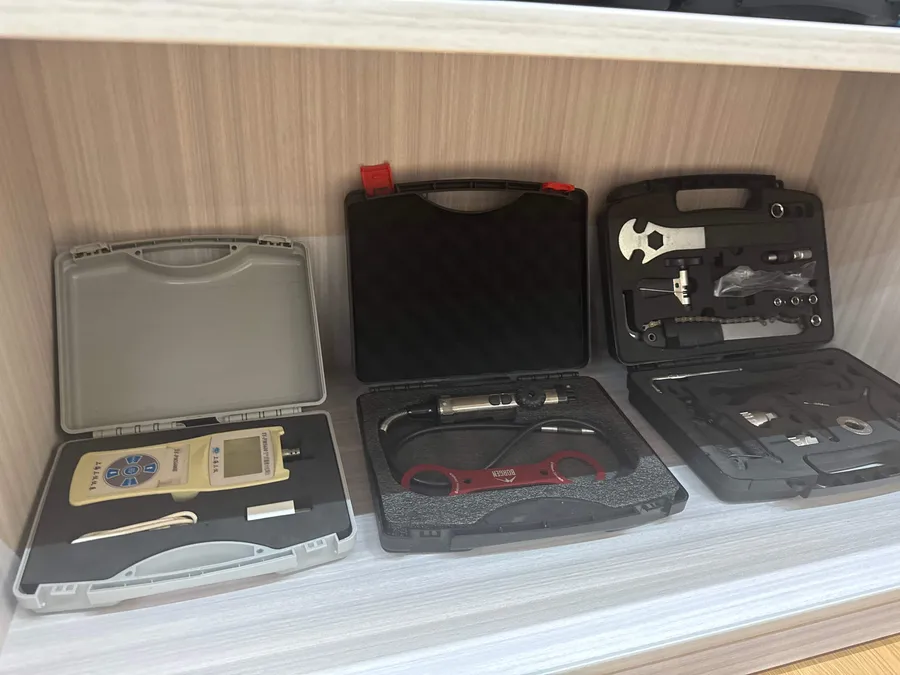
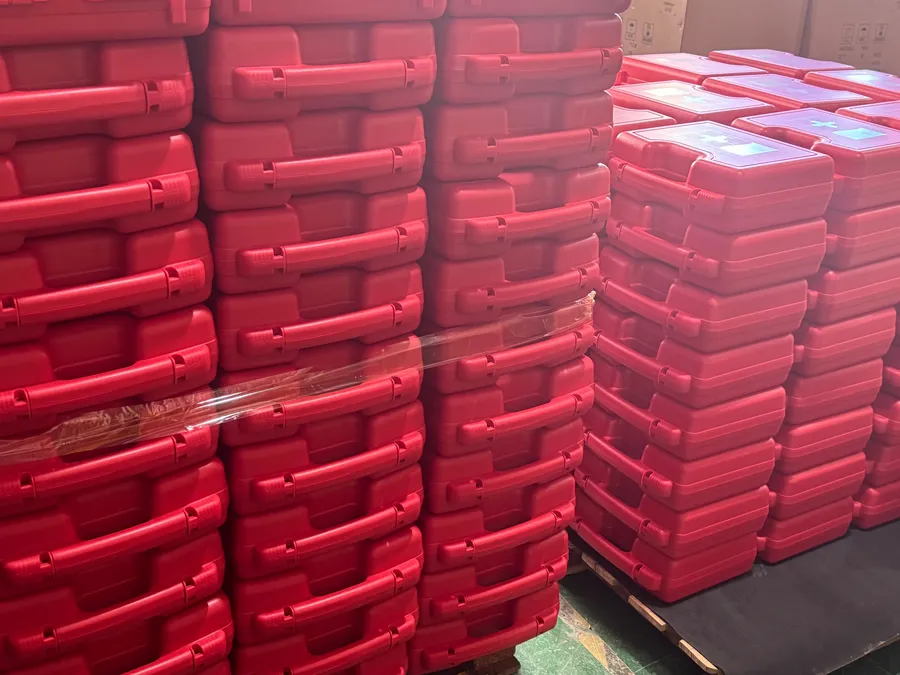
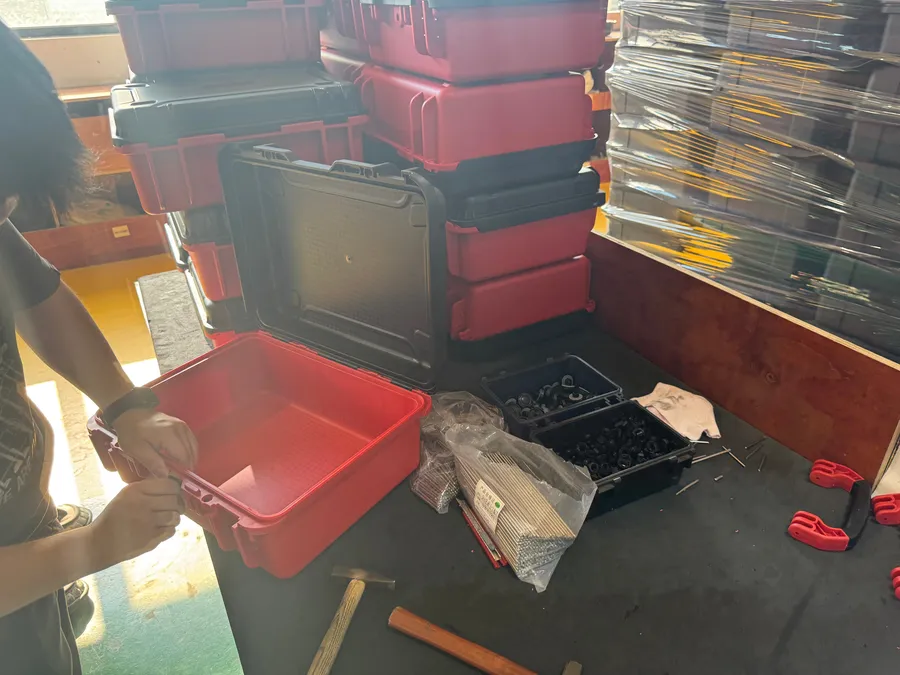
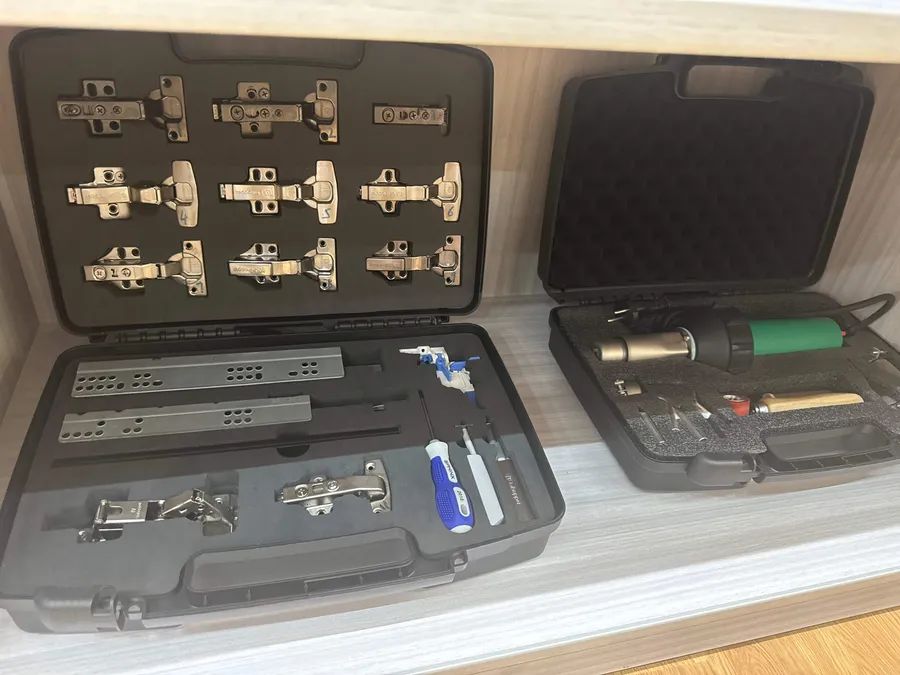
Customisation
Everything described above is configurable on a standard shell: interior layout (pick-and-pluck, die-cut or CNC-cut), foam grade and thickness, colour, logo method, latch and lock count, pressure-equalisation valve, cable ports, document holder and identification plate. A bespoke exterior geometry requires a new mould — 125 days, from 3,000 units per moulded component.
Procurement considerations
| Question | What to send us |
|---|---|
| Which shell fits? | Equipment L × W × H as packed, plus required clearance per axis |
| What does it cost? | Order quantity and estimated annual quantity — the two drive different answers |
| Is tooling needed? | Whether an existing shell clears the envelope with usable foam depth |
| Lead time? | Your required delivery date, not just the order date |
| Certification? | The exact standard your tender names — we will say whether we can test to it |
| Freight? | Destination and preferred terms; carton and pallet data supplied with the quotation |
Comparison and selection guide
The tables on this page exist because a protective case is chosen by comparing three things: the envelope, the environment and the handling chain. Where no table applies, the rule below is.
| Situation | What To Do |
|---|---|
| Occasional splash | A close-fitting rim without a gasket is cheaper and easier to maintain. |
| Rain and washdown | Sealed configuration, four or more latches, stainless hardware. |
| Immersion or pressure change | Sealed configuration plus a pressure-equalisation valve, and a documented test. |
- Size on internal dimensions plus clearance, never on a product name.
- Choose the carrying method before the shell: it changes the series, not just the price.
- Specify the interior last, and decide up front whether the end user will reconfigure it.
How do seals help reduce dust entry? relates to Waterproof & Dustproof Guide. Related families: Waterproof Cases / Custom Protective Cases / Outdoor Protective Cases / Military Protective Cases / Field Equipment Cases. Related sectors: field and industrial equipment. Continue in the Waterproof & Dustproof Guide cluster.
This page is written from our own production data. If your requirement differs, send the dimensions and we will tell you which of the 155 models fits, or whether a custom route is needed.


