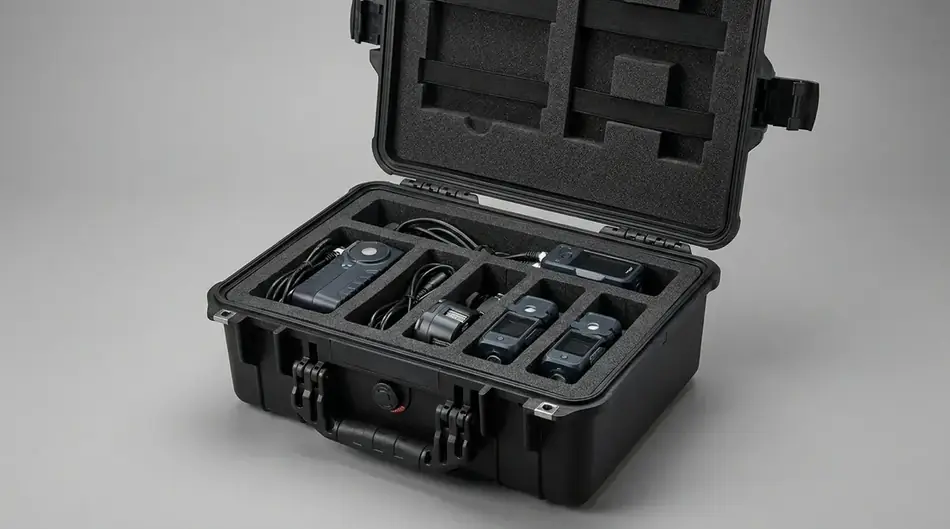
IP Rating Selection for Communication Cases?
An ingress code for a communication equipment case is chosen by exposure, not by the biggest digit: an indoor rack unit needs little beyond dust control, a shelter or cabinet install needs rain and jet protection, and a case that rides a vehicle roof or an antenna mast needs the dust-tight solid digit plus the immersion liquid digit. But a code is a laboratory result for one tested assembly, and we publish no code as a catalogue claim on any of our 155 shells: waterproof and dust are recorded as not measured, the seal is offered as a moulded gasket channel on 100 of the 127 electronics-tagged models, and where your tender needs a number we quote accredited testing against the exact model and configuration you order. This article explains each digit, the closure and material facts we do publish, and how to specify them.
Key points
- Specify the code by exposure: the solids digit for dust, the liquid digit for rain, jets or immersion; a higher digit is not automatically the better match.
- A code is a laboratory result for one tested assembly, not a family property; ask which standard, which sample, and which report.
- We publish no ingress code on any of our 155 shells: waterproof and dust are recorded as not measured, and accredited testing is quoted per configuration.
- 100 of the 127 electronics-tagged models offer a compressible gasket in a moulded channel; 27 offer no seal, so read the closure column per model.
- ABS shells are 20 of the 127 electronics-tagged models with published walls 3.0 to 5.3 mm; PP and Engineering PP span the rest, so read walls per model, not per material.
- Shock is a foam-layout question: the shell alone is not a shock rating, and no drop height is claimed without a test.
- We manufacture for wholesale and OEM buyers on EXW or FOB terms only; custom foam carries no minimum beyond the case order.
Selecting the code by exposure, digit by digit
The two-digit code is written with the solids digit first and the liquid digit second, and an X is used for a digit that was not part of the test. Read the solids digit against dust: a dusty indoor store or a desert shelter wants the dust-protected or dust-tight end of the scale, written IP5X or IP6X when only the solids digit was tested. Read the liquid digit against water: dripping and splashing sit low on the scale, jets in the middle, and temporary or continuous immersion at the top, written IPX3 through IPX8 when only the liquid digit was tested. A cabinet install under a shelter roof and a case lashed to a vehicle roof need different digits, and neither is 'the highest one'.
Treat the code as a property of one tested assembly under one protocol. The result belongs to the sample that was tested, in the orientation and state it was tested in, and it says nothing about a production batch, a lid left open for a season, or a cable gland added afterwards. That is why our own pages ask buyers to put five questions to any supplier: which standard and edition, which sample, empty or loaded, who issued the report, and what is retested on production batches.
What we publish instead of a rating
We publish mechanics, not badges. On the electronics class of our sheet, 100 of 127 models offer a seal as a compressible gasket in a continuous moulded channel, with the gasket material listed as EPDM or an equivalent compressible gasket, closed by latches whose count is set per configuration; a pressure-equalisation valve is a manufacturer option and is not fitted as standard on any model. Waterproof and dust performance are recorded as not measured on every one of the 155 models, and no ingress code is stated anywhere on the sheet, because none of these shells has been through a laboratory ingress protocol as a catalogue item.
Where a tender or an end customer needs a number, we quote accredited testing as a separate work package against the exact model, seal configuration and load state you will ship, and the report is issued to you. That route costs more than a printed badge and is worth exactly that difference: it produces a document you can hand to an auditor, tied to the assembly you actually buy.
Dustproof and Waterproof Communication Equipment Cases
Start from the closure, not the resin. Polypropylene and ABS shells do not absorb water, so the question is whether the rim is sealed: 100 of the 127 electronics-tagged models offer the moulded channel and gasket, while 27 are plain unsealed shells intended for dry indoor duty and constant daily access. For a shelter cabinet or a broadcast van, the sealed group is the shortlist; for a patch panel that lives in a climate-controlled rack room, a plain shell is easier to open a dozen times a day and honest about it.
A seal is a maintained state, not a permanent one. Our maintenance guidance is the same across the family: inspect and clear the channel before closing, especially after sand or salt; look for a permanent set in the gasket each season and replace the gasket rather than over-tighten the latches; store the case open or with latches released; and treat a pressure valve as an option to request at quotation stage if altitude or air-freight cycling is part of your duty. The waterproof-cases family page groups the sealed shells, and the mechanics behind them are explained in our guide to how waterproof cases actually work.
ABS Material Comparison for Communication Equipment Cases
Counts, wall ranges and sealing offers read straight off the published sheet, per material group, for the 127 electronics-tagged models. The example-model column is a pointer, not a recommendation; the published wall range is the range across that group's models that record a wall, and models without a recorded wall are excluded from the range rather than estimated.
| Shell Material | Models On The Sheet | Published Wall Mm | Sealing Option Offered | Example Model |
|---|---|---|---|---|
| PP | 71 | 2.0 to 5.0 | 55 | KX-84120 |
| Engineering PP | 35 | 2.1 to 5.8 | 25 | KX-92817 |
| ABS | 20 | 3.0 to 5.3 | 20 | KX-64120 |
| PP / ABS | 1 | not published | 0 | per model sheet |
Shockproof Structure for Electrical Equipment Cases
For radios, repeaters and network gear, the structure that protects electronics is the foam layout plus the shell working together, and our sheet says so plainly: shock protection is recorded as a manufacturer option that requires a specified foam layout, and the shell alone is not a shock rating. No drop height is claimed without a test anywhere on the sheet, and where a tender needs a drop figure, accredited testing on the exact configuration is the route we quote.
What we do publish is the structure itself: wall thickness per model, lid-to-base split, latch count set per configuration, and the foam system, which is offered as pick-and-pluck, die-cut, CNC-cut, EVA, PE or EPE by zone, built as top foam, base foam, egg-crate or layered structures. A bed cut around a radio with its antenna connector, battery pack and cables keeps each item supported on its structure instead of letting a shell wall do the carrying, which is what actually survives transport. KX-92817 is the structural example worth reading: a 5.0 mm wall with 125 mm of lid over 27 mm of base, so a standing unit lifts out of a deep lid tray without being dug sideways out of a bed.
Published electronics-class shells
Seven shells from the published sheet, chosen to show the range a communication buyer actually chooses between. KX-4312 is the flat patch-panel shape at 104 mm of internal depth; KX-92817 is the deep-lid standing-unit tray; KX-64120 and KX-64621 are the ABS pair for heavier radio kits at 2,640 g and 3,000 g empty; KX-86216 is the long interior for antennas and boom poles at 582 mm of internal length. Where a cell says not published, the figure has not been recorded on the sheet, and we will measure the exact shell you are quoting rather than estimate it.
| Model | Shell | External Mm | Internal Mm | Lid / Base Mm | Wall Mm | Net G | Sealing Option |
|---|---|---|---|---|---|---|---|
| KX-84120 | PP | 410 x 370 x 198 | 385 x 313 x 180 | not published | 3.7 | not published | Yes |
| KX-64120 | ABS | 405 x 362 x 195 | 378 x 307 x 187 | not published | 4.0 | 2,640 g | Yes |
| KX-92817 | Engineering PP | 280 x 225 x 165 | 253 x 180 x 152 | 125 / 27 | 5.0 | 940 g | Yes |
| KX-4312 | PP | 430 x 300 x 115 | 420 x 260 x 104 | 52 / 52 | 3.5 | 1,170 g | Yes |
| KX-3213 | PP | 315 x 260 x 128 | 308 x 230 x 118 | 86 / 32 | 3.0 | 860 g | Yes |
| KX-86216 | PP | 620 x 360 x 155 | 582 x 300 x 130 | 100 / 30 | 3.3 | not published | Yes |
| KX-64621 | ABS | 456 x 340 x 210 | 430 x 288 x 186 | not published | 4.7 | 3,000 g | Yes |
How to choose, step by step
Write the exposure down first, in one line: where the case lives, what weather reaches it, how often it is opened, and whether it is stacked, trolleyed or carried. That one line decides the closure group, the solid-digit duty you will specify to a test house, and whether a pressure valve is worth requesting. Then measure the equipment in travel configuration, radios mounted, antennas detached, cables coiled, and record the bounding box of each sub-assembly plus its mass.
Match the envelope against the published interiors, check the lid-to-base split against your layout, and only then compare prices, because two shells at the same price with different splits solve different problems. For wholesale quantities, read the export columns: carton dimensions and pieces per carton are published for sixty-four of our models, so container maths can start from recorded numbers. Send the exposure line and the bounding boxes, and we will return two or three candidates with their published figures instead of a catalogue.
Customising and OEM
The foam bed is where a communication case earns its keep, and it carries no minimum beyond the case order itself: pick-and-pluck for a kit that changes, die-cut or CNC-cut for a fixed load list, in EVA, PE or EPE by zone, with pockets sized so a missing battery or module is visible at a glance. We cut from a drawing, a photograph of the packed kit or a physical sample.
Shell-side work is priced on tooling reality: logo and colour are published at 300 pieces minimum, hardware, latch count and gasket are configuration choices on shells already moulded, and a genuinely new size is a tooling programme from 3,000 pieces per component, with first samples on an existing mould planned at 45 days and a new mould at 125 days on a 30 percent deposit. We manufacture for wholesale and OEM buyers on EXW or FOB terms only, with no retail, no DDP and no overseas warehouse.
Before you order
Send the exposure line, the bounding dimensions and mass of each sub-assembly, the closure requirement, and the quantity per delivery. We return candidate models with their published dimensions, split, wall thickness, closure state and net mass where recorded, plus a foam layout proposal, and if your tender needs an ingress figure or a drop figure we quote accredited testing on the exact configuration as a separate work package. Do not buy a printed badge: ask which standard, which sample and which report, ours included, and let the published numbers pick the model.
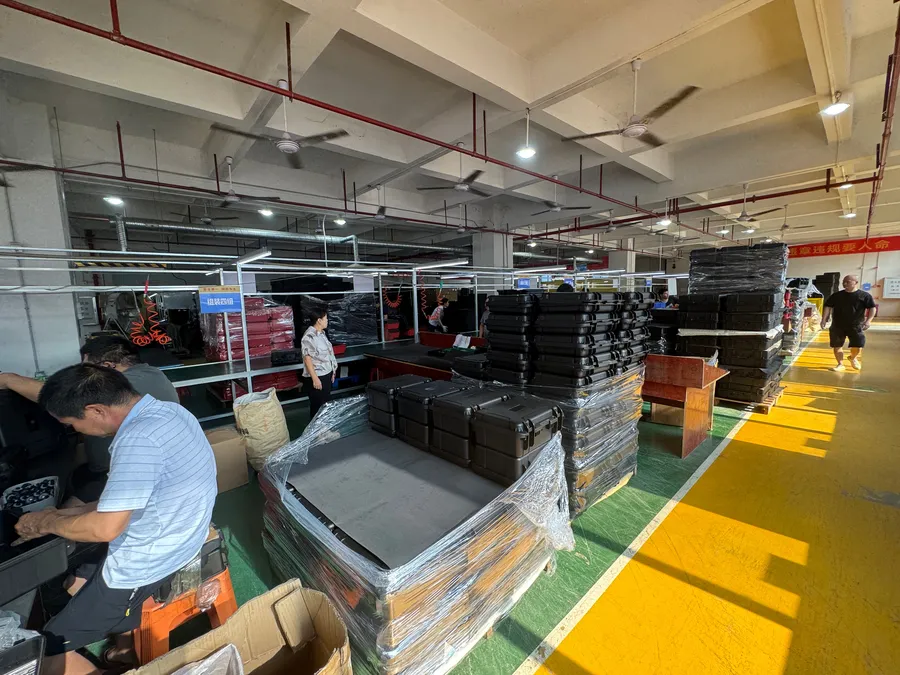
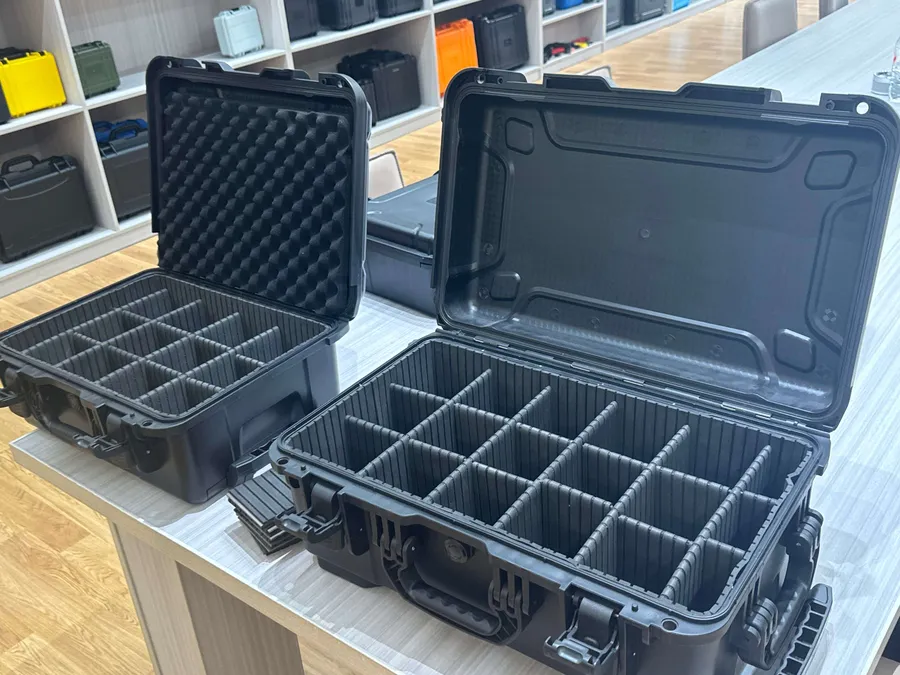
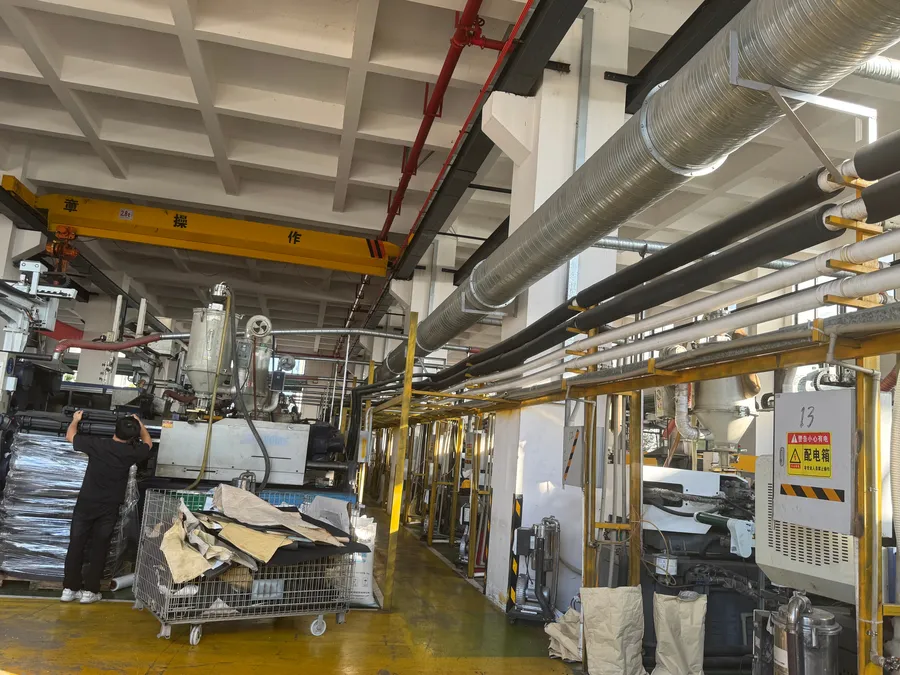
Customisation
Everything described above is configurable on a standard shell: interior layout (pick-and-pluck, die-cut or CNC-cut), foam grade and thickness, colour, logo method, latch and lock count, pressure-equalisation valve, cable ports, document holder and identification plate. A bespoke exterior geometry requires a new mould — 125 days, from 3,000 units per moulded component.
Procurement considerations
| Question | What to send us |
|---|---|
| Which shell fits? | Equipment L × W × H as packed, plus required clearance per axis |
| What does it cost? | Order quantity and estimated annual quantity — the two drive different answers |
| Is tooling needed? | Whether an existing shell clears the envelope with usable foam depth |
| Lead time? | Your required delivery date, not just the order date |
| Certification? | The exact standard your tender names — we will say whether we can test to it |
| Freight? | Destination and preferred terms; carton and pallet data supplied with the quotation |
Comparison and selection guide
The tables on this page exist because a protective case is chosen by comparing three things: the envelope, the environment and the handling chain. Where no table applies, the rule below is.
| Situation | What To Do |
|---|---|
| Battery isolation | Separate pockets, terminals up, with a physical barrier between cells and connectors. |
| Cable management | Dedicated coiled-cable channels rather than a shared compartment. |
| Field repair | Reserve a small loose compartment for spare fuses, connectors and seals. |
- Size on internal dimensions plus clearance, never on a product name.
- Choose the carrying method before the shell: it changes the series, not just the price.
- Specify the interior last, and decide up front whether the end user will reconfigure it.
IP Rating Selection for Communication Cases? relates to Waterproof & Dustproof Guide. Related families: Communication Equipment Cases / Electronics Cases / Waterproof Cases / Custom Protective Cases. Related sectors: field and industrial equipment. Continue in the Waterproof & Dustproof Guide cluster.
This page is written from our own production data. If your requirement differs, send the dimensions and we will tell you which of the 155 models fits, or whether a custom route is needed.