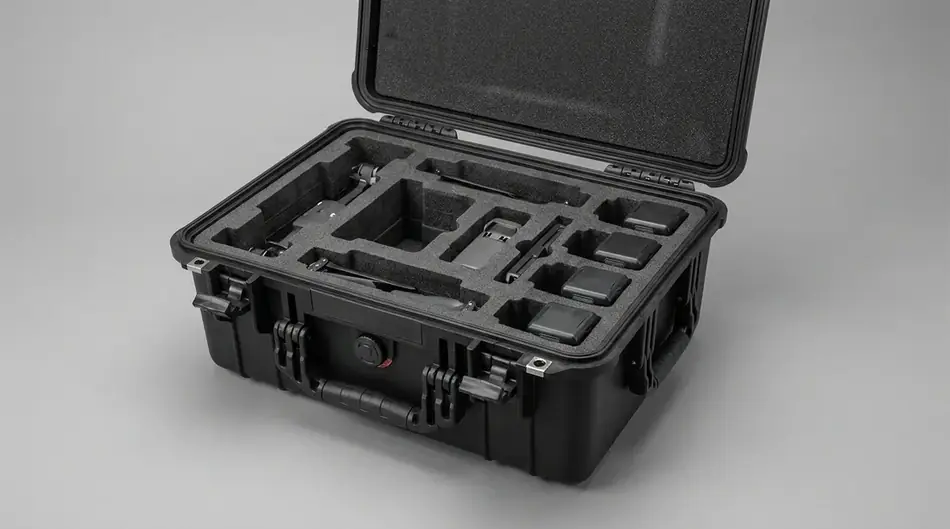
How can protective cases be used in harsh environments?
Protective cases are used in harsh environments by matching four physical things to the exposure - a rigid thermoplastic wall of known thickness, a gasket held in a continuous moulded channel, latch compression that keeps that channel closed, and a foam layout that holds the item off the shell - and then by keeping the handling discipline that most field failures actually break. On our 155 active models wall thickness is published on 148 and runs 2.0-6.0 mm, a compressible gasket in a continuous moulded channel is published on 124 while 31 models publish none, and internal volume runs from 0.3 L to 139.5 L, so the shell is chosen from measured geometry rather than from a slogan. What we do not publish is a water, dust, ultraviolet or temperature figure: those fields are recorded as not measured on every model, and accredited third-party testing is quoted per configuration instead of being asserted on a product page.
Key points
- Match the case to the movement chain first: how many hands, how many vehicles and how many nights outdoors decide the shell.
- 124 of our 155 active models publish a compressible gasket in a continuous moulded channel; the other 31 publish none.
- Wall thickness is published on 148 models and runs 2.0-6.0 mm - geometry you can measure, not a rating you have to trust.
- No water, dust, ultraviolet or temperature figure is published on any model, and no enclosure protection code is stated.
- Overfilling past the lid datum is the commonest field failure: the lid meets the rim at a designed height, not at any height.
- Carry discipline beats specification - grit in the seam or one half-latched corner defeats a heavier wall than you would buy.
- Harsh-environment use is a maintenance schedule: gasket, latch, vent and feet checks are what keep a shell working season after season.
What a harsh environment actually asks of a case
Harsh service is not one event, it is a schedule of small attacks. A shell that travels to a site and back in a van sees condensation cycles, wind-driven grit working into the lid seam, ultraviolet exposure that dries and chalks a polymer surface, and temperature swings that pump air in and out through whatever path is not closed. A shell that lives open on a tailgate, on a boat deck or at a survey marker adds salt crust, standing water at the rim, grit on the gasket face and repeated point loads on the corners. The failures that follow are specific and mostly boring: corroded ferrous hardware, fogged optics, sticky latches, a gasket that has been rolled out of its channel, swollen paper labels and, most often, a lens or a contact that is scratched every time it is lifted out of a dirty interior.
That schedule explains why we describe harsh-environment use as a set of physical conditions plus a handling routine, rather than as a badge. The conditions are the wall, the seam, the closure and the interior. The routine is what the end user does on a wet evening in a hurry, which is where a well specified case is usually lost. Both halves are inside a buyer's control before order, because the first is published as geometry on our model pages and the second is written into the packing and instruction sheet we produce for OEM orders.
How protective cases are used in harsh environments, in practice
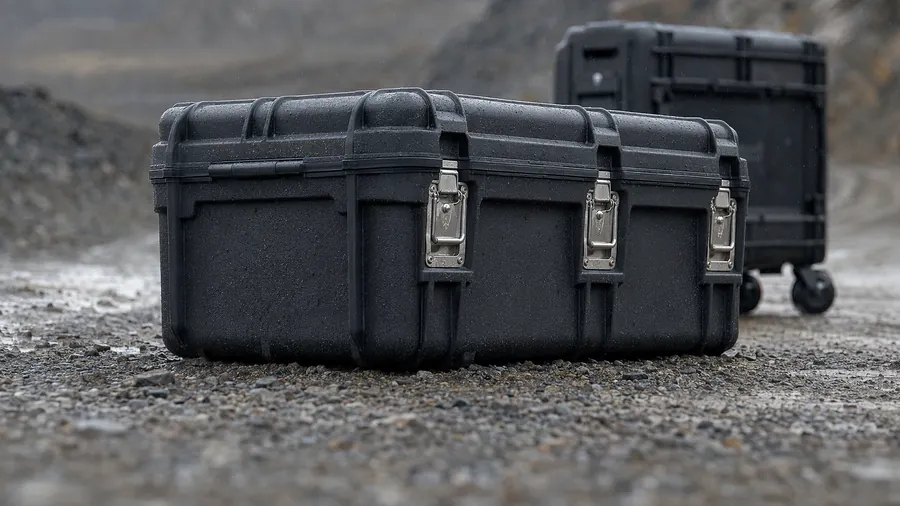
Buyers who land on this page looking for protective cases used in harsh environments are usually running one of five patterns, and the pattern changes the specification more than the industry label does. The first is vehicle stowage: the shell rides loose in a load bay or on a rack, so the corners take the abrasion and the lid seam takes the grit, and a gasketed shell with moulded feet matters more than wall thickness. The second is tailgate and open-air working, where the lid is open in rain for long periods and the base sits in water, so drainage at the rim and a shallow lid cavity with deep base are worth more than a heavier shell. The third is fixed installation and shipping, where the case is a storage container that is stacked, so stackability and a flat, dimensionally stable lid dominate.
The fourth pattern is carried-by-hand field work - survey, telecom commissioning, emergency response - where the deciding factor is mass and carry method rather than protection: 19 of our 155 models publish wheels and a telescopic handle, and net weight is published on 93 models from 100 g up to 15,320 g, which is the difference between a kit that is taken every day and one that is left in the vehicle. The fifth is cold-chain or high-temperature exposure, where the real problem is condensation inside the shell when it is brought in from the cold, and the answer is a pressure-equalisation valve specified per configuration plus a drying routine, not a thicker wall.
The four features that decide whether a shell survives field use
Feature one is the wall. Every one of our 155 active models is an injection-moulded thermoplastic shell - 94 publish PP, 38 publish engineering PP, 22 publish ABS and one publishes a PP / ABS combination - and the figure we can give you for stiffness is wall thickness, published on 148 models and ranging 2.0-6.0 mm across the line. Feature two is the seam: where a gasket is offered it is a compressible gasket in a continuous moulded channel (published on 124 models, recorded as none offered on 31), which means its quality depends on channel geometry and lid flatness rather than on a sprayed-on bead that can be peeled off in the field.
Feature three is compression. A gasket only performs if the latches hold the lid down on it evenly, so latch count is specified per configuration rather than read off a catalogue line; what is published as measured on the hardware block is the hinge, the moulded feet and a latch body that accepts a standard padlock. Feature four is the interior. Shock and impact are recorded as configuration options on all 155 models with the explicit note that a specified foam layout is required and the shell alone is not a shock figure: cross-linked PE, EVA and EPS are combined by zone, in top, base, convoluted, layered or CNC-cut form, and the foam also does the quiet job of keeping a damp or gritty item off the shell wall.
What we publish per model, and what we deliberately do not publish
The table below is the honest shape of our data. Left-hand rows are geometry and mass, taken from our own production and incoming-material records and printed on the model page before you order; the count column tells you how many of the 155 models publish that field, because we would rather show a gap than average a number across a line it does not describe. The last rows are the fields a marketing page usually fills in and we do not: water, dust, ultraviolet, temperature and any enclosure protection code are recorded as not measured, which is a statement about our test records, not a claim that the shell is weak.
| Figure | Published On | Range On The Line | What It Settles |
|---|---|---|---|
| External dimensions (L x W x H, mm) | 155 of 155 models | 120 mm to 1,356 mm external length | Stowage envelope, freight cube and pallet footprint |
| Internal dimensions (L x W x H, mm) | 155 of 155 models | 115 x 78 x 32 mm at the smallest shell | Whether the packed kit fits at all |
| Wall thickness (mm) | 148 of 155 models | 2.0-6.0 mm | Shell family, stiffness and resin mass |
| Lid depth and base depth (mm) | 100 of 155 models | lid 16-320 mm, base 15-168 mm | Where a tall item sits relative to the seam |
| Narrow internal width (mm) | 36 of 155 models | 70-308 mm | Tapered or angled items inside a rectangular cavity |
| Internal / usable interior volume (L) | 155 of 155 models | 0.3-139.5 L internal, 0.3-111.6 L usable | How much foam you can afford and still close the lid |
| Net weight (g) | 93 of 155 models | 100-15,320 g | Carry method and daily handling load |
| Gasket in a continuous moulded channel | 124 of 155 models | None offered on the other 31 | Whether the closure is worth maintaining at all |
| Water, dust, ultraviolet and temperature figures | 0 of 155 models | Recorded as not measured | Nothing - accredited testing is quoted per configuration |
Published models that are used in harsh environments, and how they differ
These are real catalogue rows, not a composite. Read them as a demonstration of how a buyer should compare shells for field use: the interesting differences are the wall thickness, whether a gasket is offered, the lid-to-base split and the mass you have to carry. The two WL4010 entries carry the same model name in two different series, and they are the clearest illustration on this page that a name is not a specification. Every figure below is printed on the linked model page.
| Model | Series | Shell | External Mm | Internal Mm | Wall Mm | Gasket | Net G | Carry |
|---|---|---|---|---|---|---|---|---|
| WL1204 (KX-1204) | 0 Series | PP | 120 x 90 x 40 | 115 x 78 x 32 | 2.6 | none offered | 100 | fixed folding handle |
| WL3207 (KX-3207) | 0 Series | PP | 315 x 260 x 70 | 308 x 230 x 64 | 3.0 | moulded channel | 570 | fixed folding handle |
| WL4010 (KX-4010) | 0 Series | PP | 400 x 360 x 100 | 390 x 315 x 88 | 3.0 | moulded channel | 1015 | fixed folding handle |
| WL4010 (KX-4010-2) | 1 Series | Engineering PP | 400 x 350 x 100 | 388 x 307 x 90 | 3.4 | moulded channel | 1240 | fixed folding handle |
| WL707# (KX-707) | 7 Series | Engineering PP | 470 x 360 x 148 | 465 x 310 x 140 | 2.5 | none offered | 1360 | fixed folding handle |
| WL8-5726 Trolley (KX-85726) | T Series | PP | 576 x 363 x 257 | 520 x 296 x 210 | 4.2 | moulded channel | 5600 | wheels + telescopic |
| WL8-8442 Trolley (KX-88442) | T Series | PP | 843 x 592 x 415 | 740 x 518 x 364 | 5.0 | moulded channel | 15320 | wheels + telescopic |
If your tender names a rating we do not hold
Tender documents routinely name an enclosure protection code, a military specification method, a drop height, an explosion-proof service condition, an airdrop grade or an ESD-safe surface requirement. None of those words appears on our model pages, and the reason is simple: we do not hold reports for them. What we hold is production and incoming-material data. So when a rating is a pass or fail condition for your purchase, treat it as a separate work package with a defined price: ask any supplier - us included - for the test report and check six fields on it, which are the accredited laboratory and its scope, the standard number and edition, the exact specimen serial and configuration tested, the test method and sample size, the pass criteria, and the date. A datasheet that prints a code without a report number behind it is a marketing document.
Our route is the plain one. We tell you in the first reply whether the figure you need exists in our records - usually it does not - and we quote accredited third-party testing on the specific shell, gasket, latch and foam configuration you intend to buy, because a result belongs to a configuration and not to a product family. If you need a gasketed engineering-PP shell with a specified latch count and CNC-cut foam, that is built, then tested, then documented; the alternative - borrowing a number from a similar-looking case - is how a batch gets disputed after delivery.
Field practice that keeps a gasketed shell working
A gasket fails in the field for a short list of reasons, and all of them are behavioural. Grit on the sealing face before closing turns a continuous channel into a sieve, so wipe the rim and the gasket before the latches go down, not after. Closing one corner first leaves the diagonally opposite corner lifted, so work the latches in sequence. Loading the base above its designed depth bows the lid and the channel stops being continuous, which is why the published lid and base depth figures matter more than the total internal depth when you pack. Stowing the case damp and closed for weeks invites the corrosion that the thermoplastic shell itself cannot suffer but your hardware can: our records list corrosion resistance as measured on all 155 models with the note that the shell has no ferrous corrosion path, while hardware is specified per configuration.
Two more habits are worth writing into an OEM instruction sheet. Bring a cold shell to room temperature before opening it, because the air inside condenses on whatever is warmer, and that water then sits in the base foam where you cannot see it; and treat the moulded feet and the handle as wear items - feet are published as measured hardware on our records, and a worn foot changes how the lid sits when the case is stacked. A pressure-equalisation valve is offered as a configuration option across the line if your duty cycle involves altitude or large temperature swings; it is not fitted by default, and we will not quote it as standard on a shell that does not carry one.
Sizing for harsh use: envelope, clearance and usable volume
Outdoor sizing mistakes are almost always clearance mistakes, and the published data gives you a way to check them without guessing. Internal volume is the cavity; usable interior volume is what is left after the foam you need. On our line the gap is real and large - the WL8-8442 Trolley publishes 139.5 L internal against 111.6 L usable, and a WL4010 publishes 10.8 L internal against 9.3 L usable - so a buyer who buys on the internal figure in cold weather, with gloves, on a wet tailgate, has already lost the margin. Then add clearance deliberately and per axis rather than as a vague round number: the sizing rule we apply across this site is at least 20 mm on each axis, so that the insert rather than the shell wall absorbs movement, and more where the item has a protruding connector, an antenna, a lens hood or a handle, with enough left at the lid face that the gasket channel stays unloaded.
Cold and wet change the numbers you should be working from. A cable stiffens, a bagged item thickens, a foam pad compresses less at low temperature, and condensation needs somewhere to go, so the packed envelope you measure in a warm showroom is not the envelope that closes a lid in the field. Measure the kit as it will actually be packed - cabled, powered down, in its cold-weather wrapping - and state the result in millimetres on three named axes. If an item is tapered or has an angled body, the field that saves you is narrow internal width, which we publish on 36 of 155 models because it only exists on shells whose cavity narrows between the wall radii.
Customisation, supply terms and how to start
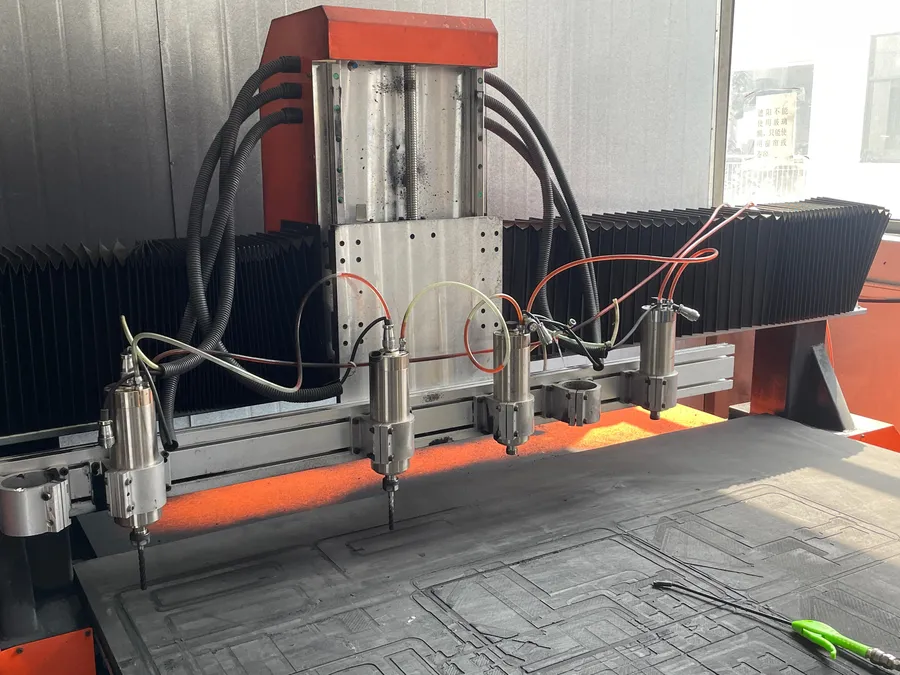
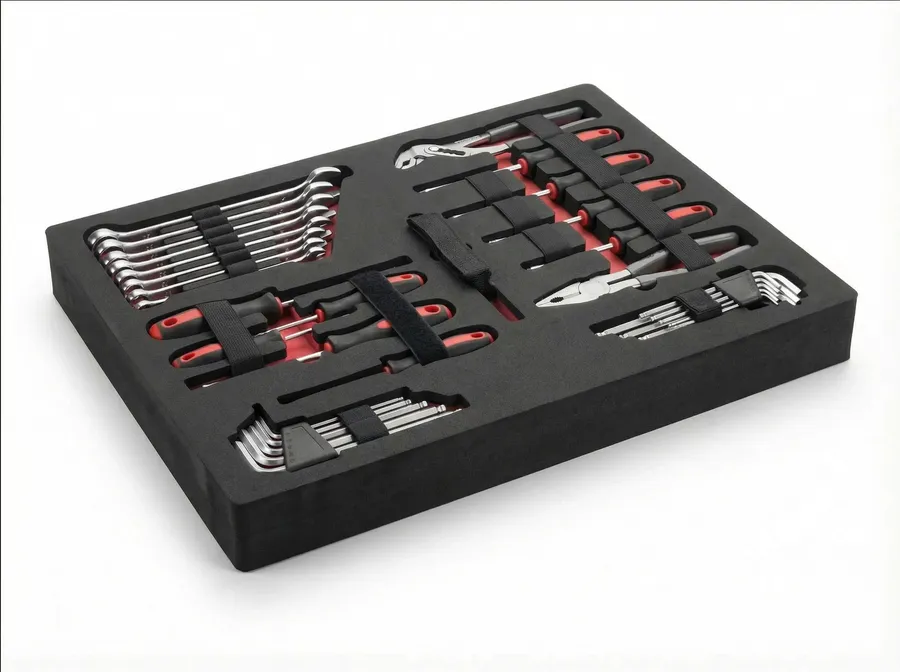
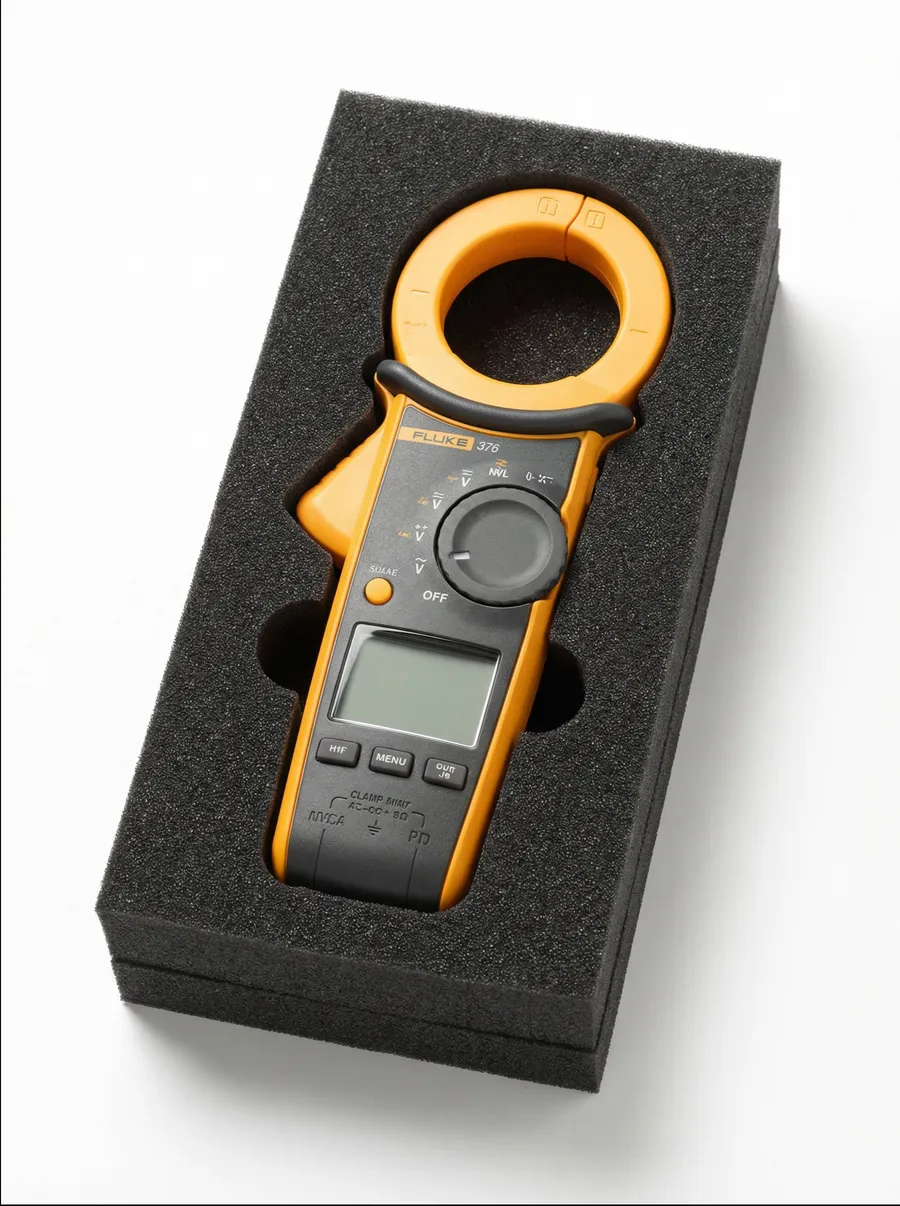
Everything described above is configurable on a standard shell: interior layout in pick-and-pluck, die-cut or CNC-cut form, foam grade and thickness by zone, colour, logo method, latch and lock count, pressure-equalisation valve, cable ports, document holder and identification plate. Minimum quantities are published in the product data as 1 unit for a standard shell, 1 unit for custom foam, and 300 units where a logo, a colour change or an OEM build is involved; a bespoke exterior geometry needs a new mould, which we quote from 3,000 units per moulded component. Lead time on the same record set is 45 days for an OEM build on existing tooling and 125 days for a new mould.
Commercial terms are fixed and stated early, because they decide whether we are the right supplier for you at all. KeXin New Materials (Guangdong) Co., Ltd. works wholesale and OEM / ODM only: we do not sell retail, we quote EXW or FOB, we do not do DDP and we have no overseas warehouse, so your own freight forwarder carries the shipment. Payment is 30 percent deposit with the balance after inspection, and third-party factory audits are welcome. Contact Fred Zhao or the KeXin Sales Team, or WhatsApp +86 135 3588 0002, with the equipment envelope as packed and the exposure you are really facing; we will tell you which of the 155 models fits, which field is not in our records, and what accredited testing would cost if you need it.
Applications
This matters most where the case is part of a movement chain rather than shelf packaging. In outdoor & recreation and field & deployment and military the same shell is specified differently because the handling, the environment and the verification requirement differ.
- Outdoor & Recreation — Consumer and professional outdoor brands buy cases as a component of their product. That means c…
- Field & Deployment — Field deployment removes every assumption a depot specification makes: no forklift, no dry stora…
- Military — Military equipment moves through a chain of handlers, none of whom own the equipment and all of …
- Telecommunications — Communications equipment is never one object. It is a unit plus a set of accessories that determ…
- Drone & UAV Operations — A drone kit is three different protection problems in one box: a light awkward airframe, heavy b…
Customisation
Everything described above is configurable on a standard shell: interior layout (pick-and-pluck, die-cut or CNC-cut), foam grade and thickness, colour, logo method, latch and lock count, pressure-equalisation valve, cable ports, document holder and identification plate. A bespoke exterior geometry requires a new mould — 125 days, from 3,000 units per moulded component.
Procurement considerations
| Question | What to send us |
|---|---|
| Which shell fits? | Equipment L × W × H as packed, plus required clearance per axis |
| What does it cost? | Order quantity and estimated annual quantity — the two drive different answers |
| Is tooling needed? | Whether an existing shell clears the envelope with usable foam depth |
| Lead time? | Your required delivery date, not just the order date |
| Certification? | The exact standard your tender names — we will say whether we can test to it |
| Freight? | Destination and preferred terms; carton and pallet data supplied with the quotation |
Comparison and selection guide
The tables on this page exist because a protective case is chosen by comparing three things: the envelope, the environment and the handling chain. Where no table applies, the rule below is.
| Situation | What To Do |
|---|---|
| Occasional splash | A close-fitting rim without a gasket is cheaper and easier to maintain. |
| Rain and washdown | Sealed configuration, four or more latches, stainless hardware. |
| Immersion or pressure change | Sealed configuration plus a pressure-equalisation valve, and a documented test. |
- Size on internal dimensions plus clearance, never on a product name.
- Choose the carrying method before the shell: it changes the series, not just the price.
- Specify the interior last, and decide up front whether the end user will reconfigure it.
How can protective cases be used in harsh environments? relates to Waterproof & Dustproof Guide. Related families: Waterproof Cases / Outdoor Protective Cases / Military Protective Cases / Field Equipment Cases / Equipment Transport Cases / Instrument & Equipment Cases / Custom Protective Cases / Ammunition Storage & Transport Boxes. Related sectors: Outdoor & Recreation / Field & Deployment / Military / Telecommunications / Drone & UAV Operations. Continue in the Waterproof & Dustproof Guide cluster.
This page is written from our own production data. If your requirement differs, send the dimensions and we will tell you which of the 155 models fits, or whether a custom route is needed.