Small dustproof waterproof plastic box enclosure custom?
Treat it as three separate decisions, not one. First, the shell: on our published data 12 small models up to about 8 litres of internal volume carry a compressible gasket seated in a continuous moulded channel, and 17 small models publish no gasket option at all, so the size you like may simply not be available with a seal. Second, what the seal is and is not: EPDM or equivalent compressible gasket is the published seal construction, but water and dust performance are recorded as not measured, so we do not publish an ingress code for any of them and we quote accredited third-party testing on the configuration you order. Third, the custom scope: colour, logo, hardware, foam and packaging are all available from 300 pieces, an existing-mould build runs 45 days to first article, and a new mould is 125 days from 3,000 per component. The most common failure is not the seal, it is a cavity that is too shallow for the depth split, or too narrow at the rails for the tray.
Key points
- Choose the shell by whether it publishes a gasket channel at all: KX-62205 publishes one at 200 x 98 x 41 mm, while KX-2508 at 245 x 175 x 68 mm publishes no gasket option.
- A gasket is a construction, not a rating. Water and dust performance are recorded as not measured on every small model here, so ask for a test plan rather than accepting a seal photograph.
- Small does not mean shallow: KX-92817 publishes 253 x 180 x 152 mm of cavity but splits it 27 + 125 mm, which is the shape you need for a module that must stand up.
- Compare internal volume with usable interior volume before you commit a layout: KX-3609 is 8.0 L internal but only 6.9 L usable once foam is in place.
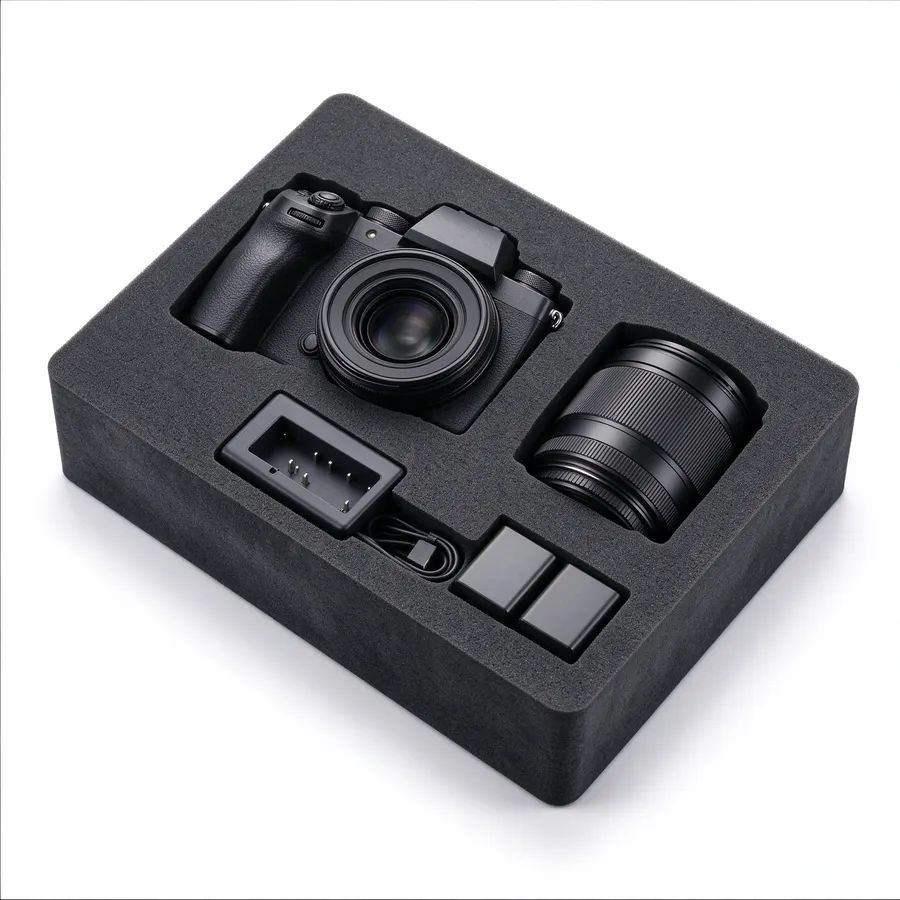
- Custom colour, logo and OEM marks start at 300 pieces each; custom foam starts at 1 unit, so prove a nest on one case before committing a print run.
- A new mould is 125 days and starts at 3,000 pieces per component. Most small enclosures fit an existing shell long before that threshold.
- Terms are wholesale and OEM only, quoted EXW or FOB from our Guangdong plant, with no retail, no delivered-duty-paid option and no overseas warehouse stock.
Small dustproof waterproof plastic box enclosure custom: what the request really contains
A small dustproof waterproof plastic box enclosure custom order is three purchases wearing one name. There is the shell, which has to be a moulded thermoplastic body with a channel that can hold a compressed gasket; there is the sealing decision, which is a construction choice plus a test decision; and there is the custom scope, meaning colour, print, hardware, interior foam and packaging. Separating them is what stops an enquiry from turning into a quote for a box that looks sealed in a photograph and behaves like an open tray in a delivery van.
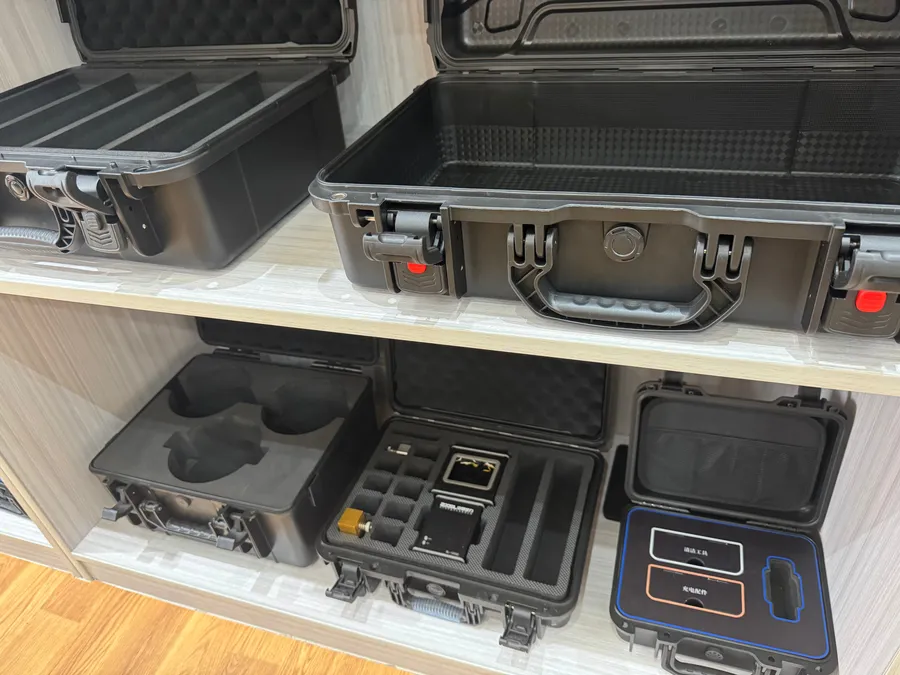
On our published range, the shell question is settled by the model, not by a wish. 12 models with internal volume up to about 8 litres record a compressible gasket in a continuous moulded channel; 17 models in the same size band record that no gasket is offered on that shell at all. That is the single most useful filter, because a buyer who picks on footprint alone frequently lands on a non-gasket shell of the exact size they wanted and then discovers the seal cannot be added. Choose from the gasket column first and the size second.
The custom layer is genuinely flexible, but it is not free of thresholds. Custom logo, custom colour, custom packaging, custom foam, custom hardware and private label are all published as available on the small models above, and each of logo, colour and OEM carries a minimum of 300 pieces, while a new mould starts at 3,000 per component. Interior foam is the exception: it starts at 1 unit, which is why a custom nest is the cheapest way to make a small enclosure fit a specific assembly.
What a gasket is on these shells, and what it is not
The published seal construction is a EPDM or equivalent compressible gasket running in a channel moulded into the shell rim, so there is no adhesive bead and no cut-and-stick cord that a re-opened case displaces. Latches compress that gasket against the mating face. That is the whole mechanism, and it is a real thing we can show you on a sample.
What it is not is a rating. On every model in the table below, water performance and dust performance are recorded as not measured, and the protection rating field is recorded as not measured with the note that no ingress code is stated. We do not print an ingress number for a shell we have not sent to a lab, and we do not describe one as dustproof or waterproof as a property of the product. The words in the heading of this page are the words buyers search with; the honest answer is that a gasket channel plus good latch compression is what makes that outcome likely, and the measurement that would make it provable is a separate, quoted activity.
Corrosion is the one environmental field published as measured on these shells, and it is measured in a narrow sense: a thermoplastic body with no ferrous corrosion path. That is a statement about the material, not about a salt-spray regime. Everything else on the not-measured list, including ultraviolet exposure, temperature range, stack load and load capacity, is exactly that: not measured.
Published small sizes that offer a gasket
Each row is read from the published record for that model. A cell marked not published has not been measured on that shell, and we leave it blank rather than borrowing a neighbour's figure. The last column is our rule of thumb for what that cavity holds once foam occupies part of it.
| Shell | Internal | Base Lid | Wall | Net | Material | Gasket | Typical Use |
|---|---|---|---|---|---|---|---|
| KX-62205 | 200 x 98 x 41 mm | not published | 3.5 mm | 310 g | ABS | Compressible gasket in continuous moulded channel | A board assembly, a small sensor head or a handheld meter lying flat |
| KX-1905 | 180 x 160 x 40 mm | 15 + 25 mm | 3.0 mm | 250 g | PP | Compressible gasket in continuous moulded channel | Two compact modules side by side, with the taller one under the deeper lid |
| KX-62209 | 200 x 98 x 78 mm | not published | 3.5 mm | 410 g | ABS | Compressible gasket in continuous moulded channel | A board stack, or a meter with a short lead bundle standing in the base |
| KX-62109 | 195 x 128 x 81 mm | not published | 3.0 mm | 470 g | ABS | Compressible gasket in continuous moulded channel | A handheld instrument plus probes in a cut base tray |
| KX-82812 | 219 x 160 x 100 mm | not published | 3.4 mm | not published | PP | Compressible gasket in continuous moulded channel | A deeper small kit where cavity height, not footprint, is the constraint |
| KX-62810 | 253 x 182 x 86 mm | not published | 4.0 mm | 900 g | ABS | Compressible gasket in continuous moulded channel | Heavier small sub-assemblies where wall stiffness carries the rack load |
| KX-3207 | 308 x 230 x 64 mm | 32 + 32 mm | 3.0 mm | 570 g | PP | Compressible gasket in continuous moulded channel | Flat assemblies in one base tray, with a document or accessory layer in the lid |
| KX-2811 | 253 x 180 x 98 mm | 27 + 71 mm | 5.0 mm | 890 g | PP | Compressible gasket in continuous moulded channel | A tall small module that has to stay upright: 27 mm base under 71 mm lid |
| KX-3508 | 344 x 268 x 72 mm | 36 + 36 mm | 3.0 mm | 995 g | Engineering PP | Compressible gasket in continuous moulded channel | A broad, flat kit with room for accessories across the lid |
| KX-92817 | 253 x 180 x 152 mm | 27 + 125 mm | 5.0 mm | 940 g | Engineering PP | Compressible gasket in continuous moulded channel | An upright assembly: 27 mm of base under 125 mm of lid |
| KX-3607 | 355 x 280 x 60 mm | 30 + 30 mm | 3.0 mm | 800 g | PP | Compressible gasket in continuous moulded channel | A shallow, wide cavity for plates, panels or a row of identical parts |
| KX-3609 | 355 x 280 x 80 mm | 40 + 40 mm | 3.0 mm | 900 g | PP | Compressible gasket in continuous moulded channel | A larger flat batch, 8.0 L internal against 6.9 L usable with foam in place |
Small shells that publish no gasket option
This is the list that saves a wasted sample round. Within the same small size band, 17 models record that no gasket is offered on the shell: KX-1204, KX-2005, KX-2305, KX-2406, KX-2508, KX-2808, KX-3308, KX-2614 and the rest of that group. These are perfectly good cases for impact, storage and organisation, and for indoor tool crib use. They are the wrong base for an outdoor enclosure where wind-driven dust or a hose is expected, because there is no channel to compress. If you have already standardised on one of these footprints and need a seal, the answer is a different shell of similar size, not a modification to this moulding.
The contrast is worth putting in numbers, because the footprints overlap. KX-62205 publishes 200 x 98 x 41 mm at 310 g with a gasket channel, while KX-2508 publishes 245 x 175 x 68 mm at 338 g with no gasket offered: nearly the same hand-carried size, completely different sealing story. Similarly KX-3207 (308 x 230 x 64 mm) is a gasket shell and KX-3308 (325 x 236 x 76 mm) is not, at close to the same cavity.
Depth split and narrow width: why a small enclosure still fails to close
A parting line on a small shell is rarely at the middle, so internal depth alone tells you little. KX-1905 publishes 180 x 160 x 40 mm of cavity as 15 + 25 mm; KX-2811 publishes 253 x 180 x 98 mm as 27 + 71 mm; KX-3607 publishes 355 x 280 x 60 mm as 30 + 30 mm. A contents list that says 60 mm deep fits KX-3607 comfortably if it lies flat in the base, and does not fit it at all if it must stand in a tray under a 30 mm lid.
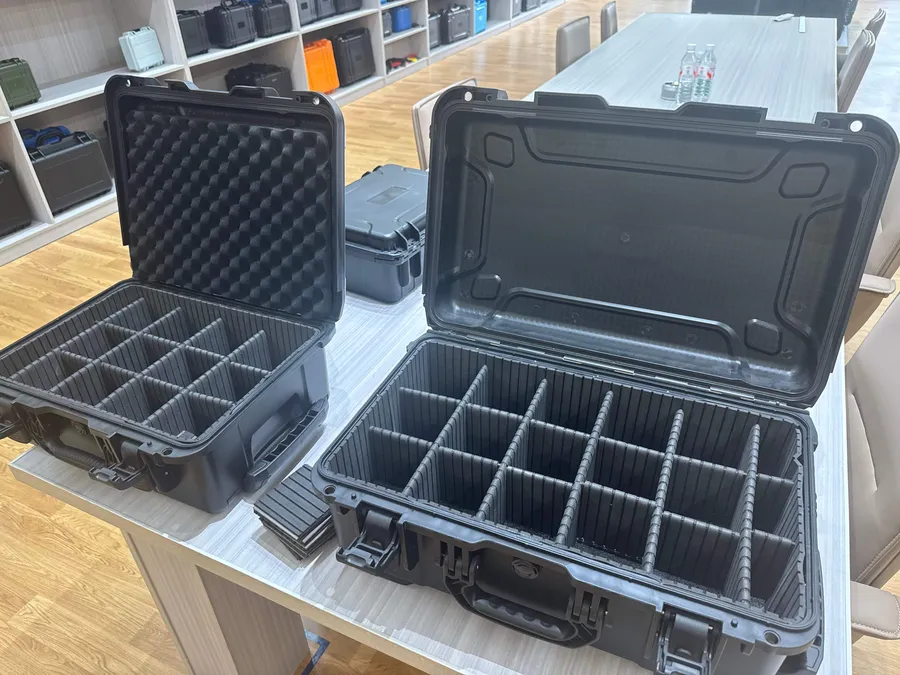
Narrow internal width is the second trap. On KX-1905 the internal cavity is 180 x 160 x 40 mm but the clear width at the narrowest point is published as 130 mm, and on KX-3207 it is 205 mm against a nominal width of 230. Rails, latch bosses and hinge hardware intrude, and a tray cut to nominal width will ride up on them, which also lifts the lid off the gasket and defeats the whole seal. Design the tray to the clear dimension, and let us check it before cutting.
Then there is the volume a buyer never budgets for. KX-3609 publishes 8.0 L internal against 6.9 L usable; KX-62810 is 4.0 internal against 3.2 usable. Foam is the protection, and foam is the space you lose. Sizing the contents against the internal figure is how an enclosure ends up with the lid standing proud of the latch line on the first article.
Choosing the wall, the material and the weight for a small sealed enclosure
Wall thickness is published per model and it is the nearest thing to a stiffness figure we offer without a lab: 3.5 mm on the ABS KX-62205, 3.0 mm on the PP KX-3207, rising to 4.0 mm on KX-62810 and 5.0 mm on KX-92817. Wall decides whether the shell racks without deforming the cavity, and a deformed cavity is what lets a gasket open at one corner. It does not convert into any impact claim: shock and impact protection are published as a manufacturer option that depends on a specified foam layout, with the wall thickness noted and no drop height stated.
Within this size band the published shell materials are ABS, PP and Engineering PP. The ABS shells here (KX-62205, KX-62209, KX-62109, KX-62810) present a stiffer, smoother moulded wall at a given size, and they are also the heavier ones: KX-62209 publishes 410 g against KX-1905 at 250 g for a comparable cavity. If the enclosure travels in a technician's hand for eight hours, weight is the deciding spec; if it lives on a shelf, the stiffer wall is.
Stackability is published as a flag and, helpfully, every gasketed model in the table above is marked stackable. The empty weight range across that group runs from 250 g to 995 g, which is the difference between an enclosure that disappears into a kit and one that gets left on the bench because nobody wants to carry it.
What we do not state, and how a tender that names an ingress code is handled
To be unambiguous: no ingress code is published for any model on this page, and no drop height, temperature range, ultraviolet figure, stack load or load capacity is published either. Those fields exist in our product record and are marked not measured. We would rather lose a line item than print a number we cannot produce a report for, and a supplier who prints an ingress code for an untested moulding is giving you a document that will fail the first time your customer audits it.
When a specification names a code, the workable path is a test plan rather than a catalogue claim. Tell us the code, the edition of the standard and the clause, and we will quote accredited third-party testing against a specific configuration: shell, gasket, latch count and the interior layout as built. Testing is scheduled and priced on the build, and the report belongs to that configuration. What you get is a lab document naming an article, not a general description of our range, which is the only version of this that survives scrutiny.
One boundary worth naming for enclosure buyers coming from electrical extrusions: these are moulded transport cases with latches and a hinged lid, not junction boxes with cable glands. If your design needs a penetrable wall, a gland plate, a PCB mounting boss pattern or a bayonet closure, say so at the enquiry stage, because that is a mould question with a 125 day lead and a 3,000 piece minimum, not a foam question.
Where small sealed enclosures actually get used
The commonest fit is a measurement or sensing assembly that spends its life outdoors or in a washdown area: a handheld meter with its lead set, a gas or flow sensor head with its calibration sheet in the lid, a torque transducer carried between a cell and the measuring room, a set of wireless nodes and their chargers. Footprints from 200 x 98 x 41 mm up to 344 x 268 x 72 mm cover that band, and the gasket channel is what keeps abrasive dust out of the nest between uses.
The second is wholesale supply into another product: an integrator who resells a small case with their own logo and colour as part of a kit, and who needs the same cavity across a family of SKUs. That is where the published 300 piece threshold for print and colour matters for planning, and where 1 custom foam from a single unit lets the kit be validated before the print run is committed.
The third is spares and service stock: a small sealed enclosure holding a replacement module, its fasteners and its instruction sheet, shipped as part of a service kit. Here the useful figures are the carton data rather than the case data, because the kit is shipped in multiples: KX-62205 ships 20 pieces to a 475 x 285 x 320 carton, KX-3207 ships 24 to a 645 x 530 x 430, and KX-3508 ships 20 to a 730 x 615 x 428. Pallet load is not published as a fixed number on any of these; we calculate it from the carton footprint against the pallet size you actually use.
Quantities, lead time and commercial terms
Our published business terms: wholesale and OEM only. Standard shells and custom foam both start at 1 piece, so a single proof case is an ordinary order. Logo, colour and OEM marks start at 300 pieces each, and a private mould starts at 3,000 per component. First article on an existing mould is 45 days; a new mould is 125 days. A deposit of 30 per cent applies to OEM work.
Quotes are EXW or FOB from our facility in Guangdong. We do not sell retail, we do not ship direct to your end customer on your behalf, we do not offer delivered-duty-paid terms, and we hold no overseas warehouse stock. Freight and customs stay with you or your forwarder. For a sealed enclosure that is usually the outcome you want anyway, because it keeps the import inspection point where you can actually open a carton and check the gasket seating before the batch is distributed.
What to send with a custom enclosure enquiry
Give us the packed reality and the decision you have already made. Concretely: the contents with the largest single dimension, whether each item must lie flat or stand up, the quantity per case, whether the case is carried by hand or shipped in multiples, the colour and print if any, the annual quantity, and whether your procedure names an ingress test and if so which edition and clause. With those answers we can name a model from the gasket column, size the nest, and separate the price of the case from the price of the testing instead of bundling them into one number that nobody can compare against a competitor.
If you are comparing suppliers on a sealed small enclosure, compare the fields rather than the adjectives: whether a gasket channel exists on that specific shell, the published base and lid depth separately, the clear internal width, wall thickness, usable interior volume, net shell weight, carton quantity, and which values are marked measured versus calculated versus not measured. A quote that cannot show that split is a photograph of a lid, and the difference between a photograph and a compressed gasket is the difference between a dry board and a scrapped one.
Customisation
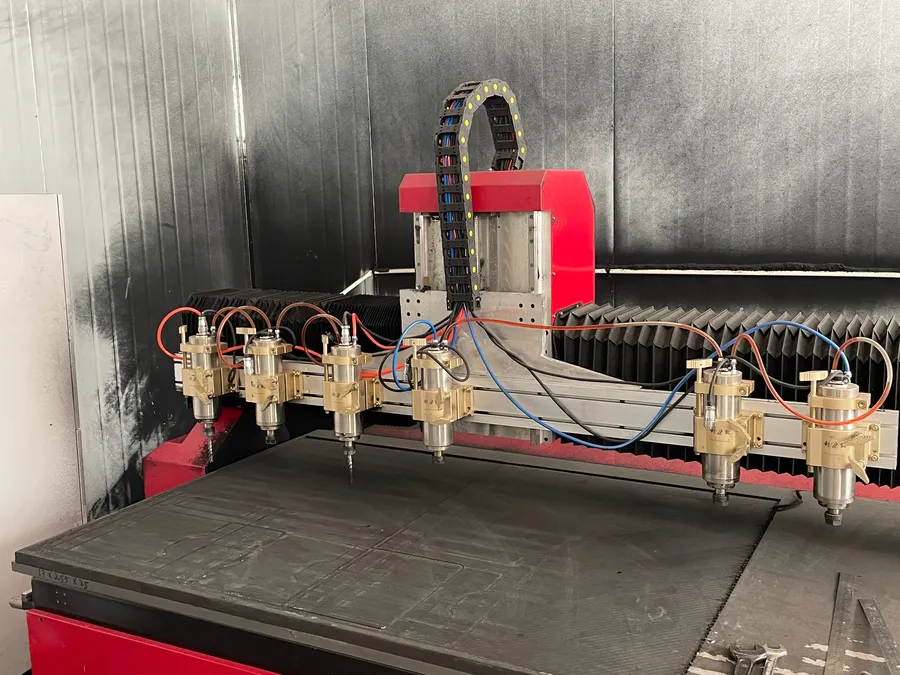
Everything described above is configurable on a standard shell: interior layout (pick-and-pluck, die-cut or CNC-cut), foam grade and thickness, colour, logo method, latch and lock count, pressure-equalisation valve, cable ports, document holder and identification plate. A bespoke exterior geometry requires a new mould — 125 days, from 3,000 units per moulded component.
Procurement considerations
| Question | What to send us |
|---|---|
| Which shell fits? | Equipment L × W × H as packed, plus required clearance per axis |
| What does it cost? | Order quantity and estimated annual quantity — the two drive different answers |
| Is tooling needed? | Whether an existing shell clears the envelope with usable foam depth |
| Lead time? | Your required delivery date, not just the order date |
| Certification? | The exact standard your tender names — we will say whether we can test to it |
| Freight? | Destination and preferred terms; carton and pallet data supplied with the quotation |
Comparison and selection guide
The tables on this page exist because a protective case is chosen by comparing three things: the envelope, the environment and the handling chain. Where no table applies, the rule below is.
| Situation | What To Do |
|---|---|
| Occasional splash | A close-fitting rim without a gasket is cheaper and easier to maintain. |
| Rain and washdown | Sealed configuration, four or more latches, stainless hardware. |
| Immersion or pressure change | Sealed configuration plus a pressure-equalisation valve, and a documented test. |
- Size on internal dimensions plus clearance, never on a product name.
- Choose the carrying method before the shell: it changes the series, not just the price.
- Specify the interior last, and decide up front whether the end user will reconfigure it.
Small dustproof waterproof plastic box enclosure custom? relates to Waterproof & Dustproof Guide. Related families: Waterproof Cases / Custom Protective Cases / Electronics Cases / Instrument & Equipment Cases / Tool Cases. Related sectors: field and industrial equipment. Continue in the Waterproof & Dustproof Guide cluster.
This page is written from our own production data. If your requirement differs, send the dimensions and we will tell you which of the 155 models fits, or whether a custom route is needed.


