Case Hardware: Latches, Hinges, Handles and Wheels
Hardware is the part of a protective case that wears out, and it is also the part that decides whether the seal stays compressed and whether the case can be opened with gloves in the dark. Specify hardware by count, by load path and by replaceability, and order a spares kit with the production batch.
Key points
- Latch count is a sealing parameter as much as a closure one: it sets how evenly the gasket is compressed.
- Hinge pins are consumables. A replaceable pin doubles the service life of the case.
- Telescopic travel height changes the pull angle, so it is a user-height parameter, not a spec-sheet number.
- Wheel diameter and track matter more on gravel and sand than on an airport apron.
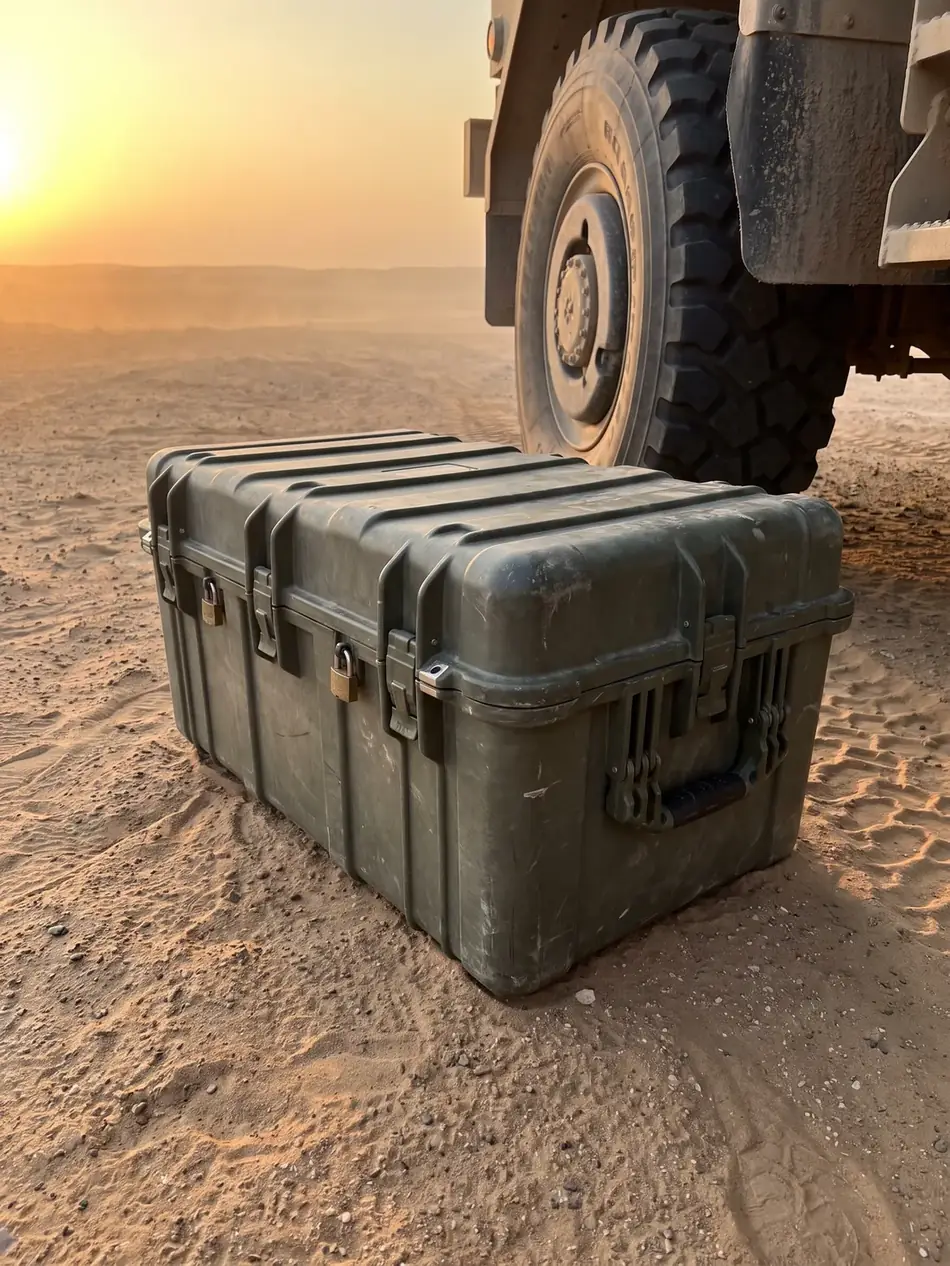
- A padlock hasp and a seal-compatible latch are different hardware options — say which you need.
Hardware inventory
| Component | Specify |
|---|---|
| Latches | Count, slide or spring type, padlock-ready, seal-compatible |
| Hinges | Continuous or discrete, replaceable pin, material |
| Handles | Fixed folding, padded, overmoulded; shoulder webbing |
| Telescopic handle | Travel height and the user heights it serves |
| Wheels | Diameter and track for the surface, not the photograph |
| Feet and rims | Rubber or moulded; must locate the next case squarely |
| Valves and ports | Pressure equalisation, cable glands, document holder |
The storage mistake that kills gaskets
A case stored closed for a year with the latches tightened puts the gasket in permanent compression. It takes a set, and the seal is gone before the case is ever dropped. Store open, or with the latches released. This costs nothing and is almost never done.
Applications
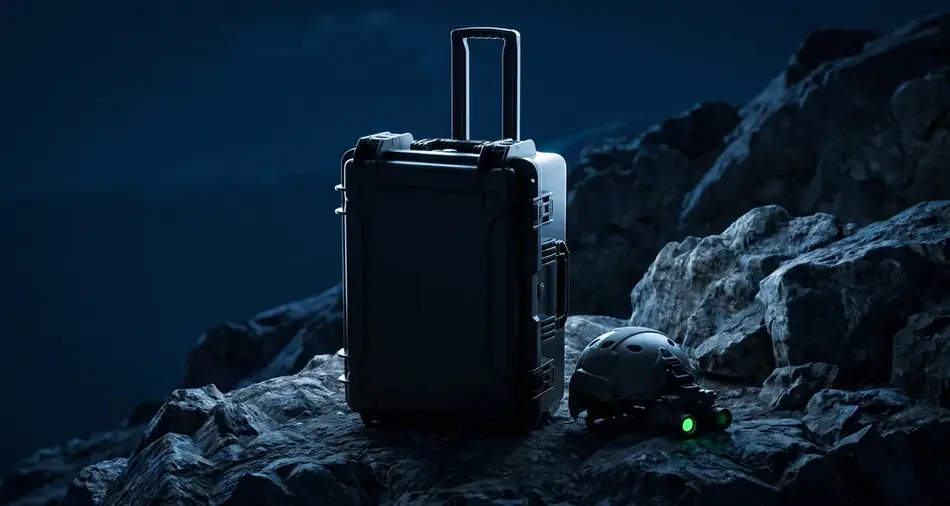
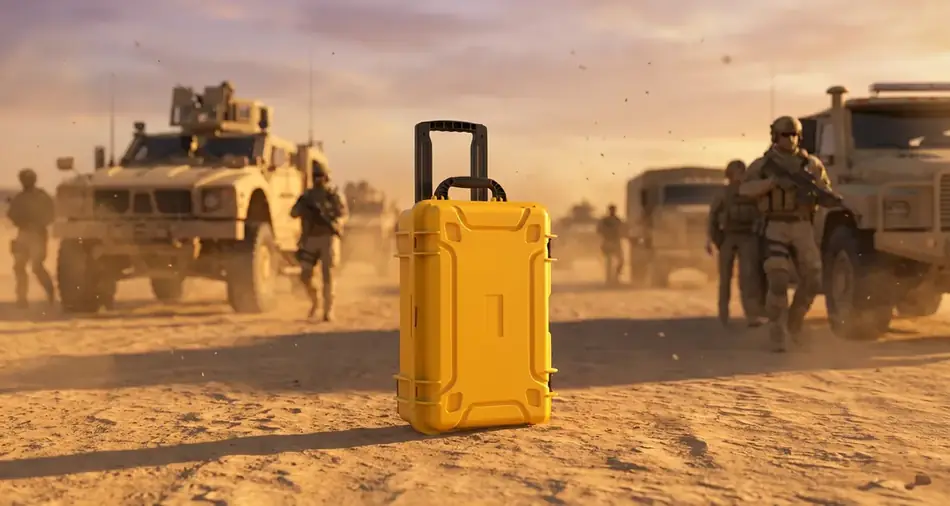
This matters most where the case is part of a movement chain rather than shelf packaging. In field & deployment and military the same shell is specified differently because the handling, the environment and the verification requirement differ.
- Field & Deployment — Field deployment removes every assumption a depot specification makes: no forklift, no dry stora…
- Military — Military equipment moves through a chain of handlers, none of whom own the equipment and all of …
Customisation
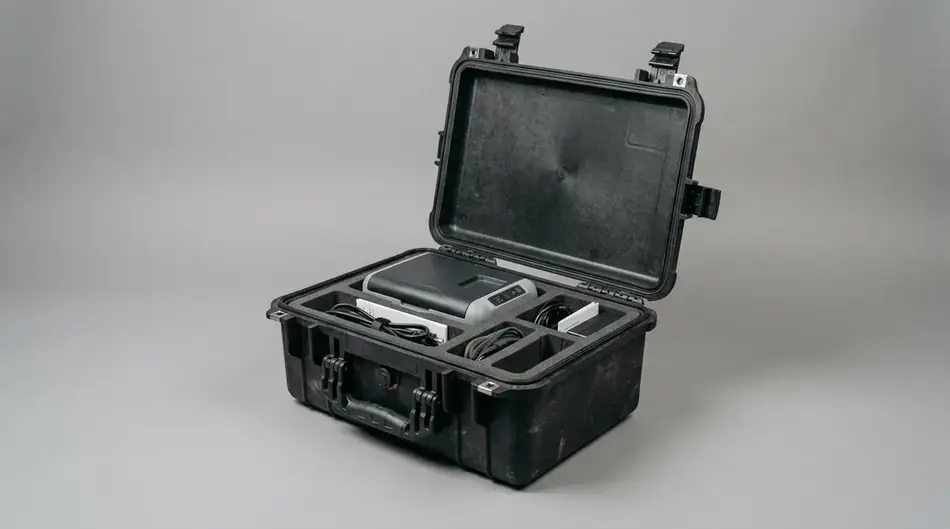
Everything described above is configurable on a standard shell: interior layout (pick-and-pluck, die-cut or CNC-cut), foam grade and thickness, colour, logo method, latch and lock count, pressure-equalisation valve, cable ports, document holder and identification plate. A bespoke exterior geometry requires a new mould — 125 days, from 3,000 units per moulded component.
Procurement considerations
| Question | What to send us |
|---|---|
| Which shell fits? | Equipment L × W × H as packed, plus required clearance per axis |
| What does it cost? | Order quantity and estimated annual quantity — the two drive different answers |
| Is tooling needed? | Whether an existing shell clears the envelope with usable foam depth |
| Lead time? | Your required delivery date, not just the order date |
| Certification? | The exact standard your tender names — we will say whether we can test to it |
| Freight? | Destination and preferred terms; carton and pallet data supplied with the quotation |
Comparison and selection guide
The tables on this page exist because a protective case is chosen by comparing three things: the envelope, the environment and the handling chain. Where no table applies, the rule below is.
| Situation | What To Do |
|---|---|
| Airport and road transfer | Check the external dimensions against cabin and boot constraints, not just the internal volume. |
| Rough ground | Larger wheels and a wider track matter more than shell volume. |
| Stored upright | Confirm the case can stand on its base with the handle retracted in your racking. |
- Size on internal dimensions plus clearance, never on a product name.
- Choose the carrying method before the shell: it changes the series, not just the price.
- Specify the interior last, and decide up front whether the end user will reconfigure it.
Case Hardware: Latches, Hinges, Handles and Wheels relates to Protective Case Basics. Related families: Rolling Cases / Waterproof Cases. Related sectors: Field & Deployment / Military. Continue in the Protective Case Basics cluster.
This page is written from our own production data. If your requirement differs, send the dimensions and we will tell you which of the 155 models fits, or whether a custom route is needed.