What Is a Military Equipment Case?
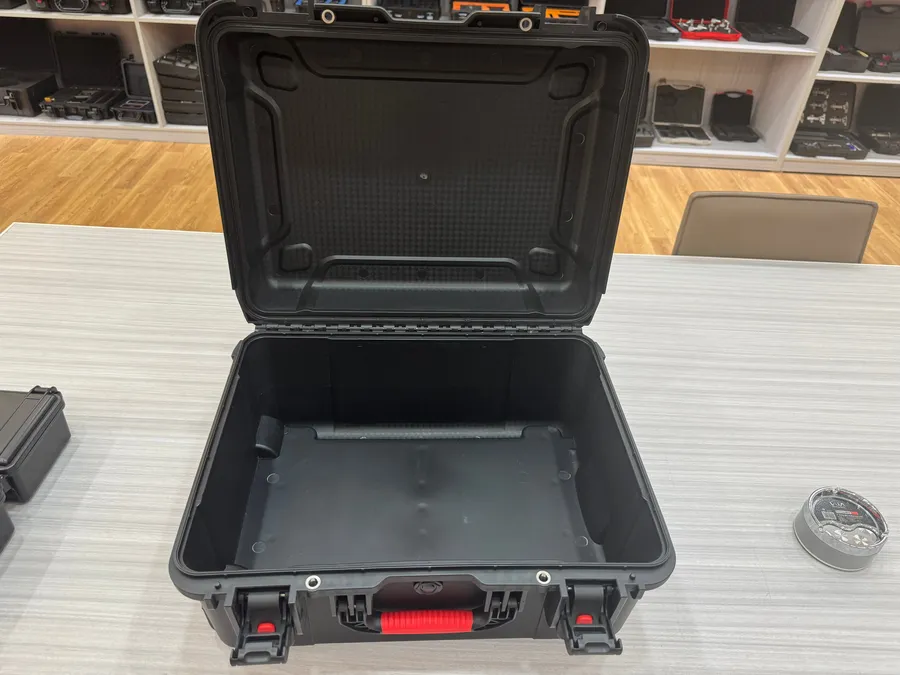
A military equipment case is a reusable hard-shell container built to move a specific piece of kit through a supply chain: an injection-moulded thermoplastic shell, a compressible seal pressed between lid and base, hardware sized to carry the stacking and lifting loads, and a foam interior cut to hold that item in a known position. The phrase describes a duty class, not a certificate. What actually protects the equipment is the sum of those five subsystems, and each one is specified with a number you can ask a supplier to publish: internal envelope, wall thickness, foam grade and thickness, latch count, and packed mass.
Key points
- A military equipment case is defined by what it is asked to survive, not by a colour or a stencil.
- Five subsystems do the work: shell, seal, hardware, interior, and the way the item is presented to them.
- Internal envelope plus clearance decides the shell; the shell decides almost everything downstream.
- Sealing is a latch-count problem as much as a gasket problem, because a gasket only resists where it is pinched.
- Ask for published internal dimensions, wall thickness per model and foam specification; treat any unquantified durability claim as a question.
The working definition
In practice the term covers a case that a unit or a contractor will hand to a driver, a load master or a shipper and expect to arrive with the contents unchanged. That is a different design brief from a storage box or a retail case. The brief is a sequence of events: it is lifted, stacked under unknown loads, dragged by its handle, splashed or rained on, left in the back of a vehicle through a cold night and a hot noon, and opened in the field where nobody has a tool.
Everything that follows is an attempt to survive that sequence with the equipment inside still calibrated and still clean. The case is not the protection; the case is the structure that keeps the protection in place through the handling that the equipment was never tested against.
The five subsystems, and what each one is really for
Two of those five are where most enquiries go wrong. The first is hardware: a shell can be over-specified and still fail at a catch, and catches are almost never quoted. The second is presentation, which is a documentation problem, not a manufacturing one.
| Subsystem | What It Does | What To Ask For |
|---|---|---|
| Shell | Carries stacking and point loads and keeps the two halves in register so the seal stays where it was designed. | Internal dimensions and wall thickness per model, published as numbers. |
| Seal and lid interface | Resists dust and water ingress while the case is being handled, and keeps grit from migrating into the hinge line. | Gasket material and continuity, plus how many latches pinch it closed. |
| Hardware | Hinges, catches, handle stays and wheel sets take the abuse; they fail long before a sound shell does. | Replaceability, spare-part availability, and whether the handle is rated for the packed mass. |
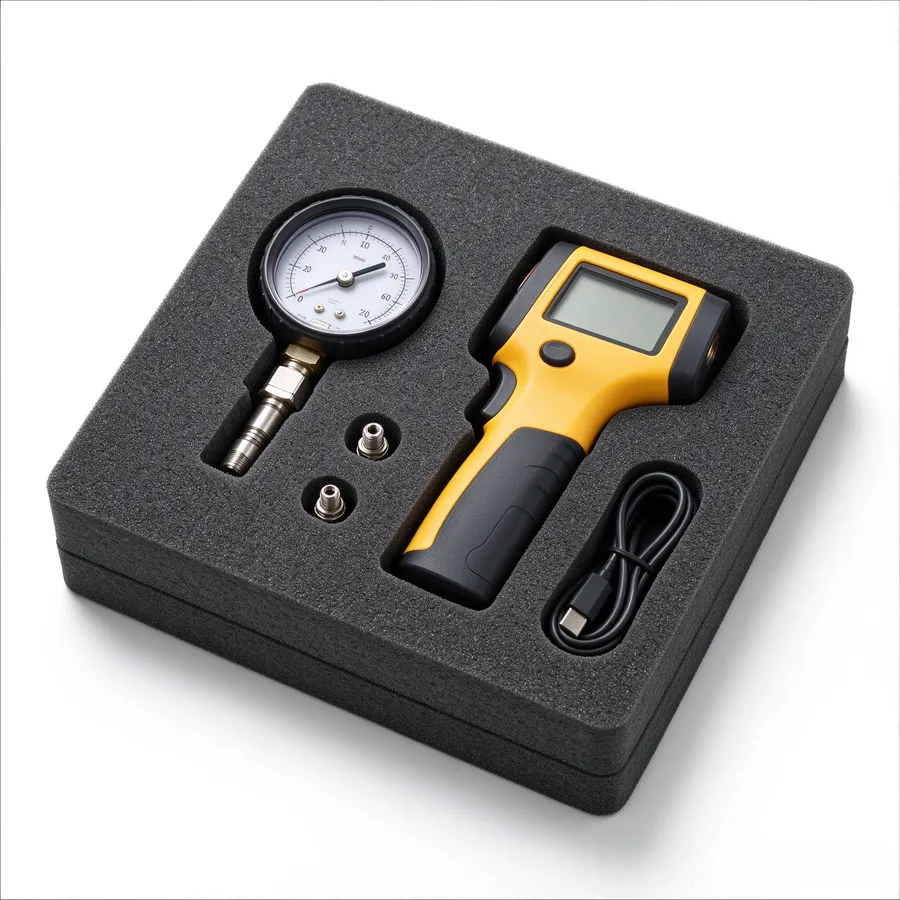
| Interior | Decides the force the equipment actually sees, by controlling stopping distance and by stopping the item shifting inside. | Foam grade, thickness, density and whether the cut is CNC, pick-and-pluck or a hybrid. |
| Presentation | Whether the item goes in the way the foam was cut for, with cables and accessories accounted for. | A layout drawing or a physical sample before the order is committed. |
What the phrase can and cannot guarantee
A duty class is not a test result. Anything that describes a case as military without a measured figure behind it is describing a market segment, which is legitimate, but it is not something to write into a specification. If a purchase order needs a defensible durability statement, it needs a test record: which axis, which drop height, which fixture, which instrumentation, and who ran it.
We publish measured figures only where we hold a record. Where a shell is offered with an optional interior, a customer-supplied gasket or a non-tested configuration, the datasheet says so explicitly rather than implying the whole assembly was tested. That tri-state habit is worth asking every supplier to adopt, because the alternative is a specification built on a word.
How these cases differ from ordinary heavy-duty plastic boxes
The differences are small in any one respect and large in aggregate. A military equipment case is normally expected to be stacked in a vehicle or a container with an unknown load above it, so wall thickness and the lid-to-base register matter more than they do on a consumer box. It is expected to be opened with gloves and closed again in the rain, so catch geometry and gasket pinch matter more than surface finish. And it is expected to be re-issued to a different item later, which is why modular interiors — a fixed carrier for the primary item plus a pluck layer above it — are more common than a single expensive CNC cut.
None of that requires exotic material. It requires the case to be dimensioned against the handling chain rather than against a photograph of one.
Where they are actually used
The bulk of these cases leave a factory carrying radios, optronics, survey instruments, drones and their batteries, medical kits, tool sets and spares. Each of those has a different dominant failure mode: a radio fails at its antenna connector, an optic fails at its calibration, a battery pack fails thermally, and a medical kit fails by being impossible to audit quickly. The case specification should follow that failure mode, not the other way round.
What to specify before you order
Three numbers and one decision. The internal envelope of the equipment in its transport configuration plus at least 20 mm clearance on each axis. The packed mass and the distance it will be carried, which decides handle, wheels and whether the case is a two-person item. The external footprint the case must fit inside, which is a pallet, a vehicle bay or a shelf and is the constraint nobody mentions until delivery. And then the decision: precision interior or flexible interior, because that single choice drives tooling time, unit price, and what happens to the case when the equipment is upgraded next year.

Customisation
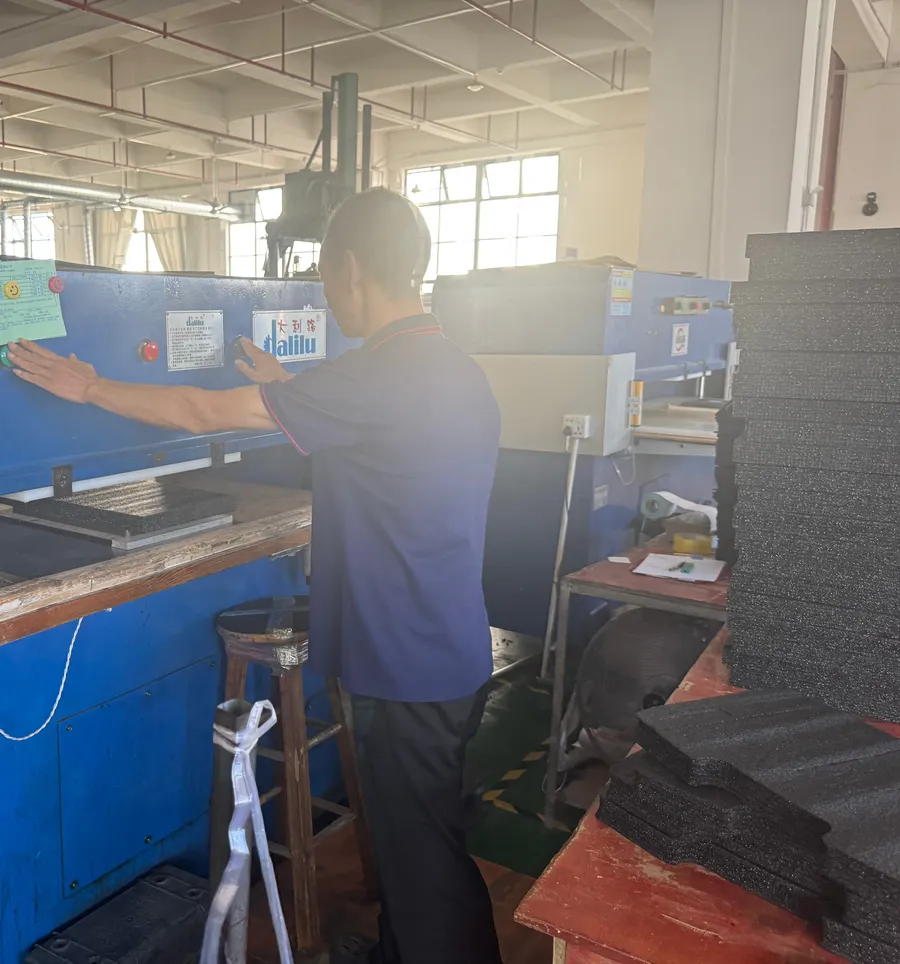
Everything described above is configurable on a standard shell: interior layout (pick-and-pluck, die-cut or CNC-cut), foam grade and thickness, colour, logo method, latch and lock count, pressure-equalisation valve, cable ports, document holder and identification plate. A bespoke exterior geometry requires a new mould — 125 days, from 3,000 units per moulded component.
Procurement considerations
| Question | What to send us |
|---|---|
| Which shell fits? | Equipment L × W × H as packed, plus required clearance per axis |
| What does it cost? | Order quantity and estimated annual quantity — the two drive different answers |
| Is tooling needed? | Whether an existing shell clears the envelope with usable foam depth |
| Lead time? | Your required delivery date, not just the order date |
| Certification? | The exact standard your tender names — we will say whether we can test to it |
| Freight? | Destination and preferred terms; carton and pallet data supplied with the quotation |
Comparison and selection guide
The tables on this page exist because a protective case is chosen by comparing three things: the envelope, the environment and the handling chain. Where no table applies, the rule below is.
| Situation | What To Do |
|---|---|
| Start from the equipment, not the case | Measure the tallest, widest and longest points of the packed equipment including antennas, handles and connectors. Add 20 mm minimum clearance per axis before selecting a shell. |
| Then choose the carrying method | Under 8 kg, a fixed handle is lighter and cheaper. Over 12 kg or any journey over 30 m, specify the T series with telescopic handle and wheels. |
| Then decide the interior | Pick-and-pluck for kits that change. Die-cut or CNC-cut for fixed layouts that must be auditable at a glance. |
- Size on internal dimensions plus clearance, never on a product name.
- Choose the carrying method before the shell: it changes the series, not just the price.
- Specify the interior last, and decide up front whether the end user will reconfigure it.
What Is a Military Equipment Case? relates to Protective Case Basics. Related families: Military Protective Cases. Related sectors: field and industrial equipment. Continue in the Protective Case Basics cluster.
This page is written from our own production data. If your requirement differs, send the dimensions and we will tell you which of the 155 models fits, or whether a custom route is needed.
