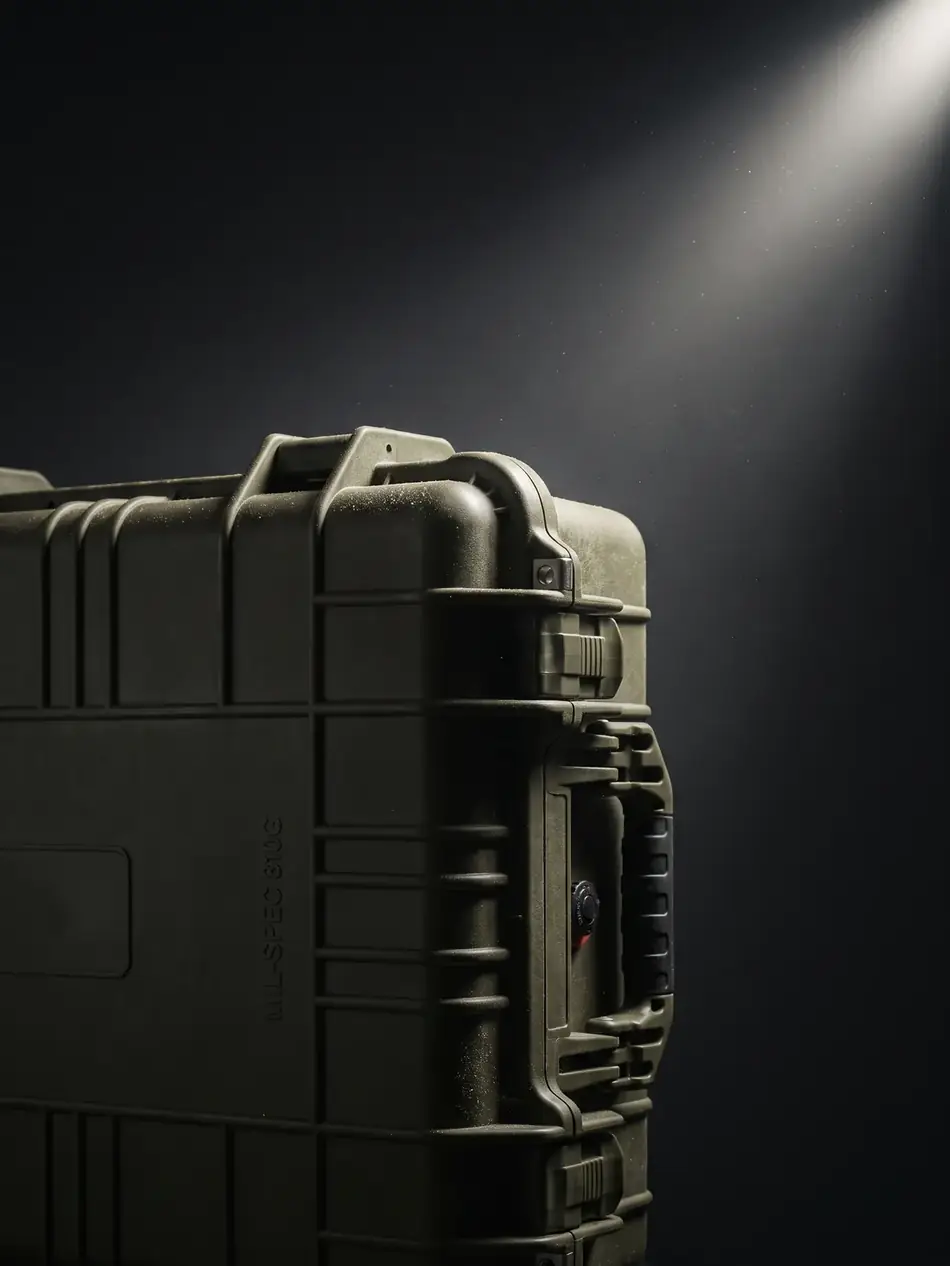
What factors affect protective case selection?
Protective case selection is driven by a defined set of factors, and weighing them in the right order prevents most buying mistakes. The first is the equipment itself: its size, weight, centre of gravity and which parts are fragile. The second is the environment and route: how far it travels, how roughly it is handled, and what dust, moisture or temperature it meets. The third is access frequency and ergonomics, which decide the lid and carry features. The fourth is the interior, because the case protects as a system of shell plus foam. The fifth is fleet standardisation, and the sixth is the commercial frame of quantity, tooling, lead time and shipping terms. KeXin lets you resolve each factor from published per-model data, so a selection is made from figures rather than guesswork.
Key points
- Lead with the equipment's physical profile and fragile points; they constrain everything else.
- The route and environment set the shell wall, the seal need and the mobility features.
- Access frequency, not just protection, drives lid style and carry options.
- Treat the case as a system: the interior carries as much of the protective decision as the shell.
- Fleet and lifecycle needs can outweigh a marginal per-unit spec choice.
- Quantity, tooling and EXW or FOB terms are selection factors, not an afterthought.
Factor one: the equipment's physical profile
The item decides the envelope. Its assembled size, including any part that always travels with it, sets the internal dimensions; its mass sets how much inertia the case must absorb; its centre of gravity decides whether it must sit low and be blocked or can float in a lighter cavity; and its fragile points, a screen, a lens, a connector, an antenna or a machined face, decide where relief pockets go. A dense instrument and a bulky but light rig of the same outer size lead to very different cases, so the physical profile is the first factor and the one that constrains all the rest.
Factor two: environment and transport route
How the case travels sets the shell. A bench-to-shelf move needs only light protection, while a vehicle, off-road or air-land route argues for a thicker wall; the military and defense shells in this range publish walls from about 4 to 6 millimetres, for example KX-6621 at a 6.0 millimetre engineering-PP wall. Dust, spray and humidity decide whether a continuous moulded gasket channel is required, and that is a per-model attribute, not a family feature, so it is filtered at the datasheet level. Cold, heat and altitude swings add considerations such as a pressure-relief valve. Route is the factor most buyers under-weight and the one most often the cause of an early failure.
Factor three: access frequency and ergonomics
How often the case is opened, and where, changes the selection as much as protection does. A kit accessed many times a day benefits from a lid that stays open, a device visible on opening, and a document holder for the checklist, while a sealed long-term store prioritises the closure over quick access. Carrying distance and who carries it drive the handle, the option of a shoulder strap and whether the unit should be wheeled or stackable. A case that is right on paper but awkward in the hands gets misused, so ergonomics is a genuine selection factor.
Factor four: the interior as part of the case
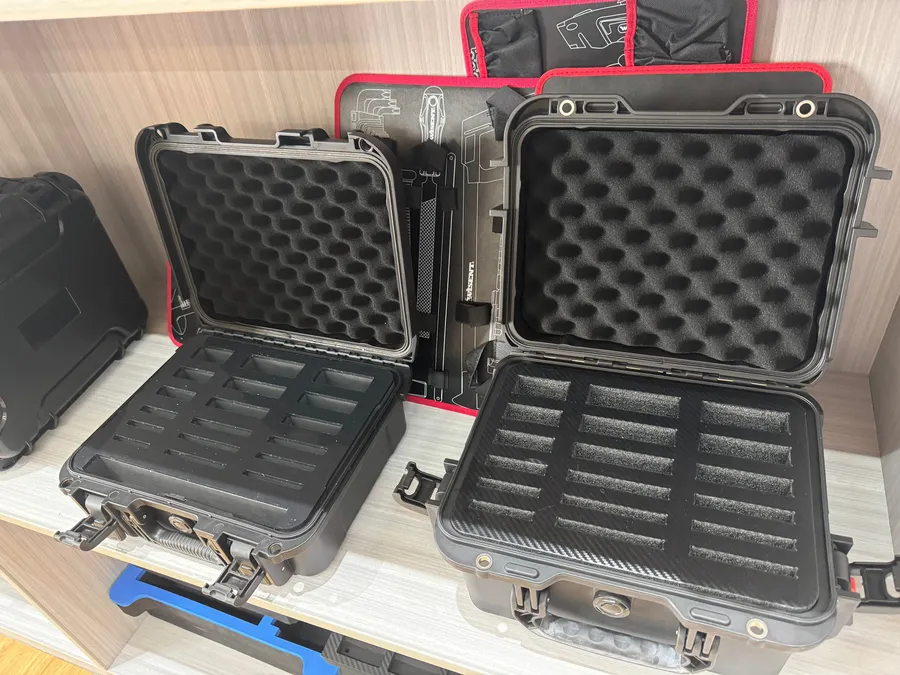
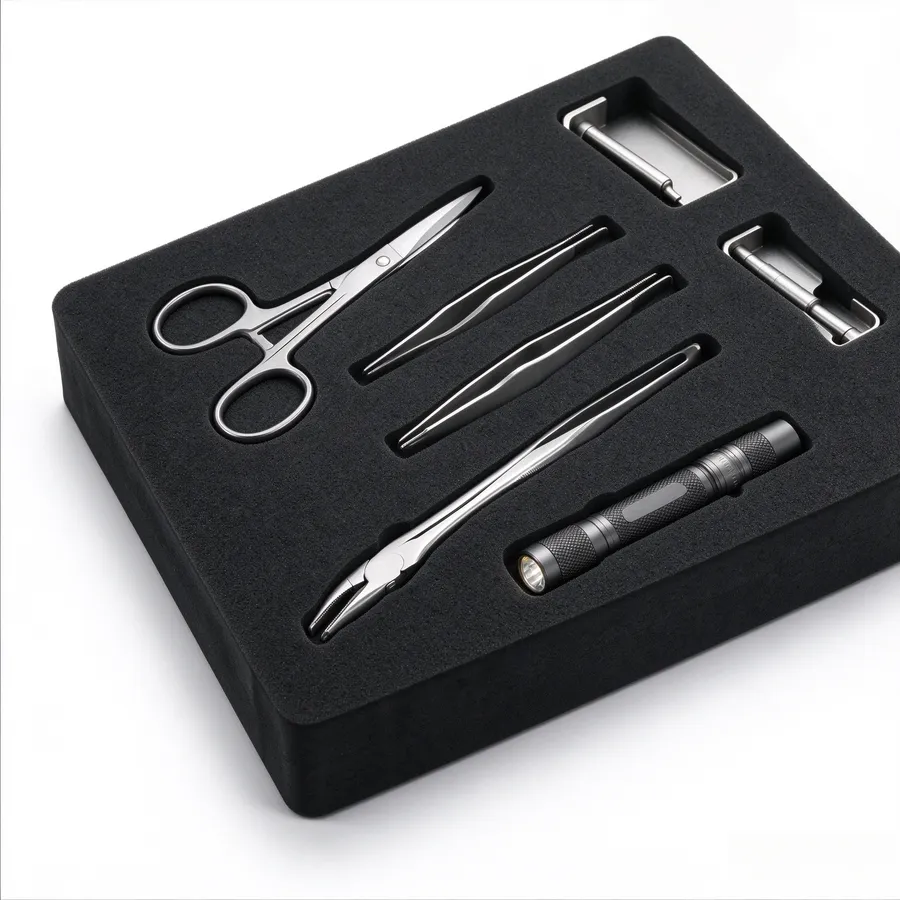
The shell does not protect the contents; the shell plus the interior does. That means the interior is a selection factor in its own right, not a free accessory. A die-cut or CNC-cut closed-cell layout isolates a sensitive device and organises its accessories; a layered structure handles a growing kit; pick-and-pluck suits contents that change between jobs. Choosing the shell without planning the interior leaves the protective decision half-made, and it is common to solve a protection problem by changing the interior on the same shell rather than by buying a heavier case.
The factors weighed against each other
| Factor | Pushes Toward | Can Be Traded |
|---|---|---|
| Equipment profile | Size, wall and cavity drawn from the item's real shape | Rarely; it constrains everything else |
| Route and environment | Thicker wall, gasket channel, mobility features | Weight and cost against handling severity |
| Access frequency | Lid style, document holder, carry option | Quick access against maximum sealing |
| Interior design | Die-cut, layered or pluck to the load | Fixed precision cut against reconfigurability |
| Fleet and lifecycle | One series, signed layouts, colour scheme | Marginal per-unit spec against system consistency |
| Commercial terms | Quantity, tooling, lead time, EXW or FOB | Bespoke geometry against an existing published size |
Factor five: fleet and lifecycle
A single purchase and a standing requirement pull in different directions. For a fleet, standardising on one or two shell series so spares, lids and cartons interchange, and keeping interiors on controlled drawings so every restock matches, often matters more than a marginal difference in one case's specification. Published external dimensions make the shelf and pallet plan calculable, and a repeatable footprint keeps a growing store orderly over years. Buyers solving a one-off problem can optimise the single unit; buyers building a capability should optimise the series.
Factor six: quantity, tooling and terms
The commercial frame is a selection factor because it decides what is feasible. Standard cases and custom foam start at the low OEM bands, colour and logo begin around 300 pieces, and a bespoke internal geometry only makes sense at the higher new-mould quantity, with a first sample in about 45 days and a new mould in about 125 days. Because KeXin sells wholesale and OEM on EXW or FOB terms, the shipping method is the buyer's own calculation, so landed cost and inbound freight should be weighed against the specification before a series is chosen.
Procurement notes
Resolve the factors from data. Confirm the chosen SKU's published internal dimensions, wall thickness, seal type and hardware, and treat any field marked not measured as unknown rather than assumed. Describe the equipment and the route and ask the factory to map them to real models. Fix the interior, colour and any options on the same order so the system stays consistent across restocks. There is no retail, DDP or overseas-warehouse arrangement, so plan quantity and freight against the EXW or FOB term.
Customisation
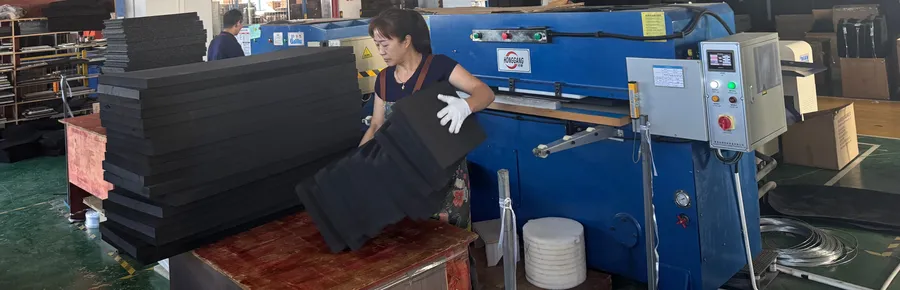
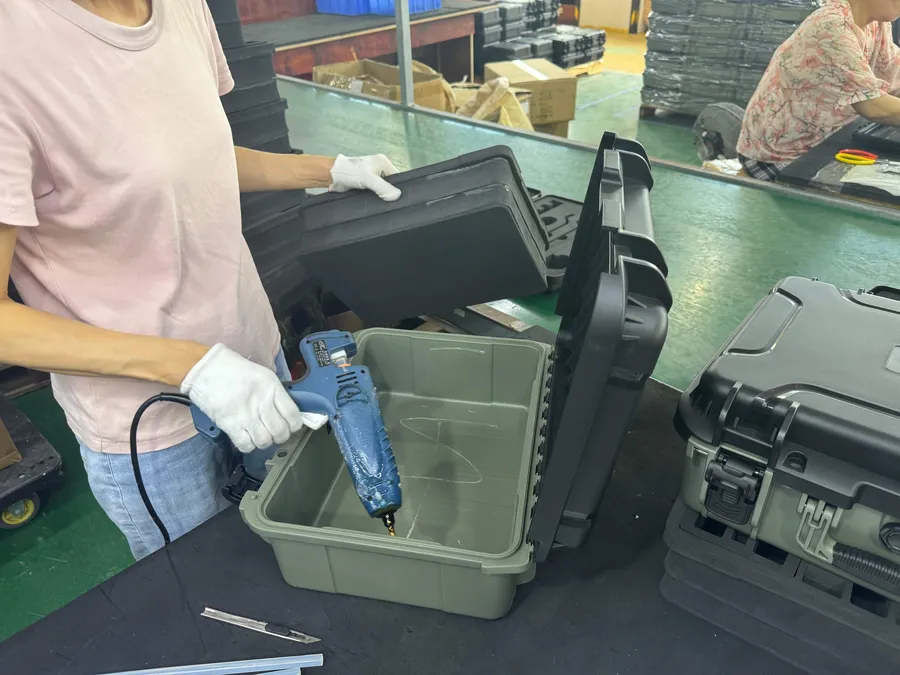
Everything described above is configurable on a standard shell: interior layout (pick-and-pluck, die-cut or CNC-cut), foam grade and thickness, colour, logo method, latch and lock count, pressure-equalisation valve, cable ports, document holder and identification plate. A bespoke exterior geometry requires a new mould — 125 days, from 3,000 units per moulded component.
Procurement considerations
| Question | What to send us |
|---|---|
| Which shell fits? | Equipment L × W × H as packed, plus required clearance per axis |
| What does it cost? | Order quantity and estimated annual quantity — the two drive different answers |
| Is tooling needed? | Whether an existing shell clears the envelope with usable foam depth |
| Lead time? | Your required delivery date, not just the order date |
| Certification? | The exact standard your tender names — we will say whether we can test to it |
| Freight? | Destination and preferred terms; carton and pallet data supplied with the quotation |
Comparison and selection guide
The tables on this page exist because a protective case is chosen by comparing three things: the envelope, the environment and the handling chain. Where no table applies, the rule below is.
| Situation | What To Do |
|---|---|
| Free-drop height | With a 50 mm base foam layer, a 15 kg assembly sees a markedly lower peak deceleration than with 20 mm. Where the case is handled by hand off a vehicle, we specify the deeper base. |
| Stacking | A case that will be shipped stacked needs a wall thickness and rim geometry that carries the load through the shell, not through the lid. |
- Size on internal dimensions plus clearance, never on a product name.
- Choose the carrying method before the shell: it changes the series, not just the price.
- Specify the interior last, and decide up front whether the end user will reconfigure it.
What factors affect protective case selection? relates to Protective Case Basics. Related families: Defense Equipment Cases / Military Protective Cases / Equipment Transport Cases / Electronics Cases. Related sectors: field and industrial equipment. Continue in the Protective Case Basics cluster.
This page is written from our own production data. If your requirement differs, send the dimensions and we will tell you which of the 155 models fits, or whether a custom route is needed.