Protective Cases for Battery Packs, Power Supplies & Energy Equipment and Outdoor
Short answer: pack energy kit by shape and by what must stay apart, not by wattage. A lithium power station is one dense block that wants a thick wall and a cavity it can be cradled in; loose cells, a torch and a power bank want separate pockets so terminals cannot bridge; a gas canister wants to stand upright in its own full-depth cut, physically divided from anything electrical; a folding solar panel is long and flat, so internal length decides the model before anything else. KeXin is the injection-moulding source factory behind 155 thermoplastic shells and publishes internal and external dimensions, wall thickness, lid and base depth, net weight, interior volume and carton packing per model. We state no ingress code, no electrical, thermal or impact rating, and no pressure claim, because those depend on the exact configuration you order and no accredited report exists for our published shells.
Key points
- A power station is one heavy block: KX-5723 publishes 500 x 340 x 211 mm internal at a 5.0 mm engineering-PP wall and 35.9 litres, with a 169 mm lid and 42 mm base.
- Loose cells and torches want separated pockets, not a big box: KX-2811 gives 253 x 180 x 98 mm internal at a 5.0 mm wall, 890 g and a 71/27 mm lid-and-base split.
- A small camping box is thin-walled by default: shells like KX-2507 publish a 2.0 mm wall, so a heavy-duty brief needs a 5.0 mm body such as KX-92817 instead.
- A gas canister must stand up and sit away from electrics: deep narrow cut-outs, as in KX-3218 at 308 x 230 x 172 mm internal with an 86/86 mm split.
- Folding solar is a length problem first: internal length runs to 725 mm on KX-88015, 880 mm on KX-89616 and 1280 mm on KX-814641, all 350 x 140 mm across.
- Moisture protection is per model: 124 of 155 shells record a compressible gasket and 31 record none, and many small outdoor shells are in the no-gasket group.
Split the request by shape before you split it by capacity
Battery and outdoor-energy enquiries arrive as a shopping list: a lithium power station, spare cells, a torch or headlamp, a power bank, a folding solar panel, a regulator or charger, and sometimes a gas canister for the camp stove. They behave completely differently in transit. The power station is a single dense mass that must not shift. Cells and a torch are many small items whose terminals must never bridge each other. A gas canister is a cylinder that has to stand upright and be kept away from anything electrical. A solar panel is long and flat and rules out most of the catalogue on length alone. So the first sort is by shape and by what must stay separated; only then do you read internal volume, and only after that do wall thickness and sealing refine the choice. Nothing in this page is an electrical or safety rating - those are yours to specify against an accredited report.
Outdoor battery storage and transport case: cradle the mass
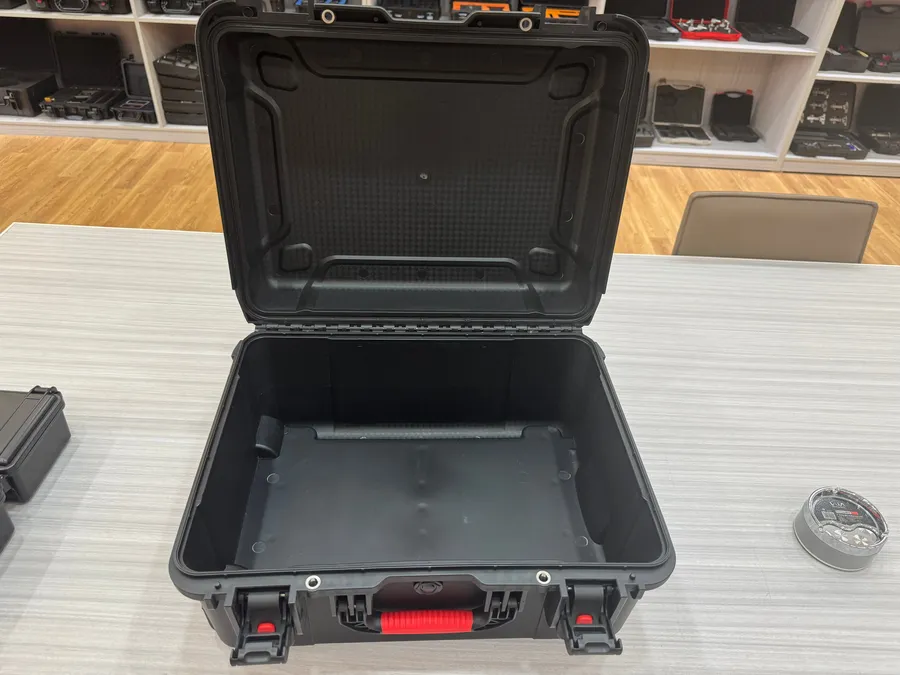
A battery pack or a small power station is the heaviest thing in the kit for its size, so it wants a thick wall and a cavity that holds it below the closure line. KX-5723 publishes 500 x 340 x 211 mm internal, a 5.0 mm engineering-PP wall, a 169 mm lid over a 42 mm base, 4680 g and 35.9 litres - a deep base so a dense block sits low. KX-4012 is the compact version at 380 x 305 x 110 mm internal, a 3.5 mm wall, 1480 g and 12.7 litres with an 85/25 mm split. For a station plus cables and a charger, KX-4321 gives 411 x 208 x 202 mm internal at a 3.0 mm wall, 2330 g and 17.3 litres. Whatever the model, the interior practice is the same: a full-depth cradle that stops the pack moving, terminals taped or capped, and no loose metal fittings stored in the same pocket as the terminals. We publish no electrical or thermal figure; a battery spec sheet is your own to consult.
Camping light and power bank heavy duty hard box
This request is deceptively demanding: the payload is small but the word heavy-duty changes the model. The usual camping shells are genuinely compact and thin - KX-2507 publishes 245 x 175 x 64 mm internal at a 2.0 mm wall and 340 g, KX-2614 is 240 x 200 x 120 mm internal at a 2.2 mm wall and 460 g, and KX-2813 is 260 x 200 x 117 mm internal at a 2.8 mm wall and 800 g. Those are fine for a lantern and a power bank on a shelf. If the box is dropped in a boot or a pack repeatedly, read wall thickness rather than the adjective: at a similar footprint, KX-2811 and KX-92817 both publish a 5.0 mm wall (253 x 180 x 98 mm and 253 x 180 x 152 mm internal, 890 g and 940 g), which is what makes a small shell feel heavy-duty. Separate each cell and each device so nothing rattles or bridges.
Portable outdoor gas canister and power storage box
A screw-top or clip-on gas canister has one real requirement for a case: it must stay upright and be physically divided from anything that throws a spark. That is a depth and divider decision. A deep narrow cavity lets a canister stand in its own full-depth cut with the electrical kit on the other side: KX-3218 gives 308 x 230 x 172 mm internal with a 86/86 mm split and 900 g, and KX-92817 gives 253 x 180 x 152 mm internal at a 5.0 mm wall for a single bottle plus a small charger. Where the load is a tall station rather than bottles, KX-4321 runs to 202 mm internal depth. Be clear about what we are not claiming: we publish no pressure rating, no gas-tight statement and no explosion or fire rating for any shell, and the compressible gasket on some models is a moisture and dust path closure, nothing more. Store canisters upright, vented per the canister maker's own instructions, and never as a sealed system we guarantee.
Outdoor flashlight and battery moisture protection box
A damp store, a boat bag or a winter shoot pushes people toward a sealed box, and here the published seal field is the number that matters. Across the 155 shells, 124 record a compressible gasket in a continuous moulded channel and 31 record none - and the no-gasket group includes many small outdoor and tactical bodies such as KX-2507, KX-2614, KX-2813, KX-712 and KX-4710, which are open by design. If the brief is moisture protection, pick a gasketed body such as KX-92817, KX-2811 or KX-4012 and confirm the seal field on the model you are actually buying. A gasket reduces the path liquid and grit take at the lid line; it is not an IP code, and we state no ingress rating for any of these shells. Keeping terminals dry is also a packing habit: cells capped, a silica sachet in a lid zone we are not claiming is sealed, and no stored condensation against a contact.
Outdoor shooting high capacity power station box
A big portable power station, its inverter cables and a spare charger are the bulkiest items in this group, so internal volume and, for a match range, whether you wheel it decide the model. KX-65522 publishes 507 x 385 x 190 mm internal at a 5.3 mm ABS wall, 4860 g and 37.1 litres. KX-5723 reaches 35.9 litres at a 5.0 mm wall, and KX-6621 gives 587 x 434 x 192 mm internal, a 6.0 mm wall and 48.9 litres for a station plus a second battery. Where the carry distance is real, wheels change the answer: KX-86136 is 530 x 360 x 304 mm internal, 58.0 litres and 8500 g with a 295 mm telescopic handle, and KX-97227 is 590 x 435 x 210 mm internal at a 6.0 mm wall, 10000 g and a 485 mm handle. Plan by mass and depth again - heavy station low in the base, cable and adapter in the lid zone.
Outdoor solar panel and charger storage case
A folding panel is the flattest, longest object here, and internal length eliminates most of the catalogue before volume is discussed. Rigid 5.0 mm bodies run a long thin cavity: KX-88015 publishes 725 x 350 x 140 mm internal, KX-89616 extends to 880 x 350 x 140 mm and KX-814641 reaches 1280 x 350 x 140 mm, each 350 x 140 mm in cross-section with a 100 mm lid over a 40 mm base and a recorded gasket - and note that net weight is not published for these long models. A small folding panel with a controller is more compact: KX-4616 (455 x 338 x 148 mm internal, 3.0 mm wall, 1395 g) or the flat KX-4710 (458 x 345 x 90 mm internal, 1370 g). Lay the panel flat with the controller and leads in their own relief so nothing presses a cell; we record no temperature range for any shell, so hot-vehicle storage is your own risk decision.
Comparison table: the buyer query, the deciding figure, and examples
Read the table as a shortlisting method, not a safety claim. Every figure belongs to the model named, so compare it against your own measured packed envelope and the mass you will actually carry. Sealing, shock and impact behaviour are configuration decisions, and battery, gas and electrical behaviour are governed by the cell or canister maker's data, not by our shell. Where a tender needs documented proof, we quote accredited third-party testing for that exact build as a separate work package instead of printing a rating we cannot stand behind.
| Query | Deciding Figure | Published Examples |
|---|---|---|
| Outdoor battery storage and transport | Thick wall, deep base, interior volume | KX-5723: 500 x 340 x 211 mm, 5.0 mm, 35.9 L; KX-4012: 380 x 305 x 110 mm, 12.7 L |
| Camping light and power bank hard box | Footprint, and wall for a heavy-duty brief | KX-2507: 245 x 175 x 64 mm, 2.0 mm, 340 g; KX-92817: 253 x 180 x 152 mm, 5.0 mm, 940 g |
| Gas canister and power box | Internal depth for upright canisters | KX-3218: 308 x 230 x 172 mm, 86/86 mm; KX-4321: 411 x 208 x 202 mm, 202 mm deep |
| Flashlight and battery moisture box | Whether the model records a gasket | 124 of 155 gasketed, 31 none; KX-4012 gasketed; KX-2507 and KX-4710 record none |
| High-capacity power station box | Volume, and wheels if carried far | KX-65522: 37.1 L, 5.3 mm ABS; KX-6621: 48.9 L, 6.0 mm; KX-86136 trolley: 58.0 L, 8500 g |
| Solar panel and charger storage | Internal length, then a flat cross-section | KX-88015: 725 mm; KX-89616: 880 mm; KX-814641: 1280 mm, each 350 x 140 mm internal |
Selection guidance: five questions for energy and outdoor kit
One: what is the single bulkiest or heaviest item, and can it be cradled below the closure line? That points at the deep-base group. Two: is anything long and flat, like a folded panel? Then internal length is the first filter and it removes most models at once. Three: how many loose cells, torches and leads share the cavity? That decides the cut - separated full-depth pockets, not one open box. Four: does it live outdoors and get splashed, or sit in a boot? A gasket is only the honest starting point, and many small outdoor shells record none. Five: what must be provable to your customer or insurer, and who pays for that test? Answer the five on one page and a battery or solar brief usually narrows to two or three models.
Applications: camp, range, off-grid and overland
These shells recur in four outdoor jobs. At base camp, a lantern, a power bank and loose cells want a legible shallow box with separated pockets. On a shooting or work range, a high-capacity station, spare packs and a charger want a large gasketed body, often on wheels for the carry. Off-grid or on a boat, damp is the main enemy, so a gasketed model plus capped terminals is the practical answer. Overland, mixed kit rides in a boot and gets knocked, so a thicker wall and a cut cradle matter more than internal volume. Tell us which of the four you are buying for and the model list usually halves before we quote.
Customisation: foam, dividers, hardware and colour
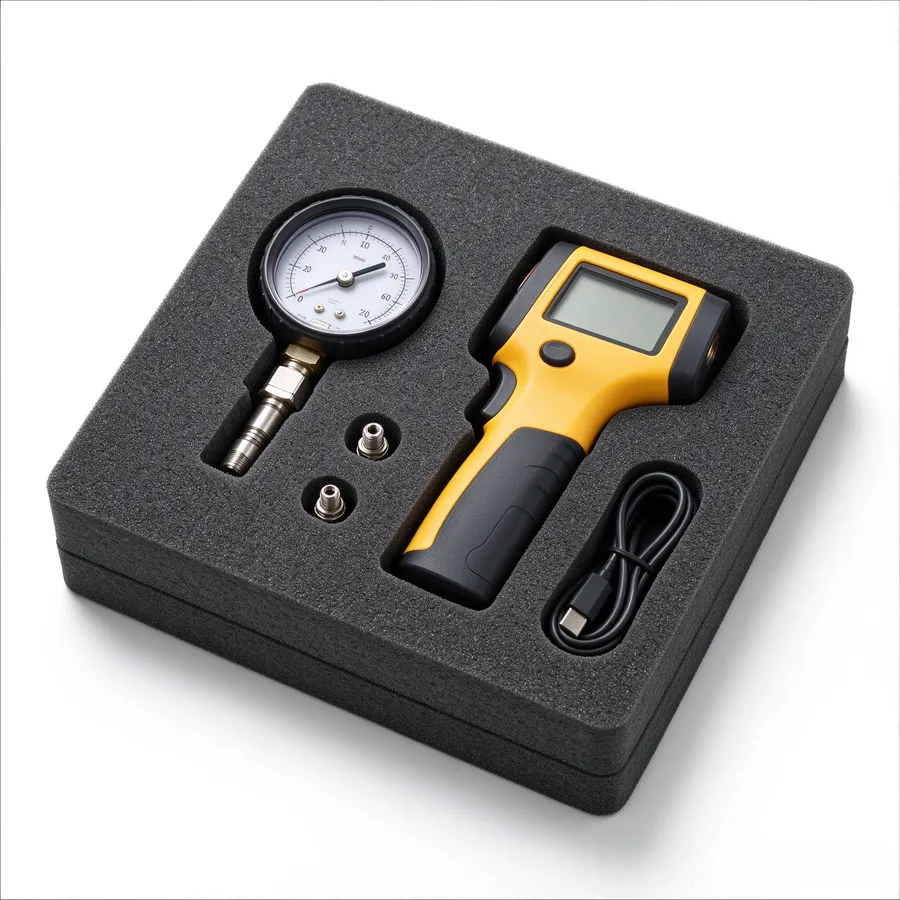
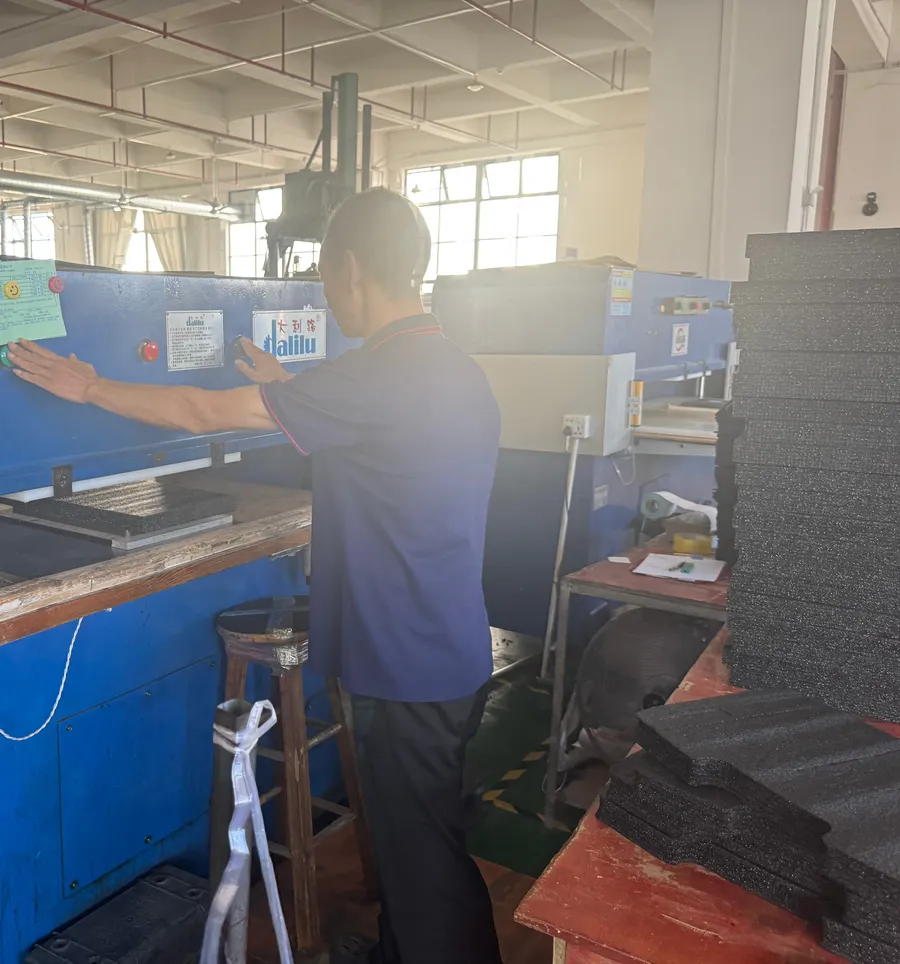
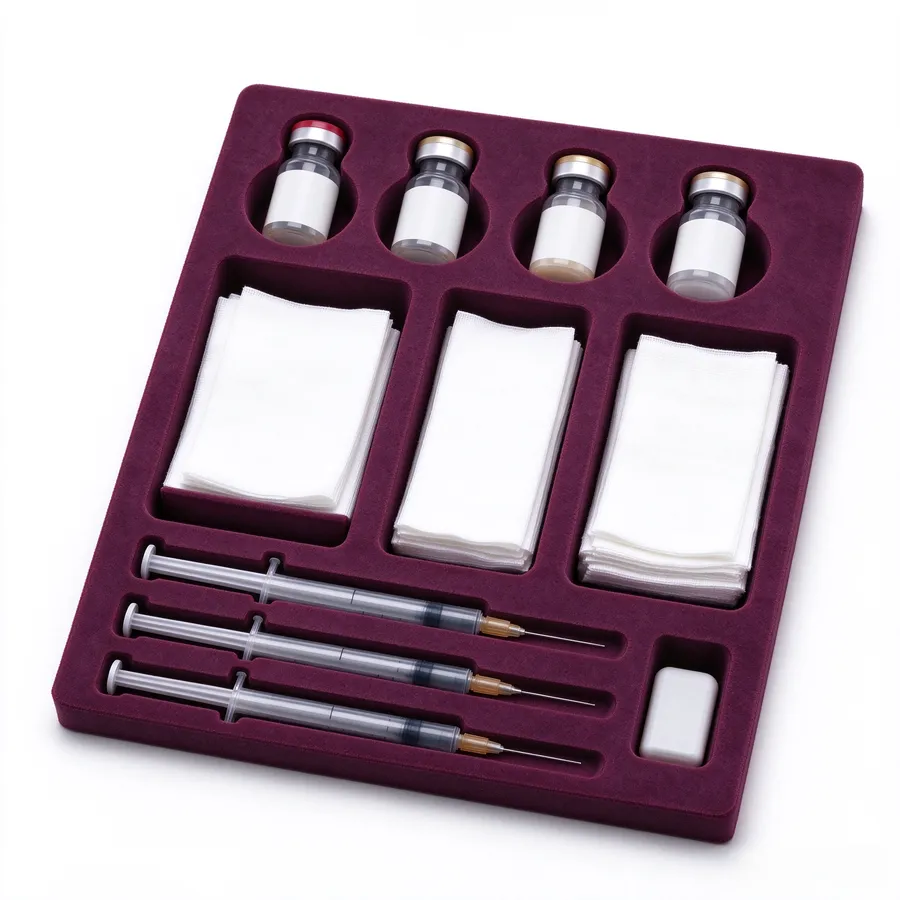
Interior work is where an energy kit is really solved, and it is quoted from one unit with no tooling. We cut cross-linked PE, EVA or EPE into full-depth pockets that keep a pack from shifting and reliefs for connectors, handles and cooling fins, with a lid zone left clear where nothing may be compressed; a drawing, a photograph of the packed kit or a physical sample starts the cut. Published foam builds include pick-and-pluck, die-cut, CNC-cut, egg-crate and layered structures. Hardware - latch count, hinges, handles, padlock-ready bodies, a pressure-equalisation valve as a manufacturer option, and a document holder - is ordered per configuration. Colour, logo and OEM packaging begin at 300 units, and a change to the shell itself is the only thing that needs a new mould.
Purchasing notes: wholesale terms and honest limits
KeXin manufactures these shells and works wholesale, OEM and ODM only on EXW or FOB terms; we do not sell retail, do not quote DDP and hold no overseas warehouse stock, so a landed cost is your FOB figure plus your own freight and customs. Minimum order quantity follows what you change: standard shells and custom foam from one unit, logo, colour and OEM hardware from 300, a custom mould from 3000 per component; an OEM first sample on an approved shell is about 45 days and a new mould about 125 days, on a 30 percent deposit with the balance after inspection. Hold any supplier to three questions: which accredited report produced this figure, what method was used, and does it cover the exact shell, gasket and foam being bought. Battery, gas and electrical safety remain governed by the maker of those items, not by the container.
Outdoor power supply protective case: buyer questions answered from published data
A power supply enquiry is narrower than the rest of this page: the payload is one dense brick with a fixed terminal side, a cable tail, and sometimes a fan or a heatsink fin stack, and it lives outdoors where the lid line is the only thing between it and weather. So we answer it the same way we answer every energy enquiry, by published figures per model rather than by adjectives. The four fields that decide a power supply shortlist are internal length and depth against your own measured envelope, wall thickness, the lid-to-base split that determines how much sits below the closure line, and whether the model records a compressible gasket. Electrical, thermal and ingress behaviour are not published by us for any of the 155 shells, and nothing below should be read as a rating.
| Search | Deciding Figure | What We Publish |
|---|---|---|
| outdoor power supply protective case | Internal length and depth first, then wall thickness | A wall driver or brick supply is chosen on internal length and depth before anything else. KX-2811 publishes 253 x 180 x 98 mm internal, a 5.0 mm PP wall, a 71/27 mm lid-and-base split, 890 g and 4.5 litres, with a compressible gasket recorded. KX-63413 gives 310 x 255 x 106 mm internal at a 4.8 mm ABS wall, 1680 g and 8.4 litres for a supply plus its leads. Temperature range and leakage current are not measured by us and are not stated for either shell. |
| outdoor power supply case with cables and connectors | Lid depth, because the loom lives there | Cable and connector volume is what overruns a shortlist, so read lid depth against base depth separately. KX-93221 publishes 300 x 200 x 200 mm internal at a 5.0 mm engineering-PP wall with a 165/35 mm split, 1230 g and 12.0 litres, which lets the supply sit in the base and the loom coil in the lid zone. KX-83514 gives 315 x 235 x 122 mm internal at a 4.9 mm wall and 9.0 litres for a flatter layout. Cut foam relief is quoted per configuration from one unit, with no tooling. |
| telecom rectifier and battery charger transport case | Net weight and wall thickness together | Rectifier and charger kit is mass-limited, so carry figures matter as much as volume. KX-3315 publishes 303 x 224 x 135 mm internal, a 4.1 mm engineering-PP wall, a 100/35 mm split, 1670 g and 9.2 litres. KX-4821 steps up to 447 x 312 x 194 mm internal, a 4.5 mm wall, a 144/50 mm split, 3670 g and 27.1 litres, gasket recorded. Stack load and continuous current derating are not measured by us, so a loaded trolley or rack decision stays with your engineer. |
| inverter or small UPS protective case size | Internal length above 400 mm with real depth | A mains inverter or small UPS is usually the largest single object in the kit. Thirty-five shells publish at least 400 mm internal length with 180 mm internal depth at a 4.5 mm wall or thicker. KX-65522 is 507 x 385 x 190 mm internal at a 5.3 mm ABS wall and 37.1 litres; KX-6621 is 587 x 434 x 192 mm internal at a 6.0 mm engineering-PP wall, 6420 g and 48.9 litres. We publish no dissipation, ventilation or operating temperature figure for either model. |
| moisture path at the lid line of a power supply box | Whether that exact model records a gasket | Sealing is per model, not per category. Of our 155 shells, 124 record a compressible gasket in a continuous moulded channel and 31 record none, and several compact outdoor bodies sit in the no-gasket group. Confirm the seal field on the model you are actually buying. A gasket closes the path liquid and grit take at the lid line; we state no ingress protection code for any shell, because none of these bodies has an accredited report behind one. |
| condensation inside an outdoor power supply case | Vent option plus packing habit | Day-to-night cycling moves air in and out of any closed shell, and condensation on a terminal is a packing problem before it is a moulding problem. A pressure-equalisation valve is a manufacturer option we quote per configuration, and a desiccant sachet in the lid zone is habit, not a claim. We publish no humidity result, no condensation cycle result and no temperature range for any of the 155 shells; those fields are recorded as not measured. |
| wholesale packing and carton data for power supply cases | Carton footprint and pieces per carton | Wholesale quotes are built on published packing data, not on case size alone. KX-63413 ships 10 pieces in a 670 x 365 x 710 mm carton, KX-4821 six pieces in 765 x 485 x 650 mm, KX-65522 three pieces in 565 x 450 x 665 mm and KX-6621 three pieces in 665 x 500 x 650 mm. KeXin sells wholesale, OEM and ODM only, on EXW or FOB terms, with a 30 percent deposit; we do not sell retail, do not quote DDP and hold no overseas warehouse stock. |
How to shortlist a power supply shell in three readings
Reading one is your own measured envelope, taken from the supply with its terminal cover and strain relief fitted, plus 20 mm of foam allowance on every face; compare that against the published internal figure, never the external one, because a 6.0 mm wall and a tapered mould take real space. Reading two is the split: a 43/149 mm lid-and-base pair such as KX-6621 keeps a heavy brick down in the base, while a 165/35 mm pair such as KX-93221 buries it in the lid, which is the wrong answer for a supply with a fin stack. Reading three is the seal field and the hardware list, because latch count, a padlock-ready body and a document holder change the price but not the published protection data, which stays as it is on the model page. If a tender needs a documented figure, we quote accredited third-party testing for that exact shell, gasket and foam build as a separate work package instead of printing a number we cannot stand behind.
What we do not claim for power and supply kit
To keep this page usable, the limits are stated plainly. We publish no ingress protection code, no operating or storage temperature range, no dielectric or leakage figure, no vibration or shock figure, and no pressure or gas claim for any shell; the waterproof, dust, ultraviolet, temperature, stack-load and load-capacity fields are recorded as not measured in our product library. Shock and impact behaviour are configuration options that depend on a specified foam layout, not properties of the bare shell. Mains wiring, earthing, enclosure category and any certification you file with an authority remain yours, and battery or supply safety stays governed by the maker of that unit. What we do publish, per model, is internal and external dimensions, wall thickness, lid and base depth, net weight, interior volume, gasket presence, carton packing and the hardware options available on that body.
Customisation
Everything described above is configurable on a standard shell: interior layout (pick-and-pluck, die-cut or CNC-cut), foam grade and thickness, colour, logo method, latch and lock count, pressure-equalisation valve, cable ports, document holder and identification plate. A bespoke exterior geometry requires a new mould — 125 days, from 3,000 units per moulded component.
Procurement considerations
| Question | What to send us |
|---|---|
| Which shell fits? | Equipment L × W × H as packed, plus required clearance per axis |
| What does it cost? | Order quantity and estimated annual quantity — the two drive different answers |
| Is tooling needed? | Whether an existing shell clears the envelope with usable foam depth |
| Lead time? | Your required delivery date, not just the order date |
| Certification? | The exact standard your tender names — we will say whether we can test to it |
| Freight? | Destination and preferred terms; carton and pallet data supplied with the quotation |
Comparison and selection guide
The tables on this page exist because a protective case is chosen by comparing three things: the envelope, the environment and the handling chain. Where no table applies, the rule below is.
| Situation | What To Do |
|---|---|
| Marine or wet | Sealed configuration with a drain-friendly interior and stainless hardware. |
| Dry and dusty | A close-fitting rim and a lid that can be opened one-handed without spilling contents. |
| Carried far | Under 10 kg packed, with a padded handle or shoulder webbing. |
- Size on internal dimensions plus clearance, never on a product name.
- Choose the carrying method before the shell: it changes the series, not just the price.
- Specify the interior last, and decide up front whether the end user will reconfigure it.
Protective Cases for Battery Packs, Power Supplies & Energy Equipment and Outdoor relates to Protective Case Basics. Related families: Outdoor Protective Cases / Tactical Equipment Cases / Waterproof Cases / Military Equipment Cases / Electronics Cases / Equipment Transport Cases / Custom Protective Cases. Related sectors: field and industrial equipment. Continue in the Protective Case Basics cluster.
This page is written from our own production data. If your requirement differs, send the dimensions and we will tell you which of the 155 models fits, or whether a custom route is needed.


