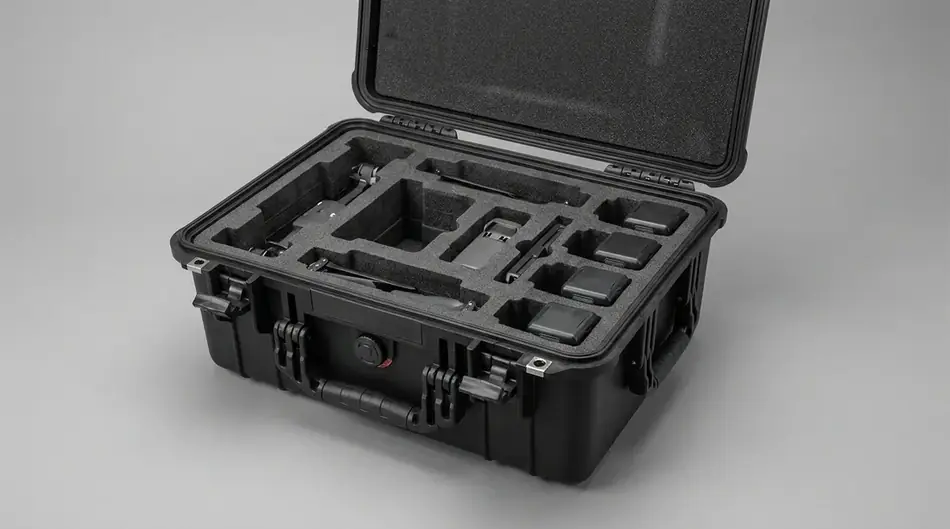
What camping equipment can be organized in a hard case?
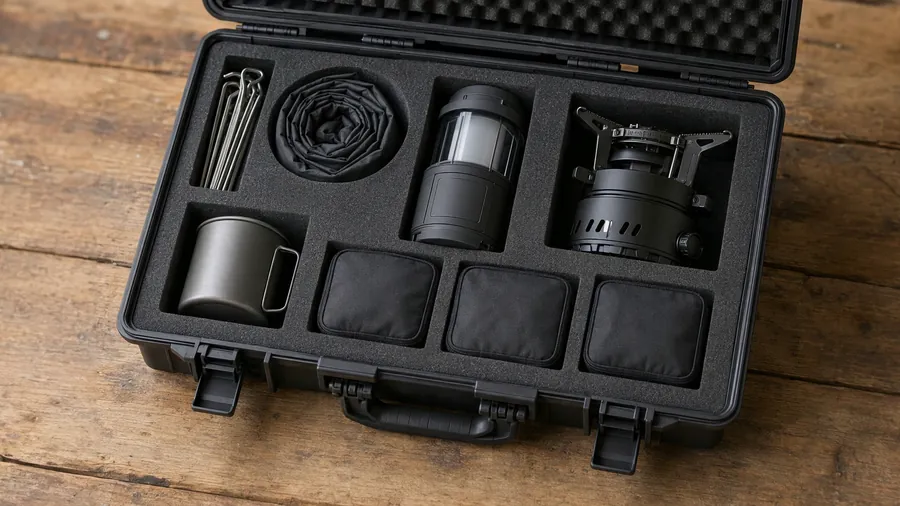
Almost any non-consumable camp kit can be organized in a hard case: cookware and stoves, lanterns, hand tools, cables and power banks, peg and tarp sets, dry clothing, first-aid and repair kits, and small electronics - provided the interior is zoned rather than left empty. In our own published file the 145 listings tagged to the outdoor category run from 0.3 L to 47.0 L of usable interior volume with a median of 14.4 L, so a solo cook set lands in a 2 to 6 L shell, a two-person camp kitchen in a 6 to 15 L shell, and a full household kit at 20 L and above. What does not belong in a case and is not shipped as part of a kit: fuel, pressurised canisters and anything packed away wet, because those are freight and mould questions rather than case questions. Fit is decided by numbers published per model - internal length, width and height, the narrow internal width where a shell tapers, and how depth splits between lid and base - and we quote against those figures instead of against catalogue photographs.
Key points
- Our 145 outdoor-category listings run 0.3 L to 47.0 L of usable interior volume, with a median of 14.4 L.
- Fit is decided by internal dimensions, the narrow internal width where the shell tapers, and lid versus base depth.
- Wall thickness is published on 148 of 155 listings: 2.0 mm to 6.0 mm, median 3.9 mm, stated per model.
- Net weight is published on 85 of the 145 outdoor listings, from 100 g on KX-1204 to 10,000 g on the KX-97227 trolley.
- Custom foam is cut against a drawing, a photograph of the packed kit, or a physical sample; foam MOQ is 1 unit.
- We print no ingress code, drop height or stack load on our listings; accredited testing is quoted as a separate work package.
Short answer: what organizes well in a hard case and what does not
A hard case is a moulded thermoplastic shell - polypropylene on 132 of our 155 listings, ABS on 22, one PP/ABS hybrid - and it organizes camp equipment in two ways at once: it protects the contents from crushing and abrasion, and it turns loose kit into one carryable unit with a fixed interior layout. The kit groups that genuinely improve with a hard case are the ones that are rigid, mixed-shape and expensive to replace: stove and cook sets, lanterns, hand tools and repair kits, cables, power banks and chargers, peg-and-tarp hardware, water filters and small instruments, dry clothing and first-aid text. Soft single-item kit such as a sleeping bag organizes badly in a moulded case because the interior shape fights the compression sack; that kind of load is a stuff-sack job, and a case only helps when several different shapes travel together.
The kit that should not go in is defined by what happens to it, not by its size. Fuel, pressurised canisters and cooking gas are freight-classification items that your forwarder and carrier handle, not items we pack or quote with a case. Wet tents, damp towels and unwashed clothing are a mould and odour question; a shell with a compressible gasket holds whatever humidity is inside it, and a case is not a drying device. What we do supply is the shell, the interior layout, the hardware and the packing data, wholesale and OEM only, on EXW or FOB terms.
Camping equipment organized hard case layouts, kit group by kit group
Buyers searching camping equipment organized hard case and the longer form outdoor camping equipment organized hard case are both asking one practical question: which shell takes which part of a camp kit without the interior turning into a rattle. The table below answers it the way we quote it, with the interior envelope published per model rather than a promise per photograph. Every dimension is from our own specification file, so you can check any row against the listing for that model.
Read the groups as layers of a camp loadout rather than as exclusive boxes. A dealer assortment that carries a spare parts case, a cook set case and a shared camp kitchen case will organize the same kit better than one large case stuffed with everything, because the small cases keep the frequently opened items out of the rarely opened ones.
| Kit Group | Interior Envelope That Takes It | Example Listings With Published Numbers | Check Before Ordering |
|---|---|---|---|
| Small hardware: head torches, pegs, repair tape, gas lighter, spare parts | Under 2 L usable; internal length 115 mm to 230 mm across the band | KX-1204 internal 115 x 78 x 32 mm, 0.3 L, 100 g; KX-2005 internal 190 x 135 x 40 mm, 0.9 L, 175 g | Narrow internal width, not just internal width - KX-1204 tapers to 70 mm |
| Cook set: compact stove, pots, mug, cutlery, windscreen | 2 L to 6 L usable; internal depth 46 mm to 117 mm | KX-2805 internal 270 x 190 x 46 mm, 2.1 L, 340 g; KX-2507 internal 245 x 175 x 64 mm, 2.3 L, 340 g; KX-2813 internal 260 x 200 x 117 mm, 5.2 L, 800 g | Whether the stove fits assembled or broken down, then measure the assembled height |
| Camp kitchen box: stove plus cookware plus utensils plus fuel-free accessories | 6 L to 15 L usable; internal length 290 mm to 393 mm | KX-712 internal 308 x 250 x 96 mm, 6.4 L, 710 g; KX-3218 internal 308 x 230 x 172 mm, 10.5 L, 900 g; KX-4012 internal 380 x 305 x 110 mm, 10.9 L, 1,480 g | Lid depth versus base depth, so tall items sit in the deep lid zone instead of being laid down |
| Two-person kit: cook plus light plus tools plus spare clothing | 15 L to 30 L usable; internal length 380 mm to 500 mm | KX-4616 internal 455 x 338 x 148 mm, 19.6 L, 1,395 g; KX-4821 internal 447 x 312 x 194 mm, 21.7 L, 3,670 g; KX-5321 internal 481 x 373 x 192 mm, 27.5 L, 4,810 g | Case net weight against what a person will actually carry; KX-4616 is 1,395 g of shell before contents |
| Base camp and family load: kitchen, tableware, power, first aid together | Over 30 L usable; internal length 500 mm to 590 mm in this band | KX-6621 internal 587 x 434 x 192 mm, 39.1 L, 6,420 g; KX-97227 trolley internal 590 x 435 x 210 mm, 43.1 L, 10,000 g, two wheels | Wheels and telescopic height, published on 11 listings from 240 mm to 485 mm, decide whether it can be rolled at all |
The size bands in our published file, counted rather than adjectived
Count fields, do not read adjectives. Our file has 155 models and the outdoor category carries 145 of them. Sorted by usable interior volume, that category splits into five bands with a very uneven shape: nine listings under 2 L, nineteen between 2 L and 6 L, forty-eight between 6 L and 15 L, fifty between 15 L and 30 L, and nineteen above 30 L. That distribution matters commercially, because the two bands in the middle are where a camp kit assortment can be built from stock shells instead of from a new tool, and because the small and large ends of the range are where buyers most often order the wrong size.
| Usable Interior Volume Band | Listings In The Outdoor Category | What It Holds In A Camp Kit | Representative Published Figures |
|---|---|---|---|
| Under 2 L | 9 | Small hardware, spares, batteries, maps and repair items | KX-62205 internal 200 x 98 x 41 mm, 0.7 L, 310 g, gasket offered |
| 2 L to 6 L | 19 | Cook sets, lanterns, water treatment, knife and tool rolls | KX-3308 internal 325 x 236 x 76 mm, 5.0 L, 575 g, 20 pieces per carton |
| 6 L to 15 L | 48 | The two-person camp kitchen and its utensils, in one carry | KX-3113 internal 296 x 258 x 121 mm, 7.9 L, 1,060 g, 16 pieces per carton |
| 15 L to 30 L | 50 | Full household kit plus power and lighting subsystems | KX-4821 internal 447 x 312 x 194 mm, 21.7 L, 3,670 g, 6 pieces per carton |
| Over 30 L | 19 | Base camp loads, dealer display kits, group expedition kit | KX-86136 trolley internal 530 x 360 x 304 mm, 46.4 L, 8,500 g, lid depth 260 mm |
The three published numbers that decide whether camp kit actually fits
First: internal dimensions. All 155 listings publish internal length, width and height as well as external dimensions, so the wall is already accounted for in the interior figure - the difference between external and internal on KX-3308, for example, is 330 x 272 x 82 mm outside against 325 x 236 x 76 mm inside. Compare your item to the internal set, never to the outside of the box, and leave clearance for the foam you want rather than for the shell you got.
Second: the narrow internal width. Tapered shells are narrower at one level than the nominal interior width, and 36 of our 155 listings publish that figure, running from 70 mm to 308 mm. KX-1204 is the clearest trap: internal width 78 mm but narrow internal width 70 mm, so a 74 mm-wide item is wrong for it even though the nominal numbers look generous. If a rigid item must pass through the throat of the shell, ask for the narrow figure and quote against it.
Third: how depth splits between lid and base. Lid depth is published on 100 of 155 listings, from 16 mm to 320 mm with a median of 97.5 mm, and base depth on the same 100 listings, from 15 mm to 168 mm with a median of 44 mm. The split decides whether a tall item stands up or has to be laid down. KX-4321 gives 164 mm of lid over 38 mm of base, which is a tall-item shell; KX-5321 is the opposite shape with 43 mm of lid over 149 mm of base, which suits flat, broad loads. Buyers who order on total depth alone routinely get the wrong one of those two.
Foam zoning: how a camp case stays organized after the vehicle starts moving
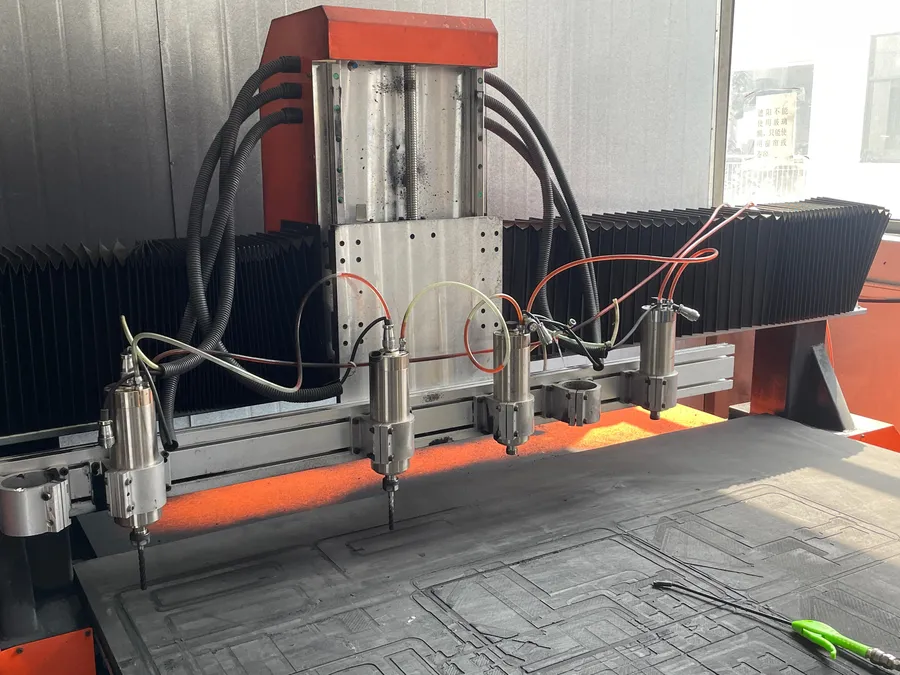
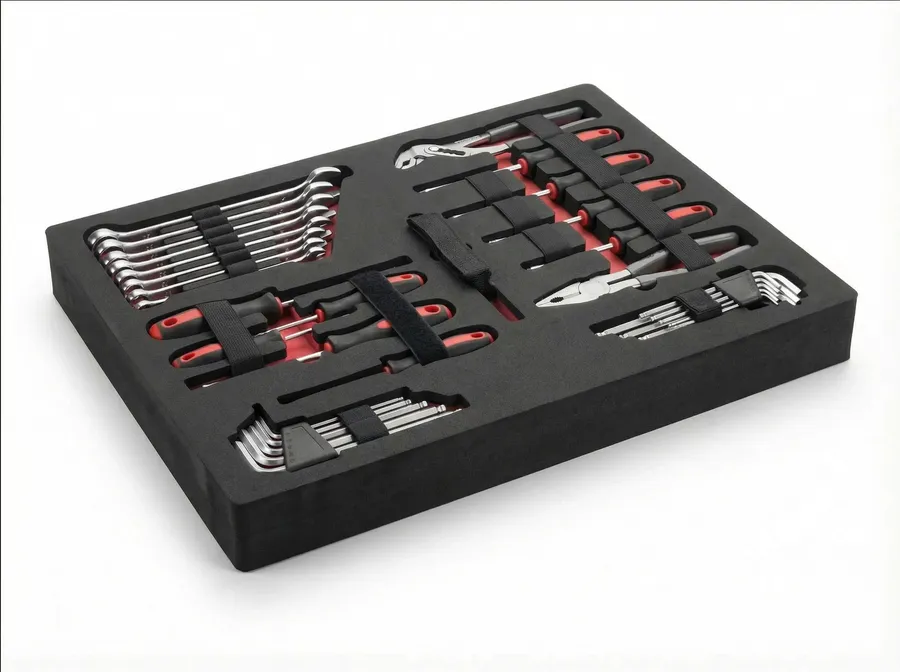
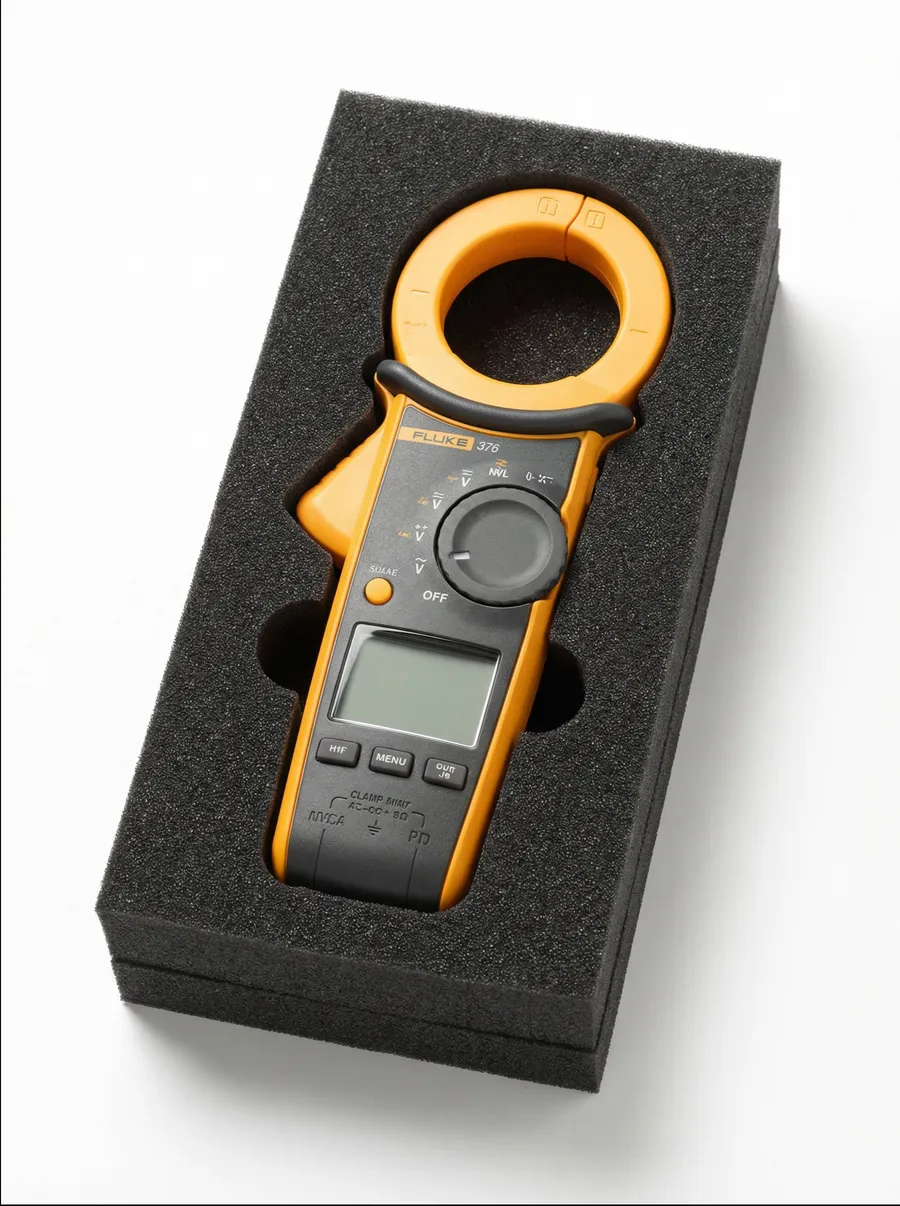
An empty shell organizes nothing; the layout is what makes camping equipment organized hard case searches end in a repeat order. Our foam options on the published file are pick and pluck, die-cut, CNC-cut, EVA, PE and EPE, in structures we build as top foam, base foam, egg-crate or convoluted, custom cut and layered. Pick and pluck is the right answer for an assortment that changes every season, because the buyer re-plucks the pockets without a new tool. CNC-cut or die-cut is the right answer for a fixed kit sold as one SKU, because the pocket outline can match the item and the item cannot rotate in transit. A layered build, base foam for mass and top foam for shape, is what keeps a heavy stove plate from riding on a lantern.
For the layout conversation we need one of three inputs, and we say so on every listing: a drawing, a photograph of the kit as it is actually packed, or a physical sample. Custom foam carries a minimum order of 1 unit on all 155 models, which is why a camp kit assortment can start as a stock shell plus custom foam rather than as a tooling project. Two habits make a case keep its organization: pocket everything rigid so nothing shares a cavity, and put the items you open at the campsite in the lid zone, where they are reachable without unloading the base.
Carry weight, cartons and what arrives at your warehouse
Weight is the number camp buyers feel and the one catalogues hide. Net weight is published on 93 of our 155 listings overall and on 85 of the 145 outdoor-category listings, spanning 100 g to 15,320 g across the file and 100 g to 10,000 g within the outdoor category, with a median of 1,370 g there. A 21.7 L shell such as KX-4821 contributes 3,670 g before a gram of kit goes in; a 19.6 L shell such as KX-4616 contributes 1,395 g. If the kit has to be carried from a parking area to a pitch, that difference is a buying decision, not a footnote.
Packing data is published on 64 of the 155 listings and on 57 of the outdoor-category listings, with pieces per carton ranging from 1 to 40. Concretely: KX-2005 ships 40 pieces in a 410 x 360 x 495 mm carton, KX-2805 32 pieces in 570 x 470 x 435 mm, KX-3308 20 pieces in 670 x 550 x 425 mm, KX-712 16 pieces in 635 x 585 x 455 mm, KX-4321 12 pieces in 885 x 515 x 650 mm, KX-4821 6 pieces in 765 x 485 x 650 mm, KX-5321 3 pieces in 530 x 440 x 635 mm and KX-97227 1 piece in 715 x 515 x 280 mm. Ask for carton dimensions and pieces per carton in your own quote request: they drive your inbound freight and your shelf planning far more than the unit price does.
What we do not claim about water, dust, drops and ratings
Buyer searches in this segment are full of rating phrases, and we treat those phrases as an explanation to give, not as a claim to copy. In our specification file, waterproof and dust resistance are recorded as not measured on all 155 listings, and the same is true of any ingress code, drop height, stack load, UV exposure figure and temperature range. We print no ingress code or depth rating unless accredited testing of the exact shell and interior you buy is commissioned and reported, and that testing is quoted as a separate work package with an accredited laboratory, scoped per configuration, because a rating belongs to an assembly and a test procedure rather than to a photograph of a lid.
What we do state, per model, is construction. A compressible gasket in a continuous moulded channel is recorded as measured on 124 of our 155 listings; on the remaining 31 no seal is offered on that shell, and we say so instead of implying one. Shock and impact protection are recorded as manufacturer options that depend on the foam layout you specify, since a shell alone is not a shock figure. Corrosion resistance is recorded as measured because a thermoplastic shell has no ferrous corrosion path. That is the honest boundary of what our file supports: geometry and construction as published numbers, environmental and impact performance as either options you configure or testing you commission.
Ordering camp kit cases: wholesale, OEM and the terms
We sell wholesale and OEM or ODM only, on EXW or FOB terms from Guangdong, China. We do not sell retail, do not quote DDP, and hold no overseas warehouse, so landed cost, customs and last-mile are your side of the quote and we plan the packing to fit that. Minimums across all 155 listings are the same shape: 1 unit for standard stock, 1 unit for custom foam, 300 units each for a custom logo, a custom colour and an OEM build, and 3,000 units per component if you want a private tool. Lead time is 45 days for OEM work on an existing mould and 125 days for a new mould. Payment is a 30 percent deposit with the balance settled after inspection, and third-party inspection as well as factory audits are welcome rather than negotiated.
For a camp kit programme the practical sequence is short. Send the kit list with the measured dimensions of each item, say which items open at the campsite, name the shell band you think you need from the volume table above, and tell us your annual quantity so the tooling question can be answered once instead of three times. Fred Zhao of the KeXin Sales Team handles this on WhatsApp at +86 135 3588 0002, and the quote form at /request-a-quote/ is the fastest way to get the drawing conversation started. The full published range is at /products/all/, and the outdoor category page at /products/outdoor-protective-cases/ lists the shells referenced here.
Customisation
Everything described above is configurable on a standard shell: interior layout (pick-and-pluck, die-cut or CNC-cut), foam grade and thickness, colour, logo method, latch and lock count, pressure-equalisation valve, cable ports, document holder and identification plate. A bespoke exterior geometry requires a new mould — 125 days, from 3,000 units per moulded component.
Procurement considerations
| Question | What to send us |
|---|---|
| Which shell fits? | Equipment L × W × H as packed, plus required clearance per axis |
| What does it cost? | Order quantity and estimated annual quantity — the two drive different answers |
| Is tooling needed? | Whether an existing shell clears the envelope with usable foam depth |
| Lead time? | Your required delivery date, not just the order date |
| Certification? | The exact standard your tender names — we will say whether we can test to it |
| Freight? | Destination and preferred terms; carton and pallet data supplied with the quotation |
Comparison and selection guide
The tables on this page exist because a protective case is chosen by comparing three things: the envelope, the environment and the handling chain. Where no table applies, the rule below is.
| Situation | What To Do |
|---|---|
| Marine or wet | Sealed configuration with a drain-friendly interior and stainless hardware. |
| Dry and dusty | A close-fitting rim and a lid that can be opened one-handed without spilling contents. |
| Carried far | Under 10 kg packed, with a padded handle or shoulder webbing. |
- Size on internal dimensions plus clearance, never on a product name.
- Choose the carrying method before the shell: it changes the series, not just the price.
- Specify the interior last, and decide up front whether the end user will reconfigure it.
What camping equipment can be organized in a hard case? relates to Protective Case Basics. Related families: Outdoor Protective Cases / Tactical Equipment Cases / Custom Protective Cases / Tool Cases / Waterproof Cases / Rolling Cases / Ammunition Storage & Transport Boxes. Related sectors: field and industrial equipment. Continue in the Protective Case Basics cluster.
This page is written from our own production data. If your requirement differs, send the dimensions and we will tell you which of the 155 models fits, or whether a custom route is needed.