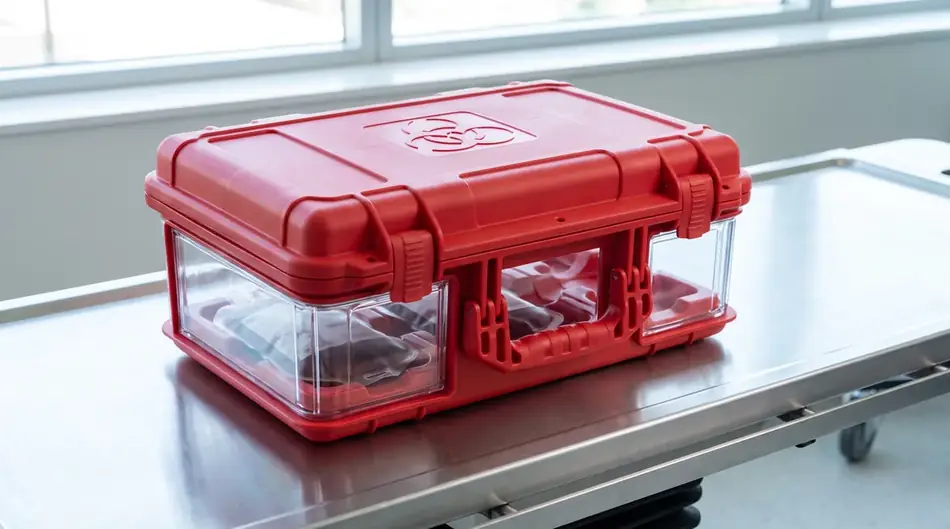
Protective Cases for Test Equipment
Short answer: a case for test and measurement equipment is specified from three published numbers on one named model - internal length, width and height; the lid-to-base split; and whether that shell records a gasket in a moulded channel - and then from the instrument's own failure points, which for a meter, scope or survey total station are the display, the connector face, the optical or probe head and any control that stands proud. KeXin publishes internal and external dimensions and usable interior volume for all 155 thermoplastic shells, wall thickness for 148 of them between 2.0 and 6.0 mm, lid and base depth separately for 100, empty mass for 93, and a gasket recorded on 124 while 31 record none. What we publish for no model is an ingress code, an electrostatic-discharge figure, a free-fall height, a shock rating or a temperature range, so ESD, anti-static, waterproof, airtight or shockproof requests are answered here as construction facts plus a specified material or an optional accredited test on the exact build - never as a property of a moulding.
Key points
- Size from the packed instrument, not its box footprint: keep the display, connectors, optical head and knobs clear of the closure line.
- Read lid depth and base depth separately: a 38/140 mm split on KX-4318 and a 44/44 mm split on KX-4010 are different cases at similar totals.
- No ingress, ESD or shock figure is published for any model; 124 of 155 shells record a gasket and 31 do not.
- Anti-static and ESD protection is a separate material specification evidenced by a batch report, not an attribute of a standard shell.
- Stiff ABS walls hold a machined instrument pocket better than a thin wall: KX-62810 at 4.0 mm and KX-63413 at 4.8 mm.
- Wheels buy carry distance but cost the stacking face: 19 models publish wheels and all are recorded non-stackable.
How A Case For Test And Measurement Equipment Is Actually Specified
Test and measurement instruments fail in transport in a small number of predictable places, and a case is worth buying only if its interior is designed against them. A digital multimeter or clamp meter breaks at the rotary switch and the probe tips; an oscilloscope breaks at the BNC connectors and the display; a calibration source breaks at its output terminals; a survey total station or theodolite breaks at the optical head, the tri-base and the collimator; a level breaks along its vial tube. The specification method that works is therefore not volume first but load path first: the instrument is carried on its strongest datum - the chassis, the feet or the mounting plate - so that no weight rests on a connector, a lens or a control knob, and the protruding parts hang over an open relief rather than against a foam wall or the opposite lid. Wall thickness then decides whether the case survives being stacked in a rack or a flight case; the lid-to-base split decides whether the tallest standing part clears the closure line; the gasket record decides grit and splash; and empty mass and carry format decide how far a technician walks. KeXin publishes all of those per model and leaves an unmeasured field marked not measured rather than filling it with a series average, which is the reason this page can name millimetres but not ratings.
ESD Anti-Static Plastic Instrument Case Wholesale
This is the request a case supplier can get most wrong with the most confidence, so start with the honest boundary. Electrostatic discharge control is a property of a specific material and a measured surface resistance, evidenced by a report on that batch - it is not an attribute of an ordinary polypropylene or ABS moulding, and we do not publish a surface-resistance or ESD figure for any of the 155 standard shells. What we can do, at quotation, is build the case in a specified antistatic or conductive grade or liner and evidence it with a report on the ordered build, the same way a component house proves a dissipative mat. For the physical case itself, a small stiff cavity protects a board-level instrument, a handheld meter or a set of calibrated resistors: the ABS KX-62109 lists 195 x 128 x 81 mm internal on a 3.0 mm wall at about 470 g with a gasket recorded; KX-62205 is the narrow format at 200 x 98 x 41 mm and about 310 g for a single instrument; and KX-62810 gives 253 x 182 x 86 mm on a 4.0 mm wall at about 900 g where a meter travels with its leads and a set of test clips. Wholesale pricing on those shells starts at one unit; an antistatic material specification is quoted as a separate work package rather than printed as a product name.
Construction Survey Instrument Case
A construction survey kit is an instrument plus the accessories that get it set up: a total station or optical level, its tri-base and plummeter, a prism pole section, a target, a ranging rod, a radio modem and a pouch of pegs and nails - and almost all of it is awkward because it is part precision optics and part job-site metal. The case is specified for the instrument, and the metal is kept separate so a nail bag cannot crush the optical head. Good published starting points: the engineering-PP KX-4012 lists 380 x 305 x 110 mm internal on a 3.5 mm wall with a 85 mm lid over a 25 mm base at about 1,480 g, so the instrument lies in the deep base and the accessories lie in the shallow lid; KX-4010 gives 390 x 315 x 88 mm on a 3.0 mm wall at about 1,015 g for a compact total station; and the stiff ABS KX-63413 at 310 x 255 x 106 mm on a 4.8 mm wall at about 1,680 g suits an instrument that must not flex when a site case is stacked. A laser scanner head or a robotic station with a protruding objective wants KX-63416 at 310 x 255 x 138 mm so the lens hangs free. Pegs, prisms and metal are the items that scratch a lens, so they never share a pocket with the instrument.
Geological Exploration Instrument Waterproof Hard Box
Geological and geophysical work is the harshest version of this category: a spectrometer, a soil or XRF analyser, a magnetometer, a ground-penetrating radar control unit or a sampling kit, carried on foot, dropped in a truck tray and opened in dust, rain and mud. Buyers ask for a waterproof hard box, and the honest answer is the same one we give everywhere on this site: waterproof and dust resistance are recorded as not measured for all 155 models and no ingress code is published, so we describe the construction that produces the behaviour instead. That construction is a gasket channel that is recorded for the named model, a latch count specified so compression stays even across a rim, and a wall thick enough to survive a stack in a vehicle. The gasketed, stiff mid formats for field instruments are: KX-3508 at 344 x 268 x 72 mm on a 3.0 mm engineering-PP wall at about 995 g with a 36/36 mm split; the ABS KX-63317 at 300 x 178 x 152 mm on a 4.0 mm wall at about 1,370 g; and KX-63912 at 360 x 240 x 104 mm on a 3.8 mm wall at about 1,600 g for an analyser with its probe and charger. If a tender names a code, commission the accredited test on the ordered configuration; do not accept it from a product name, ours included.
Instrument Case Structural Design Guide
For a buyer specifying an instrument case rather than picking one off a shelf, the structure is what decides survival, and every element below is a published, per-model figure rather than a marketing adjective. Wall thickness ranges from 2.0 to 6.0 mm across the 148 models that publish it, and it is the single number that governs whether a case can be stacked in a rack or must travel alone. The lid-to-base split matters because an instrument that bridges the closure line is crushed by the lid, not by the ground; 100 of the 155 models publish both depths, and deep-base formats such as KX-4318 and KX-4319 with a 38 mm lid over a 140 mm base exist precisely for the shape where everything heavy belongs low. The gasket is a compressible seal in a continuous moulded channel, recorded on 124 shells and absent on 31, and its performance depends on latch count and rim geometry more than on the seal itself, because uneven compression is what lets grit in at one corner. Stacking faces are published per model: 136 shells are recorded stackable and the 19 wheeled shells are recorded non-stackable. None of that is an ingress, shock or drop rating - those fields are not measured for any model - and where a specification needs them, they are commissioned on the build.
Portable Instrument Case Handle Design
The handle is the most overlooked specification in an instrument case, and it is the reason a technician either carries the kit or leaves it in the truck. Every one of the 155 models publishes a fixed carry handle, so a handheld or bench instrument is always carried by hand; the telescopic handle and wheels appear only on the 19 larger shells and, with them, a published telescopic height you can check against a vehicle floor and a doorway. The design decision is carried mass, not handle style: an instrument that weighs a few hundred grams empty in the shell is fine as a briefcase, so a meter in the ABS KX-62810 at about 900 g empty is a one-hand carry, while a survey package in the engineering-PP KX-5723 at about 4,680 g empty plus the instrument is a two-hand or a wheeled job. For the wheeled tier the published options run from KX-85424 at 483 x 363 x 190 mm internal and about 6,000 g up to KX-85835 at 500 x 400 x 305 mm and about 8,520 g. Ask for the empty mass on the 93 models that publish it and add your instrument, because the handle is only comfortable once the total is known.
Precision Instrument Briefcase: Fast Delivery And What It Really Means
A precision instrument briefcase is a carried, single-instrument package: a calibration source, a reference multimeter, a gauge set, a portable balance head or a measurement module, presented in a case that a technician opens in front of a customer. Buyers who add fast delivery are usually asking a supply question, not a protection one, and the honest answer is a schedule rather than a promise. A stock shell dispatches from current production; a custom foam layout on an existing shell starts at one unit and is quoted against the drawings or the item you send; colour, logo and OEM hardware begin near 300 units; and a new mould for a dedicated shell is near 3,000 units per component and about 125 days from approved drawings, while an OEM first sample on an existing shell is about 45 days. For the briefcase formats themselves, the stiff small ABS cavities do the job: KX-62810 at 253 x 182 x 86 mm on a 4.0 mm wall at about 900 g with a gasket recorded; KX-63317 at 300 x 178 x 152 mm on a 4.0 mm wall at about 1,370 g for a reference meter with leads; and the engineering-PP KX-93221 at 300 x 200 x 200 mm on a 5.0 mm wall with a 165 mm lid over a 35 mm base at about 1,230 g where the instrument stands up. Confirm the lead time you actually need against the configuration at quotation.
Surveying Total Station Protective Plastic Case And Total Station Protective Case
These two phrases describe the same purchase and they deserve the same careful answer, because a total station is the most precisely aligned object most survey firms own and a knock that leaves no mark still puts a collimation error on the plate. The instrument travels on its tri-base or its foot-screws, never on the optical head, with the objective lens hanging over a relief and the display and keypad unloaded; the radio modem, battery, prism and pole travel in their own pockets so no metal touches the body. Two figures decide the model. The first is the lid-to-base split, because the EDM head and the handle stand proud: the narrow deep-base formats KX-4318 and KX-4319 publish a 38 mm lid over a 140 mm base on a 3.0 mm engineering-PP wall, so the station sits low and the lid only carries accessories; KX-4012 at 85/25 mm does the same for a wider station. The second is internal height, which points to KX-63416 at 310 x 255 x 138 mm on a 4.8 mm ABS wall or the engineering-PP KX-93221 at 300 x 200 x 200 mm on a 5.0 mm wall where the station travels with a gimbal tripod head. A robotic total station or a 3D scanner head wants the objective fully relieved, so measure it as it travels, not as it stands in the catalogue.
Air-Tight Sealed Instrument Latch Case: What A Sealed Moulding Is And Is Not
Air-tight is a precise word, and we use it precisely: no model in our library is offered as air-tight, because air-tightness is a measured leak rate against a pressure differential and we publish no such figure for any of the 155 shells, just as we publish no ingress code. What a sealed-latch instrument case actually is, in published terms, is a gasketed shell with enough latches to compress that gasket evenly. Those we do record: 124 of the 155 shells note a compressible gasket in a moulded channel. For a laboratory or calibration instrument that wants a dust-resistant, wipe-down outer casing with a latched lid, the practical gasketed picks are KX-3508 at 344 x 268 x 72 mm on a 3.0 mm wall at about 995 g, KX-4010 at 390 x 315 x 88 mm on a 3.0 mm wall at about 1,015 g, and the ABS KX-63413 at 310 x 255 x 106 mm on a 4.8 mm wall at about 1,680 g for a stiffer body. Every model publishes a latch body that accepts a standard padlock, and latch count is set per configuration so compression stays even across a rim. Where a specification genuinely needs a leak rate or an ingress code, we quote accredited testing of the ordered shell, gasket and latch rather than printing one we cannot document.
What Information Is Needed For An Instrument Case Quote
A quote that turns into a working case needs six pieces of information, and the fastest way to a bad interior is to send only the instrument's catalogue dimensions. One: the packed envelope as the instrument actually travels - leads coiled, probe or prism attached, batteries fitted, protectors on - in millimetres, not a datasheet footprint. Two: the tallest standing item and where the connectors, the display and any optical head sit, because that is what the lid will meet and what must be relieved. Three: the mass of the packed kit, which together with the empty mass on the 93 shells that publish it decides handle and carry format. Four: the environment - shelf, rack, vehicle, airline hold, site dust - which drives wall thickness and whether a gasket is recorded. Five: the quantity and whether the interior is one repeatable layout or a changing set, which separates a die-cut from a CNC-cut or pick-and-pluck. Six: any marking, logo or material specification such as an antistatic grade, and the commercial frame - EXW or FOB - plus your destination. Send the packed-state dimensions, a scale photo of the kit or the instrument itself, and we will confirm the nominated model's published datasheet rather than assuming one grade or one rating across 155 shells.
Buyer Search Phrase To The Published Figure That Decides It
Each figure in this table is a published specification for the model named, not a performance rating, and the comparison is only valid against the packed envelope you measure on your own instrument. Where a calibration lab, a survey firm or an instrument OEM needs documented proof of ingress, shock or electrostatic behaviour, we quote accredited testing of that exact shell, gasket, latch and foam configuration as a separate work package rather than printing a number we cannot document, and we say plainly when a stock cavity is closer and cheaper than a new moulding.
| Buyer Search | Deciding Published Figure | Published Example |
|---|---|---|
| esd anti-static plastic instrument case wholesale | Antistatic is a batch-specified material with a report, not a shell attribute | KX-62109: 195 x 128 x 81 mm ABS, 3.0 mm, about 470 g, gasket; KX-62205: 200 x 98 x 41 mm, about 310 g |
| construction survey instrument case | Instrument in a deep base, metal accessories kept in a separate pocket | KX-4012: 380 x 305 x 110 mm, 3.5 mm, 85/25 mm lid/base, about 1,480 g; KX-63413: 310 x 255 x 106 mm ABS, 4.8 mm |
| geological exploration instrument waterproof hard box | No ingress code published; gasket recorded per model plus wall for a stack | KX-3508: 344 x 268 x 72 mm, 3.0 mm, about 995 g, gasket; KX-63912: 360 x 240 x 104 mm ABS, 3.8 mm |
| instrument case structural design guide | Wall 2.0-6.0 mm on 148 models, lid/base split on 100, gasket on 124 | KX-4318: 407 x 187 x 178 mm, 38/140 mm lid/base; 136 of 155 shells recorded stackable |
| portable instrument case handle design | Carried mass; fixed handle on all 155, telescopic and wheels on 19 | KX-62810: about 900 g empty one-hand; KX-85835: 500 x 400 x 305 mm, wheels, about 8,520 g |
| precision instrument briefcase fast delivery factory | Lead time is a schedule: stock shell, 45-day OEM sample, 125-day new mould | KX-63317: 300 x 178 x 152 mm ABS, 4.0 mm, about 1,370 g, gasket; KX-93221: 300 x 200 x 200 mm, 5.0 mm, 165/35 mm |
| surveying total station protective plastic case | Lid split for the EDM head; objective relieved; carried on its tri-base | KX-4318/KX-4319: 407 x 187 x 178 mm, 38/140 mm lid/base, 3.0 mm; KX-63416: 310 x 255 x 138 mm ABS, 4.8 mm |
| total station protective case | Internal height so a gimbal head travels; collar and battery in the lid | KX-93221: 300 x 200 x 200 mm, 5.0 mm, 165/35 mm lid/base, about 1,230 g; KX-63917: 360 x 240 x 150 mm ABS |
| air-tight sealed instrument latch case | No leak rate published; gasket recorded on 124 plus latch count for even compression | KX-3508: 344 x 268 x 72 mm, 3.0 mm, about 995 g, gasket; KX-4010: 390 x 315 x 88 mm, 3.0 mm |
| what information is needed for an instrument case quote | Packed envelope, tallest standing item, mass, environment, quantity, frame | Send drawings, a scale photo or the item; we confirm the nominated model's published datasheet |
Selection Guidance: Five Checks Before A Test Equipment Order
One: decide what carries the load - the chassis, the feet or a mounting plate - and if the answer is that the display, a connector or an optical head carries it, the interior is wrong before the shell is chosen. Two: measure the instrument as it actually travels, leads coiled and probe attached, and record the tallest standing item separately, because that is what the lid will meet. Three: read lid depth and base depth apart; 100 of the 155 models publish both, and a 38/140 mm split is a different case from a 44/44 mm split at a similar total. Four: check the external dimensions against the rack, shelf, vehicle tray or flight case the box must live in, and the narrow internal width where a cavity tapers. Five: confirm hardware on that model's datasheet - gasket recorded or not, latch count, handle, wheels and telescopic height - rather than assuming a series capability, then write down which documents your purchaser actually needs, because a survey case for a site crew and a shell written into an instrument procurement specification are two different briefs and only the second needs a commissioned test.
Where These Cases Are Used
The buyers are wider than the metrology lab. Calibration and quality laboratories move reference meters, gauge sets and source units between sites and need briefcase cavities that keep a connector unloaded. Survey, construction and civil-engineering firms need total station, level and scanner cases that survive a vehicle load and a muddy site, which is why this page sits next to the optics and instrument categories in the catalogue. Geological, mining and geophysical teams need field analyser and sensor boxes that resist grit, and the honest sealing facts matter most there. Electrical, telecom and field-service engineers carry scopes, analyse testers and OTDR units as one issuable kit. OEM instrument and test-equipment makers ship a unit and its accessories as one package and make the interior drawing the reorder standard. All draw on the same shells and differ in the cut, the gasket, the material specification, the carry format and the marking.
Customisation: Interior, Hardware, Marking And Tooling
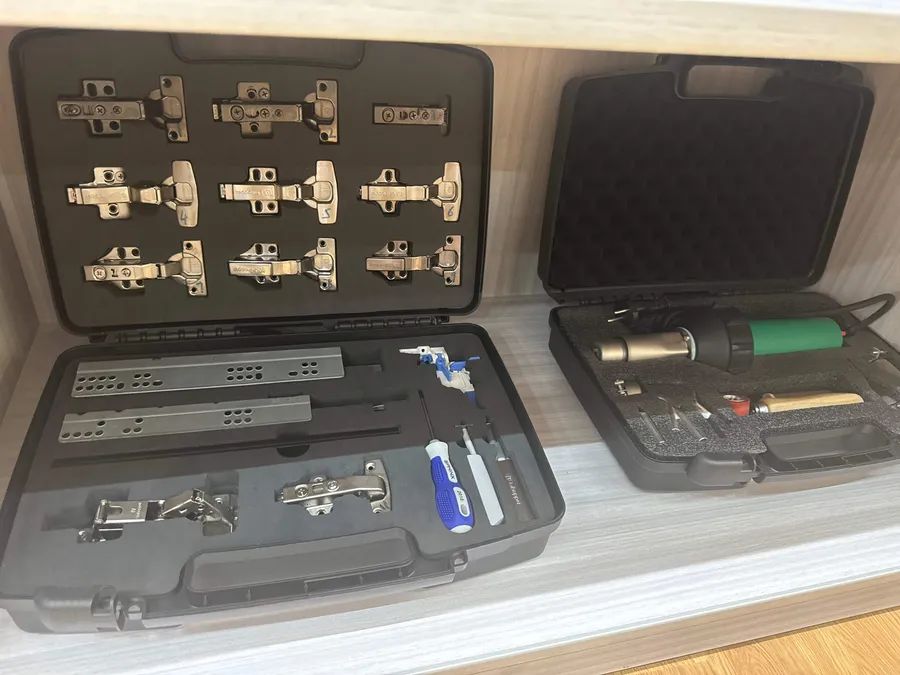
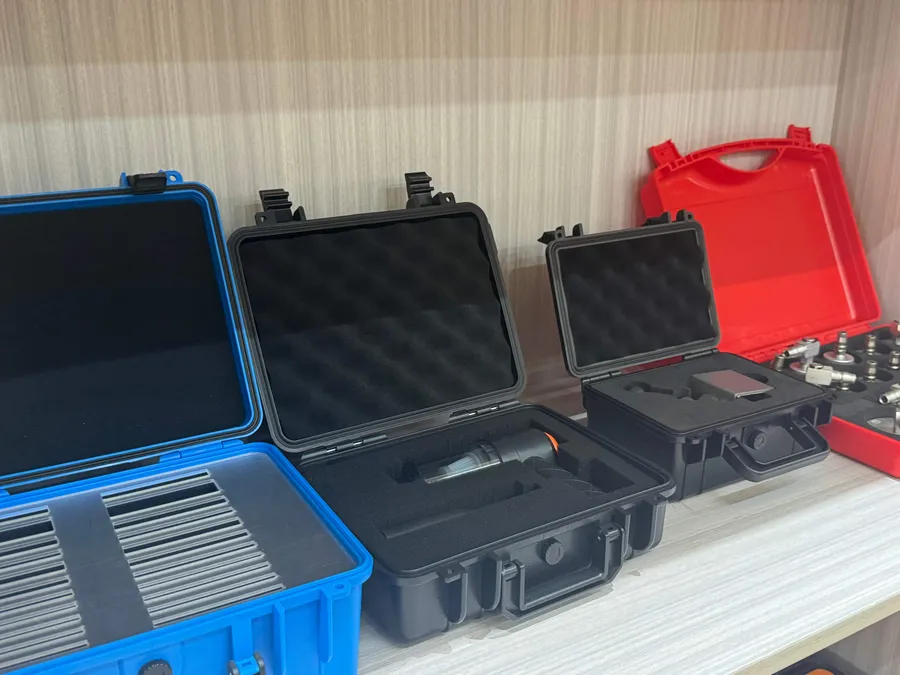
Interior work is where an instrument case is won, and it starts at one unit. We cut layered plank with a firm carrier under mass and a softer face against a finished body, through-pockets for probe and lead sets, relieved windows under an objective or a display, routed channels so a BNC or a probe plug cannot travel into its socket, retainers so an inverted case cannot lift an instrument out of its seat, and printed or routed outlines so a missing gauge or accessory shows at a glance. A fixed base with a pluck top suits a lab whose instrument set changes between jobs; a die-cut suits a production layout that repeats. Shell-side configuration - colour, printed or in-mould logo, extra latches, a document holder, a shoulder strap, a padlock point, an antistatic material specification, buyer-branded packaging - is quoted per build. Colour, logo and OEM hardware begin at 300 units; only a change to the shell itself needs a mould, near 3,000 units per component and about 125 days from approved drawings, while an OEM first sample on an existing shell takes about 45 days. Send the packed-state dimensions, a scale photo of the kit or the item itself, and we will confirm the nominated model's material datasheet rather than assuming one grade across 155 shells.
Procurement Notes: Wholesale Terms, Verification And What We Will Not Claim
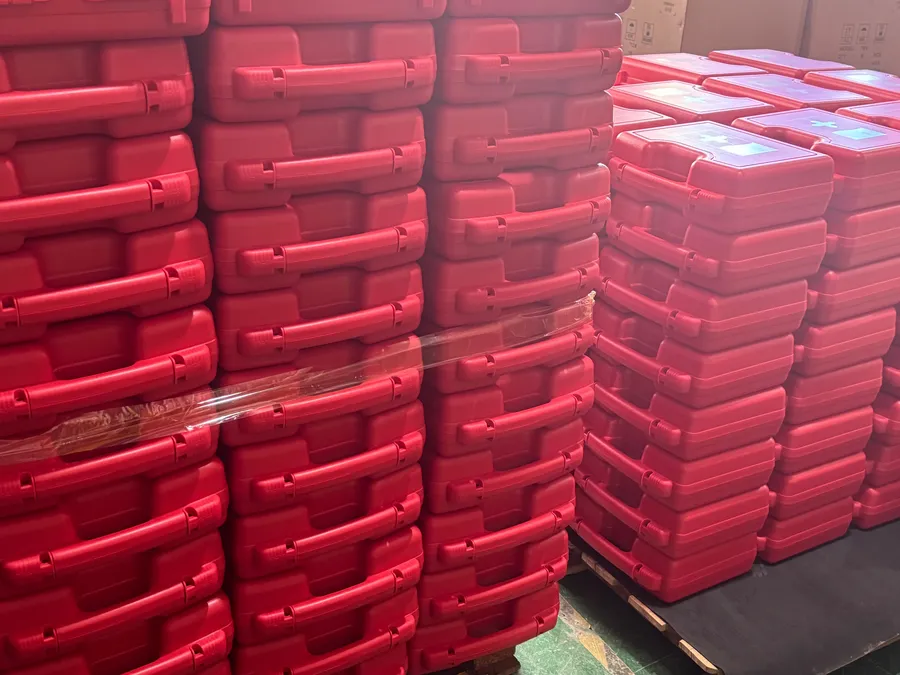
KeXin New Materials (Guangdong) Co., Ltd. manufactures these shells and supplies wholesale and OEM or ODM buyers on EXW or FOB terms only. There is no retail channel, no delivered-duty-paid quotation and no overseas warehouse, so landed cost is an FOB figure plus your own freight and clearance; carton size and pieces per carton are published on 64 of the 155 models, and pallet and container arithmetic is built from those or supplied with the quotation. Minimum order is one unit on a stock shell and one on a custom foam layout, near 300 units for colour, logo or OEM hardware and near 3,000 per component for a dedicated mould, with a first OEM article about 45 days on existing tooling and a new mould about 125 days. Payment is a 30 per cent deposit with the balance after inspection, and third-party factory inspection before shipment is welcome. Then apply the same three questions to us as to any supplier: which accredited report produced this figure, what method and conditions were used, and does it cover the exact build being bought. Any field our datasheet records as not measured - ingress, ESD, free-fall height, shock, temperature, stack load - is the answer we will give you. Enquiries go to Fred Zhao or the KeXin Sales Team, WhatsApp +86 135 3588 0002.
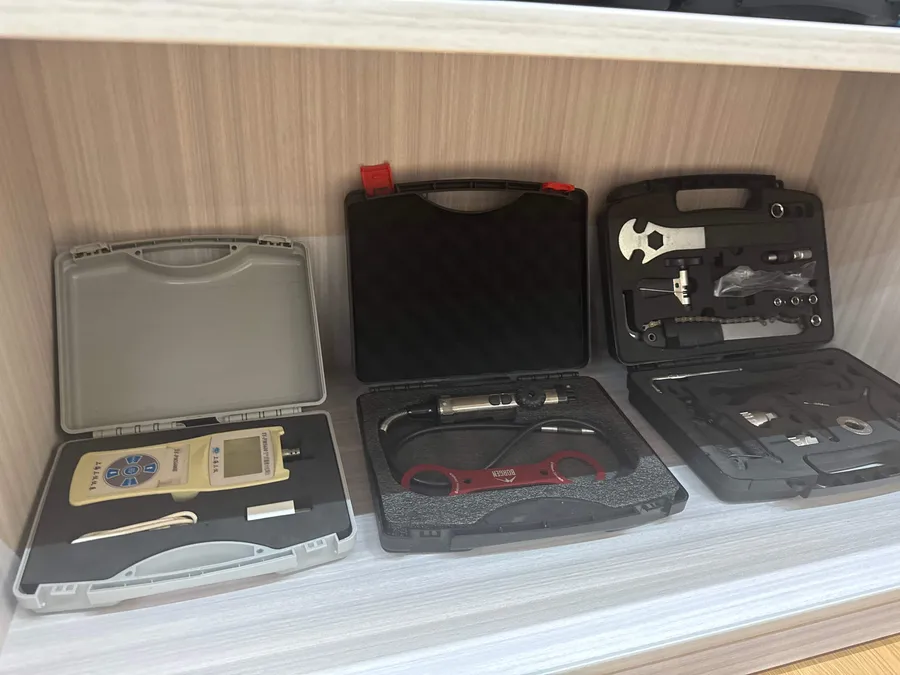
Customisation
Everything described above is configurable on a standard shell: interior layout (pick-and-pluck, die-cut or CNC-cut), foam grade and thickness, colour, logo method, latch and lock count, pressure-equalisation valve, cable ports, document holder and identification plate. A bespoke exterior geometry requires a new mould — 125 days, from 3,000 units per moulded component.
Procurement considerations
| Question | What to send us |
|---|---|
| Which shell fits? | Equipment L × W × H as packed, plus required clearance per axis |
| What does it cost? | Order quantity and estimated annual quantity — the two drive different answers |
| Is tooling needed? | Whether an existing shell clears the envelope with usable foam depth |
| Lead time? | Your required delivery date, not just the order date |
| Certification? | The exact standard your tender names — we will say whether we can test to it |
| Freight? | Destination and preferred terms; carton and pallet data supplied with the quotation |
Comparison and selection guide
The tables on this page exist because a protective case is chosen by comparing three things: the envelope, the environment and the handling chain. Where no table applies, the rule below is.
| Situation | What To Do |
|---|---|
| Benchtop mass | Firm base carrier, 50 mm minimum, with a soft contact layer. |
| Optical head | Suspend the body and clear the lenses entirely; never let foam touch a coated surface under load. |
| Field kit | CNC base for the instrument, pluck-foam top for probes and consumables. |
- Size on internal dimensions plus clearance, never on a product name.
- Choose the carrying method before the shell: it changes the series, not just the price.
- Specify the interior last, and decide up front whether the end user will reconfigure it.
Protective Cases for Test Equipment relates to Protective Case Basics. Related families: Instrument & Equipment Cases / Electronics Cases / Medical Equipment Cases / Optical Equipment Cases / Equipment Transport Cases / Waterproof Cases / Custom Protective Cases / Field Equipment Cases. Related sectors: field and industrial equipment. Continue in the Protective Case Basics cluster.
This page is written from our own production data. If your requirement differs, send the dimensions and we will tell you which of the 155 models fits, or whether a custom route is needed.