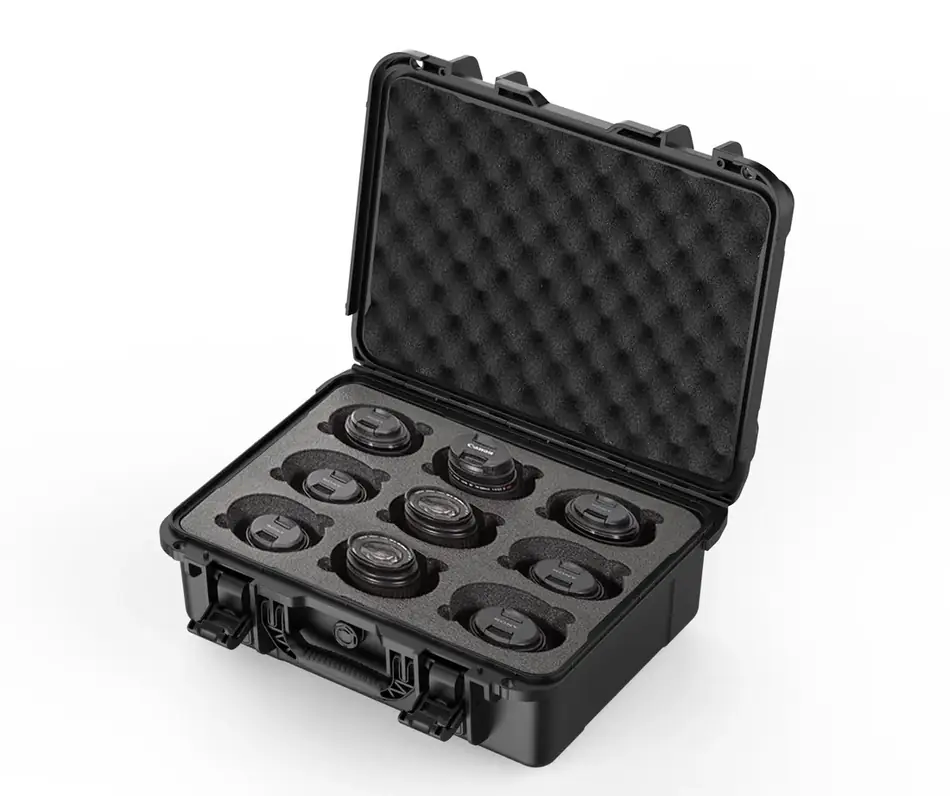
What type of case is suitable for sensitive electronics?
A case suitable for sensitive electronics combines a rigid two-shell body, a cut closed-cell foam interior that isolates the device, and a lid closure that keeps dust and moisture away. The specific type is chosen from the equipment and the handling route, not from a generic label. Compact boards and meters fit a shallow polypropylene utility shell with a pluck interior; cameras, lenses and instruments fit a mid-size ABS or engineering-PP shell around a 4.5 to 6 millimetre wall with a continuous gasket channel and a die-cut or CNC-cut cavity; larger consoles and mixed kits move to a deep or wheeled shell. KeXin publishes internal dimensions, wall thickness and seal type per model and leaves any rating not measured on that SKU blank rather than inventing it.
Key points
- Isolation, sealing and correct internal size matter more for electronics than a heavy-duty label.
- Cut foam is what stops vibration reaching boards; an empty rigid shell transmits it straight through.
- Choose a shell that publishes a continuous gasket channel if the contents face dust, spray or humidity.
- Relief pockets under connectors, lenses, antennas and control heads prevent the most common electronics damage.
- Size from the published internal dimensions and usable interior after foam, not the outer box.
- Any environmental rating is trustworthy only where it has been measured on the specific model.
What sensitive electronics actually need
Electronics fail in a case for three reasons: a shock or vibration that reaches the circuit, an ingress of dust or moisture that corrodes contacts, or a localised force on a protruding part such as a connector, lens or antenna. The right case is therefore defined by how well it addresses those three, not by how thick it looks. That means a rigid two-shell body to carry impact, a cut closed-cell foam interior to isolate the device, and a lid that closes evenly against a gasket channel. Everything else, from wall thickness to latch count, follows from the equipment and the route.
Isolation: the interior is the deciding layer
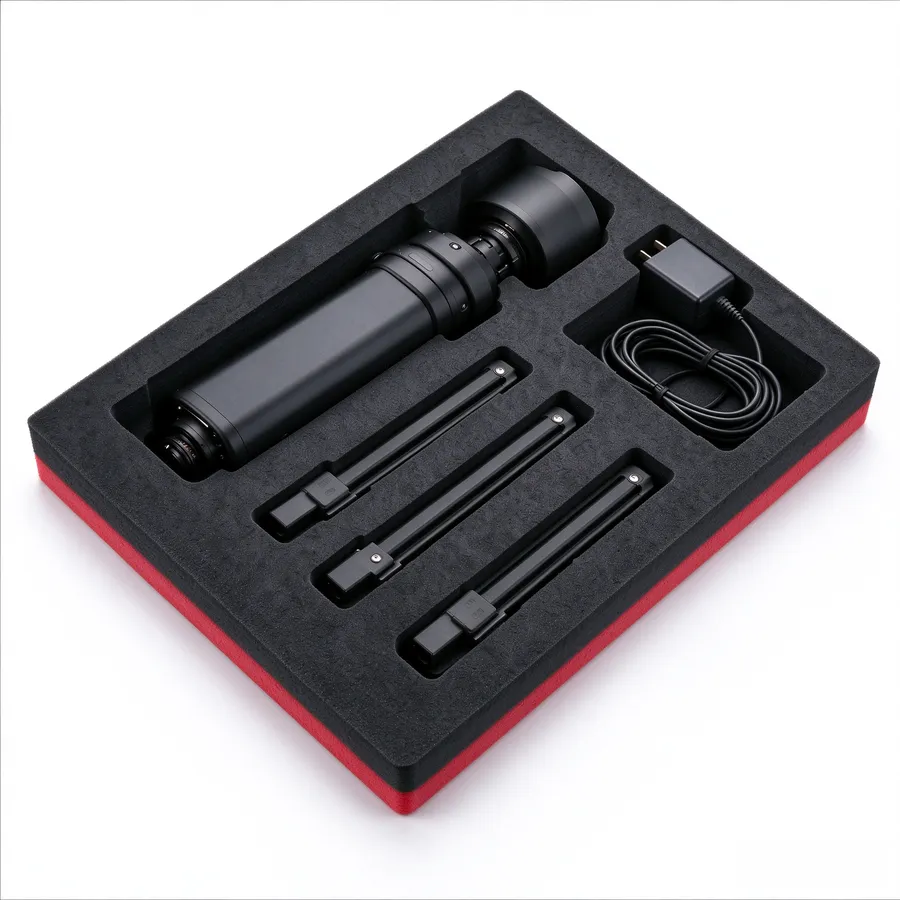
A rigid box transmits vibration directly to whatever rests inside it, so the isolating work is done by the foam, not the shell. Closed-cell polyethylene, EVA and EPE compress under a jolt and return, damping the peak force before it reaches the boards. The device should sit in a shaped cavity that supports its chassis, with dedicated relief under anything fragile, so no energy path runs from the outer wall to a sensitive component. Pick-and-pluck suits a load that changes, a die-cut or CNC-cut layout suits a fixed set, and a layered top plus base keeps cables and spares off the main item.
Sealing: gasket channel, wall and latching together
Where the contents face dust, spray or humidity, the practical feature is a continuous moulded gasket channel with a compressible gasket, and it only helps on a model that actually has one. The engineering-PP KX-85025 and the ABS KX-65522 both publish a compressible gasket in a continuous channel, with walls of 4.5 and 5.3 millimetres respectively, while some shells in the catalogue list no seal offered. The seal and the latching must be chosen together, because a gasket cannot stay compressed if the lid is held unevenly, and a thicker wall is what keeps the rim from flexing open under a stack.
Case type by equipment and handling
| Electronics Group | Case Type | Seal Note |
|---|---|---|
| Boards, meters, small modules | Shallow PP utility shell, pluck interior | Seal optional; choose a SKU that lists a channel if needed |
| Camera body and lenses | Mid-size ABS or engineering-PP shell, die-cut cavity | Gasket channel recommended for field use |
| Handheld analyser or instrument | Gasketed shell around 4.5 mm wall, layered interior | Published gasket channel and even latching |
| Comms head with handset and cables | Gasketed shell with routed cable channels | Continuous channel plus connector relief pockets |
| Console or mixed crew kit | Deep or wheeled thick-wall shell | Sealed lid, stack or wheel handling by route |
Sizing from published data
Electronics are often small, which pushes buyers toward the smallest shell. The interior, however, needs room for a firm base layer, a routed accessory layer and a gentle top, plus clearance under every protruding part. Measure the device in its connected state, including handset, cable and battery, and select the SKU whose published internal dimensions clear that envelope without leaving dead volume. A mid-size gasketed shell around the 460 by 340 by 230 millimetre internal range covers most handheld instruments with accessories, and the usable interior after foam is confirmed against the datasheet so the device is never asked to fit a cavity the liner has already taken away.
Static and thermal: confirm, do not assume
Buyers of circuit boards and modules often ask about antistatic or ESD-protective interiors, and about cold or hot operating conditions. KeXin treats these as project requirements to specify and confirm rather than as default features: a static-sensitive layout is discussed and confirmed against the foam actually used on that SKU, and any temperature claim is taken from the model's datasheet, where a value is stated only if it has been measured and otherwise left as not measured. This keeps the selection honest, because a shipping decision rests on figures that exist for the exact case being ordered rather than on a category assumption.
Customising an electronics case
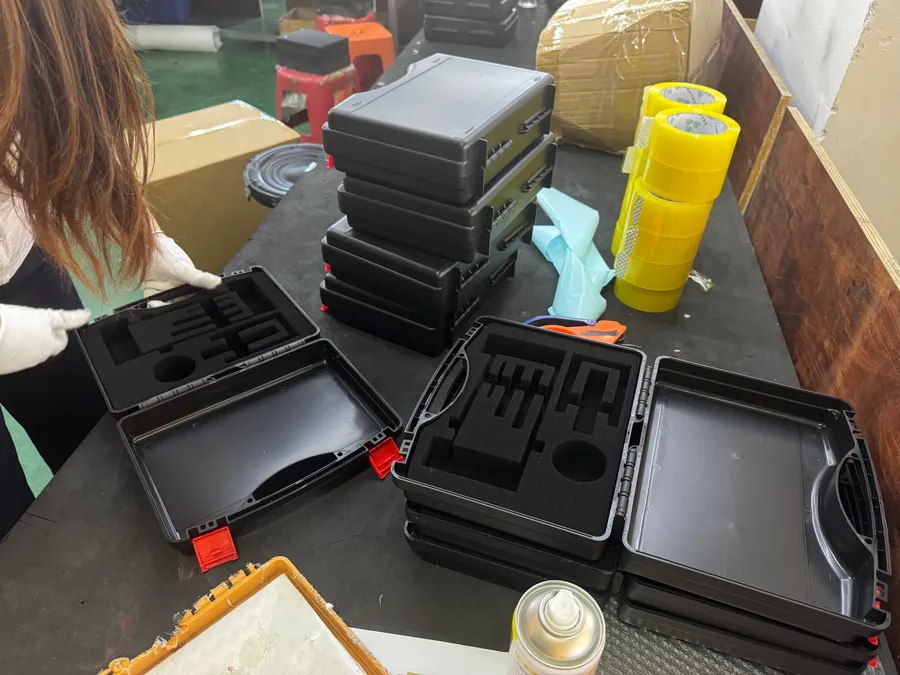
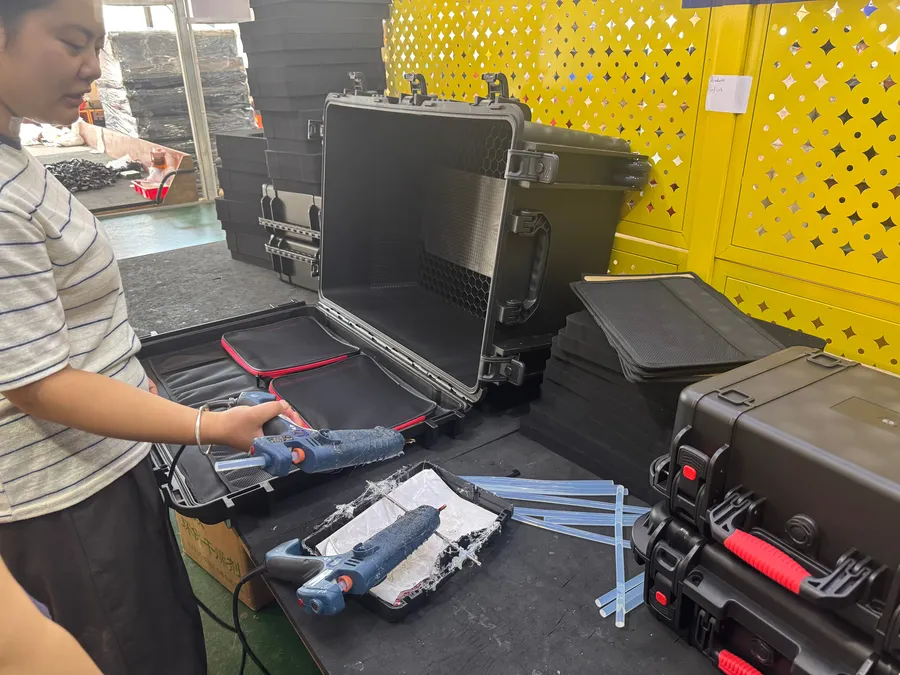
The interior, colour, logo and packaging are all customised on existing moulds. A die-cut or CNC-cut layout is drawn from a real sample or an exploded drawing, and closed-cell foam types and thicknesses are selected against the load. Colour matching, printed or in-mould logo and private-label packaging combine on the same order at the standard OEM bands, with a first OEM sample following the standing lead time of about 45 days and a 30 percent deposit. A new mould to a bespoke internal geometry starts at a higher quantity and follows about 125 days after drawing sign-off. Orders are wholesale and OEM on EXW or FOB terms, with no retail, DDP or overseas-warehouse arrangement.
Procurement notes
Specify the equipment, the accessory set and the handling route, then confirm the chosen SKU's published internal dimensions, wall thickness, seal type and hardware before ordering. Ask for the usable interior after foam, not just the raw internal box. Treat any rating marked not measured as unknown rather than borrowing a similar model's figure. Lock the interior layout and any static, thermal or packaging requirements up front so a repeat batch matches the first. Keep the approved drawing as the reorder reference so every unit in a fleet packs identically.

Customisation
Everything described above is configurable on a standard shell: interior layout (pick-and-pluck, die-cut or CNC-cut), foam grade and thickness, colour, logo method, latch and lock count, pressure-equalisation valve, cable ports, document holder and identification plate. A bespoke exterior geometry requires a new mould — 125 days, from 3,000 units per moulded component.
Procurement considerations
| Question | What to send us |
|---|---|
| Which shell fits? | Equipment L × W × H as packed, plus required clearance per axis |
| What does it cost? | Order quantity and estimated annual quantity — the two drive different answers |
| Is tooling needed? | Whether an existing shell clears the envelope with usable foam depth |
| Lead time? | Your required delivery date, not just the order date |
| Certification? | The exact standard your tender names — we will say whether we can test to it |
| Freight? | Destination and preferred terms; carton and pallet data supplied with the quotation |
Comparison and selection guide
The tables on this page exist because a protective case is chosen by comparing three things: the envelope, the environment and the handling chain. Where no table applies, the rule below is.
| Situation | What To Do |
|---|---|
| Shock | Base layer thickness and grade sized to the packed mass. |
| ESD | Anti-static PE, specified by surface resistivity range. |
| Dust | Sealed configuration with a continuous rim. |
- Size on internal dimensions plus clearance, never on a product name.
- Choose the carrying method before the shell: it changes the series, not just the price.
- Specify the interior last, and decide up front whether the end user will reconfigure it.
What type of case is suitable for sensitive electronics? relates to Protective Case Basics. Related families: Electronics Cases / Camera & Photography Cases / Instrument & Equipment Cases / Optical Equipment Cases. Related sectors: field and industrial equipment. Continue in the Protective Case Basics cluster.
This page is written from our own production data. If your requirement differs, send the dimensions and we will tell you which of the 155 models fits, or whether a custom route is needed.