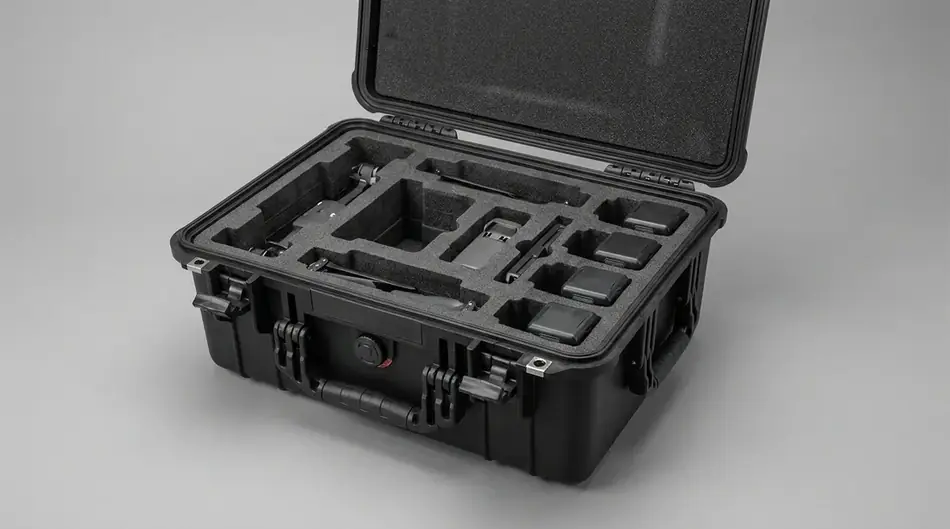
Protective Cases for Outdoor & Field Operations Equipment for High-Precision Work
Short answer: high-precision work outdoors is a fit-and-verify problem, not a catalogue problem. Choose the shell by the internal cavity the packed instrument needs plus its foam, then by wall thickness and closure, then by how it will be carried. KeXin publishes measured internal and external dimensions, wall thickness and net weight for each of 155 models, so a survey receiver, a handheld meter, a camera body with a prime lens, a lure inventory or a radio spare can be matched to a shell straight from a kit list. Sealing is a configuration choice: 124 of the 155 shells accept a compressible gasket in a continuous moulded channel and 31 are offered without one. We publish no waterproof, dust, UV or temperature figure for any model; where your tender needs a number, accredited testing is quoted against the exact build.
Key points
- Size the shell from the packed instrument plus foam, then check internal length, width and depth against the published figure.
- 124 of 155 models can be built with a gasket in a continuous moulded channel; 31 shells carry no seal option at all.
- Published wall thickness runs from 2.0 mm to 6.0 mm per model, and that number drives racking and stacking behaviour.
- No waterproof, dust, UV or temperature figure is recorded for any model, so a rating in a tender is a testing scope.
- Every latch body in the range accepts a standard padlock, which makes theft protection a hardware choice rather than a shell change.
- OEM on an existing mould reaches a first approved sample in about 45 days; a new mould is a 125-day programme.
What high-precision field work actually asks of a case
Precision kit used outdoors fails for two reasons only: the item moves inside its container, or the environment reaches it through the closure. Everything else in a product listing is decoration. So specify in this order: the internal cavity the packed item needs, the wall thickness that keeps that cavity true when boxes are stacked or racked, the closure that keeps airborne grit and splash out, the interior layout that stops movement, and last the carry method. Each of those five is a number you can check against a published per-model figure before you ask a single commercial question.
The trap in precision work is that the fragile element is the thing you cannot recalibrate in the field. A survey receiver, a laser level, a calibration reference, a microscope, an inspection camera or a camera with a fast prime all share that property. Size for the instrument on its own foam bed first and put the accessories into the volume that is left, not the other way round. In most field kits the accessories occupy more cubic centimetres than the instrument they belong to, and a box chosen around the accessories ends up letting the instrument travel.
Fishing tackle waterproof small plastic box: the small sealed formats
People searching this phrase usually want one of two things: a pocket box that keeps a reel, a scale or a line spool dry inside a wet bag, or a hard box that keeps a hook and lure inventory sorted and visible. For the first, the compact utility shells are the honest starting point. KX-1905 has an internal cavity of 180 x 160 x 40 mm, a 3.0 mm wall, a 250 g shell mass and a narrow internal width of 130 mm where the body tapers; it is also one of the models that can be built with a compressible gasket in a moulded channel, with the lid and base split 25 mm over 15 mm. KX-1204 is smaller again at 115 x 78 x 32 mm internal, 2.6 mm wall and 100 g, but it is one of the 31 shells we do not offer with a seal, so it is a dry-store box rather than a wet-use box.
Outdoor equipment case for high-temperature environments
A field box left in a vehicle roof rack, on a boat deck or inside a desert compound is a real failure mode, and we will not pretend to have measured it. Temperature range is recorded as not established for all 155 models in our specification table, which means we publish no operating temperature limit for any shell and no softening or embrittlement figure. What we can describe structurally is the material and the wall: the range is injection-moulded thermoplastic, 94 models in PP, 38 in engineering PP, 22 in ABS and one in a PP and ABS combination, with published wall thickness per model. Deeper-wall shells such as KX-2811 and KX-93221 at 5.0 mm hold a stack far better than a 2.1 mm KX-701, and that is the difference you can actually inspect on a sample. If your specification needs a heat figure, name the temperature, the dwell time and whether the box is loaded and stacked, and we will quote accredited testing on your chosen build as a separate work item.
Outdoor high-altitude and low-temperature resistant latch box
Cold, altitude and latches are three separate problems that buyers bundle into one search phrase, so treat them separately. The latch is the part we can describe concretely: every shell in the range has a moulded hinge line, moulded feet and a latch body that accepts a standard padlock, and the latch count is a configuration choice you make on the order. A gasketed closure only works when the latches compress the gasket evenly around the whole perimeter, so a box that will be opened with gloves on usually gets one more latch than the minimum. Altitude change and day-night swings put a pressure differential across the lid; a pressure-equalisation valve is an option rather than standard fitment, so specify it in writing. As with heat, we publish no low-temperature limit for any of the 155 shells.
Where cold matters most in practice is the foam rather than the shell. A firm polyethylene bed that feels adequate at room temperature can go stiff enough to transmit impact in deep cold, so for alpine or winter field kits we recommend a softer contact layer over a firmer carrier, a full perimeter of foam instead of pockets cut only in the base, and a lid layer that still touches the item when the contents shrink slightly at temperature.
Hiking drop-proof keys and gadget storage box
For a keys-and-gadget box carried on foot, mass decides everything else. KX-1204 is 100 g with 115 x 78 x 32 mm internal; KX-62205 is 310 g in ABS with 200 x 98 x 41 mm internal and a 3.5 mm wall, and it is one of the sealable models. Impact resistance is a different question, and the honest answer is that we publish wall thickness per model but no drop height for any model, so we will not imply one from a photograph. What you can control is the packing: a 20 to 25 mm convoluted or pick-and-pluck layer around the item is what limits the force reaching a key fob, a watch, a torch or a small instrument, and we cut that from a drawing, a photograph of the packed kit or a physical sample. Keep the closed mass under about 1 kg for a box that has to ride in a pack without becoming the reason the pack comes off.
Waterproof and dustproof small hard box: how to read the sealing claim
The most common request in this category is phrased as a small hard box that is both waterproof and dustproof. Our answer is procedural. First, 124 of the 155 models are moulded with a continuous channel that takes a compressible gasket in EPDM or an equivalent, and 31 shells have no seal offered, so the model line decides whether a sealed build is possible at all. Second, we do not state an ingress protection code for any model and we do not print a rating on a drawing, because a code describes a laboratory procedure carried out on one configuration rather than a property of a shell. Third, sealing depends on latch count and lid flatness as much as on the gasket, so it is specified on the purchase order and verified on the approved sample. If your tender needs a code, give us the standard, the test method and the orientation and we will quote third-party testing on that exact build.
In practice the small sealed formats people use for phones, handheld meters, receivers and spares are the mid-size ABS shells: KX-62209 with 200 x 98 x 78 mm internal, 3.5 mm wall and 410 g, and KX-62109 with 195 x 128 x 81 mm internal, 3.0 mm wall and 470 g. Both are stackable, both take a gasket, and both ship 20 pieces to a carton, which is the number that makes a fleet order cheap to freight.
Kayak, paddleboard and surf sealed dry case
Long, narrow and hard is a separate family. KX-89616 has an internal cavity of 880 x 350 x 140 mm in a 5.0 mm PP shell, an external footprint of 956 x 408 x 154 mm and 43.1 litres of internal volume, with the depth split 100 mm of lid over 40 mm of base so a blade, a paddle shaft or a tripod leg sits in the base instead of bridging the two halves. It is one of the sealable models and it is listed as stackable. Two limits are worth naming in the same breath: we publish no net weight for this shell, and we make no buoyancy statement for any model. A gasketed case launched on a boat is not a flotation device, and a supplier who says it floats has not measured anything.
Outdoor hunting gear protective transport case
A hunting or wildlife-monitoring kit is usually one precision instrument plus a lot of irregular bulk: a rangefinder or spotter, a set of batteries, a radio, a knife, bait and sample bags, and in many jurisdictions a firearm or archery item that must travel secured. The instrument gets its own pocketed bed; the rest fills the remaining volume. KX-4010 offers 390 x 315 x 88 mm internal with a 3.0 mm wall, 1,015 g and a gasket option, which suits a monocular plus accessories. KX-4312 stretches to 420 x 260 x 104 mm internal in a 3.5 mm wall at 1,170 g, and its 236 mm narrow internal width is the figure to check before a spotting scope case is approved. Where a rifle or a bow must travel, the long formats such as KX-89616 are the ones that keep the item straight instead of diagonal.
Outdoor landscape photographer dustproof hard case
Camera kit is heavy, irregular and full of air gaps, so the real decision is between a carried box and a wheeled one. KX-3608 gives 355 x 280 x 70 mm internal in a 3.0 mm PP shell at 870 g: a body with a grip and two primes lie flat in it and the 40 mm over 30 mm depth split keeps the lens layer in the base. KX-4010 sits above it at 390 x 315 x 88 mm internal and 10.8 litres. KX-5021 is an ABS deep-body shell with 465 x 315 x 196 mm internal, a 3.7 mm wall, a 62 mm base with 134 mm of lid, 28.7 litres and a 3,430 g mass, which is enough for a two-body kit with lenses mounted plus a tripod head. Once the packed mass passes what one person will carry comfortably over 30 m or more of gravel, a telescopic rolling shell such as KX-85021 with 437 x 308 x 164 mm internal and 4,912 g is the humane choice, at the cost of the flat stacking surface.
Lure and line fishing tackle hard box
A tackle box is an organisation problem wearing a protection hat. KX-3207 has 308 x 230 x 64 mm internal, a narrow internal width of 205 mm where the body tapers, a 3.0 mm wall, an even 32 mm over 32 mm depth split and a 570 g shell, and it takes a gasket; 24 pieces fit one carton measuring 645 x 530 x 430 mm, which is what makes a wholesale order cheap to ship. If you need depth for baitcasting reels, KX-3213 keeps the same footprint at 118 mm internal with 16 pieces per carton, and KX-3218 reaches 172 mm internal and 12.2 litres with 12 pieces per carton. What none of them gives you is a water rating: they are gasket options, and the seal is only as good as the latch compression you specify and the flatness you verify on the sample.
Marine anti-salt-spray corrosion hard case
Corrosion is the one environmental claim we can make from our own records. Every model in the table is recorded as corrosion resistant for the same structural reason: the shell is thermoplastic, so there is no ferrous corrosion path in the body itself. That is a material statement, not a salt-spray test report, and the distinction matters on a tender. The weak points are configurable rather than inherent. Hardware can be metal or polymer by build, and metal latch and hinge hardware on a saltwater boat is what seizes; the gasket channel collects grit, and grit in a channel is how a sealed lid stops compressing evenly. Specify polymer or coated hardware for marine use, rinse the hinge and latch faces with fresh water, and wipe the channel clear before closing.
Outdoor moisture-resistant storage case
Long-term outdoor storage is a humidity question, and most boxes get it wrong by treating it as a lid question. A gasket slows exchange with the outside air; it does not remove the water already trapped inside with the contents. If a box will sit for months, size a desiccant against internal volume, and the published internal litres per model is the figure you need, from 0.3 litres for KX-1204 through 12.2 litres for KX-3218 to 53.9 litres for KX-97227. Every opening resets the clock, so a box that is opened daily in a humid climate needs either a much larger desiccant margin or a smaller compartment per item. We record no internal humidity figure for any model, so a requirement written as a relative-humidity ceiling is a testing scope to commission, not a feature to tick.
Outdoor multi-purpose shockproof micro safety case
Small hard boxes used as general kit containers, holding a torch, a multimeter, a tracker module, a spare radio or a set of keys, are where a shock claim gets made most loosely. Our data is explicit: shock protection is recorded as a manufacturer option across the range, not as a property of a shell, because transmitted force comes from a specified foam layout. So order it that way. KX-62205 at 200 x 98 x 41 mm internal and 310 g, KX-62209 at 200 x 98 x 78 mm internal and 410 g, and KX-1905 at 180 x 160 x 40 mm internal and 250 g are the three micro formats most often quoted with a pick-and-pluck or CNC-cut base, and all three can carry a gasket. State the item, the pocket depth and whether the item is fragile in one axis or in all three.
Model comparison for outdoor precision kit
| Model | Internal Mm | Wall Mm | Net G | Gasket Option | Use |
|---|---|---|---|---|---|
| KX-1204 | 115 x 78 x 32 | 2.6 | 100 | No seal offered | Keys, small tools, dry store |
| KX-1905 | 180 x 160 x 40 | 3.0 | 250 | Yes | Tackle, meters, small optics |
| KX-62205 | 200 x 98 x 41 | 3.5 | 310 | Yes | ABS micro safety box |
| KX-62209 | 200 x 98 x 78 | 3.5 | 410 | Yes | Receiver with battery pack |
| KX-62109 | 195 x 128 x 81 | 3.0 | 470 | Yes | Handheld instrument plus probes |
| KX-3207 | 308 x 230 x 64 | 3.0 | 570 | Yes | Lure and line inventory |
| KX-3213 | 308 x 230 x 118 | 3.0 | 860 | Yes | Deeper reel and accessory box |
| KX-3608 | 355 x 280 x 70 | 3.0 | 870 | Yes | Camera body plus two primes |
| KX-4010 | 390 x 315 x 88 | 3.0 | 1015 | Yes | Optics and radio kit |
| KX-4312 | 420 x 260 x 104 | 3.5 | 1170 | Yes | Long instrument with handle |
| KX-2811 | 253 x 180 x 98 | 5.0 | 890 | Yes | Thick-wall racked store |
| KX-5021 | 465 x 315 x 196 | 3.7 | 3430 | Yes | Two-body camera kit |
| KX-89616 | 880 x 350 x 140 | 5.0 | not published | Yes | Paddle, blade, long gear |
| KX-85021 | 437 x 308 x 164 | 4.5 | 4912 | Yes | Wheeled precision instrument case |
How to choose: the five checks in order
Check one is the cavity. Add the foam you intend to use before you compare numbers, because the internal dimensions we publish are empty-cavity figures. Check two is the taper: several shells have a narrow internal width below the nominal width, and that minimum is what a hard case such as a spotting scope body or a receiver with a folded antenna must clear. Check three is the depth split between lid and base, which decides whether the item sits fully in the base or bridges the halves and gets pinched when the lid closes. Check four is mass against carry distance, and check five is the closure, which is a gasket plus latch-count decision rather than a shell property.
Two numbers people forget to ask for are the narrow internal width and the packing figure. The carton count per model is what turns a per-unit price into a landed cost, and the carton footprint is what a pallet is built from: pallet quantity is calculated from the carton against your pallet size rather than printed as a universal figure, and container loading for 20GP, 40GP and 40HQ is supplied with the quotation.
Where these cases go in the field
The kit lists that come to us most often for this category are survey and GNSS crews, ecological and wildlife monitoring teams, angling and marine research parties, landscape and inspection photographers, utility and pipeline inspection crews, and drone spare-parts and radio sets that travel with an operator rather than in a crate. What they have in common is a small number of expensive, calibrated items and a large volume of cheap, irregular accessories. Build the interior around the first group and let the second group live in a pluck-foam top layer that the field team can re-tune without ordering a new tool.
Customisation: which OEM changes are worth the wait
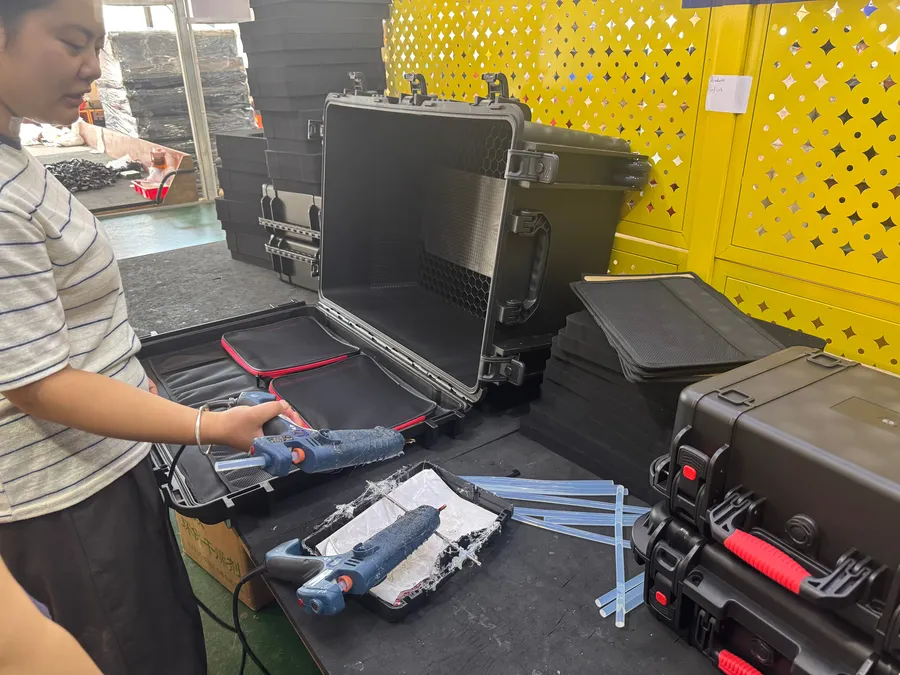
Almost every field requirement is met without touching a mould. Custom foam is quoted from one piece; logo, colour masterbatch and OEM configuration carry a 300-piece minimum, and a new mould is a 3,000-piece-per-component programme. On an approved existing shell, an OEM first sample takes about 45 days; a new mould takes about 125 days before it produces anything. So the practical rule is: change the interior, the hardware, the marking and the colour first, and only open a tool when the shell geometry itself is what is failing you. Foam, gasket, latch count, valve, shoulder strap, document holder and hardware material are all configuration lines on the same shell drawing.
Purchasing notes: terms, MOQ and verification discipline
KeXin works wholesale and OEM or ODM only, on EXW or FOB terms, with a 30 percent deposit and the balance after inspection. We do not sell retail, do not quote DDP and hold no overseas warehouse, so build freight into your own costing from the port. Third-party factory inspection before shipment is welcome and is the normal way to close a first order.
For any performance line in your specification, ask three questions of any supplier including us: what produced this number, what method and conditions were used, and does the record cover the exact configuration being bought, including gasket, latch count and foam. Where our own table has no record, the honest entry is unverified rather than low, and we will send your chosen build to a recognised laboratory with the cost reflected in the quotation.
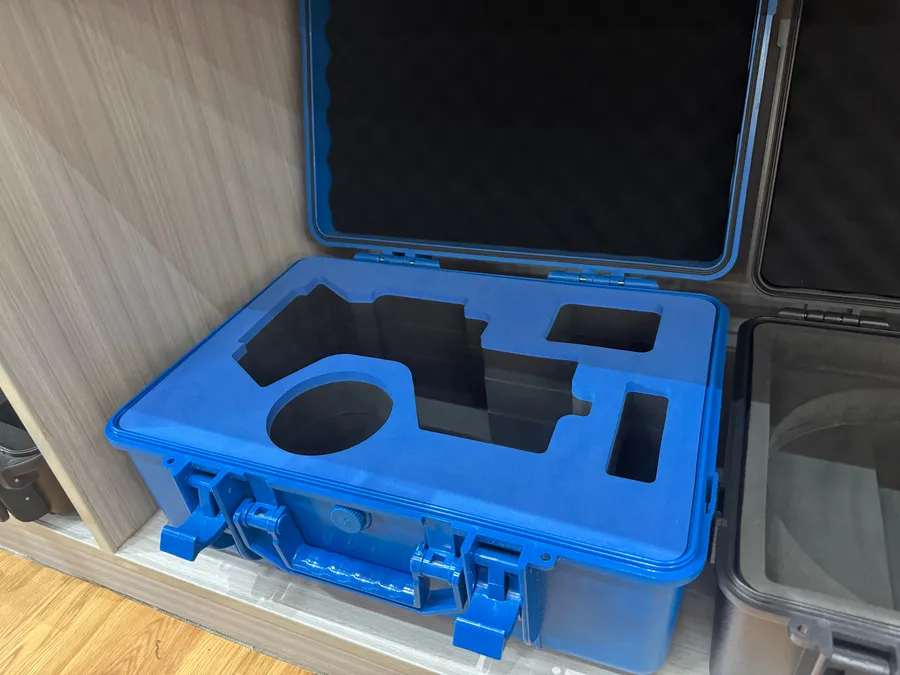
Customisation
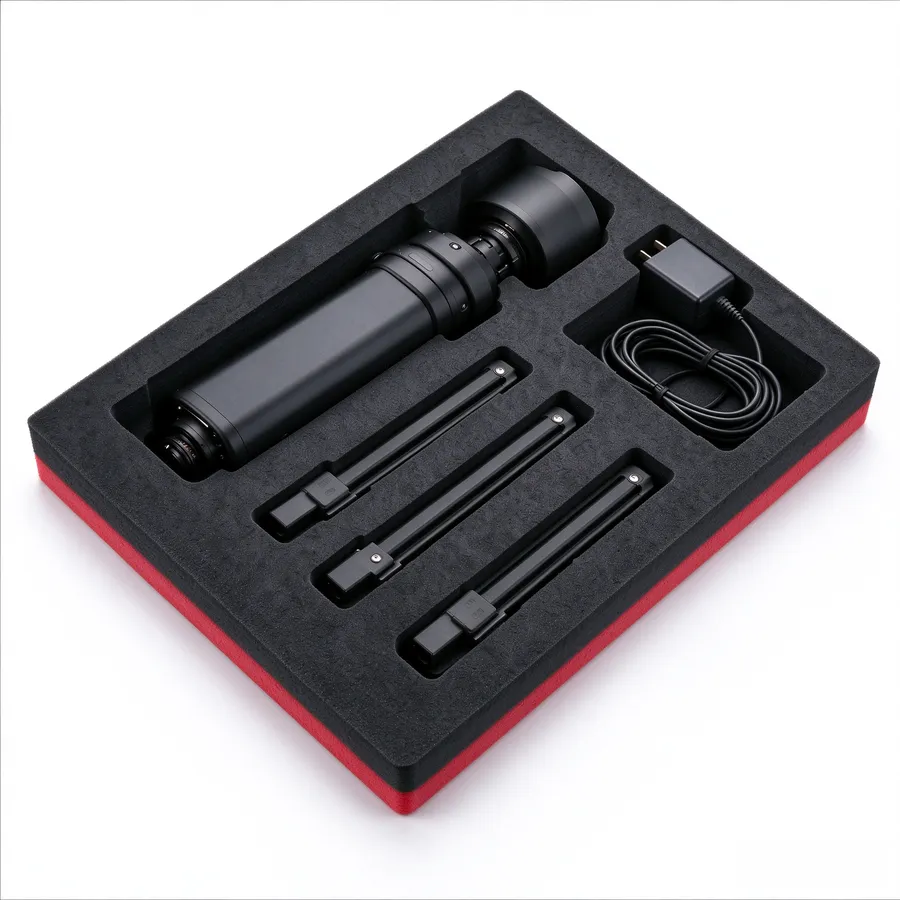
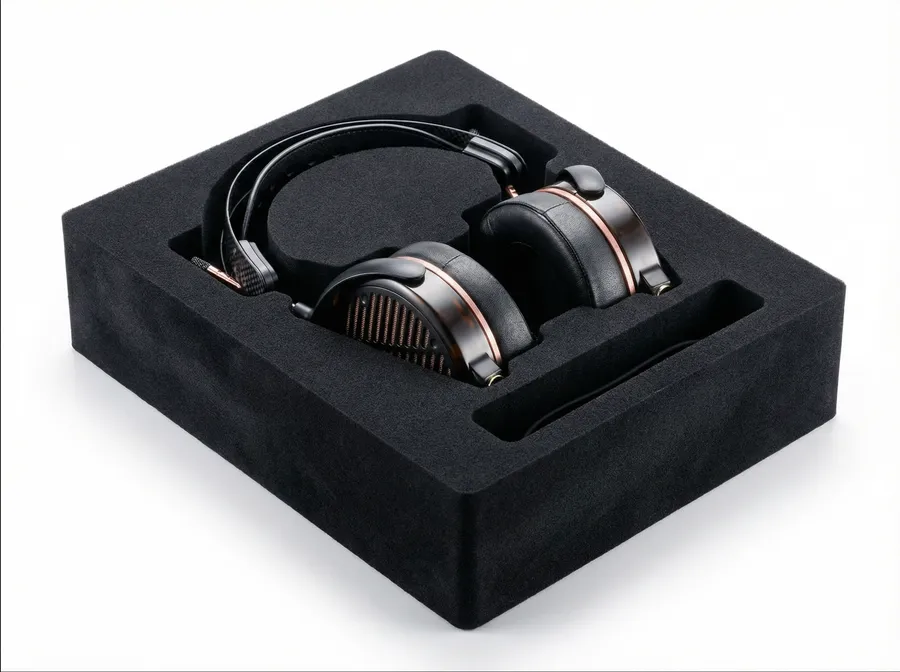
Everything described above is configurable on a standard shell: interior layout (pick-and-pluck, die-cut or CNC-cut), foam grade and thickness, colour, logo method, latch and lock count, pressure-equalisation valve, cable ports, document holder and identification plate. A bespoke exterior geometry requires a new mould — 125 days, from 3,000 units per moulded component.
Procurement considerations
| Question | What to send us |
|---|---|
| Which shell fits? | Equipment L × W × H as packed, plus required clearance per axis |
| What does it cost? | Order quantity and estimated annual quantity — the two drive different answers |
| Is tooling needed? | Whether an existing shell clears the envelope with usable foam depth |
| Lead time? | Your required delivery date, not just the order date |
| Certification? | The exact standard your tender names — we will say whether we can test to it |
| Freight? | Destination and preferred terms; carton and pallet data supplied with the quotation |
Comparison and selection guide
The tables on this page exist because a protective case is chosen by comparing three things: the envelope, the environment and the handling chain. Where no table applies, the rule below is.
| Situation | What To Do |
|---|---|
| Marine or wet | Sealed configuration with a drain-friendly interior and stainless hardware. |
| Dry and dusty | A close-fitting rim and a lid that can be opened one-handed without spilling contents. |
| Carried far | Under 10 kg packed, with a padded handle or shoulder webbing. |
- Size on internal dimensions plus clearance, never on a product name.
- Choose the carrying method before the shell: it changes the series, not just the price.
- Specify the interior last, and decide up front whether the end user will reconfigure it.
Protective Cases for Outdoor & Field Operations Equipment for High-Precision Work relates to Protective Case Basics. Related families: Outdoor Protective Cases / Waterproof Cases / Instrument & Equipment Cases / Camera & Photography Cases / Field Equipment Cases / Electronics Cases. Related sectors: field and industrial equipment. Continue in the Protective Case Basics cluster.
This page is written from our own production data. If your requirement differs, send the dimensions and we will tell you which of the 155 models fits, or whether a custom route is needed.