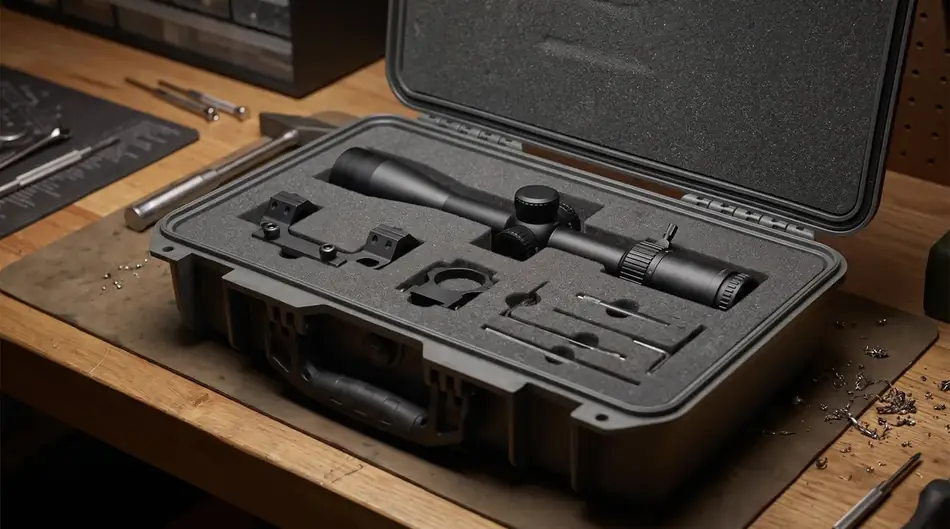
Stackable Industrial Case Design?
A stackable industrial case design is the set of decisions that let a loaded case sit squarely on the one below while the closure keeps grit and moisture out and the handle still lets one person move it. The order matters. Fix the column first, because the external footprint, the locating rim and the wall section decide whether a stack stands. Fix the closure second, because the gasket channel and the lid-to-base split decide where the load sits and how the seal is compressed. Choose the handle third, because in our published range a telescopic handle always comes with wheels, and the 19 rolling models are exactly the 19 published as non-stackable. Across our 155 active models, 136 publish stackable as true, every model publishes a fixed folding handle, 124 publish a compressible gasket in a continuous moulded channel, and no model publishes a stack load, a water result or a dust result.
Key points
- Design the column before the closure: the external footprint and the stackable flag shape the layout more than the shell material does.
- 136 of 155 models publish stackable as true, and the 19 exceptions are exactly the 19 wheeled models with a telescopic handle.
- 124 models publish a compressible gasket in a continuous moulded channel and 31 offer no seal, so the closure is a specification line, not a default.
- No model publishes a water, dust or stack load result, so specify on geometry and ask for accredited testing of the exact build you buy.
- A deep base with a shallow lid keeps mass low in the column; one published shell pairs a 43 mm lid with a 149 mm base at 5.8 mm wall.
- Wholesale and OEM only on EXW or FOB: 45 days on an existing mould, 125 days for a new mould, 30% deposit, MOQ from 1, 300 or 3,000 units.
The short answer: the column decides, the closure qualifies, the handle admits
A stackable industrial case design is not a shell with a rib on the lid. It is three groups of decisions that constrain each other, and the sequence in which you take them decides whether the finished case does the job. The column decision fixes the external footprint, the locating rim that captures the case above, the wall section that carries the load and the height-to-footprint ratio that governs whether a column tips. The closure decision fixes the lid-to-base split, the gasket channel and the latch plan, and it is the decision that most often fights the column, because a deep lid moves mass upward and a wide sealing rim competes for the same edge of the shell. The handle decision looks cosmetic until you read a product file: all 155 of our models publish a fixed folding handle, 19 add a telescopic handle, and those same 19 publish wheels and publish stackable as false.
That order is the practical answer to the question in the title. Brief a supplier on colour and foam first and you will end up with a case that carries equipment well and stacks badly, or one that stacks and cannot be closed against the conditions on site. Brief on the column first and the rest becomes arithmetic against published numbers: internal volume from 0.3 L to 139.5 L, usable interior volume from 0.3 L to 111.6 L, wall thickness from 2.0 mm to 6.0 mm, lid depth from 16 mm to 320 mm, base depth from 15 mm to 168 mm, and net weight from 100 g to 15,320 g on the models that publish one. Those ranges come from a file of 155 standard models in 7 series, and every figure below is quoted per model rather than generalised across the range.
Stackable Industrial Case Design: the column, the rim and the wall
A stack is held by geometry. The load has to travel down the shell walls and through the locating rim into the case below, and the lid panel is the last place you want it. Three published fields tell you whether that path exists. The first is the stackable flag: 136 of our 155 active models publish it as true and 19 as false. The second is the footprint, because a case stacks and palletises on the same plan, and a plan that overhangs the pallet gives back part of the gain the stack was meant to create. The third is the wall section, published from 2.0 mm to 6.0 mm with 25 models at 5.0 mm and 7 models leaving the field blank, because the wall is what resists creep when a column stands loaded for weeks rather than minutes.
The rim is the part buyers rarely see on a drawing and always feel in service. A rim that captures the base of the case above by a few millimetres keeps the column tracking; a flat lid with a gasket and no locating feature lets each case drift a little further than the one below it. Half of the design argument is therefore about the parting line: how much of the total depth belongs to the lid and how much to the base. Of the 136 stackable models, 86 publish both lid depth and base depth, which is enough to see that two shells of almost the same external height can be split in opposite ways, one with 43 mm of lid over 149 mm of base and another with 169 mm of lid over 42 mm of base. Neither split is wrong, but they suit different contents and they sit differently in a column.
| Design Decision | What It Fixes | What Our Published File Shows |
|---|---|---|
| Locating rim | Whether the case above stays in the same plan as the one below | Stackable true on 136 of 155; the 19 wheeled models are published as false |
| External footprint | The column plan and the pallet plan at the same time | Published per model; internal volume 0.3 L to 139.5 L, usable 0.3 L to 111.6 L |
| Wall section | Resistance to creep under a standing column | 2.0 mm to 6.0 mm; 25 models at 5.0 mm; 7 models leave the field blank |
| Lid-to-base split | Where the mass sits relative to the closure line | Lid 16 mm to 320 mm and base 15 mm to 168 mm; 86 stackable models publish both |
| Stack load | How many loaded cases a column can carry | Not measured on any model; no load rating is published |
Dustproof and Waterproof Industrial Case Design: a closure you specify
Dust and water are closure problems before they are shell problems. In our file, 124 of 155 models publish a compressible gasket in a continuous moulded channel, and 31 publish no sealed closure at all, which means the same moulded family can arrive with or without a sealing line depending on the model you order. The channel matters because a gasket held in a moulded groove is compressed to a consistent thickness around the whole parting line; a strip fixed another way can lift at a corner, and a lifted corner is exactly where fine grit and driven moisture enter. For a case that works on a foundry floor, a quarry site or a vehicle bed, that corner is the whole argument.
What we do not do is turn the design into a number. Water resistance and dust resistance are recorded as not measured on all 155 models, no ingress code appears anywhere in the product data, and no stack load is published either. That is not a gap in the sales copy, it is the honest state of the file. An ingress code is the outcome of a defined test on a defined article, and its meaning depends on the test method, the sample and the laboratory that ran it. If your programme needs a stated result, the practical route is to fix the configuration first, shell, gasket, latches and any valve, and then ask for accredited third-party testing of that exact build, quoted as a separate work package. A buyer able to inspect the gasket design is usually better served by the first than by a printed grade that cannot be audited.
Secondary openings decide the outcome as much as the gasket. Every penetration is a path: handle and hinge fixings, a document pocket, a pressure-equalisation valve where temperature swing is expected. A valve is a legitimate requirement, because a closed shell that heats and cools will push and pull air somewhere; the design question is what element sits inside that bore and how it is protected from the grit on the outside. Put the opening list on the drawing before the tooling is cut, not after the first sample arrives, because adding a bore to a finished mould is a different project from cutting it into a new one.
Industrial Case Handle and Telescopic Handle Design: one choice, three consequences
Handle design is where an industrial case design stops being a box. All 155 models publish a fixed folding handle, so the baseline is a two-hand lift with the handle folded inside the external envelope. Nineteen models add a telescopic handle; the same 19 publish wheels and the same 19 publish stackable as false. That is not an editing coincidence, it is geometry: a telescopic column and a wheel well occupy the edge and the base that a locating rim and a stable stack need. Extended travel is published on only 11 of the 19, at 240 mm, 295 mm, 310 mm, 385 mm and 485 mm, with a median of 295 mm, so the travel range is real but the field is thin and worth demanding in writing.
The three consequences are payload, stacking and packaging. Payload: the trolley models run from a 4.91 kg shell to 15.32 kg, while the stackable records that publish a weight run from 100 g to 6.42 kg across 74 models, and 62 models publish no net weight at all. Stacking: choosing the trolley removes the column benefit unless you plan a separate rack for the rolling units, which is a warehouse decision rather than a case decision. Packaging: the wheel and handle envelope changes the carton, and while 64 models publish carton data with 1 to 40 pieces per carton, the trolley builds are the ones where you should ask for the packed figure in writing instead of assuming the stackable carton applies. A 15.32 kg case at 843 by 592 by 415 mm is a different freight line from a 4.68 kg case at 572 by 405 by 227 mm.
| Handle And Transport Design | Models In Our File | Stackable Flag | Published Net Weight | What It Suits |
|---|---|---|---|---|
| Fixed folding handle only | 136 of 155 | true on all 136 | 100 g to 6.42 kg across 74 records | Pallet columns, rack storage, two-hand lifts into vehicles |
| Telescopic plus fixed folding, with wheels | 19 of 155 | false on all 19 | 4.91 kg to 15.32 kg across all 19 | Upright rolling, long transfers, high-volume loads |
A worked comparison from the published file
The four models below are quoted exactly as the file publishes them, and they show how the three decisions combine. The first two have almost the same published external figures, 525 by 434 by 214 mm and 572 by 405 by 227 mm, and the same stackable flag, but they are split in opposite ways: WL5321 carries 43 mm of lid over a 149 mm base, while WL5723 carries 169 mm of lid over a 42 mm base. The deep-base shell keeps the load low and leaves a shallow lid to lift, which is the friendlier arrangement for a loaded column; the deep-lid shell opens to a shallow tray, which suits tall or awkward contents that need the opening depth and are light enough not to raise the column centre of gravity. WL6621 repeats the deep-base pattern at a larger footprint and a 6.0 mm wall, and it is the heaviest stackable record that publishes a weight, at 6.42 kg. The trolley adds volume and removes the stack: 843 by 592 by 415 mm, 320 mm of lid, 15.32 kg, stackable false.
Read the table as a briefing tool rather than a league. All four publish a compressible gasket in a continuous moulded channel, and none publishes a water, dust or stack load result, so the comparison is about geometry, not protection grades. What the numbers let you do is fix the column height you need, choose the split that puts the mass where your contents can tolerate it, and then confirm wall section and weight against the handling method you actually have on site.
| Model | Published External | Wall | Lid / Base Depth | Net Weight | Stackable | Closure |
|---|---|---|---|---|---|---|
| WL5321 | 525 x 434 x 214 mm | 5.8 mm | 43 / 149 mm | 4.81 kg | true | Compressible gasket |
| WL5723 | 572 x 405 x 227 mm | 5.0 mm | 169 / 42 mm | 4.68 kg | true | Compressible gasket |
| WL6621 | 662 x 495 x 210 mm | 6.0 mm | 43 / 149 mm | 6.42 kg | true | Compressible gasket |
| WL8-8442 Trolley | 843 x 592 x 415 mm | 5.0 mm | 320 / 44 mm | 15.32 kg | false | Compressible gasket |
How the three decisions trade against each other
Every design move buys something and costs something, and the useful discipline is to name both before the drawing is approved. Deepening the base and shallowing the lid lowers the mass relative to the closure line and keeps the lid light to open, but it also lengthens the wall that has to carry the column and may make tall contents awkward to lift out. Thickening the wall adds section against creep and raises weight; the heaviest stackable record that publishes a weight, at 6.42 kg, is a 6.0 mm shell, and the trade is visible in the number. Adding a telescopic handle converts a 15 kg case into something one person can roll, and it removes stackability on all 19 models that carry one. Adding a gasket buys a continuous sealing line and adds a maintenance item. Widening the footprint steadies the column and may break the pallet plan.
The table condenses the trade-offs we see most often in OEM briefs. None of the rows is a rule that applies to every project; each is a question to put to the drawing before tooling, because a decision deferred to the sample stage is a decision you will pay for twice.
| Design Move | What It Buys | What It Costs |
|---|---|---|
| Deepen the base, shallow the lid | Mass sits below the closure line; the lid stays light to lift | A longer wall to fill, and contents may sit below the opening |
| Thicken the wall from 2.0 mm to 5.0 mm or 6.0 mm | More section against creep in a loaded column | Weight; the heaviest stackable record is 6.42 kg in a 6.0 mm shell |
| Add a telescopic handle | One person can roll a case up to 15.32 kg | Stackable is published as false on all 19 trolley models |
| Add a gasket channel | A continuous compressible sealing line around the parting line | A maintenance item; still no published ingress result |
| Widen the footprint | A sturdier height-to-footprint ratio for the column | The pallet plan may no longer divide cleanly |
| Deepen the lid | Opening depth for tall or awkward items | Mass and lid panel take the load; check the stacking intent |
Selection guidance: brief a stackable industrial case design in six steps
The steps below are the order we use when a buyer asks for a stackable industrial case and a closure in the same sentence. They are deliberately about the physical design first and the commercial terms last, because the terms only make sense once the geometry is fixed. Each step should produce a number or a named choice that goes into the drawing package, not an adjective.
Step six is the one buyers skip. A gasket, a latch plan and a valve are all configuration lines, and a supplier who quotes a design without them is quoting a shell rather than a case. Put the closure on the drawing and the stack in the same document, then ask for the sample against that document.
Where a stackable industrial case design is specified
The design pattern suits equipment that travels in quantity and is stored as a column between movements: tooling and moulds, industrial instruments, electronic assemblies, field service kits and spares. In those programmes the case is often bought by the hundred, loaded on a pallet, and moved between a rack and a vehicle, so the column, the footprint and the closure all matter and the handle matters mainly for the last metre. Our industrial equipment work follows the same logic, with internal volumes from 0.3 L to 139.5 L covering instruments that sit in a hand, in a rack or on a trolley.
Where the contents are heavy enough that one person cannot lift them, the design moves to the trolley pattern and the stacking requirement has to be solved on the rack instead of the column. That is a planning decision, not a failure of the case, and it is cheaper to make it before the order than after the first pallet arrives.
Customisation: what changes by configuration and what needs a mould
Most of a stackable industrial case design is configuration rather than new tooling. Foam layout, colour, logo, latch plan and the gasket line are specified on an existing mould; a bespoke external shape or a new rim profile is a new mould. The commercial split follows the same line: from 1 unit for stocked models, from 300 units for custom colour or logo, and from 3,000 units per moulded component for a bespoke case shape. An OEM run on an existing mould takes 45 days from the confirmed drawing and deposit, and a new mould takes 125 days. Payment is 30% deposit with the balance after inspection and before container loading.
Custom foam is the change that most often gets confused with protection. A specified foam layout supports the equipment and keeps it from moving inside the shell, and our data records shock protection and impact resistance as manufacturer options that require a specified foam layout, with the note that the shell alone is not a shock rating. What foam does not do is create a water, dust or stack load result. If you need one, the configuration has to be tested, and that is a separate package quoted against the drawing rather than a property of the foam.
Procurement notes for wholesale and OEM orders
We supply wholesale and OEM only, on EXW or FOB terms, and we do not sell retail, quote DDP or operate an overseas warehouse. Third-party inspection and an on-site factory audit are welcome by appointment, which matters for a design where the gasket channel, the latch compression and the lid-to-base split are all things an inspector can see and a catalogue photograph cannot show. Every quotation should carry the model, the published external and internal dimensions, the wall thickness, the lid and base depth, the net weight, the closure line, the handle type and the carton quantity where the file publishes one.
Two habits keep an order clean. First, quote per model: the ranges in this article describe a file of 155 models, and no single model spans them. Second, ask for the packed figure and the pallet plan in writing, because 64 models publish carton data with 1 to 40 pieces per carton while the rest leave packing blank, and the blank ones are where a freight estimate goes wrong. KeXin New Materials (Guangdong) Co., Ltd. quotes against the drawing, and the drawing is where a stackable industrial case design is either right or expensive to correct.
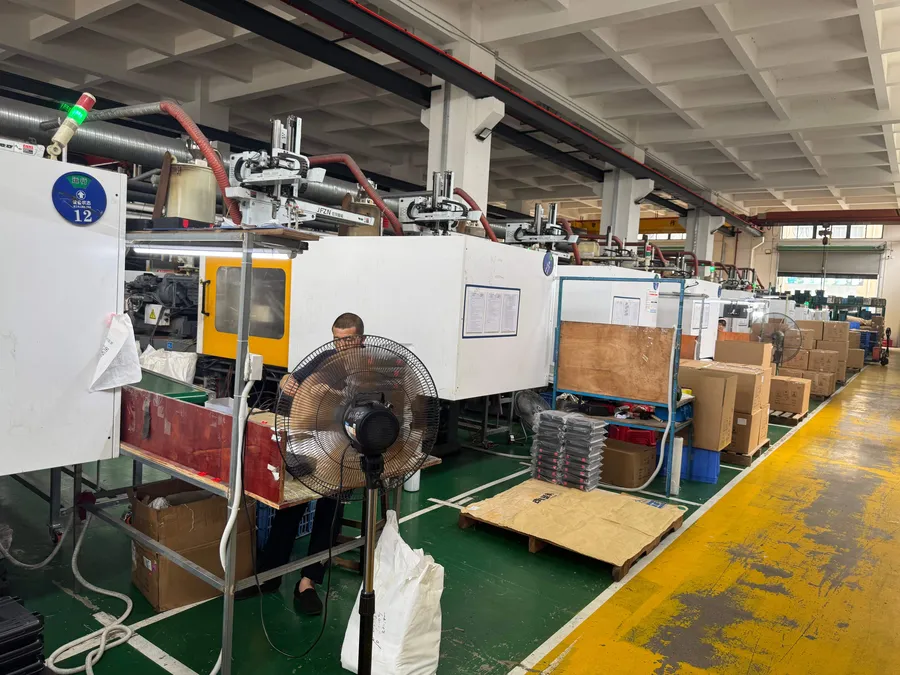
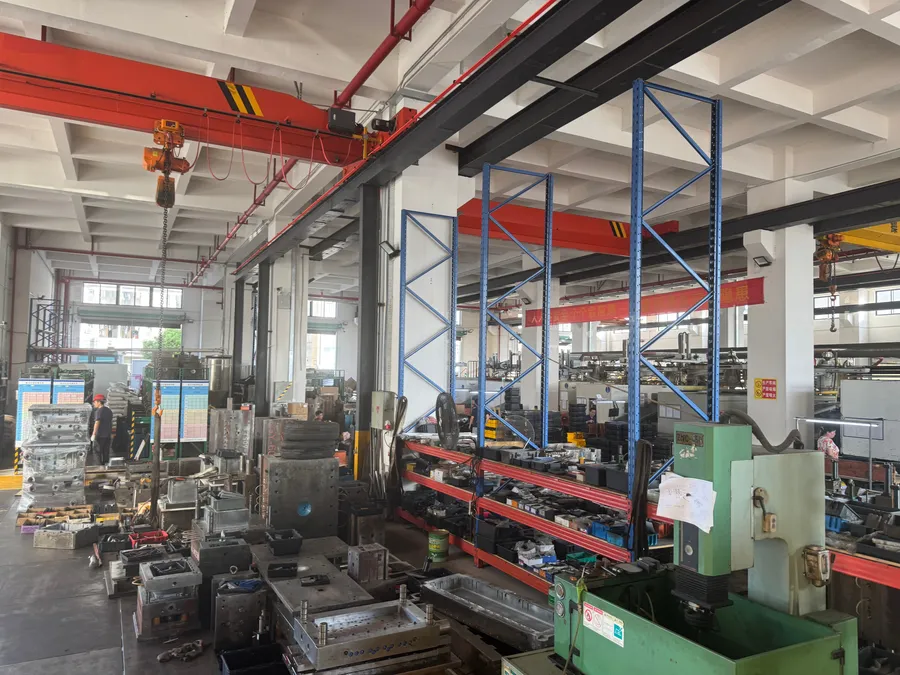
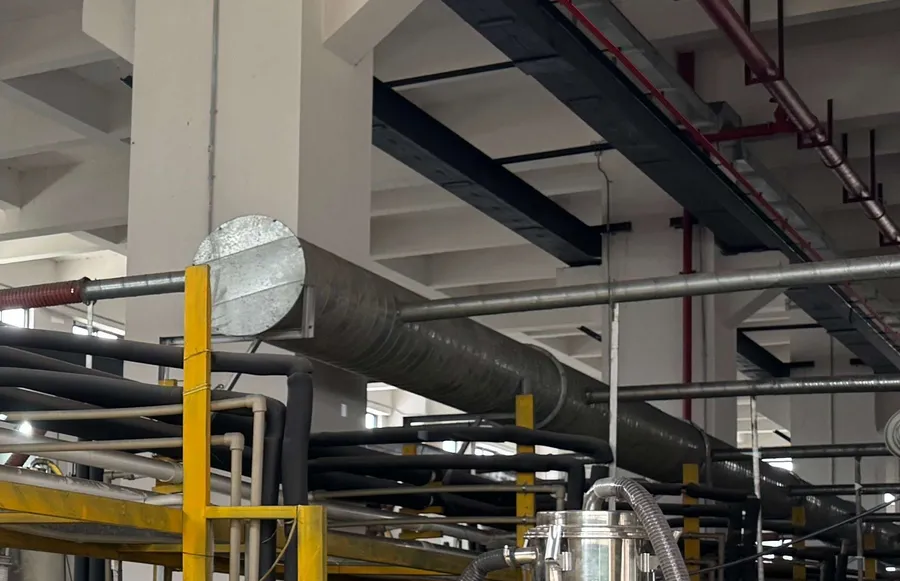
Customisation
Everything described above is configurable on a standard shell: interior layout (pick-and-pluck, die-cut or CNC-cut), foam grade and thickness, colour, logo method, latch and lock count, pressure-equalisation valve, cable ports, document holder and identification plate. A bespoke exterior geometry requires a new mould — 125 days, from 3,000 units per moulded component.
Procurement considerations
| Question | What to send us |
|---|---|
| Which shell fits? | Equipment L × W × H as packed, plus required clearance per axis |
| What does it cost? | Order quantity and estimated annual quantity — the two drive different answers |
| Is tooling needed? | Whether an existing shell clears the envelope with usable foam depth |
| Lead time? | Your required delivery date, not just the order date |
| Certification? | The exact standard your tender names — we will say whether we can test to it |
| Freight? | Destination and preferred terms; carton and pallet data supplied with the quotation |
Comparison and selection guide
The tables on this page exist because a protective case is chosen by comparing three things: the envelope, the environment and the handling chain. Where no table applies, the rule below is.
| Situation | What To Do |
|---|---|
| Sea freight | Sealed configuration plus desiccant; salt spray is a handling issue, not a material issue. |
| Air freight | Mass and external dimensions drive cost more than volume. |
| Repeated movement | Replaceable latches, hinges and gaskets; keep a spares kit with the first order. |
- Size on internal dimensions plus clearance, never on a product name.
- Choose the carrying method before the shell: it changes the series, not just the price.
- Specify the interior last, and decide up front whether the end user will reconfigure it.
Stackable Industrial Case Design? relates to Protective Case Basics. Related families: Equipment Transport Cases / Tool Cases / Instrument & Equipment Cases. Related sectors: field and industrial equipment. Continue in the Protective Case Basics cluster.
This page is written from our own production data. If your requirement differs, send the dimensions and we will tell you which of the 155 models fits, or whether a custom route is needed.