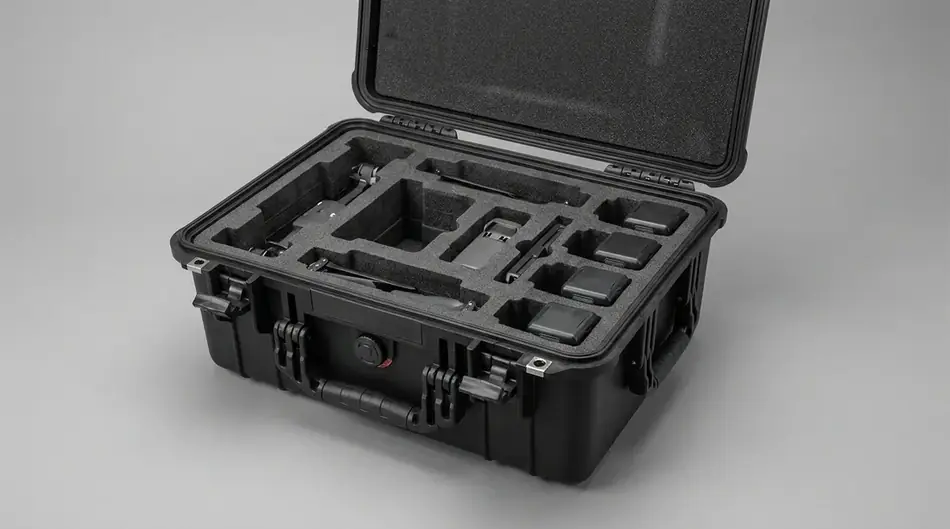
Protective Cases for Outdoor & Field Operations Equipment for Camping & Overlanding
Choose the case by the trip profile rather than by a word on a listing: for camping and overlanding the workhorse is a thin-wall polypropylene hard case chosen against published internal length, width, height and lid depth per model, with cut foam or dividers doing the protective work, and an ABS gasketed moulding only where splash, dust or a wet-dry separation justifies the extra mass. A beach or glovebox valuables box is a small sealed moulding such as the KX-62205 at 200 x 98 x 41 mm or the KX-1905 at 180 x 160 x 40 mm; a stackable camp box is the KX-3113 at 296 x 258 x 121 mm or the KX-3114 at 290 x 220 x 126 mm; a cassette stove or water filter sits in a deeper 240 x 200 x 120 mm or 260 x 200 x 117 mm cavity; a base-camp trunk moves to the wide KX-95419 at 525 x 400 x 170 mm or a wheeled moulding. Every figure here is published model by model and unmeasured fields are left blank. Splash resistance comes from a gasketed lid line; immersion is a separate claim that belongs to a named test report with a depth and a duration, so we say plainly what is measured for the model you order and, when an expedition brief demands evidence, quote accredited testing of that configuration instead of printing an adjective.
Key points
- Pick the cavity from the packed kit: camp boxes fail because a stove or filter lifts the lid, not because the shell is thin.
- A gasketed lid line is splash and dust management; it is not an immersion claim, so ask any supplier for the test behind the word.
- Stackable footprints decide a camp box more than volume does, because trip gear is carried in two or three boxes, not one.
- Tableware, glass and filters need a cut plank per item; a loose stack of plates inside a hard shell still arrives broken.
- Fuel canisters ride upright in their own packaging with foam keeping them vertical, and the box is never left in direct sun.
- KeXin sells wholesale and OEM or ODM only on EXW or FOB terms: colour and marking from near 300 pieces, new moulds near 125 days.
Start From The Trip Profile, Not From A Box Label
Camping and overlanding put a case under a different set of forces than a workshop does. Gear is loaded by hand in the dark, stacked on a roof rack or in a boot with irregular neighbours, washed out at a riverbank, exposed to wet heat, sand, pine needles and fuel, and carried in several boxes rather than one. So the choice starts from the trip profile: weekend family camping wants a stackable general box with dividers; vehicle-based overlanding wants a small number of boxes whose external size fits a drawer system or a rack; expedition and fieldwork want redundancy, marking and a documented interior. KeXin publishes external and internal dimensions, wall thickness, lid and base depth, usable volume, net weight, shell material, stackability and whether a gasket is offered, all model by model, so a fit-out becomes arithmetic against the kit that actually goes. Where a figure has not been measured on a moulding the field is left blank rather than filled with an estimate. One distinction saves most buyers: the shell decides crushing and weather ingress, the insert decides whether the contents survive, and any protection class a brief asks for is a test report on the ordered configuration, not a property of the plastics.
Outdoor Adventure Gear Pressure-Proof Safety Case
A search for an outdoor adventure gear pressure-proof safety case usually mixes three different problems: altitude and air travel changing the pressure across a sealed lid, a load being crushed under a rack or a stack of gear, and a buyer wanting the contents not to move. Pressure equalisation is the one most listings ignore. A gasketed box carried from sea level to a mountain pass or in an aircraft hold stands a real differential across the lid, which makes it hard to open and loads the seal; a breather is therefore specified as a configuration item on the sealed moulding rather than assumed, and we quote it per build. For the crush question, published wall thickness and stackability tell you more than a slogan: the ABS KX-62810 lists 253 by 182 by 86 millimetres internal on a 4.0 millimetre wall at about 900 grams with a gasket, and the KX-63912 gives 360 by 240 by 104 millimetres on a 3.8 millimetre wall with about 7.7 litres at about 1,600 grams. The word pressure-proof is not a test method, so if a brief uses it we ask what differential, what chamber and what report, and we answer with documents or with a testing quotation on that exact configuration.
Outdoor Beach Waterproof Sealed Mini Safety Box
A beach or poolside valuables box has one job: keys, a phone, a wallet and medication must stay dry when spray, splashes and a knock-over happen. That is a gasketed lid line in a small moulding, and the honest description is splash and dust management, not submersion protection. The ABS KX-62205 lists 200 by 98 by 41 millimetres internal on a 3.5 millimetre wall at about 310 grams with a seal offered, which takes a phone, a card wallet and a small tube of sunscreen; the KX-62209 is the same footprint at 200 by 98 by 78 millimetres with about 1.3 litres and about 410 grams when a power bank rides along; and the polypropylene KX-1905 gives 180 by 160 by 40 millimetres on a 3.0 millimetre wall at about 250 grams, also listed with a gasket, for a flatter profile. Sand is the real enemy of a small box, so a latch that closes after a rinse and a lid line that can be wiped are worth more consideration than depth. If a buyer needs an immersion claim, ask the supplier for the depth, duration and laboratory method behind it, and check that the report covers that exact model; where we do not hold such a measurement we say so and can arrange it for the ordered configuration.
Outdoor Camping Storage Box With Lid Stackable
An outdoor camping storage box with lid stackable is the centre of most camp fit-outs, because a family or crew carries three to six boxes and they must sit on each other without crushing the lid latch or sliding off a rack. Read stackability and external footprint before volume. The KX-3113 lists 296 by 258 by 121 millimetres internal on a 2.9 millimetre wall with an 83 millimetre lid over a 38 millimetre base, about 7.9 litres and about 1,060 grams, and is published as stackable; the KX-3114 gives 290 by 220 by 126 millimetres on a 2.2 millimetre wall with a 63 millimetre lid over a 63 millimetre base at about 675 grams; the KX-3308 covers 325 by 236 by 76 millimetres on a 2.3 millimetre wall with about 5.0 litres at about 575 grams for a flat layer of cooking gear. Where a crew wants the widest useful footprint, the KX-95419 lists 525 by 400 by 170 millimetres with about 30.7 litres at about 3,600 grams in a polypropylene and ABS construction, stackable and without a listed gasket. Two habits decide whether a stack survives a trip: nothing heavy in the box that sits on top, and a divider or plank so contents do not point their hardest edge at the lid.
Outdoor Camping Tableware Anti-Collision Storage Box
Plates, enamel mugs, glass lids, a coffee pot and a set of titanium cookware are the most broken things on any campsite, and they break against each other rather than against the case. Anti-collision is therefore an interior decision: pockets or a plank per item, a softer face against glaze and a firmer base under the heaviest pot, with the voids filled so nothing can travel across the cavity during a wash-out. The deep polypropylene KX-2614 lists 240 by 200 by 120 millimetres internal on a 2.2 millimetre wall with a 60 millimetre lid over a 60 millimetre base, about 5.0 litres and about 460 grams, which stands plates on edge in a slot cut; the KX-3113 gives 296 by 258 by 121 millimetres for a larger mess kit with a mug layer above it; and the KX-2813 covers 260 by 200 by 117 millimetres on a 2.8 millimetre wall with a 92 millimetre lid over a 25 millimetre base at about 800 grams where bowls ride stacked. Foam choice follows item mass and hardness rather than price, and a buyer should ask a supplier to state the foam type and thickness per layer, because that is where the contents are actually protected.
Outdoor Camping Water Purifier Protective Case
A pump filter, a gravity unit, spare cartridges, pre-filter mesh and a length of hose make an awkward, damp, partly fragile kit: the pump body is solid, the membranes must not be crushed or frozen, and the hoses want coiling rather than bending. Size from the unit as it is stored with its hose coiled, then check the lid line, because a pump handle or a filter stack is what prevents a camp box closing. The KX-712 lists 308 by 250 by 96 millimetres internal on a 2.8 millimetre wall with a 54 millimetre lid over a 42 millimetre base, about 6.4 litres and about 710 grams, which suits a squeeze or gravity system with cartridges; the KX-2813 gives 260 by 200 by 117 millimetres with a 92 millimetre lid for a pump unit standing in its own pocket; the KX-704 covers 350 by 220 by 80 millimetres on a 2.1 millimetre wall with about 5.3 litres at about 630 grams for a flatter layout with hose alongside. Rinse and dry before the lid closes, keep membranes from freezing, and treat the interior as a drying plan rather than only a cushion - a damp filter packed into a sealed gasket for days is a mould problem, not a protection problem.
Portable Camping Clutter Box Hard Shell
Every trip accumulates the same unspeakable kit: headlamp spares, batteries, gas adapters, pegs, repair tape, a multi-tool, cord, a lighter, medicine, sunscreen and cable ends, all of which currently live in a bag that hides them. A hard clutter box works when the interior forces order - shallow pockets, a small parts tray and one lid panel of elastic loops - rather than when it is merely deep. The KX-2405 lists 220 by 162 by 49 millimetres internal on a 2.0 millimetre wall with an 18 millimetre lid over a 31 millimetre base at about 293 grams, which is a flat tray of small items; the KX-2507 gives 245 by 175 by 64 millimetres with a 32 millimetre lid over a 32 millimetre base at about 340 grams for a peg-and-battery layer; the KX-2508 extends that to 245 by 175 by 68 millimetres at about 2.5 litres; and the tiny KX-1204 covers 115 by 78 by 32 millimetres at about 100 grams for a kit that must live in a pocket. For a clutter box that will also be knocked around on a tailgate, the ABS KX-62209 at 200 by 98 by 78 millimetres with a gasket gives a stiffer wall at 3.5 millimetres. Note that these smaller polypropylene mouldings are listed without a gasket, so a clutter box is chosen for crush and organisation, and a wet-dry separation is bought as a separate sealed moulding.
Portable Camping Plastic Trunk Container
A trunk container is the base-camp box: the whole kitchen, or the whole sleep system, loaded once and carried twice. Volume, external size and carry format decide it, and the carry format is where buyers under-specify. The KX-95419 gives 525 by 400 by 170 millimetres internal with about 30.7 litres at about 3,600 grams, stackable, in a mixed polypropylene and ABS construction without a listed gasket; the wheeled KX-5126 covers 460 by 335 by 210 millimetres with about 27.9 litres at about 5,610 grams and is published with wheels and a telescopic handle rather than as a stackable body, which is the right trade at a campsite but the wrong one on a rack; and the KX-85424 offers 483 by 363 by 190 millimetres on a 4.5 millimetre wall with about 26.6 litres, wheels, a telescopic handle and a gasket at about 6,000 grams for gear that is walked from a vehicle to a pitch. Check the external figure against the boot, drawer system or rack before the internal figure, because a trunk that will not go in the space is not a trunk.
Outdoor Cassette Stove Portable Protective Hard Box
A cassette stove and its gas canisters are a heat, mass and uprightness problem, and the safety logic belongs to the canisters rather than to the plastics. The stove is a dense metal object with a burner assembly that must not be loaded against; canisters ride in their own packaging, upright, and must never be stored in a closed box in direct sun or in a vehicle that heats up. A hard case's contribution is to keep the assembly vertical and to stop the stove sliding into the canisters: a cut pocket per item, a firmer base under the stove, and a lid depth that clears the burner. The KX-2614 lists 240 by 200 by 120 millimetres internal on a 2.2 millimetre wall with a 60 millimetre lid over a 60 millimetre base, which suits a compact cassette stove standing in a pocket with two spare canisters beside it; the KX-2813 gives 260 by 200 by 117 millimetres with a 92 millimetre lid where the stove rides with a wind screen and a small pan; the KX-3114 covers 290 by 220 by 126 millimetres at about 675 grams for a stove plus a cook set. We publish wall thickness, lid depth and internal volume for the model, not a fire or heat rating for the box; a canister's own markings and the appliance instructions govern storage and use.
Diving Waterproof Dry Box Plastic Hard Shell
A dry box on a boat or a dive site answers one specific hazard: a splash, a hose, a wave over the transom, or a wet bag sitting on top of the valuables. A gasketed lid line with latches that still close after rinsing is the practical specification, and the word to interrogate on any listing is immersion. Ask what depth, what duration, what orientation the sample was in, which laboratory issued the report and whether it covers that exact model - and treat an adjective as unproven until the document appears. For boat and shore kits the ABS KX-62810 lists 253 by 182 by 86 millimetres internal on a 4.0 millimetre wall with a listed seal at about 900 grams; the KX-63912 gives 360 by 240 by 104 millimetres on a 3.8 millimetre wall with about 7.7 litres at about 1,600 grams for a mask, snorkel and small camera layer; and the KX-64114 covers 378 by 307 by 120 millimetres with about 11.1 litres at about 2,100 grams where a dive computer, spare batteries and a log book travel together. Sand grit, not water, is what stops most small boxes sealing again, so a rinse of the lid line is part of the specification.
Outdoor Diving Flashlight Shockproof Safety Box
Torch bodies, rechargeable cells, a spare battery, O-rings and a charging cable make a small, dense, high-value kit that is usually dropped on concrete or a boat deck. Shock protection here is a combination of a stiffer shell and a pocket that stops the bezel and the tail switch taking the impact. The ABS KX-62209 gives 200 by 98 by 78 millimetres internal on a 3.5 millimetre wall with about 1.3 litres at about 410 grams and a listed seal, which takes a primary light and a spare cell with each in its own channel; the KX-62205 covers 200 by 98 by 41 millimetres at about 310 grams for a flatter carry; and the polypropylene KX-1905 at 180 by 160 by 40 millimetres, about 1.0 litre and 250 grams with a gasket option, suits a headlamp and a spare. For a dive torch with a wide head and a lanyard, the KX-1204 is too small and a pocket-per-item box in the 245 by 175 millimetre class is the practical size. Battery terminals should not touch each other or metal, so a cell pocket is part of the cut rather than an accessory.
Expedition Team Biological Sampling Case
Field teams that collect water, soil, faunal or botanical samples need a case that keeps tubes and bottles upright, separates a filter or preservative from the sharps, and survives being loaded with the rest of the camp kit. The interior is the product: a plank with a pocket per tube diameter, absorbent-capable layers, a sealed outer moulding so a leak stays inside the box rather than into the vehicle, and a marking panel for date, site and team. The KX-93221 lists 300 by 200 by 200 millimetres internal on a 5.0 millimetre wall with a 165 millimetre lid over a 35 millimetre base, about 9.6 litres and about 1,230 grams with a gasket, which stands tubes upright in a cut plank; the ABS KX-63912 gives 360 by 240 by 104 millimetres with about 7.7 litres for a flat rack of vials with a document pocket; the KX-64114 covers 378 by 307 by 120 millimetres with about 11.1 litres where preservatives travel with the sampling kit. One boundary is important: KeXin manufactures packaging. Transport approvals for regulated or infectious substances belong to the shipper and to the rules of the mode used, and are not a property of a box; what we supply is the published construction, the closure, the liner material and the configuration documents a team needs for its own compliance file.
Outdoor Expedition Team Gear Color-Coded Case
Colour coding earns its keep on multi-vehicle or multi-team trips, where the question at a dark camp is not what is in the box but whose box has it. A practical scheme uses three levels: moulding colour per team or discipline, a marking band or panel per contents class, and an interior layout that is identical across boxes so any member can find anything. Identical mouldings in different colours are the cheapest version of this, because one tooling serves the whole scheme: the outdoor polypropylene KX-701 lists 260 by 180 by 76 millimetres internal on a 2.1 millimetre wall with about 3.1 litres at about 350 grams, the KX-2808 gives 265 by 190 by 76 millimetres at about 430 grams and the KX-3308 covers 325 by 236 by 76 millimetres with about 5.0 litres at about 575 grams, all published as stackable, so a team can run medical, kitchen, power and tools in the same footprint. Colour, logo and marking are OEM work quoted per build and begin near 300 pieces on existing moulds, which is exactly where colour-coded expedition sets start to make sense commercially as well as operationally.
Comparison Table: Trip Load To The Figure You Should Check
| Trip Load | Figure To Check | Published Example | Long Tail This Answers |
|---|---|---|---|
| Beach or poolside valuables | Gasket listed on that model plus splash, not immersion | KX-62205: 200 x 98 x 41 mm internal, 3.5 mm wall, ABS, about 310 g, seal listed | outdoor beach waterproof sealed mini safety box |
| Altitude or air-freighted sealed kit | Breather as a configuration item plus wall thickness | KX-62810: 253 x 182 x 86 mm internal, 4.0 mm wall, ABS, about 900 g, gasket listed | outdoor adventure gear pressure-proof safety case |
| Stacked camp boxes on a rack | Stackability plus external footprint over volume | KX-3113: 296 x 258 x 121 mm internal, 2.9 mm wall, 83/38 mm lid/base, about 1,060 g | outdoor camping storage box with lid stackable |
| Plates, mugs and glass lids | Pockets per item plus softer face against glaze | KX-2614: 240 x 200 x 120 mm internal, 2.2 mm wall, 60/60 mm lid/base, about 5.0 L | outdoor camping tableware anti-collision storage box |
| Pump filter and cartridges | Lid depth over the pump handle, drying plan inside | KX-2813: 260 x 200 x 117 mm internal, 2.8 mm wall, 92/25 mm lid/base, about 800 g | outdoor camping water purifier protective case |
| Small parts and trip clutter | Shallow tray depth; gasket not listed on these | KX-2405: 220 x 162 x 49 mm internal, 2.0 mm wall, 18/31 mm lid/base, about 293 g | portable camping clutter box hard shell |
| Base-camp trunk walked to a pitch | Wheels, telescopic handle and litres together | KX-5126: 460 x 335 x 210 mm internal, about 27.9 L, wheels and handle, about 5,610 g | portable camping plastic trunk container |
| Cassette stove and canisters | Pocket that holds items upright; no heat rating claimed | KX-2614: 240 x 200 x 120 mm internal, 60/60 mm lid/base, about 460 g | outdoor cassette stove portable protective hard box |
| Boat or shore dry kit | Seal listed plus a rinse routine for the lid line | KX-63912: 360 x 240 x 104 mm internal, 3.8 mm wall, ABS, about 7.7 L, about 1,600 g | diving waterproof dry box plastic hard shell |
| Torch, cells and O-rings | Pocket per body; terminals isolated from metal | KX-62209: 200 x 98 x 78 mm internal, 3.5 mm wall, about 1.3 L, about 410 g | outdoor diving flashlight shockproof safety box |
| Sample tubes and preservatives | Upright pockets, absorbent layer, closure documents | KX-93221: 300 x 200 x 200 mm internal, 5.0 mm wall, 165/35 mm lid/base, gasket | expedition team biological sampling case |
| Team boxes distinguished by colour | One moulding in several colours, identical interior | KX-701: 260 x 180 x 76 mm internal, 2.1 mm wall, about 3.1 L, stackable, about 350 g | outdoor expedition team gear color-coded case |
Selection Guidance: Five Checks Before You Commit
First, arithmetic: the outside size of every packed item as it is actually stowed, plus about ten millimetres per side for the cut wall and five to ten at the lid line, read against published internal length, width, height and lid depth for a named model. Second, the stowage envelope: the external figure against the boot, drawer, rack or locker, checked before the interior is designed, since most returned camp boxes fail on external size. Third, the ingress question: whether a gasket is listed for that model, and whether the brief needs splash management or an evidenced immersion claim, because those are different purchases. Fourth, the interior: item mass and hardness decide foam type and thickness, and a hard shell with a loose interior protects nothing valuable. Fifth, the documentation: what the trip organiser, the vehicle operator or the customer actually asks to see, because a box carried on a commercial expedition is specified differently from one carried on a weekend. KeXin publishes what is measured per model and leaves unmeasured fields blank, and we would rather quote a test on your configuration than sell you a claim.
Where These Cases Are Used
These mouldings serve family and car-camping fit-outs, 4x4 overland and expedition vehicles, camper-van and motorhome drawer systems, base camps for field research and survey crews, outdoor education and scout kit, dive-boat and charter-boat kit, sea-kayak and paddling trips, fishing and hunting camps, event and film crew catering boxes, farm and rural maintenance kits, disaster-relief and humanitarian field packs, ski and mountain refuge supplies, and the retail and rental fleets that outfit all of the above. The overlap is deliberate: a camp box, a dry kit and a sampling case may share one moulding and differ only in the cut, the colour, the marking and the latch count. Buyers who specify by the item that has to arrive intact, then build the interior around it, spend less and break less than buyers who choose by volume alone.
Customising The Interior And The Shell
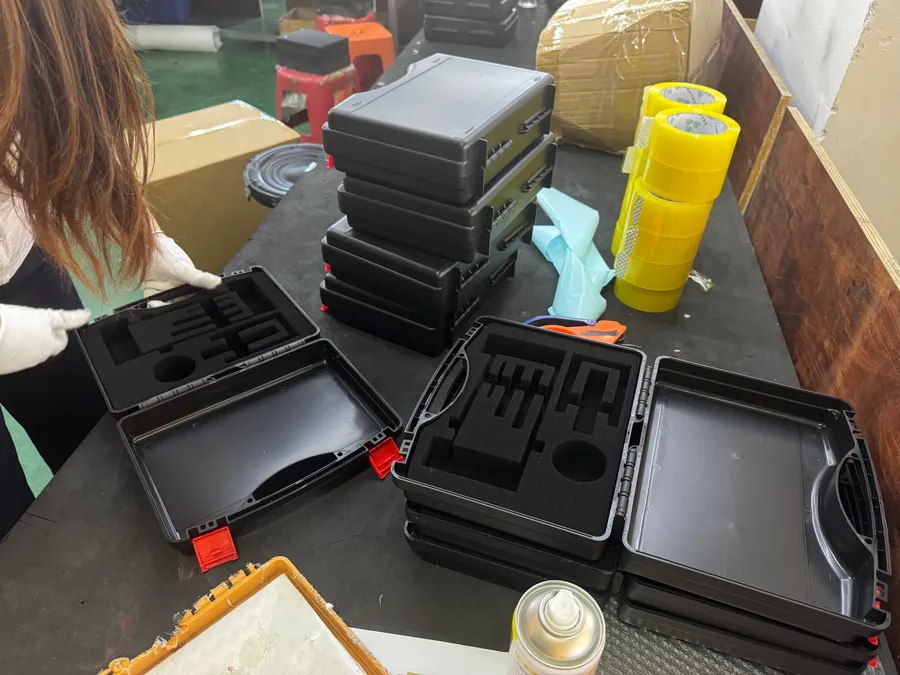
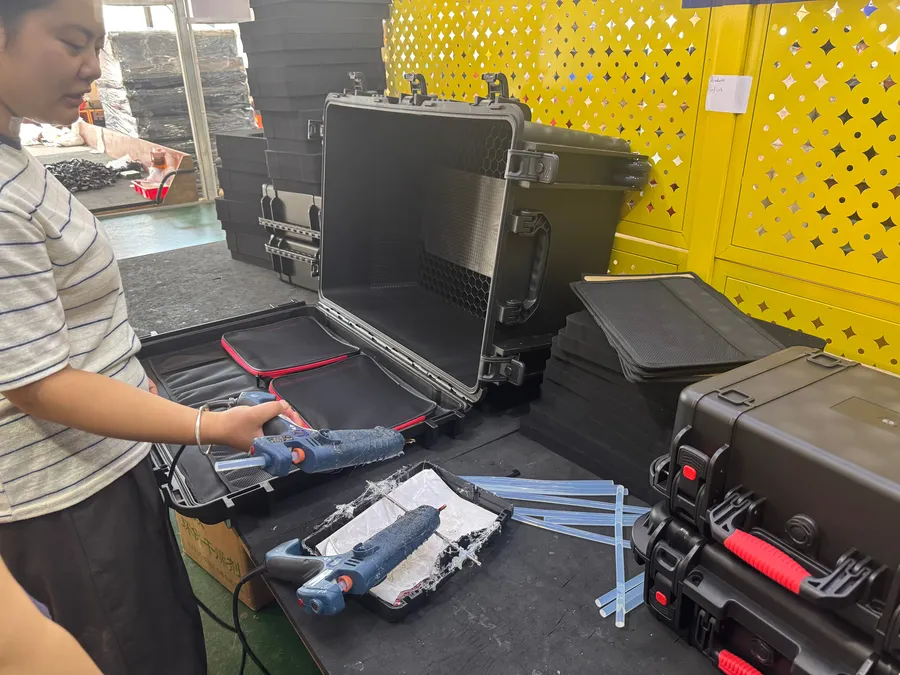
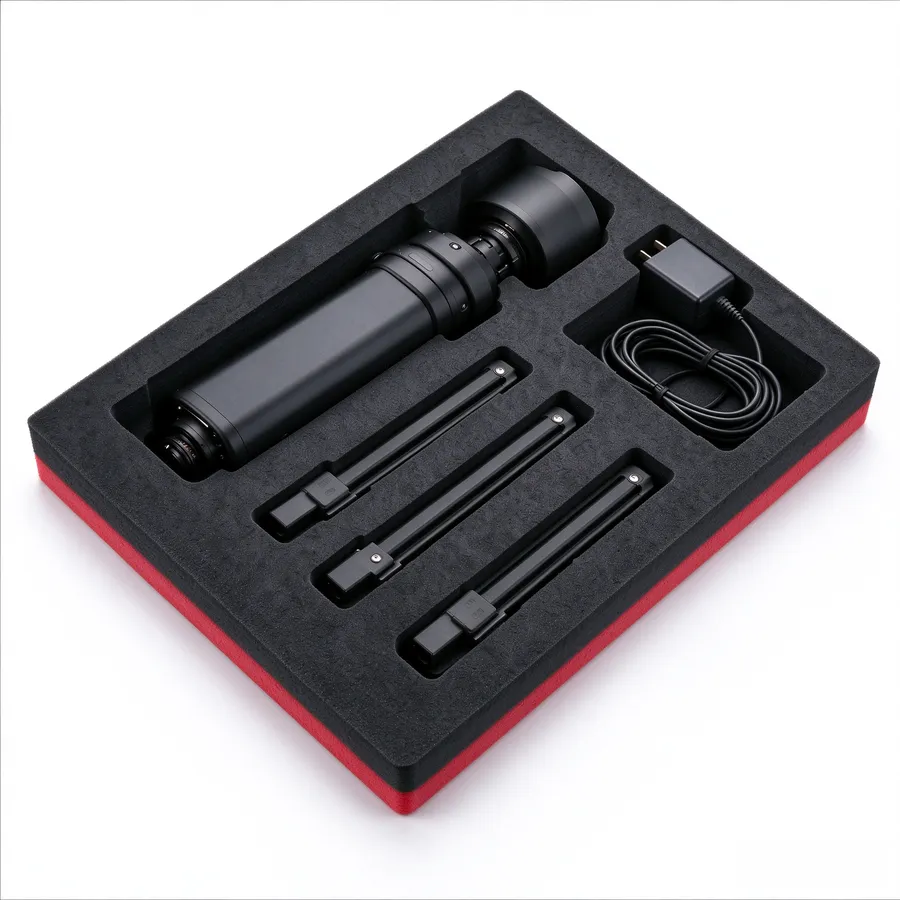
For outdoor loads the interior carries most of the value, and the changes are routine: layered cut plank with a firmer base under cookware and a softer face against glass and glaze, pockets shaped to a pump, a stove, a torch body or a tube diameter, elastic loops and small-part trays in the lid, dividers that turn one box into two, absorbent layers under anything that can leak, and printed outlines or item numbers so a shared team box can be checked in seconds. Shell and specification changes are OEM or ODM projects quoted per build: colour, a marking band or label window, latch count, a padlockable hasp, a breather position on a sealed moulding, a tether point, a moulded logo or a shoulder strap arrangement. Since we ask what is actually going inside before proposing a shell, send a photograph of the packed kit, a drawing or a physical sample, and we confirm the material datasheet for the nominated model instead of assuming one grade across the catalogue.
Procurement Notes: Wholesale Terms, MOQ And Lead Time
KeXin New Materials (Guangdong) Co., Ltd. sells to wholesale and OEM or ODM buyers on EXW or FOB terms only. There is no retail channel, no delivered-duty-paid quotation and no overseas warehouse, so freight is arranged by the buyer or quoted separately as logistics rather than folded into a unit price. On existing moulds the standard MOQ starts at a single piece and custom foam is likewise quoted from one, which lets an outfitter trial a box with real gear before committing to a fleet; colour, logo and OEM production begin near 300 pieces and a custom mould near 3,000 pieces per component. A first OEM article on existing tooling runs about 45 days and a new mould about 125 days, with a 30 per cent deposit and the balance paid after inspection and before shipment. Third-party inspection at our facility is welcome before goods leave. Send the packed dimensions and the quantity to Fred Zhao or the KeXin Sales Team, WhatsApp +86 135 3588 0002, and the reply names the model with its published figures or states plainly what has not been measured.
Field operation supplies case: what the published data answers
A supplies load is a different problem from a gear load. Consumables are many, small, light for their volume, and organised by contents list rather than by shape: dressing refills, tape, gloves, batteries, fasteners, water treatment, labels, a printed inventory. The case that works is therefore chosen on internal footprint and lid depth first, because you need to see and reach the top layer without unloading the box, then on whether the model records a gasket, and only then on litres. The figures below are published model by model in our product library; fields we have not measured are named as not measured rather than filled in with a rating.
| Search | Deciding Figure | What We Publish |
|---|---|---|
| field operation supplies case | Internal footprint and lid depth, so the top layer stays reachable | A mixed consumables load is chosen on footprint before litres. KX-4010 publishes 390 x 315 x 88 mm internal at a 3.0 mm PP wall, a 44/44 mm lid-and-base split, 1015 g and 10.8 litres, with a compressible gasket recorded, so dressings, tape and small packs lie flat and stay visible. KX-3213 gives 308 x 230 x 118 mm internal at a 3.0 mm wall with an 86/32 mm split, 860 g and 8.4 litres for packs that stand up. We publish no ingress code and no load rating for either shell. |
| field operation consumables box with dividers | Pocket plan first, then the seal field | Small packs fail in transit by migrating, so the cut decides more than the moulding. KX-712 publishes 308 x 250 x 96 mm internal at a 2.8 mm engineering-PP wall, a 54/42 mm split and 710 g, and KX-63612 gives 333 x 217 x 114 mm internal in 3.5 mm ABS at 1300 g and 8.2 litres with a gasket recorded. Die-cut, layered or pick-and-pluck foam is quoted from one unit with no tooling. Note that KX-712 records no gasket, so a wet-weather kit needs the gasketed body instead. |
| first aid and dressing resupply case | Clean interior, lid-zone document pocket | A resupply box for dressings and consumables is an identification and cleanliness question before it is a protection question. KX-4012 publishes 380 x 305 x 110 mm internal, a 3.5 mm engineering-PP wall, an 85/25 mm split, 1480 g and 12.7 litres with a gasket listed, and a lid-mounted document holder is an option on that body for the contents list. We publish no sterile barrier, no biocompatibility figure and no temperature range; those fields are not measured by us, and sterile packaging stays with the maker of the consumable. |
| spares and fastener case for field operations | Shallow tray depth plus wall thickness | Loose hardware wants a shallow, flat tray and a wall that survives being dropped off a tailgate. KX-4312 publishes 420 x 260 x 104 mm internal at a 3.5 mm PP wall, a 52/52 mm split, 1170 g and 11.4 litres with a gasket listed, keeping a fastener tray readable at a glance; KX-63413 is the heavier answer at 310 x 255 x 106 mm internal, 4.8 mm ABS, 1680 g and 8.4 litres. Stack load is recorded as not measured, so a racked installation and its restraints stay your engineer's call. |
| vehicle-mounted supplies boxes that stack | Repeated external footprint and stackable foot | A rack rewards the same footprint repeated, so read external size and the stackable field together. KX-704 publishes 350 x 220 x 80 mm internal at a 2.1 mm wall, 630 g and 6.2 litres; KX-705, KX-706 and KX-707 continue the family at 12.7, 15.9 and 20.2 litres, each 2.1 to 2.5 mm engineering PP and each recorded stackable. None of these four records a gasket. For a heavier consumables box, KX-5321 gives 481 x 373 x 192 mm internal at a 5.8 mm wall and 34.4 litres with a 43/149 mm split, so the mass sits in the base. |
| wholesale supply levels for field supplies cases | Pieces per carton and carton footprint | Reorder quantities are set by carton data, not by case litres: KX-704 ships 20 pieces in a 740 x 550 x 480 mm carton, KX-712 sixteen pieces in 635 x 585 x 455 mm, KX-3218 twelve pieces in 645 x 530 x 550 mm, KX-64114 eight pieces in 755 x 425 x 580 mm and KX-5321 three pieces in 530 x 440 x 635 mm. KeXin sells wholesale, OEM and ODM only, on EXW or FOB terms with a 30 percent deposit and the balance after inspection; we do not sell retail, do not quote DDP and hold no overseas warehouse stock. |
Internal versus external: the arithmetic a supplies list forces on you
Supplies are usually stored against a shelf, a drawer bay or a crate profile, which means the outside of the case is the constraint and the inside is the result. Compare the two published fields rather than trusting a nominal size: KX-4010 lists 400 x 360 x 100 mm external against 390 x 315 x 88 mm internal, so a wall and a tapered mould take 10 mm of length, 45 mm of width and 12 mm of height, and that 45 mm is exactly where a divider plank stops fitting. Then read lid depth against base depth, because a 44/44 mm pair keeps a shallow top layer visible while an 85/25 mm pair such as KX-4012 puts most of the cavity in the lid, which is wrong for anything you reach for daily. Only after those two readings does the volume field mean anything, and only the net weight field tells you what a carried box actually costs in a day.
What we do not state for supplies cases
The same limits apply to every model named on this page, and we would rather print them than bury them. We publish no ingress protection code, no stack-load figure, no operating temperature range, no ultraviolet figure and no sterile or biocompatibility claim; in our product library the waterproof, dust, temperature, ultraviolet and stack-load fields are recorded as not measured, and the shock and impact entries are configuration options that depend on a specified foam layout rather than properties of the bare shell. What is measured and published per model is internal and external dimensions, wall thickness, lid and base depth, net weight, interior volume, gasket presence, carton packing and the hardware fitted to that body. Across our 155 shells, 124 record a compressible gasket in a continuous moulded channel and 31 record none. Where a contract needs a documented figure, we quote accredited third-party testing for that exact shell, seal and foam build as a separate work package.
Customisation
Everything described above is configurable on a standard shell: interior layout (pick-and-pluck, die-cut or CNC-cut), foam grade and thickness, colour, logo method, latch and lock count, pressure-equalisation valve, cable ports, document holder and identification plate. A bespoke exterior geometry requires a new mould — 125 days, from 3,000 units per moulded component.
Procurement considerations
| Question | What to send us |
|---|---|
| Which shell fits? | Equipment L × W × H as packed, plus required clearance per axis |
| What does it cost? | Order quantity and estimated annual quantity — the two drive different answers |
| Is tooling needed? | Whether an existing shell clears the envelope with usable foam depth |
| Lead time? | Your required delivery date, not just the order date |
| Certification? | The exact standard your tender names — we will say whether we can test to it |
| Freight? | Destination and preferred terms; carton and pallet data supplied with the quotation |
Comparison and selection guide
The tables on this page exist because a protective case is chosen by comparing three things: the envelope, the environment and the handling chain. Where no table applies, the rule below is.
| Situation | What To Do |
|---|---|
| Marine or wet | Sealed configuration with a drain-friendly interior and stainless hardware. |
| Dry and dusty | A close-fitting rim and a lid that can be opened one-handed without spilling contents. |
| Carried far | Under 10 kg packed, with a padded handle or shoulder webbing. |
- Size on internal dimensions plus clearance, never on a product name.
- Choose the carrying method before the shell: it changes the series, not just the price.
- Specify the interior last, and decide up front whether the end user will reconfigure it.
Protective Cases for Outdoor & Field Operations Equipment for Camping & Overlanding relates to Protective Case Basics. Related families: Outdoor Protective Cases / Waterproof Cases / Tactical Equipment Cases / Field Equipment Cases / Custom Protective Cases / Equipment Transport Cases / Rolling Cases. Related sectors: field and industrial equipment. Continue in the Protective Case Basics cluster.
This page is written from our own production data. If your requirement differs, send the dimensions and we will tell you which of the 155 models fits, or whether a custom route is needed.