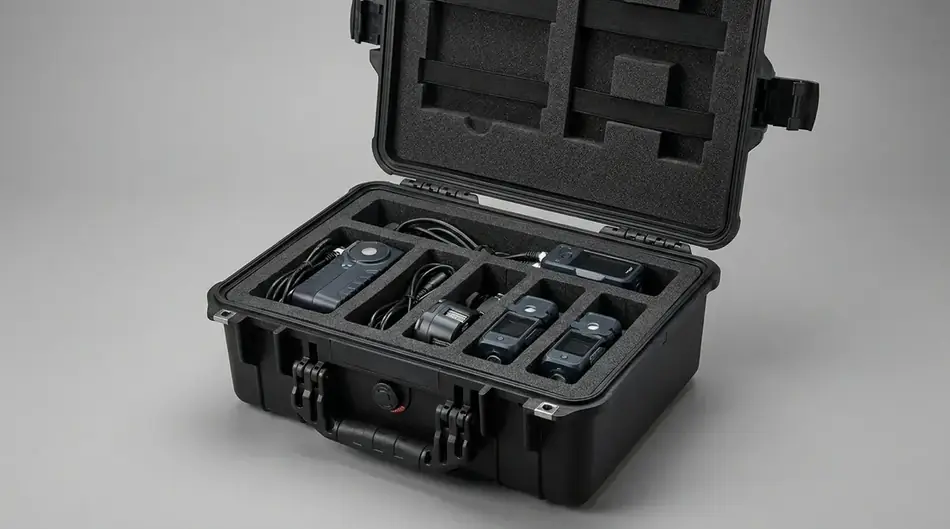
Can communication equipment cases include custom foam?
Yes, and it is the single most common request we get. A communication equipment case is built on a published mould, and the foam inside it is cut to your radios, patch panels, power supplies and cable sets rather than left as a generic slab. We offer the interior as pick-and-pluck you can reconfigure by hand, or as die-cut and CNC profiles in cross-linked PE, EVA and EPE for a fixed, repeatable layout. The shell size and wall thickness are set by the model you choose; the foam is what turns that box into a kit every technician packs the same way. Custom foam carries the lowest order floor of any option, starting from a single unit.
Key points
- Yes, the interior is cut to your radios, patch units and cables; a foam layout is made from a drawing, a photo of the packed kit or a sample.
- Pick-and-pluck suits field repair and shared stock that changes between jobs, while die-cut or CNC suits a fixed, repeatable kit.
- Foam is offered in cross-linked PE, EVA and EPE, built as base, top and egg-crate layers to locate and separate each item.
- Size the case from its internal dimensions first, then let the foam take the remaining space so nothing moves in transit.
- Custom foam has the lowest order floor of any option, from a single unit, while a logo or matched colour runs about 300 pieces.
- We publish measured internal dimensions per model and leave untested ratings blank, so request documented figures against the exact build.
The short answer: yes, and here is how
A communication equipment case is a moulded shell, and the foam inside it is what makes the case fit your specific kit. Rather than a flat slab, we cut the interior to the shapes you actually pack: radios, handheld transceivers, small patch units, power supplies, handsets and coiled cable sets. The cutting is driven by a reference you supply, a drawing, a photograph of the packed kit, or a physical sample, so each item drops into its own pocket and returns there every single time. The case does the crushing, stacking and weather work; the foam does the locating and separating, and it is the part that is genuinely customised.
Foam types for communication kit
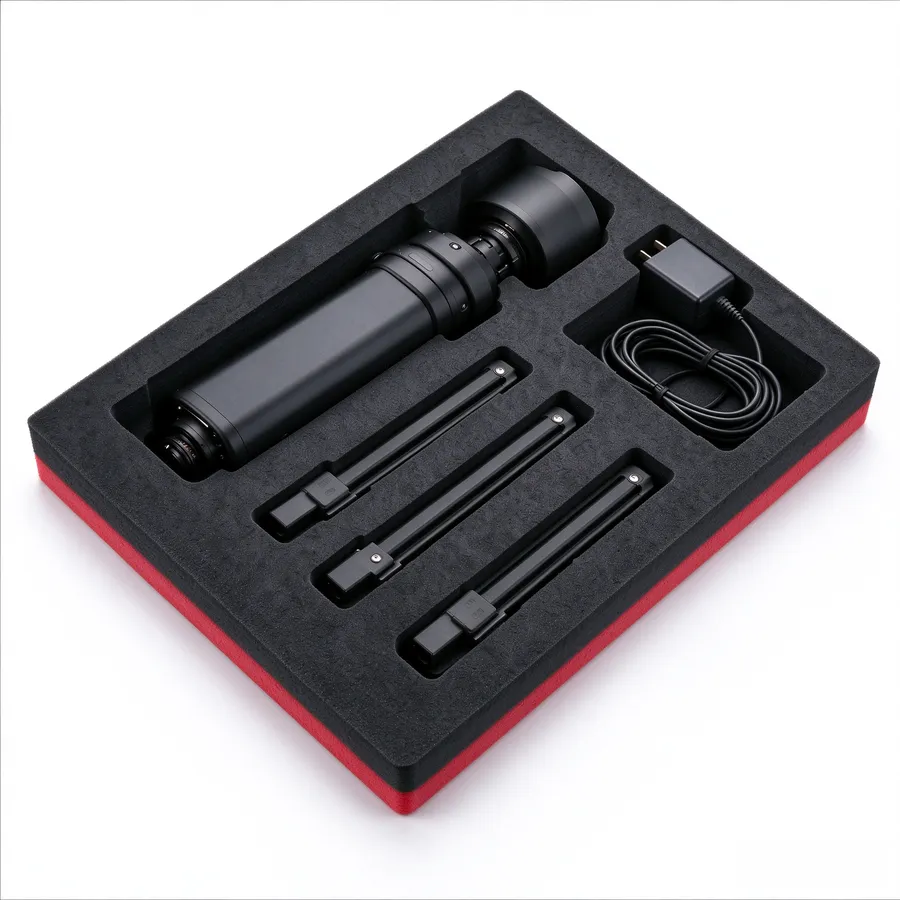
Our catalogue foam comes in pick-and-pluck, die-cut and CNC-cut profiles, made from cross-linked PE, EVA or EPE, and assembled as base foam, top foam, an egg-crate and convoluted face, or a layered build. Pick-and-pluck is the flexible option: a technician tears out a cell to drop in the next job's gear, which suits shared or mobile inventory. Die-cut and CNC are the fixed options: each device gets a machined pocket that holds it in one position, which suits a standardised kit that is packed identically every day. Many communication cases use both, a die-cut base for the radios and a pluckable top for cables and small accessories, so the layout is stable where it must be and adjustable where it should be.
Why the interior, not the shell, decides fit
The shell of a published model is fixed. Its internal length, width and depth and its wall thickness do not change with a logo or a colour, so a case is only as good as the way the foam inside it holds your equipment. A deep box with the wrong insert still lets a transceiver rattle; a shallow box with a tight die-cut layout carries fragile hardware safely because nothing is free to move. So specify the case from the internal dimensions of your largest item plus a clearance margin, then design the foam to fill the remainder. The number you can rely on is the measured internal size, not a claim about the outside of the lid.
How to choose a foam layout
| Layout Type | Best For | Reconfigure | Typical Use |
|---|---|---|---|
| Pick-and-pluck | Mixed, changing loads | Yes, by hand | Field repair and shared stock |
| Die-cut | One fixed kit, packed daily | No | Standardised radio sets |
| CNC profile | Deep or irregular pockets | No | Mixed radios, patch units, cables |
| Layered (base plus top) | Items held on both faces | Partly | Sensitive transceivers |
| Egg-crate / convoluted lid | Loose accessories and leads | Yes | Pressed over a die-cut base |
Representative sizes to foam against
Every number below comes from a published datasheet, in millimetres for the interior, with the wall thickness and the empty net weight. Communication gear tends to need depth, so the ABS six-series boxes give generous interiors: the KX-64120 offers a 378 x 307 x 187 mm interior with a 4.0 mm wall, and the larger KX-65522 reaches 507 x 385 x 190 mm at a 5.3 mm wall. A lighter PP shell such as the KX-3218 gives a 308 x 230 x 172 mm interior. Choose the internal depth for your tallest stacked item, then let the cut foam take the rest.
| Model | Material | Internal Mm | Wall Mm | Net | Internal Volume L | Seal |
|---|---|---|---|---|---|---|
| KX-3218 | PP | 308 x 230 x 172 mm | 3.0 | 900 g | 12.2 | Option |
| KX-4616 | PP | 455 x 338 x 148 mm | 3.0 | 1395 g | 22.8 | Option |
| KX-63619 | ABS | 333 x 217 x 175 mm | 3.5 | 1660 g | 12.6 | Option |
| KX-64120 | ABS | 378 x 307 x 187 mm | 4.0 | 2640 g | 21.7 | Option |
| KX-65522 | ABS | 507 x 385 x 190 mm | 5.3 | 4860 g | 37.1 | Option |
| KX-93221 | Engineering PP | 300 x 200 x 200 mm | 5.0 | 1230 g | 12.0 | Option |
How these cases are used in the field
The common thread is a kit that must be packed and unpacked many times without a device being dropped or swapped between pockets. A telecoms integrator carries handhelds, a charger, spare batteries and patch leads in a die-cut base with a pluckable top. A public-safety or defence unit standardises a radio set so that every case leaves the store in the same configuration. A service engineer moves between sites and needs a layout flexible enough to change between jobs. Across all of these the foam is the part that is actually customised, while the shell is chosen once and then reused for years, which is why cut quality and foam recovery matter more than decoration.
Ordering customised foam
Customised foam is the cheapest and lowest-commitment form of customisation we offer. It starts from a single unit to build a layout, far below the roughly 300-piece floor that applies to a printed logo or a matched colour on the shell. You send a reference, a drawing, a photograph of the packed kit, or a sample device, and we cut pick-and-pluck, die-cut or CNC profiles in cross-linked PE, EVA or EPE, then assemble base, top and egg-crate layers around your items. Because it is configuration inside an existing mould, it carries no tooling charge and no new-mould lead time, which is why most buyers begin with the foam and only later consider branding or a new size.
Customising beyond the foam
Once the interior is right, the rest of the case can be configured on the same published tool. A padlock through the latch body, a matched colour, your logo on the lid, a printed carton carrying your item codes, or a shoulder strap are all options, each with its own order floor. These change the surface and the paperwork, not the protection: a KX-64120 with a 4.0 mm wall protects identically whether or not it carries your brand. If you need an internal size no published model offers, that is a new mould, from roughly 3,000 pieces per component and about 125 days, rather than a foam or branding change. We do not claim a rating the model has not been measured against, and leave any untested field blank.
Notes before you order
Supply a real reference for the foam, because a layout guessed from a written description will not match fragile hardware. Check the internal depth against your tallest stacked item, not against the picture on the page. Approve a first-article sample before a batch of cut foam is repeated. Read the terms plainly: this is wholesale and OEM work only, quoted EXW or FOB with a 30% deposit up front, and we do not retail, do not offer DDP and keep no overseas warehouse stock. Any rating we have not measured stays blank on the datasheet, and accredited testing can be quoted separately when a tender needs documented figures. KeXin New Materials (Guangdong) Co., Ltd.
Customisation
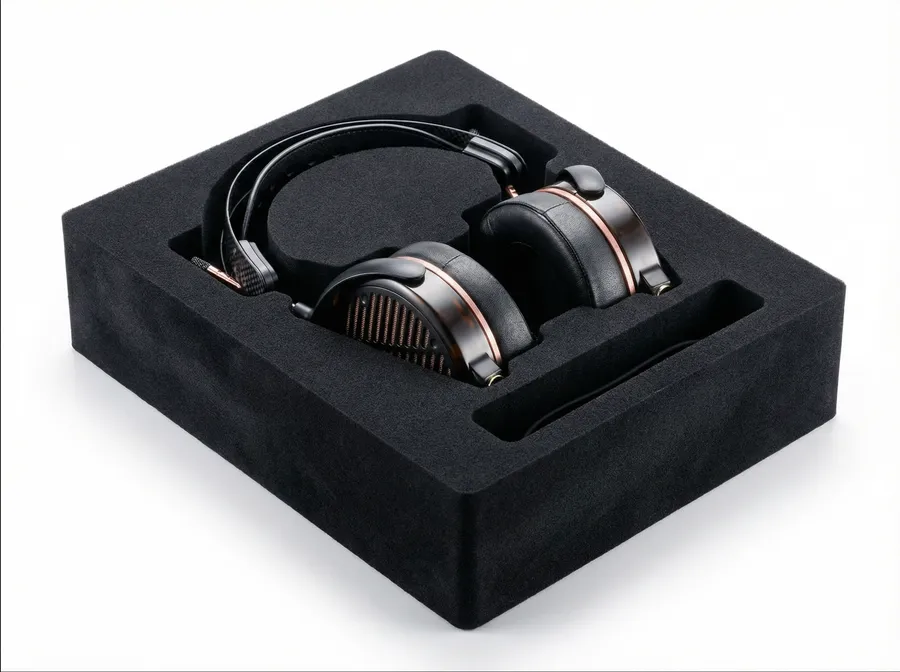
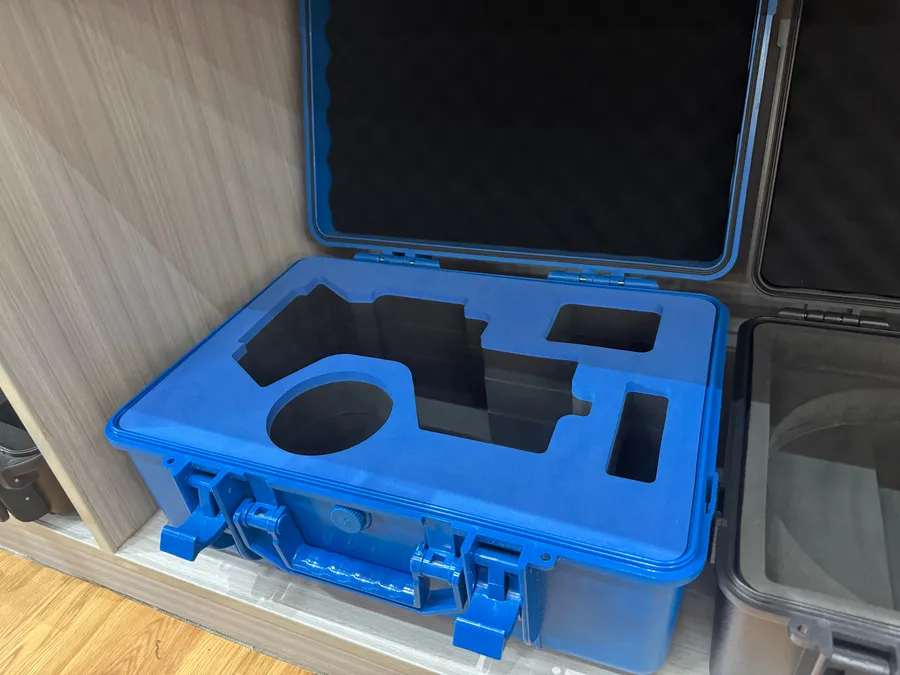
Everything described above is configurable on a standard shell: interior layout (pick-and-pluck, die-cut or CNC-cut), foam grade and thickness, colour, logo method, latch and lock count, pressure-equalisation valve, cable ports, document holder and identification plate. A bespoke exterior geometry requires a new mould — 125 days, from 3,000 units per moulded component.
Procurement considerations
| Question | What to send us |
|---|---|
| Which shell fits? | Equipment L × W × H as packed, plus required clearance per axis |
| What does it cost? | Order quantity and estimated annual quantity — the two drive different answers |
| Is tooling needed? | Whether an existing shell clears the envelope with usable foam depth |
| Lead time? | Your required delivery date, not just the order date |
| Certification? | The exact standard your tender names — we will say whether we can test to it |
| Freight? | Destination and preferred terms; carton and pallet data supplied with the quotation |
Comparison and selection guide
The tables on this page exist because a protective case is chosen by comparing three things: the envelope, the environment and the handling chain. Where no table applies, the rule below is.
| Situation | What To Do |
|---|---|
| Battery isolation | Separate pockets, terminals up, with a physical barrier between cells and connectors. |
| Cable management | Dedicated coiled-cable channels rather than a shared compartment. |
| Field repair | Reserve a small loose compartment for spare fuses, connectors and seals. |
- Size on internal dimensions plus clearance, never on a product name.
- Choose the carrying method before the shell: it changes the series, not just the price.
- Specify the interior last, and decide up front whether the end user will reconfigure it.
Can communication equipment cases include custom foam? relates to Military Case Guide. Related families: Communication Equipment Cases / Military Protective Cases / Electronics Cases / Instrument & Equipment Cases. Related sectors: field and industrial equipment. Continue in the Military Case Guide cluster.
This page is written from our own production data. If your requirement differs, send the dimensions and we will tell you which of the 155 models fits, or whether a custom route is needed.