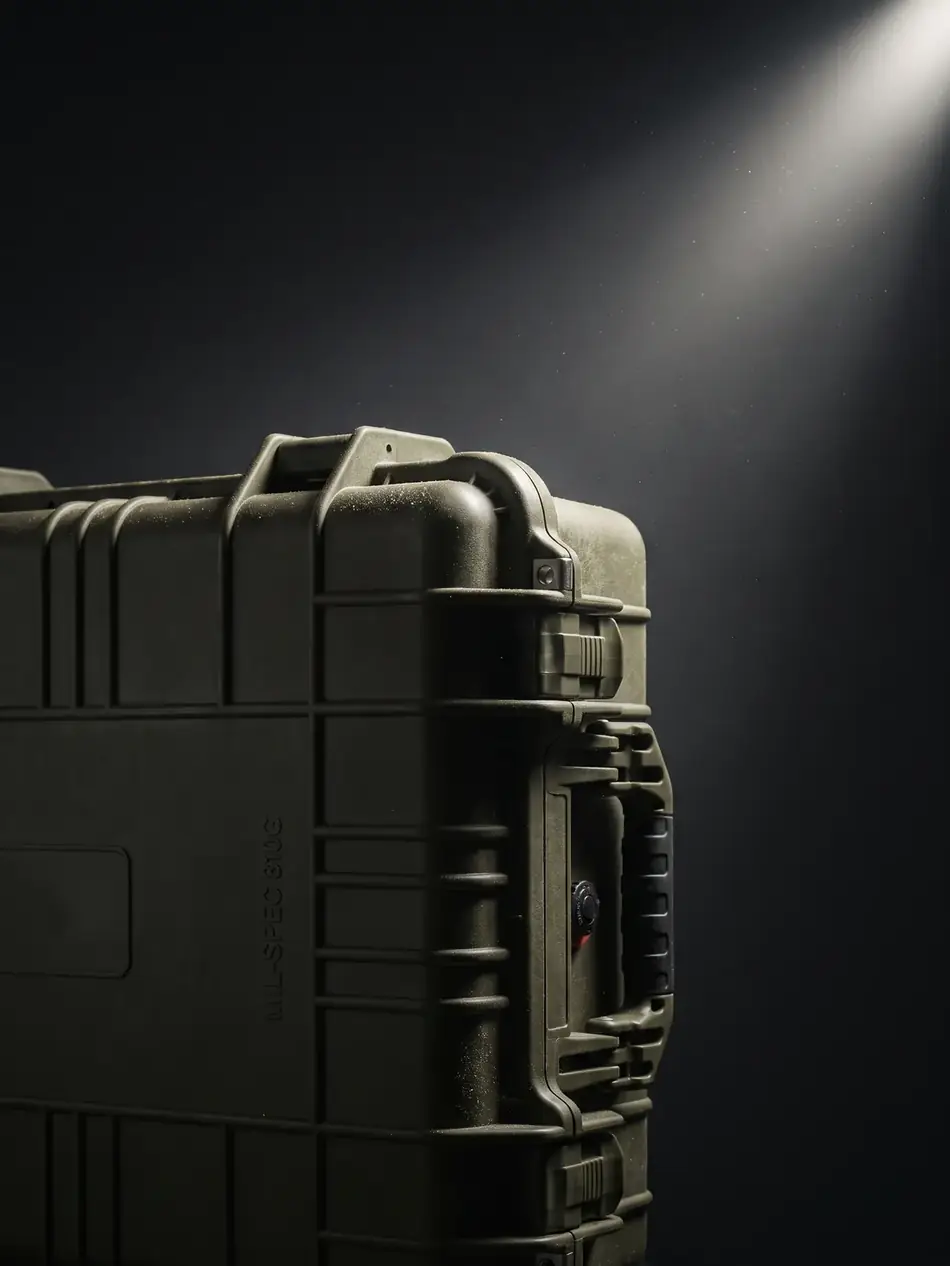
Why is equipment protection important during transportation?
Equipment protection matters during transportation because transit, not storage, is where gear meets the most uncontrolled variables in the shortest time: dropped corners, struck lids, sustained vibration, stack compression, water and grit at an open tailgate, and repeated handoffs between carriers. The case itself is usually the cheapest line on the order, while the radio, optic, instrument or payload inside it carries the real replacement price and the downtime behind it. Protection is delivered as a system rather than a single feature, because the shell, the closure, the gasket channel and the cut interior each answer a different damage mechanism, and an empty case simply passes energy through to the device. KeXin publishes measured internal and external dimensions, wall thickness and net weight for each of 155 models, so the level of protection is chosen from per-model figures instead of assumption, and any item we have not measured is left unstated rather than claimed.
Key points
- Transit concentrates uncontrolled events; a case must survive the sum of handoffs, not one dramatic drop.
- Compare protection cost against the value behind it, including repair, diagnosis and downtime, not against the case price.
- Shell alone transfers energy; the cut interior is what turns a point strike into a distributed load.
- Wall thickness and mass rise with duty per model: 5.3 mm and 4,860 g at KX-65522, 6.0 mm and 10,000 g at KX-97227.
- Palletised, multi-leg loads need stacking feet and a footprint that columns; single-carrier field moves prioritise carry features.
- Verify protection from published per-model data; treat any unmeasured attribute as unknown rather than assumed.
What actually happens to equipment between two points
Movement between a store, a vehicle, a forward position or a receiving dock exposes equipment to a small set of repeatable events: a corner taken down from hand height, a lid struck by a neighbouring load, continuous vibration transmitted through a truck body or an airframe floor, a stack that loads the case beneath it, rain and dust at an open tailgate, and the slow abrasion of a shell dragged across concrete. None of these is exceptional; together they are the normal background of any supply chain. Protection matters in transit because transportation gathers these events in a short window and outside the operator's control, whereas storage conditions are stable, known and largely fixable once chosen.
The value at risk is almost never the case
A protective case is one of the cheaper lines on a purchase order. The calibrated instrument, radio, optic or drone payload inside it can cost a multiple of the case, and the true loss is larger still: diagnosis, labour, a replacement part that is not in stock, the weeks of lead time behind it, and the schedule the equipment was supposed to support. That asymmetry is the whole argument for protection. A shell that looks heavy or expensive relative to its own price is frequently the cheapest item in the file once the payload behind it is counted, which is why defense and industrial programs specify the case as part of the equipment rather than as packaging purchased at the end of a project.
Where the exposure really comes from: handoffs
Most damage is not one dramatic event but the accumulation of many small ones across custodians. Goods leave our plant under an EXW or FOB term, move by inland haulage to a terminal, are handled at origin, travel the main leg, are handled again at destination and are then distributed onward. Every transfer brings new people, a new handling culture and a new chance of a dropped corner or a badly placed stack. A case built for transportation therefore has to survive the aggregate of those events, which is why the shell, the closure hardware, the hinges, the sealing channel and the interior have to be considered as one system and not as a feature list scored line by line.
Damage mechanisms and what answers them
| Hazard | How It Arrives | Protective Response | What We Publish Per Model |
|---|---|---|---|
| Impact and drop | Handled at docks, loaded over a bed rail, tipped at a corner | Shell wall and ribbing plus a cut interior that holds the device in one plane | External and internal dimensions, wall thickness in mm, net weight |
| Sustained vibration | Truck bodies, rail, airframe floors, long main legs | Foam that damps rather than transmits, and no hard point contact on connectors | Interior envelope and lid and base depth so the cavity can be planned |
| Stack compression | A pallet column or a container wall pressing on the top case | Stacking feet and a lid stiff enough to carry the column above it | Whether the model is stackable, and its external height per model |
| Water spray and grit | Open tailgates in rain, wash-down areas, field camps | A continuous moulded gasket channel with a compatible lid and closure | Whether a seal is offered on that model; it is not a family-wide feature |
| Shifting inside the case | The device travelling loose in an oversized cavity | Interior matched to the payload, with relief pockets for connectors | Internal volume in litres so the fit can be checked before cutting |
| Operator fatigue and misuse | Long carry distances, repeated loading, awkward weight | Handle, strap, wheels or weight chosen for who carries it and how far | Net weight and whether telescopic wheels and handles are fitted |
Protection is a system: shell plus closure plus interior
A hard shell on its own transfers energy; what protects the device is the combination of shell, closure and interior. In this catalogue published wall thickness rises with size and duty rather than sitting at one family value. KX-65522 is a 5.3 mm ABS shell offering 507 by 385 by 190 mm of interior at a net weight of 4,860 g. KX-6621 moves to a 6.0 mm engineering PP shell with 587 by 434 by 192 mm of interior at 6,420 g. At the heavy end, KX-97227 pairs a 6.0 mm engineering PP shell with 590 by 435 by 210 mm of interior and a 10,000 g net weight on wheeled transport. Those are per-model figures, not an average across the range. The interior then decides what the payload actually sees: a closed-cell cut bed holds the device in one plane, keeps connectors unloaded and separates it from the walls, so an impact becomes a distributed load instead of a point strike.
How much protection is warranted: a selection guide
Size the protection with four questions. First, what is the value and fragility density of the load, since a lens or a calibrated module justifies a cavity design that a bundle of cables does not. Second, how many handoffs will it pass through, because each one is an independent chance of a drop and a multi-leg route argues for a thicker wall and a sealed channel. Third, does it travel palletised in a column or by hand, because stacking changes what the lid must carry; a stackable model such as KX-5321 at 4,810 g serves a different pattern from a wheeled KX-96027 at 6,110 g. Fourth, is the case returnable or one-way, since a returnable fleet is opened, cleaned and re-stocked many times and should be standardised on one shell series with interiors held on controlled drawings.
Where protection earns its keep in the field
The pattern repeats across categories. Communication and radio kits travel on rough routes and are opened under pressure, so they need a cavity that also organises batteries, handsets and feeds. Optical and measurement instruments are the least forgiving loads and usually need a deeper cut with relief where a barrel or a probe sits. Drone and payload cases combine a fragile body with awkward accessories that must not be stacked on top of it. Medical and field kits are judged on how fast the right item is found as much as on how well it arrives, which is a reason to plan the interior layout before the shell is chosen rather than after. In every one of these, the protection question is really a fit question: the same shell can protect well or badly depending on what is cut into it.
Customising protection to the payload
Because the interior carries much of the protective decision, customisation is where most buyers gain the most. Die-cut and CNC-cut closed-cell layouts are matched to the device, its accessories and its relief points, and layered or pick-and-pluck structures suit kits that change between jobs. Standard shells with custom foam start at low OEM bands, colour and logo work begins at around 300 pieces, and a bespoke internal geometry belongs at the new-mould quantity, with a first sample in about 45 days and a new mould in about 125 days on a 30 percent deposit. We work wholesale and OEM only, on EXW or FOB terms, so the freight decision stays with the buyer while the protective design stays with the factory and the drawing is kept on file for consistent restocks.
Purchasing notes and what we do not claim
Resolve protection from data rather than adjectives. Confirm the chosen SKU's published internal and external dimensions, wall thickness, net weight and whether a seal is offered on that model, and treat any attribute we have not measured as unknown rather than assumed; KX-65522 and KX-96027 are published with a sealing channel, KX-95419 and KX-5126 are not, and that difference belongs to the model, not to the range. Fix the interior layout, colour and options on the same order so the system stays consistent across restocks. Keep the pallet footprint and carton pack quantities in view early, since protection bought without a handling plan tends to be opened, repacked and eventually replaced. There is no retail channel, no DDP arrangement and no overseas warehouse, so plan quantity and inbound freight against the EXW or FOB term before committing to a series.
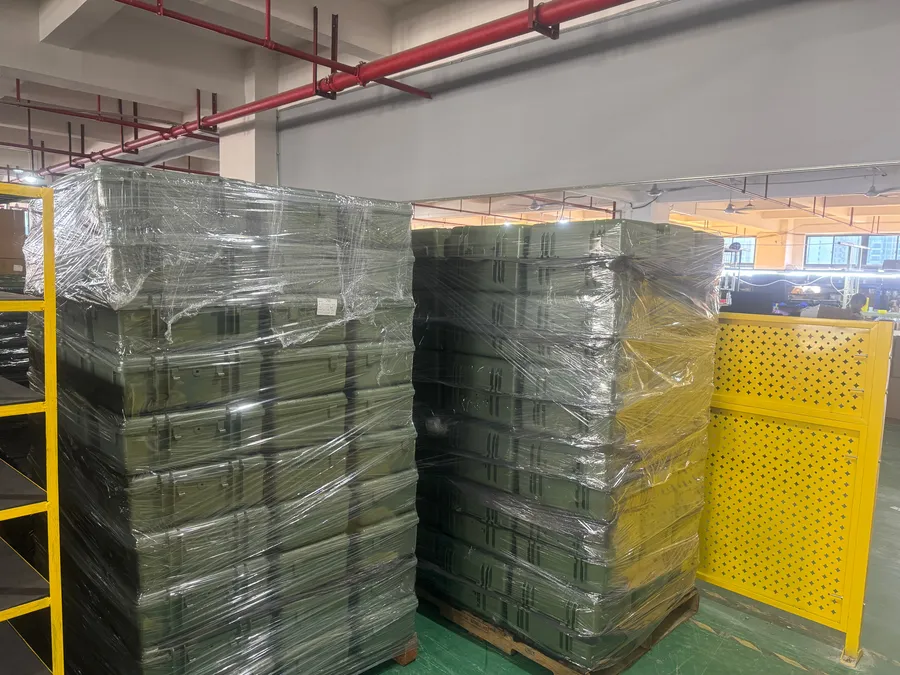
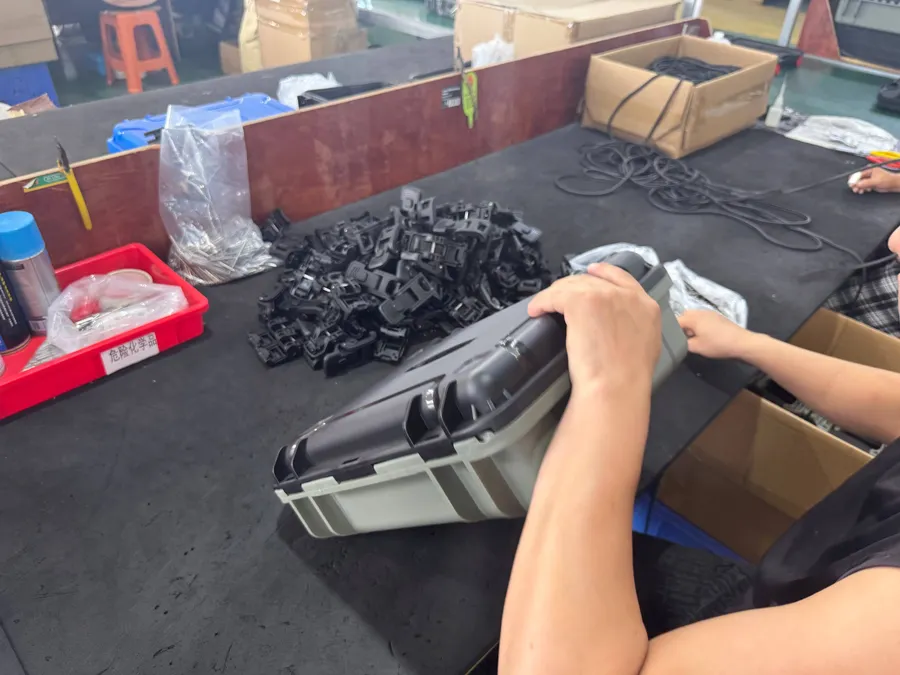
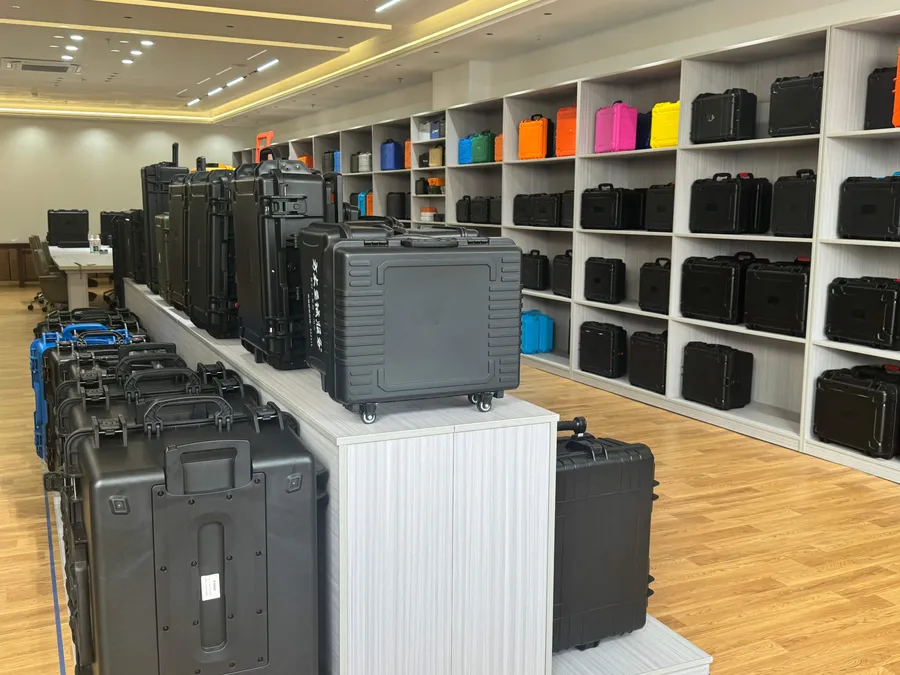

Customisation
Everything described above is configurable on a standard shell: interior layout (pick-and-pluck, die-cut or CNC-cut), foam grade and thickness, colour, logo method, latch and lock count, pressure-equalisation valve, cable ports, document holder and identification plate. A bespoke exterior geometry requires a new mould — 125 days, from 3,000 units per moulded component.
Procurement considerations
| Question | What to send us |
|---|---|
| Which shell fits? | Equipment L × W × H as packed, plus required clearance per axis |
| What does it cost? | Order quantity and estimated annual quantity — the two drive different answers |
| Is tooling needed? | Whether an existing shell clears the envelope with usable foam depth |
| Lead time? | Your required delivery date, not just the order date |
| Certification? | The exact standard your tender names — we will say whether we can test to it |
| Freight? | Destination and preferred terms; carton and pallet data supplied with the quotation |
Comparison and selection guide
The tables on this page exist because a protective case is chosen by comparing three things: the envelope, the environment and the handling chain. Where no table applies, the rule below is.
| Situation | What To Do |
|---|---|
| Free-drop height | With a 50 mm base foam layer, a 15 kg assembly sees a markedly lower peak deceleration than with 20 mm. Where the case is handled by hand off a vehicle, we specify the deeper base. |
| Stacking | A case that will be shipped stacked needs a wall thickness and rim geometry that carries the load through the shell, not through the lid. |
- Size on internal dimensions plus clearance, never on a product name.
- Choose the carrying method before the shell: it changes the series, not just the price.
- Specify the interior last, and decide up front whether the end user will reconfigure it.
Why is equipment protection important during transportation? relates to Military Case Guide. Related families: Defense Equipment Cases / Military Protective Cases / Equipment Transport Cases / Military Transport Cases. Related sectors: field and industrial equipment. Continue in the Military Case Guide cluster.
This page is written from our own production data. If your requirement differs, send the dimensions and we will tell you which of the 155 models fits, or whether a custom route is needed.