How should sensitive optical instruments be transported?
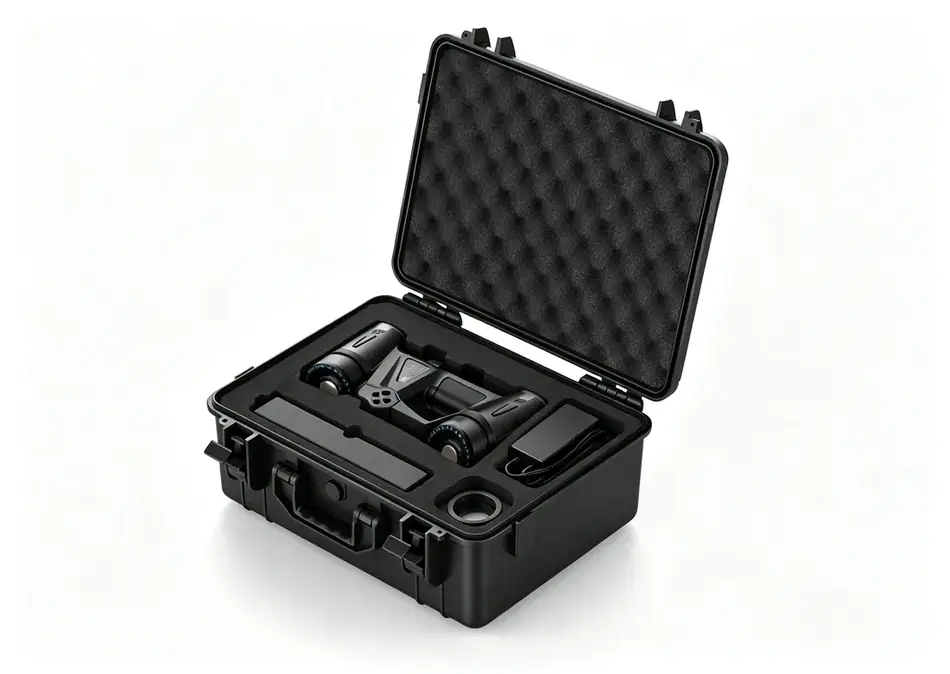
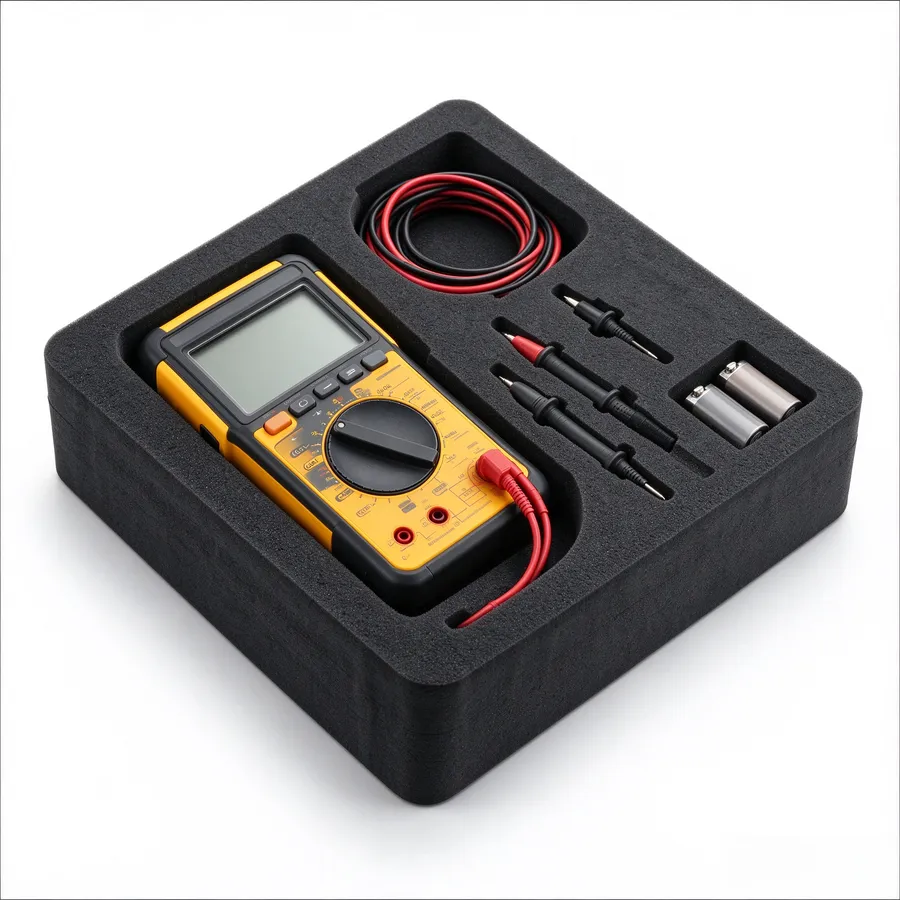
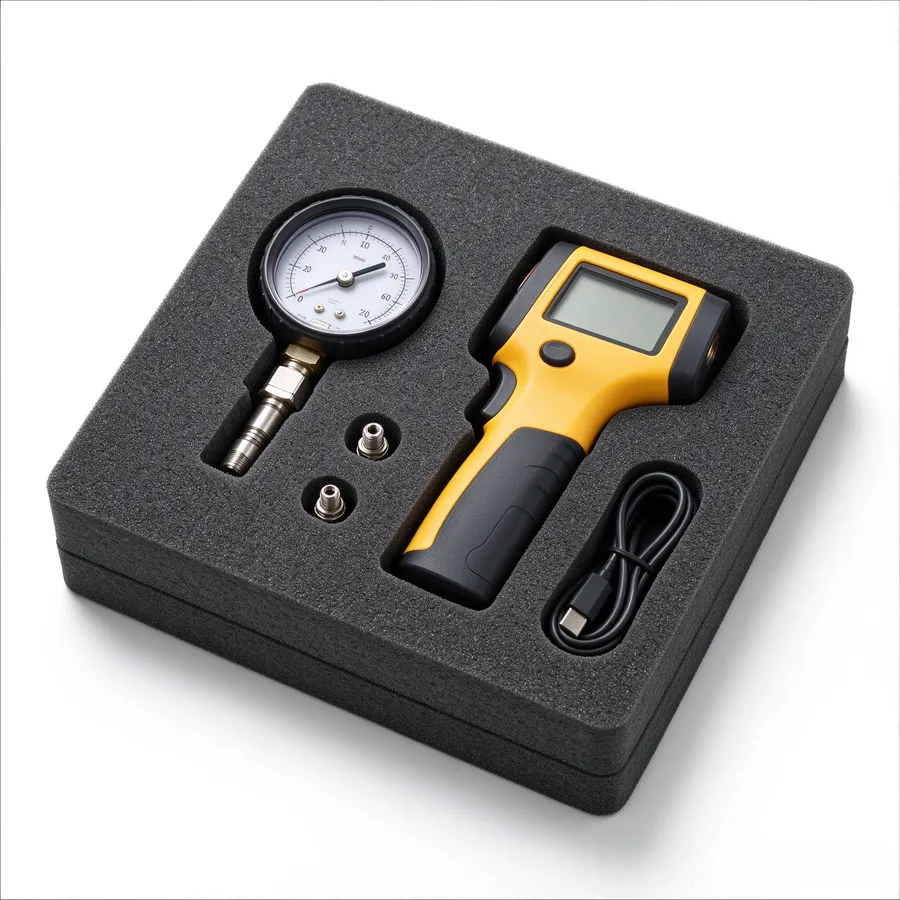
Sensitive optical instruments are transported by controlling the four things that take them out of calibration or ruin a surface: shock, rotation, point pressure on a lens or eyepiece, and ingress of dust and grit. A die-cut or CNC-cut closed-cell foam layout fixes the body and the optics as separate elements so nothing transmits shock into a joined assembly, blocks any moving part so rotation cannot shift the alignment, and leaves a relief pocket under every objective, eyepiece, prism housing and adjustment turret so no force lands on coated glass or a delicate mechanism. A continuous moulded gasket channel keeps grit away from the seals, and temperature is treated as a caution taken from the model's datasheet rather than an assumed limit. KeXin publishes internal dimensions, wall thickness and seal type per model, and lists any rating not measured on that SKU as not measured.
Key points
- Isolate the instrument from the shell with cut foam; a rigid box transmits shock into the alignment.
- Block rotation and moving stages so a shifted part cannot drag across an optical surface.
- Relief under the objective, eyepiece, prism and turrets keeps force off coated glass and fine mechanisms.
- A gasket channel keeps grit away from seals, because abrasive dust is the enemy of moving optics.
- Treat temperature and coatings carefully; use published figures, not assumptions.
- Draw the layout from the real instrument and confirm usable interior after foam before ordering.
Optics fail through alignment and surfaces
An optical instrument is damaged in two ways that ordinary gear is not. Its performance depends on alignment, so a shock that shifts a prism, a lens cell or a calibrated stage puts it out of service even with no visible mark. And its function depends on surfaces, so a scratch, a pit or a smear on a lens or a mirror is a permanent defect. Good transport practice therefore aims at two targets: keep shock and rotation away from the joined structure, and keep anything hard or gritty away from the glass. Everything below serves those two goals.
Shock isolation for a joined assembly
A rigid case transmits a jolt straight through to the instrument, and it is that transmitted shock that moves an alignment. A closed-cell PE or EVA die-cut or CNC-cut cavity fixes the body and cradles the optical tube so the foam carries the motion, damping the peak before it reaches the joined assembly. Where an instrument has a heavy optical head on a lighter base, the layout supports the head directly rather than letting it cantilever. This decoupling is why a well-cut interior on a modest shell protects optics better than a thick shell holding a loose instrument.
Blocking rotation and moving parts
Focus knobs, elevation and traverse stages, folding arms and rotating barrels are the parts that cause trouble when they are free, because a moving element driven by vibration can shift alignment or drag a component across a surface. The layout should block these in a fixed position with firm foam around the rotating member so it cannot turn in transit. Tripod threads, mounting plates and any detachable eyepiece are removed and seated separately so the instrument carries no loose mass that can swing against it.
Relief for lenses, eyepieces and turrets
Every exposed optical surface and fine mechanism needs clearance. The objective and the eyepiece sit in pockets that do not touch the glass faces, adjustment turrets get relief so the lid never presses on a knob, and prism housings are supported on their metal rather than their windows. This is the detail that separates a drawing-driven CNC-cut layout from generic pluck foam, because the exact position of each face is what the relief must avoid. Coatings are also easily abraded, so nothing gritty may share the surface contact area.
Dust, grit and the seal
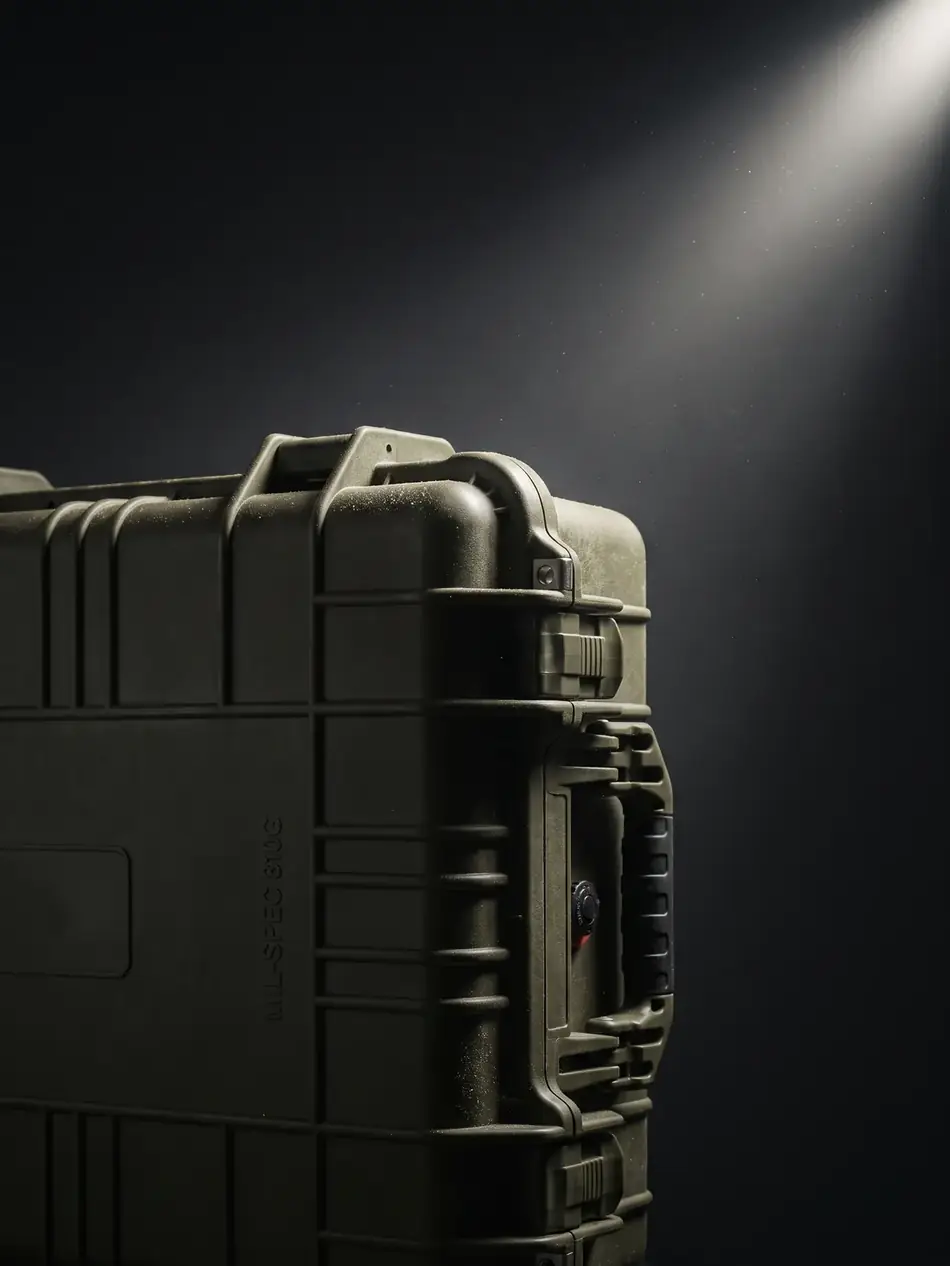
Abrasive dust is a particular threat to optics because a single grain worked across a lens scores it. A continuous moulded gasket channel with a compressible gasket keeps grit out of the interior, and it is a per-model attribute recorded as present or absent on the datasheet. The mid-size engineering-PP shell KX-85025 and the ABS KX-65522 both publish a compressible gasket in a continuous channel, with walls of 4.5 and 5.3 millimetres. Where a model lists no seal, do not assume one; choose a shell that actually has the channel for dusty routes.
Temperature and coatings caution
Rapid temperature change can fog optics with condensation and can stress bonded or cemented elements, so a genuine operating range should be taken from the model's datasheet rather than guessed. KeXin states an environmental value only where that specific model has been measured, and records the field as not measured otherwise. A buyer transporting coated instruments through cold-to-warm cycles should plan for condensation, for example by letting the case reach ambient before opening, and should raise any thermal requirement so the factory can point to models with relevant published data.
Reference shells by instrument size
| Instrument | Reference Model | Wall Mm | Seal |
|---|---|---|---|
| Compact spotting scope or monocular | KX-84825, internal 410 x 360 x 240 mm | 4.2 PP | Published gasket channel |
| Survey level or total station body | KX-85025, internal 463 x 338 x 231 mm | 4.5 engineering PP | Continuous channel |
| Instrument with head and tripod | KX-65522, internal 507 x 385 x 190 mm | 5.3 ABS | Continuous channel |
| Large optical rig with spares | KX-6621, internal 587 x 434 x 192 mm | 6.0 engineering PP | Continuous channel |
Procurement notes
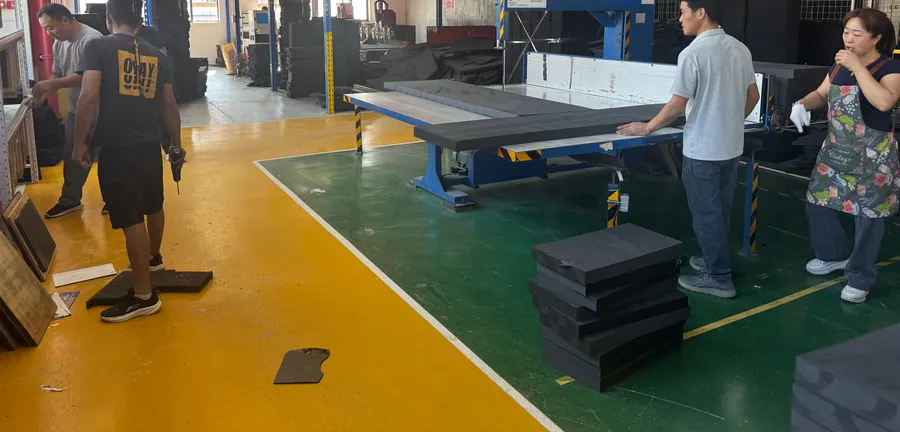
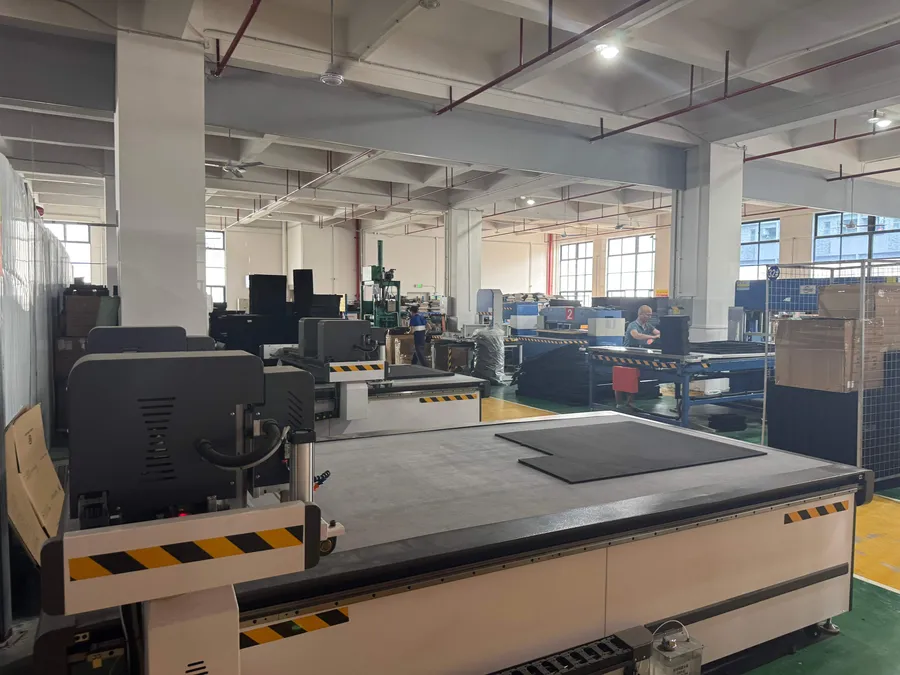
Send the instrument, its detachable parts and the chosen case SKU so the interior is drawn to the real faces and mechanisms and their relief needs. Confirm the model's published internal dimensions, wall thickness and seal type, and ask for the usable interior after foam before the layout is cut. Where any rating is marked not measured, treat it as unknown. Custom foam, colour, logo and packaging run on existing moulds at the standard OEM bands, with a first sample in about 45 days and a new mould only for a bespoke internal geometry. Orders are wholesale and OEM on EXW or FOB terms with a 30 percent deposit; there is no retail, DDP or overseas-warehouse arrangement.
Customisation
Everything described above is configurable on a standard shell: interior layout (pick-and-pluck, die-cut or CNC-cut), foam grade and thickness, colour, logo method, latch and lock count, pressure-equalisation valve, cable ports, document holder and identification plate. A bespoke exterior geometry requires a new mould — 125 days, from 3,000 units per moulded component.
Procurement considerations
| Question | What to send us |
|---|---|
| Which shell fits? | Equipment L × W × H as packed, plus required clearance per axis |
| What does it cost? | Order quantity and estimated annual quantity — the two drive different answers |
| Is tooling needed? | Whether an existing shell clears the envelope with usable foam depth |
| Lead time? | Your required delivery date, not just the order date |
| Certification? | The exact standard your tender names — we will say whether we can test to it |
| Freight? | Destination and preferred terms; carton and pallet data supplied with the quotation |
Comparison and selection guide
The tables on this page exist because a protective case is chosen by comparing three things: the envelope, the environment and the handling chain. Where no table applies, the rule below is.
| Situation | What To Do |
|---|---|
| Bare optic | Suspended body, both ends clear, soft contact layer. |
| Mounted system | Carrier under the mount, optic unloaded, tripod in a separate channel. |
| Night operations | Silent foam surface and a layout that can be opened without looking. |
- Size on internal dimensions plus clearance, never on a product name.
- Choose the carrying method before the shell: it changes the series, not just the price.
- Specify the interior last, and decide up front whether the end user will reconfigure it.
How should sensitive optical instruments be transported? relates to Military Case Guide. Related families: Optical Equipment Cases / Instrument & Equipment Cases / Defense Equipment Cases / Camera & Photography Cases. Related sectors: field and industrial equipment. Continue in the Military Case Guide cluster.
This page is written from our own production data. If your requirement differs, send the dimensions and we will tell you which of the 155 models fits, or whether a custom route is needed.