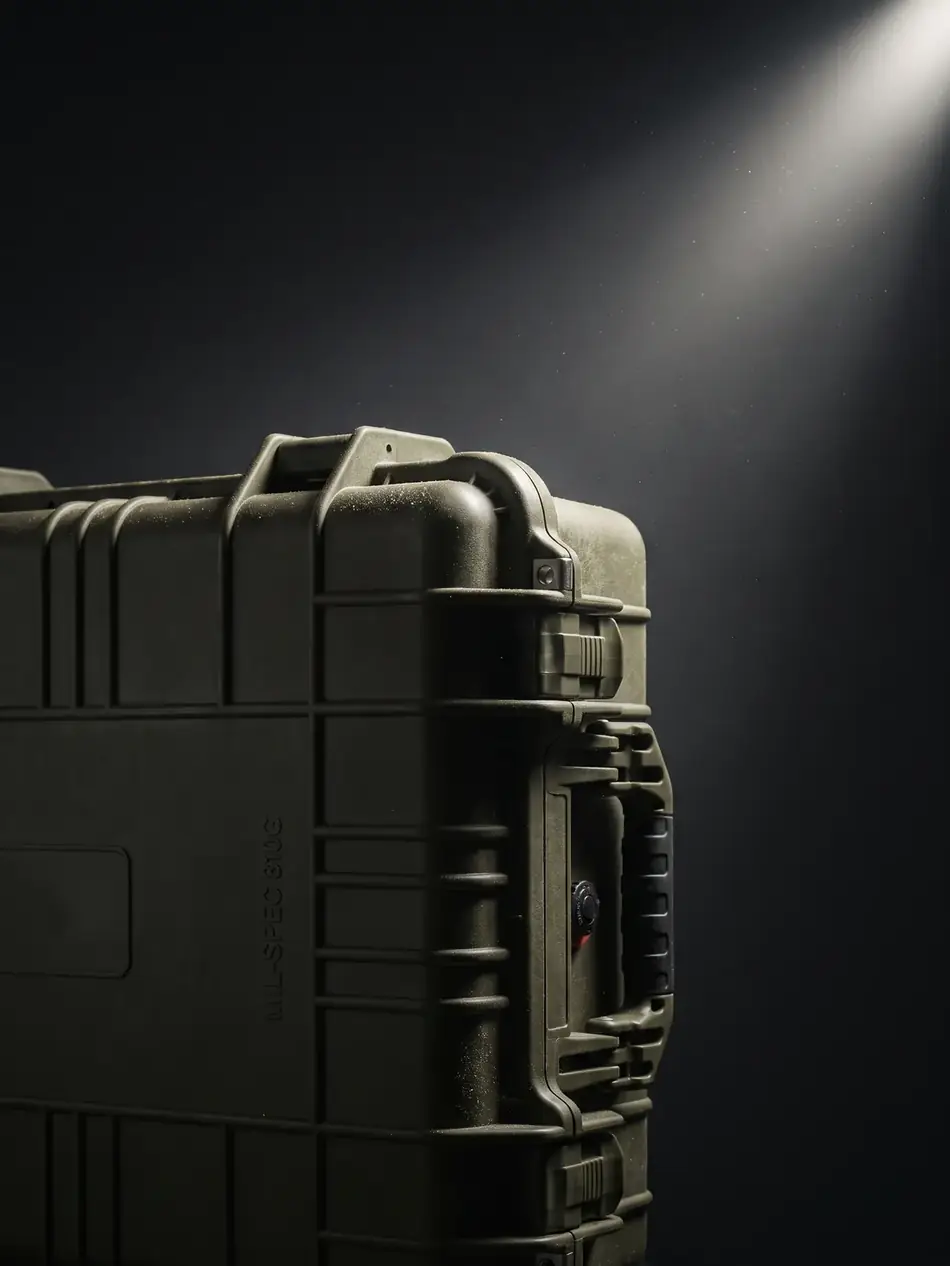
How does a military protective case protect equipment during transportation?
A military protective case protects equipment in transit by combining four mechanisms that each answer a different force. The moulded shell spreads and absorbs impact so a knocked corner does not reach the contents. A cut foam interior decouples the equipment from the shell so vibration and shock are damped before they reach the item. A latched lid with a continuous gasket channel holds that closure down and keeps dust and spray out. And a stackable, footed, sometimes wheeled geometry lets the case survive being carried, loaded and piled without the contents being crushed. Protection only works when all four are specified against the actual load and the actual route, and KeXin publishes shell and closure data per model, leaving any untested rating as not measured rather than inventing one.
Key points
- The shell handles the impact; the foam protects the equipment. Both are needed and neither substitutes for the other.
- Wall thickness is a per-model figure, and it is what determines how well the shell resists a corner knock or a stack load.
- Foam decouples the item from the case so road vibration never reaches the equipment directly.
- A gasket channel only protects if the latch pattern can hold the lid down evenly under a stack.
- Stackability, moulded feet and wheels protect against handling damage and load crush, not just weather.
- Any rating beyond published dimensions, wall thickness and seal type is stated only where it has been measured.
The shell manages the impact
The outer shell is the first line, and its job is to take the hit and spread it so the energy that reaches the interior is lower than the energy applied at the outside. Injection-moulded polypropylene and ABS shells do this through a combination of material toughness and wall thickness. The wall thickness is the more decisive variable and it is published per model: the deep transport shells in this line, such as KX-88442 and KX-88434, list a 5.0 mm wall, while mid-size shells like KX-86836 and KX-96127 list 4.8 mm. A thicker, tougher wall keeps the shell from deforming inward on a dropped edge, which is what protects the foam and, through it, the equipment.
The interior decouples the equipment
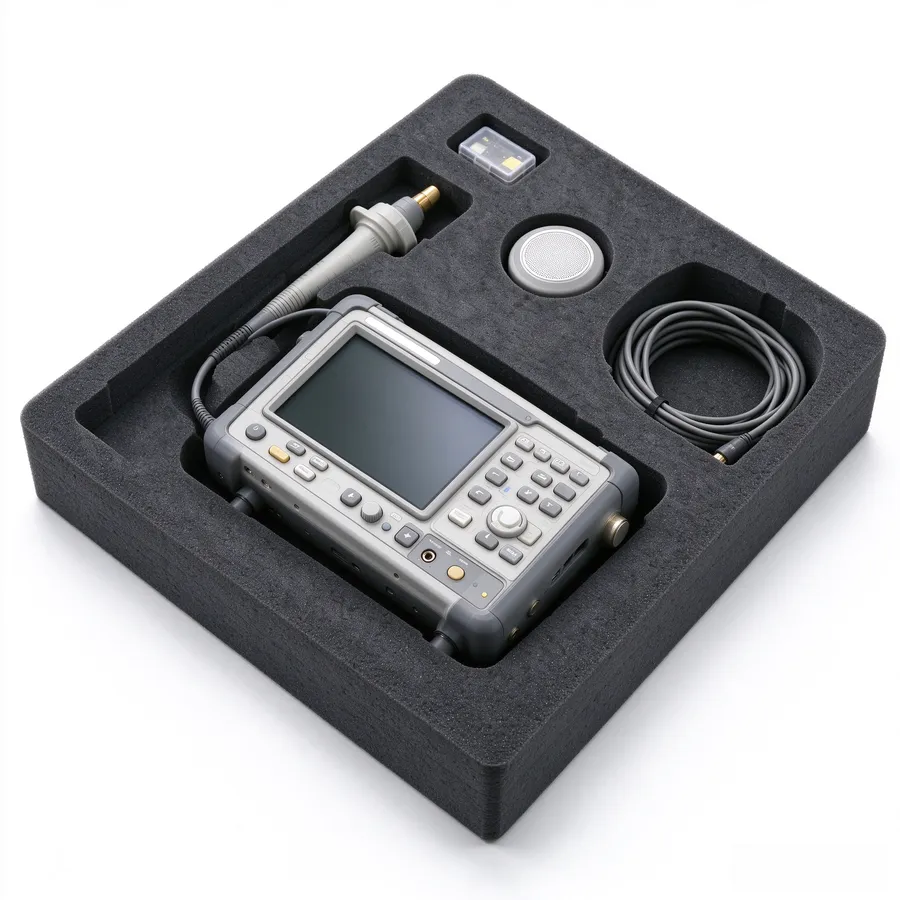
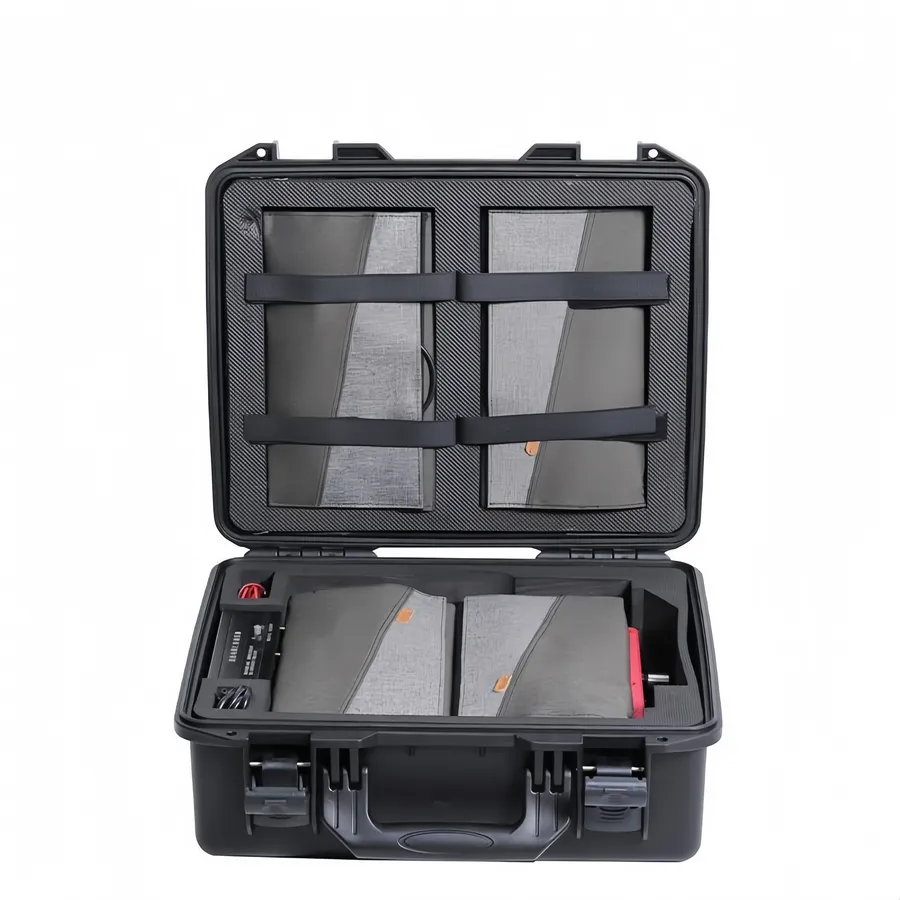
A shell alone does almost nothing for the contents, because a rigid box transmits shock straight through to whatever is resting inside it. The cut foam is what decouples the item from the structure. A die-cut or CNC-cut layout fixes the equipment in a shaped cavity so it cannot travel, and the closed-cell PE, EVA or EPE foam compresses under a jolt and returns, damping the peak force that reaches the item. A layered top plus base holds accessories off the main body, and relief pockets under an optic, connector, lens or antenna stop those fragile protrusions bearing load. This is where the real protection of sensitive military electronics, optics and instruments happens, and it is the reason a well-cut interior on a modest shell can protect better than a thick shell with a loose empty cavity.
Closure and seal under vibration
Transport is mostly vibration, and vibration gradually works a lid open if the closure is weak. A continuous moulded gasket channel with a compressible gasket keeps dust and road spray away from the interior, but the gasket can only do that if the latches hold the lid down evenly across its whole perimeter. Each model records its latch arrangement and the presence of the seal as measured where applicable. A single weak latch point lifts a corner of the seal under a stack, which is why the seal and the closure must be specified together, and why an even latch pattern matters as much as the gasket itself.
Surviving handling, stacking and carrying
Much military equipment damage happens during loading, not during driving. Moulded feet let one case index onto the lid of the one below so a stack does not walk sideways, and a stackable shell keeps its shape under the cases on top of it; the flat-lid transport shells such as KX-88421 and KX-87323 are marked stackable, while the taller wheeled variants trade stacking for mobility. Wheels and a telescopic pull on the larger shells remove the drop-and-carry risk on the way to a vehicle. Choosing between a stackable flat-lid shell and a wheeled tall shell is a protection decision as much as a convenience one, because each failure mode is different.
Protection attributes across reference models
| Model | Internal Mm | Wall | Closure And Seal | Handling |
|---|---|---|---|---|
| KX-88442 | 740 x 518 x 364 | 5.0 mm PP | Gasketed lid, latches, wheels | Wheeled tall shell, not stackable |
| KX-88421 | 740 x 518 x 189 | 5.0 mm PP | Gasketed lid, latches | Flat lid, stackable |
| KX-86836 | 595 x 460 x 315 | 4.8 mm PP | Gasketed lid, latches, wheels | Wheeled mid shell |
| KX-96127 | 545 x 545 x 210 | 4.8 mm PP | Gasketed lid, latches, wheels | Square foot print, mobile |
What protection data is and is not published
A clear-eyed protection claim is better than an impressive unverified one. KeXin publishes internal and external dimensions, wall thickness, shell material, seal availability, stackable status and hardware as measured or stated per model. Where a specific value such as a water or dust ingress classification, a drop height or a stack load has not been measured on the exact SKU you order, it is recorded as not measured and is never carried over from a neighbouring model. A buyer evaluating protection should therefore read the datasheet for the model, ask which figures are measured, and describe the transport route so the factory can tell them which values actually exist for that case.
Configuring protection for a real route
Protection is specified against the route, not in the abstract. A bench-to-van move with careful handling can rely on a modest wall with a good die-cut interior. A convoy, air-land or long-road campaign where cases are stacked and thrown points argues for a thicker shell, an even latch pattern, a genuine gasket channel and a layered interior. A system with delicate optics or connectors needs relief pockets and a shock-damping foam regardless of shell choice, because the protrusions fail long before the shell does. The right configuration is the combination that matches the forces on that specific route, and the interior drawing usually matters more than the outer shell number.
Procurement notes
Specify the case as a system: shell wall and material, gasket and latch pattern, and a foam layout cut to the real equipment drawing. Confirm each figure from the datasheet for the exact SKU, and treat fields marked not measured as unknown. Custom foam, colour, logo and packaging are available on existing moulds at the standard OEM bands, with a first sample in about 45 days and a new mould in about 125 days at higher quantity; a bespoke internal geometry is the only trigger for new tooling. Orders run wholesale and OEM on EXW or FOB terms with a 30 percent deposit, and there is no retail, DDP or overseas-warehouse arrangement, so plan inbound freight yourself.
Customisation
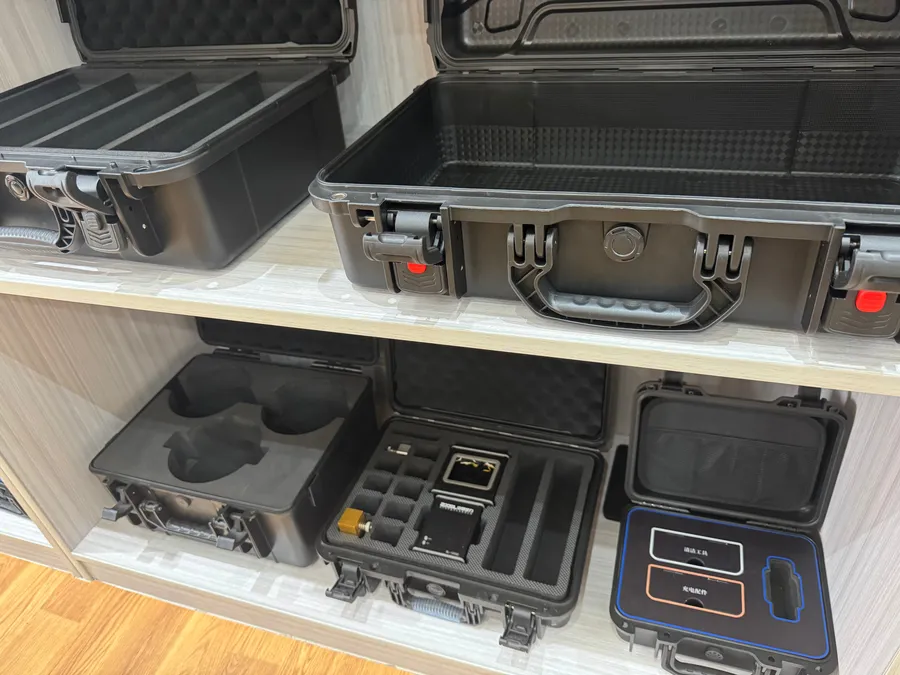
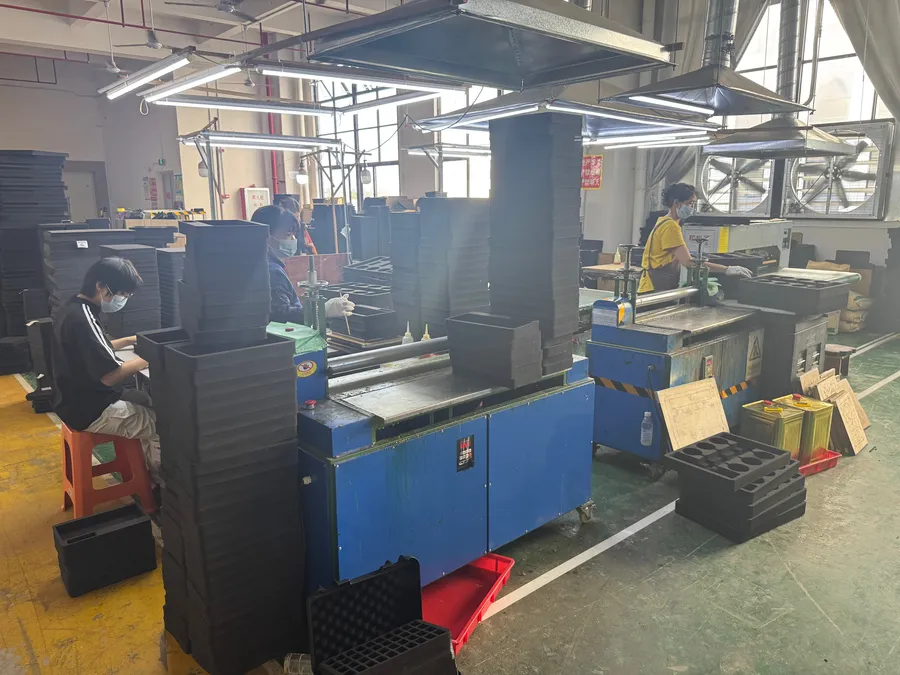
Everything described above is configurable on a standard shell: interior layout (pick-and-pluck, die-cut or CNC-cut), foam grade and thickness, colour, logo method, latch and lock count, pressure-equalisation valve, cable ports, document holder and identification plate. A bespoke exterior geometry requires a new mould — 125 days, from 3,000 units per moulded component.
Procurement considerations
| Question | What to send us |
|---|---|
| Which shell fits? | Equipment L × W × H as packed, plus required clearance per axis |
| What does it cost? | Order quantity and estimated annual quantity — the two drive different answers |
| Is tooling needed? | Whether an existing shell clears the envelope with usable foam depth |
| Lead time? | Your required delivery date, not just the order date |
| Certification? | The exact standard your tender names — we will say whether we can test to it |
| Freight? | Destination and preferred terms; carton and pallet data supplied with the quotation |
Comparison and selection guide
The tables on this page exist because a protective case is chosen by comparing three things: the envelope, the environment and the handling chain. Where no table applies, the rule below is.
| Situation | What To Do |
|---|---|
| Start from the equipment, not the case | Measure the tallest, widest and longest points of the packed equipment including antennas, handles and connectors. Add 20 mm minimum clearance per axis before selecting a shell. |
| Then choose the carrying method | Under 8 kg, a fixed handle is lighter and cheaper. Over 12 kg or any journey over 30 m, specify the T series with telescopic handle and wheels. |
| Then decide the interior | Pick-and-pluck for kits that change. Die-cut or CNC-cut for fixed layouts that must be auditable at a glance. |
- Size on internal dimensions plus clearance, never on a product name.
- Choose the carrying method before the shell: it changes the series, not just the price.
- Specify the interior last, and decide up front whether the end user will reconfigure it.
How does a military protective case protect equipment during transportation? relates to Military Case Guide. Related families: Military Protective Cases / Defense Equipment Cases / Equipment Transport Cases / Military Transport Cases. Related sectors: field and industrial equipment. Continue in the Military Case Guide cluster.
This page is written from our own production data. If your requirement differs, send the dimensions and we will tell you which of the 155 models fits, or whether a custom route is needed.