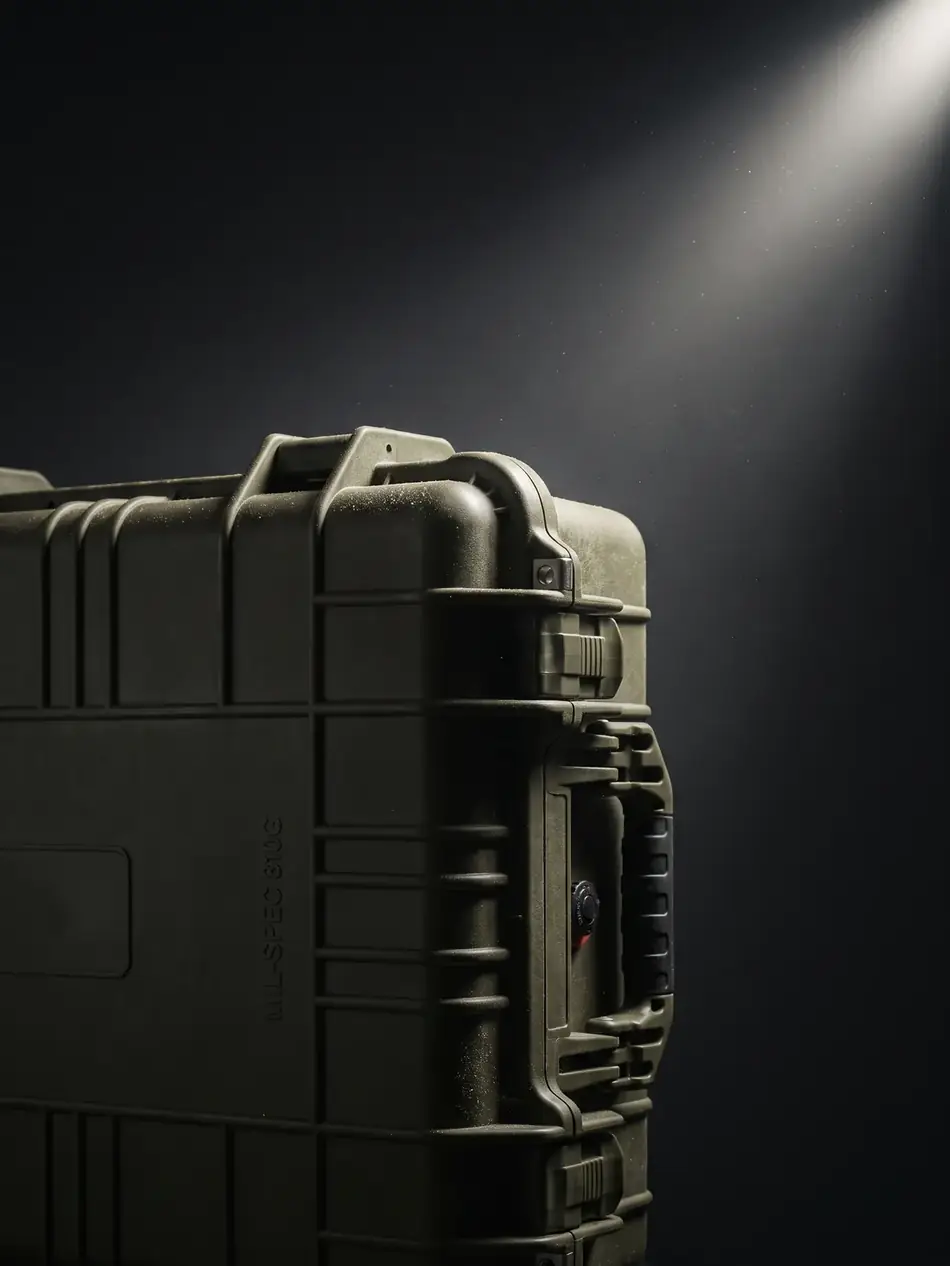
What environmental conditions should be considered?
The environmental conditions that shape a protective case choice are dust and abrasives, liquid spray and humidity, temperature extremes, ultraviolet exposure and altitude or pressure change, and each one is answered by a different feature. A continuous moulded gasket channel with a compressible gasket resists dust and spray; a tough moulded polypropylene or ABS wall resists thermal shock and impact; a pressure-relief valve is the option for altitude and temperature swings; and material choice plus finish affect how the shell ages in the sun. KeXin separates what is physically built into a model from what has been rated: the gasket channel and wall are published per SKU, while an ingress classification, an operating temperature range or a UV figure is stated only where that specific model has been measured, and is left as not measured otherwise.
Key points
- Name the dominant environmental stress for the route before choosing the case feature that answers it.
- A gasket channel resists dust and spray, but it is a per-model attribute, not a family feature.
- Do not read an ingress rating into a gasket; a physical seal and a tested classification are different claims.
- A pressure-relief valve is the feature for altitude and wide temperature swings, where the model offers it.
- Temperature and UV limits come from the model's datasheet, not from the material name alone.
- Where a value is marked not measured, plan around the unknown rather than assuming a figure.
Dust and abrasives
Dust is the most common environmental enemy because it is fine, ever-present and works into seals and connectors over many cycles. The physical feature that resists it is a continuous moulded channel around the shell rim carrying a compressible gasket, so the lid compresses the gasket evenly and closes the path. KeXin records whether a given model has that channel as measured on the SKU, and records no seal offered where the shell has none. Even latching matters here, because a single weak point can lift a corner of the gasket and let grit track in, so the seal and the latch pattern are evaluated together on the datasheet rather than separately.
Liquid spray and humidity
Rain, spray and cyclic humidity threaten electronics through corrosion of contacts more than through a sudden flood. The same gasket channel that resists dust resists liquid spray, and a wipeable closed-cell interior keeps absorbed moisture away from the boards. The important honesty point is the difference between having a seal and being rated: a compressible gasket is a built feature, while a formal ingress classification is a tested claim. KeXin publishes the gasket as present or absent per model and lists an ingress classification only where that model has actually been tested, leaving the field as not measured where it has not.
Temperature extremes
Temperature affects a case in two ways: the shell material's behaviour and the equipment inside it. A very cold shell can stiffen and lose impact toughness, and a hot one can soften, so a genuine operating temperature range must be measured on the specific model and material rather than inferred from a generic label. KeXin states a temperature range only where the datasheet measures it. For wide swings between a cold load and a warm interior, condensation is the practical risk, which argues for a sealed shell plus a pressure-relief valve option so the case breathes on command without letting moisture in through an uncontrolled path.
Ultraviolet and long outdoor exposure
Ultraviolet light is a slow factor: it fades and embrittles some plastics over seasons of outdoor storage, which is why a case that sits in the sun for years is a different specification from one that lives in a vehicle or a store. Material choice and finish influence how a shell ages, and a published UV figure is a measured claim that KeXin attaches to a model only when that test exists. Where a buyer's use is long-term outdoor exposure, the right move is to raise it explicitly so the factory can point to models with relevant published data rather than promise UV stability across the whole line.
Altitude and pressure change
Air cargo, mountain routes and rapid altitude change put a pressure differential across a sealed shell, which can strain the closure or force air and moisture through the path of least resistance. The feature that manages this is a pressure-relief valve, offered as a manufacturer option on models that support the fitting. It is not standard on every shell, so a buyer with an air or high-altitude route must specify it and confirm it on that SKU, rather than assume a sealed case automatically equalises pressure.
Matching conditions to case features
| Condition | Case Feature | Data Basis |
|---|---|---|
| Fine dust and sand | Continuous moulded gasket channel with compressible gasket | Seal present or absent, published per model |
| Rain and spray | Gasket channel plus even latch pattern | Seal and closure listed per model |
| Cyclic humidity | Sealed shell with wipeable closed-cell interior | Interior foam type; ingress only if measured |
| Cold or hot extremes | Tough moulded wall in a suitable material | Operating range only where measured |
| Long outdoor sun | Material and finish suited to UV | UV figure only where tested |
| Altitude and air cargo | Pressure-relief valve option | Offered on models that support it |
The honesty rule for environmental claims
The single most useful discipline when selecting for environment is to separate a built-in feature from a tested rating. A gasket channel is something a moulded shell physically has, and it is published per model; a classification for ingress protection, a temperature ceiling or a UV number is the result of a test, and KeXin attaches those only where that specific SKU was measured. A buyer comparing suppliers should ask which environmental figures were actually tested on the model being quoted, because a datasheet that lists impressive ratings without a test basis is weaker than a plain sheet that says which values exist and which do not.
Procurement notes
Describe the real route: the dust, the rain, the cold soak, the sun exposure, the air or altitude leg. Then confirm the chosen SKU's published seal type, wall thickness and material, and ask which environmental values are measured for that model rather than accepting a family claim. Specify the pressure-relief valve, document holder or other options at order time, because they are configured per model. Custom colour, logo and packaging run on existing moulds at the standard OEM bands. Orders are wholesale and OEM on EXW or FOB terms with a 30 percent deposit, and there is no retail, DDP or overseas-warehouse arrangement, so build any conditioning or storage needs into your own plan.
Customisation
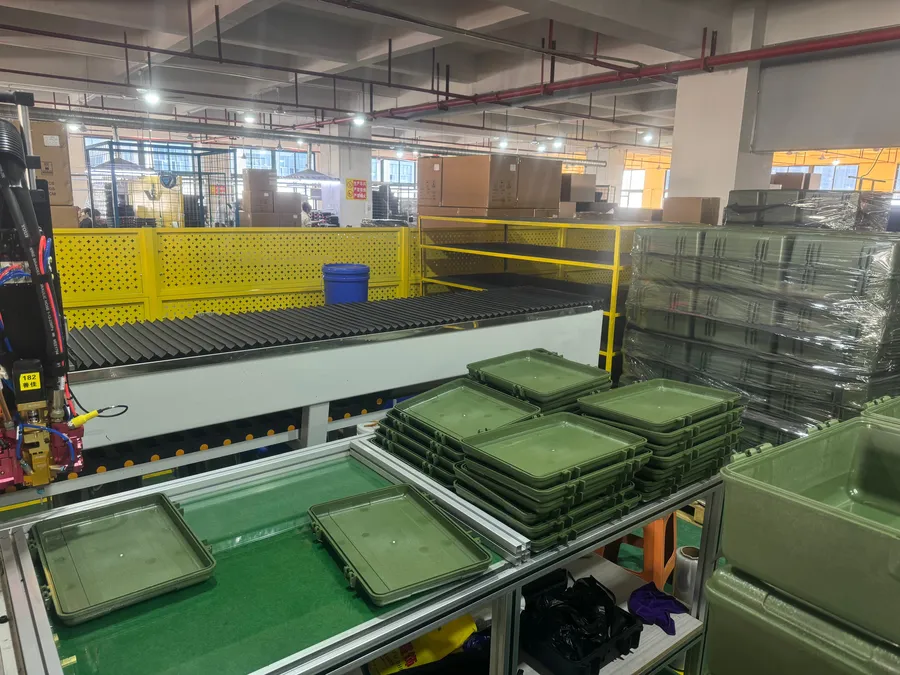
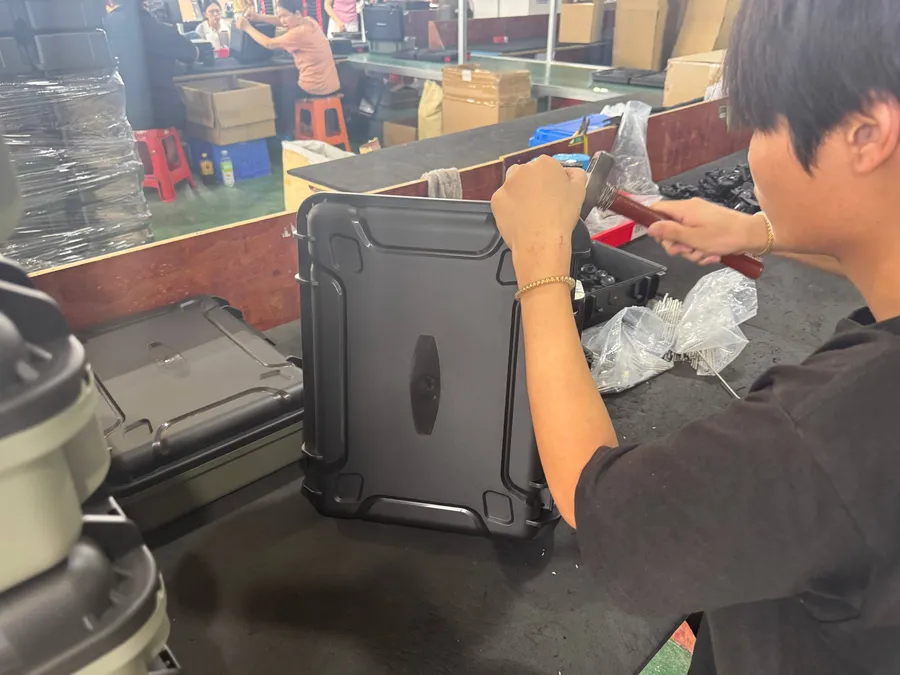
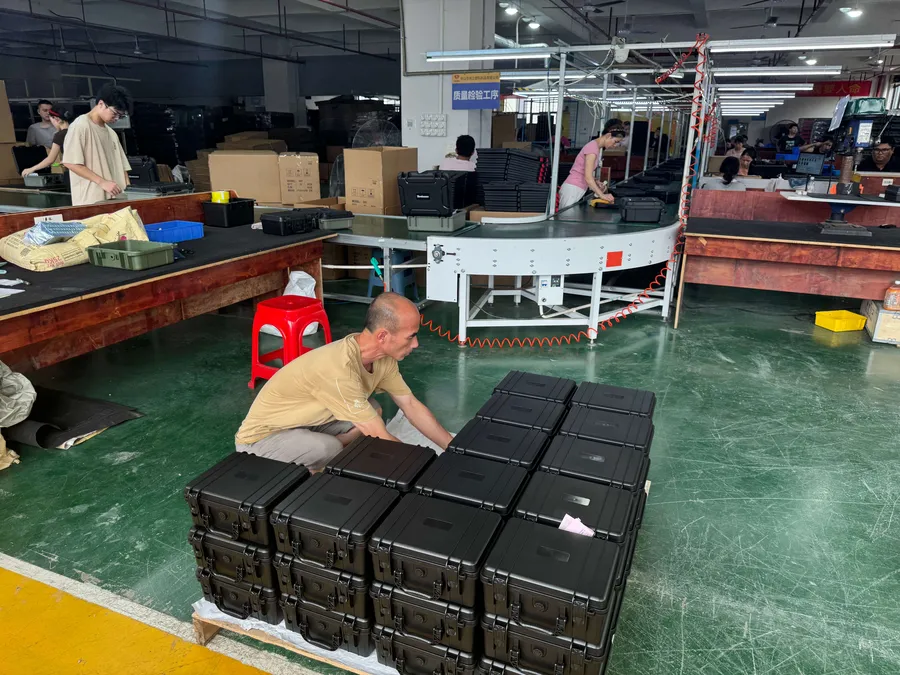
Everything described above is configurable on a standard shell: interior layout (pick-and-pluck, die-cut or CNC-cut), foam grade and thickness, colour, logo method, latch and lock count, pressure-equalisation valve, cable ports, document holder and identification plate. A bespoke exterior geometry requires a new mould — 125 days, from 3,000 units per moulded component.
Procurement considerations
| Question | What to send us |
|---|---|
| Which shell fits? | Equipment L × W × H as packed, plus required clearance per axis |
| What does it cost? | Order quantity and estimated annual quantity — the two drive different answers |
| Is tooling needed? | Whether an existing shell clears the envelope with usable foam depth |
| Lead time? | Your required delivery date, not just the order date |
| Certification? | The exact standard your tender names — we will say whether we can test to it |
| Freight? | Destination and preferred terms; carton and pallet data supplied with the quotation |
Comparison and selection guide
The tables on this page exist because a protective case is chosen by comparing three things: the envelope, the environment and the handling chain. Where no table applies, the rule below is.
| Situation | What To Do |
|---|---|
| Free-drop height | With a 50 mm base foam layer, a 15 kg assembly sees a markedly lower peak deceleration than with 20 mm. Where the case is handled by hand off a vehicle, we specify the deeper base. |
| Stacking | A case that will be shipped stacked needs a wall thickness and rim geometry that carries the load through the shell, not through the lid. |
- Size on internal dimensions plus clearance, never on a product name.
- Choose the carrying method before the shell: it changes the series, not just the price.
- Specify the interior last, and decide up front whether the end user will reconfigure it.
What environmental conditions should be considered? relates to Military Case Guide. Related families: Defense Equipment Cases / Military Protective Cases / Waterproof Cases / Outdoor Protective Cases. Related sectors: field and industrial equipment. Continue in the Military Case Guide cluster.
This page is written from our own production data. If your requirement differs, send the dimensions and we will tell you which of the 155 models fits, or whether a custom route is needed.