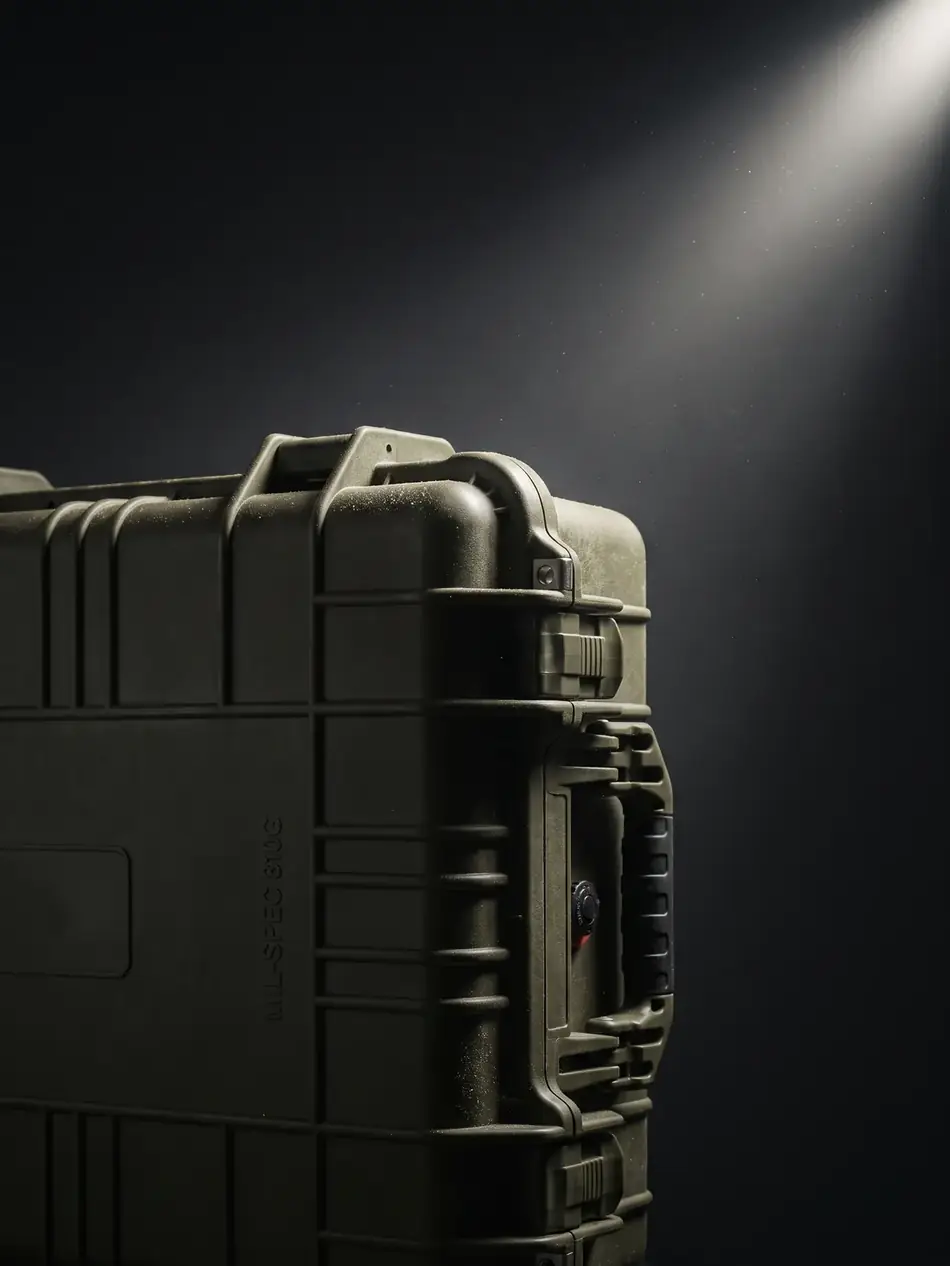
How can military protective cases be customized?
Yes. A military protective case is customised on a mould we already publish, so almost every change you order is configuration and decoration rather than new tooling: a matched body colour, an embossed or printed marking and a name plate, cut foam shaped to the exact kit, heavier or padlockable hardware, a seal on the models that support one, and a carton and label carrying your item codes. The shell geometry, wall thickness and internal dimensions stay exactly as published for the model, so protection is decided by the case you choose, not by the branding applied to it. Only a size or shape that no catalogue model offers requires a new mould, and that is a separate, slower decision carrying a far higher piece threshold, not a decoration step you can bolt onto a normal order.
Key points
- Customise on a published mould for colour, markings, cut foam, hardware and packaging; the model's wall thickness and internal size do not change.
- Decoration and configuration on a known tool start around 300 pieces per colour or marking, with a first approved sample in about 45 days on EXW or FOB terms.
- A genuinely new size is a new mould: roughly 3,000 pieces per component and about 125 days, so confirm which route a quote is actually pricing.
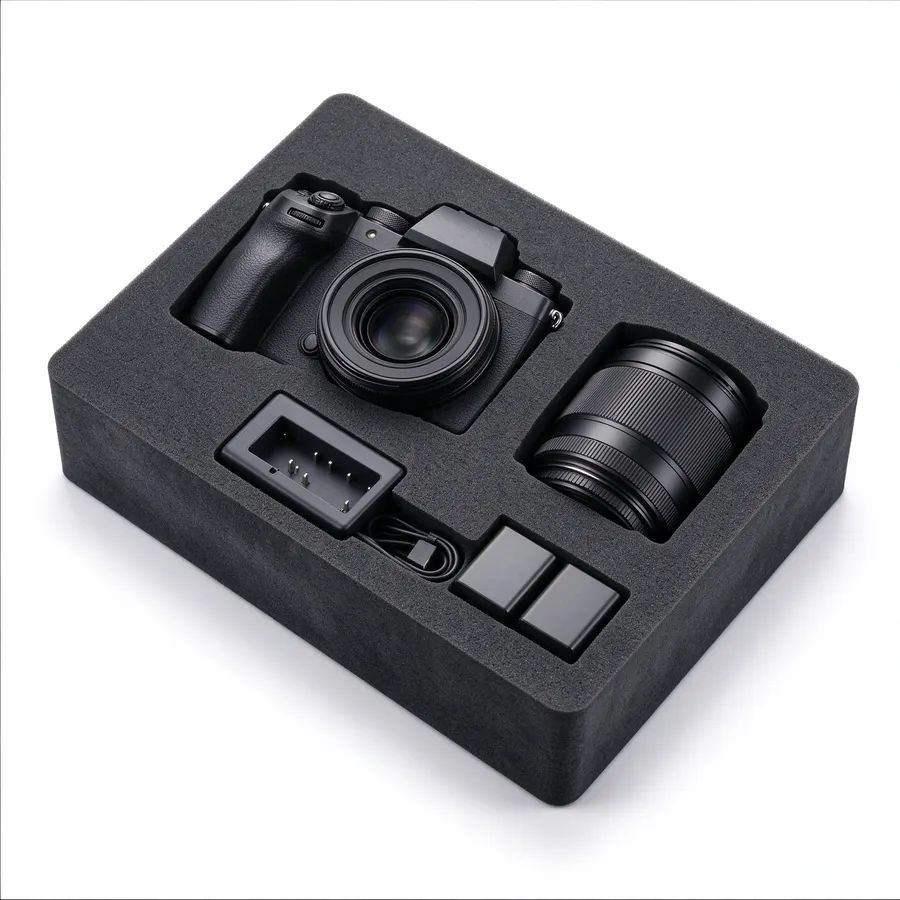
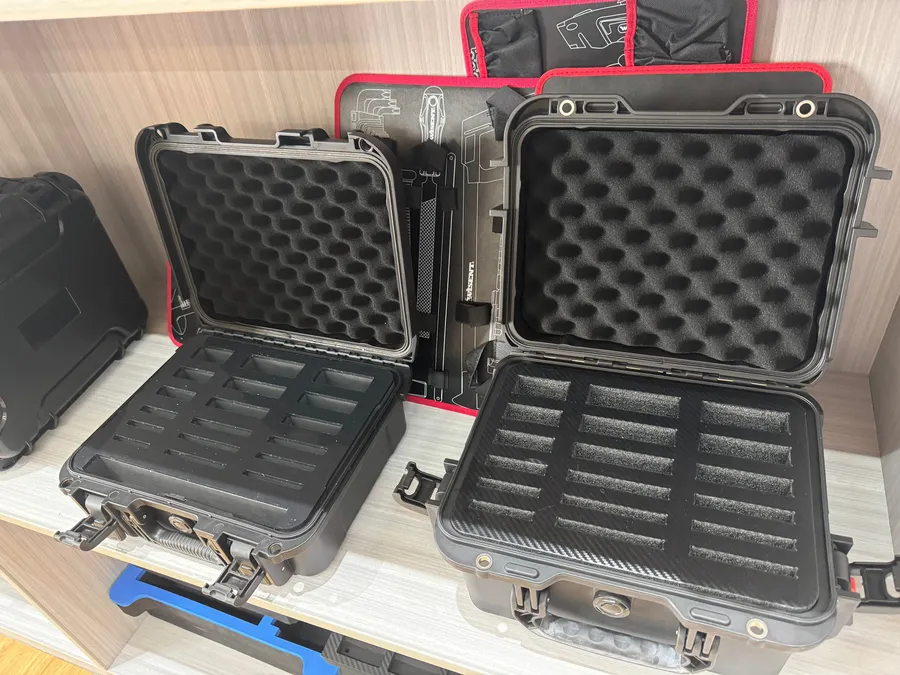
- Cut the foam to the real kit: pick-and-pluck for reconfigurable field loads, die-cut or CNC pockets when each item must sit fixed and separated.
- Give every insert a physical reference, a drawing, a photo of the packed kit or a sample unit, because a military insert is only as accurate as its source.
- Select the model by published internal dimensions and net weight first, then add colour, hardware and markings; untested ratings are left blank rather than claimed.
What customising a military case actually means
For a military protective case, customisation is applied to a shell that already exists in our catalogue. The mould, the wall thickness and the internal dimensions are fixed by the model, and none of them move because a logo or a colour is added. What you change is everything on and around that fixed shell: the body colour, the printed or embossed marking, the foam that holds the equipment, the latches, hinges and handle, an optional seal where the model supports one, and the carton the unit ships in. Keeping this split clear is the whole decision, because you are almost always decorating and configuring a proven tool rather than commissioning a new one, and the price, the lead time and the risk all follow from which of those two you are buying.
The layers you can change, from interior to markings
Think in layers. Layer one is the interior: foam cut to your kit as pick-and-pluck, die-cut or CNC profiles, built up as base, top and egg-crate arrangements. Layer two is surface identity: a matched colour, an embossed or printed marking, and a moulded or riveted name plate for unit or item numbers. Layer three is hardware and closure: padlockable latches, an added hinge count, a heavier handle, or a pressure-relief fitting on models that offer one. Layer four is packaging: a printed carton and labels carrying your item codes. All four sit on a mould we already own and change nothing about the protection the shell gives. Only a fifth layer, a size or shape no published model offers, is a new mould, and that is a slower, higher-volume project rather than a decoration step.
Hardware, closure and field fittings
Hardware follows the model's published build and is then configured from it. The latch bodies on most shells accept a standard padlock, hinges and handles are set by the tool, and extra latches, a shoulder strap or a stacking lip can be added to a configuration without touching the mould. Stackable feet and lid geometry are already engineered into the models that list stackability, which matters when cases ride on a pallet or in a vehicle bay. We publish measured dimensions and empty weight per model, and where a protection rating has not been tested on a given build the datasheet leaves that field blank rather than filling it with a claim. If a tender needs documented figures against a specific hardware build, we arrange accredited testing and quote it separately.
Markings, colour and unit identity
Marking is where a military build most often diverges from a catalogue unit. Colour is matched to artwork and a physical chip rather than a screen, so an approved first article fixes the exact shade before the run. Identity can be an embossed logo carried in the mould, a printed panel, or a separate name plate for serial, unit or item numbers; the plate route is the cheapest to change between orders because it needs no tooling at all. Because cases are reloaded and inspected many times, marking placement is agreed against the packed layout so stencils and plates stay legible under stacking and handling. What we do not do is let a colour or a logo imply a performance the base model has not been measured for; the marking sits on top of published protection, it does not add to it.
Decoration on a known tool versus a new mould
| Aspect | On Published Mould | New Mould |
|---|---|---|
| Tooling | Use our existing mould, no development | A new mould is cut, tried and approved |
| Order floor | About 300 pieces per colour or marking | From roughly 3,000 pieces per component |
| Lead time | About 45 days to a first sample | About 125 days to a first tool |
| Size and shape | Fixed by the catalogue model | Free to match an odd geometry |
| What changes | Foam, colour, marking, hardware, carton | Everything, starting from a new drawing |
| Shell protection | Identical to the standard model | Defined by the new tool and its wall |
Real models to customise against
Every figure in this table is taken from a published datasheet: internal dimensions in millimetres, the wall thickness, the empty net weight and the internal volume. Read them as a family, not an average. A compact PP shell such as the KX-4010 gives a 390 x 315 x 88 mm interior with a 3.0 mm wall and a 1015 g empty weight, while the ABS KX-5021 is a 465 x 315 x 196 mm box with a 3.7 mm wall and a 3430 g empty weight, and the engineering-PP KX-5321 reaches 481 x 373 x 192 mm on a 5.8 mm wall. Match the internal number and the empty weight to your kit and your handling limits first, then let colour, marking, hardware and foam follow after.
| Model | Material | Internal Mm | Wall Mm | Net Weight | Internal Volume L |
|---|---|---|---|---|---|
| KX-3218 | PP | 308 x 230 x 172 | 3.0 | 900 g | 12.2 |
| KX-4010 | PP | 390 x 315 x 88 | 3.0 | 1015 g | 10.8 |
| KX-4312 | PP | 420 x 260 x 104 | 3.5 | 1170 g | 11.4 |
| KX-4321 | Engineering PP | 411 x 208 x 202 | 3.0 | 2330 g | 17.3 |
| KX-5021 | ABS | 465 x 315 x 196 | 3.7 | 3430 g | 28.7 |
| KX-5321 | Engineering PP | 481 x 373 x 192 | 5.8 | 4810 g | 34.4 |
Choosing the right customisation route
Start from the interior and the size, not the marking. If a published internal dimension already swallows your kit with room for an insert, decorate and configure that model and you avoid tooling entirely. If the size fits but you must carry your own colour, marking or brand for a unit, a tender or a channel programme, go OEM on the same tool once you can clear roughly 300 pieces per configuration. If no published model fits, stop and price a new mould with the 3,000-piece floor and the 125-day tooling clearly in view. The honest question is only whether you are customising a known shape or inventing a new one, because those are two very different projects with two very different costs and lead times.
Where customised military cases are used
Customised shells appear across field, communications, optics, medical and engineering units. A signals detachment wants radios and cable sets in die-cut pockets so every item returns to a labelled place. A field hospital needs an interior reconfigurable between kits, which favours pick-and-pluck. A maintenance section wants a heavier handle and extra latches on a model it can stack on a rack or in a vehicle bay. Across these uses the box is emptied, reloaded and inspected many times, which is why hardware wear, latch count, stackability and foam recovery matter as much as the printed marking, and why the interior layout is the part buyers revisit most often after the first deployment.
Notes before you order
Confirm which mould a quote uses, because two look-alike cases can sit on different tools with different wall thickness and weight. Approve a first-article sample for both the physical box and the marking, and fix colour with a physical chip rather than a display. Supply a real reference for the foam so the pockets match the kit. Read the commercial terms plainly: this is wholesale and OEM work only, quoted EXW or FOB with a 30% deposit taken up front, and we do not run retail, do not ship DDP and hold no overseas warehouse stock. Anything a listing cannot back with a published measurement should be requested as a documented test against the exact model and configuration you order.
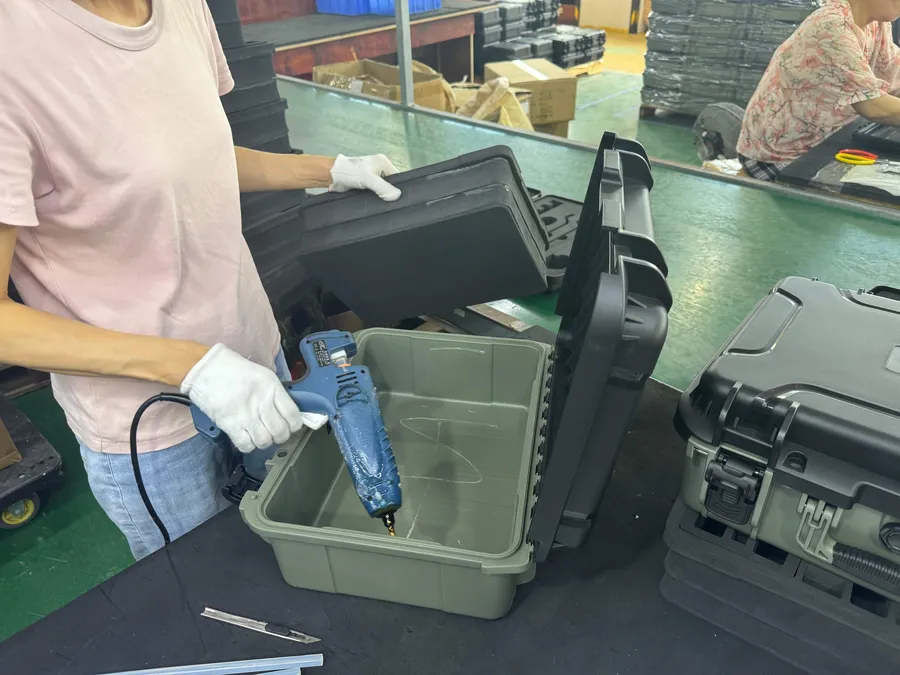
Customisation
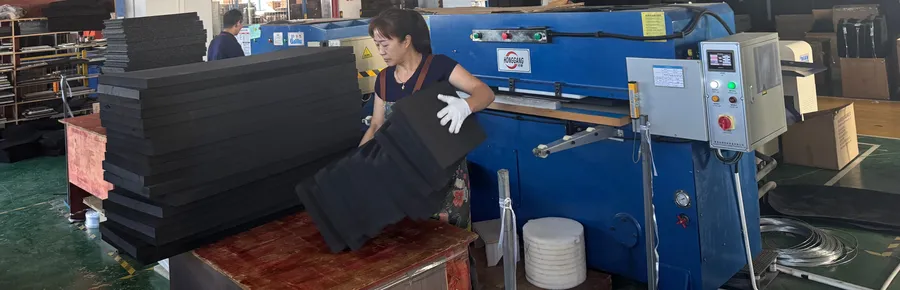
Everything described above is configurable on a standard shell: interior layout (pick-and-pluck, die-cut or CNC-cut), foam grade and thickness, colour, logo method, latch and lock count, pressure-equalisation valve, cable ports, document holder and identification plate. A bespoke exterior geometry requires a new mould — 125 days, from 3,000 units per moulded component.
Procurement considerations
| Question | What to send us |
|---|---|
| Which shell fits? | Equipment L × W × H as packed, plus required clearance per axis |
| What does it cost? | Order quantity and estimated annual quantity — the two drive different answers |
| Is tooling needed? | Whether an existing shell clears the envelope with usable foam depth |
| Lead time? | Your required delivery date, not just the order date |
| Certification? | The exact standard your tender names — we will say whether we can test to it |
| Freight? | Destination and preferred terms; carton and pallet data supplied with the quotation |
Comparison and selection guide
The tables on this page exist because a protective case is chosen by comparing three things: the envelope, the environment and the handling chain. Where no table applies, the rule below is.
| Situation | What To Do |
|---|---|
| Start from the equipment, not the case | Measure the tallest, widest and longest points of the packed equipment including antennas, handles and connectors. Add 20 mm minimum clearance per axis before selecting a shell. |
| Then choose the carrying method | Under 8 kg, a fixed handle is lighter and cheaper. Over 12 kg or any journey over 30 m, specify the T series with telescopic handle and wheels. |
| Then decide the interior | Pick-and-pluck for kits that change. Die-cut or CNC-cut for fixed layouts that must be auditable at a glance. |
- Size on internal dimensions plus clearance, never on a product name.
- Choose the carrying method before the shell: it changes the series, not just the price.
- Specify the interior last, and decide up front whether the end user will reconfigure it.
How can military protective cases be customized? relates to Military Case Guide. Related families: Military Protective Cases / Custom Protective Cases / Defense Equipment Cases / Field Equipment Cases / Tactical Equipment Cases. Related sectors: field and industrial equipment. Continue in the Military Case Guide cluster.
This page is written from our own production data. If your requirement differs, send the dimensions and we will tell you which of the 155 models fits, or whether a custom route is needed.