How should equipment dimensions be measured before purchasing a case?
Before you order a case, measure the equipment in the exact configuration it will travel in and record the maximum length, width and height with every accessory that stays attached, the packed mass and the centre of gravity. Convert those into an internal envelope by adding a per-axis tolerance stack of equipment variance, case internal variance and the foam you intend to use, then check that the resulting external footprint still fits your pallet, rack or vehicle. The measurement record, not a catalogue image, is what you order against and what you accept the delivery against.
Key points
- Measure in the transport configuration, with attached accessories counted in the outermost extent on each axis.
- Specify an internal minimum and an external maximum rather than one ideal dimension.
- Treat clearance as a stack of equipment tolerance, case tolerance and foam, split between lid and base.
- For long or thin items the controlling number is often internal width and corner geometry, not length.
- Re-measure the delivered internal dimensions against the order before you accept the shipment.
Make the measurement record before you open a catalogue
Most sizing failures happen because a buyer matches a product photograph or a model name to a piece of equipment and never writes down what they actually measured. Do the opposite: fill a measurement sheet first, then select a shell that clears every number on that sheet. The sheet becomes the single reference for the enquiry, the datasheet comparison and the acceptance check when the goods arrive.
Record the measurements with a steel rule or caliper rather than estimating from a screen, and note the tool and the conditions, because a hand-held estimate on an irregular object can be wrong by a centimetre or more on one axis.
Measure the equipment as it will be packed
Measure in transport configuration, not on the bench: antennas and handles folded or extended as they will sit, cables coiled, feet and knobs protected, and anything that stays attached included in the outermost extent. Take the maximum point in each of the three axes independently, because the widest feature is often not in line with the tallest one.
Weigh the complete packed kit, including the foam or divider it will travel in, and measure the accessory set as a separate volume. In most field kits the accessories, meaning power supplies, cables and tripods, occupy more space than the main item, and bundling them loosely is a common cause of a case that technically fits nothing.
Add a tolerance stack, not a single round number
A flat plus-twenty-millimetre note is a useful rule of thumb but not a method. The clearance you need is a stack: the equipment's own manufacturing tolerance, the case's internal dimensional tolerance, and the thickness and compression of the foam you plan to use. A hand-formed base and a machined lid do not consume the same depth, so split your height allowance between lid and base deliberately rather than leaving it to whoever packs the case.
Where an item is long and thin, the controlling number is usually the internal width or the narrow width at the corners rather than the length, because the walls and internal ribs reduce the usable gap at the ends. Compare your length against the published internal dimension and your diagonal against the internal width and height together.
Internal envelope versus external footprint (per published model)
A case is described by two different boxes, and they are never the same. The external box is what fits the pallet or vehicle; the internal box is what fits the equipment. The gap between them is the wall, the rim, the latch profile and the handle, and it is not uniform across the three axes. The rows below are real published figures for individual models, quoted per model, and are not a general capability of the range.
| Published Model | External Lxwxh Mm | Internal Lxwxh Mm | Length Loss Mm | Width Loss Mm | Wall Mm |
|---|---|---|---|---|---|
| KX-3218 | 315 x 260 x 180 | 308 x 230 x 172 | 7 | 30 | 3.0 |
| KX-4010 | 400 x 360 x 100 | 390 x 315 x 88 | 10 | 45 | 3.0 |
| KX-4616 | 460 x 367 x 155 | 455 x 338 x 148 | 5 | 29 | 3.0 |
Turn the record into an order line you can check on arrival
With the sheet complete, specify the case by the internal envelope it must provide and the external footprint it must not exceed, both as minimum and maximum numbers rather than a single figure. That phrasing lets a manufacturer offer the nearest published shell or quote a custom one, and it gives you an unambiguous acceptance test: on delivery, re-measure the internal dimensions against the order and reject what does not clear your equipment plus foam.
State the packed mass and the intended handling, because they drive wall thickness, whether a wheel set and a telescopic handle are appropriate, and how the case will stack, all of which a dimension alone cannot decide.
Configurations that defeat naive sizing
Long single items, tapered housings, assemblies with a protruding connector, and kits that must stay in one tray all push you away from a stock rectangular shell. A barrel, an antenna mast or a tripod behaves differently from a box of the same length: the usable interior is set by the narrowest internal width and the corner geometry, not by the diagonal.
Equipment that must remain assembled and ready to move also needs the connectors and protective caps counted in the envelope, and a lid that closes without loading a component. Where a stock shell cannot clear the tallest attached feature, that is a custom-shell conversation rather than a compromise to be forced.
Customisation and OEM where stock shells fall short
KeXin New Materials (Guangdong) Co., Ltd. manufactures to wholesale and OEM terms. If no published model clears your record, a custom interior, a modified lid depth, moulded foam or a bespoke shell can be specified against the same measurement sheet. A first-article sample of an OEM configuration typically takes about forty-five days and a new mould about one hundred and twenty-five days, with a thirty percent deposit, quoted EXW or FOB. Share the record early and the factory can say in one pass whether your equipment maps to an existing shell or needs tooling.
Purchasing notes and acceptance
Do the measurement before you commit to a supplier conversation, and carry the same record through quotation, production approval and goods-in. Confirm the internal dimensions you were quoted against the shipping documentation rather than the marketing sheet, and agree in writing which numbers are the acceptance criteria before you pay the balance. Orders are wholesale and OEM only, EXW or FOB, with no retail, no DDP door delivery and no overseas stocking, so plan your landed timeline around the factory gate.
Customisation
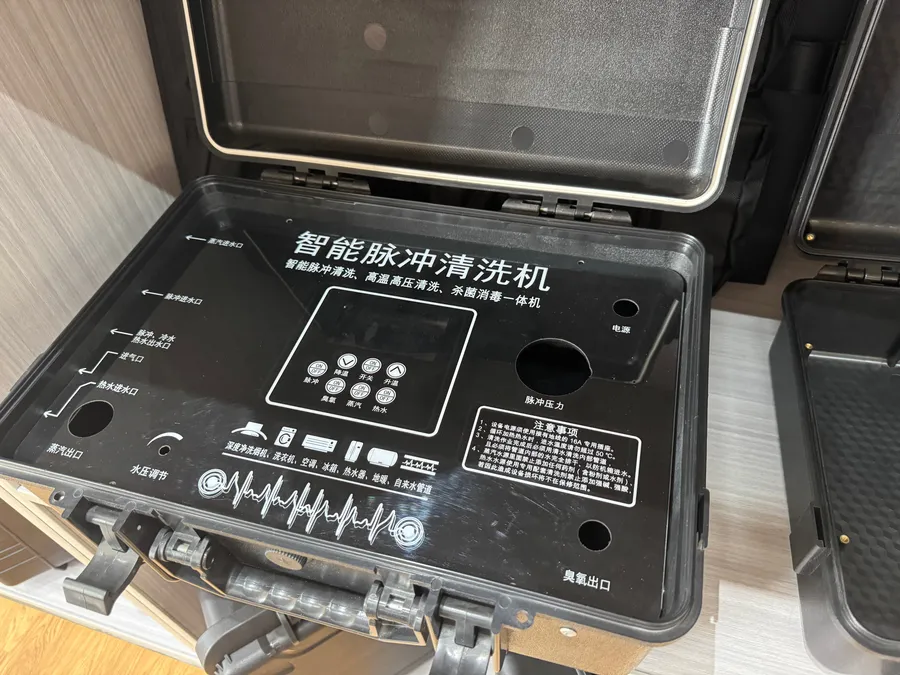
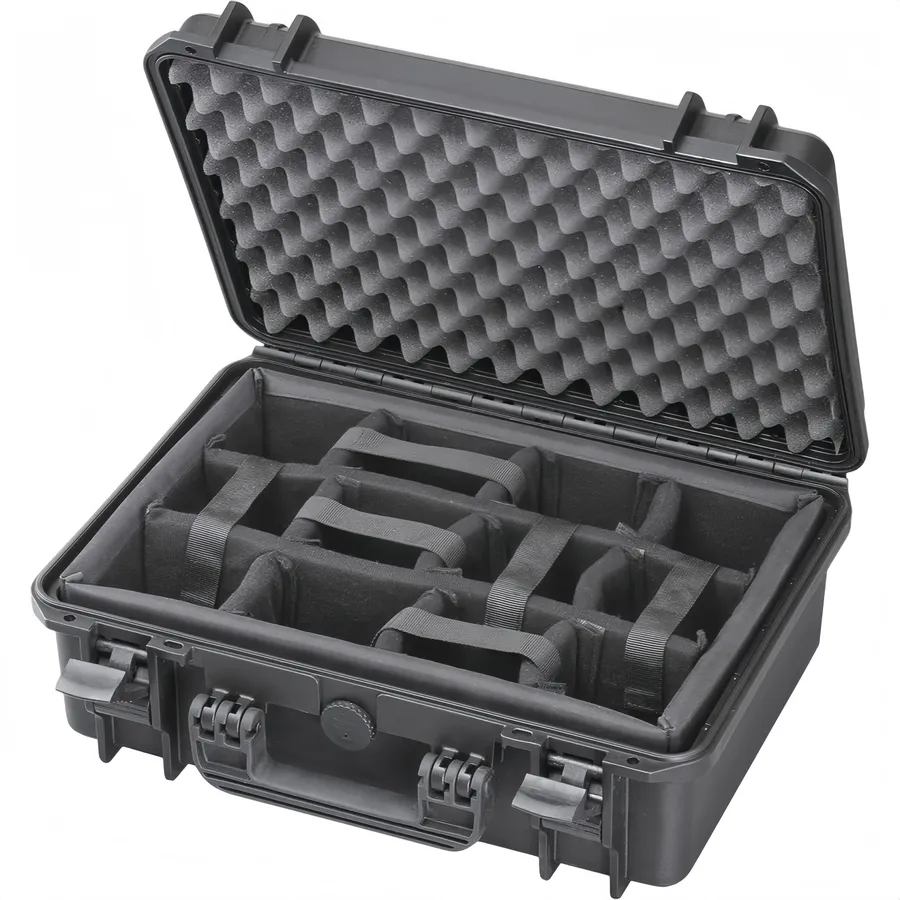
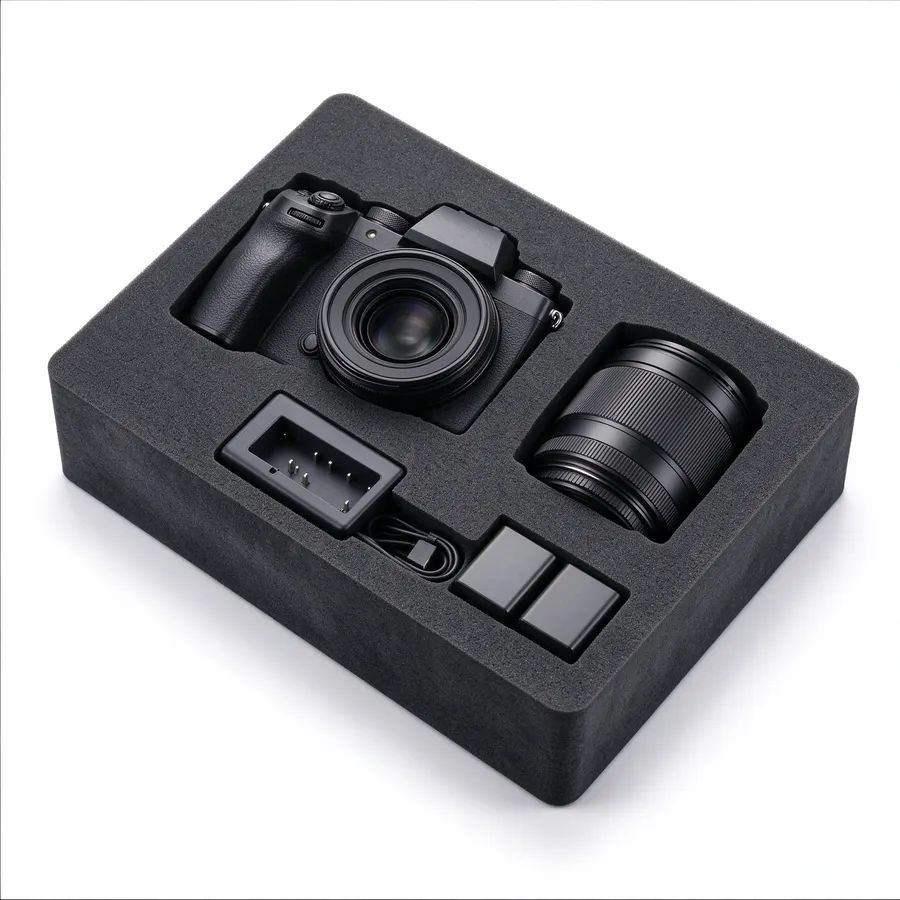
Everything described above is configurable on a standard shell: interior layout (pick-and-pluck, die-cut or CNC-cut), foam grade and thickness, colour, logo method, latch and lock count, pressure-equalisation valve, cable ports, document holder and identification plate. A bespoke exterior geometry requires a new mould — 125 days, from 3,000 units per moulded component.
Procurement considerations
| Question | What to send us |
|---|---|
| Which shell fits? | Equipment L × W × H as packed, plus required clearance per axis |
| What does it cost? | Order quantity and estimated annual quantity — the two drive different answers |
| Is tooling needed? | Whether an existing shell clears the envelope with usable foam depth |
| Lead time? | Your required delivery date, not just the order date |
| Certification? | The exact standard your tender names — we will say whether we can test to it |
| Freight? | Destination and preferred terms; carton and pallet data supplied with the quotation |
Comparison and selection guide
The tables on this page exist because a protective case is chosen by comparing three things: the envelope, the environment and the handling chain. Where no table applies, the rule below is.
| Situation | What To Do |
|---|---|
| Start from the equipment, not the case | Measure the tallest, widest and longest points of the packed equipment including antennas, handles and connectors. Add 20 mm minimum clearance per axis before selecting a shell. |
| Then choose the carrying method | Under 8 kg, a fixed handle is lighter and cheaper. Over 12 kg or any journey over 30 m, specify the T series with telescopic handle and wheels. |
| Then decide the interior | Pick-and-pluck for kits that change. Die-cut or CNC-cut for fixed layouts that must be auditable at a glance. |
- Size on internal dimensions plus clearance, never on a product name.
- Choose the carrying method before the shell: it changes the series, not just the price.
- Specify the interior last, and decide up front whether the end user will reconfigure it.
How should equipment dimensions be measured before purchasing a case? relates to Military Case Guide. Related families: Military Protective Cases / Equipment Transport Cases / Instrument & Equipment Cases. Related sectors: field and industrial equipment. Continue in the Military Case Guide cluster.
This page is written from our own production data. If your requirement differs, send the dimensions and we will tell you which of the 155 models fits, or whether a custom route is needed.


