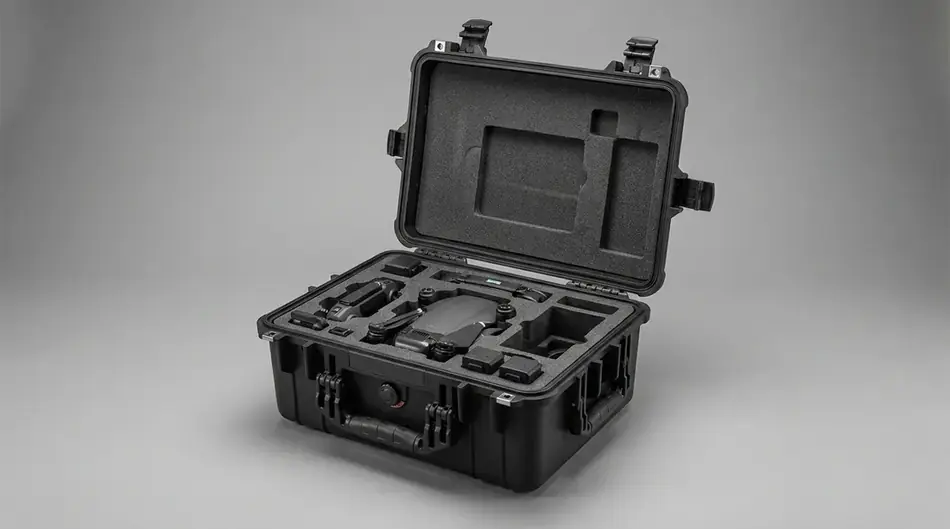
Tactical field survival rescue tool case?
A tactical field survival rescue tool case is a hard shell built around a kit that has to be carried, opened in poor light and closed again under pressure: cutting and breaching tools, a med pouch, comms, optics or a drone. The case is specified from the kit list outward, not from the sector name. Start with the longest item and the heaviest item, because those two decide the shell; then set the foam layout in the order the kit is used, because a case that is organised wrong is slow in the dark; then choose the closure and the handle for the conditions on site. In our published file of 155 active models, 19 cases hold under 5 L for worn optics, 59 are listed for drone kits with internal lengths from 350 mm to 650 mm, 35 are long cases with internal lengths from 500 mm to 1,280 mm, and no model publishes a water, dust or shock result, so the build is specified on geometry and tested only if your programme pays for it.
Key points
- Specify from the kit outward: the longest and heaviest items decide the shell before any colour, logo or foam choice is made.
- 19 models in our file hold under 5 L (0.3 L to 3.9 L), which is the band worn optics such as night vision goggles sit in.
- 59 models are drone cases with published internal lengths of 350 mm to 650 mm and usable volumes of 13.8 L to 55.8 L.
- 35 long-case models run to 1,280 mm internal length for breaching, cutting and rescue tools that cannot be broken down.
- Shock protection and impact resistance are published as manufacturer options that require a specified foam layout, not as shell ratings.
- Foam is the highest-leverage custom line: MOQ is 1, six foam types are published, and a drawing, photo or physical sample is required.
The short answer: build the case around the kit, not the label
A tactical field survival rescue tool case is not a single product category so much as a design brief with a fixed method. The kit is listed first, item by item, with its length, its mass and the order in which it is reached under pressure. The longest item sets the internal length; the heaviest item and the total load set the wall, the handle and whether wheels are needed; the access order sets the foam. Only then does the shell get chosen, and the choice is made against published dimensions rather than against a photograph of a similar-looking case. That method is what separates a case that works on a night call from a case that merely looks tactical in a catalogue.
The three loads that most often arrive in the same enquiry are worn optics, a police drone and a long rescue tool. They are not variations of one specification. Night vision goggles sit in a small, deep case that has to protect an optical train; a drone sits in a flat, wide case that has to stop an airframe and its controller colliding with each other; a breaching or cutting tool sits in a long case where the span, not the volume, drives the design. Treating them as one order is how buyers end up with a case that is too big for the goggles and too short for the bar. The published file lets you size each load separately: 19 models under 5 L, 59 drone cases, 35 long cases.
Three loads, three case patterns
Our file of 155 active models is organised by model, not by mission, so the first job in a tactical enquiry is to map the kit to a size band. Worn optics belong in the small band: 19 models publish usable interior volumes under 5 L, from 0.3 L to 3.9 L, with internal dimensions in the order of 195 by 128 by 81 mm on one sealed example. Drone kits belong in the middle and upper bands: the 59 models listed for drone kits publish internal lengths of 350 mm to 650 mm and usable volumes of 13.8 L to 55.8 L. Long rescue tools need the span: 35 long-case models publish internal lengths from 500 mm to 1,280 mm, and the largest of them carries a 5.0 mm wall over a 1,280 mm interior.
The table below is the mapping we use at quotation stage. It is deliberately about the load rather than the industry, because a police drone case and a military drone case are the same engineering problem, and a rescue tool does not care which agency carries it. The last column is the question that usually decides the build, and it is the question buyers forget to answer before asking for a price.
| Load | Published Models In Our File | Published Internal Size | Usable Volume | What Decides The Build |
|---|---|---|---|---|
| Worn optics, night vision | 19 models under 5 L | From 195 x 128 x 81 mm on one sealed example | 0.3 L to 3.9 L | Foam cavities around the optical train and a lid that closes without pressing on it |
| Police drone and controller | 59 models listed for drone kits | Internal length 350 mm to 650 mm | 13.8 L to 55.8 L | Separation of airframe, props and controller inside one flat shell |
| Long rescue and breaching tools | 35 long-case models | Internal length 500 mm to 1,280 mm | Up to 62.7 L on the longest example | Span and carried mass, then handle position and wall section |
Military night vision goggles shockproof plastic case: the small-load pattern
Buyers search for a military night vision goggles shockproof plastic case, and the useful way to read that phrase is as two requirements and one word that needs unpacking. The requirements are a small, deep shell and a foam layout that holds the goggles without loading the eyepiece or the mount. The word is shockproof, which describes an outcome rather than a property our file publishes. Our data records shock protection and impact resistance as manufacturer options, each with the note that a specified foam layout is required and that the shell alone is not a shock rating. So the honest specification is: this shell, this wall, this foam, this latch plan, and if you need a number, a test of that build.
For the small-load pattern the published choices are narrow and that is a help. The 19 models under 5 L run from a 100 g shell to a 900 g shell, and the sealed examples in that band publish wall sections from 3.0 mm to 5.0 mm. A sealed 3.0 mm example at 470 g publishes internal dimensions of 195 by 128 by 81 mm, which is the sort of volume that takes goggles, a battery set and a cleaning cloth without leaving the contents free to slide. Foam is where the design is actually done: six types are published, from pick and pluck through die-cut and CNC-cut to EVA, PE and EPE, with top, base, egg-crate, custom-cut and layered structures, and the file records that a drawing, a photograph of the packed kit or a physical sample is required before a custom cut is made.
Police drone anti-collision hard protective case: the flying-kit pattern
A police drone anti-collision hard protective case is asked for in those words because the fear is specific: the airframe, the props and the controller moving against each other in transit. Anti-collision is not a material property and no supplier can print it on a shell. What can be specified is separation. The 59 drone models in our file publish internal lengths of 350 mm to 650 mm and usable volumes of 13.8 L to 55.8 L, and 40 of them publish both a compressible gasket and stackable true, which is the combination a unit vehicle or an armoury shelf usually wants. Within that envelope, the anti-collision work is done by a foam layout that gives each item its own cavity, with the airframe held at the base and the props supported rather than cantilevered.
Two further details decide whether the case survives a season of use. The first is the closure: 124 of the 155 models publish a compressible gasket in a continuous moulded channel, and 31 publish no seal at all, so the sealed build has to be named on the order rather than assumed from the shape. The second is pressure management. A closed shell that is carried from a warm vehicle into cold air will breathe somewhere; a pressure-equalisation valve is recorded as a manufacturer option, and if the case is going to be sealed and moved between temperatures it belongs on the drawing. What none of this settles is battery transport rules, which are a separate compliance question for the operator and not something a case specification answers.
Tactical field survival rescue tool case: the long-tool pattern
The long-tool pattern is where the tactical field survival rescue tool case earns its name. Cutting, prying and breaching tools are heavy, awkward and often impossible to break down, so the internal length is the first number and the carried mass is the second. Our long-case range publishes internal lengths from 500 mm to 1,280 mm across 35 models, with a 5.0 mm wall on the longest example, whose interior measures 1,280 by 350 by 140 mm and whose usable volume is 62.7 L. At that span the case stops behaving like a box and starts behaving like a beam: the load has to be carried through the wall and the rim, the handle has to sit where the centre of mass actually is, and the lid must not be asked to bridge the span unsupported.
Organisation matters more here than in any other tactical load. A rescue kit is used in a sequence, and the sequence is not the same as the packing order that fits most neatly. Foam cut so that the first-used item sits nearest the opening, with the heavier tools low and the consumables in a separate layer, is worth more on a call than an extra millimetre of wall. The file supports that work directly: custom foam carries an MOQ of 1, thickness and shape can be specified, and the cut is made from a drawing, a photograph of the packed kit or a physical sample. Hinge and feet are published as measured hardware, the latch body accepts a standard padlock, and latch count is recorded as specified per configuration rather than fixed by the shell.
The three patterns side by side, on published numbers
The table below uses three models from the file to show how far apart the three patterns really are. WL6-2109 is a sealed small case at 211 by 165 by 93 mm external and 470 g, built for a kit that fits in two hands. WL8-6127 is a 5.0 mm drone-scale case at 612 by 427 by 268 mm external with a 530 by 360 by 248 mm interior and 47.3 L usable, built for a flat load. The long example, 14641, is 1,356 by 154 by 408 mm external with a 1,280 by 350 by 140 mm interior, built for a tool that cannot be shortened. All three publish stackable true and a compressible gasket; none publishes a net weight on the long model, which is exactly the kind of blank a buyer should ask to have filled.
Two cautions when reading any dimensions table, ours included. First, the figures are quoted in the order the file publishes them, and the axis order is not identical on every long model, so confirm which figure is the opening height on the drawing before you cut foam. Second, a case that is 1,356 mm long is not a case you carry; it is a case you lift with two people or move on a trolley, and only 19 models in the file publish wheels. If the rescue kit is genuinely long and genuinely heavy, the transport plan belongs in the brief alongside the case.
| Model | Pattern | Published External | Published Internal | Wall | Net Weight | Stackable | Closure |
|---|---|---|---|---|---|---|---|
| WL6-2109 | Worn optics | 211 x 165 x 93 mm | 195 x 128 x 81 mm | 3.0 mm | 470 g | true | Compressible gasket |
| WL8-6127 | Drone and controller | 612 x 427 x 268 mm | 530 x 360 x 248 mm | 5.0 mm | not published | true | Compressible gasket |
| 14641 | Long rescue tools | 1,356 x 154 x 408 mm | 1,280 x 350 x 140 mm | 5.0 mm | not published | true | Compressible gasket |
Selection guidance: six steps from kit list to order line
The sequence below is the one we apply to a tactical enquiry, and it is deliberately physical before it is commercial. Each step should produce a number or a named choice that goes into the drawing package. If a step produces an adjective, it has not been done yet, and the gap will surface at the sample stage when it is most expensive to close.
The last step is the one that turns a good case into a usable one. A case is opened and closed dozens of times in a shift, often with gloves on, and the latch and handle geometry decide how that feels. That is why hardware is confirmed on the sample rather than accepted from a catalogue illustration: padlockable latches, hinge position and feet are published as measured, and latch count is recorded as specified per configuration.
Where these cases are used
The three patterns map onto different working lives. Worn optics travel in a vehicle, sit in an armoury or a team room, and come out for a patrol or a training serial, so the case spends most of its time stacked and closed and the foam has to survive being repacked in the dark. Drone kits are unpacked and repacked several times a day, often on a tailgate, so the closure and the lid opening matter as much as the shell, and the foam has to tolerate a hurried hand. Long rescue tools are the opposite: they live in a vehicle or a station, are pulled out rarely and urgently, and are carried by two people or dragged, which makes the handle, the feet and the wall section the deciding hardware.
That variety is why we publish the ranges rather than a single tactical recommendation. It is also why the same case family can serve a military unit, a police drone team and a fire and rescue crew without any of them buying the wrong shell, provided each briefs from its own kit list. The sector name on the purchase order does not change the geometry; the kit does.
Customisation: foam is the cheapest change, a mould is the most expensive
Almost everything that makes a tactical case fit for purpose is configuration. Custom foam carries an MOQ of 1 unit, which makes it the practical first move for a unit trialling a layout; custom colour and logo start at 300 units; a new mould starts at 3,000 units per moulded component. An OEM run on an existing mould takes 45 days from the confirmed drawing and deposit, and a new mould takes 125 days. Payment is 30% deposit with the balance after inspection and before container loading. That structure lets a buyer prove a foam layout on a single case before committing a fleet to colour, and lets a programme with a genuinely new tool shape plan a mould without confusing it with a decoration change.
The line not to cross is the one between organisation and protection. Foam organises the kit and stops it moving; it does not create a water, dust or shock result. Our file records shock protection and impact resistance as manufacturer options that require a specified foam layout and states that the shell alone is not a shock rating, and it records water and dust as not measured on all 155 models. If a programme needs a stated result, the build has to be tested, and that is a separate package quoted against the drawing. Buying a case because it is described as shockproof, without that test, is buying an adjective.
Procurement notes for wholesale and OEM orders
We supply wholesale and OEM only, on EXW or FOB terms, and we do not sell retail, quote DDP or operate an overseas warehouse. Third-party inspection and an on-site factory audit are welcome by appointment, which suits a product where the foam cut, the latch plan and the gasket channel are all inspectable but none of them is visible in a catalogue photograph. Every quotation should carry the model, the published external and internal dimensions, the wall thickness, the net weight where published, the closure line, the handle type and the foam specification, because those are the fields an inspector can actually check.
Two practical warnings close the loop. The first is packing: 64 models publish carton data with 1 to 40 pieces per carton, and the rest leave packing blank, while pallet quantity and container loading are recorded as not measured and are supplied with the quotation. Do not build a freight budget on a number the file does not hold. The second is weight: 62 of the 155 models publish no net weight, and the long and drone models are over-represented among them, so ask for the weighed figure before you plan a two-person lift or a trolley. KeXin New Materials (Guangdong) Co., Ltd. quotes against the drawing and the kit list, and that is the point at which a tactical case is either right or expensive to correct.
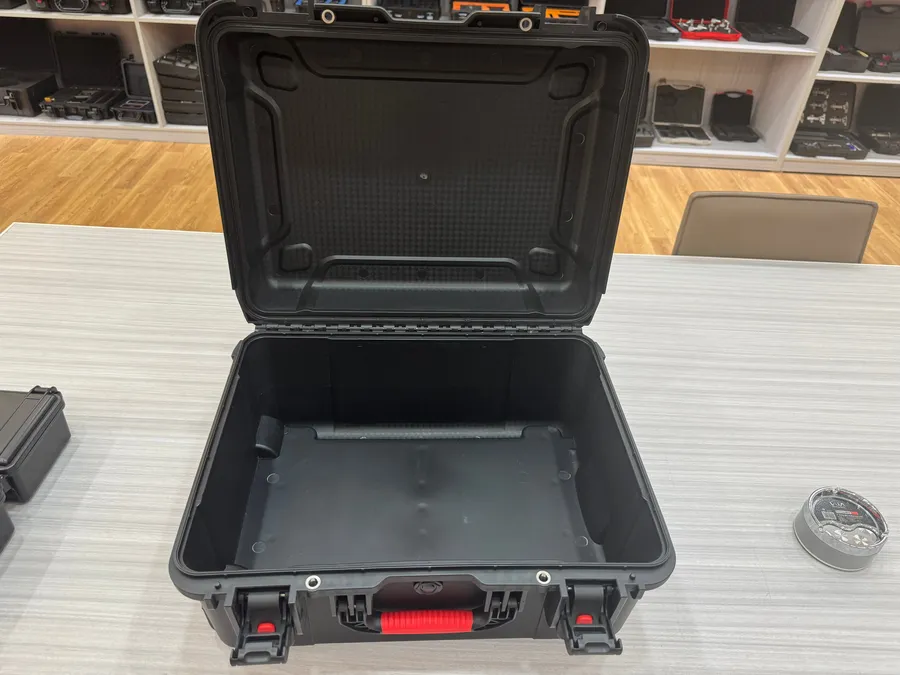
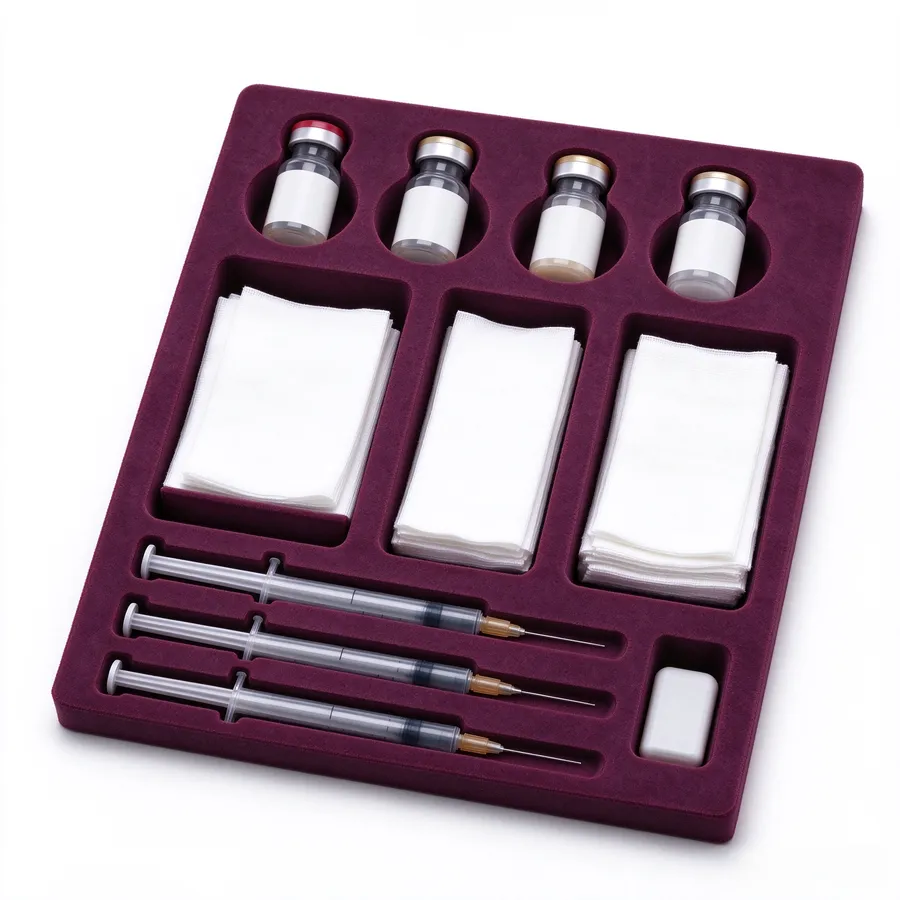
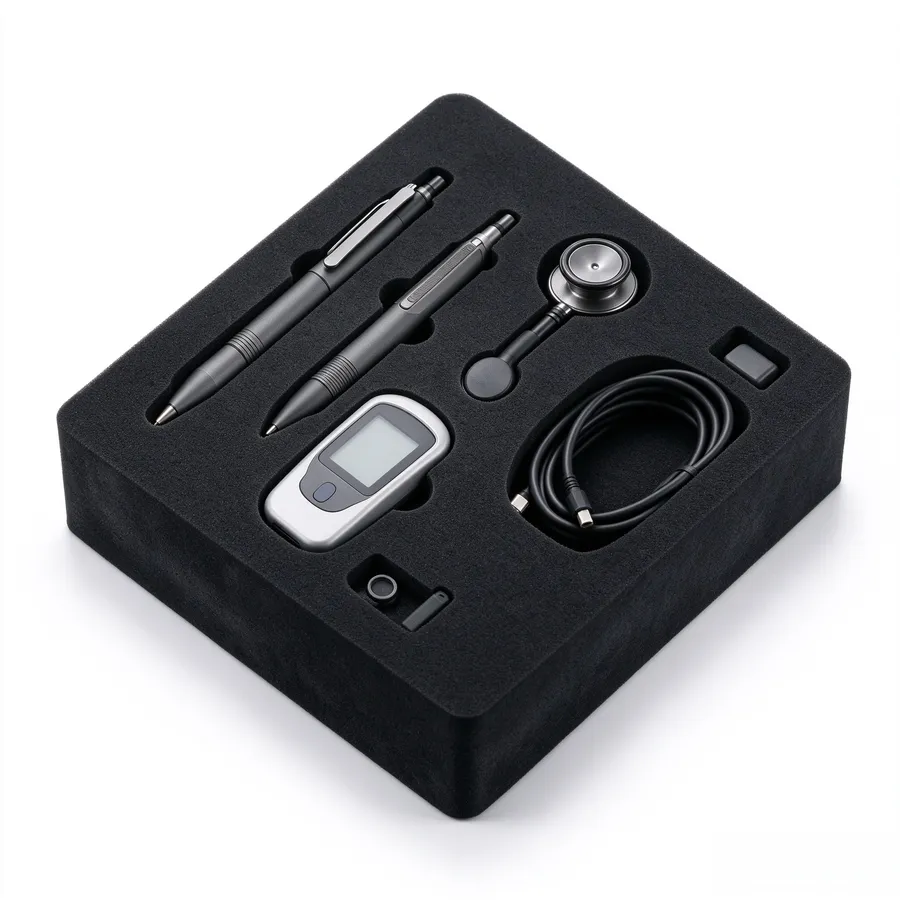
Customisation
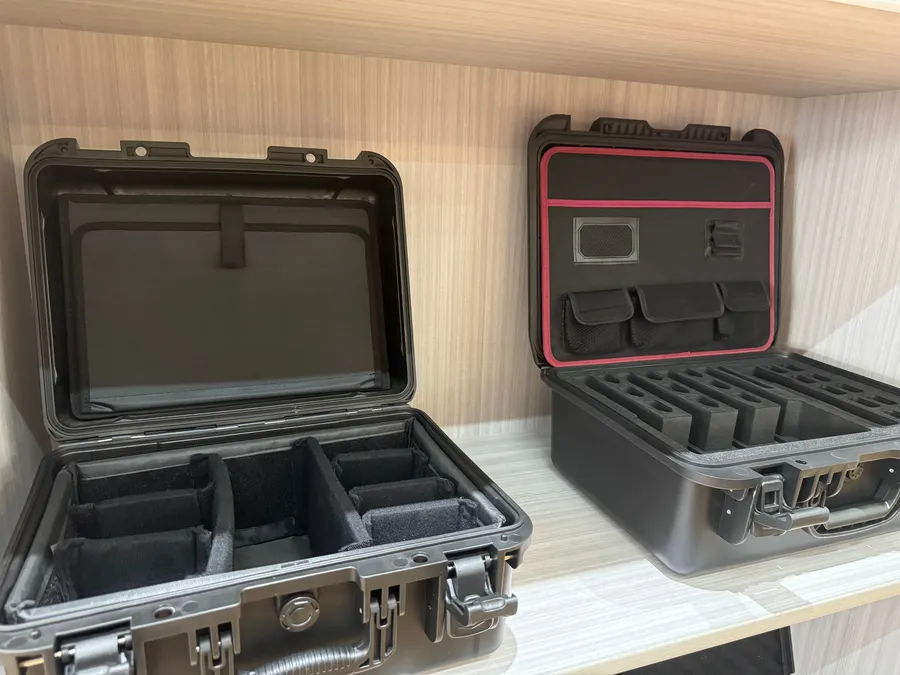
Everything described above is configurable on a standard shell: interior layout (pick-and-pluck, die-cut or CNC-cut), foam grade and thickness, colour, logo method, latch and lock count, pressure-equalisation valve, cable ports, document holder and identification plate. A bespoke exterior geometry requires a new mould — 125 days, from 3,000 units per moulded component.
Procurement considerations
| Question | What to send us |
|---|---|
| Which shell fits? | Equipment L × W × H as packed, plus required clearance per axis |
| What does it cost? | Order quantity and estimated annual quantity — the two drive different answers |
| Is tooling needed? | Whether an existing shell clears the envelope with usable foam depth |
| Lead time? | Your required delivery date, not just the order date |
| Certification? | The exact standard your tender names — we will say whether we can test to it |
| Freight? | Destination and preferred terms; carton and pallet data supplied with the quotation |
Comparison and selection guide
The tables on this page exist because a protective case is chosen by comparing three things: the envelope, the environment and the handling chain. Where no table applies, the rule below is.
| Situation | What To Do |
|---|---|
| Start from the equipment, not the case | Measure the tallest, widest and longest points of the packed equipment including antennas, handles and connectors. Add 20 mm minimum clearance per axis before selecting a shell. |
| Then choose the carrying method | Under 8 kg, a fixed handle is lighter and cheaper. Over 12 kg or any journey over 30 m, specify the T series with telescopic handle and wheels. |
| Then decide the interior | Pick-and-pluck for kits that change. Die-cut or CNC-cut for fixed layouts that must be auditable at a glance. |
- Size on internal dimensions plus clearance, never on a product name.
- Choose the carrying method before the shell: it changes the series, not just the price.
- Specify the interior last, and decide up front whether the end user will reconfigure it.
Tactical field survival rescue tool case? relates to Military Case Guide. Related families: Military Protective Cases / Tactical Equipment Cases / Drone & UAV Cases / Optical Equipment Cases. Related sectors: field and industrial equipment. Continue in the Military Case Guide cluster.
This page is written from our own production data. If your requirement differs, send the dimensions and we will tell you which of the 155 models fits, or whether a custom route is needed.