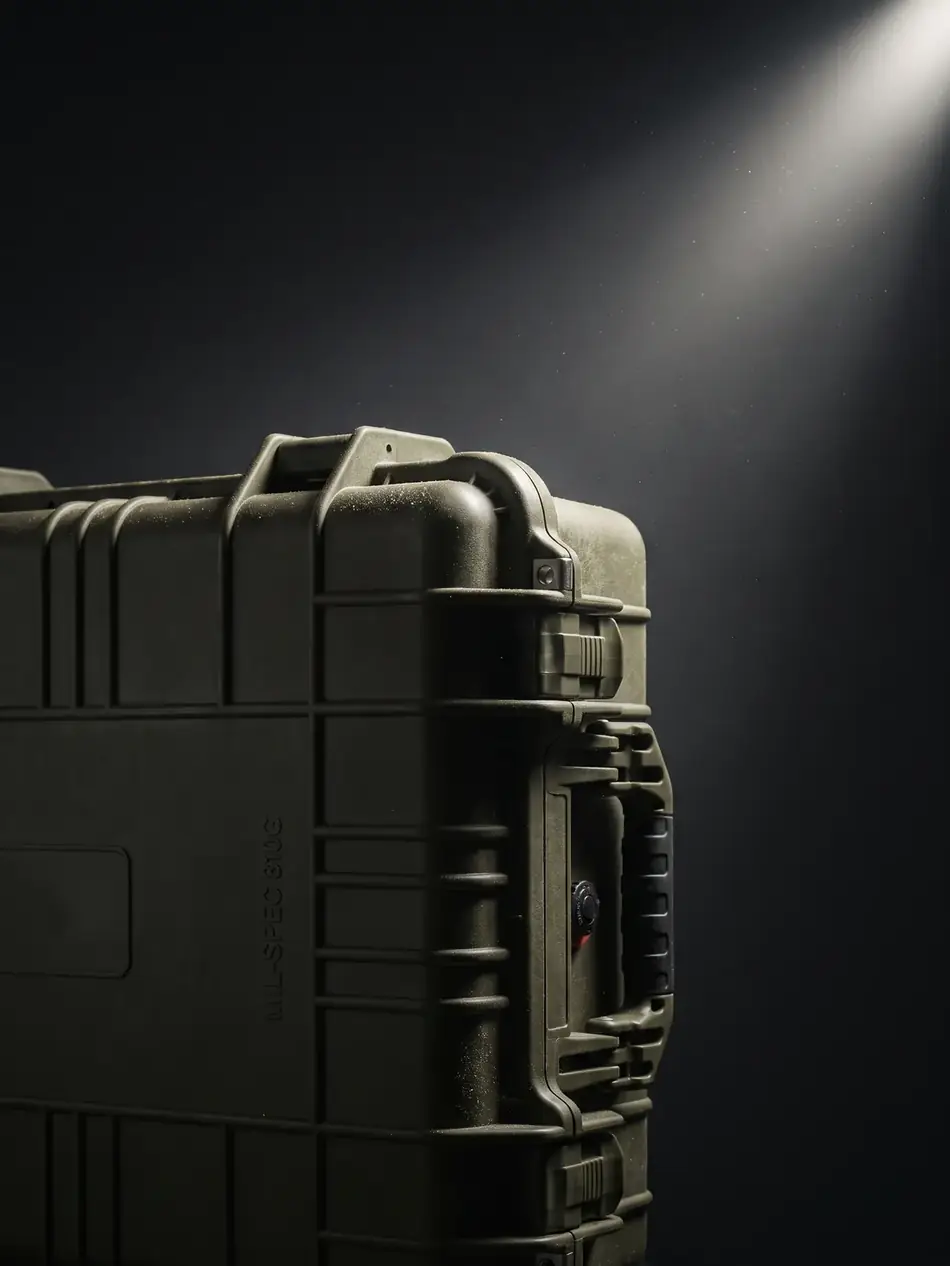
Tactical Equipment Hard Case: Published Sizes, Walls and Terms
Short answer: a tactical equipment hard case is chosen on four published facts, in this order. The cavity and the base-to-lid depth split decide whether the kit fits the way it travels. The wall thickness and shell material decide how the shell resists denting. The carry method, which is a fixed handle, a shoulder strap option or wheels with a telescopic handle, decides whether the unit is carried or rolled. The interior layout decides what happens to the contents when something lands on top of the case. KeXin New Materials (Guangdong) Co., Ltd. moulds 155 thermoplastic models; 113 carry the military tag in our catalogue data, 12 are tagged for tactical equipment, 19 are published as wheeled trolley cases, wall thickness is recorded on 148 models from 2.0 mm to 6.0 mm, base and lid depth on 100 models, and carton packing on 64. Water and dust performance are recorded as not measured and we print no ingress protection code, shock and impact are recorded as configuration options that depend on the approved foam layout, and no free-fall height is stated for any model. Sealing is a mechanism we can describe and a result we have not measured: 124 of the 155 offer a compressible gasket in a moulded channel and 31 do not.
Key points
- 113 of our 155 models carry the military tag in catalogue data and 12 carry the tactical tag; the tag is a filing label, not a performance statement.
- Impact resistance is a wall and foam decision: 148 models publish a wall thickness from 2.0 mm to 6.0 mm, and the shell alone is not a shock rating.
- Depth split beats total depth: KX-3218 publishes a 308 x 230 x 172 mm cavity as 86 mm base plus 86 mm lid, while KX-93221 puts 165 mm of its 200 mm in the lid.
- Wheels change two things at once: 19 trolley models are published with wheels and a telescopic handle, and all 19 are recorded as not stackable on a pallet.
- 124 of 155 models offer a compressible EPDM or equivalent gasket and 31 are plain shells; water and dust are recorded as not measured on both groups.
- We quote wholesale and OEM on EXW or FOB, with a logo or colour minimum of 300, a 45-day first sample on an existing mould and 125 days for a new mould.
What a tactical hard case has to do that a storage box does not
A storage box is judged on whether it holds things in one place. A hard case that moves is judged on a chain of events: it gets latched in a vehicle at night, loaded onto a pallet with other freight, dropped the last two metres onto concrete, dragged over gravel, left in sun and then moved into cold, and opened with gloves on while something is being counted. Each of those events loads the shell in a different way. Corner impact dents the shell and transmits energy inward. Stack load compresses the lid and, if the interior has no support under the instrument line, that compression becomes a cracked housing. Abrasive grit in the latch and hinge turns a one-thumb closure into a two-handed fight. Condensation inside a shell that was closed warm appears on optics and contacts hours later. None of these are solved by a word on a datasheet; each is a geometry, material, hardware or interior decision that can be checked against published numbers before an order is placed.
That is the frame this article uses. For every claim we make we point at a published field: internal and external dimensions, the base-to-lid depth split, wall thickness, net weight, shell material, seal availability, hardware, carton packing. For every claim we cannot support we say so and describe the mechanism instead: what a gasket does, what a thicker wall changes, what a foam layout is doing on your behalf. Buyers who get this order of operations wrong end up comparing adjectives, and adjectives are the least reliable part of any case specification.
How our catalogue actually files this category
The file holds 155 active shell models. Each model carries one or more category tags, and the tags are how our own catalogue files a shell, not an independent test result. The counts, computed from the product data: 113 models carry the military-protective tag, 98 the firearm-transport tag, 99 the communication-equipment tag, 68 the field-equipment tag, 45 the defense-equipment tag, 45 the military-equipment tag, 35 the long-equipment tag, 19 the military-transport tag, 12 the tactical-equipment tag and 68 the ammunition-box tag. Internal volumes as recorded span 0.3 L to 139.5 L, and the largest published external length in the file is 1,356 mm, which is why a long-gun kit, a generator accessory kit and a handheld radio set end up in completely different rows even though a buyer calls all three a tactical case.
Two other counts matter when a specification is being written. Nineteen of the 155 models are published as trolley cases with wheels and a telescopic handle, and the stacking field records those same 19 as not stackable while 136 are recorded as stackable; a buyer who plans pallet freight needs that number before choosing a wheeled shell. Sealing splits 124 with a gasket option against 31 without. Every model records a moulded hinge, feet and a latch body that accepts a standard padlock, while a pressure equalisation valve, a document holder and a shoulder strap are recorded as configuration options rather than standard fittings.
Impact-Resistant Military Hard Case: what the wall thickness figure is telling you
When a buyer writes impact-resistant military hard case, the checkable part of the answer is the shell section. Wall thickness is published on 148 of 155 models and runs from 2.0 mm to 6.0 mm, and the material is recorded as polypropylene, engineering polypropylene, ABS, or a polypropylene and ABS combination. Those numbers behave differently under a load. A 2.0 mm polypropylene shell such as KX-2405 is light and flexible; it will bounce back from a knock but a heavy item landing on the lid deflects it inward, so the interior has to carry the load instead. A 3.5 mm ABS shell such as KX-62205 is stiff in a small format, which is why that section is used on thick-wall handheld models. A 5.0 mm engineering polypropylene shell such as KX-93221, at 1,230 g for a 300 x 200 x 200 mm cavity, resists denting when tools are stacked on top of it, and 6.0 mm is the top of the published range, recorded on the KX-97227 trolley.
What the wall does not do is absorb the energy that reaches your equipment. That is the interior's job, and in our file shock protection and impact resistance are recorded as configuration options with an explicit note that the shell alone is not a shock rating. We also state no free-fall height for any model, because a fall figure describes a tested assembly, and the drop work is not in the product data. The practical specification therefore has three lines, not one: the published wall and material for the shell, the foam type and pocket layout for the interior, and, if a tender needs a documented impact or fall result, an accredited test programme quoted against the exact model and layout you order. Anything that collapses those three into a single adjective is not a specification.
Published sizes across the tactical range
The rows below are taken directly from the published specification file. Where a field is not recorded for that model the cell says so, because an empty column is a statement about our data and not an invitation to estimate. Use the internal figure to clear the kit and the usable figure to expect what is left after moulded ribs, the gasket channel and the approved foam: KX-3213 records 8.4 L internal against 7.2 L usable, KX-86216 records 22.7 L against 19.5 L, and KX-88442 records 139.5 L against 111.6 L.
Read the table by duty rather than by size. The sub-1 L flat formats are accessory and sidearm-adjacent kits. The 1 to 3 L band is handheld radios, meters and pistol kits. The 4 to 12 L band is optics, communications and instrument sets. The 13 to 23 L band is the general carry case. The 582 mm and 880 mm internal lengths are long-equipment formats, and the wheeled rows are for mass that no one carries by hand twice.
| Model | Internal Mm | Internal L | Base / Lid Mm | Wall Mm | Material | Net Weight G | Gasket Offered | Carry |
|---|---|---|---|---|---|---|---|---|
| KX-1204 | 115 x 78 x 32 | 0.3 | 16 / 16 | 2.6 | PP | 100 | No | Fixed handle |
| KX-62205 | 200 x 98 x 41 | 0.8 | Not published | 3.5 | ABS | 310 | Yes | Fixed handle |
| KX-2405 | 220 x 162 x 49 | 1.7 | 31 / 18 | 2.0 | PP | 293 | No | Fixed handle |
| KX-3213 | 308 x 230 x 118 | 8.4 | 32 / 86 | 3.0 | PP | 860 | Yes | Fixed handle |
| KX-4312 | 420 x 260 x 104 | 11.4 | 52 / 52 | 3.5 | PP | 1170 | Yes | Fixed handle |
| KX-84416 | 395 x 295 x 135 | 15.7 | 45 / 90 | 4.2 | PP | Not published | Yes | Fixed handle |
| KX-86216 | 582 x 300 x 130 | 22.7 | 30 / 100 | 3.3 | PP | Not published | Yes | Fixed handle |
| KX-89616 | 880 x 350 x 140 | 43.1 | 40 / 100 | 5.0 | PP | Not published | Yes | Fixed handle |
| KX-5723 | 500 x 340 x 211 | 35.9 | 42 / 169 | 5.0 | Engineering PP | 4680 | Yes | Fixed handle |
| KX-85021 | 437 x 308 x 164 | 22.1 | Not published | 4.5 | Engineering PP | 4912 | Yes | Wheels plus telescopic handle |
| KX-97227 | 590 x 435 x 210 | 53.9 | 168 / 42 | 6.0 | Engineering PP | 10000 | Yes | Wheels plus telescopic handle |
| KX-88442 | 740 x 518 x 364 | 139.5 | 44 / 320 | 5.0 | PP | 15320 | Yes | Wheels plus telescopic handle |
Military Measuring Instrument Case: the format that gets mis-sized most often
A military measuring instrument case is the kit most often ordered on the wrong number, because the buyer measures the instrument and forgets the three things that travel with it: the coiled lead or probe, a reference or calibration item, and the consumables such as batteries, couplant or a printed certificate. The coiled lead is what defeats a shallow tray; forcing a lid flat over a bundle is how a connector gets bent and how a gasket line gets pinched. The reference item is dense, and if it shares one pocket with the instrument housing, transit does the rest. Read the depth split before the volume: KX-2811 publishes a 253 x 180 x 98 mm cavity as a 27 mm base with a 71 mm lid at a 5.0 mm wall and 890 g, which lets a probe head hang in the lid half. KX-3315 publishes 303 x 224 x 135 mm with a 35 mm base and a 100 mm lid in engineering polypropylene at 1.67 kg. KX-3218 publishes 308 x 230 x 172 mm as an 86 mm base with an 86 mm lid, 900 g, packed 12 per carton.
For a survey or rangefinder set that needs length rather than depth, KX-4010 publishes 390 x 315 x 88 mm at 10.8 L with a 44 mm base and a 44 mm lid, 1,015 g and 10 per carton, and KX-4312 publishes 420 x 260 x 104 mm in a 3.5 mm wall at 1,170 g with 10 per carton. Where the kit is a box of instruments plus cable rather than an instrument plus cable, the cube formats do the work: KX-93221 with 300 x 200 x 200 mm internal and a 165 mm lid, or KX-5723 with 500 x 340 x 211 mm internal in engineering polypropylene at 4,680 g, packed one per carton in a 580 x 250 x 415 mm carton. Interior layout, not a printed code, is what protects a calibrated face.
Military Medical Supplies Case: depth, dividers and the outbound envelope
A military medical supplies case is a different problem again. Trauma and first-aid kits are made of many light, irregular items in sealed packaging, and the ordering mistake is a cavity that is deep enough but has no way to keep layers separated and identifiable: contents shift to one corner, and the item that was on top is at the bottom of the case when it is opened in a hurry. The answer is an interior plan before a model number. A lid with real depth lets each layer be a category. KX-64618 publishes 430 x 290 x 165 mm internal as a 25 mm base with a 140 mm lid at a 4.7 mm ABS wall and 2,775 g. KX-64621 publishes 430 x 288 x 186 mm internal, 23.0 L against 18.4 L usable, 3,000 g, and a published carton of 740 x 485 x 685 mm with 6 pieces per carton, which is the number that drives your pallet plan.
For a heavier device rather than a supplies kit, KX-4616 publishes 455 x 338 x 148 mm with a 74 mm base and a 74 mm lid at a 3.0 mm wall and 1,395 g, and the wheeled rows carry what nobody lifts twice: KX-85021 at 22.1 L and 4,912 g, KX-88442 at 740 x 518 x 364 mm internal and 15,320 g. Two cautions on those rows. All 19 published trolley models are recorded as not stackable, so a pallet built around them carries freight on the deck, not on the case. And nothing in the medical-supply context in our file is a clinical claim: the shell is packaging for devices somebody else regulates, and cold-chain, sterility or drug-storage performance is not something we test, publish or assert.
Tactical Equipment Hard Case: the four decisions, in the order they should be made
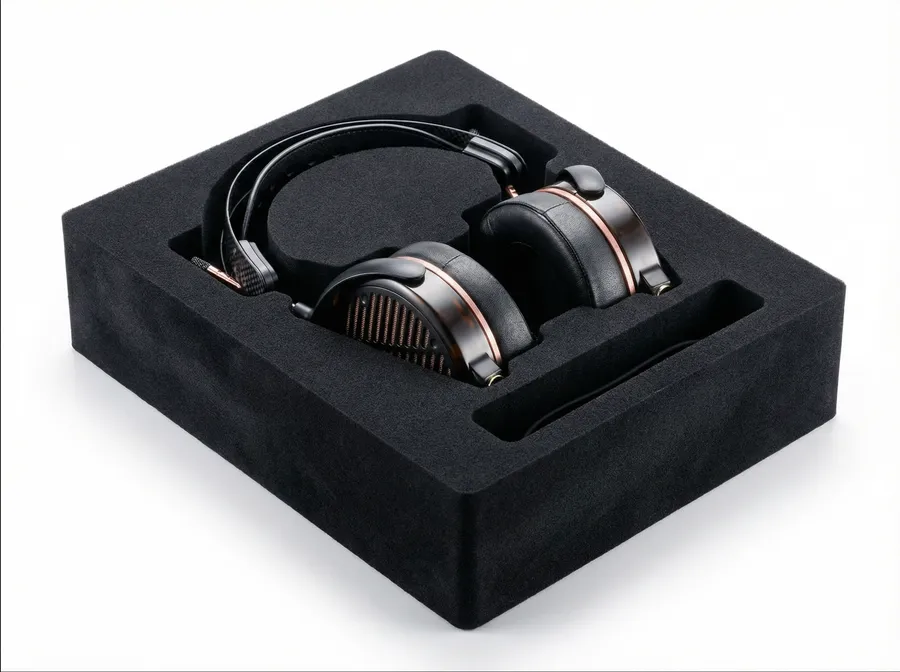
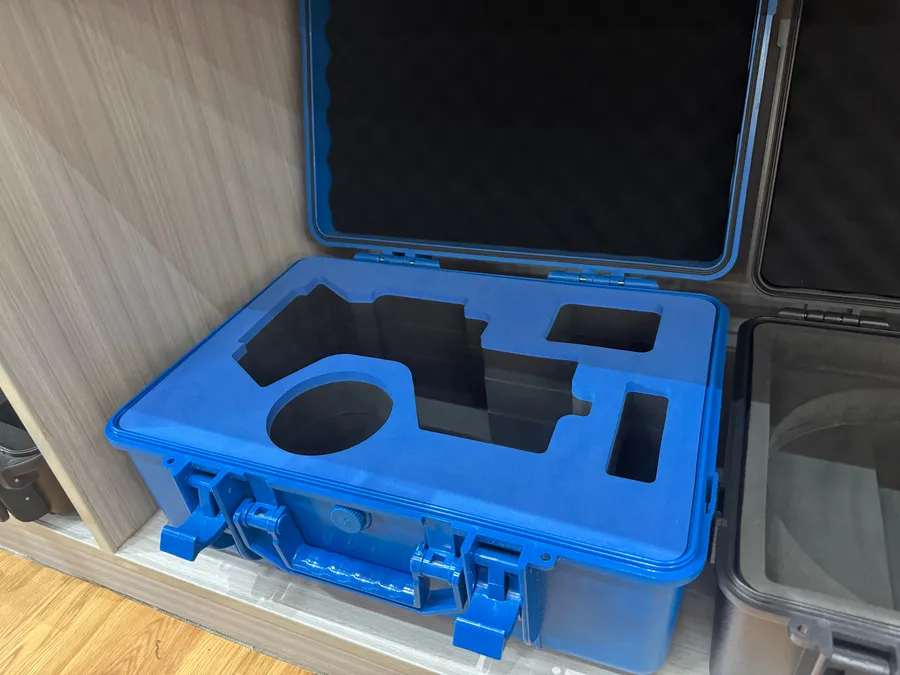
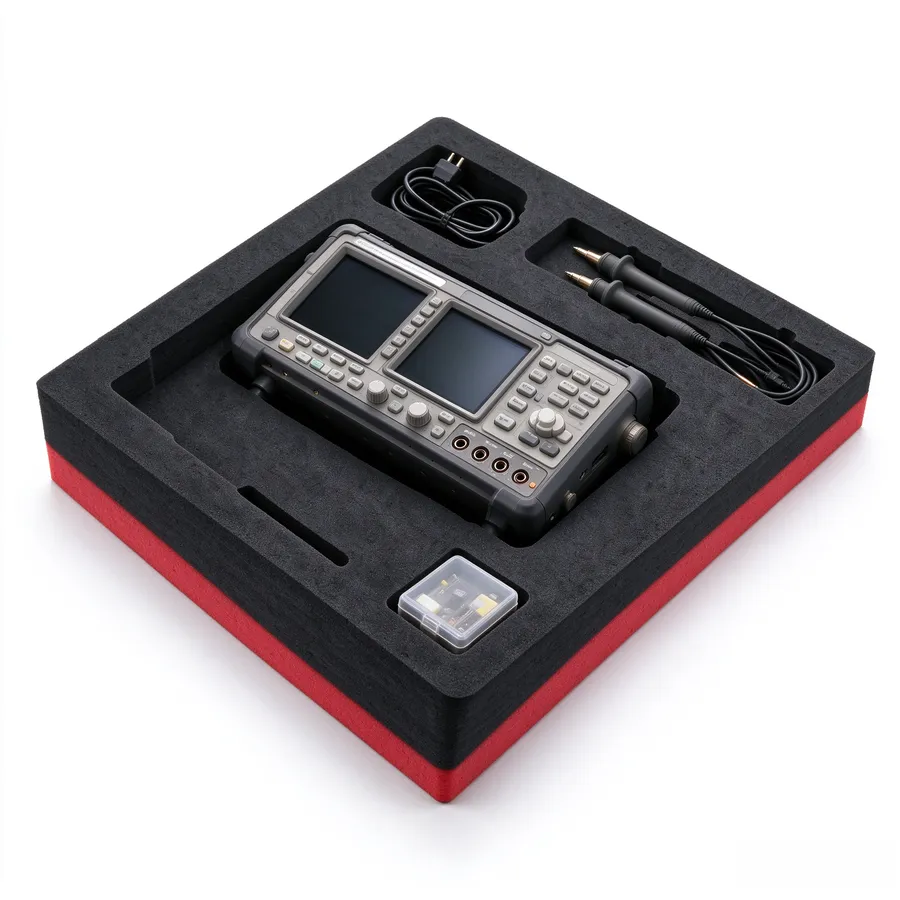
Decision one is the cavity, and the check is the packed envelope measured as it travels, with leads coiled, batteries fitted and any accessory that shares the case. Decision two is the depth split, which decides whether the lid is a shallow cover or a working half of the interior: a 27 mm base with a 71 mm lid in a 98 mm cavity is a different case from a 74 mm base with a 74 mm lid in a 148 mm cavity, even though both are described as depth figures. Decision three is the carry method, and it is a mass question before it is a preference: 100 g and 293 g shells are invisible in a load-out, 1,170 g is a case you carry on a vehicle deck, and 4,912 g upward is a trolley. Decision four is the interior: pick-and-pluck where the contents change between jobs, die-cut or CNC-cut where they do not, with a wall of foam on all six faces of anything with a glass face or a calibrated surface.
Only after those four do the seal line and the hardware get settled, because they are configuration choices on top of a chosen geometry. If the duty is dusty or wet, shortlist from the 124 models that offer a compressible gasket in a moulded channel and add a pressure equalisation valve as an option; if the case is opened constantly in a dry environment, one of the 31 plain shells is cheaper to own and faster to work from, because a gasket is a consumable that gets damaged by a hasty lid. Every model already records a moulded hinge, feet and a latch body that accepts a standard padlock, so seal and tamper provisions are additive decisions rather than a different product line.
Choosing between hand-carried, long-kit and wheeled formats
The comparison below is the one buyers actually need, because a single tender often mixes all three formats and the wrong row kills the pallet plan. The published numbers again: the lightest recorded shell is 100 g and the heaviest is 15,320 g; the longest internal cavity published for a long-equipment row is 880 mm, in KX-89616; and the largest internal volume in the file is 139.5 L, in the KX-88442 trolley. Stackability is the field people discover too late: 136 models are recorded as stackable and the 19 wheeled models are not, which is a freight consequence rather than a product defect.
| Format | Published Example | Best For | Freight Note |
|---|---|---|---|
| Flat accessory, under 1 L | KX-1204, 115 x 78 x 32 mm, 2.6 mm wall, 100 g | Optics, sidearm-adjacent kits, spares, documents | Stackable; no gasket recorded on KX-1204 |
| Handheld, 1 to 3 L | KX-62205, 200 x 98 x 41 mm, 3.5 mm ABS, 310 g, gasket offered | Radio sets, meters, single-hand tools | Carton published: 20 per carton, 475 x 285 x 320 mm |
| Instrument and optics, 8 to 12 L | KX-4312, 420 x 260 x 104 mm, 3.5 mm, 1170 g | Sight-in kits, survey sets, camera bodies with lenses | Stackable; 10 per carton, 615 x 440 x 560 mm |
| Long equipment | KX-89616, 880 x 350 x 140 mm internal, 5.0 mm wall | Long-gun and pole-type equipment, Tripod and mast sets | 40 mm base with a 100 mm lid; carton not published |
| Wheeled trolley | KX-85021, 437 x 308 x 164 mm, 4.5 mm, 4912 g | Device-plus-accessory loads moved across a yard or deck | Not stackable; wheels and telescopic handle recorded |
| Large wheeled | KX-88442, 740 x 518 x 364 mm internal, 139.5 L, 15320 g | Crew-served kits and bulk issue | Not stackable; 44 mm base with a 320 mm lid |
Where tactical hard cases are specified
The same published rows keep appearing under different buyer names: law-enforcement evidence and duty kits, range and training equipment, security and close-protection gear, field communication sets, remote and utility operations, outdoor and expedition logistics, aerospace ground equipment, and hunting or shooting sports storage. Long-format shells are filed for firearm transport, of which 98 models carry the tag in our catalogue data; dense small-parts accessory boxes are filed under the ammunition-box tag on 68 models; and 19 models are filed for military transport duty, all of which are the wheeled rows. Those are filing decisions on our side. They tell a buyer which rows to read; they do not tell a buyer that a shell has been qualified for anybody's duty cycle.
One boundary applies across all of them: we supply wholesale and OEM volume on EXW or FOB terms for buyers who put their own configuration or brand on the shell. A single case sold to an individual is not the business we run, so the minimums and lead times below are set around batch work, and the drawings we ask for are the drawings a procurement office can attach to a specification.
Customisation for a tactical build
Every model is recorded with OEM and ODM availability, custom logo, custom colour, custom packaging, custom foam, custom hardware and private label. Custom foam is quoted from a quantity of one, since it is a cutting operation on an existing shell, and we need a drawing, a photograph of the packed kit or a physical sample to cut it. Logo, colour and OEM builds carry a published minimum of 300. A first OEM sample on an existing mould is quoted at 45 days; a new mould is a 125-day programme with a minimum of 3,000 pieces per component. Hardware and interior configuration items recorded in the file include the pressure equalisation valve, the document holder and the shoulder strap, alongside standard moulded hinge, feet and a padlock-ready latch body. Foam is offered as cross-linked polyethylene, EVA or expanded polystyrene by zone, in top, base, egg-crate, layered or custom-cut arrangements, with custom thickness and shape available.
Tactical buyers usually combine three of these on one order: a colour or logo change on an existing shell, a die-cut interior for a defined kit, and a gasket plus valve on the rows that will sit outdoors. That combination is quoted against a named model rather than a category, because the cavity, the lid depth and the packing count all change with the model, and the pallet plan depends on the published carton.
Purchasing terms and documentation
Terms are wholesale and OEM, EXW or FOB. We do not sell retail, do not quote DDP and hold no overseas warehouse stock, so freight and import handling sit with your forwarder and the chosen term. A 30 percent deposit is the standing parameter on a new build. Net weight is published per model and carton packing is published on 64 of 155 models; pallet quantity is calculated from the carton footprint against your pallet size rather than published as a measured figure, and 20GP, 40GP and 40HQ container counts come with the quotation. Lead times are as published above: 45 days for a first OEM sample on an existing mould, 125 days for a new mould.
What arrives with an order is a specification sheet with the recorded fields for the ordered model, a material and hardware list, and a packing list. What does not arrive is an ingress protection statement, an immersion depth or time, a free-fall height, a stack-load figure, an ultraviolet or temperature range, or a third-party conformity document for a build that has not been submitted to a laboratory, because those fields are recorded as not measured in our product file. Where your tender needs them, name the protocol, the sample state and the load condition and we quote accredited testing as a separate work package against the exact configuration you receive.
What we do not claim for a tactical case
No ingress protection code on any of the 155 models. No immersion depth or duration. No free-fall height or drop distance. No stack-load or working-load number. No ultraviolet or temperature range. No ballistic, blast, electromagnetic or chemical performance of any kind, and no claim that a category tag in our catalogue is a qualification from any authority. Shock and impact are recorded as configuration options that depend on the foam layout you approve. The one protection line recorded as measured is corrosion resistance, and the reason is narrow: a thermoplastic shell has no ferrous corrosion path. A military tag on a model in our data means we file that shell in a military category, and nothing beyond that. If a specification needs a capability our file does not carry, the honest answer is a test scope and a price, not a sentence.
Customisation
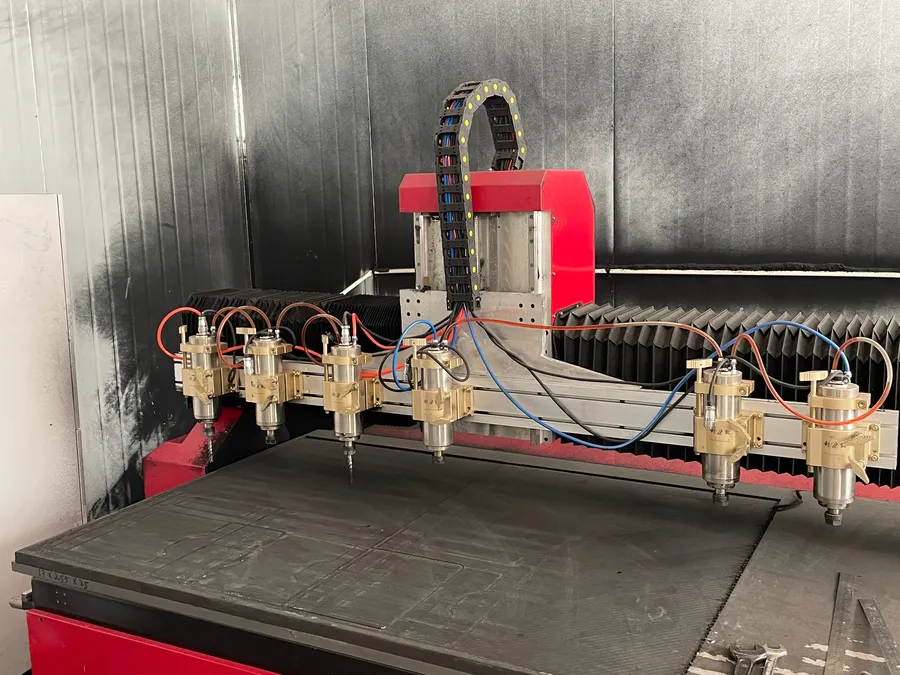
Everything described above is configurable on a standard shell: interior layout (pick-and-pluck, die-cut or CNC-cut), foam grade and thickness, colour, logo method, latch and lock count, pressure-equalisation valve, cable ports, document holder and identification plate. A bespoke exterior geometry requires a new mould — 125 days, from 3,000 units per moulded component.
Procurement considerations
| Question | What to send us |
|---|---|
| Which shell fits? | Equipment L × W × H as packed, plus required clearance per axis |
| What does it cost? | Order quantity and estimated annual quantity — the two drive different answers |
| Is tooling needed? | Whether an existing shell clears the envelope with usable foam depth |
| Lead time? | Your required delivery date, not just the order date |
| Certification? | The exact standard your tender names — we will say whether we can test to it |
| Freight? | Destination and preferred terms; carton and pallet data supplied with the quotation |
Comparison and selection guide
The tables on this page exist because a protective case is chosen by comparing three things: the envelope, the environment and the handling chain. Where no table applies, the rule below is.
| Situation | What To Do |
|---|---|
| Fixed kit | CNC or die-cut foam, tool control by silhouette, serial number pockets. |
| Variable kit | Pick-and-pluck layered foam, reconfigured by hand. |
| Mixed use | CNC base for the primary unit plus a pluck-foam lid layer for consumables. |
- Size on internal dimensions plus clearance, never on a product name.
- Choose the carrying method before the shell: it changes the series, not just the price.
- Specify the interior last, and decide up front whether the end user will reconfigure it.
Tactical Equipment Hard Case: Published Sizes, Walls and Terms relates to Military Case Guide. Related families: Tactical Equipment Cases / Military Protective Cases / Defense Equipment Cases / Military Equipment Cases / Firearm Transport Cases / Ammunition Storage & Transport Boxes / Long Equipment Cases / Field Equipment Cases / Medical Equipment Cases / Rolling Cases / Military Transport Cases / Custom Protective Cases. Related sectors: field and industrial equipment. Continue in the Military Case Guide cluster.
This page is written from our own production data. If your requirement differs, send the dimensions and we will tell you which of the 155 models fits, or whether a custom route is needed.