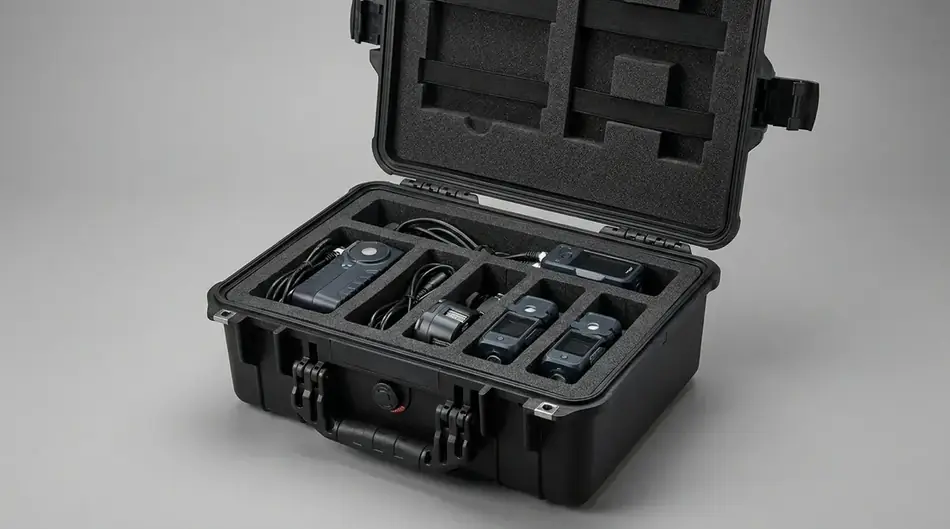
How should cables and accessories be organized inside a communication equipment case?
Keep cables and accessories out of the main equipment cavity and give them their own keyed zone. The organizing rule for a communication case is separation by function and by connector type, not by whatever space is left over after the radio sits down. Coil each cable to its own minimum bend radius, secure it so it cannot migrate, and route connectorized ends into pockets that grip the connector body rather than the strain relief. Where a kit carries adapters, headsets, power leads and spares, split them into a shallow accessory tray or a second shell sized to the narrow internal width, because a long coiled cable is limited by width and clearance long before it is limited by the length of the box. Everything below is the layout order we use when a buyer sends a communication kit list, and every figure quoted is published per model, never generalized across the range.
Key points
- Group the load into device, cable set and accessories before you measure anything.
- Size cable runs against the narrow internal width and the lid and base depth, not the box length.
- Give connectorized ends a pocket that grips the body and leaves the strain relief unsupported.
- Keep small hard accessories in their own cells or a removable tray away from the radio.
- A keyed layout reproduces the same tidy on the hundredth repack; ties and velcro do not.
- Seal availability is published per model; ask for the measured datasheet for the exact SKU.
Separate the load into device, cables and accessories before you cut any foam
The first mistake in a communication case is treating it as one volume to fill. Split the contents into three groups before you measure anything: the protected device (a transceiver, a terminal, a router, or a radio plus its power supply), the cable set (feedline, power leads, data leads, antenna jumpers), and the accessories (headsets, adapters, fuses, mounting clamps, spares, tools and paperwork). Each group fails differently, so each needs a different home. The device is mass and wants support on all six faces. The cable set is long, abrasive and has a small radius limit, so it fails by rubbing and by crushing a connector it is wrapped around. The accessories are small, hard and pointy, so they fail by migrating into a gap and pressing on a socket. Group first, size second, and cut last.
Plan cable runs against the narrow internal width, not the box length
A coiled cable does not care about the length printed on the datasheet; it cares about the clear dimension it can lie across and the height it must clear once wound. Our published models list a narrow internal width precisely because the usable slot is often smaller than the internal length. WL4010 gives 390 by 315 by 88 mm internal with a 282 mm narrow width, so a cable wound for that shell has to sit inside 282 mm and under an 88 mm cavity, while WL4616 opens to 455 by 338 by 148 mm internal at 302 mm narrow width, letting a longer jumper lie flat in one plane instead of double-coiled. A tall, shallow-footprint shell such as WL3218, at 308 by 230 by 172 mm internal with a 205 mm narrow width and an 86 mm base, suits vertical routing where a mic boom or a stiff feedline stands rather than coils. Read the width before the length and the cable stops fighting the lid.
Zone by connector and function, and protect the strain relief
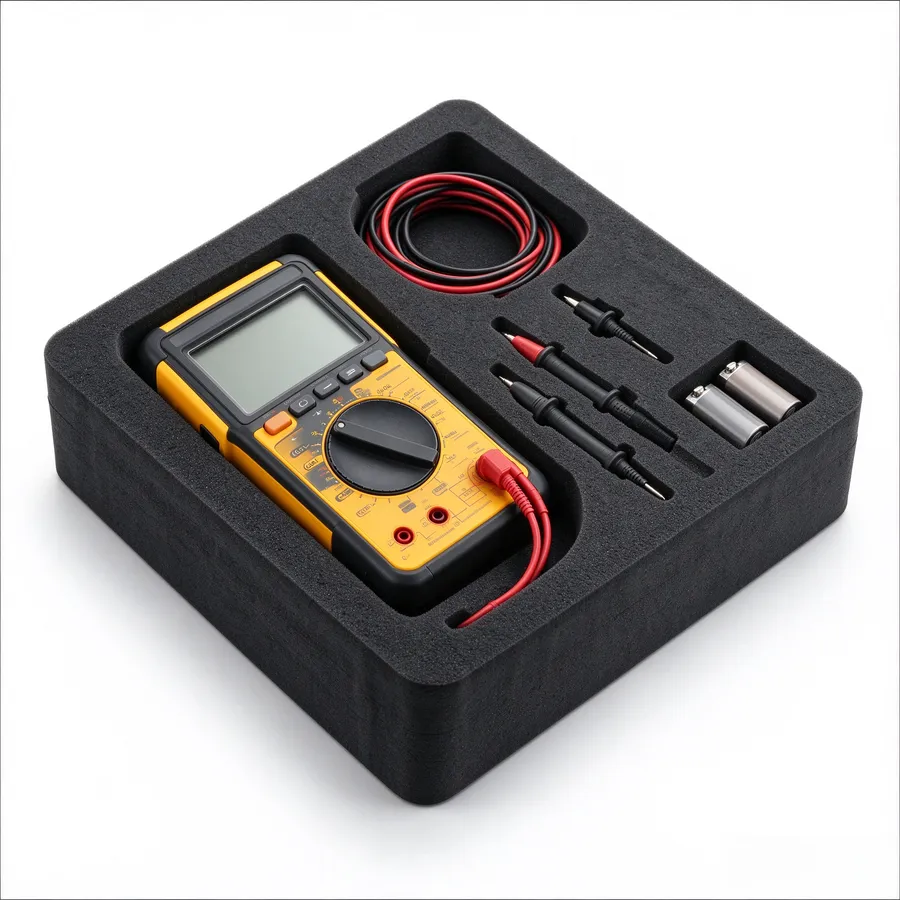
Once each group is sized, cut the interior so a connectorized cable end seats in a pocket that grips the connector body and leaves the strain relief unsupported, because a coiled lead pulling on a molded boot is how a port dies. Put the device in a base zone with keyed walls, put the cable set in its own channel or a removable tray, and put accessories in small dedicated cells so a clamp cannot travel to a board edge. Where the kit is assembled in the dark, add a lid document holder so the configuration sheet travels with the case, and keep one obvious slot for the power supply so nobody rigs it into the accessory channel. Velcro and cable ties tidy a load for today; only a keyed layout guarantees the same tidy on the hundredth repack.
Compare three cable-and-accessory layouts
| Layout | Best For | Needs | Watch Out |
|---|---|---|---|
| Loose with ties | One device, a few short leads, fast field packing | Least foam, any shell clears it | Cables migrate and press on connector faces on repeat moves |
| Compartmentalized tray | Headsets, adapters and spares that change kit to kit | A removable tray plus one device zone | Tray must lock down so it is not a second mass in transit |
| Fully keyed insert | A fixed cable set and connector set that must reproduce | CNC or die-cut keyed foam sized to narrow width | Higher foam cost; supply a revision-controlled drawing |
Selection guidance: match the shell to the cable mix, not the radio alone
Work from the accessory list upward. If the kit is one device plus a short set of leads, a shallow stackable shell such as WL4010, at 1015 g empty with a 44 mm lid over a 44 mm base, keeps connectors flat and the whole load light. Add a power supply and a longer feedline and you want more cavity height and a deeper lid, so WL4613, with a 74 mm lid over a 42 mm base and 1370 g empty, beds the dense supply below the parting line while the cable runs above it. A kit with jumpers, headsets and a spares tray fits WL4616, 455 by 338 by 148 mm internal and 1395 g empty, whose full-height lid closes cleanly over a wound bundle. Where accessory mass dominates and you want a thicker wall for a dense sub-kit, WL6-4618 pairs a 140 mm lid with a 25 mm base on a 4.7 mm ABS shell so small heavy items sit low and the cable stays above them.
Applications: how communication kits are organized in the field
A manpack relay keeps the transceiver and battery in one keyed shell and moves feedline, clamps and guy hardware into a companion shallow case, because mixing abrasive steel against a connector face is a false economy. A vehicle-mounted station splits by function: the radio and power supply ride a mid shell while a second case carries the cable harness, spare fuses and adapters on a removable tray that can be handed to a technician without unpacking the radio. A command element carrying several headsets and handset sets uses pick-and-pluck cells so each headset gets its own plane and nothing coils onto another plug. A maintenance kit for a communications truck is the accessory-heavy case, where small-parts zoning matters more than protection depth. In every configuration we quote wholesale or OEM production on EXW or FOB terms against your equipment list; we do not run a retail single-unit channel, do not quote under DDP and hold no overseas warehouse, so plan inbound freight and lead time around manufacturing rather than stock.
Custom and OEM insert options for cable management
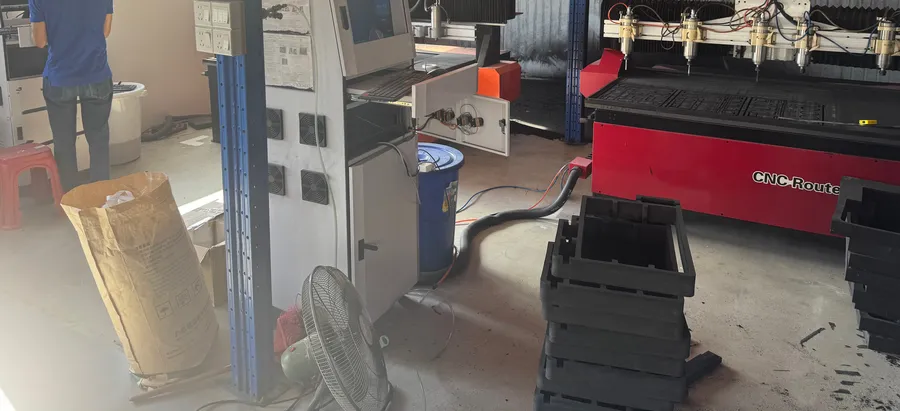
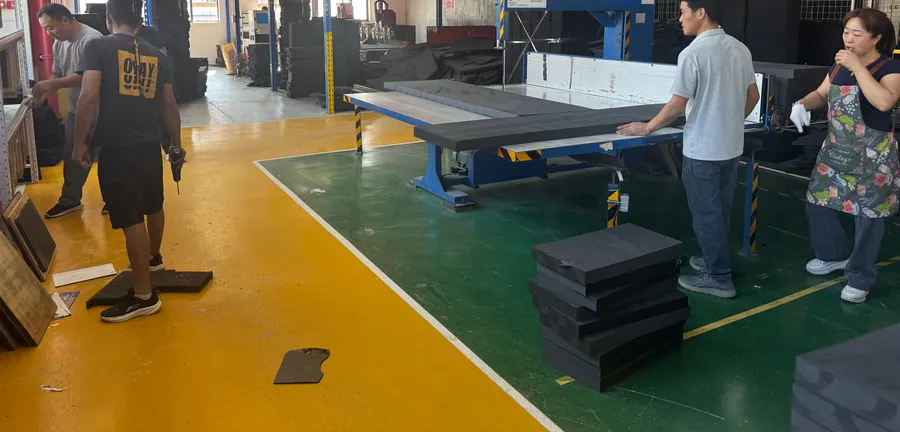
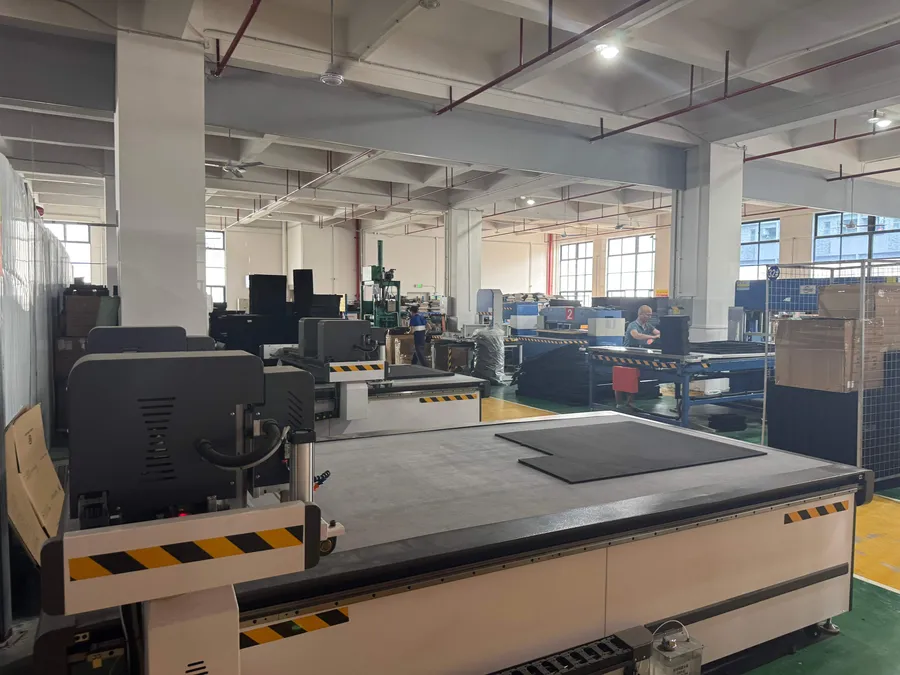
Cable layouts are routine OEM work on existing moulds. Interior choices include pick-and-pluck, die-cut, CNC-cut, layered and egg-crate foam in cross-linked PE or EVA by zone, with custom thickness and custom shapes cut from a drawing, a photograph of the packed kit or a physical sample; a dedicated cable channel, a connector pocket or a removable accessory tray is cut to that drawing, not invented. Hardware and labelling options include latch count, a padlock-through-latch body, a document holder, colour and a printed logo. Minimum quantities follow the type of change: custom foam starts from a single unit for a first sample, while logo, colour and OEM programmes begin at 300 pieces and a bespoke mould at 3,000 per component. Published lead time is about 45 days for a first OEM sample on an existing mould and about 125 days for a new tool, with a 30 percent deposit on production. Almost every cable-management improvement sits inside a standard shell plus a signed interior drawing.
Procurement notes before you order a cable-and-accessory case
Send the accessory list, not just the device, because the case is sized by the awkward items: the longest feedline, the stiffest jumper and the heaviest power supply. Ask for published internal and external dimensions, the narrow internal width, lid and base depth, wall thickness, empty mass and seal availability per model, and note which figures are measured and which are not. We publish seal availability per model and do not attach an ingress-protection rating, a temperature range or a drop height to a shell that has not actually been tested, so request the datasheet for the exact SKU rather than a range claim. Order the interior as a revision-controlled drawing so a reorder reproduces the same layout, confirm latch count explicitly, and take pallet and container loading calculated against your stated pallet standard at quotation.
Two more buyer search phrases, answered with the figures we publish per model
These two phrases reach us from different buying jobs, so they are answered separately below rather than merged into one paragraph about tidiness. The first is about a shell for an instrument you carry to a line or a panel and use on site. The second is about the internal zoning that keeps a coiled lead, a set of adapters and a spare pack from sharing one open volume with the device they belong to.
Both are answered from the same reference set we use everywhere on this site: 155 active shell models with internal and external dimensions, narrow internal width where published, lid and base depth, wall thickness, empty mass and usable interior volume listed per model, plus the foam cut options we quote against a drawing. Where a property has never been measured on these shells, the row says not measured instead of turning a material name into a performance claim.
| Search | What We Publish |
|---|---|
| cable testing equipment case | A test kit is an instrument plus a tangle, so it is sized from the published cavity rather than from a sector adjective. Across the 155 active models we publish internal length from 115 to 1280 mm, internal width from 78 to 545 mm and internal depth from 32 to 364 mm, and usable interior volume from 0.3 to 111.6 litres on every model. 99 models are listed under communication equipment cases, spanning 290 to 880 mm internal length and 84 to 275 mm internal depth. An instrument with a handle and a front panel usually wants a full-depth base zone with a shallow lid, which is the split published on KX-4010 at 390 by 315 by 88 mm internal, a 44 mm lid over a 44 mm base and 1,015 g empty, or on KX-4613 at 455 by 338 by 116 mm internal with a 74 mm lid over a 42 mm base, a 302 mm narrow internal width and 1,370 g empty. Ingress protection is recorded as not measured on all 155 models, and shock protection is listed as a manufacturer option that exists only once a foam layout is specified, so we arrange accredited third-party testing per configuration and quote it separately instead of printing a code. |
| cable and accessory compartments in equipment cases | A compartment is a depth decision and a clearance decision, and both fields are published per model. Lid depth is listed on 100 of the 155 models, from 16 to 320 mm, and base depth on the same 100 models, from 15 to 168 mm. Narrow internal width, the smallest clear dimension a wound coil can lie across, is listed on 36 models, from 70 to 308 mm. A worked pair shows the trade: KX-3218 is published at 308 by 230 by 172 mm internal with an 86 mm lid over an 86 mm base, a 205 mm narrow width and 900 g empty, which suits upright coil routing; KX-4716 is published at 455 by 338 by 150 mm internal with a 75 mm lid over a 75 mm base, a 308 mm narrow width and 1,680 g empty, which suits a long lead run flat. Divider walls are cut foam rather than a moulded feature, with cut types listed on all 155 models as Pick & Pluck, Die-Cut, CNC-Cut, EVA, PE and EPE, quoted from 1 unit on a stock shell against your drawing, a photograph of the packed kit or a physical sample. |
Which published figures actually decide a cable zone
What we do not claim for these two jobs
Neither row above carries an ingress code, a fall height or a stack load. On all 155 models the protection fields for water, dust, ultraviolet, temperature range, stack load and payload are recorded as not measured, and a compressible gasket is listed as a configuration option rather than as proof against water entry. We do not state a fall height for a compartment divider, we do not generalise one model's wall thickness of 2.0 to 6.0 mm across the range, and we do not present foam density as a substitute for a test report. If a project needs a figure we do not publish, the honest route is a measured datasheet for the exact SKU plus accredited third-party testing quoted against your configuration, and we will price that step rather than imply the result.
Terms behind both answers
KeXin New Materials (Guangdong) Co., Ltd. supplies these shells on wholesale and OEM or ODM terms only, quoted EXW or FOB, with no retail sales, no DDP quotation and no overseas warehouse, so build landed cost from the FOB figure and your own freight. Minimum order follows what you change: standard shells from 1 unit and custom foam or a custom divider layout from 1 unit, custom logo, custom colour and OEM hardware from 300 units per SKU, and a bespoke shell geometry from a new mould at 3,000 units per component. An OEM first sample on an approved existing mould is quoted at 45 days and a new mould at 125 days, with a 30 percent deposit and the balance after inspection before container loading. Send the instrument list, the full cable set with its longest and stiffest run, and the accessory bill, and the shortlist comes back with the published dimensions, lid and base depths and narrow internal width against each candidate model.
Customisation
Everything described above is configurable on a standard shell: interior layout (pick-and-pluck, die-cut or CNC-cut), foam grade and thickness, colour, logo method, latch and lock count, pressure-equalisation valve, cable ports, document holder and identification plate. A bespoke exterior geometry requires a new mould — 125 days, from 3,000 units per moulded component.
Procurement considerations
| Question | What to send us |
|---|---|
| Which shell fits? | Equipment L × W × H as packed, plus required clearance per axis |
| What does it cost? | Order quantity and estimated annual quantity — the two drive different answers |
| Is tooling needed? | Whether an existing shell clears the envelope with usable foam depth |
| Lead time? | Your required delivery date, not just the order date |
| Certification? | The exact standard your tender names — we will say whether we can test to it |
| Freight? | Destination and preferred terms; carton and pallet data supplied with the quotation |
Comparison and selection guide
The tables on this page exist because a protective case is chosen by comparing three things: the envelope, the environment and the handling chain. Where no table applies, the rule below is.
| Situation | What To Do |
|---|---|
| Battery isolation | Separate pockets, terminals up, with a physical barrier between cells and connectors. |
| Cable management | Dedicated coiled-cable channels rather than a shared compartment. |
| Field repair | Reserve a small loose compartment for spare fuses, connectors and seals. |
- Size on internal dimensions plus clearance, never on a product name.
- Choose the carrying method before the shell: it changes the series, not just the price.
- Specify the interior last, and decide up front whether the end user will reconfigure it.
How should cables and accessories be organized inside a communication equipment case? relates to Military Case Guide. Related families: Communication Equipment Cases / Electronics Cases / Military Protective Cases. Related sectors: field and industrial equipment. Continue in the Military Case Guide cluster.
This page is written from our own production data. If your requirement differs, send the dimensions and we will tell you which of the 155 models fits, or whether a custom route is needed.