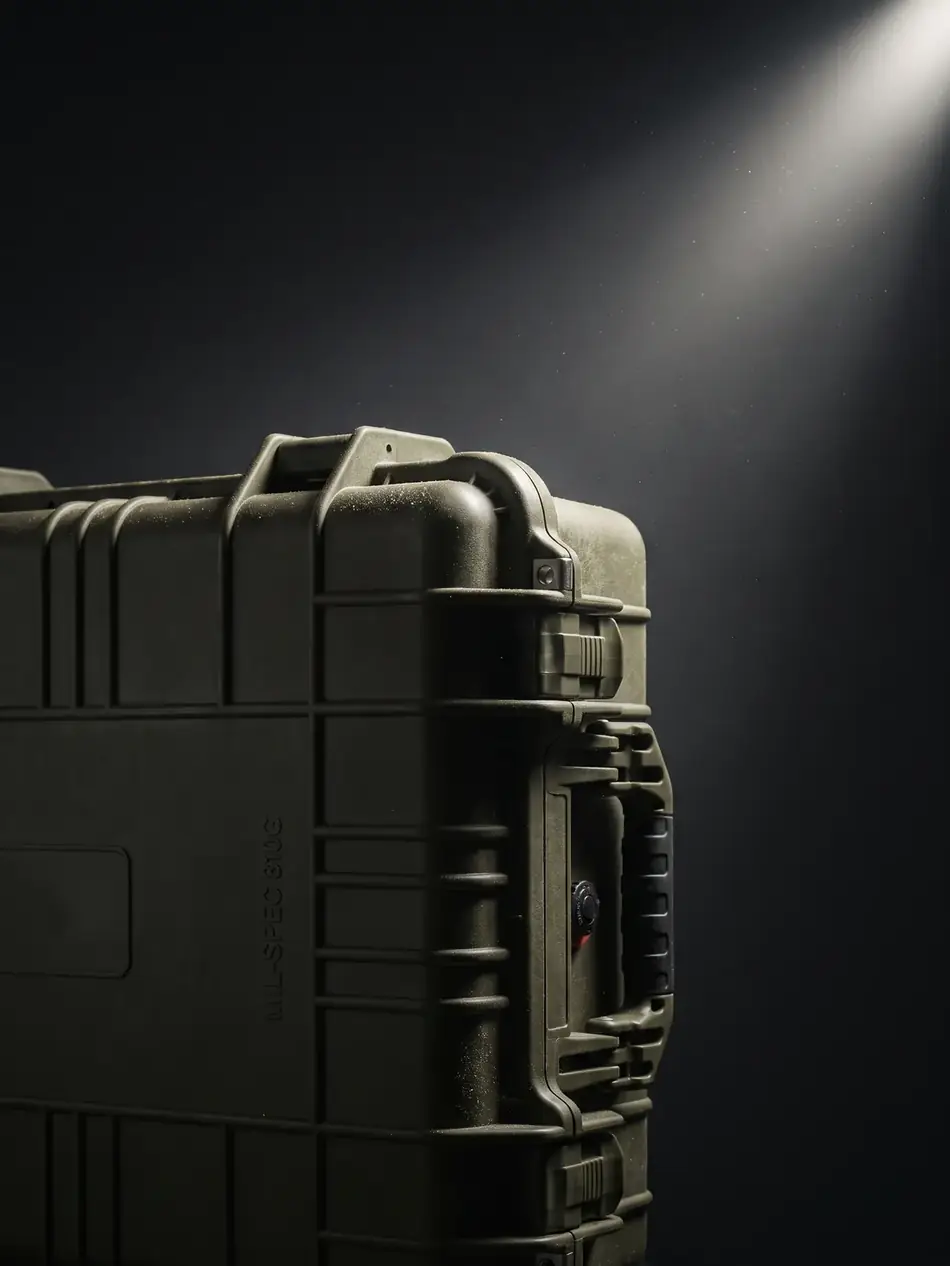
How do military equipment cases protect sensitive equipment?
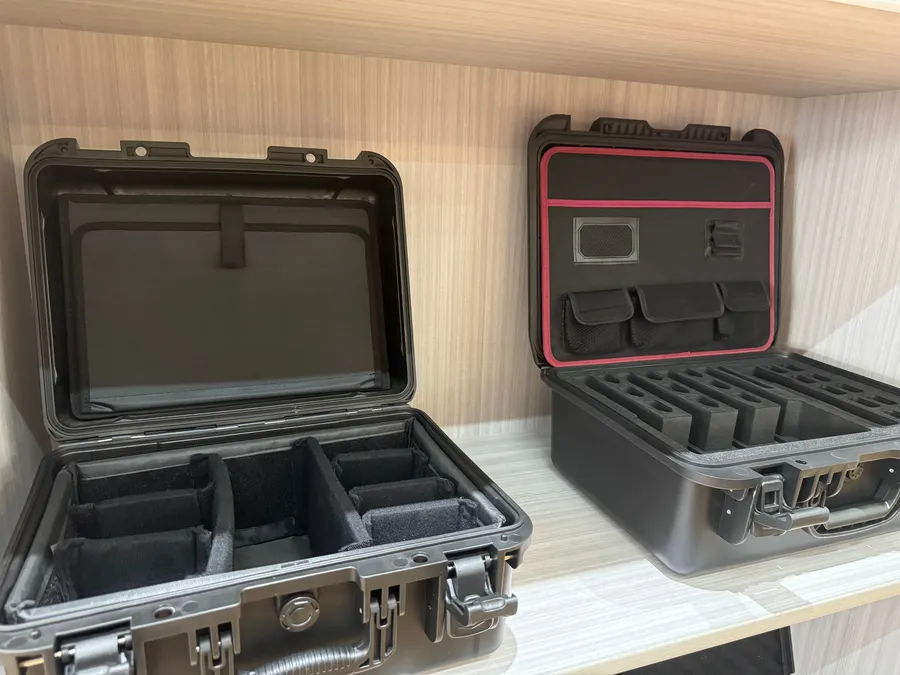
A military equipment case protects sensitive equipment by interrupting four different paths to the item, and each one has to be specified against the thing inside rather than against a catalogue claim. A rigid injection-moulded shell spreads a point load so a knocked corner does not become a local crush. A foam interior lengthens the stopping distance, which is what actually lowers the peak acceleration an optic, a sensor head or a calibration instrument sees. A latched lid on a continuous gasket channel keeps the seam closed under vibration and keeps grit and spray away from lenses, connectors and vents. And the handling geometry, feet, stacking rim, carry handle, wheels and telescopic travel, decides whether the case is carried intact or dropped on the way to the vehicle, which is where most sensitive equipment is actually damaged. KeXin publishes measured dimensions, wall thickness and mass per model, and states no protection figure for a model where no test record exists.
Key points
- Sensitive items fail from peak acceleration at the item, not from a visibly cracked shell, so the foam layout is part of the protection and not an accessory to it.
- Check the published narrowest internal width: an item that clears the nominal interior can still bind at the tightest section of the moulding.
- The lid and base depth split decides where the mass sits, and published splits are very uneven between two shells of similar internal depth.
- Sealing is stated per model: of the 113 military protective case models, 100 publish a gasket and 13 do not, so sensitive loads must be planned on the sealed shells.
- Every wheeled model in that category is published as non-stackable, which makes rolling and piling alternative storage strategies rather than extras.
- Thickness under the item buys the largest reduction available: moving from a 20 mm to a 50 mm base layer costs foam, not tooling.
- Treat any ingress code, drop height or stacking load that appears without a measurement on that exact model as an open question, not a specification.
Start from what sensitivity means, not from the catalogue
Sensitive equipment is defined by what it cannot recover from. A lens assembly, a survey instrument, a thermal core, a medical analyser and a frequency counter are all built to hold an alignment that a single sharp knock can move by enough to matter, even when the housing around it looks untouched. That is why protection has to be specified from the item outward. The practical question is not whether the case is strong but how much acceleration, movement, grit and compression the contents are allowed to experience between the shelf and the field.
There are four distinct damage paths, and a case feature has to answer each of them. Peak acceleration arrives in milliseconds from a knock or a drop. Vibration arrives continuously from a vehicle and does two things: it walks loose contents around and it works connectors and calibrated joints. Static and point load arrives from stacking, from something standing on the lid and from the case being crushed into a load bed. Particulate and moisture arrive through the seam, and with them condensation when a cold case moves into warm air. Every statement on this page maps a published feature onto one of those four paths.
The shell: turning a local force into a spread one
Each half of the case is injection moulded from a single piece of thermoplastic, so the wall has no seam that can open under load. What the shell contributes is stiffness and load distribution: a knocked corner deflects the panel, and the panel either returns or transmits. Our published range lists wall thickness per model between 2.1 and 6.0 millimetres across polypropylene, engineering polypropylene and ABS, and the material is stated on the model page rather than assumed. A KX-4010 carries a 3.0 millimetre PP wall; a KX-5321 carries 5.8 millimetres in engineering PP; a KX-6621 carries 6.0 millimetres in the same material family at a much larger plan area.
Which part of the shell is the weak point depends on the orientation of the impact, and that changes what you reinforce. A corner is the worst case for the shell itself, an edge is the worst case for the latch and its boss, a flat face drop loads the base panel, and a landing on top is the one most people never plan for. The shell is therefore a structure whose job is to keep a cushion in place through repeated handling. It is not the part that absorbs the energy for your equipment, and a bare hard case with no interior specified is a container, not protection.
The interior: stopping distance is the number that protects the item
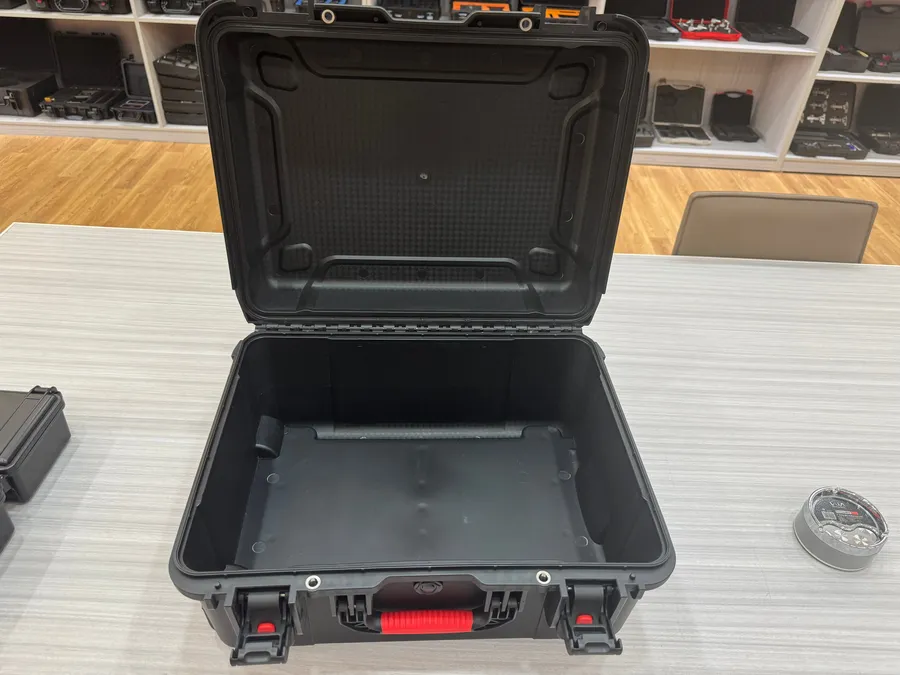
Peak acceleration is mostly a function of how far the item decelerates. Compressing foam beneath and around it lengthens that distance, and the effect is large compared with anything the shell can do: moving from a 20 millimetre base layer to a 50 millimetre layer under a 15 kilogram assembly is the single largest reduction available in a case of this type, and it is bought with foam rather than with tooling. That is why usable interior volume is published separately from internal volume on our model pages. The interior of a KX-4010 measures 390 by 315 by 88 millimetres, but with a base layer and lid contact the usable figure we publish is 9.3 litres against 10.8 litres of empty internal volume.
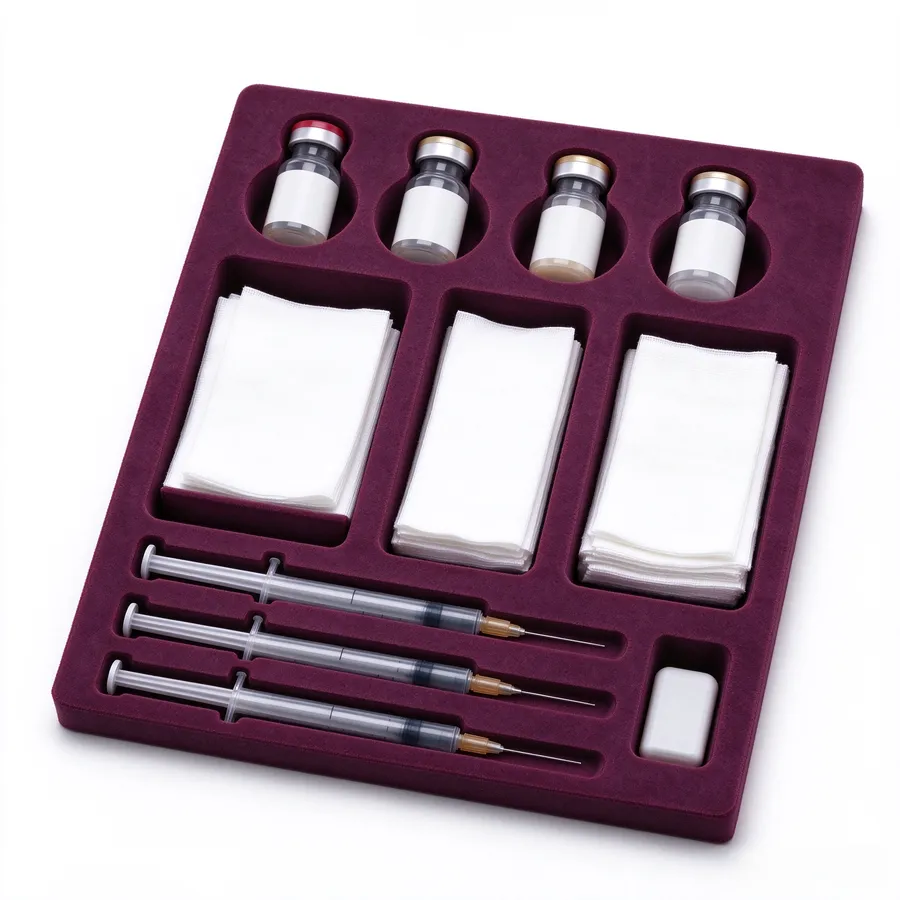
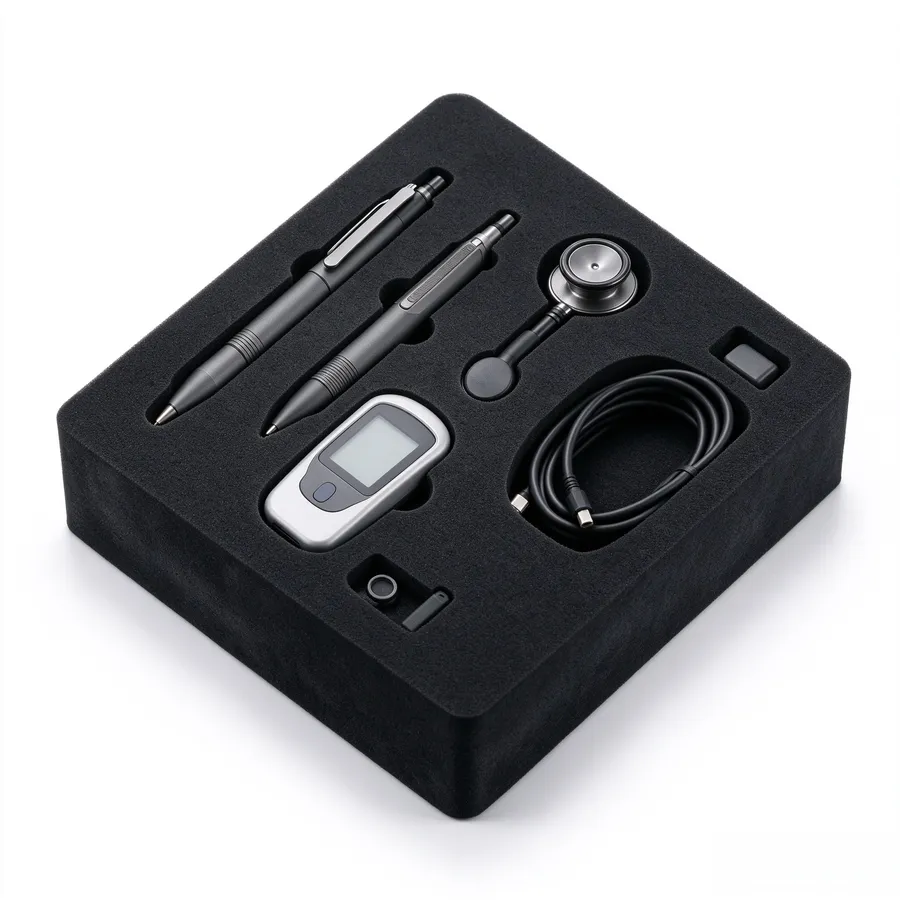
The second job of the interior is to stop travel. An item that slides is an item that eventually meets the wall with full momentum, so cavities locate it and a lid layer keeps it seated when the case is turned over. Foam is supplied as cross-linked PE, EVA or EPS by zone, in top, base, convoluted, layered or custom-cut layouts, and where a load is very sensitive we are told the packed mass, the drop height the buyer believes applies and the surface, because those three inputs decide the grade and thickness rather than any label on the case. Under repeated events, foam also creeps, which is why a layout is designed for the number of cycles you expect, not for the first one.
The closure: keeping the seam shut and the grit away
A gasket only works where something presses it closed. Our sealed models publish a compressible gasket seated in a continuous moulded channel between lid and base, and the practical variables are whether the channel is unbroken, whether there are enough latches that compression at the middle of a long edge approaches what the corners see, whether the channel geometry can be cleaned of grit, and whether the gasket still springs back after years of being compressed. Latch count is specified per configuration, and the published hardware note is that the latch body accepts a standard padlock. This is also why sealing is stated model by model: 100 of the 113 military protective case models publish a gasket, and 13 do not, including the engineering PP KX-4710.
Two related configuration options matter for sensitive loads. A pressure-equalising valve is offered on request, which addresses the case that is flown, driven up a mountain or left in sun, where a pressure difference across the seal is what forces air and moisture in and out. And a document holder is available, which keeps the item's own handling record with the case instead of in a folder somewhere. Neither is fitted as standard, and both should appear in the enquiry rather than be assumed from a photograph.
The handling layer, where sensitive equipment is actually dropped
Most damage happens in the last fifty metres, in the space between a vehicle and a building, and it is caused by a case that is too heavy or too awkward to be carried properly. Empty mass in this category is published per model and runs from 830 grams to 15.32 kilograms, so the geometry that lets one person move a case is a protection feature, not a convenience. Ninety-four of the 113 models are listed as stackable, with feet and a stacking rim that locate one case on the next. The remaining nineteen are wheeled shells with a telescopic handle, published with travel figures of 295 millimetres on a KX-85835 and 485 millimetres on a KX-97227, and every one of those nineteen is listed as not stackable.
That trade is worth making deliberately. A wheeled shell reduces the chance of a dropped case on a smooth surface and increases the risk of it being left where it was rolled, and it removes the option of piling loaded cases in a store. A stackable shell protects a whole inventory at rest but puts the handling risk back on the carry handle. Choose against how the item actually moves, because the geometry cannot serve both plans at once.
One further published figure is easy to miss and is often decisive for a sensitive item with an irregular profile: the narrowest internal width. A KX-4010 lists 315 millimetres of internal width but 282 millimetres at its narrowest point, and a KX-4312 lists 260 millimetres internal against 236 at the tightest section. An item measured only against the nominal figure can sit fine on the drawing and bind on the moulding.
Protection-relevant figures across published models
| Model | Shell | Internal Mm | Narrowest W | Lid Plus Base | Wall Mm | Usable L | Gasket Published | Stackable | Net G |
|---|---|---|---|---|---|---|---|---|---|
| KX-4010 | PP | 390 x 315 x 88 | 282 | 44 + 44 | 3.0 | 9.3 | Yes | Yes | 1015 |
| KX-4312 | PP | 420 x 260 x 104 | 236 | 52 + 52 | 3.5 | 9.8 | Yes | Yes | 1170 |
| KX-4613 | PP | 455 x 338 x 116 | 302 | 74 + 42 | 3.0 | 15.3 | Yes | Yes | 1370 |
| KX-4710 | Engineering PP | 458 x 345 x 90 | 308 | 45 + 45 | 2.5 | 12.2 | No | Yes | 1370 |
| KX-5321 | Engineering PP | 481 x 373 x 192 | Not published | 43 + 149 | 5.8 | 27.5 | Yes | Yes | 4810 |
| KX-6621 | Engineering PP | 587 x 434 x 192 | Not published | 43 + 149 | 6.0 | 39.1 | Yes | Yes | 6420 |
| KX-85835 | PP | 500 x 400 x 305 | Not published | 260 + 45 | 5.0 | 48.8 | Yes | No, wheeled shell | 8520 |
| KX-97227 | Engineering PP | 590 x 435 x 210 | Not published | 42 + 168 | 6.0 | 43.1 | Yes | No, wheeled shell | 10000 |
Matching the mechanism to the kind of sensitivity
Different sensitive loads are damaged by different paths, so the shortlist changes accordingly. For an aligned optic or a survey instrument, the governing figures are the foam thickness under the item and whether the lid carries a layer, with a sealed channel a secondary requirement; wall thickness matters mainly because the item is heavy enough to load the panel. For electronics with connectors, the enemy is sustained vibration, so a restrained cavity and a layered interior beat a thicker single slab, and the closure has to stay shut under vibration rather than merely look closed. For a battery pack or a consumable, the design question is compressive load and stacking behaviour, which points at a stackable shell and a fuller interior rather than a deep foam bed. For medical and laboratory portables, cleanability of the sealing channel and the padlock provision often decide the model before impact does.
A practical way to read it is to write the sensitivity as a sentence and then find the published field that supports it. If the sentence mentions a fall, the relevant fields are foam thickness, mass and wall. If it mentions dust, spray or a car door left open in rain, the relevant fields are the gasket entry on the model page and the latch arrangement. If it mentions calibration drifting after a month of use, the relevant fields are the interior layout and how many cycles it is designed for, because foam creep is a service-life question and not a purchase question.
Where these cases protect sensitive equipment in service
The same four mechanisms appear across the uses our cases are bought for. Field communications and radio equipment travel in vehicles, where vibration and grit are the dominant risks and a stackable lid carries the second case on top. Electro-optical and survey instruments are moved between setups, where a single knocked corner is a recalibration. Medical and laboratory portables move between sites and need a cleanable seal and a secured closure. Drone payloads and ground stations combine awkward geometry with delicate gimbals, which is where the narrowest internal width figure does most of its work. Instruments under calibration are the hardest case of all, because the damage is invisible until the next measurement.
What changes between those uses is not the shell but the specification of the interior and the closure against the route. A case that spends its life on a shelf in a store and a case that goes off the back of a truck in the rain are the same moulding with different obligations, and the buyer who says which one they are buying gets a materially different recommendation.
Configuring a case around a sensitive item
Because a fitted interior is machined rather than moulded, protection for a sensitive item does not require a tooling commitment. A custom foam insert can start from a single unit, in pick-and-pluck, die-cut or CNC-cut form, with top, base, convoluted and layered layouts available and thickness chosen per zone. What we need from you is a drawing, a photograph of the kit as it is actually packed, or the sample itself. Stock shells also accept a printed logo, a body colour change and OEM hardware from around three hundred units, with an OEM build on an existing mould planned around forty-five days to first sample. A dedicated custom mould begins around three thousand units per component and is planned around one hundred and twenty-five days.
What is published, and what we do not claim
The boundary of this page is deliberate. We publish measured dimensions, wall thickness, volumes and mass model by model, and our verification policy is that only tests actually performed are described with figures. Where no test record exists for a model we say so, and the test is quoted as a separate work package. Where a documented result is needed, it is commissioned against that exact model and configuration through an accredited laboratory, and the report belongs to the customer. Impact, drop, dust, temperature, load and stack, material and seal verification are described on their own pages for the same reason: a protection figure is only meaningful next to the method that produced it.
On the commercial side the terms are fixed. We work wholesale and OEM, quoted EXW or FOB against a thirty percent deposit; we do not sell retail, do not quote DDP landed prices and hold no overseas warehouse stock. Third-party inspection is welcome, and a purchase order that references the published model figures is the cleanest way to define what arriving goods should be checked against.
Buyer searches for military equipment cases, answered with our published data
Each phrase in the left-hand column is something equipment buyers actually type when they are sourcing cases for field gear. The right-hand column answers it with figures taken from our own product database of 155 published models, or states plainly that the field is not measured. No number below is averaged across the catalogue: every range names the family it was counted from and every single-model figure points at that model page.
| Search | What We Publish |
|---|---|
| military power equipment case | Power distribution units, battery packs and generator accessories sit at the heavy end of our published data. KX-88442 lists an internal 740 x 518 x 364 mm cavity, 111.6 litres of usable interior, a 5 mm wall and a 320 mm lid over a 44 mm base, and it moves on wheels with 295 mm of published handle travel at 15.32 kg empty; KX-88434 is the same footprint 80 mm shallower at internal 740 x 518 x 284 mm, 14.03 kg empty and 87.1 litres. Payload capacity in kilograms is recorded as not measured, so we quote the cavity and the published mass, never a weight rating. |
| military radar equipment case | Antenna panels, feed assemblies and transceiver trays are long and shallow rather than deep, which is a different mould family from the box range. KX-814641 publishes an internal 1280 x 350 x 140 mm with 50.2 litres usable and a 5 mm wall; KX-89616 is the shorter sibling at internal 880 x 350 x 140 mm and 34.5 litres. Our long equipment family holds 35 models with internal lengths from 500 to 1280 mm. Temperature range and any ingress code are recorded as not measured on all 155 models, so neither is stated here. |
| military navigation equipment case | Receivers, GNSS modules and hand-held terminals mostly land in our communications family: 99 published models with internal lengths from 290 to 880 mm, of which 86 publish a compressible gasket in a moulded channel, 90 are listed as stackable and 9 are wheeled. The usable interior in that family tops out at 43.3 litres, so navigation loads are planned on the shallow shells rather than the trolley range. A pressure-equalising valve is a manufacturer option on every model, not a standard fitting, and must appear in the enquiry. |
| military equipment transit case | Our wheeled transit line is 19 models published with telescopic handle travel between 240 and 485 mm. KX-85835 gives an internal 500 x 400 x 305 mm at 8.52 kg empty with 295 mm of travel; KX-97227 gives internal 590 x 435 x 210 mm at 10 kg empty with 485 mm of travel and a 6 mm wall in engineering polypropylene. Every one of the 19 wheeled models is published as non-stackable (0 stackable in that group), so rolling and piling loaded cases are alternative depot layouts rather than extras on the same shell. |
| shockproof military equipment case | Shock protection is published as a configuration, not a rating: it is built from a specified foam layout in Pick & Pluck, die-cut, CNC-cut, EVA, PE or EPE, arranged as top foam, base foam, convoluted or layered zones. 106 of the 113 military protective models publish a wall thickness between 2.1 and 6 mm. No drop height is claimed for any model without a test record, drop height itself is recorded as not measured, and the shell alone is not a shock rating; foam thickness under the item is the variable buyers control, and it costs foam rather than tooling. |
| military equipment case factory | KeXin New Materials (Guangdong) Co., Ltd. moulds, trims and assembles in house with 155 published models on the product pages, 113 of them listed under military protective cases. Minimum order is 1 unit for stock shells and custom foam, 300 units for logo, colour and OEM builds, and 3,000 units for a custom mould. OEM on an existing mould quotes at 45 days and a new mould at 125 days, with a 30 percent deposit. Wholesale and OEM only, EXW or FOB, no retail, no delivered-duty-paid pricing and no overseas stock. |
| export packaging for military equipment cases | 64 of the 155 models publish a carton and 58 publish a pieces-per-carton figure, from a 410 x 360 x 495 mm carton holding 40 pieces of KX-2005 (internal 190 x 135 x 40 mm) to a 715 x 515 x 280 mm single-carton for KX-97227. Carton edges run from 232 to 885 mm across those listings. Pallet quantity and container loading are recorded as not measured: we work pallets from the published carton footprint against your pallet size and supply 20GP, 40GP and 40HQ counts with the quotation, on EXW or FOB terms. |
What these rows deliberately do not claim
The protection fields in our database are recorded model by model, and the honest answer for most of them is that we have not tested them. Ingress code, drop height, stacking load, payload capacity, ultraviolet exposure and service temperature range are recorded as not measured for all 155 models, so this page states none of them, and a configuration that needs a lab report is quoted for accredited third-party testing rather than assumed from a photograph. The one property recorded as measured across the whole range is a material fact rather than a test result: every shell is thermoplastic, so there is no ferrous corrosion path in the casing itself.
The same discipline applies to the market position that buyers sometimes ask us to write. We publish our own counts (155 models, 113 military protective shells, 58 carton figures) and we do not write market-share, ranking or comparative claims about any other manufacturer, because we cannot verify them from our own records either. If a tender document needs a test line, tell us the standard and the item and we will quote the test; if a buyer only needs to know whether the gear fits, the internal dimensions, the narrowest width and the lid-over-base split on the model page answer that today without any certificate involved.
Turning one of these searches into a quotation
Customisation
Everything described above is configurable on a standard shell: interior layout (pick-and-pluck, die-cut or CNC-cut), foam grade and thickness, colour, logo method, latch and lock count, pressure-equalisation valve, cable ports, document holder and identification plate. A bespoke exterior geometry requires a new mould — 125 days, from 3,000 units per moulded component.
Procurement considerations
| Question | What to send us |
|---|---|
| Which shell fits? | Equipment L × W × H as packed, plus required clearance per axis |
| What does it cost? | Order quantity and estimated annual quantity — the two drive different answers |
| Is tooling needed? | Whether an existing shell clears the envelope with usable foam depth |
| Lead time? | Your required delivery date, not just the order date |
| Certification? | The exact standard your tender names — we will say whether we can test to it |
| Freight? | Destination and preferred terms; carton and pallet data supplied with the quotation |
Comparison and selection guide
The tables on this page exist because a protective case is chosen by comparing three things: the envelope, the environment and the handling chain. Where no table applies, the rule below is.
| Situation | What To Do |
|---|---|
| Start from the equipment, not the case | Measure the tallest, widest and longest points of the packed equipment including antennas, handles and connectors. Add 20 mm minimum clearance per axis before selecting a shell. |
| Then choose the carrying method | Under 8 kg, a fixed handle is lighter and cheaper. Over 12 kg or any journey over 30 m, specify the T series with telescopic handle and wheels. |
| Then decide the interior | Pick-and-pluck for kits that change. Die-cut or CNC-cut for fixed layouts that must be auditable at a glance. |
- Size on internal dimensions plus clearance, never on a product name.
- Choose the carrying method before the shell: it changes the series, not just the price.
- Specify the interior last, and decide up front whether the end user will reconfigure it.
How do military equipment cases protect sensitive equipment? relates to Military Case Guide. Related families: Military Protective Cases / Defense Equipment Cases / Field Equipment Cases / Waterproof Cases. Related sectors: field and industrial equipment. Continue in the Military Case Guide cluster.
This page is written from our own production data. If your requirement differs, send the dimensions and we will tell you which of the 155 models fits, or whether a custom route is needed.