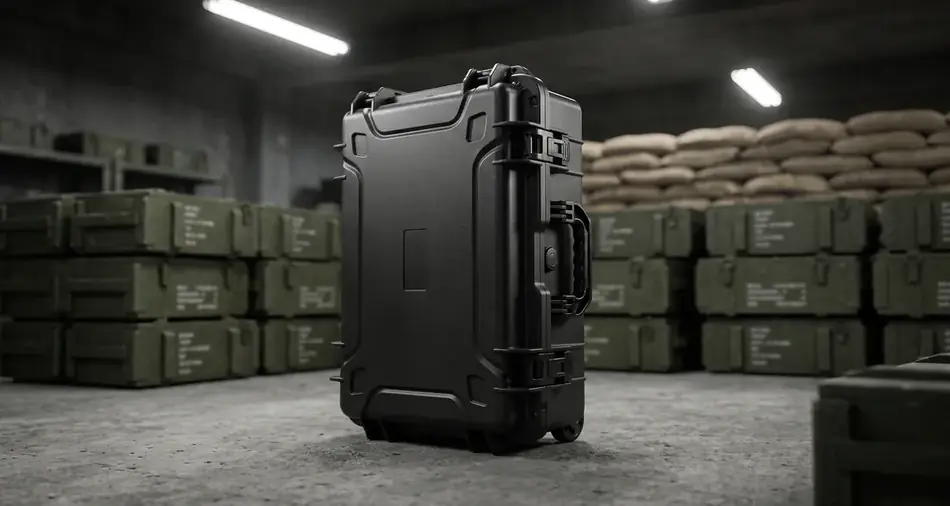
Can military transport cases be customized for different equipment?
Yes. A military transport case is a shell plus a specification, and almost every part of that specification is changeable per equipment. The interior foam, the internal dimensions, the number and type of latches, the handle and wheel set, the closure seal, the colour, the printed marking and, at higher volume, the mould itself can all be tailored to a specific payload and a specific handling cycle. What is not negotiable is physics: a shell carries its published wall thickness and stacking behaviour, so customisation starts from the equipment envelope and the loads you expect, not from a preference. KeXin works on a wholesale and OEM basis, EXW or FOB, and quotes measured figures per model rather than blanket claims.
Key points
- Customise from the internal envelope of the equipment plus clearance, never from a product photo.
- Foam layout is the highest-leverage change; it costs little and decides how the item survives handling.
- Latch count and gasket compression together decide whether a seal stays even across a long lid.
- Colour, logo and marking are tooling-free changes; a new shell shape is a mould with its own lead time.
- Ask for measured figures per model: wall thickness, net mass and internal dimensions, not a series claim.
What actually changes when you customise a case
A transport case is assembled from a small number of independent decision layers, and each one can be tuned without disturbing the others. The shell gives the outer form and the structural wall; the interior gives the stopping distance and the location of each item; the hardware gives the carry, close and lock behaviour; and the finish gives the identification. Customising for a different piece of equipment usually means changing two or three of these layers and leaving the rest at a proven default. That is why the same base shell can protect a radio set in one build and a measurement instrument in another: the shell is common, the interior and hardware are specific. A buyer who treats the case as one fixed product over-pays or under-protects; a buyer who treats it as four configurable layers gets a fit that is close to a made item at a fraction of made-item cost.
Interior customisation: the part that protects
The interior is where equipment-specific work happens. Pick-and-pluck foam gives a flexible, re-configurable layout that a field unit can update as the kit changes. Die-cut and CNC-cut foam give a precise pocket for each item so that nothing shifts in transit, and a labelled cut makes a short-content check obvious at a glance. A firm base carrier under a softer contact layer is the usual compromise between load support and surface protection. KeXin publishes the available foam structures per model — top foam, base foam, convoluted and custom cut, in cross-linked PE, EVA or EPS by zone — so the choice is made against your real contents, not against a generic picture. Foam thickness and stopping distance matter more to survival than the shell alone, and the shock and impact figures stay as configuration options because they depend on that layout.
Shell size, hardware and closure options
Where a custom interior is cheap and fast, a custom outer form is heavier. The shell can be selected from the published range by internal size, then fitted with the hardware a given payload needs: fixed folding handles for lighter loads, or wheels and a telescopic handle for the big boxes, and a lid-and-base depth split that lets tall items sit in the base rather than bridge the halves. Latch count and the compressible gasket are chosen together, because on a long lid the seal is as much a latch-spacing problem as a gasket problem. Colour, logo and marking are applied without new tooling. Only when none of the existing shells reaches the required footprint or a genuinely new outer geometry is called for does a bespoke mould enter the plan; that path carries a longer timeline and a higher quantity commitment, and it is the one item that is not a simple configuration change.
Customisation paths compared
| Path | What Changes | Tooling | Typical Use |
|---|---|---|---|
| Interior foam only | CNC, die-cut or pick-and-pluck layout to the exact contents | No new mould | Existing shell, new or changing payload |
| Hardware and closure | Handles, wheels, telescopic pull, latch count, gasket | No new mould | Heavier kit or longer carry distance |
| Finish and marking | Colour, printed logo, label holder, ID | No new mould | Unit identification and resale brand |
| Bespoke shell | Outer geometry and wall from a new mould | New mould required | No published shell meets the footprint |
Real examples from the published range
It helps to see how far a common shell stretches once the layers are configured. For a hand-carried radio or instrument, a shell such as KX-4010 lists an internal envelope of 390 by 315 by 88 mm, a 3.0 mm wall and a net mass near one kilogram, with a gasket offered on that body. For a crew-served kit that must be rolled over distance, KX-88442 lists an internal 740 by 518 by 364 mm, a 5.0 mm wall, a net mass of about 15.3 kg, wheels and a telescopic handle, and a deep lid of 320 mm over a 44 mm base so tall items sit in the base. Those are two ends of the same configurable system: the figures are published per model, and the interior, hardware and finish are set to the payload each is meant to carry.
What to send before a custom case can be quoted
The single fastest way to a correct quote is a packed-state drawing. Measure the equipment as it will actually travel — antennas folded, handles extended, cables coiled — and give the longest, widest and tallest points, then list the accessories separately, because accessories often need more room than the primary item. Add the expected packed mass, how far and how it is carried, whether it stacks or racks, and the ambient it sees. State which configuration layers matter to you: interior precision, carry hardware, closure and seal, colour and marking. KeXin works wholesale and OEM on EXW or FOB terms and does not sell at retail or ship ex an overseas warehouse; OEM first samples run about 45 days, a new mould about 125 days, with a 30 percent deposit. That is the input set that turns a general shell into a fit for your specific equipment.
Six buyer searches for military transport cases, answered against published data
Buyers reach this page with a phrase, not a model number: what box carries a supplies load, what box suits an optic, what box is ordered wholesale, how the goods travel in cartons. The table below takes each of those six search phrases in its own words and answers it with figures published in our model data for the 155 shells in the range, or says plainly that no figure exists. Internal envelope comes first, because the packed item plus its leads, handles and folding parts decides the cavity; the lid and base split comes second, because it decides whether the item sits or bridges; wall thickness, empty mass and usable interior volume come after that, because they decide how the box is carried and how much of the cavity is really free.
Read every row the way a model page is read. Where a field has no test record it is written as not measured rather than filled with an adjective, and where a figure depends on how the unit is configured it is labelled as an option we can supply, not a property of the shell. Accredited testing of any kind can be commissioned as a separate work package against the configuration you actually order; until then the honest answer is the published one.
| Search Phrase | What We Publish |
|---|---|
| military supplies transport case | General-kit supplies boxes sit in the middle of the range: 19 models are tagged as military transport cases and their usable interior runs from 17.7 to 111.6 litres, 18 of them with a gasket offered. KX-65522 is one worked example, with an internal 507 x 385 x 190 mm cavity inside a 545 x 440 x 215 mm shell, a 5.3 mm wall and a 4,860 g empty mass in ABS. It stacks and ships 3 to a carton. Shock and water figures for that model are recorded as not measured. |
| military optics transport case | Optics want a shallow cavity so the instrument lies in the base instead of bridging the two halves. 45 published models carry the optical-equipment tag and 85 the camera-equipment tag. KX-4610 gives an internal 455 x 338 x 84 mm over a 42 mm lid and 42 mm base, 1,115 g empty, 3.0 mm wall, 11.1 litres usable, gasket offered. KX-4312 is 420 x 260 x 104 mm with a 3.5 mm wall and 9.8 litres. Vibration isolation is not measured; protection comes from the die-cut or CNC foam layout you specify. |
| military battery transport case | Mass and cavity are the two published numbers that matter here. KX-86836 lists an internal 595 x 460 x 315 mm, 69.0 litres usable and a 10,600 g empty shell on wheels with a 310 mm telescopic pull; KX-88434 lists 740 x 518 x 284 mm, 87.1 litres and 14,030 g with a 295 mm pull. Both are 4.8 to 5.0 mm wall. We publish no battery-handling figure: cell spacing, terminal short-circuit protection and orientation are your packing specification, not a property of the shell. |
| water-resistant military transport case | This is a gasket and latch question, not a rating we print. 124 of the 155 published models offer a compressible EPDM-or-equivalent gasket in a moulded channel; 31 shells offer none. Latch count and spacing are specified together with the gasket, because a long lid lets water in between the closers rather than at the seal itself. Waterproof and dust values are recorded as not measured on every model, and no ingress-protection code is stated on any data sheet we publish. |
| wholesale military transport cases | Commercial terms are fixed and identical across the 155 models: minimum order is 1 unit for a standard shell or a custom foam interior, 300 units for a printed logo, a colour change or an OEM build, and 3,000 units per moulded component if a new mould is cut. First OEM samples on an existing mould run about 45 days, a new mould about 125 days, with a 30 percent deposit. We work EXW or FOB only, wholesale and OEM, no retail and no overseas warehouse stock. |
| military equipment transport packaging | Packaging data is published per model, never per series: 64 of the 155 shells list carton dimensions and 58 list pieces per carton, from 1 to 40 units. KX-2005 packs 40 into a 410 x 360 x 495 mm carton; KX-4312 packs 10 into 615 x 440 x 560 mm; KX-65522 packs 3 into 565 x 450 x 665 mm. Pallet quantity and container loading are recorded as not measured - they are calculated from the carton footprint against your pallet size, and 20GP, 40GP and 40HQ figures are supplied with the quotation. |
Published envelopes behind those searches, shell by shell
The six answers above point at named models, so the same figures are set out side by side here. Compare the internal cavity with your packed item plus 10 to 15 mm of clearance on each axis before you look at anything else; then read the lid and base split, because a tall item that should sit in the base will otherwise bridge the halves and take the impact on its own body. Then read empty mass against who carries it and how far.
| Model | Internal Mm | External Mm | Wall Mm | Empty Mass G | Usable Volume L | Lid Over Base Mm | Gasket And Carry |
|---|---|---|---|---|---|---|---|
| KX-4312 | 420 x 260 x 104 | 430 x 300 x 115 | 3.5 | 1,170 | 9.8 | 52 over 52 | Gasket offered; fixed handles; stacks; 10 per carton |
| KX-4610 | 455 x 338 x 84 | 460 x 367 x 95 | 3.0 | 1,115 | 11.1 | 42 over 42 | Gasket offered; fixed handles; stacks; shallow cavity for optics |
| KX-65522 | 507 x 385 x 190 | 545 x 440 x 215 | 5.3 | 4,860 | 29.7 | Split not published for this shell | Gasket offered; fixed handles; stacks; 3 per carton |
| KX-88015 | 725 x 350 x 140 | 800 x 408 x 153 | 5.0 | Not published for this model | 28.4 | 100 over 40 | Gasket offered; stacks; long low cavity |
| KX-86836 | 595 x 460 x 315 | 677 x 535 x 364 | 4.8 | 10,600 | 69.0 | 270 over 45 | Gasket offered; wheels plus 310 mm telescopic pull; does not stack |
| KX-88434 | 740 x 518 x 284 | 843 x 592 x 335 | 5.0 | 14,030 | 87.1 | 240 over 44 | Gasket offered; wheels plus 295 mm telescopic pull; does not stack |
What we do not claim on this page
Turning one of these searches into a quotable specification
A search phrase becomes a quotation in four steps, and none of them needs a new mould. Step one: measure the equipment as it will actually travel - antennas folded, handles extended, cables coiled - and give the longest, widest and tallest points plus the packed mass, then add 10 to 15 mm of clearance per axis and match that against the internal figures in the table above. Step two: choose the carry method before the shell, because wheels and a telescopic pull move you into the larger models, 11 of which publish a pull travel between 240 and 485 mm, while 136 of the 155 stack and 19 do not.
Step three: specify the interior last. Pick-and-pluck suits kit that changes; die-cut or CNC-cut pockets suit a fixed load and make a short-content check obvious. Foam depth is what buys the stopping distance, so state the mass of each item and its hardness rather than asking for a generic rating. Step four: state the order quantity and the delivery date, because minimum order is 1 unit for a shell and an interior, 300 for logo, colour or OEM work, and 3,000 per moulded component for a new mould, and those three tiers come with different lead times and different tooling costs.
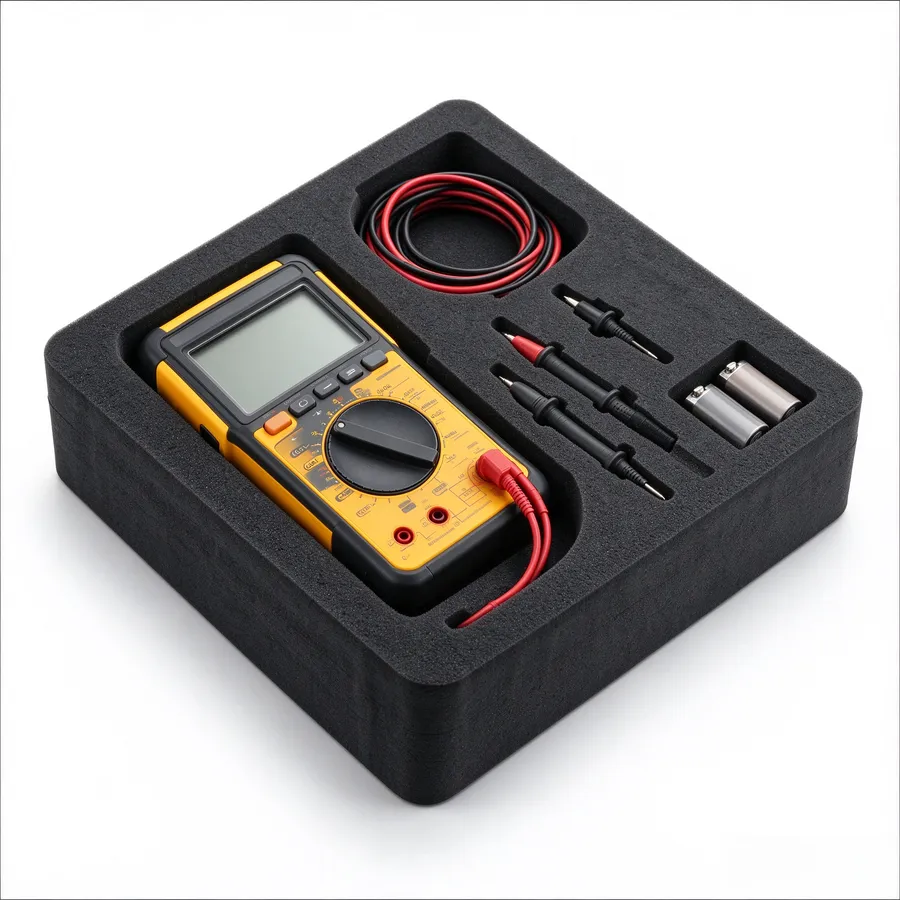
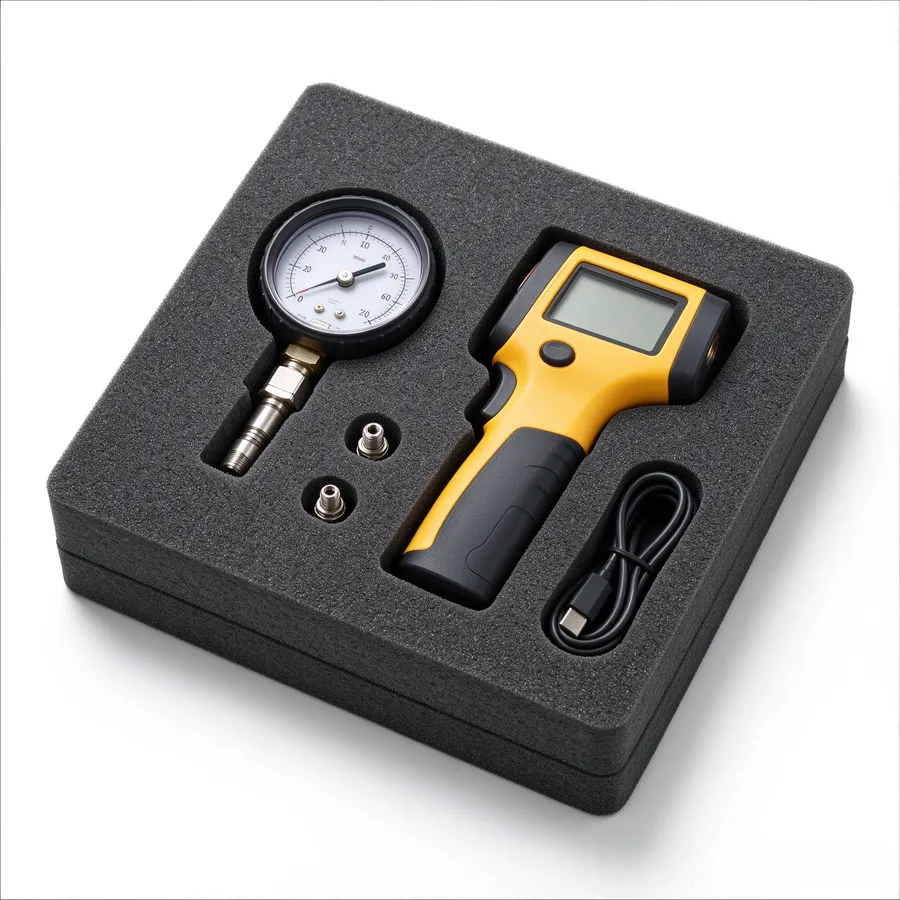
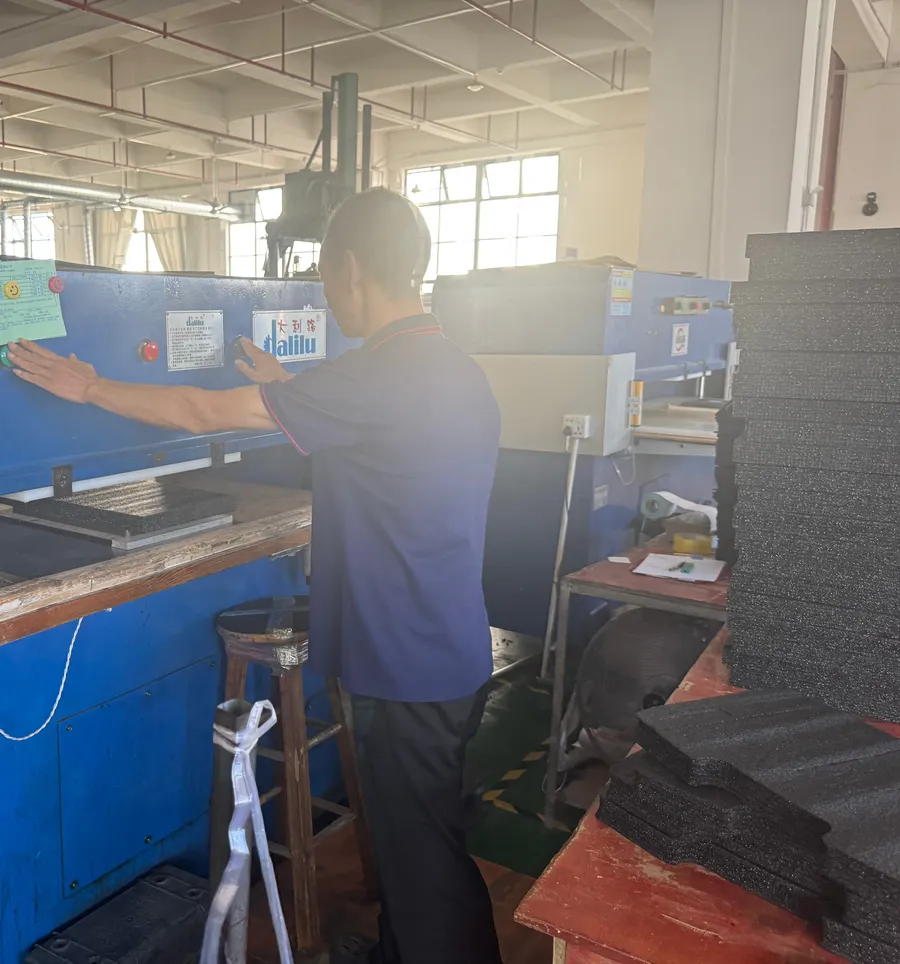
Customisation
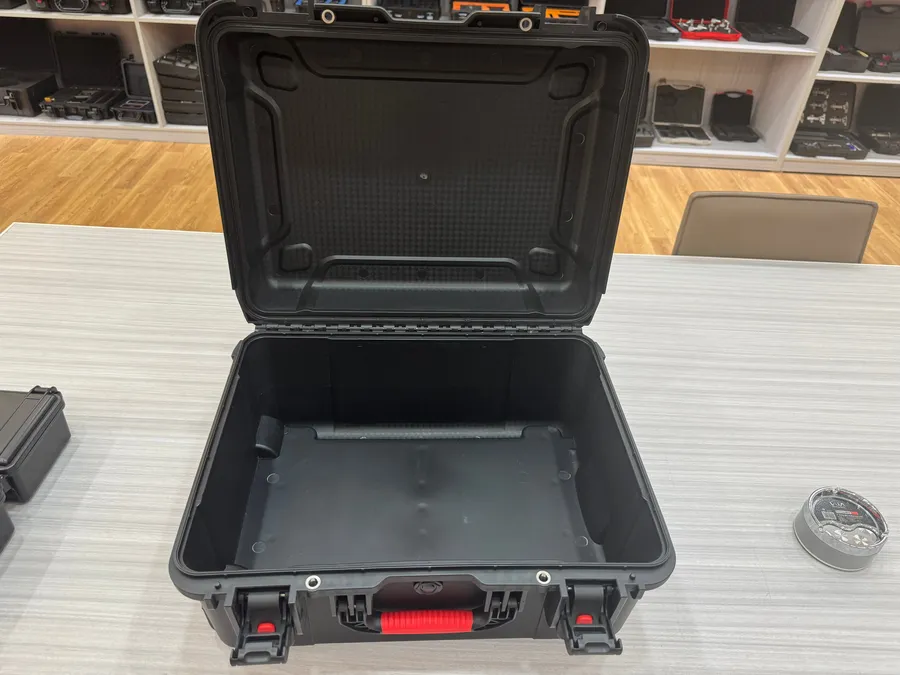
Everything described above is configurable on a standard shell: interior layout (pick-and-pluck, die-cut or CNC-cut), foam grade and thickness, colour, logo method, latch and lock count, pressure-equalisation valve, cable ports, document holder and identification plate. A bespoke exterior geometry requires a new mould — 125 days, from 3,000 units per moulded component.
Procurement considerations
| Question | What to send us |
|---|---|
| Which shell fits? | Equipment L × W × H as packed, plus required clearance per axis |
| What does it cost? | Order quantity and estimated annual quantity — the two drive different answers |
| Is tooling needed? | Whether an existing shell clears the envelope with usable foam depth |
| Lead time? | Your required delivery date, not just the order date |
| Certification? | The exact standard your tender names — we will say whether we can test to it |
| Freight? | Destination and preferred terms; carton and pallet data supplied with the quotation |
Comparison and selection guide
The tables on this page exist because a protective case is chosen by comparing three things: the envelope, the environment and the handling chain. Where no table applies, the rule below is.
| Situation | What To Do |
|---|---|
| Surface | Gravel and sand need a larger wheel diameter than a smooth apron. |
| User height | Handle travel changes the pull angle; check it against the people who will actually pull it. |
| Storage | Confirm the case stands upright on its base with the handle retracted. |
- Size on internal dimensions plus clearance, never on a product name.
- Choose the carrying method before the shell: it changes the series, not just the price.
- Specify the interior last, and decide up front whether the end user will reconfigure it.
Can military transport cases be customized for different equipment? relates to Military Case Guide. Related families: Military Transport Cases / Military Protective Cases / Custom Protective Cases. Related sectors: field and industrial equipment. Continue in the Military Case Guide cluster.
This page is written from our own production data. If your requirement differs, send the dimensions and we will tell you which of the 155 models fits, or whether a custom route is needed.