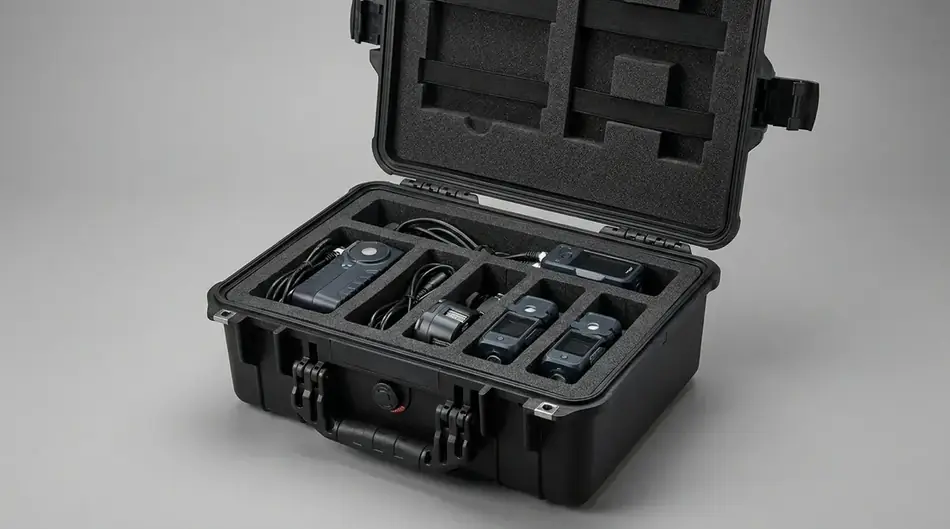
What protective case features are important for communication equipment?
For communication equipment the case features that carry the most risk are, in order: an interior that fixes each item so nothing shifts, relief for plugged-in connectors and handsets, a closure with an even latch pattern that keeps a gasket seated, carry and stacking hardware matched to the route, and identification that makes a short-content check instant. Size, wall thickness and net mass then set the envelope: KX-4010 lists an internal 390 by 315 by 88 mm at a 3.0 mm wall and about 1.0 kg, while a deeper manpack body such as KX-5321 gives 481 by 373 by 192 mm at a 5.8 mm wall and roughly 4.8 kg. KeXin publishes these measured figures per model and offers a gasket option per model rather than stating a water or dust code, because a rating needs accredited testing on the exact build.
Key points
- Fix every item in a cut interior: connectors fail from small repeated shifts far more often than from one big knock.
- Give plugged-in handsets and leads room so a connector face never presses against the case wall.
- Choose a closure with an even latch pattern so a gasket stays compressed across a long lid, not lifted in the middle.
- Match carry and stacking hardware to the distance and the stack height the case actually faces in service.
- Read the published internal size, wall and net mass of the exact model, because they vary widely across the range.
- Treat a gasket as a per-model build option, and ask for measured figures rather than a rating label borrowed from another case.
Interior fixation is the feature that protects the electronics
A communication set is an assembly of connectors, and connectors are damaged by small repeated movement far more often than by a single dramatic impact. The most valuable feature a case offers is therefore not a thicker shell but an interior that stops the contents moving: a firm cut seat for the transceiver, a separate pocket for each battery, and a channel for a coiled lead so it cannot snag a plug. Where the kit changes between deployments, a pick-and-pluck top layer over a firm base carrier keeps that fixed primary seat while letting the accessory row be re-laid. A loose fit inside an oversized box is a worse outcome for a radio than a snug pocket, because the set then shifts against its own connector each time the case is picked up, set down or stacked.
Connector relief and how the kit is packed
The second feature people forget is space for things left connected. A handset with its plug seated, a paddle, or a short patch lead all stand proud of the main body, and if the interior is cut only to the bare radio those items press on the socket or crush under the lid. Specify the pockets around the packed state, not the product photograph: measure the set with a handset attached and the cable coiled as it will sit, and keep the connector face off the case wall so a side load never reaches the socket. On deeper bodies such as KX-4613, with an internal 455 by 338 by 116 mm, this is usually a two-layer layout with the radio below and the connected accessories above; on shallow bodies such as KX-4010 at 390 by 315 by 88 mm the lead and handset take a routed top layer instead.
Closure, latch pattern and the gasket option
Moisture and blowing dust are handled by a compressible gasket and a close-fitting closure, and the feature that decides whether the gasket actually works is the latch pattern. A long lid needs latches spaced so the seal stays evenly compressed across its whole length; a lid held at only two ends lifts in the middle and the seal stops doing its job. KeXin lists a gasket as available per model and publishes the closure details with it, but it does not state an ingress protection code, because a rating is produced by accredited testing on one specific configuration and is not a property of the word field or military. What you can specify instead is real protection: an evenly latched gasketed body, a hinge and latch arrangement that does not distort the rim, and an interior that keeps the sealed face clear.
Structure, wall and the figures that are published
The shell resists the loads of stacking and handling, and the honest way to compare shells is the numbers KeXin records, not a marketing claim. Wall thickness, internal dimensions and net mass are published per model, and they vary a great deal: KX-4312 has a 3.5 mm wall and about 1.17 kg for a wider control head, KX-4616 offers an internal 455 by 338 by 148 mm at roughly 1.4 kg for a full set with spares, and KX-5321 reaches a 5.8 mm wall and about 4.8 kg for a manpack kit carried with batteries. Read the exact model you intend to order. A feature such as a thicker wall buys stacking strength and mass, and the right value depends on how the case is handled, not on making every case as heavy as the biggest one.
Feature priority by equipment class
| Equipment Class | Lead Feature | Reference Model | Closure Focus |
|---|---|---|---|
| Handheld radio plus spares | Routed top layer for lead and handset | KX-4010, internal 390x315x88 mm, 3.0 mm wall | Gasket option, evenly spaced latches |
| Control head or small terminal | Shallow wide cut, connector off wall | KX-4312, internal 420x260x104 mm, 3.5 mm wall | Gasket option per model |
| Set with batteries and cables | Two-layer base plus pluck top | KX-4616, internal 455x338x148 mm, 3.0 mm wall | Deep lid, full-perimeter latch |
| Manpack kit carried with spares | Deep fixed seat, wheels and pull | KX-5321, internal 481x373x192 mm, 5.8 mm wall | Gasket option, stacking feet |
How to weigh the features for a real route
Start from the packed kit and the handling cycle, then let the features fall out of those two facts. A short hand-carry gains more from a light shell and a fixed folding handle than from extra wall, while a crew kit moved over rough ground or a long distance gains more from wheels and a telescopic pull than from a thicker body. If the case will be stacked in a vehicle, the lid, feet and latch arrangement matter more than the interior; if it is stored open on a bench, identification and a document holder earn their place. Send KeXin the packed-state measurements, the expected packed mass, the carry and stacking expectation and the ambient, and the feature list is quoted on that basis rather than as a fixed catalogue configuration.
Customising the feature set
Most of these features are configuration choices, and KeXin builds them to the equipment rather than to a standard SKU. Cut interiors, pick-and-pluck layers, gasket options, latch patterns, handles, feet, colour, a logo and packaging are available as OEM options; on an existing mould a first OEM sample runs about 45 days, a new mould about 125 days, with a 30 percent deposit, and custom foam can start at a single set while logo, colour and OEM runs are quoted against their own minimums. That flexibility is the point: a communication case is specified feature by feature around the radio family it carries, and the same logic that suits one transceiver family is adapted, not replaced, for the next.
Procurement notes
Supply is wholesale and OEM on EXW or FOB terms. KeXin does not sell at retail, does not offer DDP, and holds no overseas warehouse stock, so quantities, tooling and lead times are agreed directly against the equipment specification and the destination. Because protection depends on the exact build, order a sample of the configuration you intend to buy and check the interior against your own packed kit before committing to volume; that single step resolves more feature disputes than any specification table. Model figures quoted here are published per model and should be confirmed against the specific item you are ordering, since dimensions, wall and mass differ across the range.
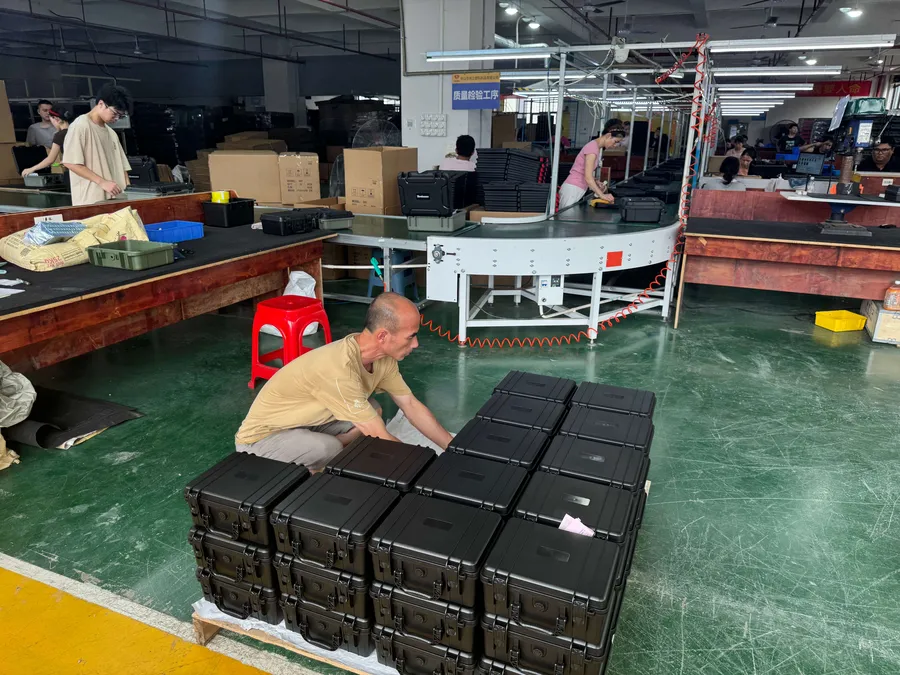
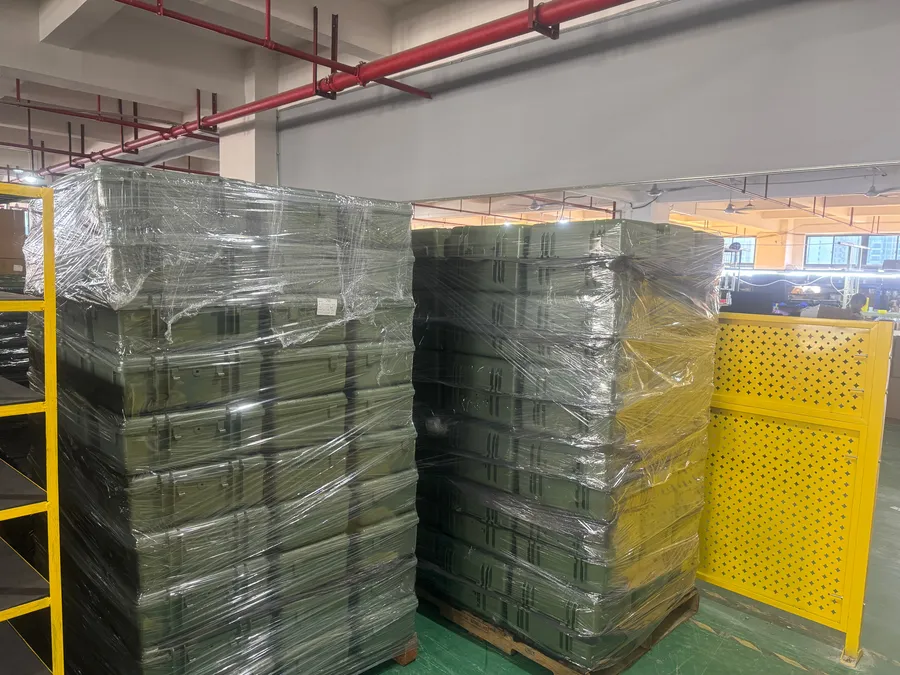
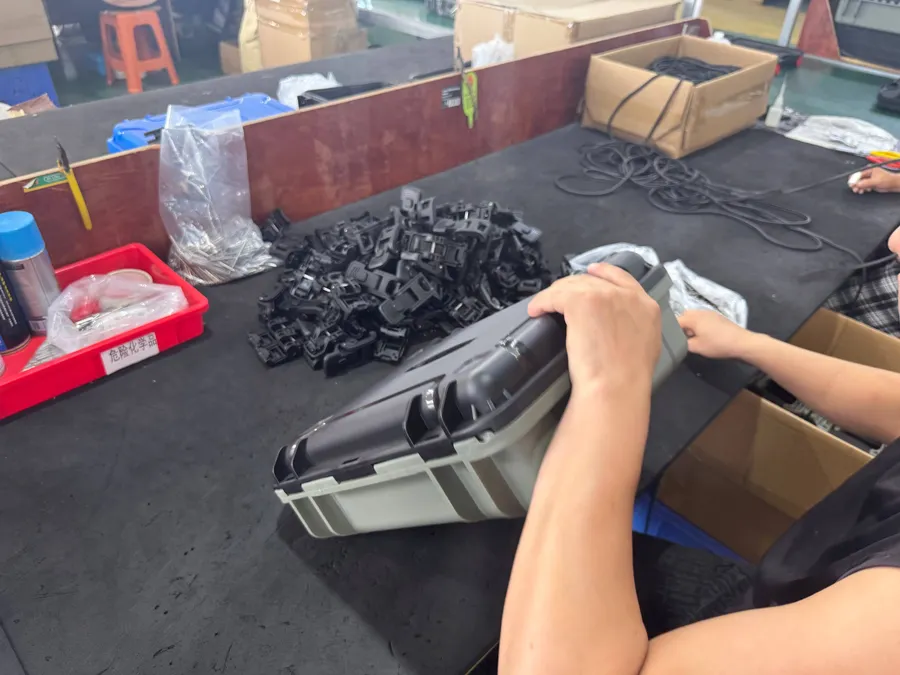
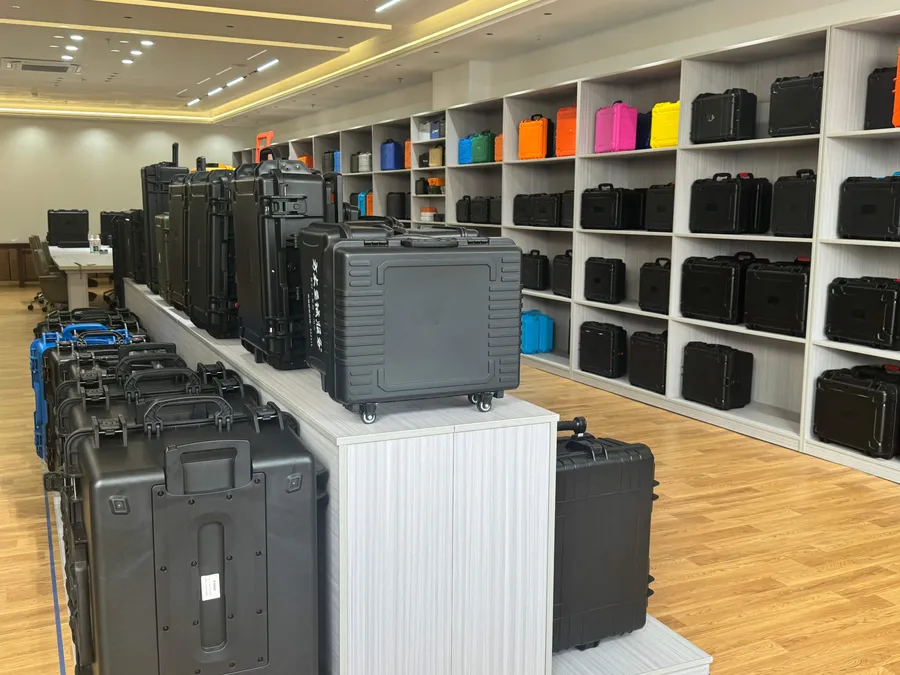
Customisation
Everything described above is configurable on a standard shell: interior layout (pick-and-pluck, die-cut or CNC-cut), foam grade and thickness, colour, logo method, latch and lock count, pressure-equalisation valve, cable ports, document holder and identification plate. A bespoke exterior geometry requires a new mould — 125 days, from 3,000 units per moulded component.
Procurement considerations
| Question | What to send us |
|---|---|
| Which shell fits? | Equipment L × W × H as packed, plus required clearance per axis |
| What does it cost? | Order quantity and estimated annual quantity — the two drive different answers |
| Is tooling needed? | Whether an existing shell clears the envelope with usable foam depth |
| Lead time? | Your required delivery date, not just the order date |
| Certification? | The exact standard your tender names — we will say whether we can test to it |
| Freight? | Destination and preferred terms; carton and pallet data supplied with the quotation |
Comparison and selection guide
The tables on this page exist because a protective case is chosen by comparing three things: the envelope, the environment and the handling chain. Where no table applies, the rule below is.
| Situation | What To Do |
|---|---|
| Battery isolation | Separate pockets, terminals up, with a physical barrier between cells and connectors. |
| Cable management | Dedicated coiled-cable channels rather than a shared compartment. |
| Field repair | Reserve a small loose compartment for spare fuses, connectors and seals. |
- Size on internal dimensions plus clearance, never on a product name.
- Choose the carrying method before the shell: it changes the series, not just the price.
- Specify the interior last, and decide up front whether the end user will reconfigure it.
What protective case features are important for communication equipment? relates to Military Case Guide. Related families: Communication Equipment Cases / Field Equipment Cases / Military Protective Cases / Electronics Cases. Related sectors: field and industrial equipment. Continue in the Military Case Guide cluster.
This page is written from our own production data. If your requirement differs, send the dimensions and we will tell you which of the 155 models fits, or whether a custom route is needed.