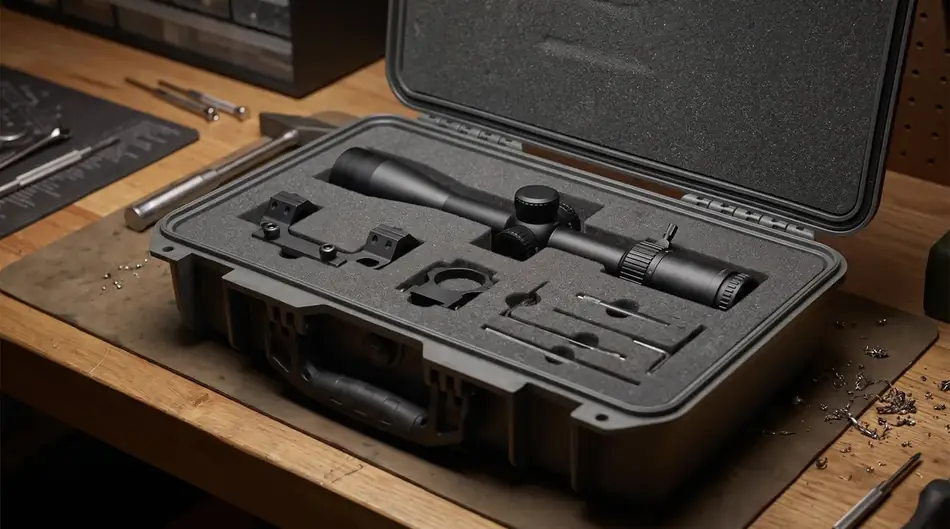
How can tool cases be customized?
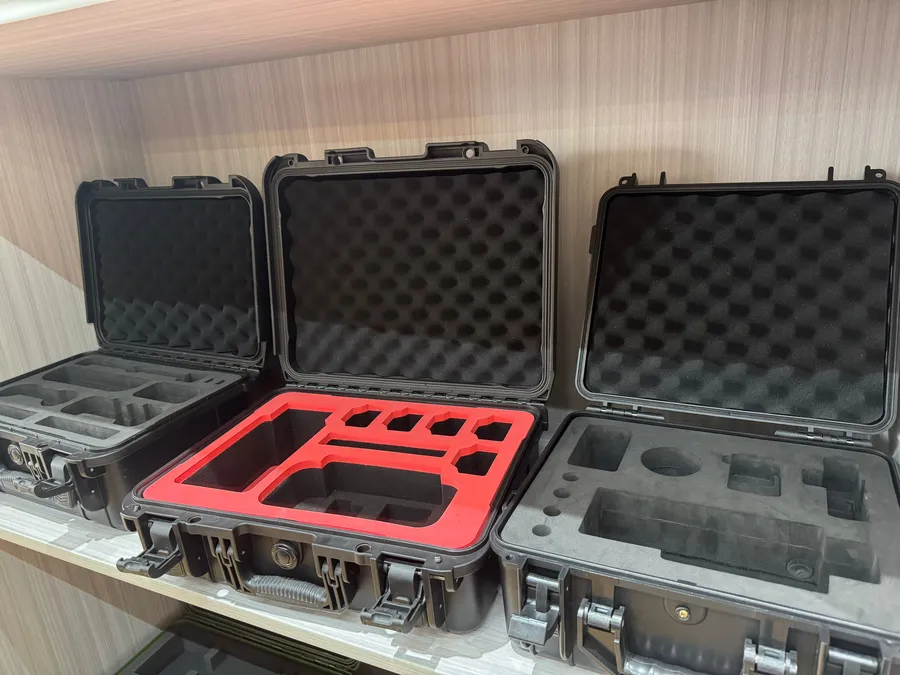
Yes. A tool case is customised mainly by configuration and decoration on a mould we already run, not by commissioning new tooling: cut foam shaped to the exact kit, a matched body colour, an embossed or printed marking with an optional name plate, padlockable or heavier hardware, and a printed export carton carrying your item codes. The shell geometry, wall thickness and internal dimensions stay exactly as published for the model you choose, so protection is decided by the case you select, not by the branding applied to it. Across the 120 tool-case models in our published range, wall thickness runs from 2.0 mm on the smallest shells to 5.8 mm on the biggest, and empty weight from 100 g to 6 kg, which is why model selection comes first and decoration second. Only a size no catalogue model offers requires a new mould, and that is a separate, slower, higher-volume decision rather than a decoration step bolted onto a normal order.
Key points
- Select the tool case model by published internal dimensions, wall thickness and empty weight first; decoration never changes those numbers.
- Colour, logo and marking changes start at 300 pieces per colour or marking; custom cut foam is available from a single piece.
- A new size needs a new mould: about 3,000 pieces per component and roughly 125 days, so confirm which route a quote is actually pricing.
- Cut the foam to the real kit: pick-and-pluck for reconfigurable loads, die-cut or CNC pockets when every tool must sit fixed and separated.
- Give the foam designer a drawing, a photo of the packed kit or a physical sample, because an insert is only as accurate as its reference.
- Orders are wholesale and OEM only on EXW or FOB terms with 30% deposit, and a first sample on an existing mould takes about 45 days.
What is actually fixed, and what you can change
Every customized tool case we build starts from a mould that already exists in the catalogue, and that fact shapes the whole conversation. The shell geometry, the wall thickness and the internal dimensions are properties of the model, and no logo, colour or foam layout changes them. A WL3218 shell measures 315 x 260 x 180 mm outside and 308 x 230 x 172 mm inside on a 3.0 mm wall, and it still measures exactly that after decoration. What you change is everything on and around that fixed shell: the interior that holds the tools, the surface identity that carries your name, the hardware that closes and carries it, and the carton it ships in. Keeping the split clear matters commercially, because configuration and decoration on a known tool are fast and run at modest volumes, while a shell that does not exist yet is a tooling project with different thresholds, lead times and risks.
The five layers of a customized tool case
Think in layers, because each layer is quoted differently. Layer one is the interior: pick-and-pluck, die-cut or CNC-cut foam in EVA, PE or EPE, built up as base, lid and egg-crate layers so every wrench, probe or meter sits in its own pocket. Layer two is surface identity: a body colour matched to your artwork, an embossed or printed marking, and a moulded or riveted name plate for unit and serial numbers. Layer three is hardware: padlockable latches, hinge count, handle type and feet, plus a pressure-relief fitting on the models that offer one. Layer four is packaging: a printed carton and labels carrying your item codes, so goods inward at your warehouse is unambiguous. Layer five is the only one that touches tooling: a size or shape no published model offers, which becomes a new mould project at roughly 3,000 pieces per component rather than a line item on a normal order.
Comparison: decoration, configuration and a new mould
The same word, customised, covers three different commercial routes, and quotes go wrong when the routes are mixed. The table separates them by what changes, the volume each route needs and the time it takes.
| Change | What You Get | Volume | Lead Time | Tooling |
|---|---|---|---|---|
| Body colour, logo or marking | Matched colour, embossed or printed mark, moulded or riveted name plate | 300 pieces per colour or marking | About 45 days to a first sample on the existing mould | None on the shell |
| Cut foam interior | Pick-and-pluck, die-cut or CNC pockets in EVA, PE or EPE, layered base and lid | From a single piece | Quoted against the drawing or sample | Cutting fixture only, no shell mould |
| Hardware and closure | Padlockable latches, hinge and handle specification, feet, optional pressure-relief fitting | Agreed per configuration | Follows the production run | None, options are fitted at assembly |
| Printed export carton and labels | Your item codes and handling marks on the shipping pack | Agreed per order | Follows the production run | Print plate only |
| A new size or shape | A shell no catalogue model offers, with your own internal layout | About 3,000 pieces per component | About 125 days to first samples | New mould, the only route of the five |
Choose the shell before the decoration
Model selection is the step that decoration cannot undo, so it comes first in every quotation. Start from the laid-out kit, not from the outside of an old case: list each tool with its silhouette and the cables or documents that travel with it, then match the published internal dimensions and the split between lid and base depth. A compact electronics-and-hand-tool kit fits the WL4010 interior of 390 x 315 x 88 mm at 1,015 g empty, a deeper technician set suits the WL4312 with 420 x 260 x 104 mm inside on a 3.5 mm wall, and the WL5321 carries 481 x 373 x 192 mm of usable space at 4,810 g with a 5.8 mm wall. Wall thickness across the published tool-case range runs from 2.0 mm to 5.8 mm per model, and empty weight from 100 g to 6 kg, so the spread is wide enough that the choice is about fit and handling, not about one shell being universally stronger. Once the model is fixed, colour, marking, foam and hardware are configuration work on top of a known tool.
Foam: the layer that actually protects the tools
The shell holds the stack load; the foam decides the force each tool sees. We cut interiors as pick-and-pluck for kits that change between jobs, die-cut pockets for repeatable service sets, and CNC profiles when every item must sit fixed, separated and presented the same way each time, with EVA, PE and EPE as the working materials and top, base, egg-crate or layered structures as the build-up. A cut-out also acts as a tool-control record: an empty pocket shows at a glance what is missing before a kit leaves the workshop. Accuracy depends on the reference you give us, so we work from a dimensioned drawing, a photograph of the packed kit or a physical sample, and a first-article insert is approved before the run. Foam is ordered from a single piece on a stock shell, which makes it the cheapest way to upgrade a case you already use.
Where customized tool cases go to work
The same shell family serves very different crews, and the customisation differs more than the case does. Field maintenance teams cut foam around torque tools and spares so a kit can be checked against its silhouette at the end of a shift. Calibration and instrument crews specify deep bases and lid foam so meters travel face-up and fixed. Military and defence buyers combine a military application spec with unit markings and padlockable latches, on shells from the military protective cases range, and treat the packing list as part of the deliverable. 115 of the 120 published tool-case models are stackable, which is why colour-coded lids per trade are common on palletised workshop sets: the stack sorts itself by colour before a lid is opened.
Hardware, closure and marking options
Hardware is where a case is lived with, and it is specified per model rather than invented. Latch bodies on the sealed models accept a standard padlock, hinges and feet are standard on most shells, and the handle is a fixed folding type on the mid-size tool cases. A shoulder strap and a pressure-relief fitting are options we can supply depending on the model, counted in the configuration quote. Marking has three routes, cheapest first: a riveted or moulded name plate, which needs no tooling and is the easiest to change between orders; printing on a flat panel; and embossing in the mould, which fixes the mark for the life of the tool and suits high-running colours. Placement is agreed against the packed layout, so a marking stays legible when cases are stacked and carried.
Procurement notes: terms, volumes and lead time
We sell wholesale and OEM only: there is no retail channel, no DDP service and no overseas warehouse, and prices are quoted EXW or FOB. Payment runs on a 30% deposit with the balance before shipment. On an existing mould, a first sample takes about 45 days from artwork approval; a new mould is a different project at about 125 days and from 3,000 pieces per component, so ask a quote to state which route it is pricing before you compare prices across suppliers. Colour and marking changes start at 300 pieces per colour or marking. For a clean first enquiry, send the model or target internal size, the tool list with dimensions, the foam preference, colours and artwork, marking content and the destination port, and we answer with a like-for-like quotation instead of a guess.
What we leave blank, and why
Protection figures are published per model from our own production or incoming-material records, and we do not generalise one model's numbers into a range-wide claim. Where a property has not been measured, the datasheet field stays blank instead of carrying an optimistic value, and we do not assert conformity to test standards we have not run. Ask for the datasheet of the model you shortlisted, read the blank fields as untested rather than poor, and if a rating is decisive for your programme, raise it as a test requirement in the quotation stage so it is agreed in writing before production rather than argued after delivery.
Two neighbouring searches, answered line by line
A multimeter tool case and a custom construction tool case factory order reach this page for the same reason: in both cases the answer is configuration on a shell we already mould, not a new tool. The rows below are answered only with figures already published model by model in our specification table, or with an explicit statement that the property was never measured. No figure is borrowed from a neighbouring model, and where a model publishes a value the model number is named so the number can be checked against that model's own page.
| Search | What We Publish |
|---|---|
| multimeter tool case | A digital meter travels with leads, probes and alligator clips, so the published numbers that matter are the internal footprint and the lid-to-base split, not the outside dimensions. KX-62109 (WL6-2109) publishes a 195 x 128 x 81 mm internal cavity in an ABS shell on a 3.0 mm wall, 470 g empty, 2.0 L internal and 1.7 L usable, with 20 pieces per 470 x 365 x 560 mm export carton. KX-3213 (WL3213) gives 308 x 230 x 118 mm inside on an 86 mm lid over a 32 mm base, a 3.0 mm wall, 860 g empty and 8.4 L internal against 7.2 L usable in polypropylene. For a meter stood face-up, KX-3315 (WL3315) publishes 303 x 224 x 135 mm internal with a 100 mm lid over a 35 mm base, a 4.1 mm wall, 1,670 g empty, 9.2 L internal and 7.4 L usable in engineering polypropylene. The pockets themselves are cut to your kit - Pick & Pluck, die-cut or CNC-cut from a drawing, a photograph of the packed meter or the unit itself - and custom foam starts from 1 set on any of the three. |
| custom construction tool case factory | Read this as the manufacturing route, not a retail catalogue. 120 models carry the tool-cases category in our published specification table; wall thickness is stated per model from 2.0 mm to 5.8 mm (115 of the 120 publish a figure) and empty weight from 100 g to 6,000 g (74 publish a figure). The shell resin splits 68 polypropylene, 32 engineering polypropylene and 20 ABS; 115 of the 120 are marked stackable and every one of the 120 publishes a fixed folding handle. For a site kit, KX-5321 (WL5321) publishes 481 x 373 x 192 mm internal with a 149 mm base under a 43 mm lid, a 5.8 mm wall, 4,810 g empty, 34.4 L internal and 27.5 L usable, three pieces per 530 x 440 x 635 mm carton. Five of the 120 publish wheels together with a telescopic handle and all five are marked non-stackable; KX-85726 is 520 x 296 x 210 mm internal, a 155 mm lid over a 55 mm base, 4.2 mm wall, 5,600 g empty and a 385 mm published handle height, while KX-85424 is 483 x 363 x 190 mm internal on a 4.5 mm wall at 6,000 g empty. Quotation floors are the published ones: colour, logo or OEM hardware from about 300 pieces, a new shell size from about 3,000 pieces per component at roughly 125 days, and about 45 days for a first OEM sample on a mould we already run. |
What actually decides the fit for a meter kit
The meter body is the easy part; the leads are what make a multimeter tool case a layout question rather than a size question. Coiled test leads, a current clamp and a set of probe tips need their own depth, and a moulded dial guard or a magnetic hanger adds a few millimetres the datasheet does not show. That is why we quote from the laid-out kit rather than from an old case: measure the meter with its leads coiled as they are actually stored, note whether the instrument stands on its own angled bezel or lies flat, and send that with the tool list.
The lid-to-base split is the second number buyers miss. A shallow equal split, such as the 44 mm over 44 mm published for KX-4010, keeps a slim meter visible but leaves little room above a probe tip; a deep lid such as the 100 mm published for KX-3315, or the 86 mm published for KX-3213, lets the instrument sit protected in the lid while the base carries leads, fuses, a thermocouple and the instruction sheet. 36 of the 120 tool-case models also publish a narrowed internal width, which is the figure to read first if a meter pocket has to clear an internal lid panel.
What a factory order covers on the construction side
For every one of the 120 published tool-case models, the specification table records OEM, ODM, private label, custom colour, custom logo, custom hardware, custom packaging and custom foam as available, and custom moulding as a separate route at about 125 days with a floor of 3,000 pieces per component. The practical difference for a construction buyer is which line item is being priced: a trade-coloured lid with a riveted name plate and a re-cut insert is configuration on a known mould, while a case sized to a specific torque tool is tooling, with tooling risk and tooling lead time attached.
Commercially the standing terms are unchanged here: wholesale and OEM only, quoted EXW or FOB from Guangdong, China, with no retail channel, no DDP service and no overseas warehouse. Payment runs a 30 per cent deposit with the balance after inspection before shipment, and third-party inspection of the finished goods or an audit of the factory is welcome. A clean first enquiry sends the model or the target internal size, the tool list with dimensions, the foam preference, colours and artwork, marking content and the destination port; Fred Zhao or the KeXin Sales Team answers with a like-for-like quotation, reachable on WhatsApp +86 135 3588 0002.
What we do not state for either search
Neither row above carries an ingress protection code, a drop height, a stack load or a temperature range, because those are not published for any model. Across all 120 tool-case models the specification table records waterproof, dust resistance, UV resistance, temperature range, stack load and load capacity as not measured, and the protection rating the same way. Impact is described only as the wall thickness stated for that model - 3.0 mm on KX-3213, 4.1 mm on KX-3315, 5.8 mm on KX-5321 - with no drop height claimed, and shock protection is a function of the specified foam layout rather than a property of the shell.
The one protection line recorded as measured is material chemistry: a thermoplastic shell with no ferrous corrosion path. Sealing is stated as hardware, not as a rating: 91 of the 120 publish a compressible gasket in a continuous moulded channel and 29 record none offered on the shell. Pallet quantity is published as calculated from the carton footprint against your pallet size rather than as a tested figure, and 55 of the 120 models publish an export carton size - 49 of them together with the pieces-per-carton count, which is the number to use when working out a mixed meter-and-tool shipment. If a project specification needs a tested statement, accredited third-party testing against the exact build can be commissioned as a separate work package; we do not claim a result we have not measured.
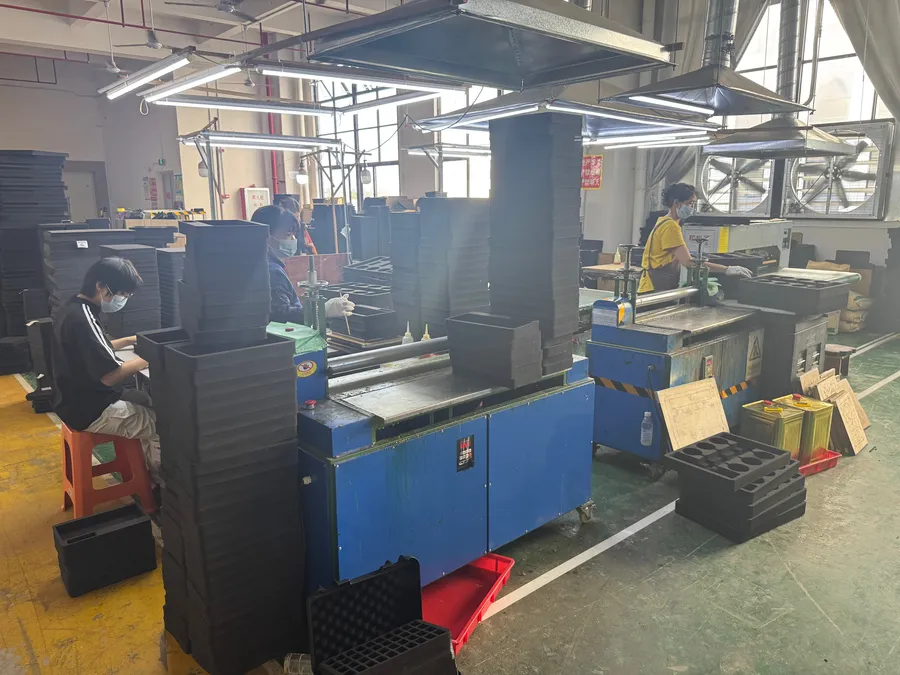
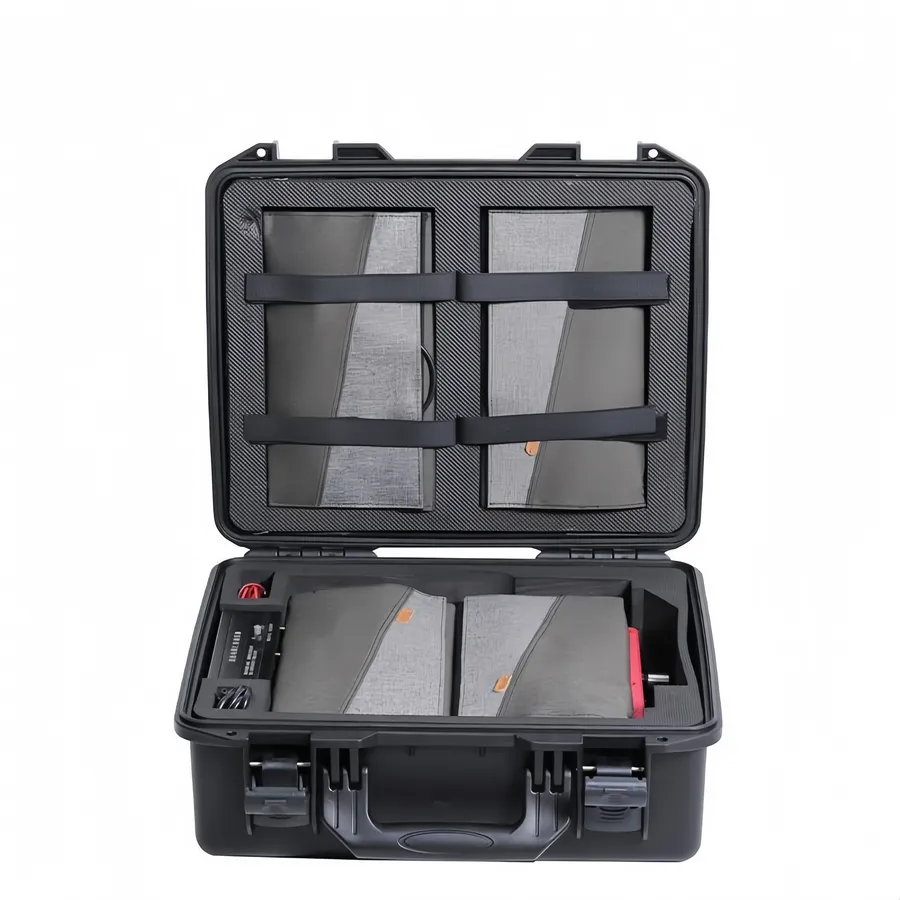
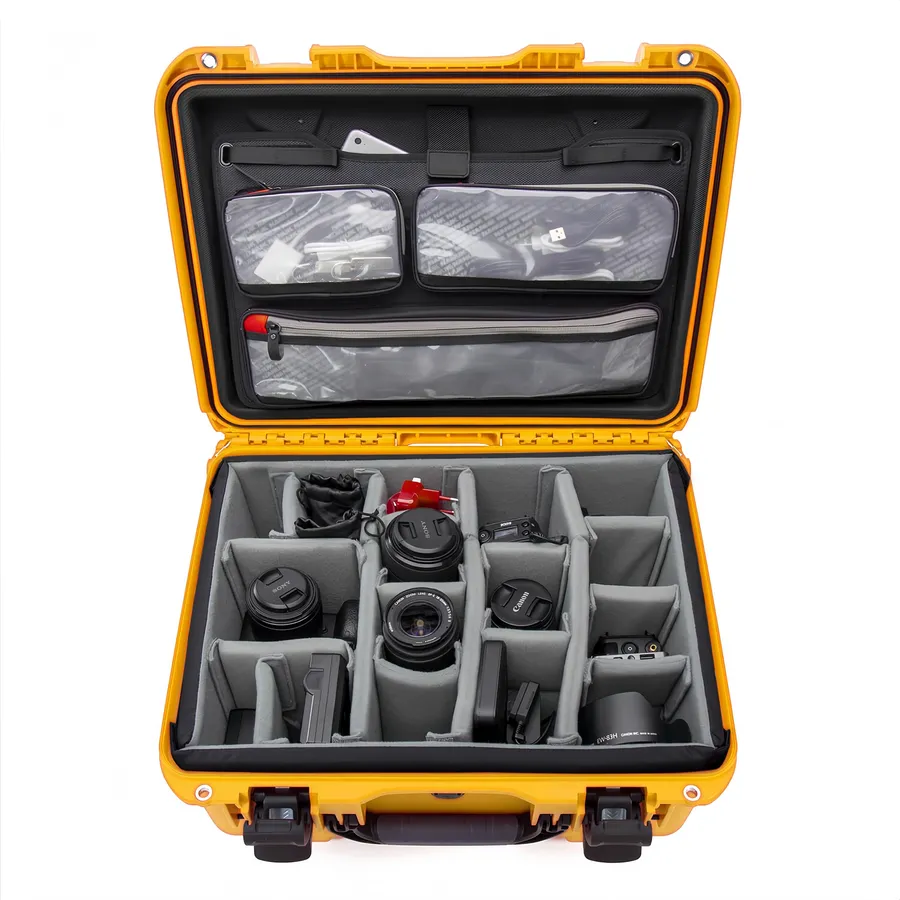
Customisation
Everything described above is configurable on a standard shell: interior layout (pick-and-pluck, die-cut or CNC-cut), foam grade and thickness, colour, logo method, latch and lock count, pressure-equalisation valve, cable ports, document holder and identification plate. A bespoke exterior geometry requires a new mould — 125 days, from 3,000 units per moulded component.
Procurement considerations
| Question | What to send us |
|---|---|
| Which shell fits? | Equipment L × W × H as packed, plus required clearance per axis |
| What does it cost? | Order quantity and estimated annual quantity — the two drive different answers |
| Is tooling needed? | Whether an existing shell clears the envelope with usable foam depth |
| Lead time? | Your required delivery date, not just the order date |
| Certification? | The exact standard your tender names — we will say whether we can test to it |
| Freight? | Destination and preferred terms; carton and pallet data supplied with the quotation |
Comparison and selection guide
The tables on this page exist because a protective case is chosen by comparing three things: the envelope, the environment and the handling chain. Where no table applies, the rule below is.
| Situation | What To Do |
|---|---|
| Fixed inventory | CNC or die-cut silhouette with part numbers printed on the foam. |
| Variable kit | Pluck foam plus a loose tray. |
| Bench work | Removable trays that lift out square so the case doubles as a stand. |
- Size on internal dimensions plus clearance, never on a product name.
- Choose the carrying method before the shell: it changes the series, not just the price.
- Specify the interior last, and decide up front whether the end user will reconfigure it.
How can tool cases be customized? relates to Military Case Guide. Related families: Tool Cases / Military Protective Cases / Custom Protective Cases / Tactical Equipment Cases. Related sectors: field and industrial equipment. Continue in the Military Case Guide cluster.
This page is written from our own production data. If your requirement differs, send the dimensions and we will tell you which of the 155 models fits, or whether a custom route is needed.