How should military equipment be packed for transportation?
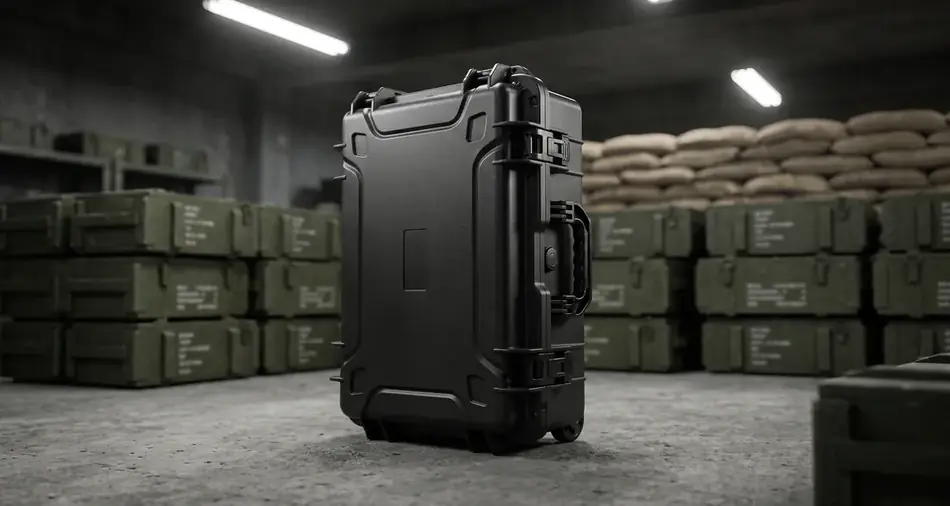
Packing military equipment for transportation is a sequence, not a single decision: measure the equipment in its transport configuration, add clearance so the foam rather than the shell absorbs movement, select a shell whose published wall thickness matches the stacking and racking load, engineer the interior layout, set the closure so the gasket compresses evenly, and only then work out cartons, stacks and pallets from the manufacturer's packing data. The catalogue publishes those numbers per model - internal and external dimensions, wall thickness from 2.0 to 6.0 mm, net mass, carton quantities - so a packing plan can be built from datasheets before anything ships, and every unmeasured property stays an honest blank instead of an estimate.
Key points
- Measure equipment as it will actually travel - antennas folded, cables coiled - then add at least 20 mm of clearance per axis.
- Wall thickness, published per model from 2.0 to 6.0 mm, decides stacking and racking behaviour; choose the shell by structure first.
- A seal option exists on 124 of 155 models; even latch compression, not gasket thickness alone, keeps the rim closed against dust.
- 136 of 155 models are specified stackable - confirm stack behaviour from the datasheet before you plan a pallet, not after.
- Plan cartons from real packing data: six WL6-4120 cases fill a 750 x 425 x 640 mm carton, three WL6-5522 cases a 565 x 450 x 665 mm carton.
- No performance statement without a test record: publish measured values per model and commission accredited testing as a separate package.
Pack from the transport configuration, not the bench configuration
Equipment packed for transportation is rarely the equipment that sat on the workbench. Antennas fold, handles rotate, cables coil, mounting brackets come off, and every one of those decisions changes the envelope you are actually protecting. Record the longest, widest and tallest points with everything stowed the way it will travel, photograph that state, and treat the photograph as part of the packing record - it is also the input the foam shop needs if the interior will be cut.
Group the load by what it can survive together. A rugged radio and an optical sight do not belong in the same uncompartmented case, however neatly the volumes add up, because the packing rule for each item is set by the most fragile item sharing the box.
Clearance and the internal envelope
Clearance is the cheapest protection you can specify. The sizing guidance applied across this catalogue is at least 20 mm on each axis between the equipment envelope and the foam, so that the insert, not the shell wall, takes the movement. An undersized interior puts the load path through the shell; an oversized interior lets the item walk and scuff its own packaging. Both failures look identical on arrival.
Check the narrow internal width as well as the nominal one: 36 catalogue models taper internally by more than 5 mm from the nominal width, and a tray or bracket that clears the opening can bind at the narrow point. The published narrow width is the honest number to design against.
Choose the shell by structure
The catalogue is organised into series by structural role, and wall thickness is published per model between 2.0 and 6.0 mm. Choose by the job the shell must do - carried, stacked, racked, rolled - and let the series structure shorten the search:
| Series | Role | Span | Packing Note |
|---|---|---|---|
| 0 / 1 Series | Mini and small utility shells | 23 + 7 models, from 0.3 L | Carton quantities of 20-40 pieces |
| 6 / 7 Series | Mid-size equipment cases | 20 + 6 models, up to 37 L | Typically 3-8 cases per carton |
| 8 / 9 Series | Heavy-duty and deep-body cases | 62 + 18 models, up to 139.5 L | 1-6 cases per carton; 4.2-6.0 mm walls |
| T Series | Telescopic rolling cases | 19 models | 1 case per carton, individual box data published |
Wall thickness is the transit decision
Wall thickness is the number that pays for itself in transit. Thin-wall shells keep mass down for hand-carry loads; 4.2 to 6.0 mm walls on the heavy series take the point loads of stacking under other cargo and of racking in a vehicle body. Neither is better - the packing plan decides which one is correct, which is why the value is published for each of the 155 models rather than quoted as a range for the range.
Engineer the interior before the case is full
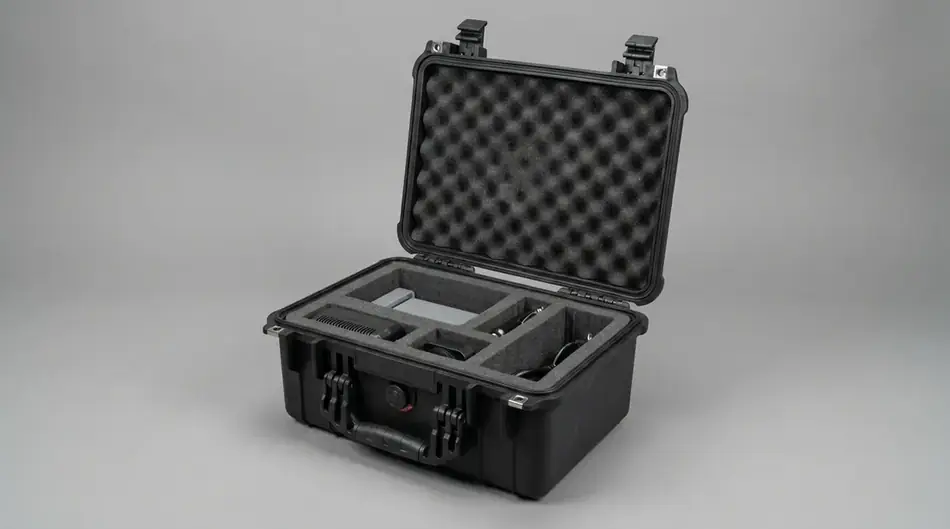
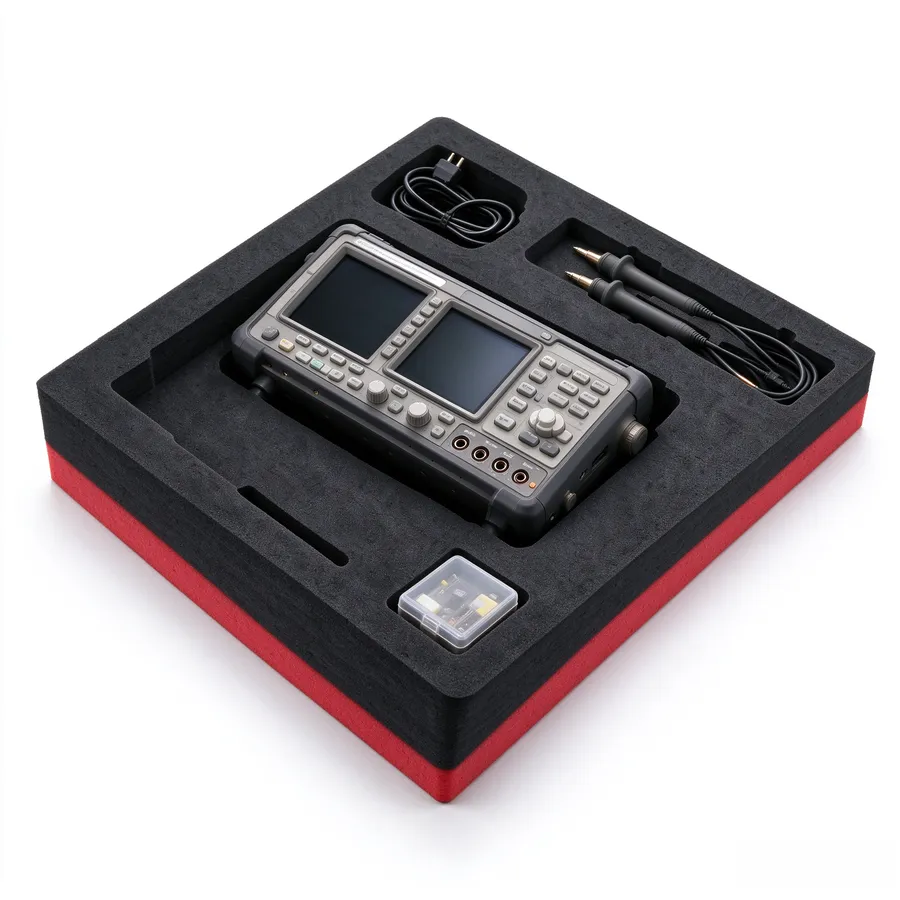
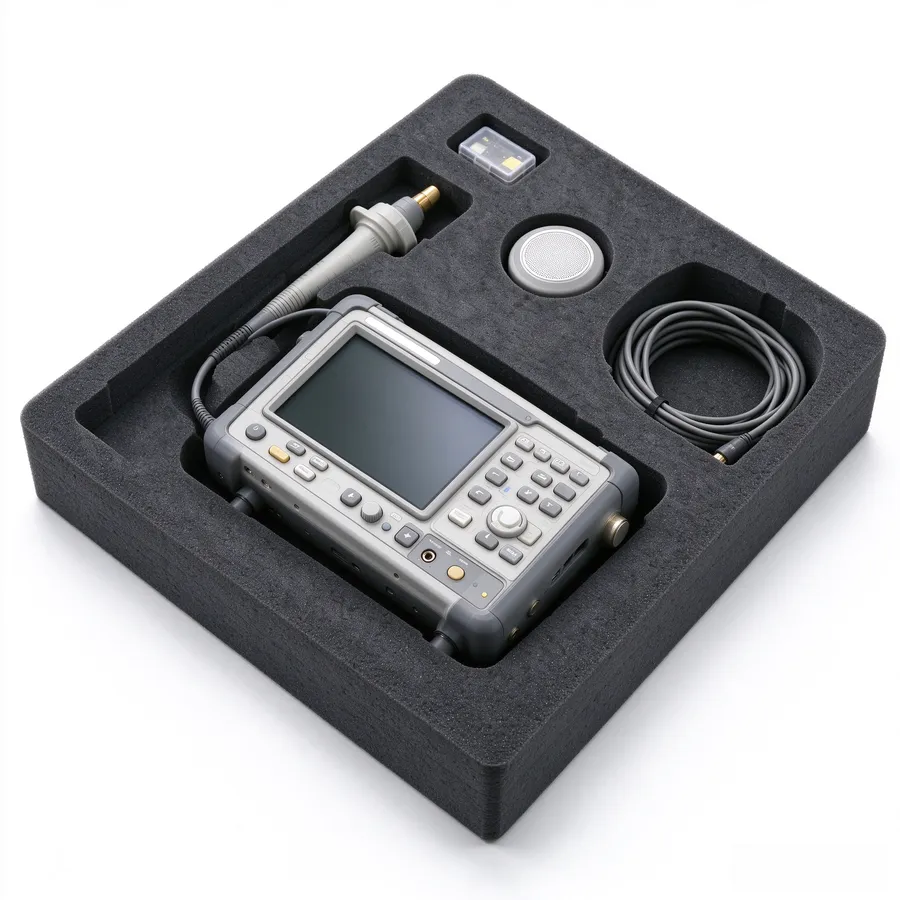
An interior is a load path. A firm carrier layer under the device stops it settling into the foam; a softer contact layer protects finished surfaces; cut-outs locate items so the same layout can be verified at a glance during an inventory check. Layered CNC-cut builds serve fixed equipment, pick-and-pluck top layers serve kit that changes between deployments, and egg-crate or convoluted layers cushion lids and mixed loads.
Specify foam by zone rather than one material everywhere. Zones are cheap to change between orders, which matters when the equipment fit is revised mid-programme - the interior is the part of a packing plan you can fix without touching the shell.
Close it so the seal actually works
A gasketed rim excludes dust and water only when it is compressed evenly, and even compression is a latch-count decision. Latches scale with lid area, hinges locate the lid, and latch bodies accept a standard padlock where lockable closure is required. A compressible gasket is available as a configuration option on 124 of the 155 models, and pressure-equalisation valves can be fitted on suitable models so altitude and temperature changes do not fight the latch torque.
We state sealing exactly as built: gasketed rim, latch layout, valve option - and no ingress code on the datasheet unless that model and configuration has a test record. Where a programme requires documented ingress performance, accredited testing is commissioned as a separate work package against the exact configuration.
Stack, carton and pallet arithmetic from real packing data
Transit packing is arithmetic, and the arithmetic must come from the manufacturer's packing records, not from estimates. In the current catalogue 136 of 155 models are specified stackable and 64 models publish carton data. Examples from that data: six WL6-4120 cases pack into one 750 x 425 x 640 mm carton; three WL6-5522 cases fill a 565 x 450 x 665 mm carton; the deep-body WL9-5419 ships one per 550 x 485 x 755 mm carton. Rolling T-series models ship one per carton because the telescopic hardware must not take point loads.
Work the numbers in this order: cases per carton from published pack data, cartons per layer against the pallet footprint, then layers against the container's usable height. The empty mass of the heavy shells belongs in the payload budget - the largest rolling model weighs 15.3 kg before anything is packed into it. The guide on container loading for protective cases walks a full worked example.
Long and oversized equipment
Long equipment breaks normal packing plans first. The long-format shell in the catalogue carries a 1,280 x 350 x 140 mm internal envelope at a 5.0 mm wall - an antenna-mast or long-instrument footprint that no amount of foam engineering can fold into a shorter case. When equipment exceeds that envelope, the packing plan changes from one case to a case pair with a defined split, and the split line should fall at a structural joint of the equipment, never at its most fragile span.
For oversized loads the same rule holds as everywhere else: publish the split, photograph the packed state, and keep the interior layout reproducible so the second packing team packs it the same way the first one did.
Field repacking discipline
A packing plan that only works at the factory is not a packing plan. In field conditions the same case is repacked by whoever is on duty, at night, sometimes in a hurry, so the interior must make the correct layout the easy layout: cut-outs that only accept the right item, lids that close only when the sequence is right, document holders and labels that carry the contents list. Inventory checks work the same way - a layered interior with a visible silhouette per item turns a check into a glance instead of an unpacking. That is a customization requirement, and it belongs in the RFQ alongside the dimensions.
Procurement and claim discipline for transport packing
Supply is wholesale and OEM under EXW or FOB terms, with a 30 percent deposit and balance before shipment. Minimums follow the customization layer: one piece on a standard model or foam layout, 300 units for colour or logo, 3,000 for a new mould; lead times are 45 days on an existing mould and about 125 days on new tooling. KeXin New Materials (Guangdong) Co., Ltd. publishes the packing data for each model and will quote pallet plans against your container specification.
One discipline above all: no standard or performance claim without a test record for that model and configuration. The datasheet states what was measured, unmeasured items are marked as such, and accredited testing is commissioned as a separate work package when a programme requires documentation. That is what keeps a packing plan auditable from the factory floor to the forward base.
Customisation
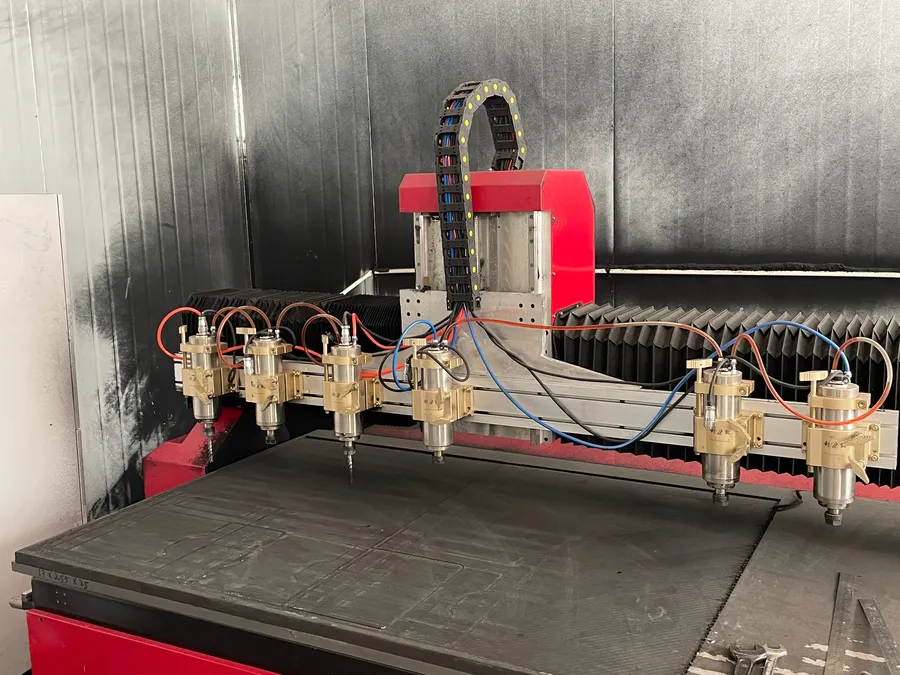
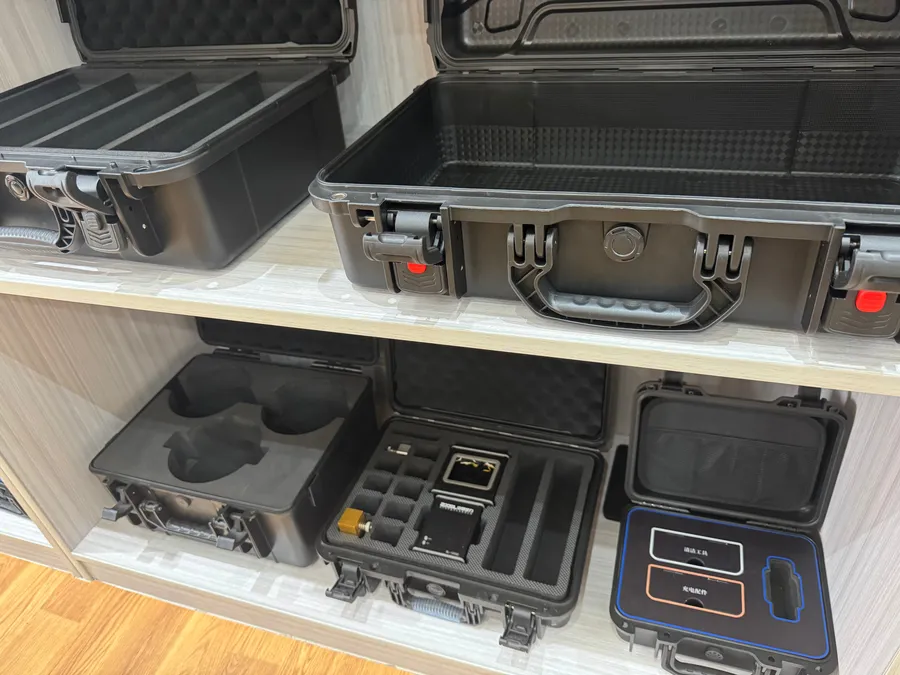
Everything described above is configurable on a standard shell: interior layout (pick-and-pluck, die-cut or CNC-cut), foam grade and thickness, colour, logo method, latch and lock count, pressure-equalisation valve, cable ports, document holder and identification plate. A bespoke exterior geometry requires a new mould — 125 days, from 3,000 units per moulded component.
Procurement considerations
| Question | What to send us |
|---|---|
| Which shell fits? | Equipment L × W × H as packed, plus required clearance per axis |
| What does it cost? | Order quantity and estimated annual quantity — the two drive different answers |
| Is tooling needed? | Whether an existing shell clears the envelope with usable foam depth |
| Lead time? | Your required delivery date, not just the order date |
| Certification? | The exact standard your tender names — we will say whether we can test to it |
| Freight? | Destination and preferred terms; carton and pallet data supplied with the quotation |
Comparison and selection guide
The tables on this page exist because a protective case is chosen by comparing three things: the envelope, the environment and the handling chain. Where no table applies, the rule below is.
| Situation | What To Do |
|---|---|
| Start from the equipment, not the case | Measure the tallest, widest and longest points of the packed equipment including antennas, handles and connectors. Add 20 mm minimum clearance per axis before selecting a shell. |
| Then choose the carrying method | Under 8 kg, a fixed handle is lighter and cheaper. Over 12 kg or any journey over 30 m, specify the T series with telescopic handle and wheels. |
| Then decide the interior | Pick-and-pluck for kits that change. Die-cut or CNC-cut for fixed layouts that must be auditable at a glance. |
- Size on internal dimensions plus clearance, never on a product name.
- Choose the carrying method before the shell: it changes the series, not just the price.
- Specify the interior last, and decide up front whether the end user will reconfigure it.
How should military equipment be packed for transportation? relates to Military Case Guide. Related families: Military Protective Cases / Military Transport Cases / Long Equipment Cases / Field Equipment Cases / Defense Equipment Cases. Related sectors: field and industrial equipment. Continue in the Military Case Guide cluster.
This page is written from our own production data. If your requirement differs, send the dimensions and we will tell you which of the 155 models fits, or whether a custom route is needed.