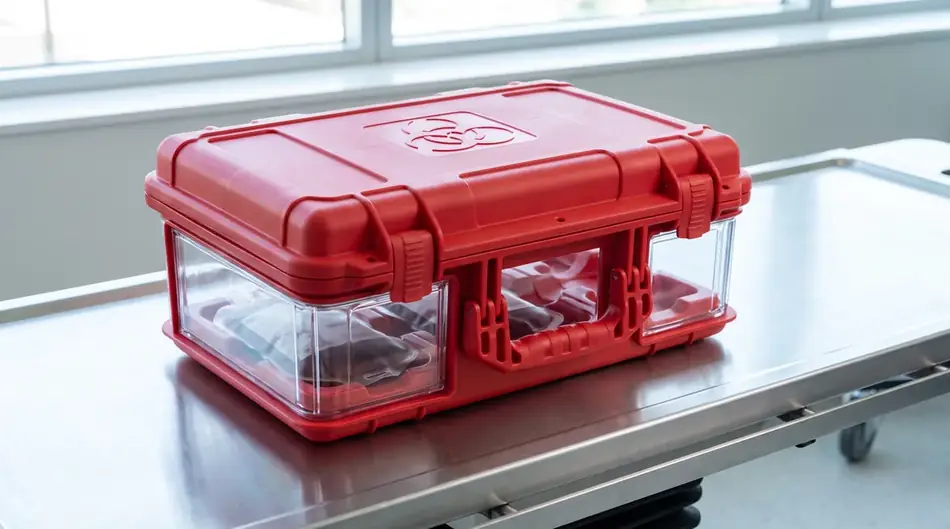
Can medical equipment cases be customized for different devices?
Yes. Every medical equipment case we ship is a configured product: you choose a stock shell size from the 155-model catalogue, then the interior, sealing, hardware and branding are specified around the device. The interior is the main customization surface - pick-and-pluck, die-cut or CNC-cut foam in PE, EVA or EPE, layered or convoluted - and shells from 0.3 to 139.5 litres of internal volume cover handheld diagnostic tools up to multi-instrument field kits. Colour and logo options start at 300 units and a dedicated new mould at 3,000; a stock shell with an engineered interior runs on a 45-day existing-mould lead time. Supply is wholesale and OEM under EXW or FOB terms, with measured specifications published per model instead of generic claims.
Key points
- Size the case from the device envelope plus clearance, never from a catalogue photograph or a competitor's model number.
- A stock shell with a custom foam interior is the fastest OEM route: 45 days on an existing mould, one-piece trial quantities.
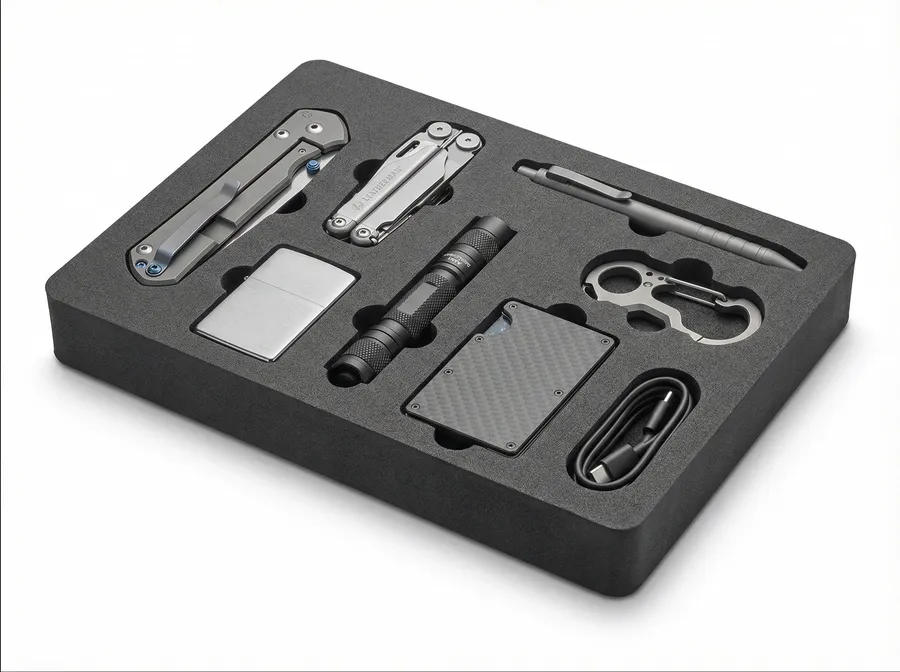
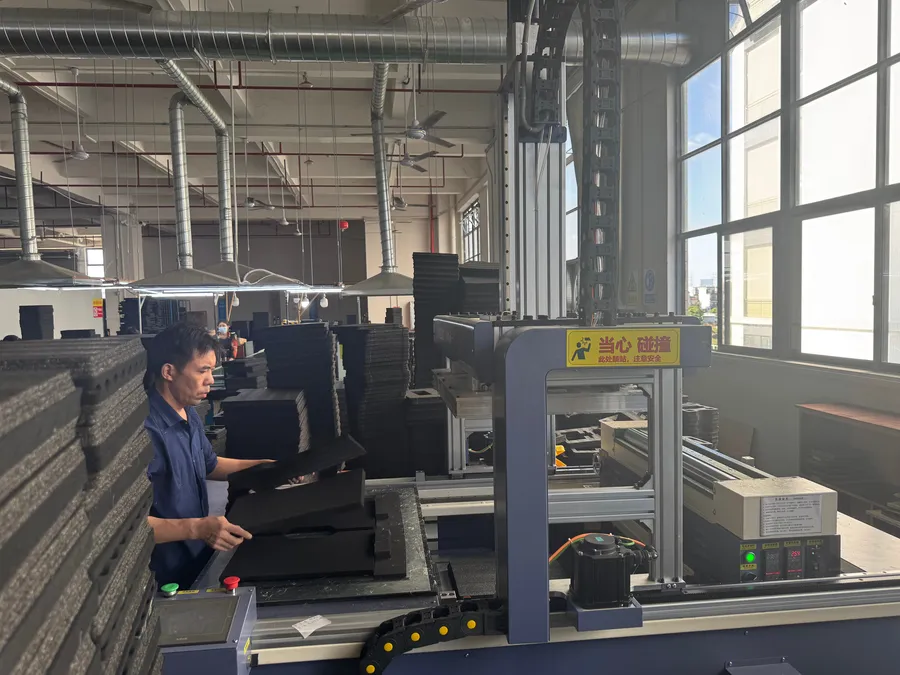
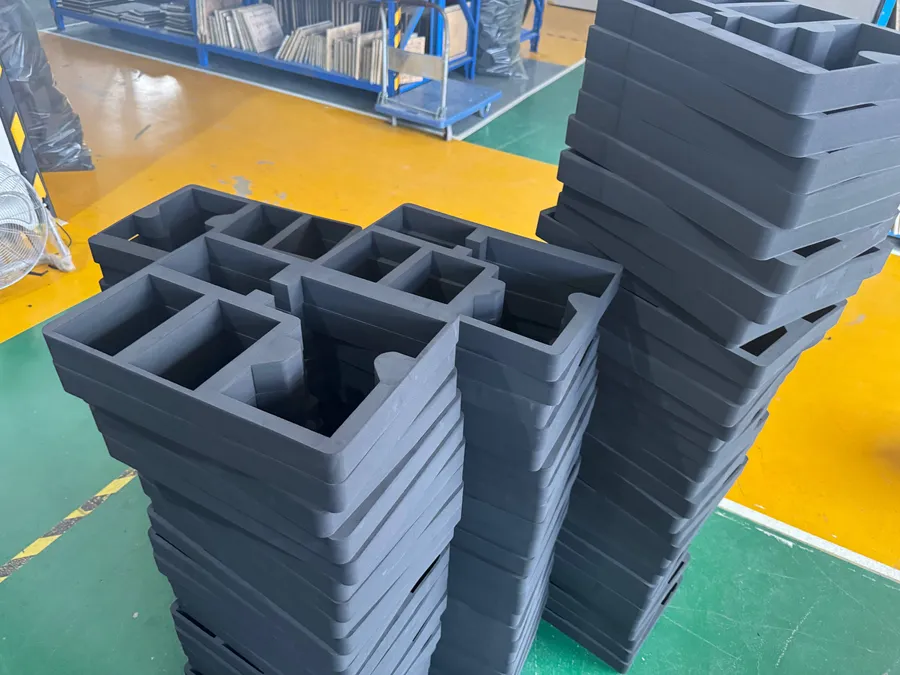
- CNC-cut foam fixes a specific device precisely; pick-and-pluck suits kits whose contents change between deployments.
- Seals, metal or polymer hardware, padlock-accepting latches and document holders are per-model configuration options quoted at RFQ.
- Colour and logo customization starts at 300 units; a dedicated new mould becomes economical at 3,000 units and about 125 days.
- Ask for the published specification of the exact model: where no test record exists, we say so instead of estimating.
What customization actually covers on a medical equipment case
A medical equipment case is customized in four layers. The shell is selected, not invented: the catalogue spans 155 models from a 120 x 90 x 40 mm mini shell to an 843 x 592 x 415 mm rolling case, so most devices fit an existing footprint. The interior is engineered to the device: foam type, density, thickness, layering and cut-outs. The closure and hardware are configured: gasket sealing is available on 124 of the 155 models, metal or polymer latches and hinges, fixed or telescopic handles, wheels on 19 models. Finally the shell can carry your colour and your logo, and the case can carry labels and document holders.
That division matters commercially. Selecting a stock shell keeps you on the 45-day existing-mould lead time; engineering the interior is a foam-order change, not a tooling change; only a genuinely new envelope justifies new tooling. Each layer carries its own minimum order quantity and its own cost behaviour, which is why we quote them separately.
Start from the device, not from the shell
Measure the device in its transport configuration - cables coiled, probes stowed, antennas folded - and record the longest, widest and tallest points, then add clearance. The sizing guidance applied across this catalogue is at least 20 mm of clearance on each axis so the foam, not the shell wall, absorbs movement. A monitor with a protruding connector block is longer than its screen dimension suggests; a handheld with a fitted holster is wider than the handheld alone.
Send one of three inputs, all of which the foam shop can work from: a dimensioned drawing, a photograph of the packed kit with a scale reference, or the physical device or a dummy. Photographs are the most common starting point for medical kits, because the accessories - leads, chargers, trays - usually occupy more volume than the instrument they belong to.
Interior options compared
The four interior constructions behave differently on precision, change frequency and cleaning, and the choice drives both unit cost and how the kit is serviced in the field.
| Interior | Best For | Precision | Note |
|---|---|---|---|
| Pick-and-pluck foam | Kit contents that change | Coarse, 20-30 mm cells | No drawing needed; reconfigurable in the field |
| Die-cut foam | One layout repeated in volume | Medium | Lowest unit cost at quantity; cutting form per layout |
| CNC-cut foam | Fixed device plus accessories | High, to the millimetre | Built from drawing, photo or sample; layered builds supported |
| Egg-crate / convoluted layers | Mixed loads and lid cushioning | General cushioning | Combined with a firm carrier layer under the device |
Foam materials and layering
Foam is specified by zone: closed-cell PE or EVA where the device nests, a softer contact layer where surfaces are finished, and a firm carrier layer that keeps the load off the shell wall. Thickness is a stopping-distance decision - the guide on how foam thickness is chosen walks through it - and each layer is a line item you can change without touching the shell, which is what keeps mid-programme layout revisions cheap.
Shell, seal and hardware configuration
Wall thickness across the catalogue runs from 2.0 to 6.0 mm and is published per model, because it decides stacking behaviour and rigidity, not brand or colour. Where contents must be kept dry and dust-free, 124 of the 155 models offer a compressible gasket in the lid-to-base rim as a configuration option. We state sealing capability exactly as it is built: a gasketed rim with even latch compression, and no ingress code on the datasheet unless that specific model and configuration has a test record - accredited testing can be commissioned as a separate work package.
Hardware follows the load path. Latch count scales with lid area so the gasket compresses evenly, hinges locate the lid, and latch bodies accept a standard padlock where lockable closure is specified. Handles come as fixed folding, shoulder-strap or trolley formats, and 19 models carry wheels, with 11 of those publishing telescopic-handle heights - the difference between a two-handed carry and a one-hand roll across a car park.
Sizing examples from the current catalogue
Three real points on the size ladder show how the medical range steps. The smallest shell, model KX-1204, has a 115 x 78 x 32 mm interior and 0.3 litres of volume for handheld instruments. Model WL4616 sits mid-range with a 455 x 338 x 148 mm interior, 22.8 litres and a 3.0 mm wall - a common envelope for a diagnostic kit with its leads. At the rolling end, model WL8-5835 offers a 500 x 400 x 305 mm interior, 61 litres and a 295 mm telescopic handle, while the largest rolling shell reaches 139.5 litres on a 740 x 518 x 364 mm interior. Every figure is the published value for that specific model, not a generalization.
For long instruments - endoscopes, orthopaedic instrumentation, portable ultrasound with its transducer - the long-format shell carries a 1,280 x 350 x 140 mm interior at a 5.0 mm wall. Check the narrow internal width too: 36 models taper internally by more than 5 mm, so a tray or rack that clears the nominal width can still bind at the narrow point. The published narrow width is the number to design against.
Colour, marking and documentation
Shell colour and logo printing or moulding start at 300 units each, which is where most fleet buyers land once a device type is standardized. Below that threshold, customization concentrates in the interior and hardware, which carry no volume minimum. Document holders, equipment labels and inventory cards are configuration items on the lid or base, so a case identifies its contents, owner and service state without being opened.
For defence and emergency-medical buyers the same options apply to military medical equipment: colourways, marking and interior layouts are quoted under the same OEM terms. The medical equipment category itself contains 71 models selected for instrument transport, and all 155 catalogue models list medical among their application contexts.
When a dedicated mould is the right answer
A new mould is a volume and longevity decision, not a styling one. It becomes economical around 3,000 units, takes about 125 days from approved drawings to first samples, and is worth it when no stock envelope fits the device, when nesting depth must be exact, or when a programme will re-order for years. Between the one-off foam job and the new mould sits the middle path: an existing shell with a fully engineered interior on the 45-day existing-mould lead time, which is how most medical OEM programmes start.
We will say plainly when the stock range is close enough. Paying for tooling to gain 15 mm of interior is a poor trade against a larger shell with better foam.
Procurement notes for customized medical cases
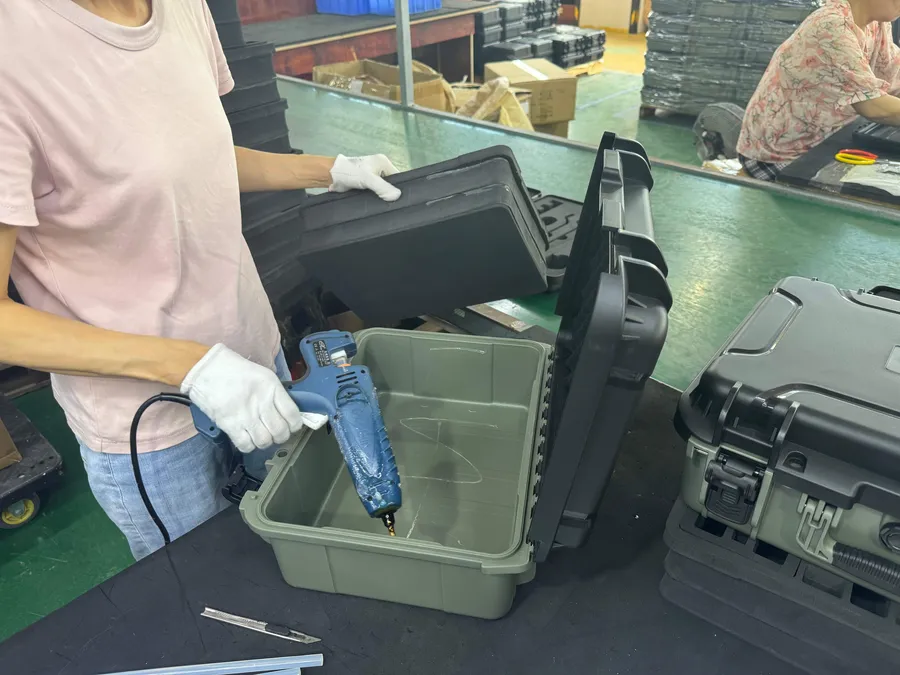
Minimums are layered: one piece on a standard model, one piece for a custom foam layout, 300 units for logo or colour, 3,000 for a new mould. Payment is a 30 percent deposit with balance before shipment, terms are EXW or FOB, and lead times are 45 days on an existing mould and about 125 days on new tooling. KeXin New Materials (Guangdong) Co., Ltd. manufactures these cases in-house, so interior changes and shell configuration stay under one quotation and one point of contact.
Before requesting a price, send the device envelope with clearance, the packed-kit photograph or sample, the sealing and hardware options you want, and the annual quantity. That is enough for a firm quotation and, where the programme requires it, a commissioned test plan on the exact model and configuration.
Two buyer searches, answered row by row from the published data
These two searches land on the same question this page already answers - a device gets a case built around it, not a generic box - but each one asks for a different kind of proof, so they are answered separately below. Every figure is either a value published for the named model in our specification table, or a count taken from that same table across the medical category, or an explicit statement that the property was never measured. Nothing here is a generalisation from one model to the range, and nothing is a regulatory or laboratory claim.
| Search | What We Publish |
|---|---|
| medical device protective case | A medical device protective case is configured, not designed from scratch: 71 models carry the medical-equipment-cases category in our published specification table, and all 155 catalogue models list medical among their application contexts. Within that 71-model category the published ranges are 20.2 to 139.5 litres of internal volume, wall thickness stated per model from 2.5 mm to 6.0 mm (66 of the 71 publish a figure), empty weight from 1,360 g to 15,320 g (36 publish a figure), 64 models recording a compressible gasket in a continuous moulded channel and 7 recording none offered on the shell, 52 marked stackable and 19 published with wheels. Three real points on that ladder: KX-707 publishes a 465 x 310 x 140 mm interior, a 70 mm lid over a 70 mm base, a 2.5 mm wall on an engineering-polypropylene shell, 1,360 g empty and 20.2 L internal against 17.4 L usable, eight pieces per 735 x 480 x 595 mm carton, with no gasket offered on that shell. KX-4616 publishes 455 x 338 x 148 mm internal, a 74 mm lid over a 74 mm base, a 3.0 mm wall, 1,395 g empty, 22.8 L internal and 19.6 L usable, a gasketed rim and a narrowed internal width of 302 mm - the number to design a tray against. KX-64619 publishes 430 x 288 x 166 mm internal on a 4.7 mm ABS wall, 2,840 g empty, 20.6 L internal and 16.5 L usable, six pieces per 740 x 485 x 615 mm carton. The pockets are cut to the device and its accessories as Pick & Pluck, die-cut or CNC-cut foam in EVA, PE or EPE from a drawing, a photograph of the packed kit or the unit itself, and custom foam starts from 1 set. |
| medical device case manufacturer | We are the manufacturer: the shells are injection moulded in our own plant from polypropylene, engineering polypropylene or ABS, and the medical category splits 42 PP, 20 engineering PP, 8 ABS and 1 PP/ABS shell. Every one of the 71 medical-category models records OEM, ODM, private label, custom colour, custom logo, custom hardware, custom packaging and custom foam as available, on the same published floors: 1 piece for a standard model or a custom foam layout, 300 units for a colour or a logo, and a genuinely new shell size from 3,000 pieces per component at about 125 days, against about 45 days for a first OEM sample on a mould already in service. Terms are wholesale and OEM only, EXW or FOB from Guangdong, China, with a 30 per cent deposit and the balance after inspection; there is no retail channel, no DDP quotation and no overseas warehouse, and third-party inspection of finished goods or an audit of the factory is welcome. For wheeled fleets KX-85835 publishes 500 x 400 x 305 mm internal, a 260 mm lid over a 45 mm base, a 5.0 mm wall, 8,520 g empty, 61.0 L internal and 48.8 L usable on wheels with a 295 mm telescopic handle; KX-88442 is the largest medical-category envelope at 740 x 518 x 364 mm internal, 139.5 L internal and 111.6 L usable, 15,320 g empty, wheels and a 295 mm handle. Both are marked non-stackable in the published table, as are all 19 wheeled models in the medical category. |
What the manufacturer question actually has to answer
Buying from a manufacturer rather than a reseller changes three things in a quotation. First, the interior and the shell are priced under one article number and one datasheet, so a foam revision between orders does not need a new supplier conversation - the foam shop works from the same model record. Second, the physical limits are published per model instead of asserted: wall thickness is stated for 148 of the 155 catalogue models between 2.0 mm and 6.0 mm, and 11 models publish a telescopic handle height; inside the medical category the published handle heights are 240, 295, 310, 385 and 485 mm, so a two-handed carry and a one-hand roll can be told apart from the datasheet rather than from a photograph.
Third, tooling is a real option with a real threshold rather than a promise. 36 of the 155 models taper internally by more than 5 mm between the nominal width and the narrow internal width, which is the figure that decides whether a moulded tray, a reagent rack or a device cradle actually clears the shell at its tightest point. Where no stock envelope works, the new-mould route is quoted at 3,000 pieces per component and about 125 days to first samples; where one is 15 mm too roomy, we say so and price the foam instead.
Where the interior, not the shell, does the work
The sizing rule used across this catalogue is at least 20 mm of clearance on each axis, measured on the device in its transport configuration with cables coiled, probes stowed and any holster fitted, so the foam absorbs movement rather than the shell wall. Foam is specified by zone: a closed-cell PE or EVA nest where the device sits, a softer contact layer where surfaces are finished, and a firm carrier layer that keeps the load off the rim. Each layer is a line item that can change without touching the mould, which is what keeps a mid-programme layout revision cheap, and 19 of the 71 medical-category models publish an export carton size for planning a mixed shipment.
What we do not state on this page
Across all 71 medical-category models the specification table records waterproof, dust resistance, UV resistance, temperature range, stack load, load capacity and protection rating as not measured, so neither row above carries an ingress code, a drop height, a temperature limit or a stacking figure. Impact is described only as the wall thickness published for that model - 2.5 mm on KX-707, 4.7 mm on KX-64619, 5.0 mm on KX-85835 - with no drop height claimed, and shock performance is a property of the specified foam layout rather than of the shell. Sealing is stated as hardware: a gasketed rim with latch count set for even compression, nothing more. The single protection line recorded as measured for every one of the 71 is material chemistry - a thermoplastic shell with no ferrous corrosion path.
Pallet quantity is published as calculated from the carton footprint against your pallet size rather than as a tested value, and we make no statement here about biological safety, cleanroom suitability, sterilisation compatibility or any device registration: the case is a transport article, and the medical device inside it remains the registrant's responsibility. Where a programme specification needs a tested statement, accredited third-party testing against the exact model and configuration can be commissioned as a separate work package; we do not claim a result we have not measured.
Customisation
Everything described above is configurable on a standard shell: interior layout (pick-and-pluck, die-cut or CNC-cut), foam grade and thickness, colour, logo method, latch and lock count, pressure-equalisation valve, cable ports, document holder and identification plate. A bespoke exterior geometry requires a new mould — 125 days, from 3,000 units per moulded component.
Procurement considerations
| Question | What to send us |
|---|---|
| Which shell fits? | Equipment L × W × H as packed, plus required clearance per axis |
| What does it cost? | Order quantity and estimated annual quantity — the two drive different answers |
| Is tooling needed? | Whether an existing shell clears the envelope with usable foam depth |
| Lead time? | Your required delivery date, not just the order date |
| Certification? | The exact standard your tender names — we will say whether we can test to it |
| Freight? | Destination and preferred terms; carton and pallet data supplied with the quotation |
Comparison and selection guide
The tables on this page exist because a protective case is chosen by comparing three things: the envelope, the environment and the handling chain. Where no table applies, the rule below is.
| Situation | What To Do |
|---|---|
| Clinical environment | Closed-cell foam or a wipeable tray; no open-cell pluck foam. |
| Emergency use | Latches that open with one hand and a lid that stays up unaided. |
| High-value device | Deeper base foam, a separate transducer zone, and a documented drop test if required. |
- Size on internal dimensions plus clearance, never on a product name.
- Choose the carrying method before the shell: it changes the series, not just the price.
- Specify the interior last, and decide up front whether the end user will reconfigure it.
Can medical equipment cases be customized for different devices? relates to Military Case Guide. Related families: Medical Equipment Cases / Instrument & Equipment Cases / Custom Protective Cases / Military Equipment Cases / Rolling Cases. Related sectors: field and industrial equipment. Continue in the Military Case Guide cluster.
This page is written from our own production data. If your requirement differs, send the dimensions and we will tell you which of the 155 models fits, or whether a custom route is needed.