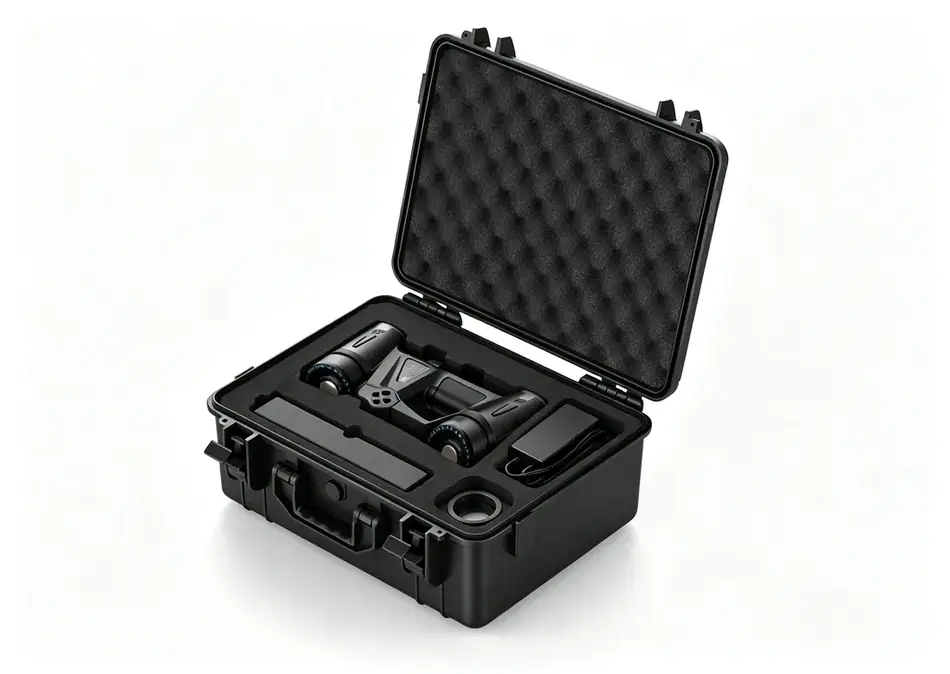
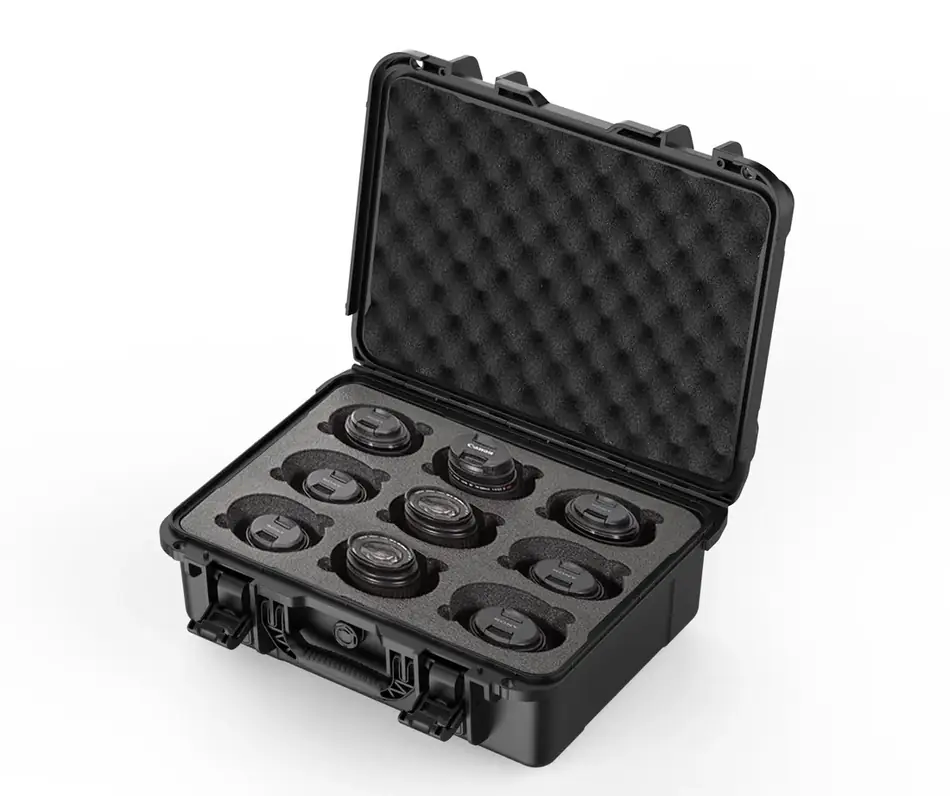
How should optical equipment dimensions be measured before ordering a case?
Measure the optical kit exactly as it will travel: the body with its lens or sunshade mounted, caps and batteries fitted, and any handle or cable included, then record the largest length, width, and height across the whole assembly, not just the main barrel. Compare that against the published internal dimensions of the case, and leave room on all six faces for foam. Do not compute internal size by subtracting twice the wall thickness from the external number, because our internal dimensions are measured on the assembled shell and include moulded corners, latch bosses, and the lid-to-base depth split. Send us a drawing, a photograph of the packed kit, or a sample, and we will confirm the fit against the real object.
Key points
- Measure the kit as configured, with lens, caps, battery and cables on, because the longest rigid point sets the size.
- Record the largest cross-section on every axis, not the body diameter, since a sunshade or mount overhangs the barrel.
- Compare against published internal dimensions, which are measured on the assembled shell and are not external minus wall.
- Leave foam clearance on all six faces and check the lid-to-base depth split before assuming the kit fits.
- Volume in litres does not decide fit; the box whose internal long axis matches your longest dimension does.
- Send a drawing, packed photo, or sample so we verify the fit against the real object before production.
Measure the kit as it will actually travel
The single most common ordering mistake is measuring the instrument bare and then discovering that a mounted lens, a petal sunshade, a quick-release plate, or a coiled cable turns a comfortable fit into a lid that will not close. Optical gear rarely travels as a naked body. Before you note any number, assemble the kit the way it will be packed: objective and eyepiece caps on, lens or sight mounted, batteries and their contacts in place, sunshade or hood attached, hand strap and leads coiled where they will sit. Then measure that whole assembly. If you own several configurations, measure the largest one and design the insert around it, because a case sized to the barest setup rejects the real field load on day one.
Use a rigid scale or calipers for small optics and a tape for the outer envelope of a full kit, and measure each axis twice. Optical barrels and housings are seldom perfect rectangles, so the number that matters is the maximum extent you can reach in that direction, not the typical one.
Which dimension actually governs the fit
For optical equipment the governing dimension is usually the longest rigid span, and it is frequently set by an accessory rather than the main body. A compact scope body may be short, but with a mounted objective and a sunshade the overall length grows well past the housing. A wide objective bell, a filter ring, or a protruding focuser can set the width, and a raised eyepiece or a mounted accessory rail can set the height. Record length, width, and height as the maximum of the packed assembly on each axis and treat any protrusion as part of the footprint, because foam protects a shape, and that shape must include everything that sticks out.
It also helps to note which faces are fragile. A front lens wants to face into soft foam rather than toward the lid seam, and a calibration or datum surface should never rest on a hard edge. Those decisions change the packing orientation, and therefore which internal axis has to carry the extra clearance.
Reading published dimensions honestly
Our product pages list both external and internal dimensions for each model, and the internal figure is measured on the assembled shell, not derived from a formula. That distinction matters for optical buyers who try to reverse-engineer the interior. Take the deep-body 9 Series KX-4318: its external size is 432 by 240 by 186 mm and its internal size is 407 by 187 by 178 mm. The width loses 53 mm even though the wall is only 3.0 mm, because moulded corner radius, latch bosses, and the lid-to-base parting consume the difference. Subtracting twice the wall thickness would have predicted roughly 234 mm of interior, which is wrong by almost five centimetres and would have promised a fit for an optic that does not exist. Always design from the published internal number for the exact model, never from the external number minus wall.
Reserve foam clearance on all six faces
A case protects an instrument through its insert, so the interior a kit needs is larger than the kit itself. Leave a working allowance of foam around the item on the base, the lid, and all four sides, and check it against the lid-to-base depth split, which tells you how that allowance is divided. Our flat 0 Series KX-4010 splits its depth 44 mm lid and 44 mm base, while the deep KX-4318 puts 38 mm in the lid and 140 mm in the base, so a tall lens stood base-down fits a deep body but overflows a flat tray. For delicate optics we use a firmer structural layer under the mass and a soft face layer against surfaces and coatings, with isolated pockets so two rigid items never touch. The clearance is not a test standard and we do not state a drop figure for it; it is the physical room the chosen foam needs to do its job for the item mass you pack.
Published internal dimensions to size against
| Model | Series | External Mm | Internal Mm | Lid / Base Depth Mm | Internal Volume L |
|---|---|---|---|---|---|
| KX-4010 | 0 | 400x360x100 | 390x315x88 | 44 / 44 | 10.8 |
| KX-4318 | 9 | 432x240x186 | 407x187x178 | 38 / 140 | 13.5 |
| KX-4613 | 0 | 460x367x126 | 455x338x116 | 74 / 42 | 17.8 |
| KX-5021 | 9 | 495x374x206 | 465x315x196 | 134 / 62 | 28.7 |
| KX-6621 | 9 | 662x495x210 | 587x434x192 | 43 / 149 | 48.9 |
Matching a deep body to a tall kit
Optical kits fall into two shapes and they want different boxes. A long, thin assembly such as a spotting scope with its lens, or a rail-mounted sight, suits a case whose internal length carries the whole span with room for the sunshade, like the KX-4613 at 455 mm internal length. A tall, single item such as a monocular with a rubber armour, or a small instrument with an upright display, suits a deep body whose base foam can take the height, like the KX-4318 with 140 mm of base depth or the KX-5021 with 62 mm of base plus a 134 mm lid. Volume alone will not tell you which: a 17.8 litre flat case and a 13.5 litre deep case protect very different geometries. Match the box on the axis where your kit is biggest.
Verifying the fit before you order
Once you have the packed dimensions, a candidate model, and the foam allowance, check the fit as a set of statements rather than a hope: the longest packed span is shorter than the matching internal dimension after clearance; the tallest point sits inside the base-plus-lid depth split without pressing the lid; no fragile face rests on a hard edge or against the parting line; and any second rigid item has its own pocket. Where we supply a custom insert we ask for a drawing, a photograph of the packed kit, or a physical sample, because the constraint has to match the real object. This review costs minutes and removes the class of error that no amount of later foam can fix, which is a case that is simply the wrong shape.
Selection guidance
Start from the packed envelope, not the catalogue. Note the maximum length, width, and height of the assembled kit, add the foam allowance on each face, then filter models whose published internal dimensions clear those numbers on the same axes. Prefer a body that leaves the fragile front lens facing into soft foam and keeps mass low and centred. If no existing model clears the numbers, that is an insert or moulding conversation, not a compromise, and it is cheaper to raise it now than after a batch ships. Where two models both fit, choose the one whose lid-to-base split matches your tallest feature, and the stiffer wall only if the case will be stacked or carried with heavy gear on top.
Typical applications
This measurement discipline covers the optical work we ship most: field and survey optics, monoculars and binoculars, spotting and rifle scopes with mounted accessories, camera and lens sets, and bench or handheld measurement instruments with a delicate front element. In every case the same rule applies: the packing is designed from the as-configured envelope and the published internal size of one named model, so an alignment-critical unit and its lenses arrive without a coating touched or a collimation shifted. Buyers who give us the item, its packed dimensions, and how it travels get an insert sized to that, not a generic tray.
Customisation and OEM
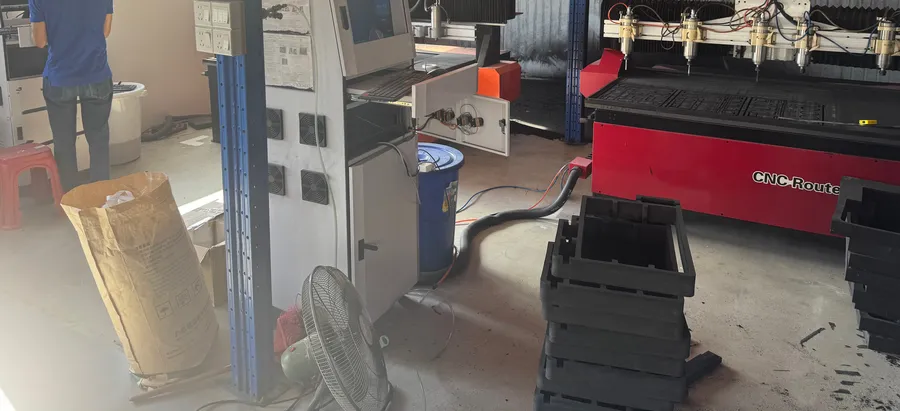
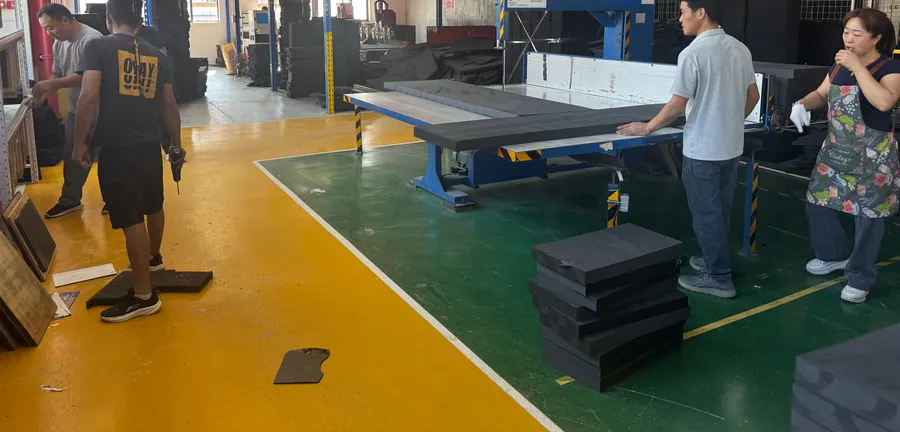
We sell wholesale and OEM only, EXW or FOB, with no retail, no DDP, and no overseas warehousing. For optical kits we cut inserts as pick-and-pluck, die-cut, or CNC-cut, in layered, egg-crate, or custom-shape foam, with a soft face against finishes and isolated pockets per lens or sub-assembly. Custom colour, logo, and packaging are available at OEM volumes; first samples on an existing mould run about 45 days and a new mould about 125 days, both on a 30 per cent deposit. Send the packed dimensions or a sample and we will pick the shell and the insert together and flag where accredited testing should be quoted if your program requires numbers.
Procurement notes
Before you raise a purchase order, capture the as-configured envelope, the fragile faces, and the lid-to-base depth you need, and write them into the enquiry. Ask us to confirm the published internal dimensions and per-model wall thickness for the specific model, rather than assuming one model's figures generalise across the line. If your specification names a standard or a drop test, say so early so the configuration can be quoted against accredited testing; otherwise rely on the measured values we publish for the exact model and packing you order. A short written fit and a packing drawing settle the whole question before the first batch is cut, and they keep optical equipment from becoming an expensive lesson in the difference between a case and a well-sized one.
Customisation
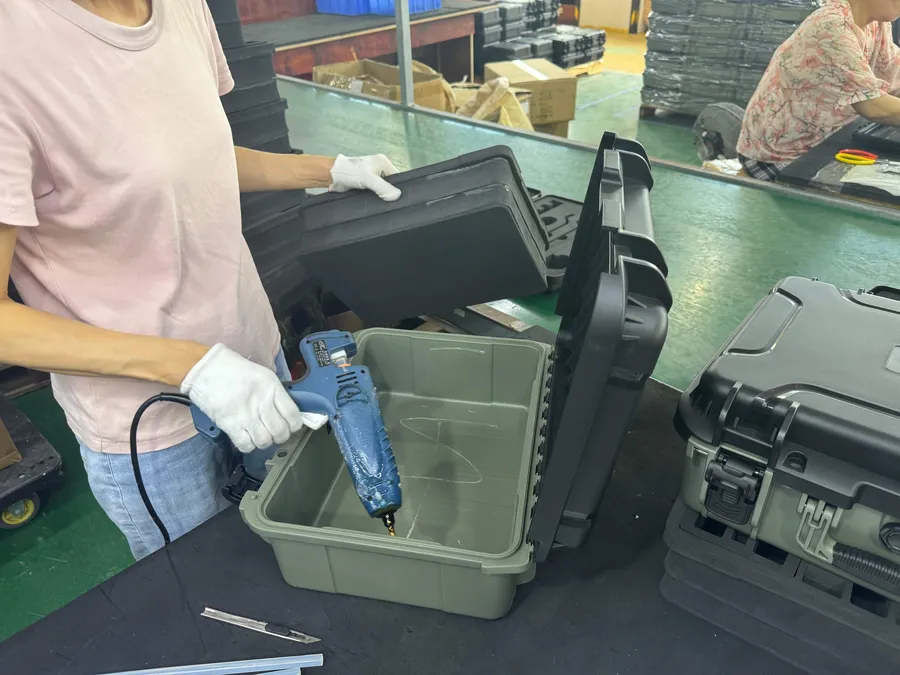
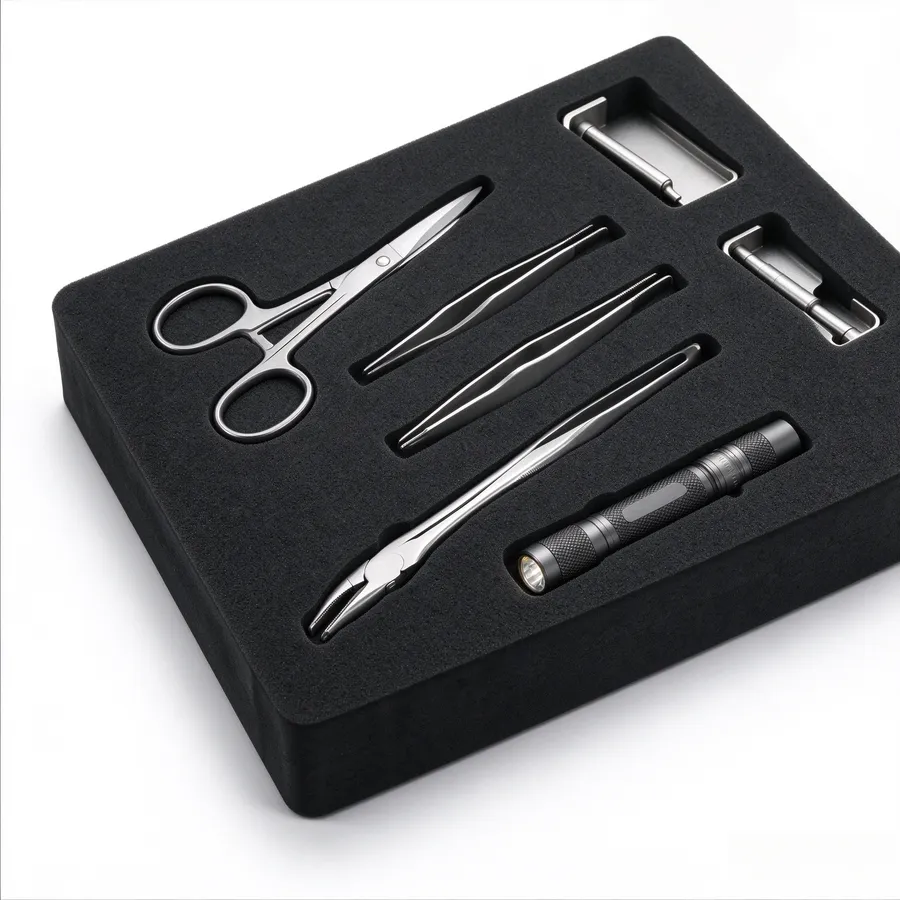
Everything described above is configurable on a standard shell: interior layout (pick-and-pluck, die-cut or CNC-cut), foam grade and thickness, colour, logo method, latch and lock count, pressure-equalisation valve, cable ports, document holder and identification plate. A bespoke exterior geometry requires a new mould — 125 days, from 3,000 units per moulded component.
Procurement considerations
| Question | What to send us |
|---|---|
| Which shell fits? | Equipment L × W × H as packed, plus required clearance per axis |
| What does it cost? | Order quantity and estimated annual quantity — the two drive different answers |
| Is tooling needed? | Whether an existing shell clears the envelope with usable foam depth |
| Lead time? | Your required delivery date, not just the order date |
| Certification? | The exact standard your tender names — we will say whether we can test to it |
| Freight? | Destination and preferred terms; carton and pallet data supplied with the quotation |
Comparison and selection guide
The tables on this page exist because a protective case is chosen by comparing three things: the envelope, the environment and the handling chain. Where no table applies, the rule below is.
| Situation | What To Do |
|---|---|
| Bare optic | Suspended body, both ends clear, soft contact layer. |
| Mounted system | Carrier under the mount, optic unloaded, tripod in a separate channel. |
| Night operations | Silent foam surface and a layout that can be opened without looking. |
- Size on internal dimensions plus clearance, never on a product name.
- Choose the carrying method before the shell: it changes the series, not just the price.
- Specify the interior last, and decide up front whether the end user will reconfigure it.
How should optical equipment dimensions be measured before ordering a case? relates to Military Case Guide. Related families: Optical Equipment Cases / Camera & Photography Cases / Instrument & Equipment Cases. Related sectors: field and industrial equipment. Continue in the Military Case Guide cluster.
This page is written from our own production data. If your requirement differs, send the dimensions and we will tell you which of the 155 models fits, or whether a custom route is needed.