How should antennas and accessories be stored?
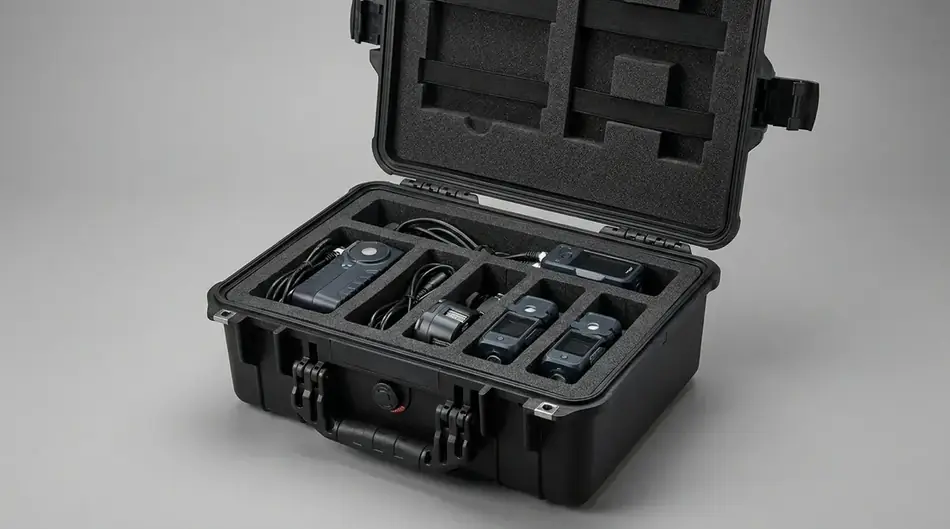
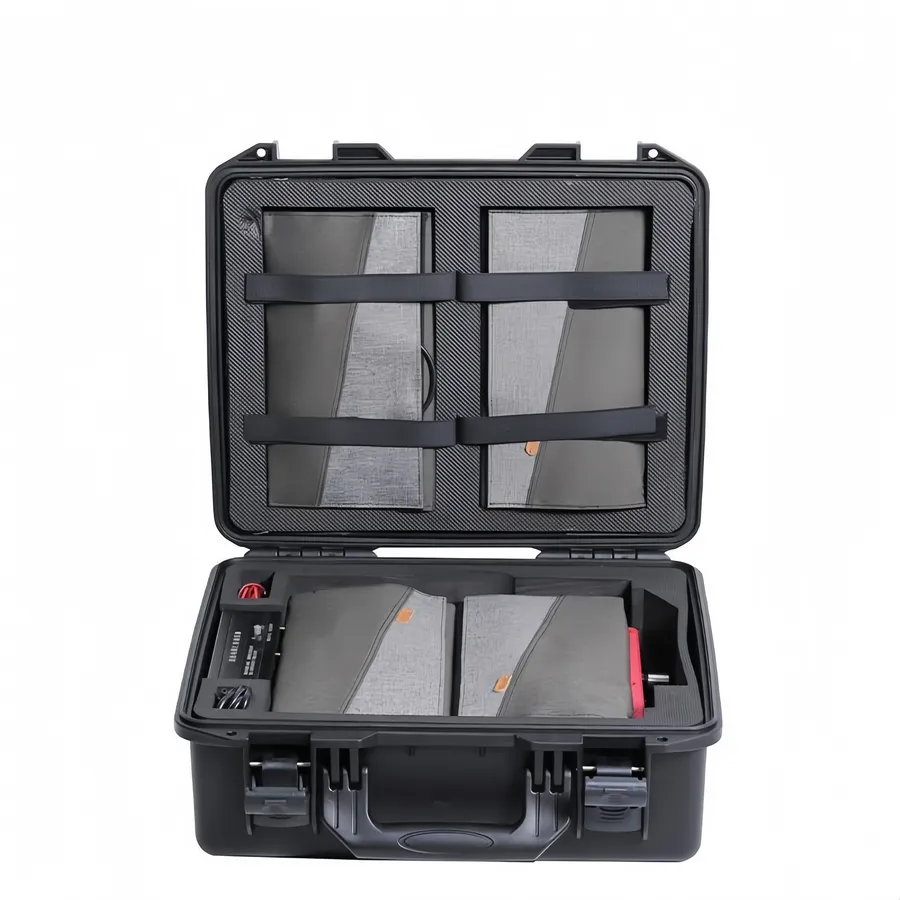
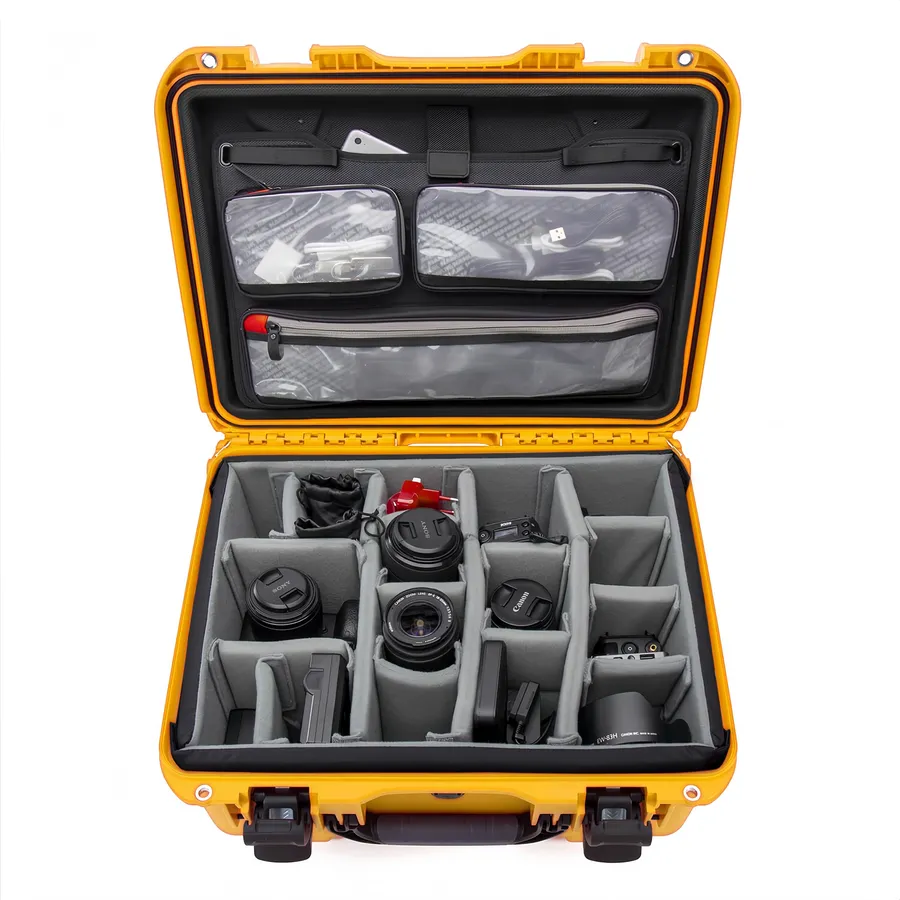
Antennas and their accessories should be stored so nothing bends a radiating element, nothing crushes a connector thread, and nothing lets a cable or a ferrite travel against another part. The practical layout is a shaped foam interior: a channel or a shallow curved seat for each whip, telescopic or flexible antenna so it is supported along its length rather than pressed at a point; a dedicated pocket with relief for every connector base so threads and pins are unloaded; a routed coil path for coaxial cable sized so the bend radius is never too tight; and a separate tray or divider zone for mounts, masts, adapters and spare elements. Because antennas are long and thin and their connectors are the failure point, they reward a purpose-drawn interior far more than a generic box.
Key points
- Support a whip or telescopic antenna along its length so it is never point-loaded or bent past its limit.
- The connector is the failure point, so give every base a relieved pocket that unloads the threads and pins.
- Route coax into a sized coil path so the bend radius is never tight enough to kink or change its impedance.
- Keep mounts, adapters, masts and ferrites in a separate zone so hardware cannot abrade an element.
- Size the case from its published internal dimensions, then draw the foam to it before ordering.
- A drawing-controlled layout makes a comms antenna kit repack the same way every time.
Why antennas are a special storage problem
An antenna is mostly exposed structure: a long thin element, a threaded base, sometimes a flexible or telescoping section, and a matching connector. Each of those fails in a way that ordinary boxy equipment does not. A whip bent in transit can change its electrical performance permanently; a telescopic element crushed at a joint stops sliding; a connector base with a bruised thread or a bent pin degrades the match and can be ruined by the next mating. That is why antennas stored loose in an empty case fail, and why a shaped interior that supports the element and unloads the connector is the correct answer.
Whips, telescoping and flexible elements
The element should be supported along its length, not at a single point. A shallow curved channel or a straight groove in a firmer closed-cell foam holds a whip or a telescopic antenna so it cannot be bent across a hard edge. Where the antenna has a collapsed and an extended position, the layout fixes it in the position it will travel in, so the joints are under no load. For flexible or coiled elements, a pocket that holds the coil without compressing it keeps the conductor from taking a set. Telescopic sections are best stored collapsed and seated so nothing rests on the thin top stages.
Protecting the connector base
The connector base is where almost all antenna damage matters. Give each base its own pocket with clearance below it so the threads, the centre pin and the mating face bear nothing when the lid closes and cannot be knocked by a neighbouring item. Where several antennas share a case, the bases should not face each other across a shared wall of foam, because a shift can drive one connector into another. This is a case where a CNC-cut layout drawn from a real sample beats generic pluck foam, because the relief is placed exactly under the feature that must be protected.
Coax, pigtails and ferrites
Cable is stored by controlling its bend. A routed coil path sized to the assembly keeps coaxial cable and pigtails from being kinked, and holding the bend radius generous protects both the conductor and the impedance of the line. Ferrite chokes and inline components are small, hard and able to abrade an element, so they go in their own pockets or a divider tray away from the antenna shafts and connector faces. Ends and connectors lie in a channel so their plugs cannot travel into another part.
Mounts, masts, adapters and spares
| Item | Storage Seat | Protection |
|---|---|---|
| Flexible whip | Long shallow channel along the foam | Point-loading prevented |
| Telescopic antenna | Collapsed in a fixed groove, joints unloaded | Prevents bent stages |
| Panel or patch antenna | Flat pocket with relieved edges | Face protected from pressure |
| Coaxial cable or pigtail | Sized coil path with connector channel | Bend radius preserved |
| Mounts, masts, adapters | Divider tray zone, away from elements | No abrasion of connectors |
Sizing the case to the kit
Because antennas are long, the case is usually chosen for length before volume. Lay out the longest element and the assembled radio first, then pick the SKU whose published internal dimensions clear them with room for the foam. A field radio set with its handset, a whip and a cable roll fits a gasketed mid-size shell such as KX-85025 at an internal 463 x 338 x 231 mm; a larger set of antennas, masts and spares fits KX-6621 at 587 x 434 x 192 mm. Confirm the usable interior after foam so a long element is not left short of a channel it needs.
Keeping the kit repackable and traceable
A comms antenna kit has many near-identical parts, so the layout doubles as a checklist. Shaped pockets show a missing whip or adapter at a glance, and a lid document holder can carry the frequency or configuration sheet that belongs with the set. A drawing-controlled die-cut or CNC-cut layout means a restocked case matches the original, and a colour-coded zone can separate bands or roles when several antennas live in one box. This is what keeps a shared radio kit organised across multiple operators rather than depending on whoever packed it last.
Procurement notes
Send the antenna types, the radio, the cable set and the case SKU so the interior is drawn to the real parts and their relief needs. Specify the foam structure by how the kit is repacked, and ask for the usable interior after foam against the datasheet's published internal dimensions. Custom foam, colour, logo and buyer packaging run on existing moulds at the standard OEM bands, with a first sample in about 45 days and a new mould only for a bespoke internal geometry. Orders are wholesale and OEM on EXW or FOB terms with a 30 percent deposit; there is no retail, DDP or overseas-warehouse arrangement. Where a protection value is marked not measured, treat it as unknown rather than assumed.
Customisation
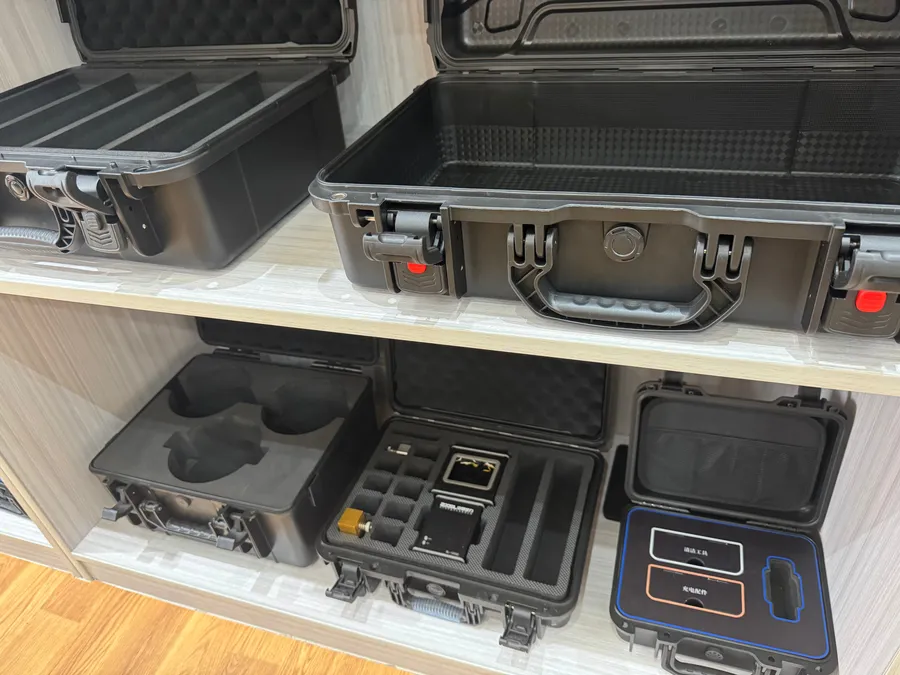
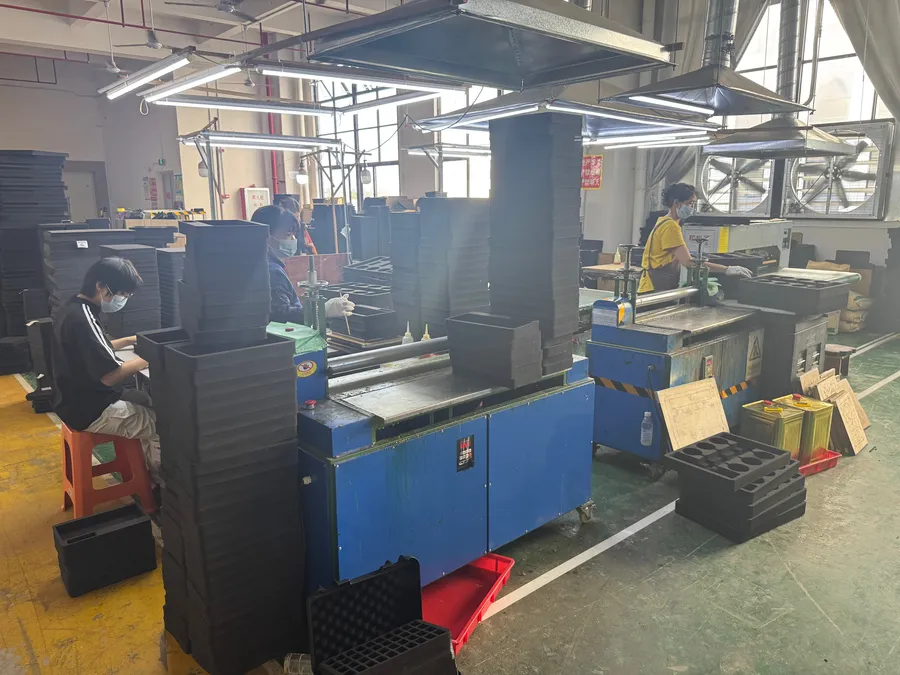
Everything described above is configurable on a standard shell: interior layout (pick-and-pluck, die-cut or CNC-cut), foam grade and thickness, colour, logo method, latch and lock count, pressure-equalisation valve, cable ports, document holder and identification plate. A bespoke exterior geometry requires a new mould — 125 days, from 3,000 units per moulded component.
Procurement considerations
| Question | What to send us |
|---|---|
| Which shell fits? | Equipment L × W × H as packed, plus required clearance per axis |
| What does it cost? | Order quantity and estimated annual quantity — the two drive different answers |
| Is tooling needed? | Whether an existing shell clears the envelope with usable foam depth |
| Lead time? | Your required delivery date, not just the order date |
| Certification? | The exact standard your tender names — we will say whether we can test to it |
| Freight? | Destination and preferred terms; carton and pallet data supplied with the quotation |
Comparison and selection guide
The tables on this page exist because a protective case is chosen by comparing three things: the envelope, the environment and the handling chain. Where no table applies, the rule below is.
| Situation | What To Do |
|---|---|
| Battery isolation | Separate pockets, terminals up, with a physical barrier between cells and connectors. |
| Cable management | Dedicated coiled-cable channels rather than a shared compartment. |
| Field repair | Reserve a small loose compartment for spare fuses, connectors and seals. |
- Size on internal dimensions plus clearance, never on a product name.
- Choose the carrying method before the shell: it changes the series, not just the price.
- Specify the interior last, and decide up front whether the end user will reconfigure it.
How should antennas and accessories be stored? relates to Military Case Guide. Related families: Communication Equipment Cases / Defense Equipment Cases / Military Protective Cases / Field Equipment Cases. Related sectors: field and industrial equipment. Continue in the Military Case Guide cluster.
This page is written from our own production data. If your requirement differs, send the dimensions and we will tell you which of the 155 models fits, or whether a custom route is needed.