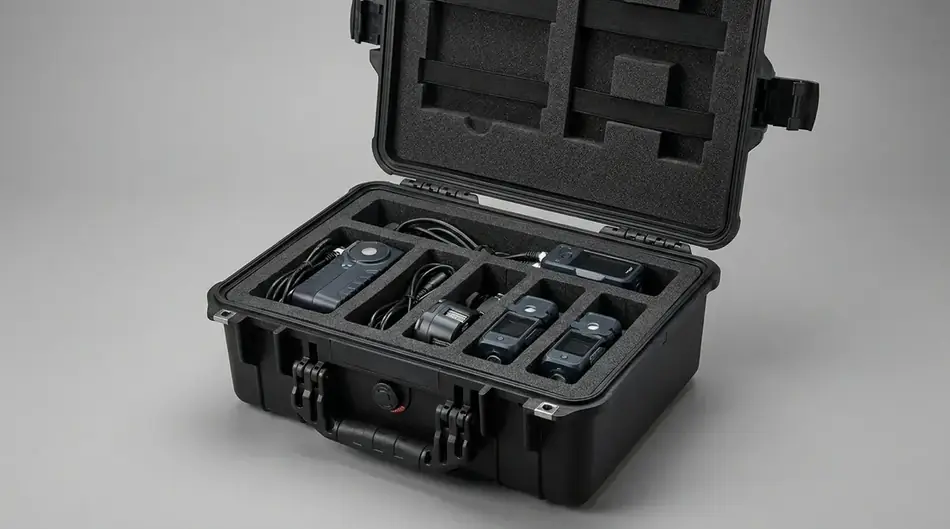
Protective Cases for Emergency Response & Public-Safety Gear for Army Field Use
For army field emergency response and public-safety gear, pick the case from the packed outside dimensions of each item plus a working margin, not from a catalogue name: a gasketed polypropylene or ABS transit case from the military-protective line, cut-foamed to the specific radios, trauma kits and hand tools, is the default, and every internal figure, wall thickness and seal option is published per model rather than assumed across the whole range.
Key points
- Start from each packed item plus about 10 mm clearance, then match internal length, width and height before touching a shell.
- Seal, gasket and wall thickness are listed per model; ask for that model's figure rather than a claim applied to the whole range.
- Anti-static behaviour lives in the liner, not the shell - name the target and request the liner material's own test data.
- A case cannot make hazardous-area equipment safe: explosion protection belongs to the device and its certifying body, not the moulding.
- Pre-cut layered foam beats loose pluck foam for kit turned out repeatedly, since the layout stays correct and gaps show instantly.
- KeXin is wholesale and OEM/ODM only, EXW or FOB, with about 45-day first articles and new moulds near 125 days.
Size the case from the packed envelope, not the catalogue name
Begin with the outside of each packed item - the radio with its antenna seated, the trauma kit with its pouch compressed, the hand tools in their tray - then add a working margin of roughly ten millimetres on length and width before you open the catalogue. Internal length, internal width and internal height are published per model on KeXin product pages, so the match is arithmetic rather than guesswork; lid depth and base depth are listed where measured and left blank where they are not, and a blank figure means we have not measured it, not that the case is unsuitable.
Army field emergency rescue equipment box: what actually has to fit
A first-response box carries soft, irregular volume - compress bandages, a tourniquet, an airway, boxes of gloves and a few rigid instruments - so internal height and lid depth matter as much as footprint. The gasketed polypropylene KX-4010 gives a published 390 by 315 by 88 millimetre internal cavity at about 1.015 kilograms, and the taller KX-4312 gives 420 by 260 by 104 millimetres at 1.17 kilograms, both with a listed seal option. Those are interior figures to compare against your packed kit, not a protection claim to be read into them.
Military comms terminal protective hard case
Handheld radios, a manpack terminal, coiled cables and a charging cradle make a heavy, point-loaded set that needs cut foam beneath each handset and clearance over any standing antenna. The gasketed KX-4613 lists 455 by 338 by 116 millimetres internal with a 74 millimetre lid over a 42 millimetre base, and the deeper KX-4616 lists 455 by 338 by 148 millimetres, so a terminal with its cabling can sit flat instead of forcing the lid closed. Foam is cut to the devices you nominate rather than lifted from a generic template.
Anti-static military electronics protective case: the honest version
Static control is a property of the interior liner, not the outer shell, and anti-static, static-dissipative and conductive each describe a different surface-resistivity band measured on the liner material itself. We will tell you which liner we intend to use and can request that material's own test data, but we do not print a static figure for a finished case we have not measured. If your brief specifies a resistivity range, send the range and we will quote the closest verified liner for that configuration instead of implying a grade the case does not carry.
Army field exercise dustproof reinforced plastic box
For exercise kit the practical enemy is blowing dust and grit at the seal and latch line, not immersion. Ribbed polypropylene shells in the protective range carry a gasket and latch compression - the KX-4610 lists a 3.0 millimetre wall and a 455 by 338 by 84 millimetre internal cavity with a seal option - and that construction resists dust in normal field handling. Any stronger statement about how much dust or water a box keeps out is a test result tied to one method, so we publish the construction that exists and leave the level to be measured for the exact model.
Army specialised foam-cut shockproof box
Shock protection in a moulded plastics case is engineered in the foam, not asserted by the shell. A specialised box for a squad's mixed load uses layered plank - a firmer base under mass and a softer face against instrument bodies - cut so each item is held on its own axis. The engineering-polypropylene KX-5321 offers a large 481 by 373 by 192 millimetre internal volume on a 5.8 millimetre wall, which suits a full team load, while smaller sealed boxes take the same layered approach with less dead air to shift in transit.
Heavy Duty Military Plastic Case: The Specification and Certification Question
Buyers often arrive with a defence specification or a third-party certificate named in the tender, and the right answer is a document rather than a slogan. Ask any supplier for the specification number, the accredited issuing body and the exact model that document covers; a level claimed without those three items is only a marketing word. KeXin states plainly, per model, whether such paperwork exists, and where it does not we quote the tested configuration through an independent laboratory before you commit, so the claim on the purchase order is one the factory and the lab both stand behind.
Military diving equipment waterproof hard case
Wet gear - a mask, fins, a buoyancy compensator, torches - is damp, salty and heavy, and the honest design response is drainage plus a corrosion-tolerant latch set, with a gasket to keep splash and grit out between dives. A gasket and a claim of waterproof performance under submersion are not the same thing, because the second is a measured result. The ABS KX-64114 lists 378 by 307 by 120 millimetres internal with a seal option as a starting footprint, but no depth or immersion figure is attached unless that model is put through a documented test.
Double-Sealed Tactical Portable Safety Case
A double seal should mean two independent sealing surfaces working at once - a primary gasket compressed by the lid and a second lip or latch zone sharing the load - not simply more latches. Which models carry a genuine second surface is a per-model construction detail, and the KX-4821, with a 447 by 312 by 194 millimetre internal cavity on a 4.5 millimetre engineering-polypropylene wall and a listed seal option, is the kind of format where the second compression line is worth confirming against the drawing before the word double is taken as met.
Explosion-Proof Tactical Equipment Safety Box: What a Factory Should Document
Explosion protection is a property of electrical equipment under a hazardous-area scheme - the device, its temperature class and its gas group - and a plastics case factory cannot confer it by making a box. We will not describe any KeXin case as explosion-proof, because that is not ours to claim. What we can do is size a case that mechanically protects a device that already carries its own approvals, keep those markings in the record, and tell you exactly which protection the case provides and which belongs to the instrument maker and the certifying body.
Outdoor military gear case versus a tactical case
The overlap is large but the choices differ: an outdoor military gear case leans on wall thickness, a UV-tolerant polymer and a footprint that survives being stacked with other kit, while a tactical case optimises carry, latch placement and quick access. The KX-4610 (11.1 litres usable) and the larger KX-5321 (27.5 litres usable) sit on either side of that line and both list a seal option. The real comparison is which trade-off your field use rewards, and our military versus industrial case guide sets out the difference without attaching a level claim.
Military-grade engineering protective latch briefcase
The phrase military-grade does a lot of work, so read it as a build brief: an engineered polymer shell, sprung latches, a carry handle and an interior cut for a specific load. For a comms accessory or a sensitive hand-held instrument, the ABS KX-62109 lists 195 by 128 by 81 millimetres internal at about 470 grams with a seal option, and the slimmer KX-62209 lists 200 by 98 by 78 millimetres, both in a briefcase format. Those are published interior and mass figures, deliberately not a grade or a rating.
High-Density PP Plastic Military Protective Latch Box
Polypropylene is chosen for a balance of stiffness, toughness at low temperature and chemical tolerance, and wall thickness is the figure that separates a light utility box from a heavy-duty one. The KX-3218 lists a 3.0 millimetre wall on a 308 by 230 by 172 millimetre internal cavity at about 900 grams with a seal option, while the engineering-polypropylene KX-5321 goes to 5.8 millimetres for a bigger, heavier load. If a buyer names a resin grade, we confirm the actual material and its datasheet for the model rather than assume one grade across the line.
Comparison table: emergency kit to the figure you should check
| Kit Type | Must Stay Clear | Figure To Check | Published Example |
|---|---|---|---|
| Radio / comms terminal | Handset cradle, antenna base, cable loom, charger | Internal height vs standing antenna, lid depth | KX-4613: 455 x 338 x 116 mm internal, 74/42 mm lid/base, 1.37 kg, seal option |
| Trauma / rescue kit | Compress packs, tourniquet, airway, glove boxes | Internal footprint and usable height for fast grab | KX-4010: 390 x 315 x 88 mm internal, 9.3 L usable, 1.015 kg |
| Sensitive electronics | Connector faces, lens, keypad | Liner static class and pocket depth | KX-62109: 195 x 128 x 81 mm internal, ABS, 1.7 L usable |
| Wet / diving gear | Mask, fins, torches, drainage path | Seal option and corrosion-tolerant hardware | KX-64114: 378 x 307 x 120 mm internal, 11.1 L usable |
| Squad mixed load | Hand tools and instruments together | Wall thickness and usable volume | KX-5321: 481 x 373 x 192 mm internal, 5.8 mm wall, 27.5 L |
Selection guidance: three checks before you commit
First, confirm the packed envelope of every item with its working margin against published internal dimensions, because a model that is a couple of millimetres short will not close cleanly on a loaded tray. Second, confirm the interior plan - pre-cut plank rather than loose pluck foam for anything turned out repeatedly in the field - and the number of latches relative to how the box is carried. Third, confirm what documentation the application genuinely needs and ask us for the specific figures for the specific model; where a level or a report is required we arrange it on that configuration rather than pointing at a datasheet that never made the claim.
Where these cases go in the field
Emergency-response and public-safety loads for army field use cluster into communications, medical and general kit, and the same shell moves between them once the interior is cut for the payload. That is why the product families overlap: a case listed for communication equipment, for medical equipment or for general military use may share a moulding with your rescue box and differ only in foam. Choosing by the device that must survive, then cutting the interior around it, beats choosing by a category label, which is exactly what our military case selection guide recommends.
Customising the interior and the shell
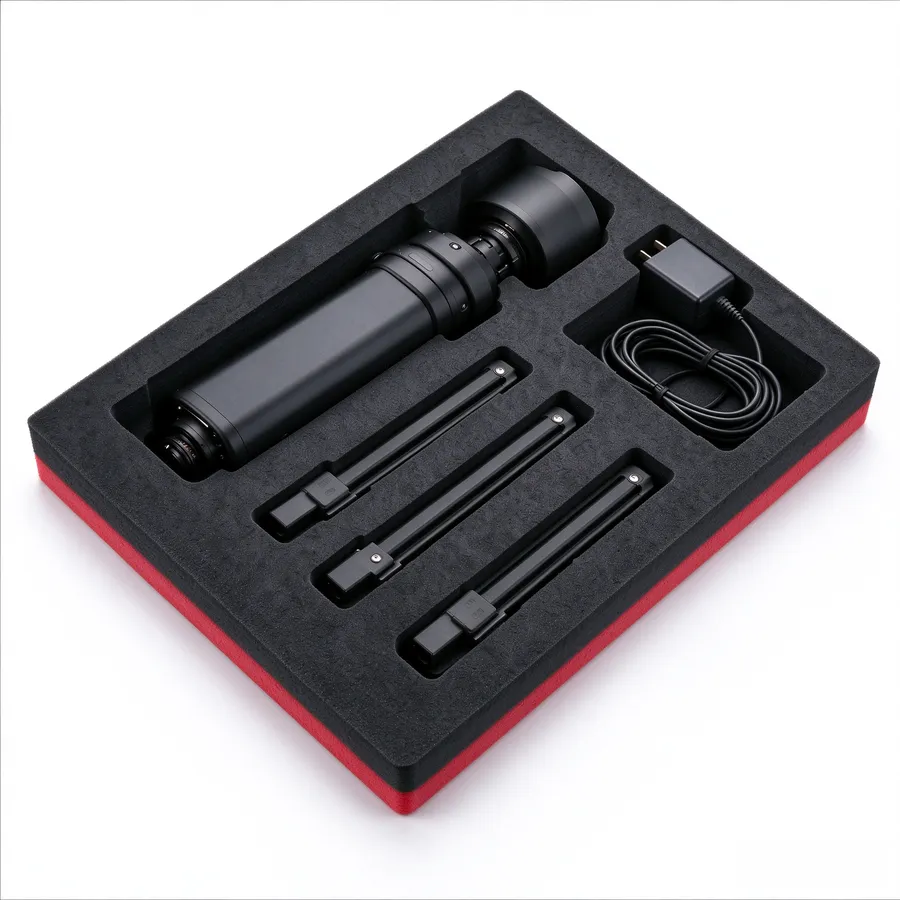
Interior customisation is normal for this category: layered cut foam, pockets for handsets and torches, a soft face against optics and a firmer base under mass, plus marking so a poorly lit turn-out still grabs the right tray. Shell changes - colour, a label window, extra latches or an added pocket - are OEM or ODM work and are quoted per project. Because the interior carries most of the protective behaviour, we will always ask what the equipment actually is before proposing a build.
Procurement notes: wholesale terms and verification
KeXin works with wholesale and OEM or ODM buyers on EXW or FOB terms only; we do not sell retail, do not quote delivered-duty-paid and keep no overseas warehouse. The standard MOQ on existing moulds is low, custom moulds start near three thousand pieces, a first OEM article on existing tooling is about forty-five days and a new mould about one hundred and twenty-five, with a thirty per cent deposit and the balance before shipment. Third-party inspection at our facility is welcome, and enquiries run through Fred Zhao or the KeXin Sales Team, with WhatsApp on +86 135 3588 0002.
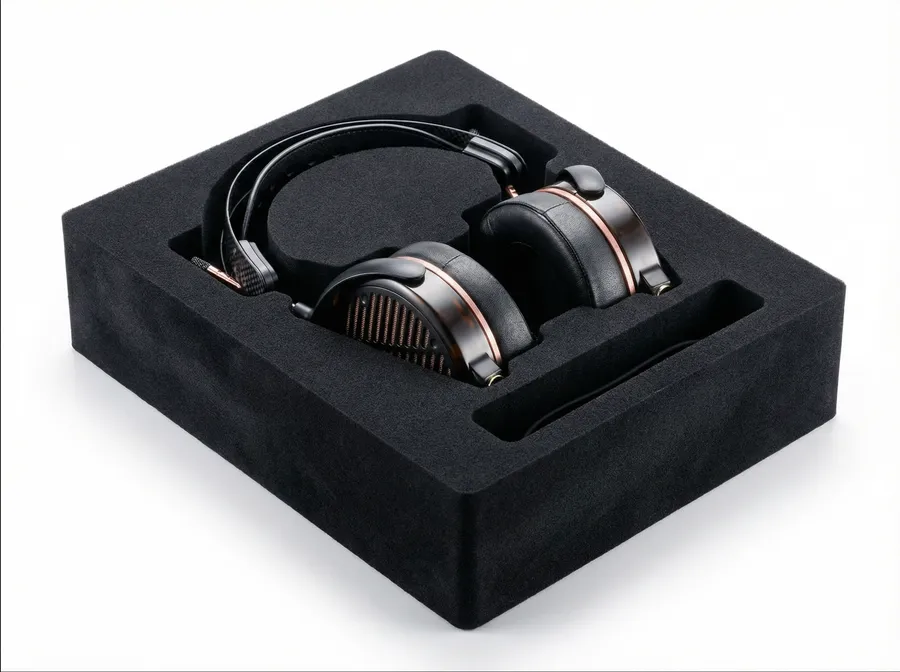
Customisation
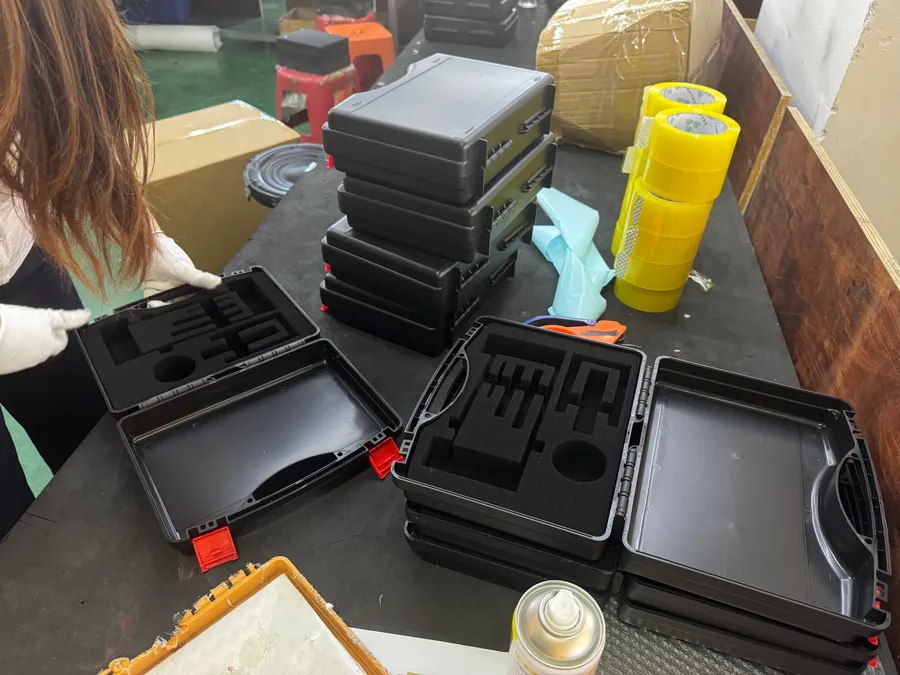
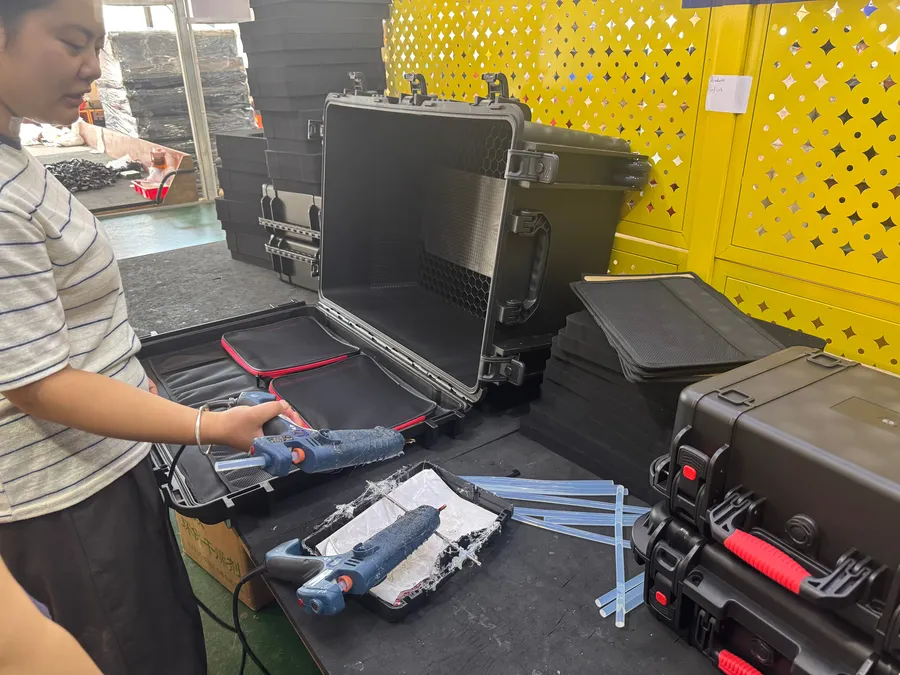
Everything described above is configurable on a standard shell: interior layout (pick-and-pluck, die-cut or CNC-cut), foam grade and thickness, colour, logo method, latch and lock count, pressure-equalisation valve, cable ports, document holder and identification plate. A bespoke exterior geometry requires a new mould — 125 days, from 3,000 units per moulded component.
Procurement considerations
| Question | What to send us |
|---|---|
| Which shell fits? | Equipment L × W × H as packed, plus required clearance per axis |
| What does it cost? | Order quantity and estimated annual quantity — the two drive different answers |
| Is tooling needed? | Whether an existing shell clears the envelope with usable foam depth |
| Lead time? | Your required delivery date, not just the order date |
| Certification? | The exact standard your tender names — we will say whether we can test to it |
| Freight? | Destination and preferred terms; carton and pallet data supplied with the quotation |
Comparison and selection guide
The tables on this page exist because a protective case is chosen by comparing three things: the envelope, the environment and the handling chain. Where no table applies, the rule below is.
| Situation | What To Do |
|---|---|
| Start from the equipment, not the case | Measure the tallest, widest and longest points of the packed equipment including antennas, handles and connectors. Add 20 mm minimum clearance per axis before selecting a shell. |
| Then choose the carrying method | Under 8 kg, a fixed handle is lighter and cheaper. Over 12 kg or any journey over 30 m, specify the T series with telescopic handle and wheels. |
| Then decide the interior | Pick-and-pluck for kits that change. Die-cut or CNC-cut for fixed layouts that must be auditable at a glance. |
- Size on internal dimensions plus clearance, never on a product name.
- Choose the carrying method before the shell: it changes the series, not just the price.
- Specify the interior last, and decide up front whether the end user will reconfigure it.
Protective Cases for Emergency Response & Public-Safety Gear for Army Field Use relates to Military Case Guide. Related families: Military Protective Cases / Tactical Equipment Cases / Communication Equipment Cases / Medical Equipment Cases / Field Equipment Cases / Outdoor Protective Cases / Electronics Cases. Related sectors: field and industrial equipment. Continue in the Military Case Guide cluster.
This page is written from our own production data. If your requirement differs, send the dimensions and we will tell you which of the 155 models fits, or whether a custom route is needed.