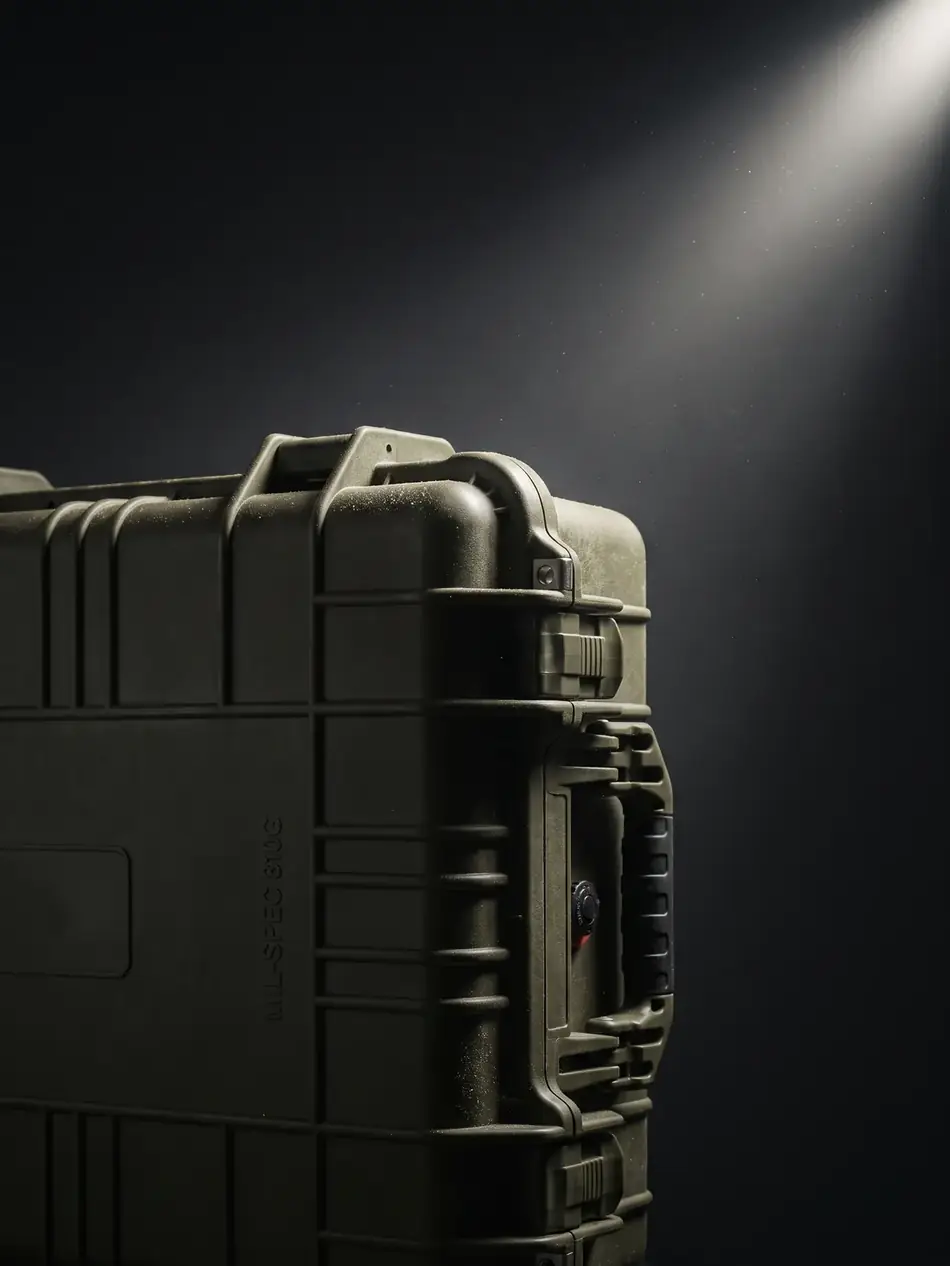
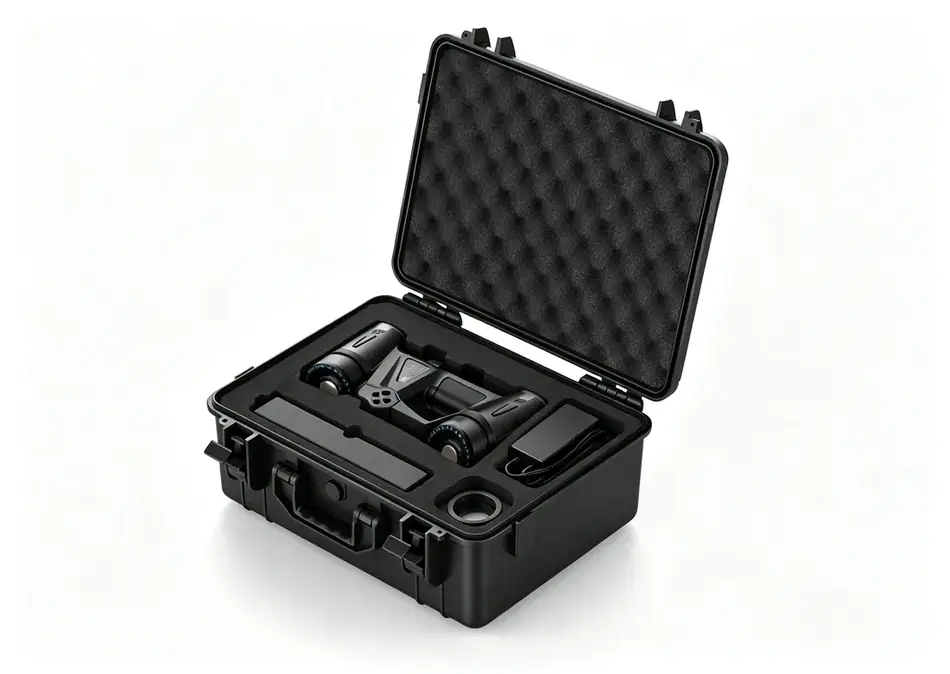
What information should be included in an equipment case RFQ?
An equipment case RFQ should carry five blocks of information: the internal envelope with a stated clearance and the packed mass, the interior and hardware brief written as functions rather than adjectives, the first-order quantity plus a twelve-month forecast, the delivery term (EXW or FOB, with the destination port), and the acceptance method you will actually inspect on delivery. Add the carton and pallet plan in the same document if freight cost influences the decision. Every gap gets filled differently by each bidder, which is why a thin enquiry comes back as a price range and why two quotations for what looks like the same case can differ by a third.
Key points
- Give the internal envelope, packed mass and a clearance number, or the supplier prices a guess rather than a shell.
- Write the interior as a function - pluck, cube-cut or machined pocket - because that sets foam route and labour time.
- Fix EXW or FOB and the destination port; a bid offering door delivery is answering a different commercial question.
- Ask for published measured values plus a tolerance you can inspect, instead of standard names nobody has tested.
- Request the carton plan in the same RFQ: 64 of the 155 catalogue models publish carton data and freight is built from it.
- Compare quotations line by line; a lower unit price that drops the insert or thins the wall is not a lower price.
Why an incomplete RFQ returns a range instead of a price
A moulded case price is the sum of four decisions - which shell, which interior, how much hardware, which production route - and each one is only fixed by information the buyer holds. When the envelope, the quantity or the term is missing, the supplier protects itself by quoting a range or by quietly choosing the cheapest interpretation of the blank space. Either way the number you receive cannot be laid beside a competitor's number, and the comparison that justified running the enquiry in the first place never actually happens.
For defence and measurement programmes the cost of that ambiguity is higher than the case itself, because the same enquiry usually feeds a qualification file, a spares forecast and a receiving inspection. Write the RFQ so that a stranger could manufacture to it without asking a question, and the returned bids become data rather than marketing.
Block one: the envelope, stated as three numbers and a clearance
State the internal length, width and height you need, the packed mass of the item, and the external footprint you must not exceed if the case has to fit a rack, a pallet grid or a vehicle bay. Then state the clearance you expect between the equipment and the foam as a number: the sizing convention used across this catalogue is at least 20 mm on each axis, so that movement in transit is absorbed by the insert instead of by the shell wall. Buyers who omit clearance routinely receive a case that accepts the instrument on the bench and rejects it with the carry handle fitted.
Measure in the transport configuration, not the bench configuration. Antennas fold, protective caps stay on, cables coil, tripods mount. For optical and survey instruments, name the datum you measured from - objective bell, mounting plate, tripod foot, eyepiece - because the widest point is rarely the body, and the height of the eyepiece above the barrel decides whether a flat-lidded shell works at all. Internal and external dimensions are both published per model, and the difference between them is the wall plus the rim geometry, so an external constraint is a real specification and not a preference.
Block two: interior, shell material and hardware brief
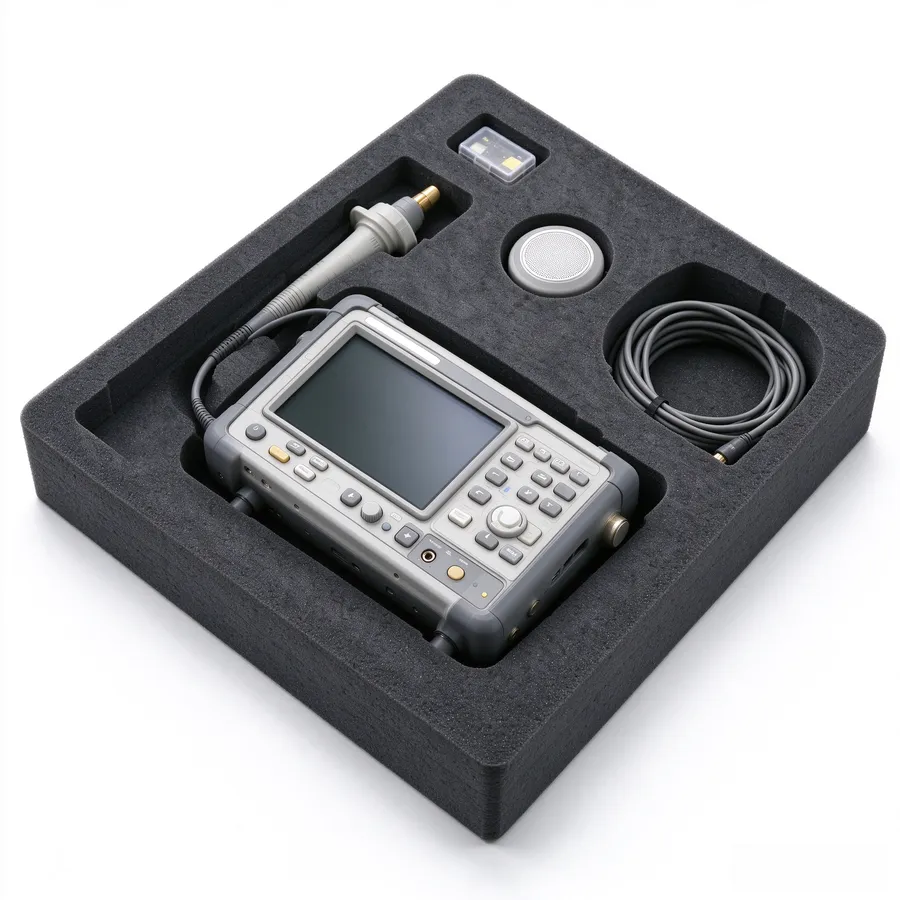
Describe what the interior must do: hold one item in a machined pocket, hold many items loosely in pluck foam, accept a cube-cut layout that the user can reconfigure, or remain an empty shell with dividers. List the items that must travel together, and say which surfaces are finish-critical. That single paragraph decides the foam route, the cutting time, the number of tooling operations and therefore most of the non-shell cost in the quotation. Vague wording such as shock-absorbing padding gives the bidder nothing to price against.
On the shell, state preferences rather than absolutes and let the datasheet do the arguing: wall thickness is published per model between 2.0 and 6.0 mm, shell material across the catalogue is polypropylene on 94 models, engineering polypropylene on 38, ABS on 22 and a PP/ABS construction on one, a compressible seal configuration is available on 124 of the 155 models, and 19 models publish wheels and a telescopic handle. Hardware counts matter as specification, not decoration: latches scale with lid area because even compression is what keeps a rim closed, hinges locate the lid, and latch bodies accept a padlock where lockable closure is required.
Block three: quantities, term and schedule
Give the first-order quantity, a twelve-month forecast, the required on-board date and the sample expectation. Quantity is what determines how tooling and packaging are spread across the order and whether a stock shell or a dedicated mould is economic, so an omitted quantity is the most expensive blank on the page. State the term you want priced - EXW or FOB - and name the port, because the freight leg and the responsibility boundary follow the term, not the catalogue.
KeXin New Materials (Guangdong) Co., Ltd. supplies wholesale and OEM orders only, quoted EXW or FOB from the factory, with no retail sales, no DDP door delivery and no overseas warehouse, and payment is a thirty percent deposit with the balance before shipment. Put that in the RFQ so that bidders who intend to bundle freight into the unit price declare themselves instead of winning on an apples-to-oranges number.
Block four: acceptance and verification wording
This is where defence-side RFQs most often go wrong: a standard number is copied into the document as a shorthand for tough, and nobody on either side of the transaction intends to test to it. Ask instead for the properties you will verify on receipt - internal and external dimensions, wall thickness, unit mass, stacking geometry, latch count, seal configuration - and state the tolerance you expect on moulded parts and cut foam.
KeXin's datasheet convention is explicit and worth writing into your specification: measured values are recorded from production or incoming-material data, items that depend on the ordered configuration are stated as supplier options, and any property with no test record is left marked unmeasured rather than filled with an estimate. Where a programme genuinely requires a named test, treat it as a separate accredited testing work package with a report delivered before award, and ask each bidder to price that package so it is visible.
Block five: packing and freight data in the same document
Freight is usually decided before the case is chosen. Sixty-four of the catalogue's 155 models publish carton dimensions and fifty-eight publish pieces per carton, and a pallet build is calculated from that carton footprint against your pallet size rather than quoted from memory; twenty-foot, forty-foot and high-cube loading figures are supplied with the quotation. Ask for the carton plan for the exact configuration you are buying - insert fitted, lid closed, handle and wheels attached - so the volumetric figure you compare between bidders is the one you will actually pay freight on.
Where you are buying a mixed order, say so. Consolidating a small instrument case with a mid-size transport case in one shipment changes carton design more often than it changes the shell, and a bidder who knows the mix can tell you whether a few millimetres of carton adjustment is worth more than the freight negotiation.
What each RFQ line actually decides
The useful test is whether a competitor's engineer could reproduce your requirement from the document alone. Where the answer is no, the strong column above is what the line item needs to become before the RFQ is issued.
| Rfq Block | Decides | Strong Version | Weak Version |
|---|---|---|---|
| Internal envelope and clearance | Shell size, cavity depth, foam thickness per axis | L x W x H in mm, transport configuration, 20 mm clearance stated | A model number the buyer liked in the catalogue |
| Packed mass | Wall choice, handle and latch count, carrier layer under the item | kg per unit with accessories installed | Blank, or the bare instrument weight only |
| Quantity and forecast | Tooling share, unit price, stock shell versus new mould | First order plus a twelve-month estimate | Ongoing requirement |
| Interior function | Foam route, cutting time, reconfigurability, spares | Pluck, cube-cut or machined, with an item list | Shock absorbing foam inside |
| Delivery term | Who books freight and where responsibility transfers | EXW or FOB with a named port | Delivered price, origin unstated |
| Acceptance method | Whether a bid can be verified before award | Published measured values plus stated tolerance | Standard names with no test scope or report |
Choosing the response path: stock shell, custom foam, OEM or new mould
Tell the bidder which route you want priced, or you will receive four incomparable answers. On the published commercial parameters, a standard model and a custom foam layout both start at one piece; colour, logo and OEM configuration start at 300 units; a dedicated new mould starts at 3,000. An OEM configuration on an existing mould runs on a forty-five-day first-article lead time, and a new mould about one hundred and twenty-five days from approved drawings.
A practical RFQ asks each bidder to price the same three routes: nearest published model with an engineered insert, OEM configuration of an existing shell, and a dedicated mould at the forecast volume. That structure turns the answer into a decision chart - where the tooling cost stops being recovered by the size of the order - instead of a single number that hides which route the supplier invented.
How the required detail changes by application
Optical and survey instruments are alignment-critical, so the brief should name the datum, the finish-sensitive surfaces and whether the item travels on its mounting plate; a firm carrier layer under the device stops it settling into softer foam over months of storage, and single-unit cartons are common at that value density. Defence field kits are the opposite problem: many items, repeated repacking by whoever is on duty, so the RFQ should ask for locating cut-outs, stackable geometry and marking provisions rather than more padding.
Communication and electronics payloads need accessory sub-trays for cables, batteries and handsets, and a latch count that matches lid area because the dust path is a compression problem, not a gasket-thickness problem. Calibration and measurement instruments that live on a shelf need a footprint that racks and a lid that opens on a bench. Write the application into the RFQ even when the dimensions are identical, because it is what tells a supplier which published model to start from.
Customisation and OEM annexes worth attaching
If you expect an OEM answer, the RFQ needs attachments rather than adjectives: the item bill of materials with a dimensioned photograph per item, logo artwork and placement, a colour reference rather than a colour name, the marking and labelling scheme for cartons and units, the target carton configuration, and the inspection record you want returned with samples. Those five annexes are what allow a factory to commit to a price and a date on the first pass instead of the third.
Also state the spares question up front. An insert is a wear item in a programme that repacks monthly, and reordering a machined layout years later is cheaper when the cutting file is named in the contract than when it has to be recreated from a photographed sample.
Purchasing notes: reading the bids that come back
Normalise before you compare. Check what each price excludes - insert, hardware, carton, pallet, testing package - and check whether the unit price is quoted empty or with the interior fitted, since that difference alone explains most of the spread. Confirm the wall thickness and shell material actually quoted against the datasheet, not the series name the bidder wrote, and confirm the term: an EXW number and an FOB number from the same factory are the same sale at different points.
Then run the two questions that separate a real bid from a reprice. Ask each bidder to restate the envelope, the clearance and the acceptance method in their own words; and ask for a line-item breakdown of shell, foam, hardware and packaging. A supplier that priced your specification can answer both in a day. One that guessed at the blanks will ask you what you meant.
Frequently asked questions
Short answers to the questions this document raises most often in a procurement review, kept deliberately operational: what to send, what to ask for back, and what to refuse to compare.
Information Required For An Automotive Equipment Case Quote
The automotive version of this enquiry is short because its shape is well known: the internal envelope, the interior function, the packed mass, the quantity and the term. What changes inside a vehicle workshop is the transport configuration. A socket set travels in its blow-moulded tray, an impact gun travels with its anvil and its hose, and a diagnostic tablet travels with a charger brick, so the measurement that decides the quotation is the closed tray rather than the tool laid out on a bench.
State the internal length, width and height you need, the clearance you expect between equipment and foam, and the packed mass with accessories installed. The sizing convention used across this catalogue is at least 20 mm on each axis, absorbed by the insert rather than by the shell. Internal and external dimensions are published for all 155 models, so a bidder is being asked to name a model against data you can read back afterwards.
| Search | What We Publish |
|---|---|
| Information required for an automotive equipment case quote | Five items: internal length, width and height in millimetres with a stated clearance, the packed mass with accessories fitted, the interior function written as pluck, cube-cut or machined pockets against an item list, the first-order quantity with a twelve-month forecast, and the term to be priced, EXW or FOB with a named port. Shell preferences can be quoted against published data rather than adjectives, because wall thickness runs from 2.0 to 6.0 mm across the 155 models and a compressible seal configuration is available on 124 of them. |
| Which automotive case sizes should be named in an enquiry? | Name the cavity, not the category. Workshop references published in this catalogue include the KX-4613 at 455 x 338 x 116 mm internal on a 3.0 mm wall at about 1,370 g, the KX-4010 at 390 x 315 x 88 mm and about 9.3 litres, the KX-85021 at 437 x 308 x 164 mm with two wheels and a telescopic handle, and the KX-6621 at 587 x 434 x 192 mm on a 6.0 mm wall with a stackable footprint. |
| What quantity and term information moves an automotive quotation most? | The first-order quantity plus the twelve-month forecast, because the two of them decide the production route: a standard model and a custom foam layout both start at 1 piece, colour, logo and OEM configuration start at 300 units, and a dedicated mould starts at 3,000 pieces per component. Ask for EXW or FOB only, with a 30 per cent deposit and the balance after your inspection; there is no retail channel, no DDP door delivery and no overseas warehouse. |
The Automotive Details That Usually Get Left Out
Three blanks explain most of the gap between two quotations for what looks like the same case. The first is the lid line: a ratchet head, a battery brick or a torque-wrench handle that lifts above the tray in transit changes the cavity depth and therefore the carton. The second is hardware, because a bay that needs a padlockable latch or a particular latch count has to say so, hardware being quoted per configuration rather than assumed from the series name. The third is where the case lives when it is not open, which is an external-footprint constraint against a shelf, a trolley grid or a boot, even when the internal cavity is generous.
Where a dealer group wants kits identified by brand, attach artwork and a colour reference rather than a colour name, and say whether you want a print on an existing shell or a moulded colour, because those are two different questions with two different schedules. A colour or logo run begins near 300 units on existing tooling, while changing the tooling itself begins near 3,000 pieces per component and moves a 45-day first article into something closer to 125 days.
What A Complete Automotive Enquiry Should Get Back
Judge the returned bid by whether it answers the blanks you filled. The lines below are the ones a purchasing review can actually check, and a bidder who priced your specification rather than guessing at it will not find them expensive to supply.
What Is Not Included In An Automotive Quotation
Protection ratings are not part of what KeXin publishes or prices. Water and dust behaviour is recorded as not measured across all 155 models, so a quotation describes a shell, a wall thickness, a seal configuration where the model carries one, and a cut insert, rather than a rating. Where a fleet or dealer specification genuinely requires a named test, treat it as a separate laboratory instruction with its own scope, sample size and report, and keep it out of the case line so the two are not compared as one number.
The same discipline applies to what a buyer might otherwise read into an automotive case. Nothing in a quotation should be taken as resistance to fuel, brake cleaner or tyre dressing, and nothing as a shock or impact result; those properties are not measured here and are not offered as brochure wording. What is offered is published geometry model by model, an engineered interior, wholesale and OEM terms on EXW or FOB, and a welcome to third-party factory inspection before shipment.
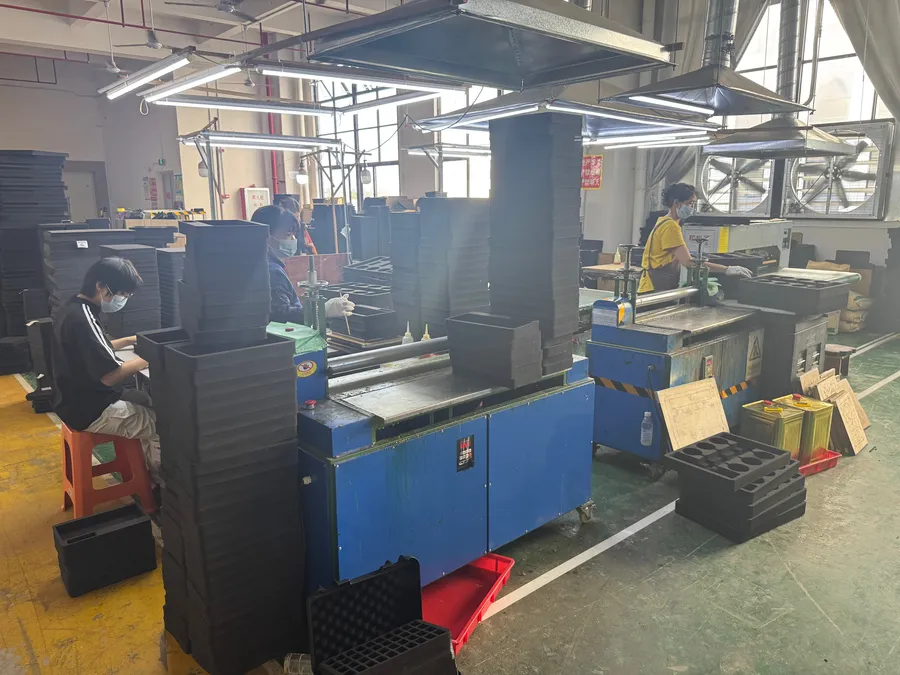
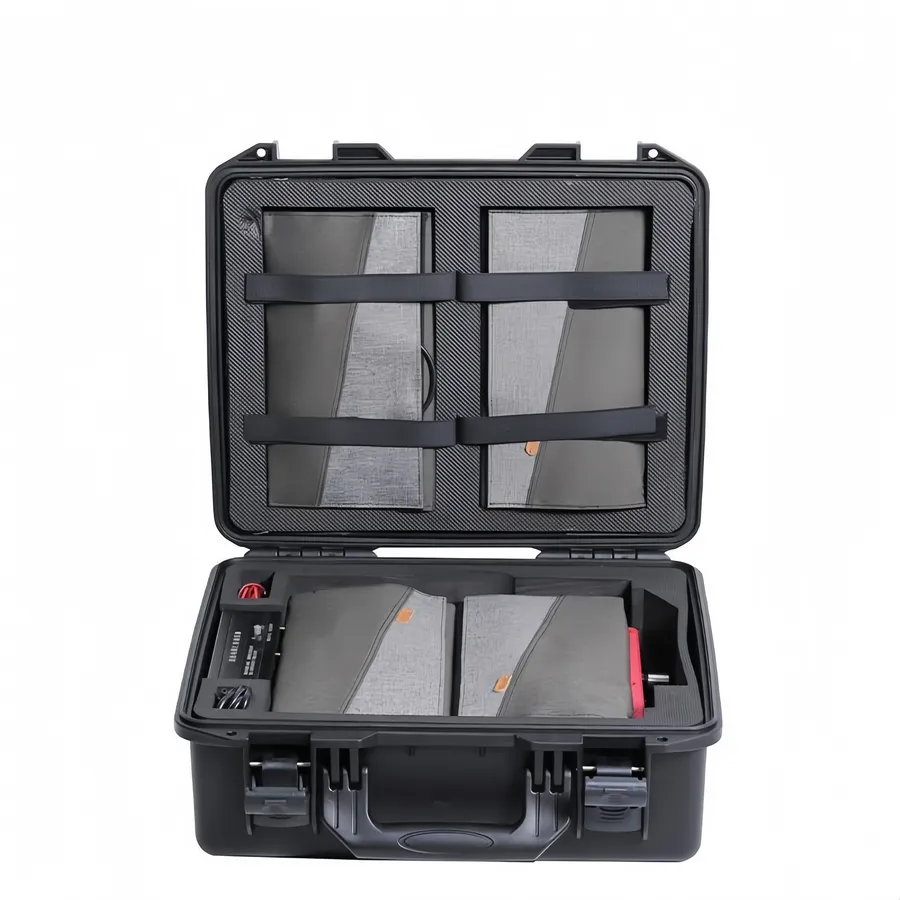
Customisation
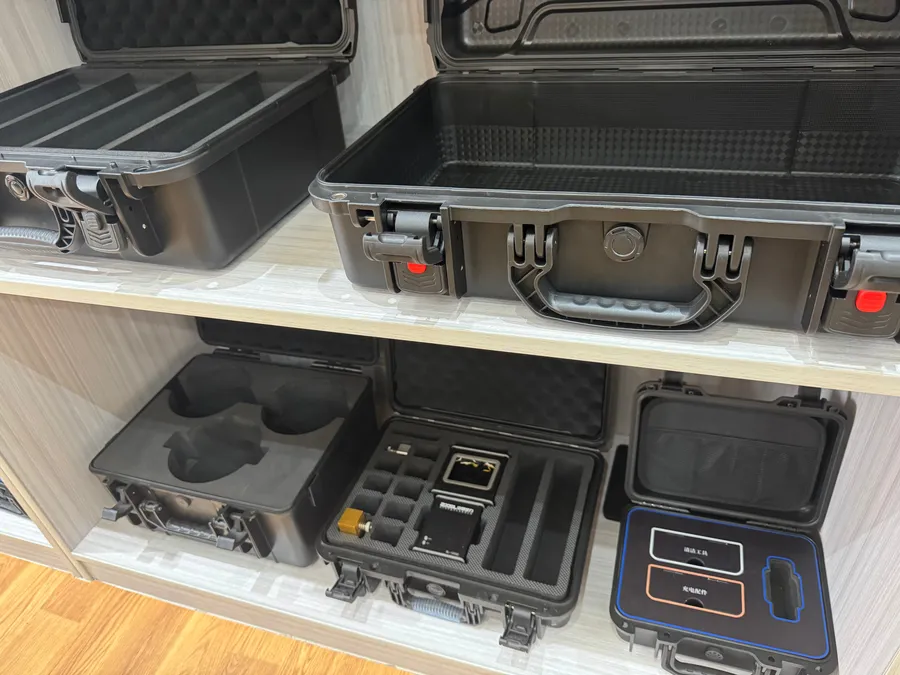
Everything described above is configurable on a standard shell: interior layout (pick-and-pluck, die-cut or CNC-cut), foam grade and thickness, colour, logo method, latch and lock count, pressure-equalisation valve, cable ports, document holder and identification plate. A bespoke exterior geometry requires a new mould — 125 days, from 3,000 units per moulded component.
Procurement considerations
| Question | What to send us |
|---|---|
| Which shell fits? | Equipment L × W × H as packed, plus required clearance per axis |
| What does it cost? | Order quantity and estimated annual quantity — the two drive different answers |
| Is tooling needed? | Whether an existing shell clears the envelope with usable foam depth |
| Lead time? | Your required delivery date, not just the order date |
| Certification? | The exact standard your tender names — we will say whether we can test to it |
| Freight? | Destination and preferred terms; carton and pallet data supplied with the quotation |
Comparison and selection guide
The tables on this page exist because a protective case is chosen by comparing three things: the envelope, the environment and the handling chain. Where no table applies, the rule below is.
| Situation | What To Do |
|---|---|
| Free-drop height | With a 50 mm base foam layer, a 15 kg assembly sees a markedly lower peak deceleration than with 20 mm. Where the case is handled by hand off a vehicle, we specify the deeper base. |
| Stacking | A case that will be shipped stacked needs a wall thickness and rim geometry that carries the load through the shell, not through the lid. |
- Size on internal dimensions plus clearance, never on a product name.
- Choose the carrying method before the shell: it changes the series, not just the price.
- Specify the interior last, and decide up front whether the end user will reconfigure it.
What information should be included in an equipment case RFQ? relates to Military Case Guide. Related families: Defense Equipment Cases / Optical Equipment Cases / Instrument & Equipment Cases / Custom Protective Cases / Equipment Transport Cases. Related sectors: field and industrial equipment. Continue in the Military Case Guide cluster.
This page is written from our own production data. If your requirement differs, send the dimensions and we will tell you which of the 155 models fits, or whether a custom route is needed.