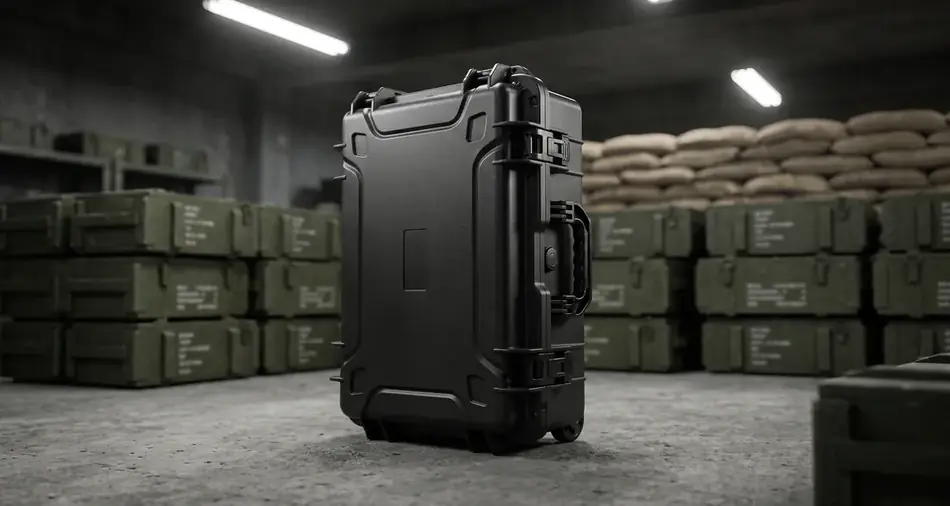
How should heavy-duty military cases be specified?
Specify a heavy-duty military case from published, per-model figures, not from adjectives. The military-protective-cases family in our catalogue lists 113 active models with published internal and external dimensions, so the first specification line is internal volume measured against the packed load: the family spans 10.1 L to 139.5 L of internal volume, and usable interior volume is published on every model, up to 111.6 L on the largest trolley shell. Wall thickness is recorded on 106 of the 113 models, from 2.1 mm to 6.0 mm, and shell material is stated per model as polypropylene, engineering polypropylene, ABS or a PP/ABS combination. Net shell weight is a measured, published figure on 57 models, from 830 g to 15,320 g, and that number decides carry handles versus a two-person lift versus wheels and a telescopic handle, which 19 models publish. Stackability is published as true on 94 models, and it is a deliberate trade-off: the 19 trolley models are not stackable. A compressible gasket is available on 100 of the 113 models; the other 13 are plain shells. Water, dust, shock and load performance are recorded as not measured in our catalogue file, we print no ingress-protection code for any model, and where a tender requires documented figures we quote accredited third-party testing against the exact model, gasket configuration and packed load state as a separate work package, with the report issued to you. Terms are wholesale and OEM only, EXW or FOB, no retail, no delivered-duty-paid shipments and no overseas warehouse stock.
Key points
- Specify from the published family figures, not adjectives: internal volume runs 10.1–139.5 L and wall thickness 2.1–6.0 mm per model across the 113-model military case family.
- Check internal dimensions against your longest packed item; external dimensions belong to the pallet and vehicle plan, not to the fit check.
- Net shell weight is a measured, published figure on 57 family models, from 830 g to 15,320 g, and it decides handles, two-person carry or a trolley run.
- Stackability and mobility are a published trade-off: 94 models stack, 19 trolley models publish wheels plus a telescopic handle and do not stack.
- A gasket is a per-model flag: 100 of 113 family models offer one, 13 are plain shells, and no ingress-protection code is printed for any model.
- Approve the foam layout with a drawing, a photograph of the packed kit or a sample; the shell is not a shock rating and we state no free-fall figure.
- Plan the programme around published lead times: 45 days on an existing mould, 125 days for a new mould, 30% deposit, EXW or FOB, wholesale and OEM only.
What heavy duty means when every figure is published
The phrase heavy duty military plastic case appears in thousands of requests for quotation, and almost none of those requests define it. One buyer means a shell that survives being dragged across a flight line; another means a case that stacks eight high in a container; a third simply means thicker plastic. If you write heavy duty into a tender without numbers, every bidder fills the gap with its own assumption, and the quotations you receive are not comparable. The workable alternative is to define duty by figures that a manufacturer can actually publish and you can actually check: internal dimensions, internal volume, wall thickness, shell material, net shell weight, stackability, gasket availability and packing quantities.
That is how our catalogue file is built. KeXin New Materials (Guangdong) Co., Ltd. moulds a 155-model thermoplastic library with published internal and external dimensions on every model, and the military-protective-cases family within it holds 113 active models, each with its own page and its own published figures. Across that family, internal volume runs from {iv_lo} L to {iv_hi} L, usable interior volume from 8.7 L to 111.6 L, and wall thickness from 2.1 mm to 6.0 mm on the 106 models where it is recorded. Nothing in those sentences is an adjective; each number is looked up per model, and the same numbers are what a specification checklist should carry.
Published figures across the military case family
The comparison below quotes four family models at the positions buyers usually ask about: a small shell, two mid and large stacked-storage shells, and the largest trolley in the family. Every cell is taken from the model's own catalogue record, and each model page repeats the full record, including packing quantities. Read the table as a demonstration of the method, not as a menu of four choices: the family between these four spans 10.1–139.5 L of internal volume.
| Specification Line | Wl3218 | Wl5021 | Wl6621 | Wl8-8442 Trolley |
|---|---|---|---|---|
| External dimensions, L × W × H | 315 × 260 × 180 mm | 495 × 374 × 206 mm | 662 × 495 × 210 mm | 843 × 592 × 415 mm |
| Internal dimensions, L × W × H | 308 × 230 × 172 mm | 465 × 315 × 196 mm | 587 × 434 × 192 mm | 740 × 518 × 364 mm |
| Internal volume / usable interior volume | 12.2 L / 10.5 L | 28.7 L / 24.7 L | 48.9 L / 39.1 L | 139.5 L / 111.6 L |
| Wall thickness | 3.0 mm | 3.7 mm | 6.0 mm | 5.0 mm |
| Net shell weight | 900 g | 3,430 g | 6,420 g | 15,320 g |
| Shell material | PP | ABS | Engineering PP | PP |
| Stackable | yes | yes | yes | no |
| Wheels + telescopic handle | no | no | no | yes |
| Gasket flag (seal available) | yes | yes | yes | yes |
| Catalogue page | /products/military-protective-cases/kx-3218/ | /products/military-protective-cases/kx-5021/ | /products/military-protective-cases/kx-6621/ | /products/military-protective-cases/kx-88442/ |
The specification checklist to send with your request
A request built from the lines below can be quoted without a round of clarification emails, because each line maps to a field we publish per model. Send the packed load list first: the case is the last thing designed, not the first.
Wall thickness and shell material: what the numbers decide
Wall thickness in the family runs from 2.1 mm on the thin-shell utility models to 6.0 mm on the largest stacked-storage shell, and it is published on 106 of 113 models rather than asserted for the family as a whole. It is one input to shell stiffness, alongside rib pattern, material and the geometry of the lid engagement; it is not a grade label. We publish the number and the material so your engineer can judge the shell against the load, instead of translating a marketing word into millimetres on their own. When your integration needs a material data sheet, ask for it against the specific model code.
Shell material is stated per model. Polypropylene appears on the majority of the family, engineering polypropylene on shells where the wall schedule runs thicker for their size, ABS on models such as the WL5021 and the WL6-series shells, and a PP/ABS combination on at least one model (the WL9-5419). The material choice interacts with weight: two shells of similar internal volume can differ by hundreds of grams in net weight depending on material and wall, which is why the checklist carries both lines instead of a single duty word.
Weight, stackability and pallet mathematics
Net shell weight is a measured figure where we publish it: 57 of the 113 family models carry a measured net weight, from 830 g on the smallest utility shell to 15,320 g on the WL8-8442 Trolley. Add your payload on top before choosing hardware. A fully fitted signals kit, a set of charged batteries and coiled copper leads can double or triple the shell figure, and the handling method changes before the payload does. Check your own unit handling rules against the loaded weight, and let the published weights, not the case's external size, decide between carry handles and a trolley configuration.
Stackability is a published flag, true on 94 of 113 family models, and the pallet quantity is published on all 113, calculated from the carton footprint against your pallet size. The two figures work together: a shell that stacks well fills a pallet footprint predictably, and the trolley models that cannot stack need their own stowage plan. 69 models also publish the base and lid depth split separately, which matters twice over: it decides whether equipment stands upright in the base, and it sets the stacking height arithmetic when cases travel nested in a vehicle or a container.
When a heavy-duty case becomes a trolley
19 of the 113 family models publish wheels and a telescopic handle, from the WL8-5021 Trolley at 4,912 g net with 22.1 L internal volume up to the WL8-8442 Trolley at 15,320 g with 139.5 L. Every one of those trolley models publishes stackable as false, which is the trade-off in one line: retractable hardware adds height and contact points that a flat-stack arrangement does not tolerate. Units that mostly move palletised cases between vehicles keep the stackable shells; units whose crews walk cases across aprons, gravel and gangways specify the trolleys; and mixed fleets carry both, chosen per load rather than per family.
Foam layout is the shock system you actually specify
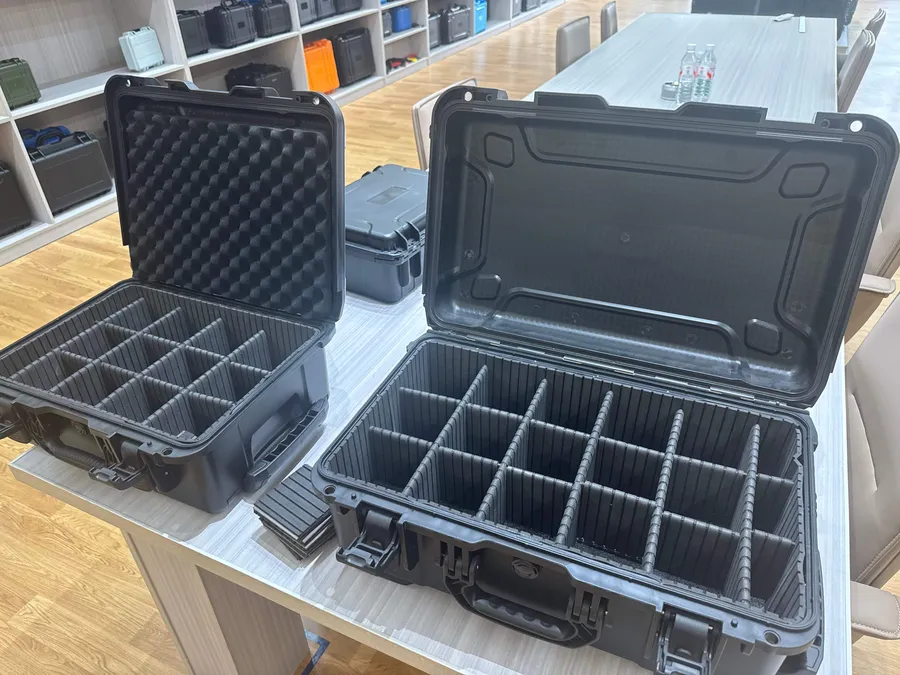
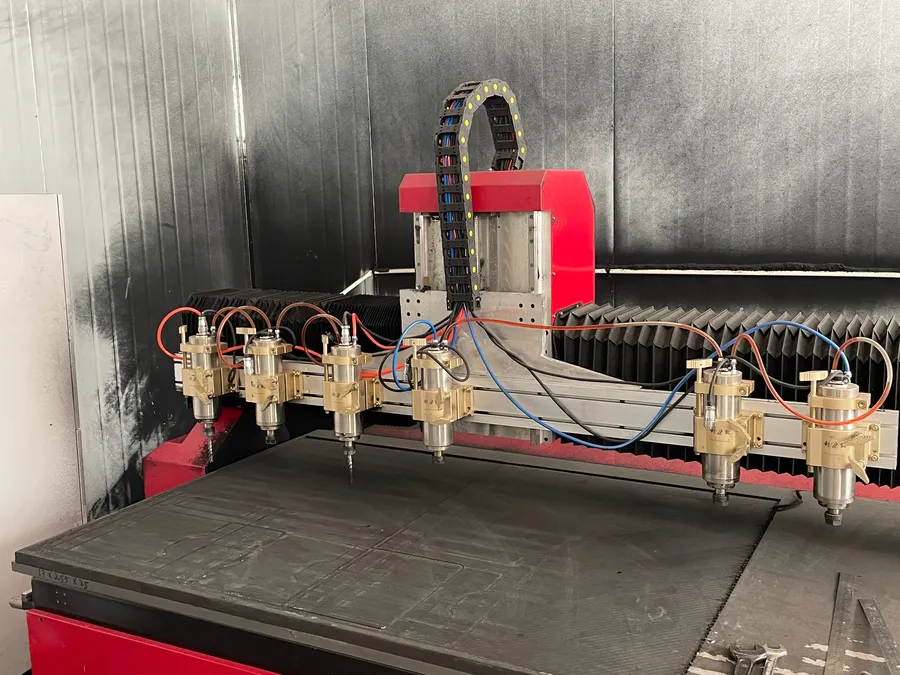
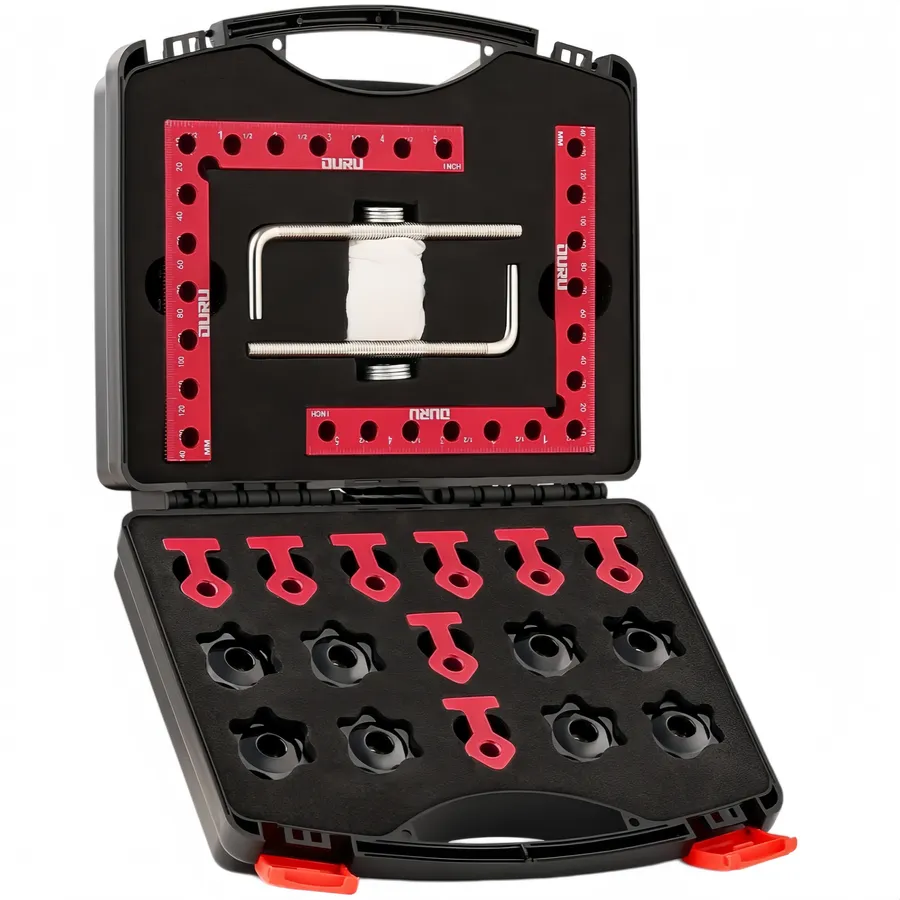
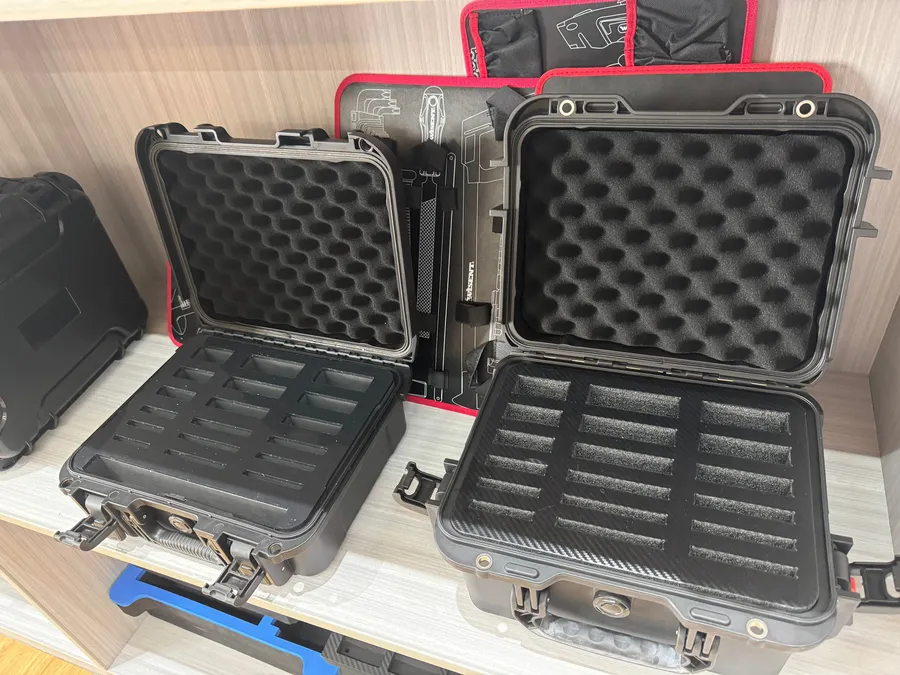
The published shell figures describe a box; the foam layout describes how the load is held inside it. Every family model publishes the same foam capability set: insert types from pick-and-pluck, die-cut and CNC-cut to EVA, PE and EPE sheet, in structures that include top foam, base foam, egg-crate and layered builds, with custom thickness and custom shapes available and CNC or die-cut production as published options. What we require to cut it is also published: a drawing, a photograph of the packed kit, or a physical sample. Custom foam carries the same MOQ as a standard shell, so a single-unit trial is possible on standard models.
Treat the foam layout as layout engineering, not as a laboratory figure. We do not publish a free-fall height, we do not present the shell as a shock rating, and a case without an approved foam layout is an unfinished specification. The practical sequence that works: freeze the packed load list, mark which faces of each item need support, agree foam thickness per face with the moulding drawings, and approve a first article on the standard shell before committing a programme quantity.
Seals, gaskets and what we do not claim
A compressible gasket seated in a moulded channel is available on 100 of the 113 family models; 13 models publish seal availability as false, including the WL705#, WL706# and WL707# utility shells and the WL-5126 Trolley. If your environment statement says dust-laden or wet, name the models you will accept and check the gasket flag per model instead of assuming it follows size or price.
On performance claims our file is deliberately plain: water, dust, UV, temperature and load performance are recorded as not measured, and no ingress-protection code is printed for any model in the catalogue. We will not attach a rating the product has not been measured against, and we advise buyers to treat any supplier figure of that kind as a question rather than an answer. Where a tender or an integration requires documented figures, we quote accredited third-party testing against the exact model, gasket configuration and packed load state as a separate work package, with the report issued to you. That keeps the engineering file honest and leaves the evidence in your hands.
Where these cases deploy
The family serves the deployment patterns described on our sector pages: base-level radio and communication equipment, sighting and optical instruments, tool kits and test instruments that move between benches and vehicles, and medical or laboratory modules that travel in the same containers as the equipment they support. Those pages describe packing patterns and the decision points that recur across units, such as whether a load travels nested, palletised or crew-carried. They are written for buyers assembling a requirement, not for consumers choosing a single box, which is also why every page ends in the same place: the published figures, the foam capability set and a contact route to the moulding floor.
Customisation, lead times and commercial terms
Programme timings are published per model: 45 days for OEM work on an existing mould, 125 days where a new mould must be cut. Quantity thresholds are published too: logo, colour and OEM programmes start at 300 units, a new custom mould at 3,000 units, while standard models and custom foam inserts carry an MOQ of 1, so a pilot order can precede a programme decision. Payment runs on a 30% deposit with the balance before shipment.
Commercially we work wholesale and OEM only: EXW or FOB terms from Guangdong, no retail channel, no delivered-duty-paid shipments and no overseas warehouse stock. If your procurement framework needs a delivered-price comparison, ask your forwarder to quote the freight leg against the published carton and pallet quantities, which are printed on every model page. Enquiries that arrive with the checklist from the section above are typically answerable without a clarification round, because every line maps to a published field.
Customisation
Everything described above is configurable on a standard shell: interior layout (pick-and-pluck, die-cut or CNC-cut), foam grade and thickness, colour, logo method, latch and lock count, pressure-equalisation valve, cable ports, document holder and identification plate. A bespoke exterior geometry requires a new mould — 125 days, from 3,000 units per moulded component.
Procurement considerations
| Question | What to send us |
|---|---|
| Which shell fits? | Equipment L × W × H as packed, plus required clearance per axis |
| What does it cost? | Order quantity and estimated annual quantity — the two drive different answers |
| Is tooling needed? | Whether an existing shell clears the envelope with usable foam depth |
| Lead time? | Your required delivery date, not just the order date |
| Certification? | The exact standard your tender names — we will say whether we can test to it |
| Freight? | Destination and preferred terms; carton and pallet data supplied with the quotation |
Comparison and selection guide
The tables on this page exist because a protective case is chosen by comparing three things: the envelope, the environment and the handling chain. Where no table applies, the rule below is.
| Situation | What To Do |
|---|---|
| Start from the equipment, not the case | Measure the tallest, widest and longest points of the packed equipment including antennas, handles and connectors. Add 20 mm minimum clearance per axis before selecting a shell. |
| Then choose the carrying method | Under 8 kg, a fixed handle is lighter and cheaper. Over 12 kg or any journey over 30 m, specify the T series with telescopic handle and wheels. |
| Then decide the interior | Pick-and-pluck for kits that change. Die-cut or CNC-cut for fixed layouts that must be auditable at a glance. |
- Size on internal dimensions plus clearance, never on a product name.
- Choose the carrying method before the shell: it changes the series, not just the price.
- Specify the interior last, and decide up front whether the end user will reconfigure it.
How should heavy-duty military cases be specified? relates to Military Case Guide. Related families: Military Protective Cases / Military Equipment Cases / Military Transport Cases. Related sectors: field and industrial equipment. Continue in the Military Case Guide cluster.
This page is written from our own production data. If your requirement differs, send the dimensions and we will tell you which of the 155 models fits, or whether a custom route is needed.