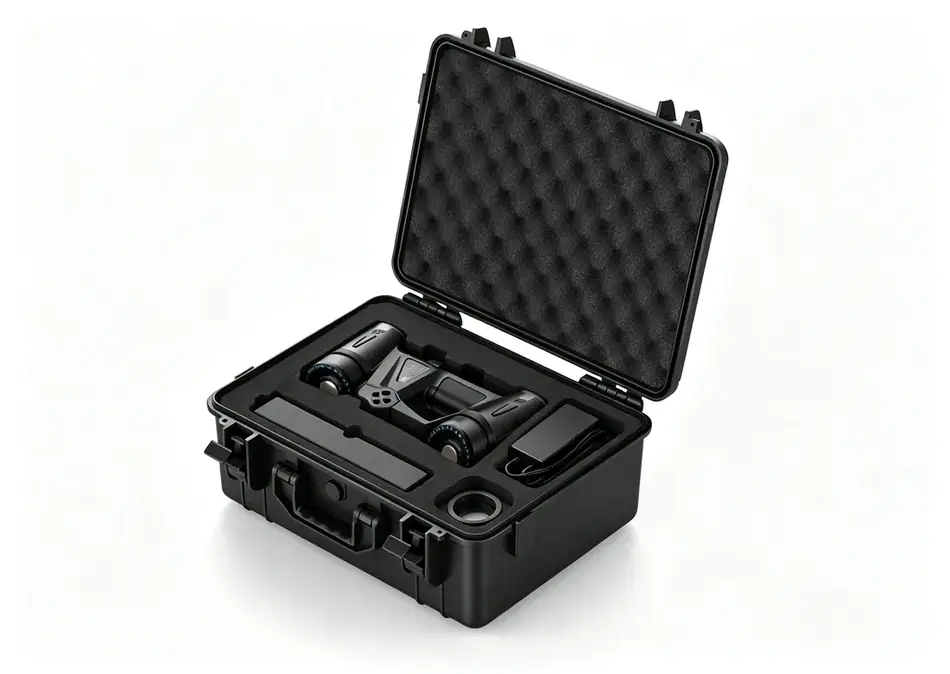
Impact Protection for Instrument Cases
Impact protection for instrument cases comes from three things working together: the wall thickness of the moulded shell, the foam layout inside it, and how firmly the device is restrained in its pocket. On our 115 catalogue models tagged for instrument use the shell is moulded polypropylene with published wall thickness from 2.1 to 5.8 millimetres, but shock protection and impact resistance are recorded as a manufacturer option that needs a specified foam layout, not a rating the empty shell carries on its own, and no drop height is published because on all 115 that figure is recorded as not measured.
Key points
- Impact protection for instrument cases is the shell wall plus the foam layout plus how firmly the device is restrained, not the shell on its own.
- 115 of our 155 catalogue models carry the instrument case tag, and published wall thickness on those shells runs from 2.1 to 5.8 millimetres.
- Shock protection and impact resistance are recorded as a manufacturer option that depends on a specified foam layout, never a bare shell rating.
- We publish no drop height or impact energy for any model, because on all 115 those figures are recorded as not measured.
- Net empty weight is published on 62 of the 115 instrument models, from 460 to 7,800 grams, so ask for the exact model rather than a range.
- For a formal result, name the procedure and commission accredited third-party testing for the configuration you actually order.
What Impact Protection for Instrument Cases Depends On
A buyer searching for impact protection for instrument cases is usually asking two different questions at once: will the shell survive being knocked, pinched, or stood on, and will the instrument inside survive being dropped. Those are answered by different features. The first is a property of the moulded wall, the ribs, and the lid-to-base line, and we publish the wall thickness for each model. The second is a property of the foam and of how the device is held in place, and it cannot be read off the shell at all.
That split is why two cases with the same outside dimensions can protect an instrument very differently. A shallow 76-millimetre-deep shell packed with firm convoluted foam under a rigid meter, and a 148-millimetre-deep shell with loose pick-and-pluck foam around the same meter, are not the same engineering problem. Specify both the shell and the interior in one brief, because a quotation that covers only the shell has answered half of the question you asked.
The Hard Shell Is Only Half of the Problem
Every instrument-rated model in our catalogue is a moulded polypropylene shell, and the wall thickness we publish per model is the first real number behind impact protection for instrument cases. Across the 115 models tagged for instrument use, 109 have a wall thickness on record, from a thin 2.1 millimetres up to 5.8 millimetres, with 3.0, 4.2, 4.5 and 5.0 millimetres being the values that appear most often. A thicker wall spreads a local knock over more material before the load reaches the cavity.
Wall thickness alone is not a rating, though, and the catalogue does not present it as one. A 5.8-millimetre wall still passes a sharp corner strike through to the contents unless the foam beneath it is dense enough to absorb the pulse. So when you compare models, read the wall figure as the shell's resistance to dents, crushing, and point loads, and read the interior as the thing that governs what the instrument actually experiences during the same event.
Foam Layout Is Where Shock Protection Comes From
On all 115 instrument-rated models, shock protection is recorded as a manufacturer option that requires a specified foam layout, and the catalogue note is explicit that the shell on its own is not a shock rating. The same holds for impact resistance, which is published per model with the caveat that no drop height is claimed without a test. In practice the interior build, not the plastic, decides whether a handheld instrument survives the fall that ends a long day of fieldwork.
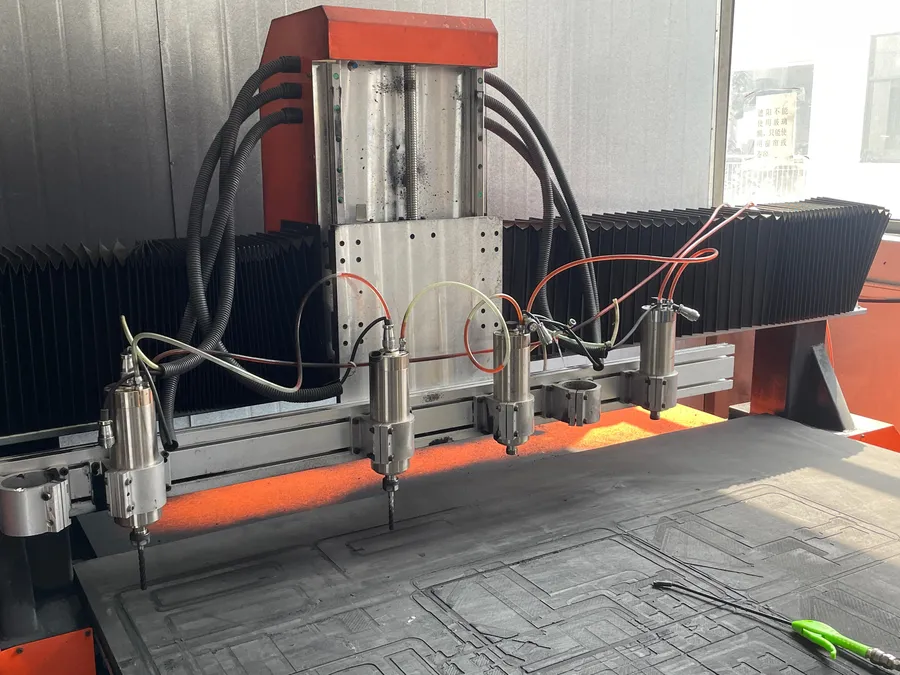
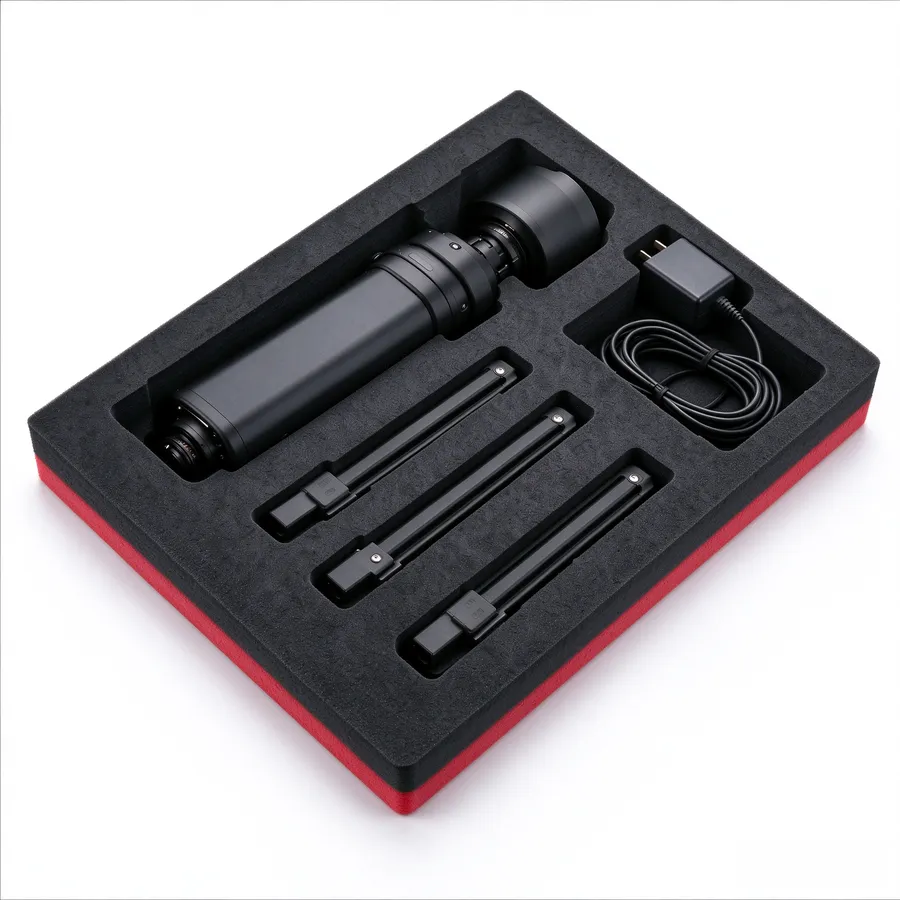
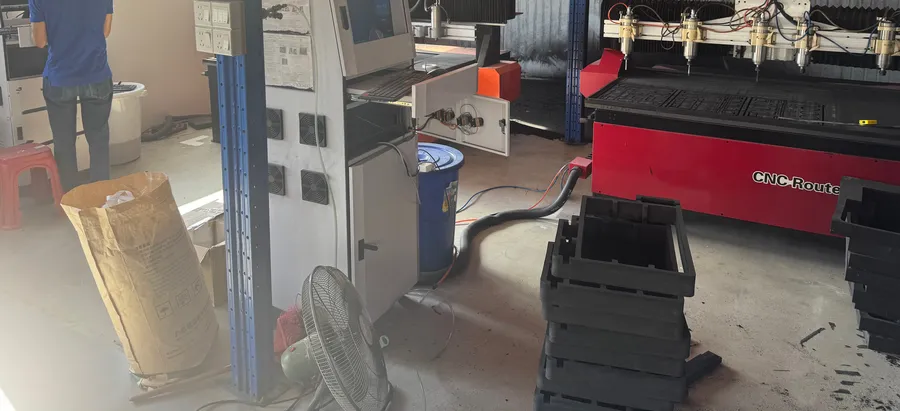
We work with cross-linked polyethylene, EVA, and EPS foam, offered as pick-and-pluck, die-cut, and CNC-cut, arranged as top foam, base foam, egg-crate or convoluted liners, custom-cut pockets, and layered stacks. A dense, thin base layer under a heavy instrument plus a softer convoluted top layer is a common pattern for measurement gear, because it arrests vertical travel without shoving the device up into the lid on the rebound. Send a drawing, a photograph of the packed kit, or a physical sample and we lay it out for your model.
Published Sizes and Weights You Can Specify
Comparison starts from published geometry, not from adjectives. The models below all carry the instrument case tag in our catalogue; the figures are the internal dimensions, wall thickness, and net empty weight recorded for each SKU, so you can see the range rather than a single average. Net weight is on record for 62 of the 115 instrument models and spans 460 to 7,800 grams across the full range.
| Model | Internal Dimensions (Mm) | Wall Thickness | Net Weight |
|---|---|---|---|
| KX-3308 | 325 x 236 x 76 | 2.3 mm | 575 g |
| KX-3213 | 308 x 230 x 118 | 3.0 mm | 860 g |
| KX-4010 | 390 x 315 x 88 | 3.0 mm | 1015 g |
| KX-4312 | 420 x 260 x 104 | 3.5 mm | 1170 g |
| KX-4616 | 455 x 338 x 148 | 3.0 mm | 1395 g |
| KX-2614 | 240 x 200 x 120 | 2.2 mm | 460 g |
What We Do Not Publish About Impact, and Why
The most common request is a stated drop height or an impact energy number. We do not publish either for any instrument model, because on all 115 the protection rating is recorded as not measured, with a note that accredited testing is quoted per configuration. Printing a number we have not run for that shell and that interior would be a guess dressed up as a specification, and a buyer who designs a field process around that figure inherits all of the risk when the case does not behave.
What we do publish is verifiable construction data: the model, the internal and external dimensions, the wall thickness, the net weight, the foam and hardware options, and the carton footprint. That is enough to compare shells honestly and to build an interior around a real device. If your contract or your insurer needs a formal result, name the procedure and we will quote accredited third-party testing and issue a written report for the exact configuration you order.
How Buyers Should Specify Impact Protection in an RFQ
Write the brief as a system rather than a single adjective. Give the instrument type, its weight and its most fragile axis, the internal dimensions you need or the device drawings, the wall thickness band you want for the shell, the foam density and structure, and whether a resealable compressible gasket is required. Then state the failure you are designing against: repeated knocks inside a vehicle, a hand-off drop onto hard ground, stacked storage in a depot, or a long ocean leg.
That framing keeps the quotation honest, because it lets us match a model from published sizes, propose an interior from your drawing, and price the whole assembly on our normal terms. We work wholesale and OEM or ODM only on EXW or FOB. First OEM samples take 45 days on an existing mould, a new mould takes 125 days, payment is a 30 percent deposit with the balance released after inspection, and third-party factory audits are welcome.
Applications That Set the Impact Bar for Instrument Cases
Field survey and utility crews carry measurement gear that gets dropped from waist height onto gravel, so they buy thicker shells with a firm base layer that arrests vertical travel. Laboratory and calibration instruments move in a car boot between sites and need restrained pockets that stop sideways movement more than they need raw wall thickness. Aerospace, defence, and electronics integrators ship optics and test sets that combine a drop risk with a vibration risk, so the interior is zoned by component rather than left uniform.
Industrial and medical instrument pools add a handling and cleaning dimension, because the same case is opened on a bench and closed in a corridor many times a day. None of these buyers need the shell sold as a rated product; they need the right model and the right interior for the way the gear actually moves. Send the application and the device and we will shortlist the published instrument models that fit the job.
Impact Factors at a Glance: Published Data Versus Open Questions
The table separates what you can specify from published catalogue data today from what stays open until a configuration or a commissioned test settles it. Keeping those two columns apart is the single best habit when you evaluate a supplier's impact claims.
| Factor | What Is Published | What Stays Open |
|---|---|---|
| Shell wall thickness | Yes, 2.1 to 5.8 mm across the 109 instrument models with a figure on record | Which model and wall your device actually needs |
| Internal dimensions | Yes, internal length, width, and depth per model | Usable space left after the interior is cut |
| Net empty weight | Yes on 62 of the 115 models, from 460 to 7,800 g | Weight of your specific packed build |
| Shock protection | Recorded as a manufacturer option that needs a foam layout | Whether your interior is specified and built |
| Drop height or impact energy | No, recorded as not measured on all 115 models | Accredited testing, quoted per configuration |
| Formal protection rating | No rating is stated; accredited testing quoted on request | The third-party report you choose to commission |
Customisation, Terms, and Where to Send the Brief
We build to order. Custom foam, colour, logo, hardware, and packaging are available; logo, colour, and OEM orders start at 300 pieces and a custom mould at 3,000 pieces, while standard and custom-foam orders begin from a single unit so you can prove an interior before committing to a tool. Our scope is wholesale and OEM or ODM only, quoted on EXW or FOB, with no retail channel, no delivered-duty-paid lanes, and no overseas warehouse.
Send the device drawings, the target internal size, and the failure you are designing against to Fred Zhao or the KeXin Sales Team, reachable on WhatsApp at +86 135 3588 0002. KeXin New Materials (Guangdong) Co., Ltd. will shortlist the published instrument models that fit and quote the matching foam interior alongside the shell.
Customisation
Everything described above is configurable on a standard shell: interior layout (pick-and-pluck, die-cut or CNC-cut), foam grade and thickness, colour, logo method, latch and lock count, pressure-equalisation valve, cable ports, document holder and identification plate. A bespoke exterior geometry requires a new mould — 125 days, from 3,000 units per moulded component.
Procurement considerations
| Question | What to send us |
|---|---|
| Which shell fits? | Equipment L × W × H as packed, plus required clearance per axis |
| What does it cost? | Order quantity and estimated annual quantity — the two drive different answers |
| Is tooling needed? | Whether an existing shell clears the envelope with usable foam depth |
| Lead time? | Your required delivery date, not just the order date |
| Certification? | The exact standard your tender names — we will say whether we can test to it |
| Freight? | Destination and preferred terms; carton and pallet data supplied with the quotation |
Comparison and selection guide
The tables on this page exist because a protective case is chosen by comparing three things: the envelope, the environment and the handling chain. Where no table applies, the rule below is.
| Situation | What To Do |
|---|---|
| Benchtop mass | Firm base carrier, 50 mm minimum, with a soft contact layer. |
| Optical head | Suspend the body and clear the lenses entirely; never let foam touch a coated surface under load. |
| Field kit | CNC base for the instrument, pluck-foam top for probes and consumables. |
- Size on internal dimensions plus clearance, never on a product name.
- Choose the carrying method before the shell: it changes the series, not just the price.
- Specify the interior last, and decide up front whether the end user will reconfigure it.
Impact Protection for Instrument Cases relates to Protective Case Basics. Related families: Instrument & Equipment Cases / Electronics Cases / Optical Equipment Cases / Tool Cases / Medical Equipment Cases. Related sectors: field and industrial equipment. Continue in the Protective Case Basics cluster.
This page is written from our own production data. If your requirement differs, send the dimensions and we will tell you which of the 155 models fits, or whether a custom route is needed.