What is a custom protective case?
A custom protective case is a transport case whose interior is shaped around one specific piece of equipment while the shell, hardware and finish are chosen from a published catalogue of moulds. The useful distinction is where the freedom starts: on our 155 published models the shell is an existing injection moulded body, so customisation runs from the inside out, through cut foam, lid and base depth, seals, latches, handles, colour and logo, and only becomes a tooling project when the external envelope itself has to change. That difference decides your lead time (45 days for a first OEM sample, 125 days for a new mould) and your minimum order (1 piece for foam, 300 for logo, colour or OEM, 3,000 per component for tooling).
Key points
- Most custom work is interior work: die-cut or CNC foam inside a published shell, which is why custom foam carries a minimum order of 1 on our models.
- Changing the external envelope means a new mould, quoted at 125 days with a minimum order from 3,000 pieces per component, not a two-week change.
- Published geometry spans 120-1,356 mm external length and 2.0-6.0 mm wall thickness across 148 models, so most envelopes already exist before tooling.
- Compare measured values model by model: wall thickness, net weight and seal availability are published per model, and a blanket statement across a whole range is a reason to ask questions.
- Seals are published as available on 124 of our 155 models, but protection performance is recorded as not measured, so request laboratory work if your spec needs a result.
- We work wholesale and OEM only on EXW or FOB terms, with a 30% deposit and the balance after inspection; third-party inspection is welcome.
What a custom protective case is, and what the word is often used to mean
A custom protective case is a transport case whose interior is shaped around one specific piece of equipment, and whose shell, hardware and finish are selected from a published catalogue of moulds rather than invented for the order. The word custom is used loosely in this trade. On many supplier pages it means nothing more than a logo printed on an existing box. At KeXin New Materials (Guangdong) Co., Ltd. it means a defined set of engineering decisions: which mould, which lid and base depth, which foam, which seal, which latches and handles, and what the finished part weighs and fits into. The distinction is commercial as much as technical, because each of those five decisions carries a different lead time and a different minimum order.
The practical test is short. If your equipment can sit inside a published shell and be held by cut foam, you are buying a configuration and not a tooling project. If the equipment fits no published internal envelope, or if the shape of the case itself must change for stacking, handling or vehicle fit, then a new mould enters the conversation. Everything below exists to help you find out which of those two situations you are in before you spend money on either one, and to show which numbers we are willing to put in writing per model.
The four levels of a custom protective case programme
Most enquiries that arrive as a request for a custom protective case, and every oem custom protective case brief we receive, resolve into one of four levels. The levels are cumulative rather than alternative: a programme can stop at Level 1 or Level 2 and never pay for tooling, and we say so when the equipment allows it. The table states what changes at each level and what we can commit to from published data.
| Level | What Changes | Our Position | Why It Matters |
|---|---|---|---|
| Level 1 - Interior only | Die-cut, CNC-cut or pick-and-pluck foam in EVA, PE or EPE, as top foam, base foam, egg-crate or layered sets | Published as available across the catalogue, with a drawing or a physical sample required before cutting | No new tooling, which is why custom foam carries a minimum order of 1 piece on our models. |
| Level 2 - Configuration | Lid and base depth combination, seal, latch count, handle, shell colour, logo method, packaging | Seal availability is published per model on 124 of our 155 models; the remaining items are build options | Still uses an existing mould. Colour and logo changes start at 300 pieces on our published MOQ sheet. |
| Level 3 - Modification | Insert trays, dividers, added hardware positions, telescopic handle or wheel additions | Wheels are fitted on 19 catalogue models and a telescopic handle on 19; the remainder are fixed-handle designs | New hardware positions can require a mould change, so we quote after seeing the drawing rather than before. |
| Level 4 - New mould | The external envelope itself: footprint, wall geometry, parting line, closure layout | Quoted at 125 days with a minimum order starting at 3,000 pieces per component | This is a capital decision, and most briefs do not need it because 155 published shells already cover the common envelopes. |
What our published numbers cover before anything is customised
A custom brief is only worth reading if there is a standard to compare against, so we publish the geometry of every model in the catalogue: external and internal length, width and height, wall thickness, lid and base depth, net weight and carton packing. The range currently holds 155 models across seven series, from the 23 models of the compact 0 Series to the 62 models of the 8 Series, with 20 in the 6 Series, 19 in the T Series, 18 in the 9 Series, 7 in the 1 Series and 6 in the 7 Series. External length runs from 120 mm to 1,356 mm, external width from 90 mm to 610 mm and external height from 40 mm to 415 mm. Internal length runs from 115 mm to 1,280 mm, internal width from 78 mm to 545 mm and internal height from 32 mm to 364 mm. Those are catalogue-wide ranges; each model page states its own value, and that per-model figure is the one to quote in a specification.
Wall thickness is published between 2.0 mm and 6.0 mm across 148 models, and net weight between 100 g and 15,320 g across the 93 models where we have recorded it. Lid depth runs from 16 mm to 320 mm and base depth from 15 mm to 168 mm on the 100 models where the two halves are measured separately. That last division is where customisation starts to matter in practice: two models can share the same footprint and still hold different instruments because the lid and base are divided differently. KX-3207 is 315 x 260 x 70 mm outside with 308 x 230 x 64 mm inside, while KX-3218 shares the 315 x 260 mm footprint at 180 mm deep with an internal 308 x 230 x 172 mm. Both are 3.0 mm wall PP shells with a seal listed as available, and both are stackable, yet they hold different equipment. Calling a case the right size and claiming it actually holds your instrument are not the same statement.
What an OEM custom protective case order actually includes
An oem custom protective case is a wholesale order where the buyer's brand, specification and packaging replace ours on a case we manufacture. In writing it is a short list. On the product side it covers shell colour, a logo method, foam cut to the buyer's equipment, carton and label artwork, and hardware finish. On the paperwork side it covers a specification sheet per model, the measured dimensions we publish, the packing basis and the inspection point before the balance falls due. We are a wholesale and OEM factory: we do not sell retail, we quote EXW or FOB, we do not operate an overseas warehouse, and we do not offer DDP delivery. Those four limits are the reason our quotation format looks narrower than some others on the market.
Our published minimum order for OEM work is 300 pieces, the same threshold that applies to a custom colour or a logo. That figure is not a negotiating position. It follows from how injection moulding batches run, from colour compound changeover and from print set-up. Below that quantity the honest answer is usually a Level 1 or Level 2 order on a stock shell with cut foam, which is precisely why custom foam has a minimum of 1 piece. If a supplier quotes an oem custom protective case at one piece with a logo in three days, ask which mould the box uses and what wall thickness that mould runs at, because those two answers determine whether you are buying a production case or a prototype.
Timelines, deposits, and what drives them
Two numbers govern most programmes. The first OEM sample is quoted at 45 days from an approved specification. A new mould is quoted at 125 days, with a minimum order starting at 3,000 pieces per component. The gap between those dates is the reason we push briefs toward the existing 155 shells first: a configuration order can be sampled, fitted and inspected inside a quarter, while a tooling order commits you to four months before you can hold the object you specified. Series breadth helps here. With 62 models in the 8 Series alone, and shell materials split across 94 PP, 38 engineering PP, 22 ABS and 1 PP/ABS model, the odds that a nearby envelope already exists are higher than buyers expect.
Commercially the terms are fixed. A 30% deposit starts production and the balance is paid after inspection. We welcome third-party inspection at that stage and will work with the agency you appoint. Sample approval, foam fit and packing verification are the three places where a custom protective case programme slips, and all three are visible before the balance falls due, which is why we sequence them in that order rather than shipping against a drawing alone. Packing is agreed the same way: KX-1204 ships 40 pieces to a carton measuring 410 x 360 x 495 mm, and pallet quantities are calculated from that carton footprint against the pallet size you load, rather than being asserted as a fixed figure for the whole range.
Where customising does not help you
Custom work is not automatically better, and part of defining the term is saying when it adds nothing. If your equipment is a rectangular instrument with connectors on one face, a published shell plus layered foam will hold it as well as a bespoke mould at a fraction of the cost and lead time. If your real requirement is a performance result, such as a dust or water ingress level, a stacking load or a repeatable drop height, then reshaping the case does not produce that result either. Outcomes of that kind depend on seal continuity, wall geometry and closure compression, and they are measured model by model or not at all. Adding foam to a shell whose model page lists no seal does not make it sealed, and a new lid on a shell with an unmeasured closure pattern does not change how that closure behaves under load.
What we do not state about a custom case
This is the part of the definition that buyers rarely see written down anywhere. Our product data records protection performance as not measured for the range. We publish geometry, wall thickness, weight, shell material, seal availability, hardware and packing because those are properties we can state from the mould and the build sheet. We do not publish an ingress protection code, a defence or military standard reference, a drop result, a stacking load or a buoyancy statement, and we do not present any model as having a third-party conformity result. A custom case is not made more protective by being custom: a bespoke mould carries exactly the same need for measurement as a catalogue one, and often a longer wait before anyone has a physical part to measure.
How to write the brief if you have no drawing office
You do not need CAD to open a custom protective case conversation, because a request that starts from a drawing usually still has to be corrected against the real object. What we need is the item and its worst orientation. Send the equipment, or a photograph with a ruler in frame, together with the three figures that decide everything else: the largest single dimension, the weight, and how the item travels, whether carried by hand, racked, stacked in a vehicle, or shipped on a pallet alongside other cartons. From that we shortlist shells, propose the foam layout, and tell you plainly whether you are inside the existing catalogue or outside it.
Terms, samples and who to contact
KeXin works with buyers who order wholesale or under their own brand, on EXW or FOB terms. Standard and foam-configured orders start at a minimum of 1 piece; logo, colour and OEM orders start at 300; a new mould starts at 3,000 pieces per component. A 30% deposit starts production, the balance is paid after inspection, and third-party inspection agencies are welcome at our facility. For a specification review, contact Fred Zhao or the KeXin Sales Team on WhatsApp +86 135 3588 0002 and send the three measurements described above. We will reply with candidate models, the published value for each one, and a clear statement of anything we cannot yet measure, so that your purchase order describes a case you can actually inspect on arrival.
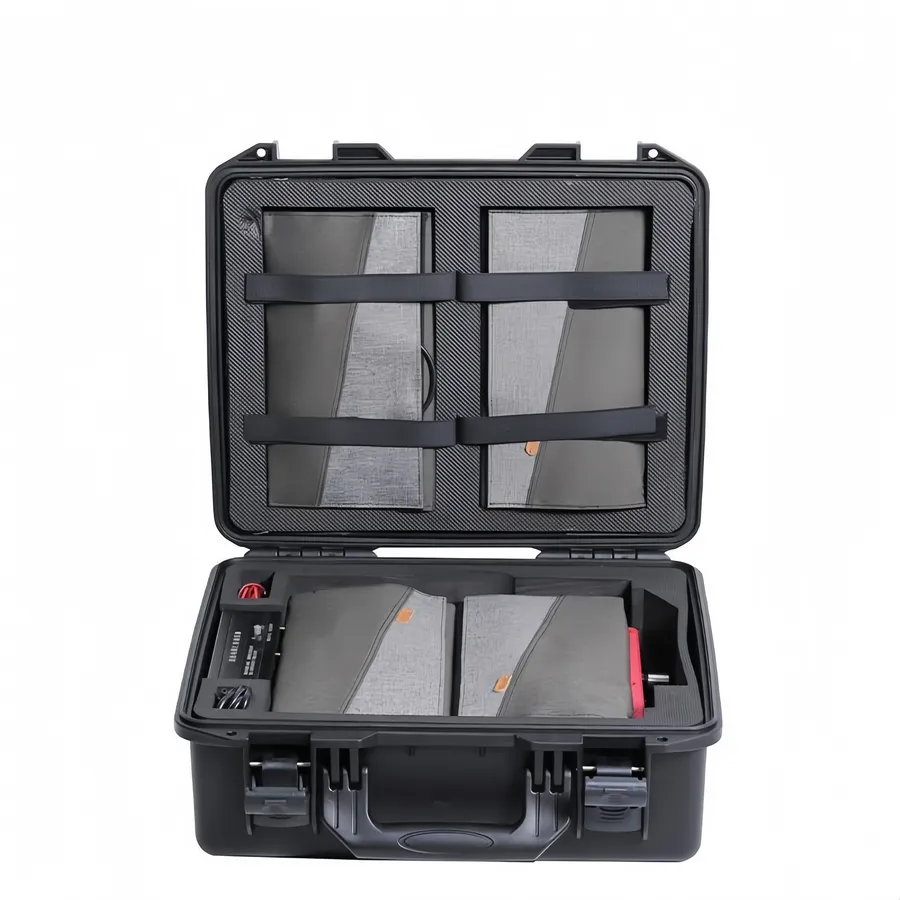
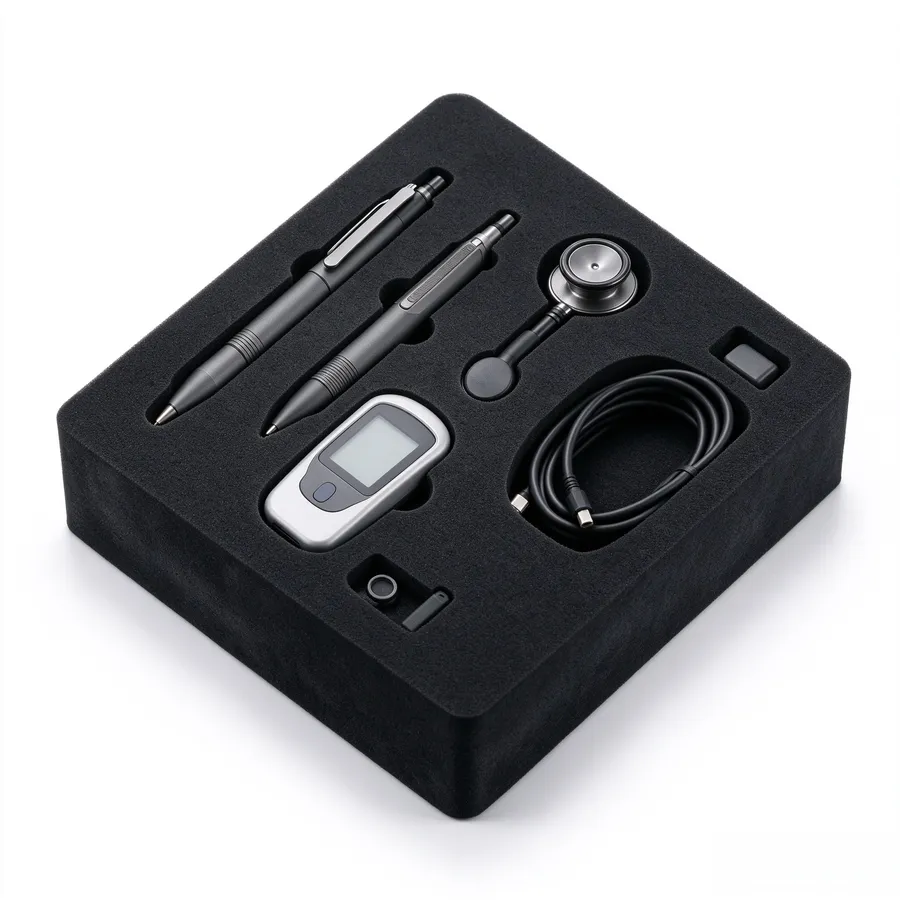
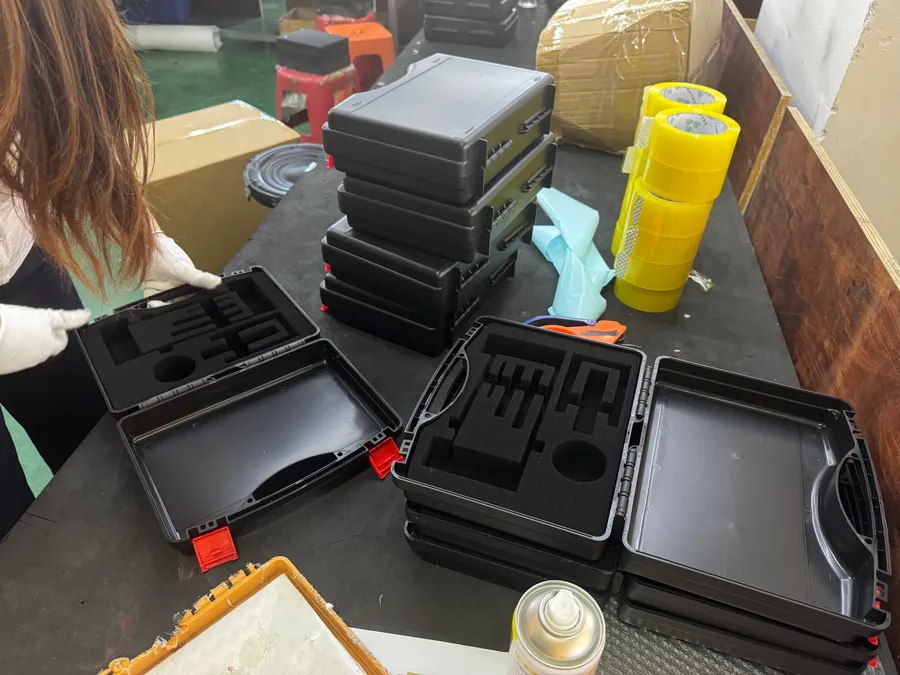
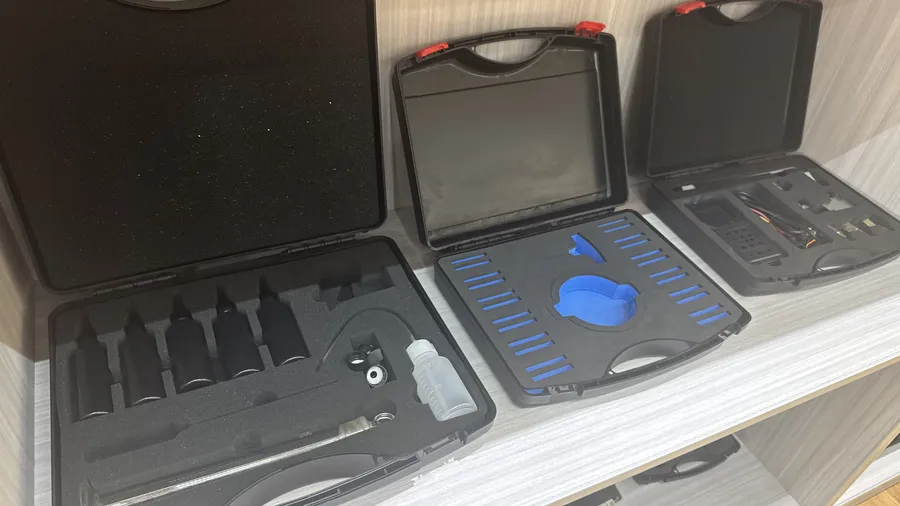
Customisation
Everything described above is configurable on a standard shell: interior layout (pick-and-pluck, die-cut or CNC-cut), foam grade and thickness, colour, logo method, latch and lock count, pressure-equalisation valve, cable ports, document holder and identification plate. A bespoke exterior geometry requires a new mould — 125 days, from 3,000 units per moulded component.
Procurement considerations
| Question | What to send us |
|---|---|
| Which shell fits? | Equipment L × W × H as packed, plus required clearance per axis |
| What does it cost? | Order quantity and estimated annual quantity — the two drive different answers |
| Is tooling needed? | Whether an existing shell clears the envelope with usable foam depth |
| Lead time? | Your required delivery date, not just the order date |
| Certification? | The exact standard your tender names — we will say whether we can test to it |
| Freight? | Destination and preferred terms; carton and pallet data supplied with the quotation |
Comparison and selection guide
The tables on this page exist because a protective case is chosen by comparing three things: the envelope, the environment and the handling chain. Where no table applies, the rule below is.
| Situation | What To Do |
|---|---|
| Fastest | Standard shell plus CNC foam — typically 45 days from approved drawing. |
| Branded | Standard shell plus custom colour and logo — MOQ applies to the resin colour. |
| Bespoke geometry | New mould — 125 days, MOQ from 3,000 units per component. |
- Size on internal dimensions plus clearance, never on a product name.
- Choose the carrying method before the shell: it changes the series, not just the price.
- Specify the interior last, and decide up front whether the end user will reconfigure it.
What is a custom protective case? relates to Protective Case Basics. Related families: Custom Protective Cases / Equipment Transport Cases / Military Protective Cases. Related sectors: field and industrial equipment. Continue in the Protective Case Basics cluster.
This page is written from our own production data. If your requirement differs, send the dimensions and we will tell you which of the 155 models fits, or whether a custom route is needed.


