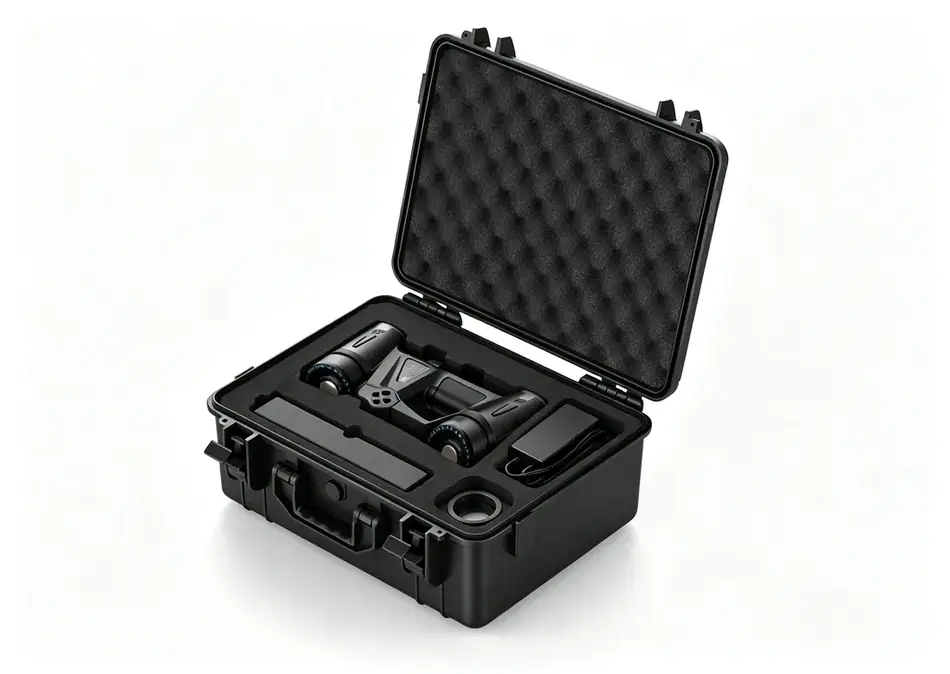
Which protective case suits NDT testing instruments?
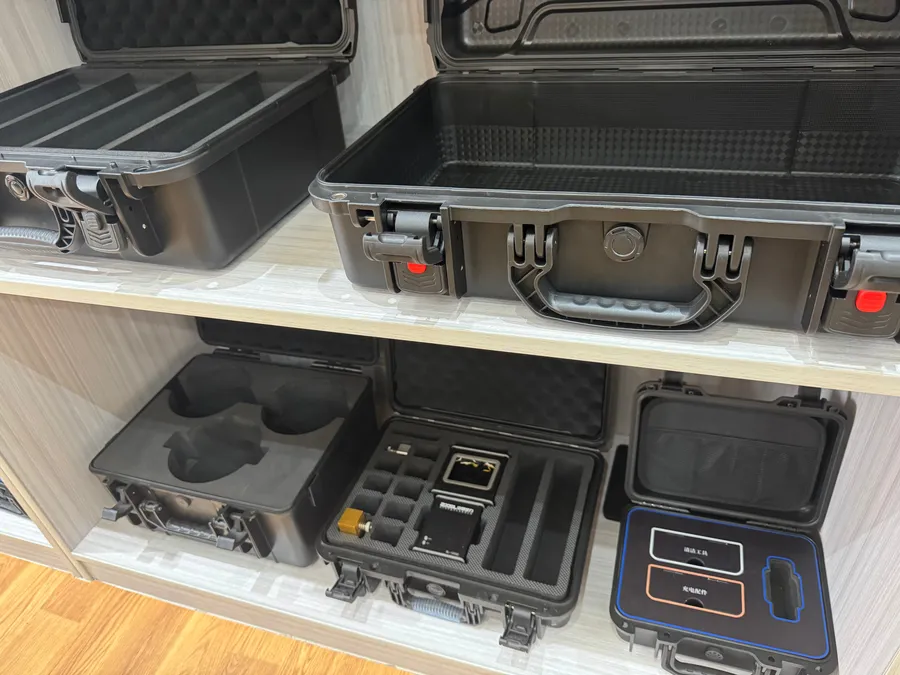
A case suits an NDT instrument when its interior rectangle, its lid-versus-base depth split and its foam pocket match that specific instrument plus the probes, cables and blocks that travel with it - not when it carries a generic instrument label. Pick by equipment class: a handheld thickness or coating gauge sits in a shallow shell such as KX-62205 (interior 200 x 98 x 41 mm) or KX-62109 (195 x 128 x 81 mm); an ultrasonic flaw detector with angle probes and wedges starts around KX-3213 (308 x 230 x 118 mm) or KX-3218 (308 x 230 x 172 mm); a phased-array unit or data station needs 447 x 312 x 194 mm (KX-4821) or, for the heaviest kits, a wheeled body such as KX-85424 with an interior of 483 x 363 x 190 mm. KeXin publishes measured internal and external dimensions, wall thickness, lid and base depth and net weight model by model; protection grades are recorded as not measured, so we publish a laboratory result only for the configuration you order and we do not print a grade we cannot document.
Key points
- Size the case from the instrument plus probes, wedges, cable, charger and reference blocks measured together, not from the instrument body alone.
- The 115 catalogue models tagged for instrument use publish interiors from 5.8 to 44.0 litres with wall thickness from 2.1 to 5.8 mm, per model.
- Depth split matters more than volume: KX-3218 gives 86 mm lid over 86 mm base, while KX-93221 gives 165 mm over 35 mm for instruments standing in the base.
- A gasket is a construction option, not a rating: 96 of the 115 instrument-tagged models list a seal as available, and none carries a published ingress grade.
- Foam is specified in three layers - a base bed sized to the packed mass, a pocket deep enough to clear the probe face, and a top restraint over the lid.
- Send the instrument drawing and the annual quantity: standard and custom foam start at 1 piece, logo and colour at 300, a new mould at 3,000.
Start With The Equipment Class, Not The Case
Non-destructive testing is not one instrument. A portable ultrasonic thickness gauge weighs a few hundred grams and is carried on a lanyard; an ultrasonic flaw detector adds two to six angle probes, wedge blocks, a length of cable and a battery; a phased-array instrument adds a scanner, an encoder, couplant bottles and a set of calibration blocks; eddy-current, hardness, videoscope and magnetic-particle kits each bring their own awkward geometry. When a buyer types the phrase "case for ndt equipment" they usually mean one of these classes, and the right shell is decided by the largest rigid item plus the tallest standing item, not by brand preference.
Three published numbers decide the fit. The first is the interior rectangle, because a flaw detector that is 245 mm wide cannot lie in a 230 mm cavity no matter how long the case is. The second is how interior height is divided between lid and base, because a probe standing 150 mm tall is useless in a case that gives 30 mm above the base line. The third is the foam cut, because an instrument that floats between two pieces of block foam takes every shock through its display and its connector sockets. KeXin publishes all three per model, so a buyer can compare a device drawing against a case drawing before any sample is made.
Published Sizes We Can Quote From, Model By Model
Across the 155 models in our catalogue, 115 are tagged for instrument use. Their published interiors run from 5.8 to 44.0 litres, moulded wall thickness from 2.1 to 5.8 mm, and net weight from 460 g to 7.8 kg on the 62 models where weight is published; the smaller gauge-sized shells sit in the electronics and custom categories, starting at 115 x 78 x 32 mm interior on KX-1204. The rows below are taken directly from those published records rather than from a size chart that assumes what a buyer will put inside.
| Instrument Class | Model | Interior (Mm) | Exterior (Mm) | Volume | Wall | Net Weight | Seal Listed |
|---|---|---|---|---|---|---|---|
| Handheld gauge, minimal kit | KX-62205 | 200 x 98 x 41 | 222 x 128 x 50 | 0.8 L | 3.5 mm | 310 g | yes |
| Gauge plus probe and cable | KX-62109 | 195 x 128 x 81 | 211 x 165 x 93 | 2.0 L | 3.0 mm | 470 g | yes |
| Ultrasonic flaw detector | KX-3213 | 308 x 230 x 118 | 315 x 260 x 128 | 8.4 L | 3.0 mm | 860 g | yes |
| Detector with wedges and spares | KX-3218 | 308 x 230 x 172 | 315 x 260 x 180 | 12.2 L | 3.0 mm | 900 g | yes |
| Deep standing kit | KX-93221 | 300 x 200 x 200 | 323 x 243 x 212 | 12.0 L | 5.0 mm | 1,230 g | yes |
| Phased-array instrument | KX-4821 | 447 x 312 x 194 | 475 x 363 x 210 | 27.1 L | 4.5 mm | 3,670 g | yes |
| Array plus reader and blocks | KX-5021 | 465 x 315 x 196 | 495 x 374 x 206 | 28.7 L | 3.7 mm | 3,430 g | yes |
| Heavy kit moved by hand | KX-85424 | 483 x 363 x 190 | 540 x 430 x 240 | 33.3 L | 4.5 mm | 6,000 g | yes |
Buyer Phrases, Answered Against Our Published Data
The wording people use when they look for this product is not the wording our engineering data uses, so this table maps one to the other. A query for an "ndt testing instrument protective case" and a query for a "case for ndt equipment" reach us from the same buyer group but describe different kits: the first is usually one instrument with its probe set, the second is the whole box of accessories that has to fit beside it. Where a phrase implies a performance level we have not recorded for that model, the answer says so plainly instead of inventing a figure, because an inspection case that overstates what it does is worse for a buyer than one that admits what is still open.
| Buyer Phrase | What It Usually Covers | What We Publish |
|---|---|---|
| "ndt testing instrument protective case" | One instrument with its probe set, couplant and charger | Interior and exterior dimensions, wall thickness, lid and base depth, net weight where recorded, seal option per model |
| "case for ndt equipment" | A mixed kit: instrument, wedges, calibration blocks, cable, spare battery | The same fields plus carton dimensions and pieces per carton, so freight can be planned before sampling |
| ultrasonic thickness gauge hard case | A handheld unit, one or two probes, a coupling pad | Small interiors from 115 x 78 x 32 mm (KX-1204) through 195 x 128 x 81 mm (KX-62109), ABS or PP shells |
| phased array instrument carrying case | Instrument, scanner, encoder, cables and blocks | Bodies from 27.1 litres (KX-4821) to 36.2 litres (KX-96027), walls from 3.7 to 5.0 mm, trolley options with wheels |
| probe and wedge organiser case | Angle probes, wedges, standards, no instrument | Narrowest internal width is published on 23 instrument-tagged models, which is what wedge rows are sized against |
Depth Split, Foam Layout And Probe Restraint
Two cases with the same interior volume behave differently in the field. On the models below the published lid and base depths add up to the interior height, which is what lets a buyer place the instrument in the base and the probes in the lid, or stand a probe column in the base and keep the display clear of the closing line. A shallow lid suits a gauge lying flat; a 134 to 165 mm lid suits a detector with its transducers seated upright.
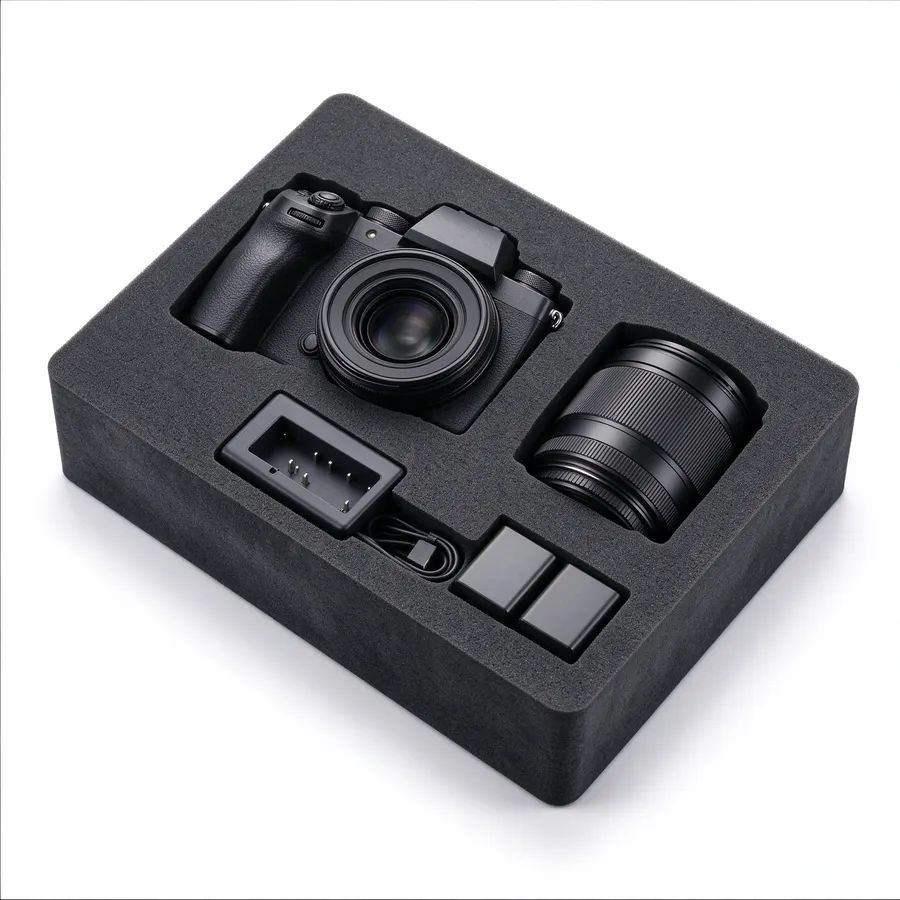
Our standard instrument layout is a base bed of block foam sized to the packed mass, a routed pocket under the instrument body, cut-out seats for each probe and wedge, and a top restraint layer over the lid so nothing lifts when the case is turned over. The transducer face should never rest on the cavity floor: a wear plate or a raised island keeps the crystal clear of grit that gets wiped in with the case. Foam density, pocket tolerance and whether the inlay is pluck-style or fully routed are agreed on the drawing, and custom foam starts from a single piece.
| Model | Lid Depth | Base Depth | Interior Height | Works Well For |
|---|---|---|---|---|
| KX-3213 | 86 mm | 32 mm | 118 mm | Detector lying flat, accessories in the lid |
| KX-3218 | 86 mm | 86 mm | 172 mm | Balanced kit with wedges seated upright |
| KX-93221 | 165 mm | 35 mm | 200 mm | Instrument standing in the base, thick 5.0 mm wall |
| KX-4321 | 164 mm | 38 mm | 202 mm | Long handles, yoke arms, tall connector stacks |
| KX-4821 | 144 mm | 50 mm | 194 mm | Array unit with scanner and cable looms |
| KX-5021 | 134 mm | 62 mm | 196 mm | Heavier instrument seated low, blocks beside it |
Instrument Class Versus Case Construction
The comparison below is a selection aid, not a compatibility promise: your device drawing decides. What we control is the shell geometry, the wall thickness, the depth split, the hardware and the foam, and all of those are quoted from published model data rather than from a typical value applied across the range.
| Kit | Recommended Model | Interior | Construction Point |
|---|---|---|---|
| Gauge, boot, one probe, charger | KX-62109 | 195 x 128 x 81 mm | 195 x 128 x 81 mm published interior in a 3.0 mm ABS shell with seal listed |
| Detector, three probes, two wedges, cable | KX-3218 | 308 x 230 x 172 mm | Even 86 mm and 86 mm split lets probe seats live in the lid |
| Array, scanner, encoder, couplant | KX-4821 | 447 x 312 x 194 mm | 4.5 mm wall with a 144 mm lid; 3,670 g empty |
| Multi-channel unit with reader and standards | KX-85424 | 483 x 363 x 190 mm | Wheels and handle for loads that should not be carried on stairs |
| Yoke, long handles, mains lead | KX-4321 | 411 x 208 x 202 mm | 202 mm interior height for items that must stand |
| Wide panel or plate specimen carrier | KX-64819 | 454 x 325 x 173 mm | Flat 454 x 325 mm footprint in a 3.5 mm ABS shell |
Moisture, Dust And What We Do Not Claim
A seal is a construction feature and a rating is a laboratory result, and buyers of inspection equipment need both to be described separately. Our catalogue carries a seal-availability field, and 96 of the 115 instrument-tagged models list a seal as available; that tells you the shell is designed to take a gasketed closing face. It does not tell you a grade. For these models the protection field is recorded as not measured, so we do not print a grade, we do not print a submersion depth, and we do not describe a model as waterproof in a way that implies a result it does not have.
This distinction matters most for NDT cases because of what buyers do with them. Once a lid is cut for a cable, a headset jack or a probe column, the closing path is interrupted at that cut, and any figure measured on an unopened shell no longer describes the case you received. If your procedure requires a stated grade, ask us to quote accredited testing against the specific standard and on the finished, cut configuration, with the report number recorded on the order. Where the kit must stay dry in rain, the practical answer is usually a double approach: a gasketed shell, a desiccant pocket and a breathable inner bag, plus a wipe-down routine at the end of a shift so condensation is not sealed in with the instrument.
Impact, Stacking And Site Handling
Shock reaching a transducer depends on the wall, the foam and the restraint together. In the instrument-tagged group the shell material is published as PP on 62 models, engineering PP on 35, ABS on 17 and a PP/ABS combination on one, with wall thickness between 2.1 and 5.8 mm; 136 models across the catalogue are listed as stackable and 19 are listed with wheels. What we do not do is quote a fall height or an impact energy for a model without a record for that model and configuration, and we would rather a buyer specify the handling profile - van deck, scaffolding, site container, air hold - and get the wall and foam chosen for it, than read a figure nobody measured.
Freight planning works the same way. KX-3213, for example, is published as 16 pieces in a 645 x 530 x 520 mm carton and KX-4010 as 10 pieces in a 710 x 410 x 500 mm carton, and pallet quantities are recorded as not measured, so we calculate a pallet plan from the carton footprint against your pallet size rather than publishing a load figure. Two site habits then protect NDT electronics more than any shell detail: connectors should not carry the load, so sockets get a relieved pocket that a coiled cable cannot press inward, and dense steel reference blocks should sit in their own channel away from the instrument, because a shifting block is the most common cause of a cracked display bezel in a case that was otherwise sized correctly.
A Checklist To Send With Your Enquiry
Send the list below and we can answer with model candidates, a foam proposal and a carton plan rather than with questions back. The same eight points are what our own engineers work from when a distributor brings us an inspection range to support.
Customisation, Commercial Terms And Contact
KeXin works with distributors, equipment makers and inspection-service companies on a wholesale and OEM or ODM basis, quoted EXW or FOB. We do not sell retail, we do not offer DDP and we do not hold overseas stock, so lead time is planned around production rather than a warehouse. Published thresholds are uniform across the catalogue: one piece for a standard model or a custom foam set, 300 pieces for a logo or a colour change, 300 for OEM and 3,000 for a dedicated mould. First articles on an existing mould run 45 days, a new mould runs 125 days, and terms are a 30 percent deposit with the balance after inspection. Third-party factory audits and independent inspection before shipment are welcome and are arranged against the purchase order.
For an NDT range the useful starting point is a dimension sheet rather than a catalogue number, because the difference between a good instrument case and a bad one is usually 15 mm of depth and where the wedge seats go. Send drawings, quantities and the handling profile, and we will return candidate models with their published interiors, wall thickness and carton data, plus a foam layout for review before any tooling commitment.
This page is published by KeXin New Materials (Guangdong) Co., Ltd., the manufacturer of the KX case range, and every dimension, wall thickness, weight and quantity figure in it is taken from our own published model records rather than from a supplier datasheet. Enquiries for NDT instrument cases should be addressed to Fred Zhao or the KeXin Sales Team, by WhatsApp on +86 135 3588 0002, with the instrument drawing and the annual quantity attached.
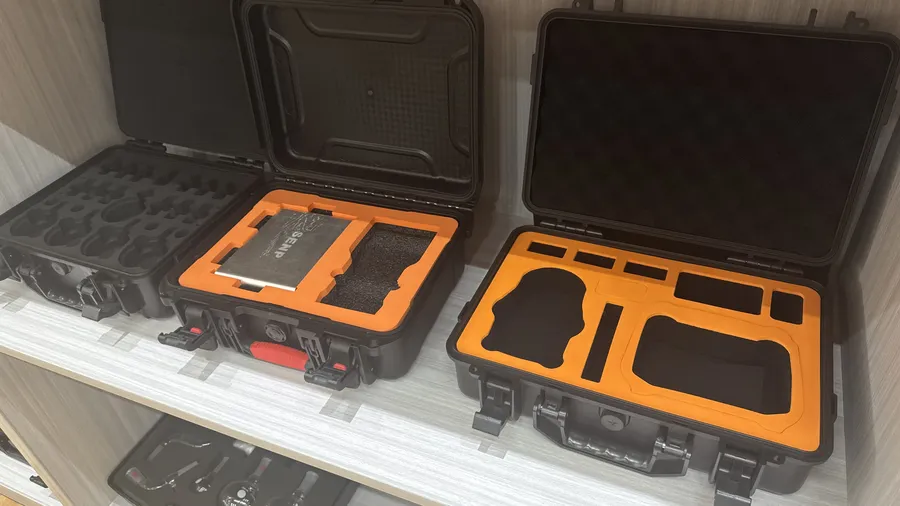
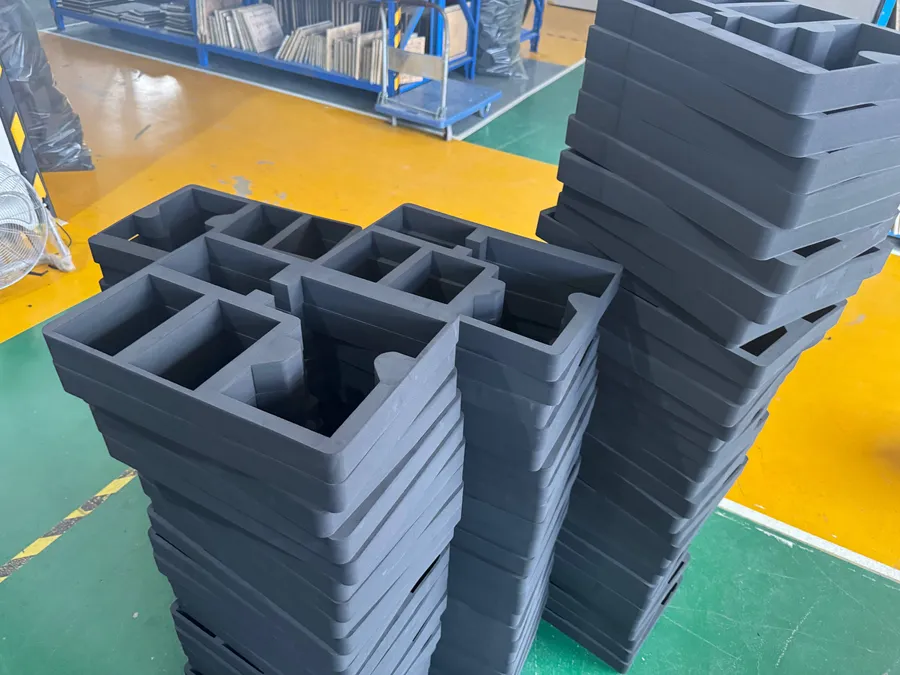
Customisation
Everything described above is configurable on a standard shell: interior layout (pick-and-pluck, die-cut or CNC-cut), foam grade and thickness, colour, logo method, latch and lock count, pressure-equalisation valve, cable ports, document holder and identification plate. A bespoke exterior geometry requires a new mould — 125 days, from 3,000 units per moulded component.
Procurement considerations
| Question | What to send us |
|---|---|
| Which shell fits? | Equipment L × W × H as packed, plus required clearance per axis |
| What does it cost? | Order quantity and estimated annual quantity — the two drive different answers |
| Is tooling needed? | Whether an existing shell clears the envelope with usable foam depth |
| Lead time? | Your required delivery date, not just the order date |
| Certification? | The exact standard your tender names — we will say whether we can test to it |
| Freight? | Destination and preferred terms; carton and pallet data supplied with the quotation |
Comparison and selection guide
The tables on this page exist because a protective case is chosen by comparing three things: the envelope, the environment and the handling chain. Where no table applies, the rule below is.
| Situation | What To Do |
|---|---|
| Benchtop mass | Firm base carrier, 50 mm minimum, with a soft contact layer. |
| Optical head | Suspend the body and clear the lenses entirely; never let foam touch a coated surface under load. |
| Field kit | CNC base for the instrument, pluck-foam top for probes and consumables. |
- Size on internal dimensions plus clearance, never on a product name.
- Choose the carrying method before the shell: it changes the series, not just the price.
- Specify the interior last, and decide up front whether the end user will reconfigure it.
Which protective case suits NDT testing instruments? relates to Protective Case Basics. Related families: Instrument & Equipment Cases / Electronics Cases / Optical Equipment Cases / Custom Protective Cases / Military Protective Cases. Related sectors: field and industrial equipment. Continue in the Protective Case Basics cluster.
This page is written from our own production data. If your requirement differs, send the dimensions and we will tell you which of the 155 models fits, or whether a custom route is needed.