Solar PV Testing Equipment Case: Published Sizes, Depth Split and Sealing Options
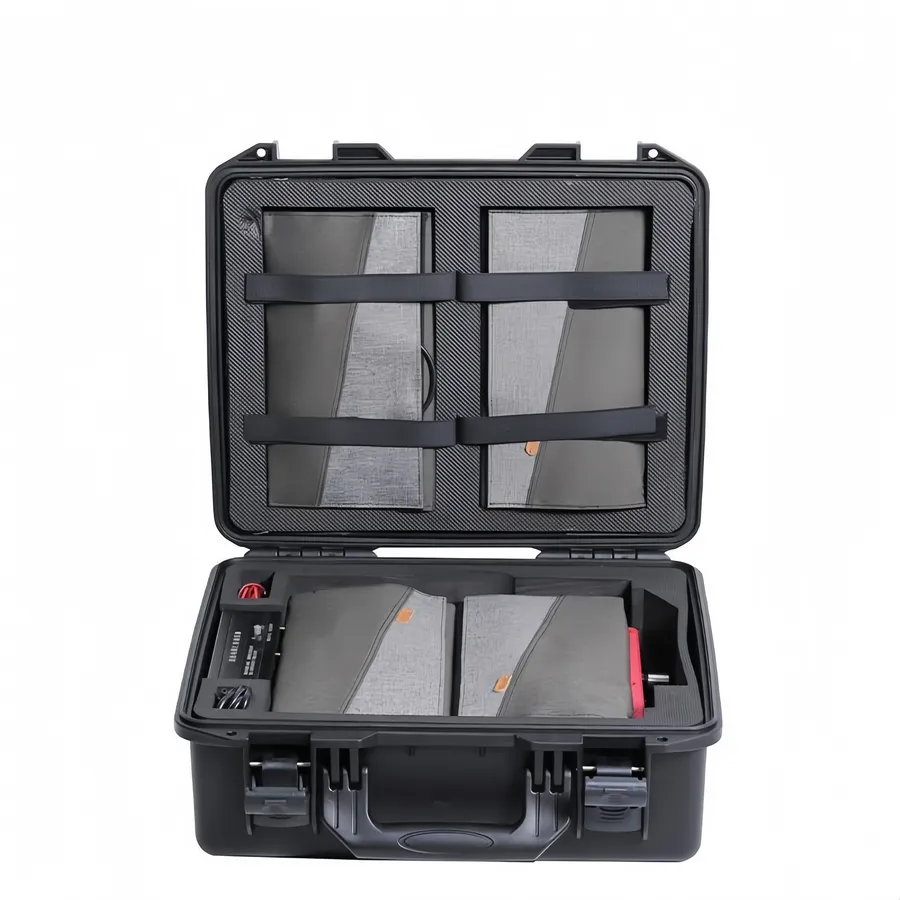
Size the cavity from the whole kit, not from the instrument. A solar PV testing equipment case usually carries an I-V curve tracer or string tester, its current clamp, a bundle of voltage sense leads, connector adapters for MC4-class and anderson-style interfaces, the irradiance reference sensor or pyranometer with its levelling base, and the calibration or reference sheet that must travel with the unit. KeXin New Materials (Guangdong) Co., Ltd. moulds 155 thermoplastic shell models whose published internal volumes run from 0.3 L to 139.5 L, with usable interior volume up to 111.6 L, wall thickness recorded on 148 models from 2 mm to 6 mm, base-and-lid depth split published on 100 models, and carton size with pieces per carton published on 64 models. Water and dust are recorded as not measured in our product file and no ingress protection code is printed for any model: 124 of the 155 offer a compressible gasket in a moulded channel and 31 are plain shells, while a pressure equalisation valve is a configuration option. Shock and impact follow the foam layout you approve, so the shell alone is not a shock rating and we publish no free-fall height. Where a tender needs a documented number, we quote accredited third-party testing against the exact model, gasket configuration and packed load state as a separate work package, and the report is issued to you. Business terms are wholesale only: EXW or FOB, no retail, no delivered-duty-paid shipments and no overseas stock.
Key points
- Size from the packed kit, not the instrument body: coiled sense leads, the current clamp, the connector adapters and the reference sheet all share one cavity.
- Depth is a lid-to-base decision, not a total. KX-3213 publishes 308 x 230 x 118 mm internal as 32 mm base + 86 mm lid, so a probe head or a levelling base sits in the lid half.
- Internal volume and usable interior volume are two published numbers: KX-88442 records 139.5 L internal against 111.6 L usable because ribs, the gasket channel and foam take space back.
- Shortlist on seal only for wet or dusty work: 124 of the 155 models offer a compressible gasket in a moulded channel and 31 are plain shells for dry storage.
- Water, dust, ultraviolet and temperature range are recorded as not measured across the file, and no ingress protection code is printed, so a rating in a tender is a test scope.
- Shock protection is a foam-layout decision. Pick from CNC-Cut, Die-Cut, EPE, EVA, PE, Pick & Pluck and approve the drawing; the shell alone carries no fall figure and we state no free-fall height.
- A fleet order is a packing question: carton size and pieces per carton are published on 64 models, and pallet quantity is calculated from the carton footprint against your pallet.
- OEM on an existing mould runs 45 days at MOQ 300 with your logo and colour; a new mould is 125 days at MOQ 3000 per component.
What a solar PV testing equipment case has to carry, and what damages it
PV test work is rarely one instrument. A commissioning crew travels with an I-V curve tracer or string tester, a current clamp, a set of voltage sense leads with adapter tips, a multimeter or insulation-resistance tester, an irradiance reference sensor or pyranometer on a levelling base, and increasingly a thermography camera or a visual inspection camera for module QA. Each of those fails in transit in a different way. The display window and the sensor face crack when a load lands on the lid, which is what happens when a case is stacked under a rack of racking rails. Pin and banana connectors bend when a coiled lead is trapped and the lid is forced. A calibration sheet that travels loose gets folded and then unreadable, and an instrument shipped without its reference document is a spare part, not a test asset. Salt-laden air at coastal arrays and grit on rooftops get into the latch and hinge, turning a one-thumb latch into a lever you fight with both hands. A dense adapter block sharing one pocket with an instrument housing is how a casing gets dented, because the metal block does not deform and the instrument does.
The transport profile is just as specific. Cases ride flat on a pallet in a container, take stack load they were never opened to resist, and get hooked or dragged over the last stretch from the inverter room to the array. That is why the honest way to specify a case for this work is to separate three questions and answer each with published data instead of an adjective: what cavity and depth split does the kit need, what shell and hardware configuration is that model offered with, and what evidence does your buyer or engineer need that we have not measured and must therefore test as a separate package.
Solar PV Testing Equipment Case: the six published numbers that decide the model
Every model in our file is described by the same block of measurements, and those six fields are what a purchasing decision is actually made on. Internal length, width and depth are published on all 155 models; the external envelope is published on all of them too, ranging up to 843 x 592 x 415 mm on the largest rolling case. Internal volume and usable interior volume are recorded separately and they are not the same number, because moulded ribs, the gasket channel and the foam layout you approve take space back. Wall thickness is recorded on 148 models and runs from 2 mm to 6 mm. The base-depth and lid-depth split is published on 100 models, which matters more than the total when a sensor head or a levelling base has to sit in the lid half. Net weight is published on 93 models, from 100 g on the smallest shell to 15320 g on the largest trolley case.
Two further lines decide usability in the field rather than on paper. Seal availability is a per-model fact: 124 models offer a compressible gasket, EPDM or equivalent, carried in a continuous moulded channel around the opening, and 31 are plain shells. And 36 models publish a narrow internal width, ranging from 70 mm to 308 mm, which is the number that tells you whether a probe handle or a clamp jaw clears the tapered wall near the latch side. Shell material is recorded as ABS / Engineering PP / PP / PP / ABS. Hardware is recorded per model as a moulded hinge, feet, a padlock-ready latch body, and a fixed or telescopic handle, with wheels and a telescopic handle published on 19 models.
Read those fields before reading any adjective on a supplier page. If a datasheet cannot answer all six, the case is being sold on a story rather than on geometry.
Published models by instrument class, with real figures
The table is drawn straight from the published specification file. Every figure is a recorded value for that model, and where a field is not published the cell says so rather than guessing. Read the volume column as a pair: KX-3308 records 5.8 L internal against 5 L usable, and KX-88442 records 139.5 L against 111.6 L, because the ribs and the gasket channel consume space. Sizing to internal volume alone is how a kit arrives and the lid will not close.
As a rule of thumb drawn from published cavities, and not a promise about your device: a single handheld instrument with its leads lands under 2 L, a tracer with clamp and adapters sits in the 4 to 9 L band, a two-person kit with a camera or laptop sits in the 10 to 20 L band, and a multi-crew spares case starts above 20 L. Measure the packed envelope as it actually travels, then pick the row.
| Equipment Carried | Model | Internal (L X W X D) | Internal L / Usable L | Base / Lid Depth | Wall Mm | Net Weight G | Gasket Offered | Outer Packing |
|---|---|---|---|---|---|---|---|---|
| Solar clamp meter, IV multimeter, test leads | KX-1905 | 180 x 160 x 40 mm | 1.2 / 1 | 15 mm base + 25 mm lid | 3 | 250 | Yes | carton not published |
| Insulation resistance tester + string probe set | KX-2808 | 265 x 190 x 76 mm | 3.8 / 3.3 | 38 mm base + 38 mm lid | 2.2 | 430 | No (plain shell) | 560 x 445 x 415 mm, 20 pcs |
| Irradiance meter / reference cell with levelling base | KX-3207 | 308 x 230 x 64 mm | 4.5 / 3.9 | 32 mm base + 32 mm lid | 3 | 570 | Yes | 645 x 530 x 430 mm, 24 pcs |
| I-V curve tracer with current clamp and sense leads | KX-3308 | 325 x 236 x 76 mm | 5.8 / 5 | 38 mm base + 38 mm lid | 2.3 | 575 | No (plain shell) | 670 x 550 x 425 mm, 20 pcs |
| Module QA camera, EL kit, spare adapters | KX-3508 | 344 x 268 x 72 mm | 6.6 / 5.7 | 36 mm base + 36 mm lid | 3 | 995 | Yes | 730 x 615 x 428 mm, 20 pcs |
| Thermal imager + laptop for a two-person crew | KX-4010 | 390 x 315 x 88 mm | 10.8 / 9.3 | 44 mm base + 44 mm lid | 3 | 1015 | Yes | 710 x 410 x 500 mm, 10 pcs |
| Full commissioning kit, sealed, deep lid | KX-3213 | 308 x 230 x 118 mm | 8.4 / 7.2 | 32 mm base + 86 mm lid | 3 | 860 | Yes | 645 x 530 x 520 mm, 16 pcs |
| Depot / workshop case for a whole test fleet | KX-4616 | 455 x 338 x 148 mm | 22.8 / 19.6 | 74 mm base + 74 mm lid | 3 | 1395 | Yes | 755 x 470 x 635 mm, pieces not published |
| Rolling field case, array-to-array transfer | KX-85021 | 437 x 308 x 164 mm | 22.1 / 17.7 | depth split not published | 4.5 | 4912 | Yes | carton not published |
| Large rolling case for a multi-crew O&M spares kit | KX-88442 | 740 x 518 x 364 mm | 139.5 / 111.6 | 44 mm base + 320 mm lid | 5 | 15320 | Yes | carton not published |
Depth split and foam layout: why total internal depth is the wrong number
A case closes by mating two mouldings, so the depth that matters is where the parting line falls relative to your instrument. KX-3213 publishes 308 x 230 x 118 mm internal as 32 mm base + 86 mm lid. Put a clamp meter with a standing kickstand in that shell and the lid wins the argument. KX-3207 is 308 x 230 x 64 mm internal as 32 mm base + 32 mm lid, and KX-2808 is 265 x 190 x 76 mm as 38 mm base + 38 mm lid, which is why the same footprint serves either a shallow reference sensor or a tracer with a connector stack. Where a split is not published we say so: only 100 of the 155 models record the base and lid depths separately, so for the rest we confirm the split per production batch before tooling changes are approved.
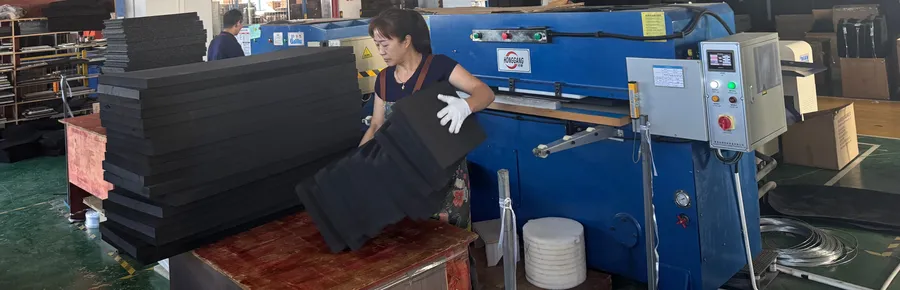
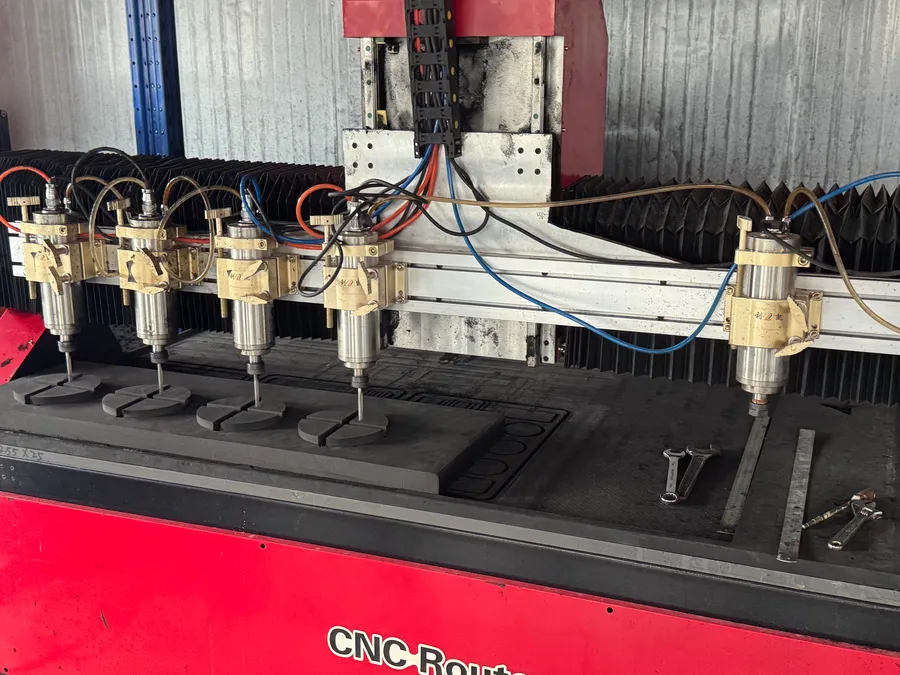
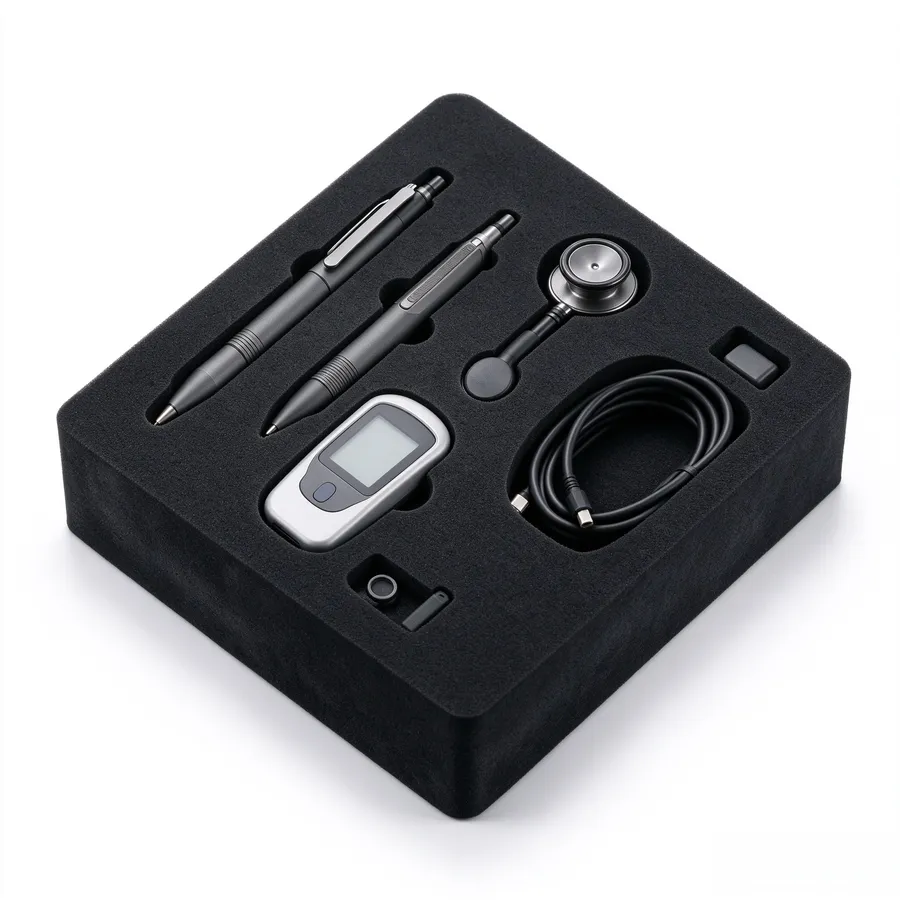
Foam is where protection is actually engineered, and it is a drawing you approve, not a filler we throw in. We cut from CNC-Cut, Die-Cut, EPE, EVA, PE, Pick & Pluck in top-foam, base-foam, layered, egg-crate and custom-cut structures, with CNC and die-cut routes available. For a PV kit the practical layout keeps each instrument in its own pocket with a wall of foam between the tracer body and the metal adapter block, a channel for the coiled sense leads so they are never trapped under the lid, a flat document pocket for the calibration sheet, and a recess for the reference sensor with its levelling base sitting face-up. Custom foam MOQ is 1, so a foam layout can be changed on a trial order. The shell alone is not a shock rating and we state no free-fall height without a test you commission.
Seals, valves and the protection lines we do not state
A seal on a case is a mechanism before it is a marketing word. On the 124 models where it is offered, the mechanism is a compressible gasket in a continuous moulded channel, compressed by latches spaced around the lid. Two details decide whether that mechanism keeps working on site. The first is a pressure equalisation valve, available as a configuration option across the whole library: without it, a case closed warm at midday and cooled overnight draws outside air inward through whatever gap exists, and any water standing on the lid rim is pulled in with it. The second is drainage, since a lid with a flat shallow pocket lets rainwater sit on the gasket line, which is a maintenance problem before it is ever a protection problem. None of that is a rating. It is a description of how the assembly resists particles and liquid getting in.
The other half of the honest answer is what we leave blank. Water, dust, ultraviolet exposure, temperature range, stack load, payload and any overall protection code are recorded as not measured across all 155 models, and we print no digit, no immersion depth and no immersion time for any of them, because a single-digit figure describes one sample run in one state under one laboratory procedure, not a production batch and not an assembly a buyer later modifies with a cable pass-through. Shock and impact are recorded as configuration options that depend on the foam layout you approve. Corrosion resistance is the line we record as measured, and the reason is narrow but real: a thermoplastic shell has no ferrous corrosion path, so the parts that actually rust on a coastal array are the latch springs, the hinge pins and any steel hardware you specify. If your specification needs a documented figure, the correct procurement route is a test programme quoted against the model, gasket configuration and packed load state you will ship, run by an accredited laboratory, with the report issued in your name.
| Specification Line | Status In Our File | How To Audit It |
|---|---|---|
| Internal and external dimensions, volume, wall, net weight | published per model, 148 of 155 models with wall thickness from 2 mm to 6 mm | compare the datasheet figure against a caliper reading on delivery |
| Water and dust performance | recorded as not measured; no ingress protection code is printed for any model | a rating in your tender is a test scope, quoted against model, gasket and packed state |
| Shock, impact and free-fall behaviour | recorded as a configuration option that needs a specified foam layout; the shell alone is not a shock rating | approve the foam drawing first, then define the evidence you want and where it is run |
| Ultraviolet, temperature range, stack load, payload | recorded as not measured across all 155 models | state the exposure and the stacking height you will use and ask for a test programme |
| Corrosion path of the shell | recorded as measured: a thermoplastic shell with no ferrous corrosion path | check the hardware finish, latch springs and hinge pins, which are the parts that rust |
Fleet purchasing for EPC and O&M buyers: cartons, pallets, MOQ and lead time
A tester distributor or an engineering contractor buys these in multiples, so the packing block is as important as the cavity. 64 models publish a carton size and pieces per carton: KX-3308 ships 670 x 550 x 425 mm, 20 pcs, KX-4010 ships 710 x 410 x 500 mm, 10 pcs, and the largest rolling shells ship one piece per carton. Pallet quantity is published as a calculation from the carton footprint against your pallet size rather than as a printed number, and container figures for 20GP, 40GP and 40HQ are supplied with the quotation instead of being asserted on a product page. 136 models are recorded as stackable, which is the relevant line for warehouse racking; a stacked column only tells you anything if the empty shells nest the way we say they do, so we confirm the stacking orientation with the carton drawing.
Commercial terms are fixed and plain: we work wholesale and OEM or ODM only, on EXW or FOB, with no retail, no delivered-duty-paid shipments and no overseas warehouse stock. Standard and custom-foam orders start at MOQ 1, logo and colour work at MOQ 300, and a new mould at MOQ 3000 per component. Payment is a 30 percent deposit with the balance after your inspection, and third-party inspection is welcome before that balance is paid. Lead time is 45 days for OEM production on an existing mould and 125 days for a new mould. Fred Zhao and the KeXin Sales Team handle enquiries; WhatsApp +86 135 3588 0002.
| Purchasing Situation | What We Publish | Buyer Action |
|---|---|---|
| One crew, one instrument set | internal cavity and depth split per model; 100 of 155 models publish the base/lid split | measure the packed kit as it travels, then pick the row; standard MOQ is 1 piece |
| Fleet order for an EPC or O&M contractor | carton size and pieces per carton on 64 models; pallet quantity calculated from the carton footprint against your pallet | send the pallet size and the annual instrument count with the enquiry |
| Own-brand programme for a tester distributor | logo and colour at MOQ 300, OEM on an existing mould in 45 days | supply artwork and the instrument list; we quote the shell, foam and hardware separately |
| A cavity that no existing mould matches | new mould 125 days, MOQ 3000 per component | a drawing, a photograph of the packed kit, or a physical sample of the instrument |
OEM and ODM: how a branded solar PV testing equipment case is built
Our OEM route starts from your instrument list rather than from our catalogue. Send the make and model of each device, a photograph of the packed kit as it travels, or a physical sample, and we return a shortlist of shell models with the cavity, depth split and packing figures, a foam drawing, and a hardware configuration. Logo, colour, packaging, foam and hardware are all open as customisations on 155 of the models in the file, and private label is available. Where an instrument set genuinely does not fit any published cavity, a new mould is quoted at 125 days with MOQ 3000 per component, and we will say so plainly rather than selling you a case the lid will not close on.
What we do not do is design protection backwards from a marketing claim. A configuration is defined by the geometry and hardware you approve, and any documented performance figure you need is produced by an accredited laboratory against that exact configuration, ordered as its own work package with a written scope, a sample quantity and a report issued to you. That is a slower sentence than the one a competitor might send, and it is the only one we can stand behind when your engineer opens the report at the array.
Which case for which job on the array
The last cut is by workflow rather than by instrument. A rooftop or carport install moves a case by hand up a ladder, so weight and a fixed folding handle dominate and KX-1905 at 250 g is in the conversation. A utility-scale site walks hundreds of metres between strings, so wheels and a telescopic handle matter more than cavity volume, which is where the 19 models published with wheels put you. A depot that holds a quarter's worth of spares buys on packing efficiency, so carton size and stackability decide it. A module QA workflow that carries a camera and a laptop wants width, not depth: KX-3508 publishes 344 x 268 x 72 mm internal with a 36 mm base + 36 mm lid split and ships 730 x 615 x 428 mm, 20 pcs, which is why a shallow wide shell beats a deep narrow one for that job. Match the case to the movement pattern of the crew and the numbers in the table above stop being a catalogue and start being a selection tool.
Customisation
Everything described above is configurable on a standard shell: interior layout (pick-and-pluck, die-cut or CNC-cut), foam grade and thickness, colour, logo method, latch and lock count, pressure-equalisation valve, cable ports, document holder and identification plate. A bespoke exterior geometry requires a new mould — 125 days, from 3,000 units per moulded component.
Procurement considerations
| Question | What to send us |
|---|---|
| Which shell fits? | Equipment L × W × H as packed, plus required clearance per axis |
| What does it cost? | Order quantity and estimated annual quantity — the two drive different answers |
| Is tooling needed? | Whether an existing shell clears the envelope with usable foam depth |
| Lead time? | Your required delivery date, not just the order date |
| Certification? | The exact standard your tender names — we will say whether we can test to it |
| Freight? | Destination and preferred terms; carton and pallet data supplied with the quotation |
Comparison and selection guide
The tables on this page exist because a protective case is chosen by comparing three things: the envelope, the environment and the handling chain. Where no table applies, the rule below is.
| Situation | What To Do |
|---|---|
| Benchtop mass | Firm base carrier, 50 mm minimum, with a soft contact layer. |
| Optical head | Suspend the body and clear the lenses entirely; never let foam touch a coated surface under load. |
| Field kit | CNC base for the instrument, pluck-foam top for probes and consumables. |
- Size on internal dimensions plus clearance, never on a product name.
- Choose the carrying method before the shell: it changes the series, not just the price.
- Specify the interior last, and decide up front whether the end user will reconfigure it.
Solar PV Testing Equipment Case: Published Sizes, Depth Split and Sealing Options relates to Protective Case Basics. Related families: Instrument & Equipment Cases / Outdoor Protective Cases / Electronics Cases / Field Equipment Cases / Tool Cases. Related sectors: field and industrial equipment. Continue in the Protective Case Basics cluster.
This page is written from our own production data. If your requirement differs, send the dimensions and we will tell you which of the 155 models fits, or whether a custom route is needed.


