Substation Inspection Equipment Case: Published Sizes, Weight and Handling
Choose the model by total packed weight and by how the kit is walked across the yard, not by the name of the instrument. A substation inspection round carries a secondary injection test set, a contact resistance or insulation tester with a bundle of Kelvin and sense leads, an earth resistance tester with spike reels, a thermal camera and tablet for busbar scans, phasing or voltage detection gear, and often insulated torque tools for breaker work. KeXin New Materials (Guangdong) Co., Ltd. moulds 155 thermoplastic shell models with published internal volumes from 0.3 L to 139.5 L, wall thickness recorded on 148 models from 2 mm to 6 mm, a base-and-lid depth split on 100 models, net weight on 93 models from 100 g to 15320 g, and wheels plus a telescopic handle on 19 models. Water and dust are recorded as not measured in our file and no ingress protection code is printed for any model: 124 of the 155 offer a compressible gasket in a moulded channel, 31 are plain shells, and a pressure equalisation valve is a configuration option. Shock and impact follow the foam layout you approve, so the shell alone is not a shock rating, we state no free-fall height, and a case is never sold as an insulating barrier or as live-work safety equipment. Where a tender needs a documented figure we quote accredited third-party testing against the exact model, gasket configuration and packed load state as a separate work package, with the report issued to you. Terms are wholesale and OEM only, EXW or FOB, no retail, no delivered-duty-paid shipments and no overseas warehouse stock.
Key points
- Add up the packed load before choosing: the test set, copper leads, spike reels and a tablet are heavier than the shell, and shell net weight is published on 93 models only.
- Wheels change the crew, not just the case: 19 of 155 models publish wheels and a telescopic handle, which turns a two-person carry over gravel and steel stairs into one person plus a trolley run.
- Standing a test set upright is a lid-depth decision. KX-92817 publishes 253 x 180 x 152 mm internal as 27 mm base + 125 mm lid, so the set stands in the base and the leads coil above it.
- Long items must clear the tapered wall: narrow internal width is published on 36 models from 70 mm to 308 mm, and that figure, not the box width, decides whether a phasing rod fits.
- A transport case is not electrical protective equipment: we publish no dielectric, voltage withstand or arc-related figure, and no live-work claim belongs on a case datasheet.
- Water, dust, ultraviolet, temperature range, stack load and payload are recorded as not measured across all 155 models, and no ingress protection code is printed for any of them.
- For a utility stock programme the packing block is the price block: carton size with pieces per carton is published on 64 models and pallet quantity is calculated against your pallet.
- OEM on an existing mould is 45 days at MOQ 300 with your logo; a new mould for a cavity nothing matches is 125 days at MOQ 3000 per component.
What a substation inspection round actually carries
A substation inspection or short-outage kit is a stack of heavy, differently shaped loads rather than one instrument. The core is usually a secondary injection test set for relay checking, with its current and voltage leads on reels; a contact resistance tester for breaker and isolator joints, with Kelvin clips and a short heavy pair of leads; an insulation resistance tester; an earth or ground resistance tester with spikes and reels of cable; a power quality or harmonic analyser with current clamps; and a thermal imaging camera with a tablet for the routine busbar and cable-pit scan. Around that sit the things that get damaged or lost: phasing gear and voltage detectors with their probes, insulated torque tools for breaker bolts, spare fuses and indicator lamps, gas analysis or leak detection equipment on SF6 panels, and the paperwork, which in a live substation is not optional because a permit-to-work document travels with the instrument it refers to.
The site punishes a case in ways a workshop never does. Cable trenches and culverts mean a case is lifted onto and off a narrow walkway rather than rolled. Graded stone and steel grating destroy the flat face of a base and make a small wheel jam. A case set down on a warm bushing or near an oil film picks up residue that attacks a gasket line over months. Condensation in a cable pit at dawn is the reason a seal discussion matters, and dust from an old yard is the reason a latch with a boot keeps working after a season. Metal floors and steel stairs also multiply the shock a lead reel takes when a case is set down hard, which is why the foam layout is the engineering decision here rather than a packing afterthought.
Substation Inspection Equipment Case: the published figures that narrow 155 models to two
Our file describes every model with the same measurements, and four of them do most of the filtering. Internal length, width and depth are published on all 155 models, with the external envelope as well, running up to 843 x 592 x 415 mm on the largest rolling shell. Internal volume and usable interior volume are recorded separately, from 0.3 L to 139.5 L internal and up to 111.6 L usable, because moulded ribs, the gasket channel and the approved foam take space back. Wall thickness is recorded on 148 models from 2 mm to 6 mm. The base-and-lid depth split is published on 100 models, which is the field that decides whether a test set stands upright or has to lie on its side. Net weight is published on 93 models, from 100 g to 15320 g, and 36 models publish a narrow internal width, the tapered clearance at the latch side that long rods either clear or do not.
Two lines then decide whether the case survives the yard as a working asset rather than a storage box. Seal availability is a per-model fact: 124 models offer a compressible gasket, EPDM or equivalent, in a continuous moulded channel around the opening, and 31 are plain shells; a pressure equalisation valve is a configuration option across the library, which matters in a pit where the temperature swings between dawn and midday. And handling hardware is recorded per model as a moulded hinge, feet, a padlock-ready latch body, and a fixed or telescopic handle, with wheels and a telescopic handle published on 19 models. 136 models are recorded as stackable, which is what a utility cares about when the same case is racked across thirty sites. Shell material is recorded as ABS / Engineering PP / PP / PP / ABS.
Published models by instrument, with real figures
The table is taken straight from the published specification file; every cell is a recorded value for that model, and where a field is not published the cell says so instead of estimating. Note how differently the cavities are shaped for the same class of work: KX-92817 gives you 253 x 180 x 152 mm internal at 27 mm base + 125 mm lid for a set that stands up, while KX-4610 gives 455 x 338 x 84 mm as 42 mm base + 42 mm lid for a wide flat load such as a camera and tablet. Neither is bigger than the other in any useful sense; one is deep and one is shallow.
Read the packing column as part of the selection, because a single pilot order and a fleet order are different products. KX-3213 ships 645 x 530 x 520 mm, 16 pcs and KX-5021 ships 765 x 485 x 650 mm, 6 pcs, while the largest wheeled shells ship one piece per carton. If your purchasing team needs a landed cost per site, that column plus your pallet size is the arithmetic, and we supply container figures for 20GP, 40GP and 40HQ with the quotation rather than printing them on a page.
| Equipment Carried In The Round | Model | Internal (L X W X D) | Internal L / Usable L | Base / Lid Depth | Wall Mm | Net Weight G | Gasket Offered | Wheels / Handle | Outer Packing |
|---|---|---|---|---|---|---|---|---|---|
| Secondary injection / protection relay test set | KX-5021 | 465 x 315 x 196 mm | 28.7 / 24.7 | 62 mm base + 134 mm lid | 3.7 | 3430 | Yes | Carried by hand | 765 x 485 x 650 mm, 6 pcs |
| Contact resistance (micro-ohm) tester with Kelvin leads | KX-63413 | 310 x 255 x 106 mm | 8.4 / 6.7 | depth split not published | 4.8 | 1680 | Yes | Carried by hand | 670 x 365 x 710 mm, 10 pcs |
| Earth and ground resistance tester with spike reels | KX-3213 | 308 x 230 x 118 mm | 8.4 / 7.2 | 32 mm base + 86 mm lid | 3 | 860 | Yes | Carried by hand | 645 x 530 x 520 mm, 16 pcs |
| Insulation resistance tester + phasing / voltage detector | KX-63612 | 333 x 217 x 114 mm | 8.2 / 7.1 | depth split not published | 3.5 | 1300 | Yes | Carried by hand | 585 x 385 x 560 mm, 8 pcs |
| Thermal imaging camera + tablet for a busbar scan | KX-4010 | 390 x 315 x 88 mm | 10.8 / 9.3 | 44 mm base + 44 mm lid | 3 | 1015 | Yes | Carried by hand | 710 x 410 x 500 mm, 10 pcs |
| Power quality / harmonic analyser with CT clips | KX-4610 | 455 x 338 x 84 mm | 12.9 / 11.1 | 42 mm base + 42 mm lid | 3 | 1115 | Yes | Carried by hand | 755 x 470 x 650 mm, pieces not published |
| SF6 gas analysis or leak detection kit | KX-92817 | 253 x 180 x 152 mm | 6.9 / 5.5 | 27 mm base + 125 mm lid | 5 | 940 | Yes | Carried by hand | carton not published |
| Breaker torque tools and insulated hand tools | KX-86216 | 582 x 300 x 130 mm | 22.7 / 19.5 | 30 mm base + 100 mm lid | 3.3 | net weight not published | Yes | Carried by hand | carton not published |
| Heavy VLF or DC test set, walked across the yard | KX-85726 | 520 x 296 x 210 mm | 32.3 / 25.8 | 55 mm base + 155 mm lid | 4.2 | 5600 | Yes | Wheels + telescopic handle | carton not published |
| Substation outage kit on wheels, deep cavity | KX-86136 | 530 x 360 x 304 mm | 58 / 46.4 | 44 mm base + 260 mm lid | 5 | 8500 | Yes | Wheels + telescopic handle | carton not published |
Weight, distance and the crew: the handling questions a datasheet hides
In a switchyard the binding constraint is usually how far the kit is carried and by how many people, and our published data lets you reason about it honestly. Empty shell net weight is published on 93 models and ranges to 15320 g on the largest rolling case; the instruments on top of that are yours to weigh, and copper lead sets and a spike reel are heavy in a way a plastic instrument box hides. Distance decides the hardware: 19 models publish wheels with a telescopic handle, including KX-85726 at 520 x 296 x 210 mm internal and 5600 g empty, and KX-86136 at 530 x 360 x 304 mm internal and 8500 g. Those are the shells that get walked from the control room to a remote bay without a second person. Everything else is a carried case, and then the published net weight plus the lid geometry is what your crew will feel on a steel stair.
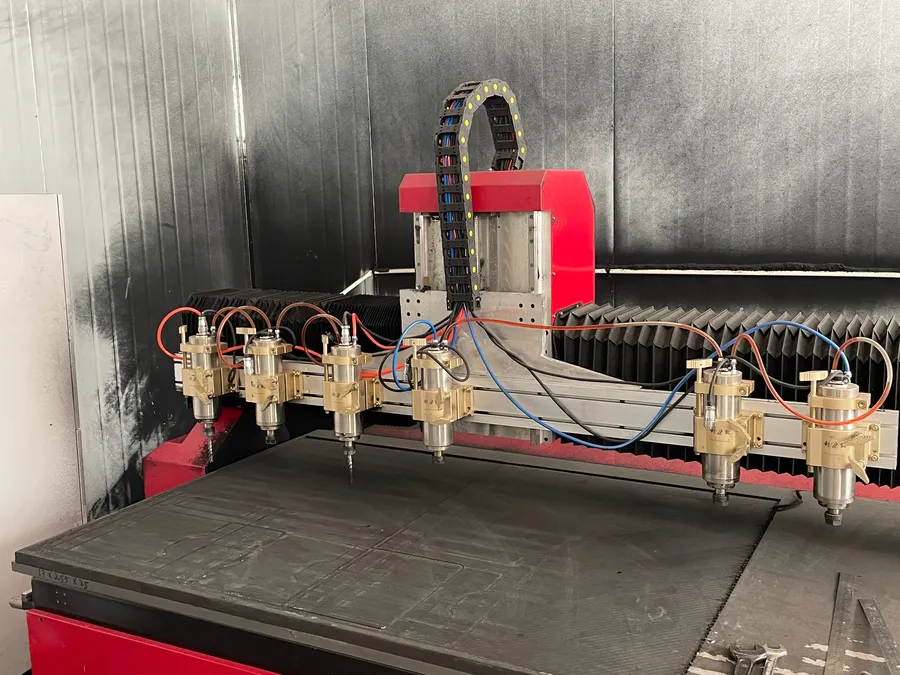
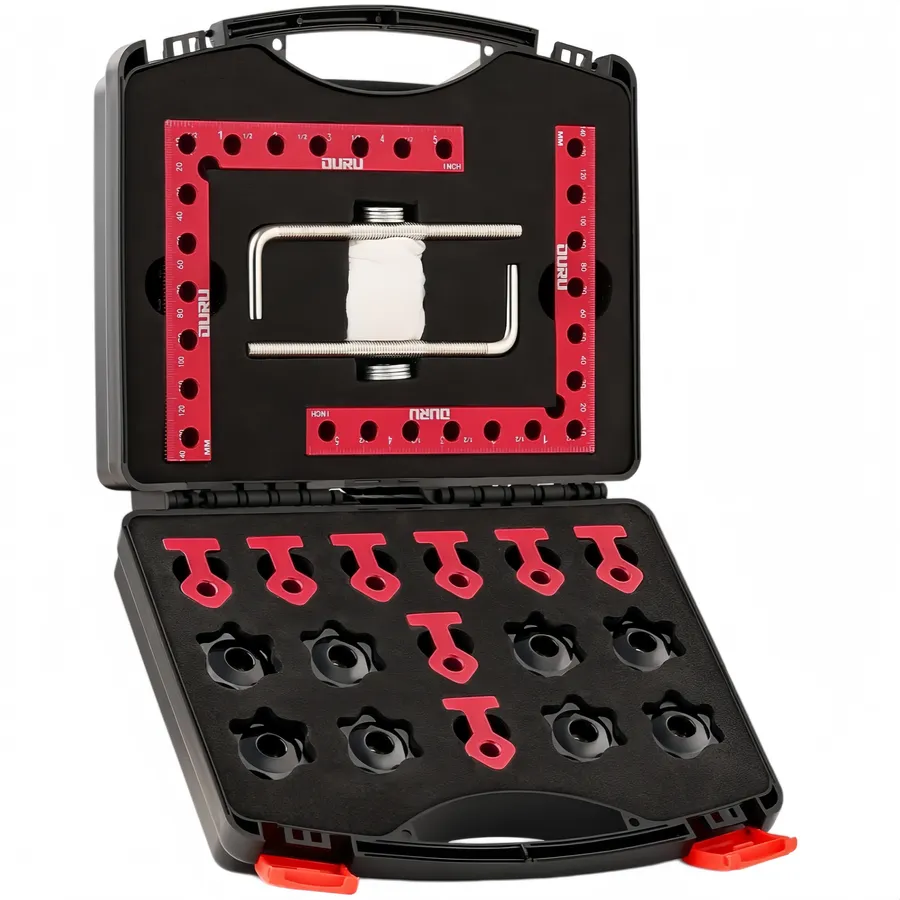
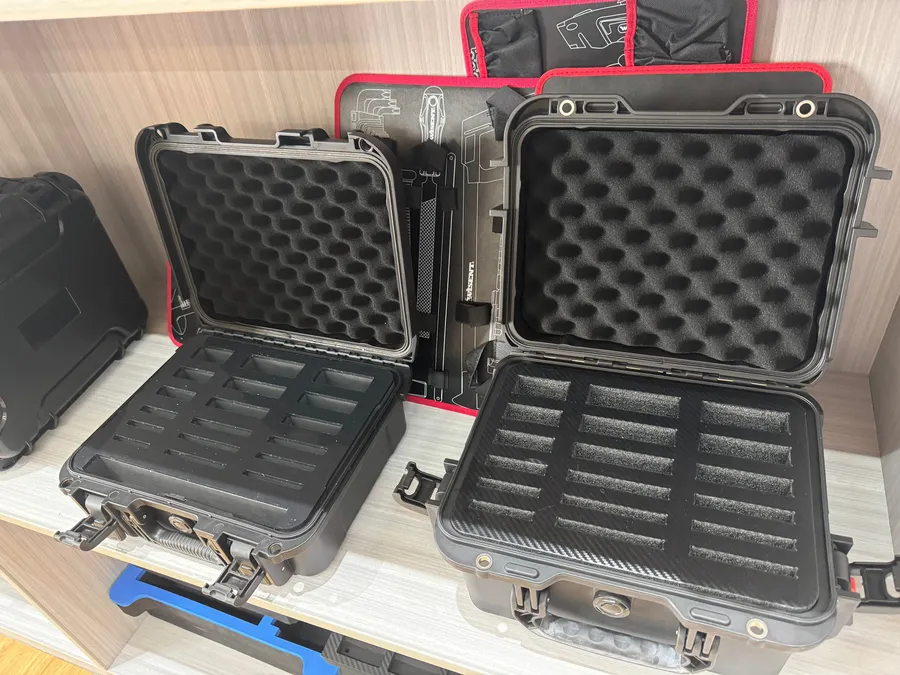
The second hidden question is what happens inside the case during that walk. A lead reel sliding sideways against an instrument connector is the commonest damage we hear described, and it is a foam-layout fault rather than a shell fault. We cut from CNC-Cut, Die-Cut, EPE, EVA, PE, Pick & Pluck in top-foam, base-foam, layered, egg-crate and custom-cut structures, with CNC and die-cut routes, and custom foam carries an MOQ of 1 so a layout can be revised on a trial order. The pattern that works for an inspection round puts each instrument in its own pocket, a separate pocket for each lead set so nothing is coiled over a connector, a flat document pocket for the permit and the test results, and a recess that captures the probe tips of phasing gear so they cannot walk into a tablet screen.
| Handling Problem | Published Figure To Check | Why It Decides The Model |
|---|---|---|
| One crew member carries the set and the leads | net weight of the empty shell, published on 93 of 155 models from 100 g to 15320 g | the instrument and copper leads add load on top of the shell, so the published shell weight is a floor and not a total |
| The kit is walked over gravel, cable trenches and steel stairs | wheels on 19 models, telescopic handle on 19 models | a wheeled shell with a telescopic handle turns a two-person carry into one person plus a trolley run |
| A test set stands upright rather than lying flat | lid depth published on 100 models, up to 320 mm on KX-88442 | standing the set needs lid clearance plus a foam pocket that stops it walking sideways when the lid closes |
| Long phasing rods or a torque bar will not lie across a box | narrow internal width published on 36 models, from 70 mm to 308 mm | a long item must clear the tapered wall at the latch side, which is what the narrow width records |
| The utility stocks the same case across many substations | carton size and pieces per carton on 64 models, stackable recorded on 136 models | a stock programme is bought in cartons and racked in columns, so packing geometry is part of the price |
What we publish and what we leave blank on protection
Substation buyers ask sharper questions than most, so it is worth being exact about the two halves of the answer. The mechanism half is publishable: on the 124 models where it is offered the seal is a compressible gasket in a continuous moulded channel compressed by latches spaced around the lid, a pressure equalisation valve is available as a configuration option, and the latch body accepts a standard padlock, which in a substation is a lockout requirement before it is a security feature. What a gasket resists is dust and splash and the condensation cycle of a cable pit, described as a mechanism and nothing more.
The claim half is where we stay quiet. Water, dust, ultraviolet exposure, temperature range, stack load, payload and any overall protection code are recorded as not measured across all 155 models, and we print no digit, no immersion depth and no immersion time, because a digit describes one sample in one state under one laboratory procedure rather than a production batch or an assembly you later modify with a cable pass-through. Shock and impact are recorded as configuration options dependent on the foam layout, with no free-fall height claimed without a test you commission. Corrosion resistance is the line recorded as measured, and narrowly so: a thermoplastic shell has no ferrous corrosion path, so the parts that fail near salt air or oil are the latch springs, hinge pins and any steel hardware you specify. And one boundary deserves stating plainly, because it is a safety boundary rather than a commercial one: a transport case is not electrical protective equipment. It is not an insulating barrier, we publish no dielectric or voltage-withstand figure for a shell, and nothing on our pages should be read as a live-work safety claim.
| What A Buyer Might Expect | What Our File Says | What To Do Instead |
|---|---|---|
| A dielectric or voltage withstand figure for the case itself | temperature range, stack load and payload are recorded as not measured on all 155 models; a transport case is not an insulating barrier and is not electrical protective equipment | keep live-work safety equipment in its own documented scope and ask us only to protect the instruments |
| A water and dust protection code | recorded as not measured, and no ingress protection code is printed for any model | shortlist the 124 models offering a compressible gasket in a moulded channel, then commission accredited testing against the shipped configuration as a separate work package |
| A fall height the case survives with a test set inside | shock and impact are recorded as configuration options that depend on the foam layout; the shell alone is not a shock rating and we publish no free-fall height | approve the foam drawing first, then define the evidence you need and where it is produced |
| Ultraviolet stability for a case left in a switchyard all summer | ultraviolet exposure is recorded as not measured | say where the case is stored between rounds; a shaded cable-pit store and an outdoor rack are different specs |
| Corrosion performance near salt air, oil and SF6 decomposition products | the shell is recorded as measured on this line: a thermoplastic shell with no ferrous corrosion path | specify the hardware finish, since latch springs, hinge pins and any steel insert are the parts that corrode first |
Stock programmes, cartons and the commercial terms
A utility or a testing contractor rarely buys one case; the order is a stock programme across a region, sometimes with a spare set held at two or three substations. That makes the packing block part of the specification: 64 models publish a carton size and pieces per carton, 136 models are recorded as stackable, and pallet quantity is published as a calculation from the carton footprint against your pallet size rather than as a printed number. Container figures for 20GP, 40GP and 40HQ come with the quotation. Send the annual instrument count and the pallet size and the whole arithmetic is done in one pass, including mixed orders where a deep-lid shell for the standing test set ships beside a shallow wide shell for the thermal camera.
The commercial frame is fixed and simple. We work wholesale and OEM or ODM only, on EXW or FOB terms: no retail, no delivered-duty-paid shipments and no overseas warehouse stock. Standard and custom-foam orders start at MOQ 1; logo and colour work at MOQ 300; a new mould at MOQ 3000 per component. Payment is a 30 percent deposit with the balance after your inspection, and third-party factory or pre-shipment inspection is welcome before that balance is released. Lead time is 45 days for OEM production on an existing mould and 125 days for a new mould. Enquiries go to Fred Zhao or the KeXin Sales Team, WhatsApp +86 135 3588 0002.
OEM and ODM: how a utility-spec case gets built
Utility and contractor specifications usually arrive as an equipment list plus a colour, a stencil, and a padlock requirement rather than as a model number. Our route starts from that list. Send the instruments with their packed dimensions, the annual quantity, and any requirement such as a hi-vis shell colour, a stencil block for an asset number, a document holder on the lid, or a specific latch for your lockout hasps, and we return a shortlist of shell models with cavity, depth split, wall, weight and packing figures, a foam drawing, and a hardware sheet. Logo, colour, packaging, foam and hardware are all open, and private label is available on the whole file of 155 models. Where a genuinely awkward item such as a phasing rod assembly fits no published cavity, a new mould is quoted at 125 days with MOQ 3000 per component, and we will tell you that instead of selling a case your crew will fight.
What we will not do is reverse-engineer a protection claim to win a bid. A configuration is defined by the geometry and hardware you approve, and any documented performance figure you need is produced by an accredited laboratory against that exact configuration, ordered as its own work package with a written scope, a stated sample quantity and a report issued in your name. Slower to write, but it is the only version that survives being opened by your engineer at the bay.
Which shell for which job in the yard
The last cut is by workflow. A routine quarterly scan carries a camera, a tablet and a meter, so shallow width wins and KX-4010 at 390 x 315 x 88 mm internal with 44 mm base + 44 mm lid is the shape to look at. A relay checking job during a short outage carries a test set with reels, so depth and a sealed gasket matter more, which points at KX-5021 or KX-86136. A breaker joint measurement trip is light and fast, so a carried shell such as KX-3213 at 860 g is enough. A commissioning job that stays on site for a week moves heavy sets across distance, so the wheeled shells such as KX-85726 change how many people the task needs. And a spares and tools store wants a long cavity for torque bars, where KX-86216 at 582 x 300 x 130 mm internal is the published shape. Match the case to the movement pattern and the crew size, then check the row in the table above.
Customisation
Everything described above is configurable on a standard shell: interior layout (pick-and-pluck, die-cut or CNC-cut), foam grade and thickness, colour, logo method, latch and lock count, pressure-equalisation valve, cable ports, document holder and identification plate. A bespoke exterior geometry requires a new mould — 125 days, from 3,000 units per moulded component.
Procurement considerations
| Question | What to send us |
|---|---|
| Which shell fits? | Equipment L × W × H as packed, plus required clearance per axis |
| What does it cost? | Order quantity and estimated annual quantity — the two drive different answers |
| Is tooling needed? | Whether an existing shell clears the envelope with usable foam depth |
| Lead time? | Your required delivery date, not just the order date |
| Certification? | The exact standard your tender names — we will say whether we can test to it |
| Freight? | Destination and preferred terms; carton and pallet data supplied with the quotation |
Comparison and selection guide
The tables on this page exist because a protective case is chosen by comparing three things: the envelope, the environment and the handling chain. Where no table applies, the rule below is.
| Situation | What To Do |
|---|---|
| Benchtop mass | Firm base carrier, 50 mm minimum, with a soft contact layer. |
| Optical head | Suspend the body and clear the lenses entirely; never let foam touch a coated surface under load. |
| Field kit | CNC base for the instrument, pluck-foam top for probes and consumables. |
- Size on internal dimensions plus clearance, never on a product name.
- Choose the carrying method before the shell: it changes the series, not just the price.
- Specify the interior last, and decide up front whether the end user will reconfigure it.
Substation Inspection Equipment Case: Published Sizes, Weight and Handling relates to Protective Case Basics. Related families: Instrument & Equipment Cases / Electronics Cases / Equipment Transport Cases / Tool Cases / Field Equipment Cases. Related sectors: field and industrial equipment. Continue in the Protective Case Basics cluster.
This page is written from our own production data. If your requirement differs, send the dimensions and we will tell you which of the 155 models fits, or whether a custom route is needed.


