Can case gaskets be customised for a specific piece of equipment?
Yes. Case gaskets are customised per model and per order. The gasket itself — profile, compound, hardness, and how it is joined — can be changed on shells that already publish a moulded channel, and that change rides on existing tooling, which keeps the OEM sample window at 45 days. A new shell size is a different project: a new mould runs 125 days with MOQ from 3,000 per component. What we do not do is print performance grades we have not measured. The catalogue publishes external and internal dimensions, lid depth, and wall thickness for every model, and 124 of the 155 published models list an EPDM or equivalent compressible gasket option for that shell; anything beyond that — an ingress protection code, an ageing figure — is arranged as accredited laboratory testing quoted per configuration, never asserted in advance.
Key points
- Start from the case model, not the compound: 124 of our 155 published models list an EPDM or equivalent compressible gasket option for that shell; a few small shells publish none.
- A gasket-only change — profile, compound, hardness, joints — rides on the existing mould, keeping the OEM sample window at 45 days; new shell geometry needs a new mould: 125 days, MOQ from 3,000 per component.
- We publish dimensions, lid depth, and wall thickness per model and we print no IP code and no ageing figure: accredited testing is quoted per configuration when a project needs it.
- Tender wording naming a protection grade is a question for the supplier: ask any vendor for laboratory name, method and version, test dates, and sample serials before treating a claim as fact.
- Gaskets are consumables: latch adjustment and a clean channel resolve most field complaints before you order model-keyed replacement gaskets.
What buyers actually mean when they ask for custom case gaskets
When a buyer asks whether case gaskets can be customised for a specific piece of equipment, the question almost always bundles three separate decisions. The first is the channel: the groove moulded into the lid rim that the gasket sits in, whose shape and length follow the footprint of each model. The second is the gasket itself: its profile, its compound, its hardness, and whether it arrives as a moulded ring or a cut length with a spliced joint. The third is everything that loads the gasket — latch count and adjustment, hinge alignment, and on some builds a pressure-equalisation valve, which the catalogue lists as a configuration option rather than standard equipment. Changing any one of the three is possible; changing all three at once is a new product, not a tweak, and that distinction drives both the timeline and the tooling cost.
For most equipment owners the practical version of the question is narrower: the case model is already chosen, the lid depth and wall thickness are published, and what needs adapting is the seal line that meets their device — a connector that crosses the rim, a lid that closes shallower than expected, or a compound that must survive a hotter storage site. Those sit inside the first two decisions above and are the kind of change KeXin handles on wholesale and OEM orders without opening a new tool.
The four paths for gasket customisation, and what each one changes
The table is deliberately blunt about the fourth path. A buyer comparing suppliers will sometimes be told that any shell can take any gasket; our catalogue records each model as it is tooled, and where a small shell carries no channel, we say so at quotation stage rather than discovering it at delivery. That honesty is cheaper than a returned container.
| Path | What Changes | Tooling Reality | Published Anchor |
|---|---|---|---|
| Change the gasket only | A custom case gasket profile, compound, hardness or joint method on a shell that already publishes a moulded channel | No new tooling; the change rides on the existing mould, inside the 45-day OEM sample window | materials.seal line on 124 of 155 models: EPDM or equivalent compressible gasket |
| Redesign the channel on an existing mould | Groove depth, width or positioning in the lid rim | Steel rework on the existing tool, scoped case by case during the tooling review | Lid depth per model, from 16 mm to 320 mm across the catalogue |
| New shell geometry | A lid rim sized around equipment no published model fits | New mould: 125 days, MOQ from 3,000 per component | OEM and ODM marked available on catalogue models |
| Shell published without a seal offering | Equipment that needs sealing but the chosen shell states none offered on that shell | Stated honestly; either move to a model that publishes a channel or scope the shell change — no promises on a shell built without one | Example: KX-1204 (120 × 90 × 40 mm) is published with no seal offering on that shell |
Gasket channel in a moulded lid: why the answer starts with the model
Lid depth is not gasket thickness — it is the reason one gasket programme cannot cover a whole catalogue. A 320 mm deep lid on the KX-88442 and a 16 mm lid on the KX-1204 give the channel a different path length, different corner radii, and a different amount of room for the gasket to compress into when the latches pull the lid down. The wall thickness column matters the same way: a 5.0 mm wall carries a deeper, better-anchored groove than a 2.6 mm wall, and a gasket asked to seal against thin material needs a lighter compression target. Every figure in this table is the published, per-model specification from our product data, which is also what a supplier comparison should be built on: the model sheet, not a brochure promise.
| Model | External Mm | Lid Depth Mm | Wall Thickness Mm | Net Weight G | Published Seal |
|---|---|---|---|---|---|
| KX-88442 | 843 × 592 × 415 | 320 | 5.0 | 15,320 | EPDM or equivalent compressible gasket (option) |
| KX-4010 | 400 × 360 × 100 | 44 | 3.0 | 1,015 | EPDM or equivalent compressible gasket (option) |
| KX-1905 | 190 × 190 × 45 | 25 | 3.0 | 250 | EPDM or equivalent compressible gasket (option) |
| KX-1204 | 120 × 90 × 40 | 16 | 2.6 | 100 | Published with no seal offering on this shell |
What we do not claim about gasket performance
The protection fields on our model sheets record waterproof and dust figures as not measured, and we print no IP code for any configuration, because a code without a laboratory behind it is decoration. This is the buyer-education point that matters more than any single answer from us: a protection grade describes what a specific sample of a case did in a specific laboratory procedure — dust-tight ingress, limited ingress under spray, or full immersion — and the number only belongs to the exact configuration that went through it. Two shells with the same mould can produce different results once latch count, gasket joint method, or valve fitment changes, which is why the same grade quoted across a whole catalogue line should make any buyer pause.
When a tender names a grade or an impact procedure, the right request — from us or from anyone else — is a report that carries the laboratory name, the method and its revision, the test date, the configuration as tested, and the serial numbers of the samples. If a supplier cannot produce those five things, the grade is a hope, not a result. Our position is simple: we state plainly what our own data does and does not record, and where a project needs a figure we have not measured, we quote accredited third-party laboratory testing against the configuration the buyer actually intends to order.
Which gasket compound suits hot climates, cold storage, or coastal use
The compound question follows the environment, not the marketing. EPDM — the line our catalogue publishes as the available option, described as an EPDM or equivalent compressible gasket — is the conventional choice for outdoor weathering because it resists ozone and sunlight well; silicone compounds are usually the ones buyers raise when they ask which gasket compound suits hot climates or wide temperature swings, and fluorosilicone enters conversations about fuel and oil contact. We will not claim that every model runs happily on every compound: substituting a compound changes compression behaviour in a channel sized for a specific material, so at KeXin it is handled as an engineering review of the particular model, with the raw-material datasheet and compression-set figures for the proposed compound put in front of the buyer before anything is committed. Ask any supplier for those same two documents; a vendor who has neither is choosing the compound by habit.
Replacing a case gasket on a field-issued protective case
A fleet of issued cases ages unevenly, and gaskets fail before shells do: pinched during a close, dried by storage, cut during an improvised repair. Before ordering replacements for a fleet, check the two free fixes first — latch strike adjustment, which restores lid alignment and even compression around the rim, and a full channel clean, because grit held in the groove reads as a leaking gasket. If the gasket itself is damaged, order by model: the channel path is model geometry, so a replacement strip has to match that model's profile, length, and joint position. Keeping one spare case gasket per active model in the stores, logged the same way spare latches are logged, turns a sealing complaint into a ten-minute bench job instead of a returned case.
How a KeXin OEM gasket order actually runs
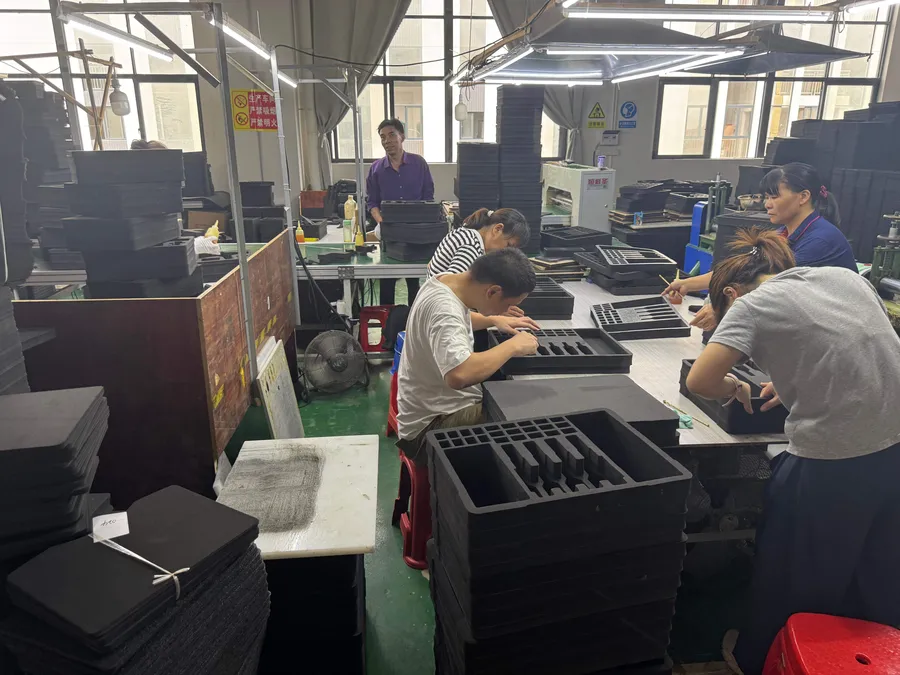
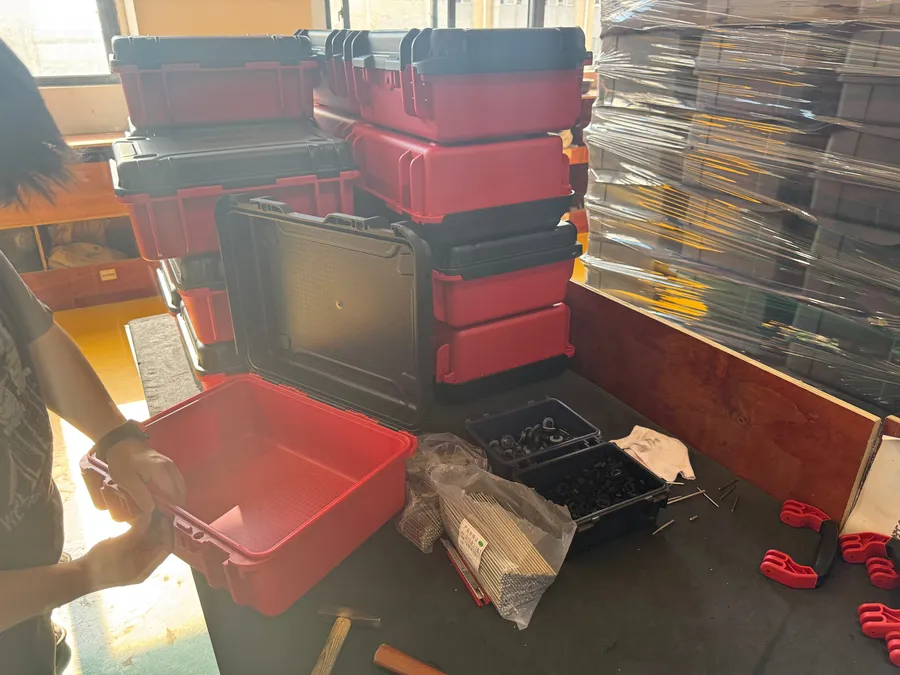
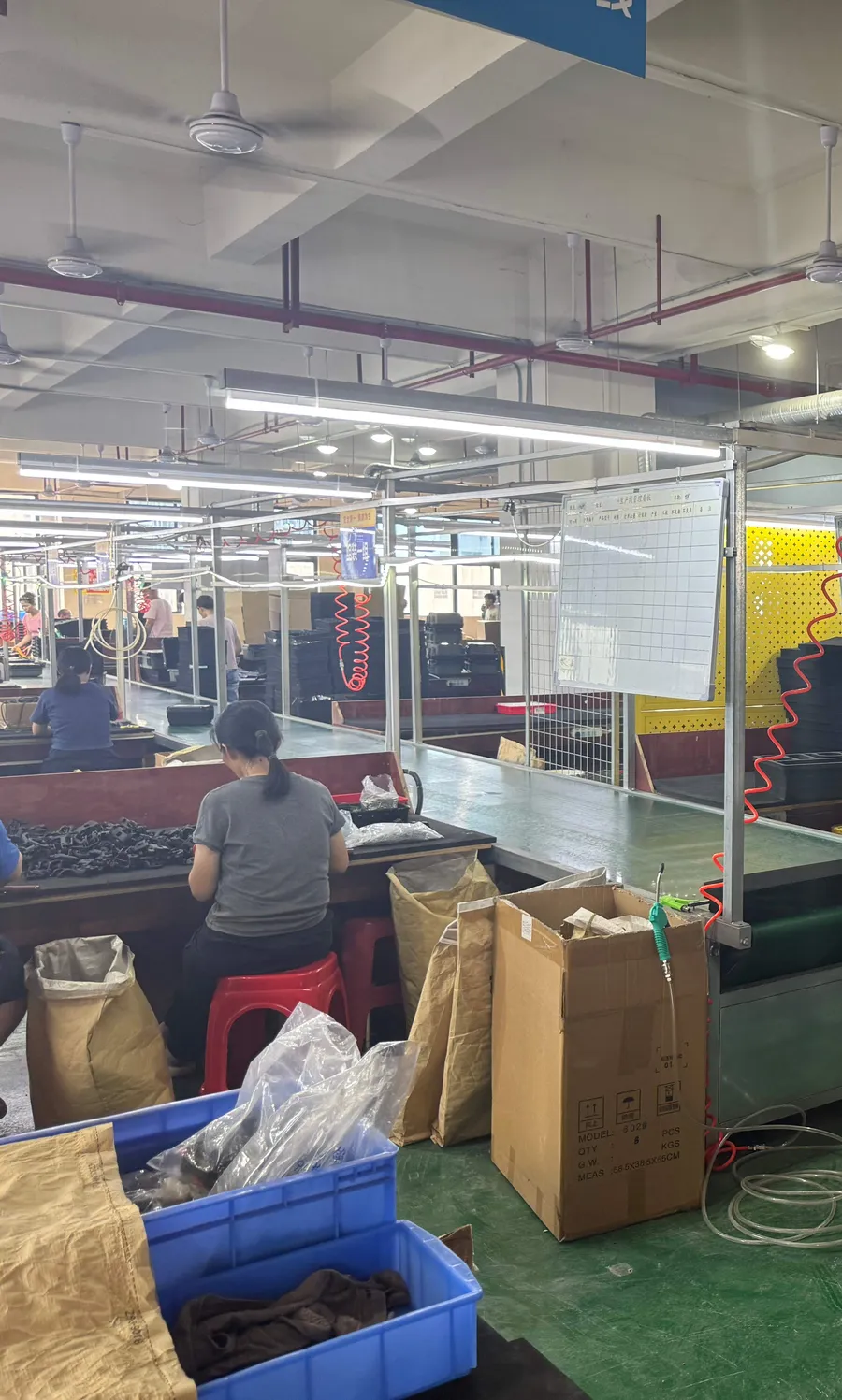
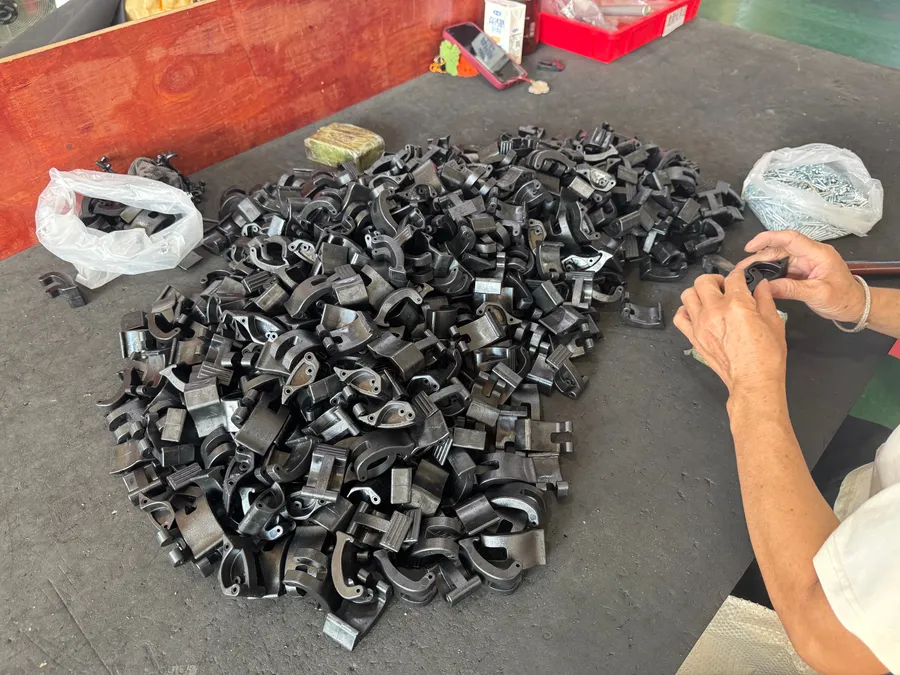
KeXin New Materials (Guangdong) Co., Ltd. works wholesale and OEM/ODM only, on EXW or FOB terms — no retail, no DDP, no overseas stocking — and third-party factory audits are welcome. A gasket customisation project starts with the model number and the equipment: a drawing, a photograph of the packed kit, or a physical sample. A gasket change on an existing channel runs inside the standard 45-day OEM sample window; logo and colour programmes start from 300 units; anything needing new shell geometry is quoted as a new mould at 125 days, MOQ from 3,000 per component. Commercial terms are fixed and simple: 30% deposit, balance after inspection. Start the conversation with Fred Zhao or the KeXin Sales Team, or reach us on WhatsApp at +86 135 3588 0002, and say what the equipment needs from the lid line — we will answer with what our published data supports, what needs a tool, and what needs a laboratory.
Customisation
Everything described above is configurable on a standard shell: interior layout (pick-and-pluck, die-cut or CNC-cut), foam grade and thickness, colour, logo method, latch and lock count, pressure-equalisation valve, cable ports, document holder and identification plate. A bespoke exterior geometry requires a new mould — 125 days, from 3,000 units per moulded component.
Procurement considerations
| Question | What to send us |
|---|---|
| Which shell fits? | Equipment L × W × H as packed, plus required clearance per axis |
| What does it cost? | Order quantity and estimated annual quantity — the two drive different answers |
| Is tooling needed? | Whether an existing shell clears the envelope with usable foam depth |
| Lead time? | Your required delivery date, not just the order date |
| Certification? | The exact standard your tender names — we will say whether we can test to it |
| Freight? | Destination and preferred terms; carton and pallet data supplied with the quotation |
Comparison and selection guide
The tables on this page exist because a protective case is chosen by comparing three things: the envelope, the environment and the handling chain. Where no table applies, the rule below is.
| Situation | What To Do |
|---|---|
| Fastest | Standard shell plus CNC foam — typically 45 days from approved drawing. |
| Branded | Standard shell plus custom colour and logo — MOQ applies to the resin colour. |
| Bespoke geometry | New mould — 125 days, MOQ from 3,000 units per component. |
- Size on internal dimensions plus clearance, never on a product name.
- Choose the carrying method before the shell: it changes the series, not just the price.
- Specify the interior last, and decide up front whether the end user will reconfigure it.
Can case gaskets be customised for a specific piece of equipment? relates to Logistics & Packing Guide. Related families: Custom Protective Cases / Waterproof Cases / Electronics Cases / Instrument & Equipment Cases / Military Protective Cases / Tactical Equipment Cases. Related sectors: field and industrial equipment. Continue in the Logistics & Packing Guide cluster.
This page is written from our own production data. If your requirement differs, send the dimensions and we will tell you which of the 155 models fits, or whether a custom route is needed.


