What information should be provided about case palletization before a quotation?
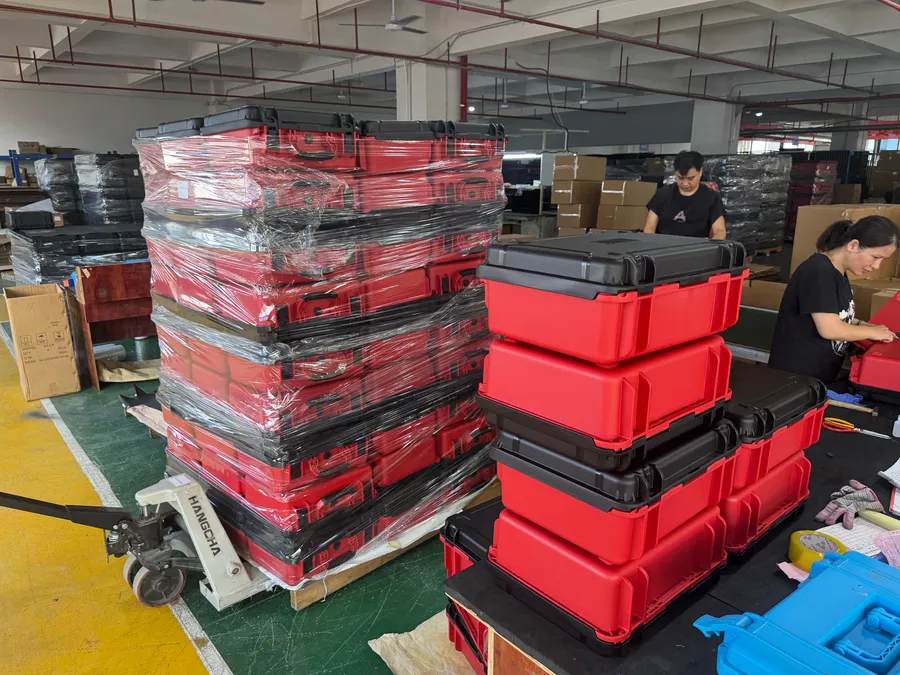
Send six inputs and a case palletization quotation can be priced on real numbers instead of guesses: the model or an equipment outline, the published carton pack data for that model, your pallet standard, your stack or rack height limit, the destination port with an EXW or FOB preference, and the volume you expect per release. Our published pallet_quantity field is recorded as not measured, because units per pallet depend on the pallet you use, so we calculate it from the carton footprint against the pallet you name and print the assumptions on the quotation. The same rule covers 20GP/40GP/40HQ container figures: they are supplied with the quotation for the specific configuration, not published as generic counts.
Key points
- Name the pallet standard - 1200 x 1000, 1100 x 1100 or 48 x 40 in - because pieces per layer change with every footprint.
- Quote from the model's published carton pack data: 58 of the 155 published models list carton outer size and pieces per carton.
- State your stack limit, because warehouse rack clear height or a double-stack rule decides layer count, not the case alone.
- Treat pallet_quantity as not measured - it is calculated against your pallet, never published as one universal count.
- Give the destination port and EXW or FOB preference; we price wholesale and OEM programs, not retail or DDP shipments.
- Ask any supplier for accredited laboratory reports on stacking classes they quote; we do not state grades we have not measured.
Case palletization: what a quotation is built from
Case palletization looks like a single number - cases per pallet - but a quotation that survives contact with your warehouse is built from several inputs. The shell footprint decides how many cases fit one layer, the carton decides what the layer actually contains, and your pallet standard decides how many layers are allowed. Leave any one of these out and the quote you receive is an assumption wearing a price tag.
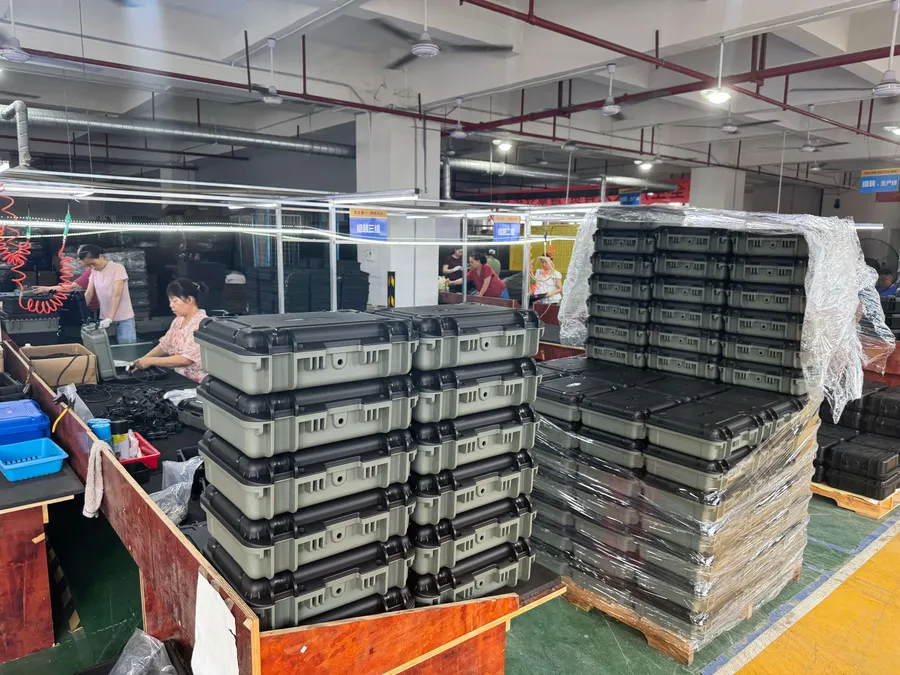
KeXin New Materials (Guangdong) Co., Ltd. manufactures hard-shell protective cases and publishes dimensions, carton pack data and weights model by model. For case palletization specifically, we treat the buyer's pallet and storage rules as part of the specification, not as an afterthought. This page lists exactly what to send before requesting a quotation, and where each number in our answer comes from.
The six inputs that fix a case palletization quotation
Every palletization quotation we issue traces back to the six inputs below. Three of them - model, carton data and pallet standard - are enough to calculate pieces per layer and layers per stack. The remaining three - stack limit, destination and volume - decide whether that calculation is worth presenting as a logistics plan or as a simple packing note.
| Input | Why It Matters | Typical Answer |
|---|---|---|
| Model or equipment outline | Fixes shell footprint; we can then point at the published carton for that model | A model name such as KX 2507, or equipment L x W x D plus mass |
| Carton pack data | Pallet math runs on cartons, not naked shells, for wholesale shipments | Published per model: carton outer size and pieces per carton |
| Pallet standard | Footprint of the pallet decides pieces per layer | 1200 x 1000 mm, 1100 x 1100 mm or 48 x 40 in, named explicitly |
| Stack or rack limit | Layer count is capped by your warehouse, not by enthusiasm | Rack clear height, a double-stack rule, or a total loaded height in mm |
| Destination and terms | Determines the freight leg we are quoting | Port or city, with EXW or FOB preference; we do not quote DDP |
| Volume per release | Decides full pallets versus mixed freight and the tooling path if a new size is needed | Units per order or per month, plus OEM timelines if a new mould is involved |
Published carton data you can quote from today
You do not have to wait for the quotation to start the arithmetic. Our product table publishes carton outer size and pieces per carton for 58 of the 155 models, and the table below shows six of them verbatim. External dimensions listed here are the shell only; cartons add packing clearance, which is why pallet math should always run on the carton row.
If your intended model is not among the 58 with published carton data, say so in the request. We will supply the carton specification for that model with the quotation rather than let you plan a pallet program around an empty field.
| Model | External Mm | Carton Mm | Pieces Per Carton |
|---|---|---|---|
| KX 2005 | 195 x 170 x 46 | 410 x 360 x 495 | 40 |
| KX 2305 | 230 x 180 x 45 | 480 x 370 x 470 | 40 |
| KX 2406 | 240 x 200 x 55 | 490 x 410 x 290 | 20 |
| KX 2507 | 250 x 210 x 70 | 505 x 430 x 360 | 20 |
| KX 3213 | 315 x 260 x 128 | 645 x 530 x 520 | 16 |
| KX 6-3619 | 356 x 267 x 190 | 585 x 385 x 620 | 6 |
Why pallet_quantity is recorded as not measured
In our published product data the pallet_quantity field exists on all 155 models, and on every one of them the value is recorded as not measured, with the note that figures are calculated from the carton footprint against your pallet size. That is a deliberate choice, not an evasion. Pieces per pallet is not a property of the case; it is a property of the case, the carton, the pallet, the stack rule and the handling method together.
A supplier who prints one universal cases-per-pallet figure is quietly assuming a pallet you may not use. When we calculate, the assumptions go on the quotation in writing: pallet size, layer pattern, layer count and total loaded height. If your warehouse later caps the stack, we re-run the arithmetic on the new constraint instead of arguing with an old number.
Pallet standards and stack height: the two constraints buyers forget
The pallet standard changes the answer more than any case feature does. A 1200 x 1000 mm footprint common in European logistics, an 1100 x 1100 mm footprint used across parts of Asia, and a 48 x 40 in footprint common in North America each produce a different pieces-per-layer result for the same carton. Buyers in one region routinely quote figures that simply do not exist on another continent's pallets.
Stack height is the second forgotten constraint. Rack clear height, a no-double-stack rule, or a maximum loaded height for automated lines can cut layers even when the footprint has room left. Tell us which rule applies - or that floor stacking with double stacking is allowed - and the calculation we return will match your building instead of an idealized warehouse.
Container loading: supplied with the quotation, not guessed
Our product data carries a container_loading field on all 155 models, and on every model the note reads the same way: 20GP, 40GP and 40HQ figures are supplied with the quotation. We do not publish generic per-model container counts because carton orientation, pallet choice, and dunnage practice change the result from one program to the next.
For case palletization programs this is usually good news. If the quotation prices palletized cartons, the container figure is derived from the same pallet plan your warehouse will actually receive, so the number in the quote and the number at your dock describe one configuration rather than two.
What we do not claim about palletized cases
We publish what we measure and mark the rest. The stack_load_kg and load_capacity_kg fields in our product table are recorded as not measured, and the stackable flag is a design feature of the shell geometry, not a declared load class. If your tender requires a stacking or compression class, we say plainly whether we hold a measurement for that configuration, and any laboratory program is arranged at an accredited third-party laboratory on the specified configuration.
The same discipline applies to protection wording. We do not state dust or water grades we have not measured, and we do not print rating codes as though they were properties of the shell. Buyers comparing suppliers should ask every vendor for the test report behind any quoted class - the method, the laboratory and the date - and treat unexplained numbers as marketing.
Commercial terms for palletized wholesale and OEM programs
We sell wholesale and OEM/ODM programs only - no retail, no DDP, and no overseas warehouses - quoting EXW or FOB from our works. Standard OEM first samples take 45 days, a new mould takes about 125 days, terms are 30% deposit with the balance paid after inspection, and third-party inspection or a factory audit on your side is welcome before shipment.
Send the six inputs above with your request and KeXin Sales Team will return a palletization quotation with its assumptions in writing. Contact Fred Zhao on WhatsApp at +86 135 3588 0002, or send the equipment outline through the quotation form and the team will come back with the carton and pallet arithmetic for your market.
Customisation
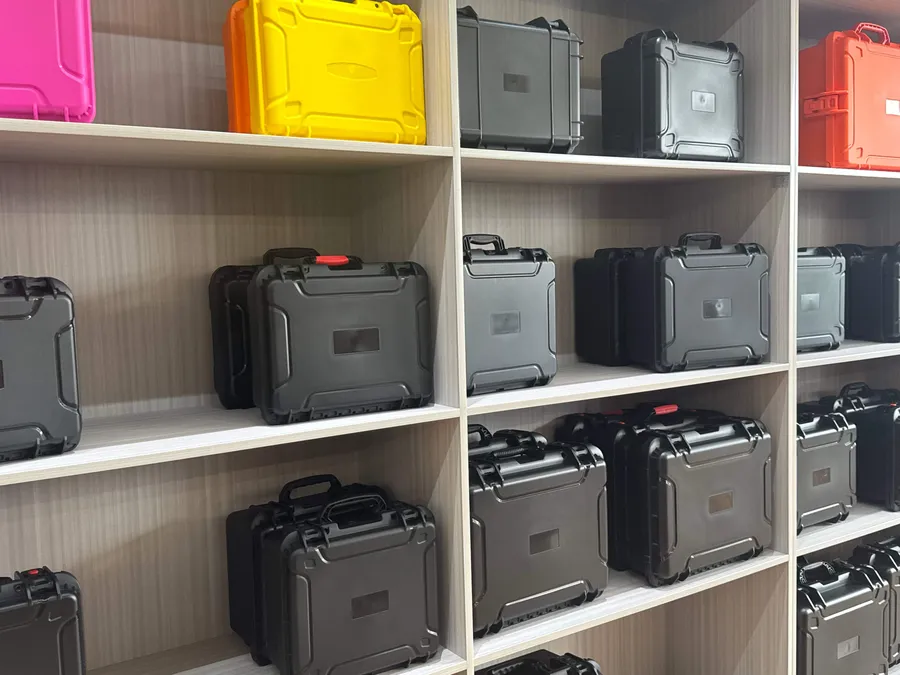
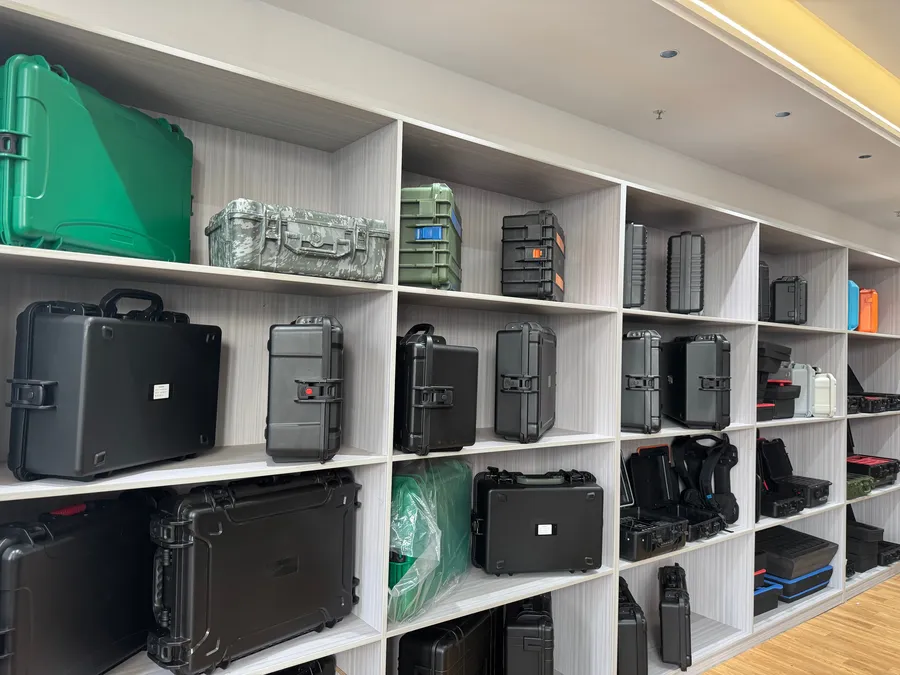
Everything described above is configurable on a standard shell: interior layout (pick-and-pluck, die-cut or CNC-cut), foam grade and thickness, colour, logo method, latch and lock count, pressure-equalisation valve, cable ports, document holder and identification plate. A bespoke exterior geometry requires a new mould — 125 days, from 3,000 units per moulded component.
Procurement considerations
| Question | What to send us |
|---|---|
| Which shell fits? | Equipment L × W × H as packed, plus required clearance per axis |
| What does it cost? | Order quantity and estimated annual quantity — the two drive different answers |
| Is tooling needed? | Whether an existing shell clears the envelope with usable foam depth |
| Lead time? | Your required delivery date, not just the order date |
| Certification? | The exact standard your tender names — we will say whether we can test to it |
| Freight? | Destination and preferred terms; carton and pallet data supplied with the quotation |
Comparison and selection guide
The tables on this page exist because a protective case is chosen by comparing three things: the envelope, the environment and the handling chain. Where no table applies, the rule below is.
| Situation | What To Do |
|---|---|
| Sea freight | Sealed configuration plus desiccant; salt spray is a handling issue, not a material issue. |
| Air freight | Mass and external dimensions drive cost more than volume. |
| Repeated movement | Replaceable latches, hinges and gaskets; keep a spares kit with the first order. |
- Size on internal dimensions plus clearance, never on a product name.
- Choose the carrying method before the shell: it changes the series, not just the price.
- Specify the interior last, and decide up front whether the end user will reconfigure it.
What information should be provided about case palletization before a quotation? relates to Logistics & Packing Guide. Related families: Equipment Transport Cases / Custom Protective Cases / Electronics Cases / Tactical Equipment Cases. Related sectors: field and industrial equipment. Continue in the Logistics & Packing Guide cluster.
This page is written from our own production data. If your requirement differs, send the dimensions and we will tell you which of the 155 models fits, or whether a custom route is needed.


