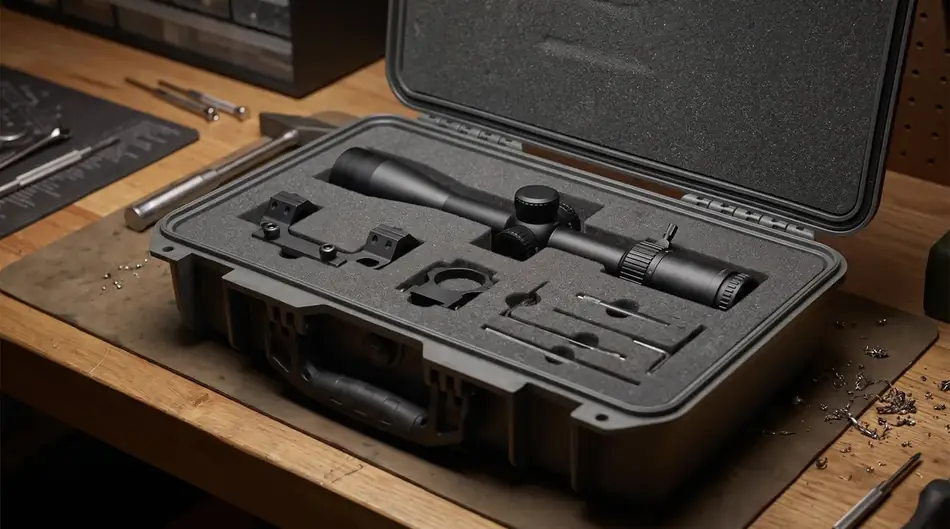
How should case palletization be specified in a protective case RFQ?
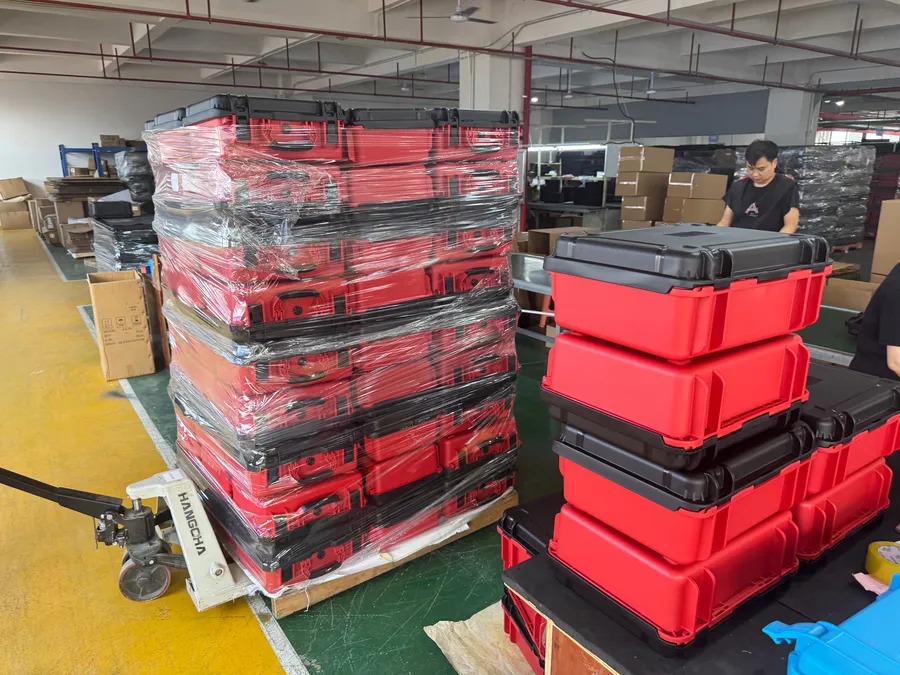
Specify palletization in a protective case RFQ as a data request, not an adjective. The line has to name the deck size you use, the carton footprint to be fitted to it, the maximum stack height after packing, whether heavy lines sit at the bottom, the SKU mix per pallet, the securing method, and the target pallet count per container. KeXin publishes carton dimensions for 64 models and pieces per carton for 58 of them, so cartons per layer can be calculated on your deck; pallet quantity itself is recorded as not measured per model because it is calculated from the published carton footprint against the pallet size you nominate, and 20GP, 40GP and 40HQ figures are supplied with the quotation once that plan is fixed.
Key points
- Put the deck size in the RFQ - 1200 by 1000 or 1200 by 800 mm change the layer count, so a pallet figure without a deck is meaningless.
- Carton dimensions are published for 64 models and pieces per carton for 58, which is enough to calculate cartons per layer for your deck.
- Pallet quantity is recorded as not measured per model and is calculated against your pallet; expect it as an order figure, not a catalogue line.
- State the maximum height after packing. Published carton heights run from 232 to 755 mm, so the same footprint gives three or four layers.
- Name the 19 wheeled trolley models separately: they are published as not stackable, so their pallet plan is one layer high by definition.
- Ask for the securing method as a configuration choice - film, strapping, corner boards - because those are options we supply, not measured properties.
What a palletization line in a protective case RFQ has to contain
Most RFQs treat palletization as one sentence - pack on pallets, ship 24 pallets - and then the packing plan is invented twice: once by the factory, once by the forwarder, and the difference is paid for in re-packing or in a container that closes on an air gap. A line that survives that hand-off names seven things: your deck size, the carton footprint fitted to that deck, the maximum stacking height after packing, the layer pattern, the SKU mix per pallet, the securing method, and the pallet count you expect per container. Everything else in the palletization answer follows from those seven fields.
We can price from published data as soon as those fields exist, because the arithmetic inputs are already public. Carton dimensions appear on 64 of our 155 active models, with footprints from 410 by 360 mm up to 885 by 630 mm and heights from 232 to 755 mm; pieces per carton appear on 58 of them and run from 1 to 40. What no model page gives is a fixed pallet quantity, because that figure depends on your deck and your height limit rather than on the tool the case was moulded on. KeXin New Materials (Guangdong) Co., Ltd. works wholesale and OEM only, on EXW or FOB terms, so the load plan is agreed in the quotation stage and not improvised at the loading door.
The seven fields, and what each one lets us return
| Rfq Field | What It Fixes | What We Return |
|---|---|---|
| Pallet deck size | Cartons per layer. A 410 by 360 mm carton fits four per layer on 1200 by 800 mm and up to six on 1200 by 1000 mm. | Cartons per layer for each model you listed, calculated from published carton footprints. |
| Maximum height after packing | Layer count. Published carton heights span 232 to 755 mm, so 1,800 mm allows three layers where 2,200 mm allows four. | Layers inside your height, pieces per pallet, and a warning where a tall carton limits the stack to one layer. |
| Layer pattern | Whether cartons run in columns or interlock; interlocking buys stability and costs usable footprint. | A layer drawing per SKU and the footprint penalty of the pattern you choose. |
| SKU mix per pallet | Mixed pallets break simple footprint arithmetic and need a stacking sequence. | A build sequence, heavy lines at the bottom, and the pallet count that follows. |
| Securing method | Film, strapping and corner boards are supply options; they change pallet height allowance and cost. | The option priced per pallet position, described as a configuration rather than a measured property. |
| Pallet source | Whether you supply ex-works pallets, we buy locally, or pallets travel with the goods. | The packing scope for EXW or FOB, and any pallet cost separated from unit price. |
| Container plan | Pallet height and deck decide how many units close inside a 20GP, 40GP or 40HQ. | Container figures with the quotation, since they are recorded as not measured per model. |
Published packing data: what the model page carries and what it does not
The specification set behind every model page carries external dimensions, internal dimensions, wall thickness, lid and base depth, net weight where published, usable interior volume, shell material, hardware and a carton record. External footprints run from 120 by 90 mm to 843 by 592 mm, heights from 40 to 415 mm, wall thickness from 2.0 to 6.0 mm on the 148 models where it is published, and usable interior volume from 0.3 to 111.6 litres. Net weight is published on 93 models, from 100 g to 15,320 g. Gross weight is not published on any model, which is why pallet mass has to be assembled at quotation stage from published net weight plus the tare of your carton and your pallet.
Two fields that buyers expect to find are deliberately left open. Pallet quantity is recorded as not measured, with the note that it is calculated from the carton footprint against your pallet size. Container loading is recorded as not measured, with 20GP, 40GP and 40HQ figures supplied with the quotation. Both are order-level calculations, so a supplier who prints a fixed pallet count for every buyer is either guessing or quoting a packing plan you did not ask for. Our data policy labels three states only: measured, from our own production or incoming-material records; manufacturer option, a construction we can supply where the figure follows your configuration; and not measured, where no record exists for that model and configuration and no value is stated.
Worked examples on a 1200 by 1000 mm deck
The three examples below are arithmetic on published carton dimensions against one stated deck size. They are not published pallet quantities, and the same cartons give different answers on a 1200 by 800 mm deck or under a lower height limit.
| Line | On 1200 By 1000 Mm | Height Note |
|---|---|---|
| WL2005, carton 410 by 360 by 495 mm, 40 pieces per carton | Four cartons per layer one way, six when the carton is turned; 160 to 240 pieces per layer. | At 495 mm per layer, three layers close under 1,800 mm and four under 2,200 mm. |
| WL9-5419, carton 550 by 485 by 755 mm, one piece per carton | Four cartons per layer, so four pieces per layer; two layers reach 1,510 mm and eight pieces per pallet. | The tall single-unit carton is the case where height, not footprint, sets the pallet count. |
| WL8-8442 trolley, external 843 by 592 by 415 mm, published as not stackable | Two units per layer once the 592 mm edge runs along the 1,200 mm side; nothing stands above them. | Net weight is published at 15,320 g for this model, so deck strength and handling are your side of the plan. |
Layer height, deck condition and who owns the load plan
Height is the field most often left blank and most often decisive. Published carton heights run from 232 to 755 mm across the 64 models where a carton is recorded, and a container door, a rack beam or a bridge underlay each cut the usable stack differently. Tell us the height after packing rather than the height of the goods, because a closed case on a rim and a carton on a corner board are two different top surfaces, and the second one is what determines whether your fifth layer exists.
Pallet condition sits on your side of the plan, and the RFQ should say who supplies the deck. Under EXW we pack to the pallet you bring or the pallet you specify and hand it over at our premises; under FOB the packing and load plan run to the port of shipment. Deck rating, stringer condition and whether the pallet returns or is one-way are stated by your pallet supplier, not by us, and a stack plan that ignores them is the usual reason a layer list changes after the goods are already moulded.
Palletization and container loading are two numbers, at two stages
Palletization is decided by your deck and height limit; container loading is decided by how many of those pallets close inside a box and how the mass distributes. They are quoted in that order. A pallet plan built without a container target tends to waste the last row of a 40GP, and a container target set before the pallet plan tends to arrive as mixed flat packs that no forwarder wants to restow. Because container figures for 20GP, 40GP and 40HQ are recorded as not measured per model, we return them with the quotation once the pallet plan is fixed, and we will restate them if the plan changes - a common occurrence when a foam layout is added late, since custom foam starts at one unit minimum order and can change both carton count and layer height.
Non-stackable lines and mixed pallets need their own entry
Of the 155 active models, 19 are published as not stackable, and every one of them is a T-series trolley: wheels plus a telescopic handle occupy the top face, so a second unit has no surface to stand on. Those lines form a one-layer pallet by definition, and the arithmetic above for WL8-8442 - two units per layer on a 1200 by 1000 mm deck - is a single-layer pallet rather than a stack. If your order mixes trolley models with stackable cases, list them under separate pallet headings in the RFQ. A single pallet figure applied across a mixed list hides the one-layer constraint, and it is the constraint that changes the container count.
Commercial terms that belong in the same RFQ paragraph
Palletization answers move price, so they should travel with the terms. We sell wholesale and OEM, quote EXW or FOB, do not sell retail, do not quote delivered-duty-paid door-to-door packages, and hold no overseas warehouse where a stocking pallet could wait for a second order. Published minimum quantities are one unit for standard goods and custom foam, 300 units where a logo, colour or OEM programme applies, and 3,000 units for a custom mould. OEM work on an existing mould runs 45 days; a new mould runs 125 days, with a 30 per cent deposit. If a pallet constraint you are working to would need a different carton format or a changed rim geometry, that is a tooling conversation and it should open the enquiry, not arrive at the packing list stage.
What we do not state about pallets
This page states published carton data, published stacking values and arithmetic on your deck. It does not state a fixed pallet quantity per model, a pallet load rating, a container count that survives a changed packing plan, or a gross weight per model, none of which exist in the published records. Where a field is recorded as not measured, the quotation route is to name the calculation or the test and price it as its own package. Buyers who receive that structure can put the same numbers in front of a forwarder and a warehouse team without discovering, after the shells are made, that the pallet figure they planned around was never a published value.
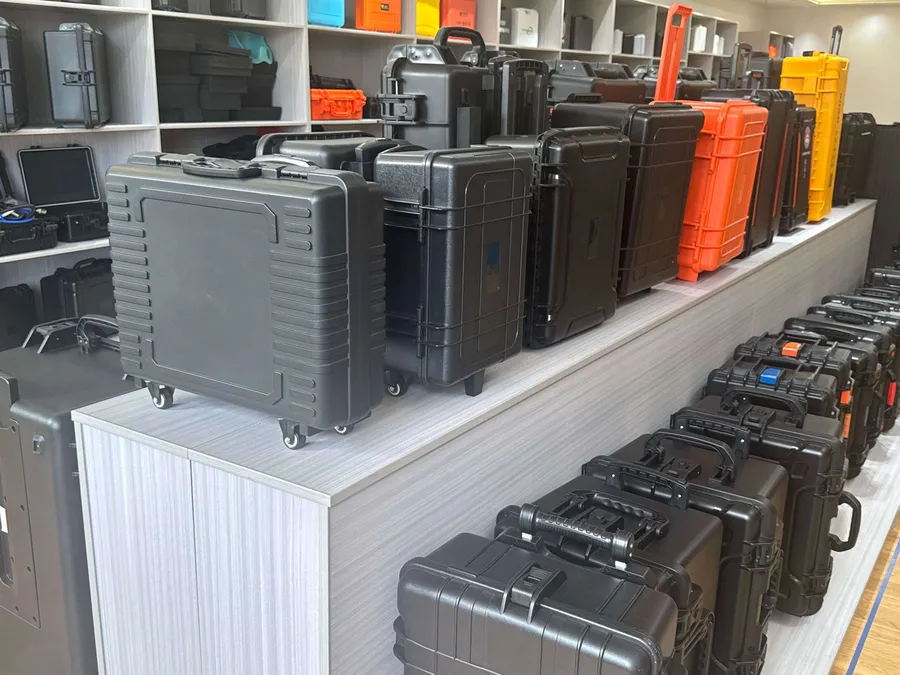
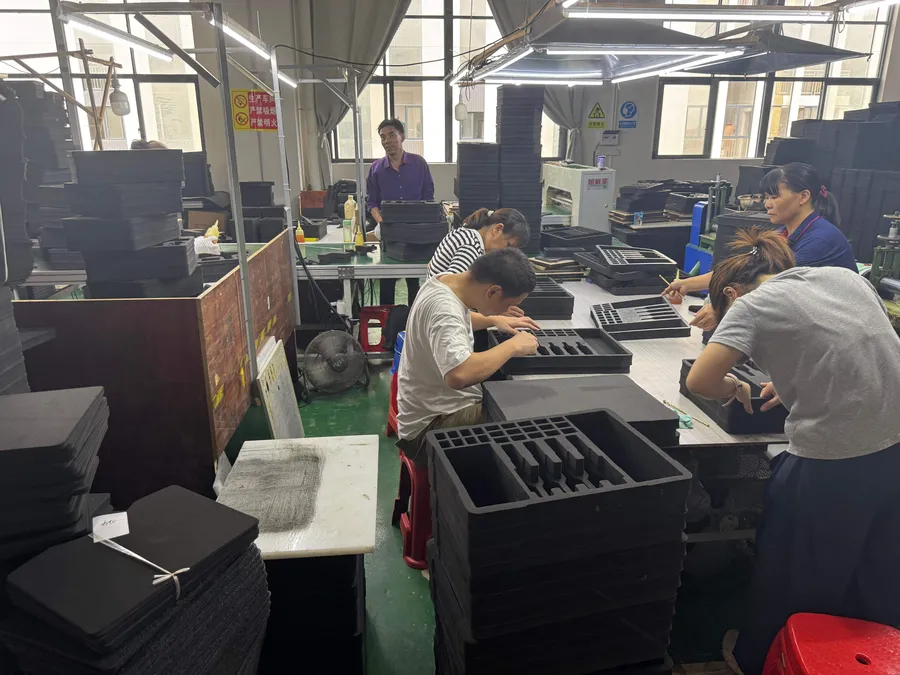
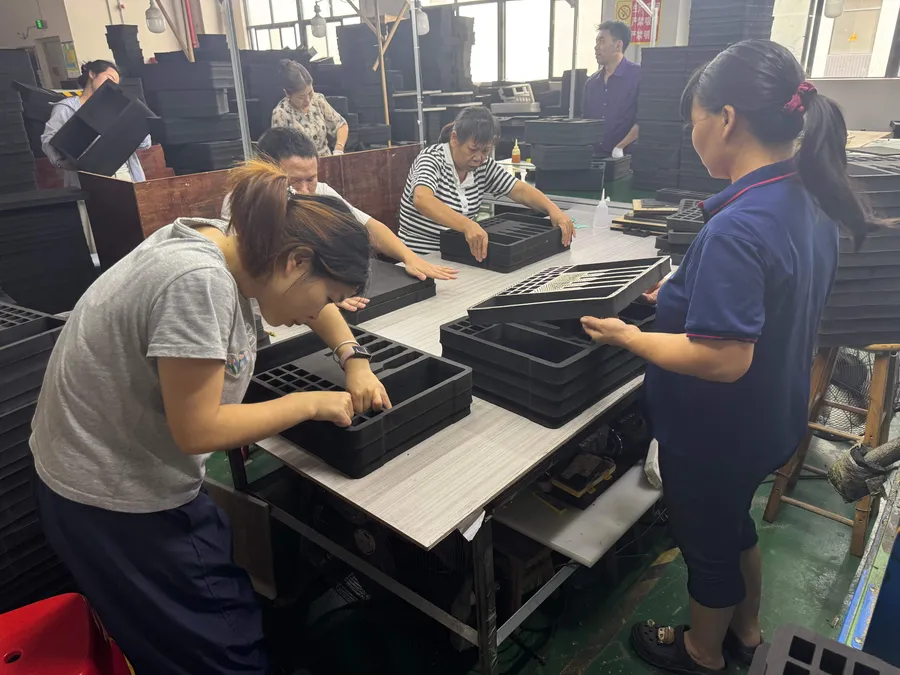
Customisation
Everything described above is configurable on a standard shell: interior layout (pick-and-pluck, die-cut or CNC-cut), foam grade and thickness, colour, logo method, latch and lock count, pressure-equalisation valve, cable ports, document holder and identification plate. A bespoke exterior geometry requires a new mould — 125 days, from 3,000 units per moulded component.
Procurement considerations
| Question | What to send us |
|---|---|
| Which shell fits? | Equipment L × W × H as packed, plus required clearance per axis |
| What does it cost? | Order quantity and estimated annual quantity — the two drive different answers |
| Is tooling needed? | Whether an existing shell clears the envelope with usable foam depth |
| Lead time? | Your required delivery date, not just the order date |
| Certification? | The exact standard your tender names — we will say whether we can test to it |
| Freight? | Destination and preferred terms; carton and pallet data supplied with the quotation |
Comparison and selection guide
The tables on this page exist because a protective case is chosen by comparing three things: the envelope, the environment and the handling chain. Where no table applies, the rule below is.
| Situation | What To Do |
|---|---|
| Fastest | Standard shell plus CNC foam — typically 45 days from approved drawing. |
| Branded | Standard shell plus custom colour and logo — MOQ applies to the resin colour. |
| Bespoke geometry | New mould — 125 days, MOQ from 3,000 units per component. |
- Size on internal dimensions plus clearance, never on a product name.
- Choose the carrying method before the shell: it changes the series, not just the price.
- Specify the interior last, and decide up front whether the end user will reconfigure it.
How should case palletization be specified in a protective case RFQ? relates to Logistics & Packing Guide. Related families: Custom Protective Cases / Equipment Transport Cases / Tool Cases / Electronics Cases. Related sectors: field and industrial equipment. Continue in the Logistics & Packing Guide cluster.
This page is written from our own production data. If your requirement differs, send the dimensions and we will tell you which of the 155 models fits, or whether a custom route is needed.