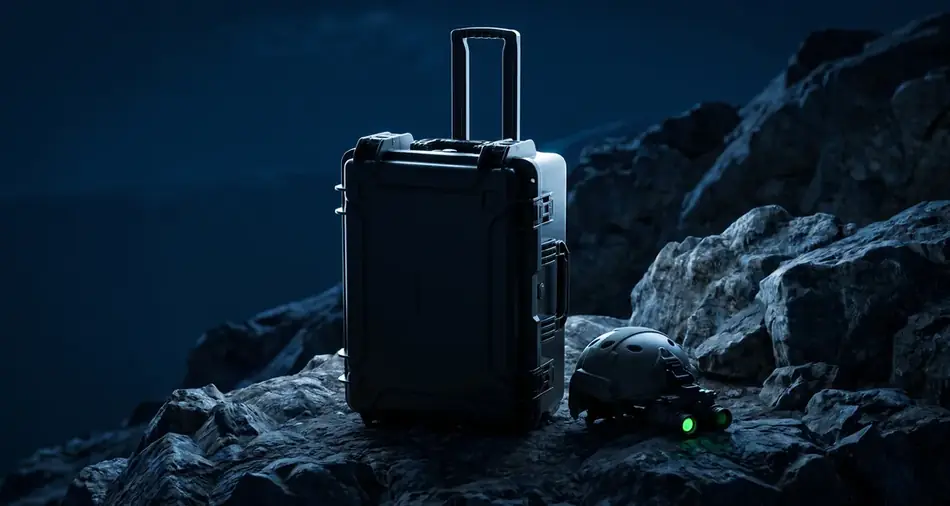
Can case handles be customised for a specific piece of equipment?
Yes, but on three different routes, and only one of them moves the handle. KeXin records custom_hardware as available on all 155 models in our published file, so handle colour, a logo on the grip cover, a bolt-on hardware kit fitted to existing moulded inserts, and the choice between our two published handle configurations can be ordered on an existing mould at 45 days to first sample with a MOQ of 300 pieces. Relocating a handle, or asking a folding handle to carry the seal face, changes the load path and is a new tool: 125 days with a MOQ from 3,000 pieces per component. The starting point is not a preference, it is your device. Our file carries exactly two handle values, fixed folding on 136 models and telescopic plus fixed folding on 19, and all 19 of those are also the wheeled shells published as non-stackable.
Key points
- Order handle colour, a logo cover or a bolt-on hardware kit on an existing mould: 45 days to first sample, MOQ 300 pieces.
- Moving a handle to a new position is a tool change, not a hardware change: 125 days, MOQ from 3,000 pieces per component.
- Our file publishes two handle values only: fixed folding on 136 of 155 models, telescopic plus fixed folding on 19.
- The 19 telescopic models are the same 19 that publish wheels, and all 19 publish stackable as false.
- Depth changes the load in the grip but not the handle figure: KX-88434 to KX-88442 is +80 mm and +1,290 g at the same 295 mm.
- No listing publishes a handle load rating or handle material, so size the grip from loaded device mass, not a catalogue number.
Three routes to a customised handle, and what each one actually changes
A handle request rarely arrives as a single question. It arrives as a device on a desk and a list of complaints about how it is carried today: the grip will not extend, the folding handle sits exactly where a rack rail is, the opening is too small for a gloved hand, or a case that has to be palletised was bought with wheels. Each complaint has a different answer, and the answer turns on one thing only, whether the tool has to change. Route one is selection: take the published handle configuration that already matches the carrying method, which is available at a standard MOQ of one and can be paired with custom foam at a MOQ of one. Route two is configuration on an existing mould. Route three is a new mould.
We split it that way because an injection-moulded thermoplastic shell anchors its fixed folding handle in bosses that are part of the tool. Colour, a logo on the grip cover, hardware bolted to existing inserts, a padlock hasp added in an existing boss, and the choice between the configurations we already run all sit inside route two and change nothing structural. Removing a handle, relocating its bosses, or moving a folding handle onto the sealing face alters either the load path or the gasket channel, and that is route three. When a supplier tells you a handle position can be changed without touching the tool, the useful question back is what the handle is anchored to.
What our published hardware data records about handles
The handle field in our product file is a string with two values rather than a ladder of grades. Across 155 models, 136 record fixed folding and 19 record telescopic plus fixed folding. All 155 publish a fixed folding handle, including all 19 rolling ones, so on our shells a telescopic grip is an addition and not a substitution: the side handle stays available for the second person lifting a case into a vehicle. Those same 19 listings are precisely the 19 that publish wheels and the 19 published as non-stackable, against 136 of 136 fixed-folding models published as stackable.
Three handle fields are simply absent, and we would rather say so than invent them to make a quotation look specified. Handle material is published on 0 of 155 models, with the hardware line stated as metal or polymer by configuration. Shoulder strap is recorded as a manufacturer option with no value on all 155. Extended telescopic height appears on only 11 listings, ranging from 240 mm to 485 mm with a median of 295 mm, which means 8 of our 19 rolling models are offered with a telescopic handle and no published travel figure. That is a data gap in our own catalogue, and it is the first line to demand in writing.
| Published Field | Coverage In Our File | Values Recorded | Customisable On An Existing Mould |
|---|---|---|---|
| Handle type | 155 of 155 | Fixed folding (136), telescopic plus fixed folding (19) | Choice of configuration; colour and grip cover |
| Fixed folding handle present | 155 of 155 | True on every model including the 19 rolling shells | Yes, bolt-on and colour only |
| Extended telescopic height | 11 of 155 | 240, 295, 310, 385 and 485 mm; median 295 mm | No; tube length and stage count are tool-defined |
| Handle material | 0 of 155 | Hardware stated as metal or polymer by configuration | By configuration, quoted per order |
| Shoulder strap | 0 of 155 publish a value | Manufacturer option, no anchor pattern published | Only where moulded anchor bosses already exist |
| Handle load rating | 0 of 155 | load_capacity_kg recorded as not measured on all 155 | Not applicable; no figure to customise |
The two published handle configurations, side by side
Both rows below are read out of our own model file rather than from a category page, so they can be compared against the numbers any supplier should return for their own range. The point of the contrast is not which handle is better. It is how much of the rest of the specification moves when you choose the rolling one, because a telescopic grip does not arrive on its own.
| Handle Configuration | Models In Our File | Longest External Axis | Published Net Weight | Stackability | Customisation Route |
|---|---|---|---|---|---|
| Fixed folding | 136 of 155 | 120 mm to 1,356 mm | 100 g to 6,420 g, on 74 of the 136 | 136 of 136 published as stackable | Colour, grip cover logo, bolt-on kit on the existing mould |
| Telescopic plus fixed folding | 19 of 155 | 463 mm to 843 mm | 4,912 g to 15,320 g, all 19 published | 0 of 19 published as stackable | Existing-mould hardware only; travel and stage count need a new tool |
| Relocated handle position | Not a listed option | Depends on the new shell | Quoted with the tool | Set by the new mould | New mould, 125 days, MOQ from 3,000 pieces per component |
Sizing a handle against one specific piece of equipment
Begin with the mass you will actually lift, which is the device plus accessories plus foam, not the empty shell. Our published net weight covers 93 of 155 models, from 100 g on KX-1204 to 15,320 g on KX-88442, and there is no handle capacity figure to select against, so the sequence that works is: weigh the loaded case, decide the carrying method, then choose the shell that publishes a geometry compatible with that method. One-person movement over distance is the rolling range. Two-person lifts into a rack or onto a pallet are the folding-handle range. Doing it in the opposite order, picking a shell and then discovering the handle is wrong for the route, is the most common way a custom hardware conversation turns into a re-tool.
Then check the envelope, because a handle decision is also a pallet decision. Our rolling range spans 463 mm to 843 mm on the longest external axis with a median of 610 mm, and every shell in it is published as non-stackable. The fixed-folding range reaches 1,356 mm on KX-814641 and 956 mm on KX-89616, long equipment shells that are carried by two people at folding handles rather than wheeled, because a shell that length will not track straight through a doorway. If your device is long, the customisation conversation is about grip count and grip position on a stackable shell, not about a telescopic tube.
Depth changes the load in the grip, but not the published handle figure
This is the part of fitting a handle to one specific device that buyers most often miss, and it is visible inside our own data. Within a footprint family the telescopic figure stays identical while the shell deepens and the mass in your hand rises. KX-85827 and KX-85835 share a 588 by 475 mm external footprint and both publish 295 mm of telescopic height; the deeper body adds 86 mm of case height and 720 g of shell. KX-88434 and KX-88442 share an 843 by 592 mm footprint and both publish 295 mm, with the deeper model adding 80 mm and 1,290 g. The handle did not change. The load carried by it did.
So when you customise an interior for a heavier device, or step up a depth size to fit it, the handle line in the purchase order should be re-confirmed rather than inherited from the first approved sample. The same pattern holds on the small fixed-folding shells: KX-3207, KX-3213 and KX-3218 share a 315 by 260 mm footprint at 70, 128 and 180 mm of case height and publish 570 g, 860 g and 900 g, all three with the identical fixed folding handle. Note also that the published telescopic value is not the sum of the case height and a tube: KX-87336 publishes 240 mm against a 357 mm external height, so the two fields measure different things and must never be added together.
| Model Pair | External Footprint | Case Height (Mm) | Net Weight (G) | Published Telescopic Height | What It Means For The Handle |
|---|---|---|---|---|---|
| KX-85827 / KX-85835 | 588 x 475 mm | 267 / 353 | 7,800 / 8,520 | 295 mm on both | 720 g more shell on the same grip figure |
| KX-86830 / KX-86836 | 677 x 535 mm | 304 / 364 | 10,160 / 10,600 | 310 mm on both | 440 g more, height unchanged |
| KX-88434 / KX-88442 | 843 x 592 mm | 335 / 415 | 14,030 / 15,320 | 295 mm on both | 1,290 g more on the heaviest listing in the file |
| KX-3207 / KX-3213 / KX-3218 | 315 x 260 mm | 70 / 128 / 180 | 570 / 860 / 900 | Not applicable, no telescopic handle | One fixed folding handle across a 58 percent mass rise |
Where handle customisation pays off, by application
For electronics and instrument kits moved by one person through offices, terminals and plant corridors, the working field is the extended height and the fallback is the folding handle that lifts the case over a kerb. That is our rolling range, which is also the range where wall thickness is published from 4.2 mm to 6.0 mm on 18 of 19 models, so the shell starts heavier. For field equipment and military transport the folding handle is the primary interface: vehicle loading, two-person lifts into a rack, and palletised movement, where a telescopic stanchion standing proud of the shell is an obstruction rather than a feature.
For ammunition storage and issue rooms the question shifts from carry comfort to interference, meaning whether the handle area collides with a hasp, a tag holder or a shelf edge. Every model in our file publishes the note that the latch body accepts a standard padlock, and latch count is specified per configuration, so a handle and hasp layout is settled on the hardware line rather than assumed from a photograph. For medical devices moved between rooms, a grip opening that works with gloves usually matters more than travel height, and that is one of the dimensions we answer configuration by configuration precisely because it is not published.
Customising handle hardware on commercial terms
KeXin supplies wholesale and OEM only, on EXW and FOB terms. We do not sell retail, we do not quote DDP, and we hold no overseas warehouse. The minimum order and lead-time figures below are the ones carried in the model file itself, and they are what separate a two-week hardware conversation from a four-month tooling one.
| Customisation | Moq (Pieces) | First Sample Or Shipment | Handle Outcome |
|---|---|---|---|
| Standard order from published models | 1 | Per listed stock and schedule | Choose fixed folding, or the 19 telescopic models |
| Custom foam interior | 1 | Existing-mould OEM route, 45 days | Interior changes without moving the grip |
| Custom handle colour or logo on the grip | 300 | 45 days on an existing mould | Cosmetic and identification changes only |
| Custom hardware kit on existing inserts | 300 | 45 days on an existing mould | Bolt-on hasps, strap anchors and protective caps |
| New mould to relocate or reshape a handle | From 3,000 per component | 125 days | New grip position, new travel, new load path |
Procurement notes for a custom handle line
Put four items on the purchase order line instead of in an email thread: the handle type per SKU, the extended height for that SKU where one exists, whether the handle sits inside the quoted external dimension, and whether the handle and wheel assembly is fitted before or after the gasket is compressed. That last item decides whether a sealing discussion has any meaning. Our file shows an available seal on 124 of 155 models and on 18 of the 19 rolling models, which is a consequence of the deep bodies that carry wheels being specified for weather exposure rather than a line-wide property you can assume on a small shell.
Order a spare hardware kit for each batch band you operate, because telescopic tubes, grip covers and pivot pins are serviceable items and a spare costs far less than a grounded case. At receiving inspection, check the rolling shells for stanchion play and every folding handle for mould flash inside the grip opening, since flash is a tooling artefact that appears on the first shots after a maintenance cycle. If your pallet plan matters, note that packing data is thinnest exactly where handles matter most: 64 of 155 listings publish a carton and only 6 of the 19 rolling ones do, with pallet quantity calculated from the carton footprint against your pallet size rather than published per model. Payment terms are a 30 percent deposit on EXW or FOB.
What we do not claim about a custom handle
No listing in our file publishes a handle load rating, a handle material, a grip opening dimension, a pivot cycle count or a shoulder strap value, and the load capacity field is recorded as not measured on all 155 models. We do not turn a handle description into a capacity figure in order to close a quotation. Protection entries are kept to the same standard: waterproof, dust and stack-load fields are recorded as not measured, so neither a handle description nor a gasket note carries an implied rating. Where a compliance file needs a number, accredited third-party testing on the configuration you order is quoted as a separate work package, and that result belongs to the configuration rather than to the catalogue.
The practical summary for a buyer is short. Selection and cosmetic or bolt-on hardware work are available on all 155 models within the 45-day existing-mould route at a MOQ of 300. Geometry, travel height and grip position are settled by the tool, which is a 125-day, 3,000-piece conversation. Everything in between is a paperwork question that should be answered on the purchase order line, per SKU, before the sample is approved.
Customisation
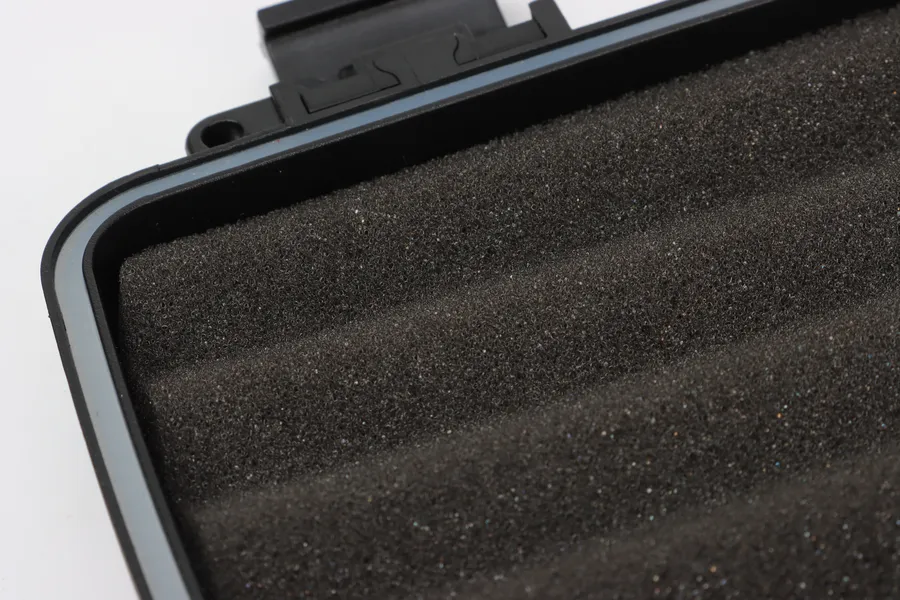
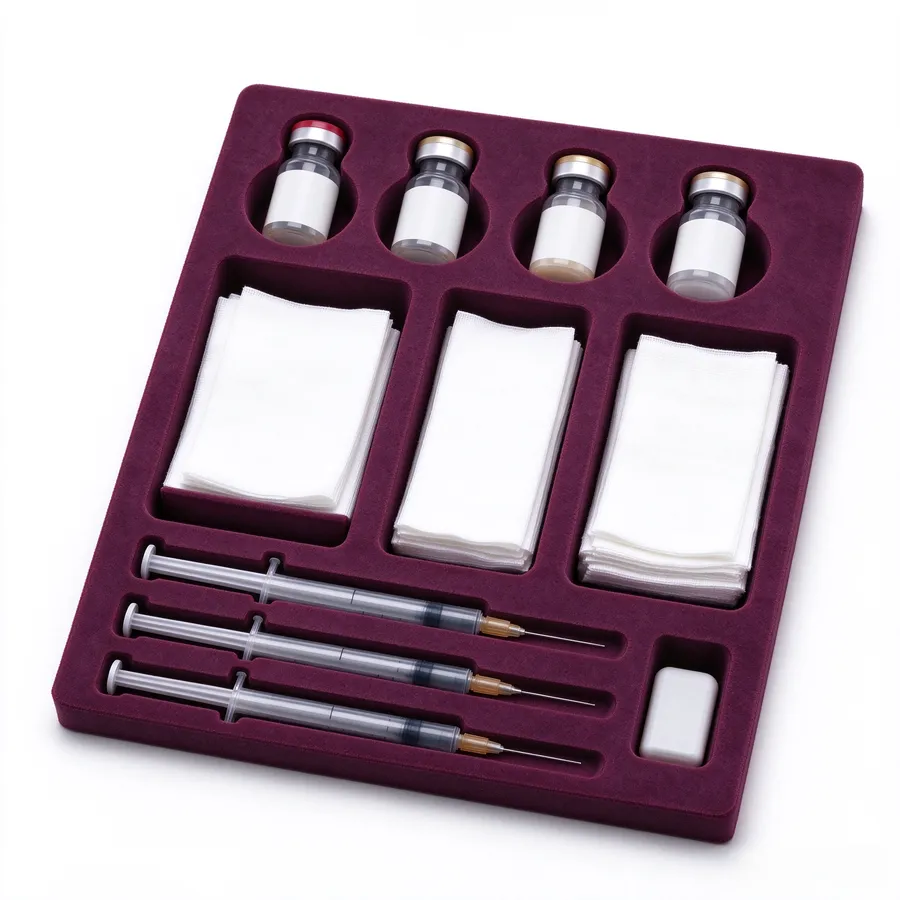
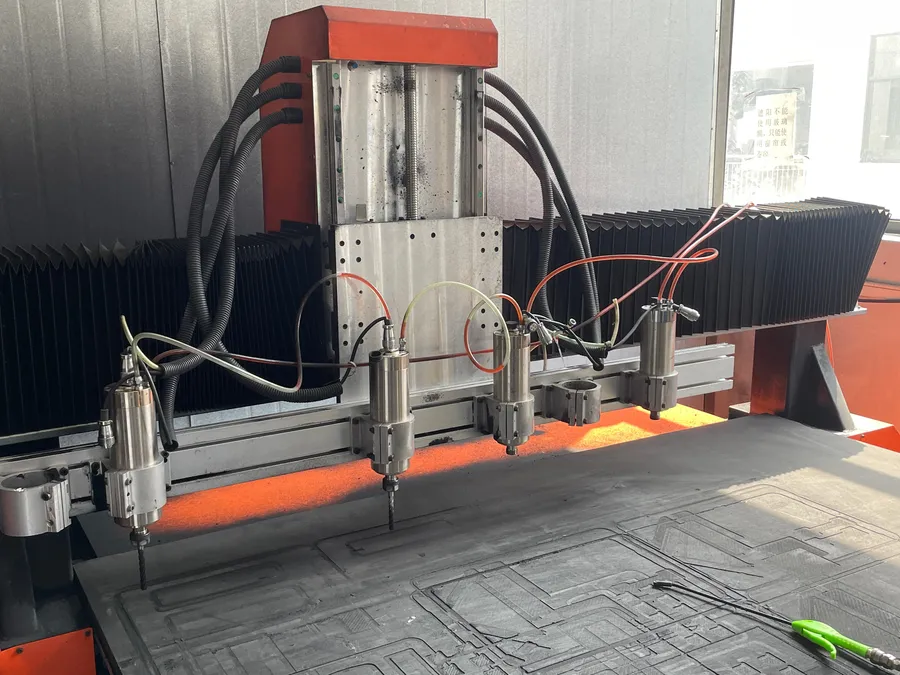
Everything described above is configurable on a standard shell: interior layout (pick-and-pluck, die-cut or CNC-cut), foam grade and thickness, colour, logo method, latch and lock count, pressure-equalisation valve, cable ports, document holder and identification plate. A bespoke exterior geometry requires a new mould — 125 days, from 3,000 units per moulded component.
Procurement considerations
| Question | What to send us |
|---|---|
| Which shell fits? | Equipment L × W × H as packed, plus required clearance per axis |
| What does it cost? | Order quantity and estimated annual quantity — the two drive different answers |
| Is tooling needed? | Whether an existing shell clears the envelope with usable foam depth |
| Lead time? | Your required delivery date, not just the order date |
| Certification? | The exact standard your tender names — we will say whether we can test to it |
| Freight? | Destination and preferred terms; carton and pallet data supplied with the quotation |
Comparison and selection guide
The tables on this page exist because a protective case is chosen by comparing three things: the envelope, the environment and the handling chain. Where no table applies, the rule below is.
| Situation | What To Do |
|---|---|
| Fastest | Standard shell plus CNC foam — typically 45 days from approved drawing. |
| Branded | Standard shell plus custom colour and logo — MOQ applies to the resin colour. |
| Bespoke geometry | New mould — 125 days, MOQ from 3,000 units per component. |
- Size on internal dimensions plus clearance, never on a product name.
- Choose the carrying method before the shell: it changes the series, not just the price.
- Specify the interior last, and decide up front whether the end user will reconfigure it.
Can case handles be customised for a specific piece of equipment? relates to Logistics & Packing Guide. Related families: Custom Protective Cases / Military Protective Cases / Rolling Cases / Electronics Cases / Equipment Transport Cases / Ammunition Storage & Transport Boxes. Related sectors: field and industrial equipment. Continue in the Logistics & Packing Guide cluster.
This page is written from our own production data. If your requirement differs, send the dimensions and we will tell you which of the 155 models fits, or whether a custom route is needed.