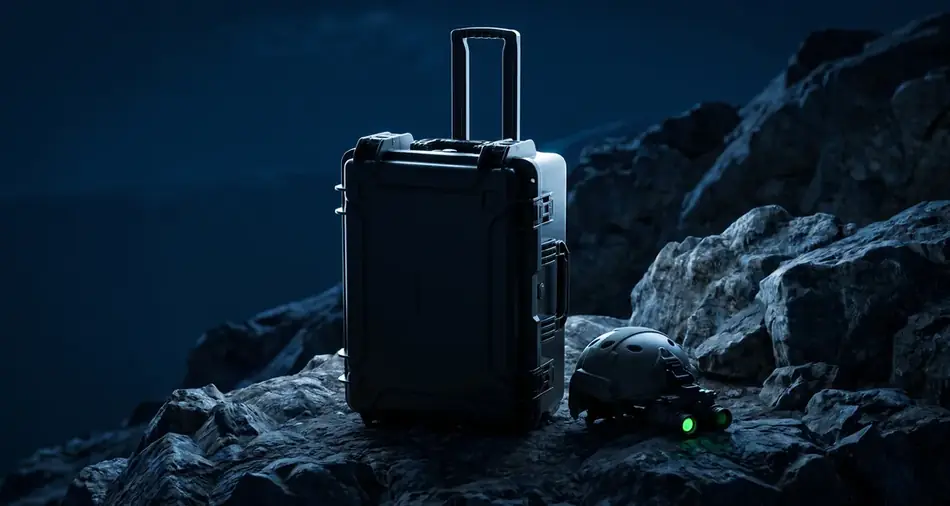
How should case stackability be specified in a protective case RFQ?
In a case stackability line item, name the model, say whether it is one of the stackable shells or a rolling case, list the stacking feet, give the carton footprint and pieces per carton, and state your pallet size and the number of tiers you plan to ship. That lets a supplier build the cube. What you should not ask for is a stamped stack load, because in our catalogue the stack load figure is recorded as not measured for every model, so no kilogram value is published; the honest RFQ item is the construction that supports stacking plus the carton and pallet geometry that lets the load be calculated for your configuration.
Key points
- In a stackability RFQ line, name the model, its stacking feet, the carton footprint, pieces per carton, your pallet size, and the number of tiers.
- 136 of our 155 catalogue models are published as stackable and 19 carry wheels, so declare which family you mean rather than assume every shell stacks.
- Stack load is recorded as not measured on all 155 models, so ask for the stacking geometry, not for a kilogram figure we do not publish.
- Pallet and container counts are not fixed catalogue values; they are computed from the carton footprint against your pallet size and supplied with the quotation.
- Ask for carton dimensions and pieces per carton explicitly, because 58 models publish both and they are the true unit a stack is built from.
- Interlocking feet, lid depth, and a telescopic lid are the geometry to request; a stacking or load report, if needed, is separate accredited testing.
How to specify case stackability in a protective case RFQ
Case stackability is specified in an RFQ as geometry plus packaging, not as a strength promise. List the model, whether it is a stackable shell or a rolling case, the stacking feet, the carton outer dimensions and pieces per carton, your pallet size, and how many tiers you intend to ship. A supplier can price and cube all of that directly.
Keep the strength question separate. Our catalogue records the stack load figure as not measured for every model, so there is no published kilogram value to copy into an enquiry. What stacks a case is the base and foot geometry, the lid depth, and the carton it ships in; the load it survives is a test result, and if you need that number it is a commissioned test quoted against the procedure you name.
The two stacking families in the catalogue
Case stackability is not uniform across a range. Of our 155 models, 136 are published as stackable, and 19 are rolling cases that carry wheels; in our data every wheeled model is a non-stacking model, which is exactly why the wheels count and the stackable count mirror each other at 136 and 19. A rolling case is bought to be pulled, not piled, and an RFQ that calls it 'stackable' gets the wrong tool.
So the first stackability line in your RFQ is a family declaration: stackable shell or rolling case. That single choice changes the base detail, the feet, whether a lid nests, and how the carton is designed. Name the model and the family together, and the rest of the stacking brief can be built around a known footprint instead of a guess.
Stacking feet design is what makes a case stack
Stacking feet design is the geometry a buyer should describe when case stackability matters. Across all 155 models the feet are recorded as a measured feature, which means the feet are physically present on the tool and can be located and dimensioned on a drawing. Interlocking feet, a recessed base, and a rim that registers the case above it are what keep a stack from walking sideways on a warehouse floor or in a container.
Feet are not a load rating, and the RFQ should not treat them as one. They tell you how cases locate on each other, not how much weight the column carries. Describe the footprint and the interlock you want for the specific model, and let the strength question be answered by the material and wall of that model plus any test you choose to commission, rather than by the presence of feet alone.
Lid depth and telescopic lid stacking height
Stacking height is set by the lid and base split, which our catalogue publishes per model. Many models ship with a matched lid and base depth, others are deep-lid shells, and the totals vary model by model rather than by a single rule. Where a telescopic lid is offered, it changes the stacking height and the nesting behaviour, so a buyer who stacks to a fixed shelf should ask for the lid and base depth of the exact model rather than trusting a series average.
This is the item most RFQs forget. The telescopic lid stacking height and the lid/base depth together decide how tall a stack of your chosen model actually stands, and that number feeds directly into your shelf pitch, your carton count per tier, and your container cube. State the target stack height in the enquiry and ask the supplier to confirm it from the model's published lid and base depths.
Carton, pallet and container are configuration, not a stamped number
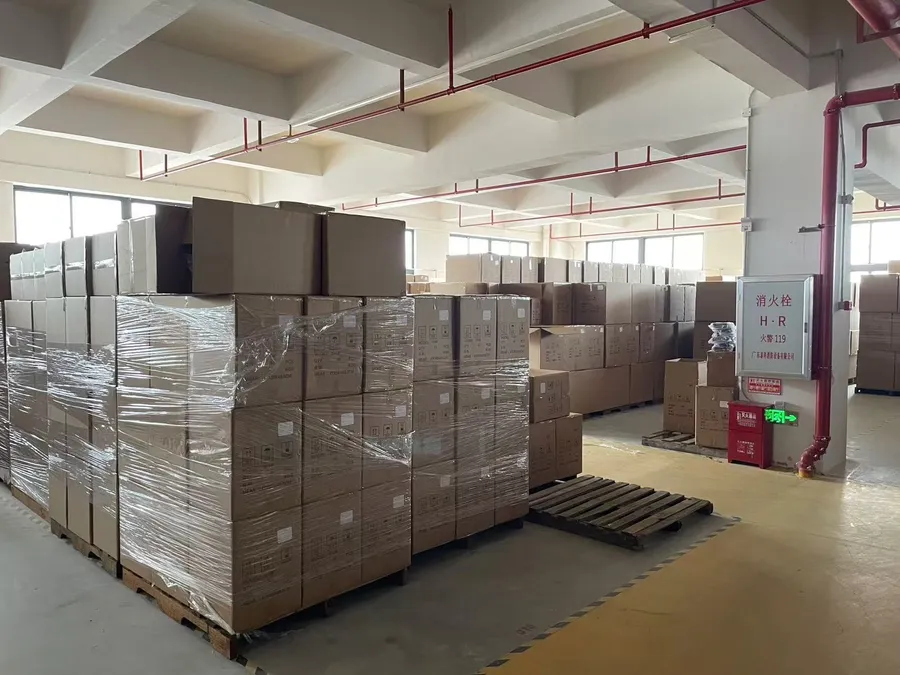
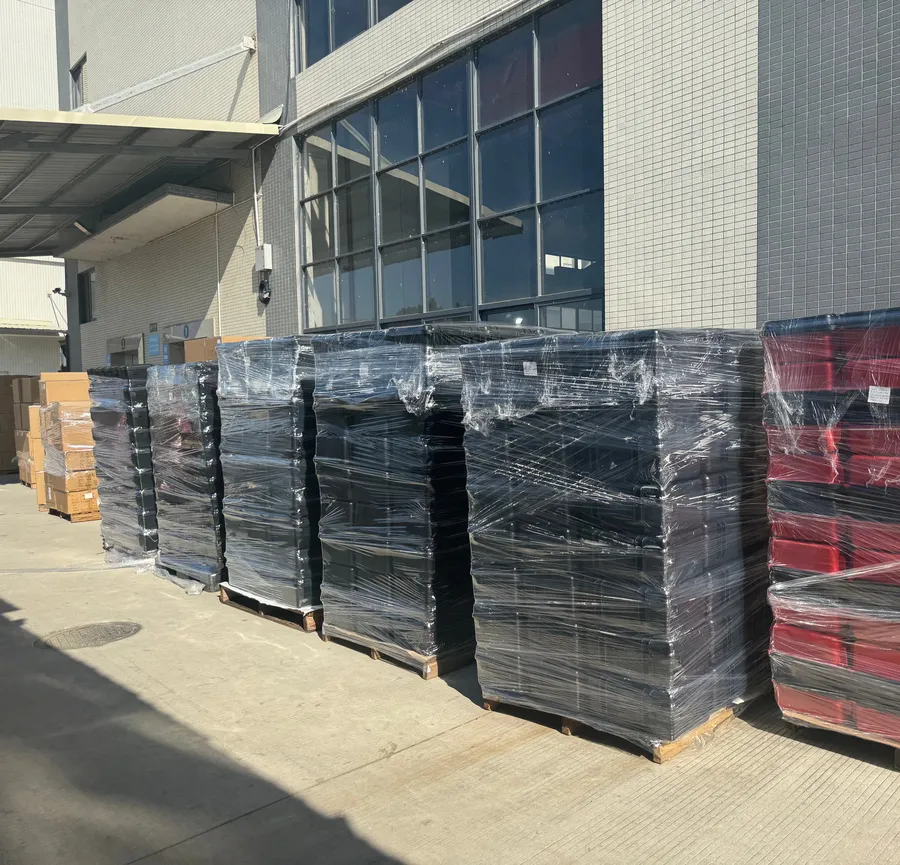
The unit a warehouse stacks is the carton, not the bare case, so a pallet configuration has to start from outer cartons. Our catalogue publishes a carton footprint with pieces per carton for 58 models and a carton size without a count for 6 more; the remaining shells are packed to order. Because a carton like a 645 by 530 by 430 millimetre box holding 24 pieces stacks very differently from a single deep case, the RFQ should carry the carton outer dimensions and pieces per carton explicitly.
Pallet quantity and container loading are not fixed catalogue numbers. Both are recorded as not measured across all 155 models, because they are calculated from the carton footprint against your pallet size, and the 20-foot, 40-foot, and high-cube figures are supplied with the quotation. The honest ask is therefore not 'give me your pallet count' but 'here is my pallet size and my tiers, cube it from the carton data'.
What stackability data supports, and what needs a test
The distinction that keeps a stacking RFQ honest is the same one we hold for gaskets. The construction that supports stacking, meaning stackable shell, feet, lid depth, and carton geometry, is real catalogue data you can check against the tool. The strength and volume results, meaning the stack load a column survives and the pallet and container counts, are recorded as not measured because they depend on your configuration and on a test nobody has run for that order.
So specify the construction in the RFQ, and treat any load or stacking figure as a separate scope. If your receiving process depends on a stated stack load, name the procedure and ask the supplier to commission accredited third-party testing and issue a report for the configuration you are buying. Do not accept a number copied from a datasheet that the catalogue itself flags as not measured.
A stackability block you can paste into an RFQ
A clean stackability block reads like this: model number and family (stackable or rolling); stacking feet and base/rim style; lid depth and base depth, and telescopic lid if requested; target stack height and shelf pitch; carton outer dimensions and pieces per carton; your pallet size and tiers per pallet; and the container type if you want a loading figure. Add one line stating whether you require a commissioned load or stacking report.
Then carry the commercial frame we work to, because it shapes the answer: wholesale and OEM or ODM only, on EXW or FOB terms, quantity and MOQ shown. We run no retail channel, we do not quote delivered-duty-paid lanes, and we have no overseas warehouse, so a stacking enquiry comes back as a factory-direct export cube. First OEM samples take 45 days and a new mould 125 days if your footprint needs a new tool.
Applications where stackability drives the buy
Fleet and field deployments, retail back-of-house, and instrument pools all buy on stacking math, because the case that will not stack cleanly wastes vertical space on every pallet. Ammunition and tool storage cases are stacked densely, so the feet and lid depth matter more there than in single-unit kits, and electronics and instrument cases are often cartoned before they are stacked, which makes the carton geometry the real variable.
For every one of those, the RFQ reads the same way: name the model and family, describe the feet and lid, give the carton and pallet geometry, and separate the strength question from the construction question. A stackability line written that way comes back with a usable pallet configuration; one written as 'must hold N kilograms stacked' comes back with a number the supplier never measured.
Stackability at a glance: what to specify versus what is not measured
| Rfq Item | What The Catalogue Supports | What Stays Open |
|---|---|---|
| Stackable family | 136 of 155 models published as stackable; 19 rolling cases recorded as not stackable | Whether your SKU is in the stackable family |
| Stacking feet | Feet recorded as a measured feature on all 155 models | The exact interlock and footprint you want drawn |
| Lid and base depth | Published per model, lid and base split recorded by shell | Telescopic lid range, requested per configuration |
| Carton footprint | Carton outer with pieces per carton published on 58 models | Pack design for the 91 models packed to order |
| Stack load | Recorded as not measured, so no kilogram value is stated | A load or stacking report, commissioned and quoted separately |
| Pallet and container loading | Computed from carton footprint against your pallet size, supplied with the quotation | Your pallet size and tiers, which drive the calculation |
Procurement notes for stacking enquiries
When you send a stackability RFQ, put the geometry first and the strength question last, because geometry is what we can answer from published data and strength is a test we run on request. We supply wholesale and OEM or ODM only on EXW or FOB terms, take a 30 percent deposit with the balance after inspection, and welcome third-party factory audits, so a stacking enquiry is priced as a direct export order.
Related reading and where to send the enquiry
If your stacking brief touches weight, load capacity, palletisation, or container loading, those topics each have their own guide in the knowledge centre, and reading the palletisation and container-loading pages before you write the RFQ saves a round trip. Send the finished stackability block to Fred Zhao or the KeXin Sales Team, reachable on WhatsApp at +86 135 3588 0002, and keep the model list and carton data attached so the first answer is a real cube.
Customisation
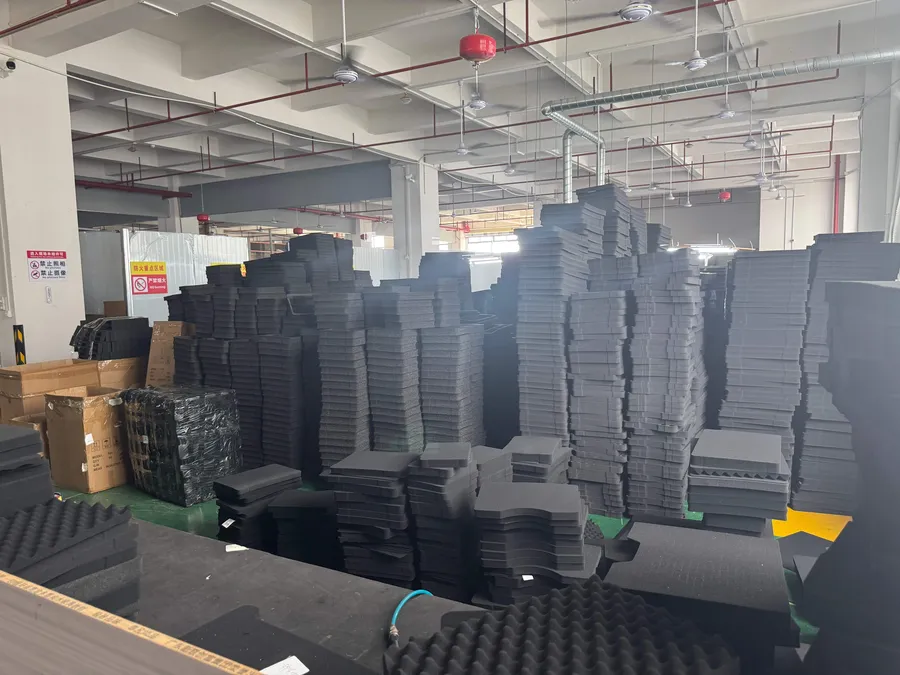
Everything described above is configurable on a standard shell: interior layout (pick-and-pluck, die-cut or CNC-cut), foam grade and thickness, colour, logo method, latch and lock count, pressure-equalisation valve, cable ports, document holder and identification plate. A bespoke exterior geometry requires a new mould — 125 days, from 3,000 units per moulded component.
Procurement considerations
| Question | What to send us |
|---|---|
| Which shell fits? | Equipment L × W × H as packed, plus required clearance per axis |
| What does it cost? | Order quantity and estimated annual quantity — the two drive different answers |
| Is tooling needed? | Whether an existing shell clears the envelope with usable foam depth |
| Lead time? | Your required delivery date, not just the order date |
| Certification? | The exact standard your tender names — we will say whether we can test to it |
| Freight? | Destination and preferred terms; carton and pallet data supplied with the quotation |
Comparison and selection guide
The tables on this page exist because a protective case is chosen by comparing three things: the envelope, the environment and the handling chain. Where no table applies, the rule below is.
| Situation | What To Do |
|---|---|
| Fastest | Standard shell plus CNC foam — typically 45 days from approved drawing. |
| Branded | Standard shell plus custom colour and logo — MOQ applies to the resin colour. |
| Bespoke geometry | New mould — 125 days, MOQ from 3,000 units per component. |
- Size on internal dimensions plus clearance, never on a product name.
- Choose the carrying method before the shell: it changes the series, not just the price.
- Specify the interior last, and decide up front whether the end user will reconfigure it.
How should case stackability be specified in a protective case RFQ? relates to Logistics & Packing Guide. Related families: Custom Protective Cases / Equipment Transport Cases / Rolling Cases / Tool Cases. Related sectors: field and industrial equipment. Continue in the Logistics & Packing Guide cluster.
This page is written from our own production data. If your requirement differs, send the dimensions and we will tell you which of the 155 models fits, or whether a custom route is needed.