Can internal vs external dimensions be customised for a specific piece of equipment?
Yes, but not as a single decision. External dimensions belong to the mould, so they only move when a new tool is cut; internal dimensions are fixed by the same mould, yet most fits for one specific piece of equipment are solved inside an existing shell by changing the interior, which alters the usable cavity without touching either published figure. Both sets are stated separately in our published data: 155 listings give internal and external dimensions on every axis, and a measured wall thickness is published for 148 of them, from 2.0 to 6.0 mm, so the gap between the two figures is a documented number rather than something you have to estimate. A configured foam interior is the cheap route; a new tool is the only route that changes the outside dimensions of the shell.
Key points
- External dimensions are tooling-bound: nothing in an order configures them smaller or larger without a new mould.
- Our published data states both dimension sets separately on every axis, so a cavity claim can be checked, not inferred.
- A configured foam interior changes usable volume and part location while both published dimension sets stay unchanged.
- Commercial terms for a new tool are 125 days and MOQ 3,000 pcs per component, so sizing a shell is a volume decision.
- No dimensional tolerance band is published per model, and our published data also lists a narrow internal width on 36 listings, the figure that decides whether a tapered part actually fits.
- A published usable interior volume falls below the internal envelope on 154 of 155 listings, so size to the cavity you keep.
What customising the two dimension sets actually means
A case carries two independent dimension sets, and each answers a different buyer question. The external set is what freight, a vehicle boot, a rack bay and a shelf have to accommodate; the internal set is what your equipment has to fit inside. In our published data both are stated per axis rather than one being derived from the other, which matters because a supplier who gives you only one figure has answered only one of your two questions. For the smallest listing, the published external size is 120 x 90 x 40 mm and the published internal size is 115 x 78 x 32 mm, with a measured wall thickness of 2.6 mm, so the measured gap on that model is 5 mm on length, 12 mm on width and 8 mm on height.
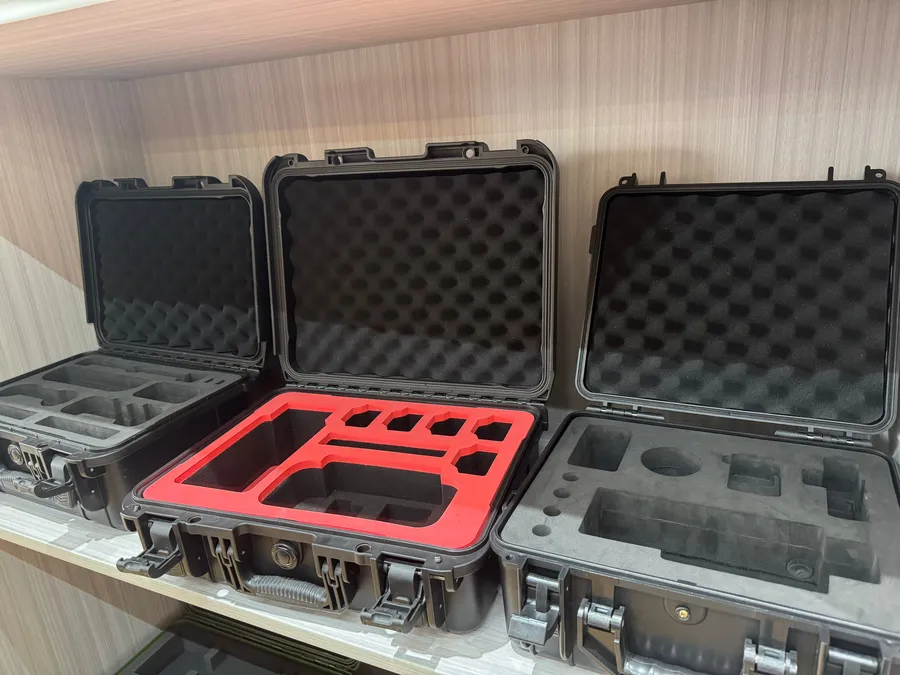
Customising therefore means choosing which of those two figures you are willing to move, and paying for the right mechanism. The interior can be re-engineered all day without touching the shell: foam is cut, layered and routed to hold a specific device. The shell itself only changes through tooling, and tooling is quoted on commercial terms rather than as a line item you can negotiate away. Everything between those two extremes is a configuration choice - which lid and base depth combination you take, which hardware you bolt on, which colour you mould in - and none of those choices change a published dimension.
Five levers, and which figure each one moves
The table below is the practical answer to the question in the title. Read the second column first: if the fit problem you have can be solved without moving a published figure, it should be solved there, because the cost and lead time of the last row are an order of magnitude larger than the first four.
| Lever | What It Moves | What Stays Published | Basis And Commercial Terms |
|---|---|---|---|
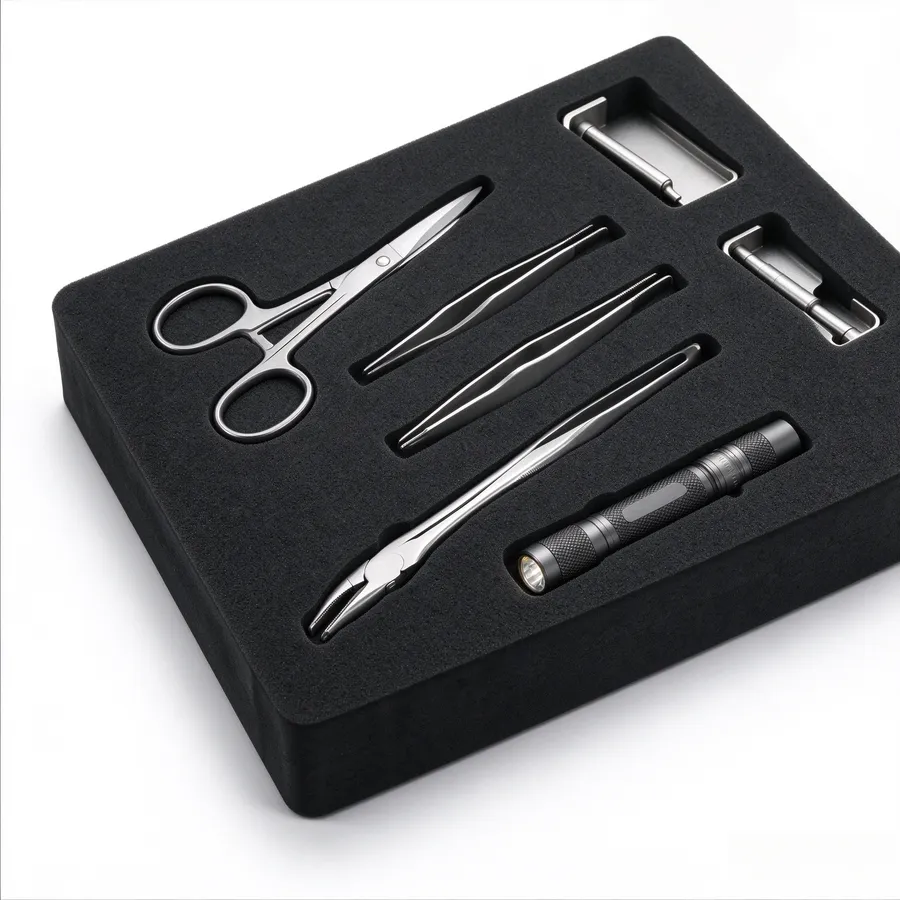
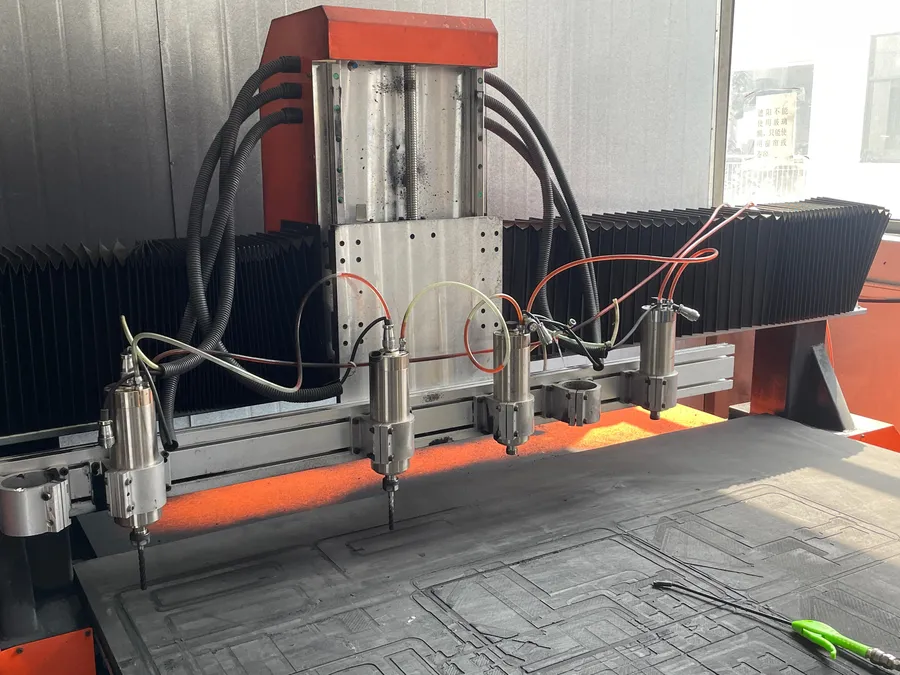
| Configured interior: pick-and-pluck, die-cut or CNC-cut foam | The usable cavity and where each part sits | Internal and external dimensions on every axis | Configured per order; published MOQ data shows 1 unit for standard cases and custom foam |
| Colour, logo and carton packaging | Appearance and packing only | Every dimension in both sets | Configured per order; published MOQ data shows 300 units for logo and colour work |
| Hardware: handle, latch, padlock boss, wheels | Local depth, protrusion and carrying height outside the published envelope | The internal cavity dimensions | Configured per order; wheels are published on 19 of 155 listings |
| Lid and base depth choice within an existing tool | How the published internal height is divided between the two halves | Total internal height and the external footprint | Configured per order; lid and base depths are published on 100 listings |
| New tool (custom mould) | Both dimension sets, on all three axes | Nothing - the published figures are replaced by your drawing | Commercial terms are 125 days and MOQ 3,000 pcs per component |
What the published figures look like on real models
Every value in this table is a published figure for that model, taken from our model file; the wall thickness is a measured value recorded from our own production data. Read the two dimension columns as evidence that the gap between inside and outside is not a constant: it grows with the shell, and it grows unevenly by axis, which is exactly why estimating one set from the other fails on specific equipment.
| Model | External Mm | Internal Mm | Wall Mm | Lid + Base Mm |
|---|---|---|---|---|
| KX-1204 (published) | published 120 x 90 x 40 | published 115 x 78 x 32 | measured 2.6 | published 16 + 16 |
| KX-2005 (published) | published 195 x 170 x 46 | published 190 x 135 x 40 | measured 2.0 | published 20 + 20 |
| KX-4010-2 (published) | published 400 x 350 x 100 | published 388 x 307 x 90 | measured 3.4 | published 45 + 45 |
| KX-85726 (published) | published 576 x 363 x 257 | published 520 x 296 x 210 | measured 4.2 | published 155 + 55 |
| KX-86836 (published) | published 677 x 535 x 364 | published 595 x 460 x 315 | measured 4.8 | published 270 + 45 |
| KX-88442 (published) | published 843 x 592 x 415 | published 740 x 518 x 364 | measured 5.0 | published 320 + 44 |
How to choose the route for your equipment
Start from the device, not from a case. Measure the piece as it will actually travel: body plus connectors, plus antennas, handles and anything that does not fold, then add clearance for the foam wall around it. Compare that three-axis envelope with our published internal figures, and check the narrow section as well as the rectangle: a measured narrow internal width is published on 36 listings, and on a tapered shell that is the axis that rejects parts, not the length.
Second, decide which constraint is binding. If the constraint is the shelf, the rack or the vehicle, the external set is fixed by someone else's dimension and you are choosing inside a published envelope. If the constraint is the device itself - a sensor head that must lie at an angle, a case that must carry two units side by side - then the interior is the free variable, and a configured foam layout solves it without tooling. Only when no published internal envelope contains the device at all does the tooling row become the cheapest of the remaining options, and that is a volume decision, not a sizing decision.
Third, check the third figure you will be asked about at goods-in: usable interior. In our published data, 154 of 155 listings show a usable interior volume below the internal envelope volume, because interior foam occupies part of the cavity. On the largest listing the published internal volume is 139.5 litres while the published usable interior volume is 111.6 litres, so a device sized to the raw cavity will not go in once the foam is configured.
Where a custom dimension actually costs you
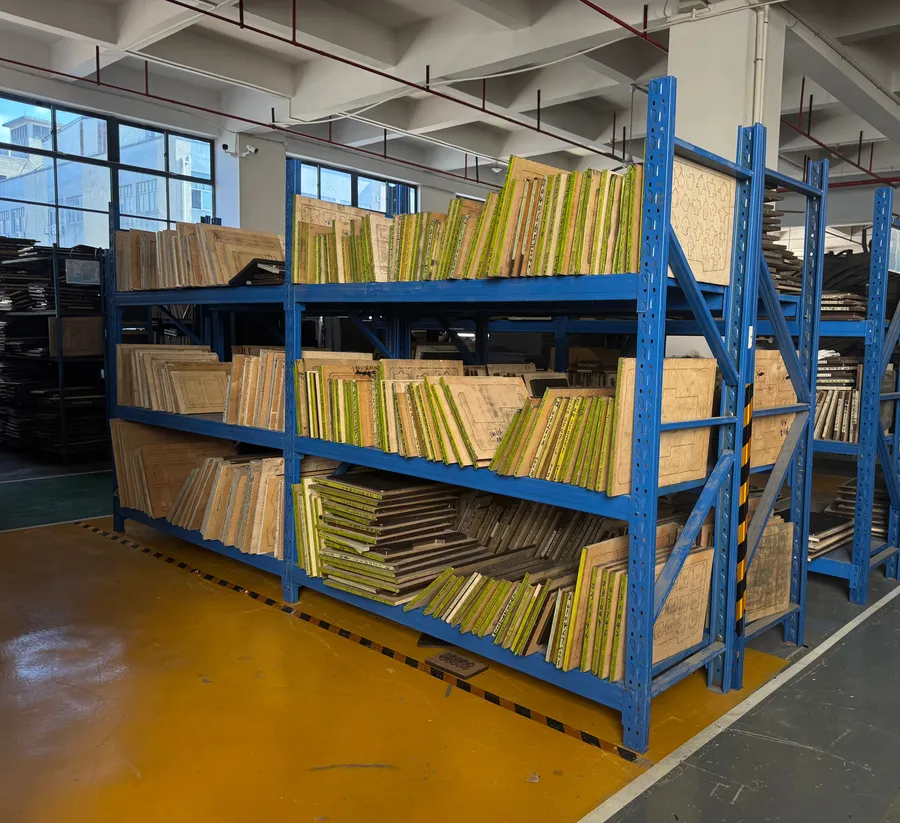
Tooling is where the two dimension sets stop being a spec conversation and become a commercial one. On our published commercial terms, an OEM first sample on an existing mould runs 45 days and a new mould runs 125 days, at MOQ 3,000 pcs per component with a thirty percent deposit, wholesale and OEM only on EXW or FOB terms. That is the honest shape of the decision: a new shell dimension buys you a cavity nobody else orders, and it is amortised across a run long enough to make the tool worth cutting.
The other cost is one buyers forget to write down. No dimensional tolerance band appears in our published model data for any listing, and a moulded thermoplastic shell is not a machined part. So the tolerance line belongs in your drawing review before the first sample, together with the shell material you are on: the file publishes PP on 94 listings, and the same published material split shows engineering PP on 38 listings and ABS on 22 listings, while wall thickness moves with that material and with the size rather than with your drawing.
Applications where the internal figure decides the build
For benchtop instruments and telecoms gear, the binding dimension is usually a connector stack or a rear heat budget, and both are interior questions answered by a configured cavity rather than a shell change. For field and medical equipment the binding dimension is usually the carrying form factor: the same published internal envelope can be ordered with a fixed handle, or with wheels and a telescopic pull, and a telescopic handle height is published on 11 listings, from 240 to 485 mm, which is the figure that decides whether a loaded case goes into an overhead bin or into the hold.
For long items - tripods, rods, rifle-shaped tooling - the rectangle is the wrong test entirely, and the narrow internal width and the lid and base depth split are the published numbers that decide the build. That is also where die-cut and CNC-cut foam pays for itself: a cavity that locates the part at two points and supports it along its length is an interior engineering job, quoted per order rather than per tool.
Purchasing notes: what to send so the answer is not a guess
Send three external axes for the device as it travels, the mass, the orientation it must sit in, how many cavities you need and whether the case itself must stack. Say which of the two dimension sets is fixed for you and which is open. Those two sentences let us tell you in one reply whether your fit is a configured foam job at MOQ 1 unit from our published MOQ data, or a new tool at MOQ 3,000 pcs per component on the commercial terms above. Anything vaguer turns the exchange into three rounds of email.
KeXin New Materials (Guangdong) Co., Ltd. supplies at wholesale and OEM level only, quoted EXW or FOB from the factory. We do not sell retail, do not quote DDP and hold no overseas warehouse, so landed cost and import handling stay on your side of the quotation while the dimensions, the interior and the tooling stay on ours.
Customisation
Everything described above is configurable on a standard shell: interior layout (pick-and-pluck, die-cut or CNC-cut), foam grade and thickness, colour, logo method, latch and lock count, pressure-equalisation valve, cable ports, document holder and identification plate. A bespoke exterior geometry requires a new mould — 125 days, from 3,000 units per moulded component.
Procurement considerations
| Question | What to send us |
|---|---|
| Which shell fits? | Equipment L × W × H as packed, plus required clearance per axis |
| What does it cost? | Order quantity and estimated annual quantity — the two drive different answers |
| Is tooling needed? | Whether an existing shell clears the envelope with usable foam depth |
| Lead time? | Your required delivery date, not just the order date |
| Certification? | The exact standard your tender names — we will say whether we can test to it |
| Freight? | Destination and preferred terms; carton and pallet data supplied with the quotation |
Comparison and selection guide
The tables on this page exist because a protective case is chosen by comparing three things: the envelope, the environment and the handling chain. Where no table applies, the rule below is.
| Situation | What To Do |
|---|---|
| Fastest | Standard shell plus CNC foam — typically 45 days from approved drawing. |
| Branded | Standard shell plus custom colour and logo — MOQ applies to the resin colour. |
| Bespoke geometry | New mould — 125 days, MOQ from 3,000 units per component. |
- Size on internal dimensions plus clearance, never on a product name.
- Choose the carrying method before the shell: it changes the series, not just the price.
- Specify the interior last, and decide up front whether the end user will reconfigure it.
Can internal vs external dimensions be customised for a specific piece of equipment? relates to Logistics & Packing Guide. Related families: Custom Protective Cases / Instrument & Equipment Cases / Electronics Cases. Related sectors: field and industrial equipment. Continue in the Logistics & Packing Guide cluster.
This page is written from our own production data. If your requirement differs, send the dimensions and we will tell you which of the 155 models fits, or whether a custom route is needed.


