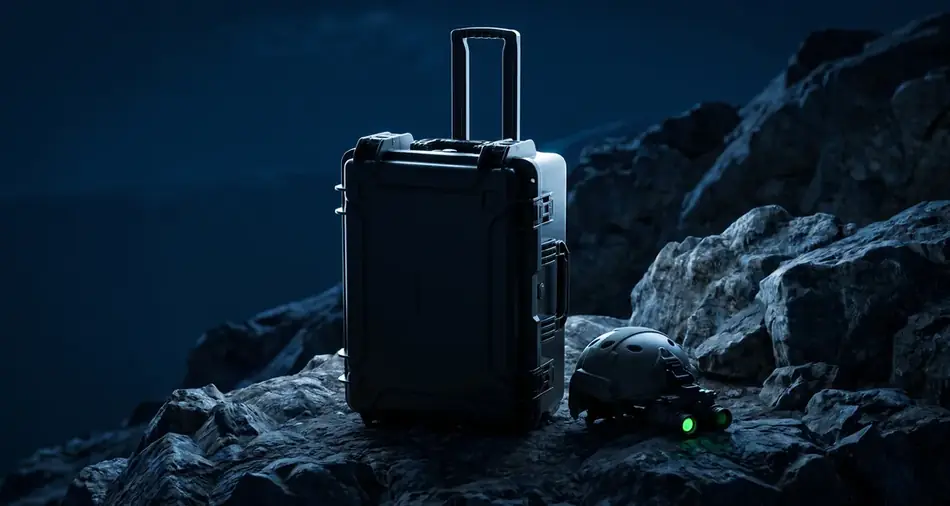
Can case wheels be customised for a specific piece of equipment?
Yes. Case wheels can be customised for a specific piece of equipment, but on this line they are a configuration choice rather than a default fitting. Across the 155 published models, 19 carry a wheel pair as built (hardware.wheels is set to 2), and those are the larger trolley-style cases whose empty weight runs from about 4,912 g to 15,320 g. For the remaining 136 models, wheels sit in the same OEM-hardware bucket as handles, latches and foam, so they can be added to a chosen tooling subject to mould and load considerations. What we publish are the real dimensions and weights measured for each model; we do not print a wheel load rating, a drop figure, or an ingress-protection code that was never measured for that build.
Key points
- Wheels are a configuration, not a default: only 19 of 155 published models ship with a wheel pair as built.
- Wheeled models are the heavy ones: empty weight runs from about 4,912 g to 15,320 g across the trolley range.
- Telescopic pull heights are published on 11 of the 19 wheeled models; the other eight list no handle height.
- All 155 models carry a fixed folding handle, so a wheel pair supplements the grip rather than replacing it.
- Wheels, handles, latches and foam are all flagged as OEM-variable hardware, added against a chosen tooling.
What customised case wheels actually means on this catalogue
When a buyer asks whether case wheels can be customised, the honest answer is that wheels belong to the same OEM-hardware group as handles, latches and foam inserts. They can be added to a case built for a particular piece of equipment, but they are not stamped onto every shell. In the published records the hardware.wheels field reads 2 on nineteen models and 0 on the remaining one hundred and thirty-six, which tells you exactly which bodies leave the line with a wheel pair and which ones are fitted only on request.
Which models ship with wheels, and the figures behind them
The table lists a spread of the nineteen built-in-wheel models, with dimensions and empty weight taken directly from the published model records. The lightest wheeled body sits at 4,912 g and 22.1 litres of interior volume; the heaviest reaches 15,320 g and 139.5 litres, with a longest external side of 843 mm. These are concrete catalogue values for named models, not a general capability claim spread across the whole range.
| Model | External Mm | Empty Weight | Interior Volume |
|---|---|---|---|
| KX-85021 | 495 x 370 x 210 | 4,912 g | 22.1 L |
| KX-85827 | 588 x 475 x 267 | 7,800 g | 44.0 L |
| KX-86136 | 612 x 427 x 355 | 8,500 g | 58.0 L |
| KX-86836 | 677 x 535 x 364 | 10,600 g | 86.2 L |
| KX-88434 | 843 x 592 x 335 | 14,030 g | 108.9 L |
| KX-88442 | 843 x 592 x 415 | 15,320 g | 139.5 L |
Wheels against fixed folding handles: how the line splits
A useful way to read the catalogue is that the nineteen wheeled models are exactly the nineteen models whose handle field reads telescopic plus fixed folding. The other one hundred and thirty-six read fixed folding only. This coupling matters when you customise: a case that rolls normally needs something to steer it by, so on the current line the wheel pair and the pull handle arrive as one configuration rather than two fully independent switches.
| Configuration | Model Count | Handle |
|---|---|---|
| Wheel pair (hardware.wheels = 2) | 19 | Telescopic plus fixed folding |
| No built-in wheels | 136 | Fixed folding only |
Telescopic pull heights: what is published and what is blank
Pull-handle height is the detail buyers ask about most and the field the catalogue answers least completely. Of the nineteen wheeled models, eleven list a published telescopic height, clustered at 240 mm on two models, 295 mm on five, 310 mm on two, and 385 mm and 485 mm on one model each. The remaining eight wheeled models leave the telescopic height field empty. We publish a height only where the tooling carries a recorded value; where it is blank we treat it as an open configuration question for the quotation rather than inventing a number to fill the row.
How wheels get matched to a specific piece of equipment
Matching wheels to equipment starts from the load you can weigh, not the load you hope for. First fix the packed weight of the equipment plus the empty case, then judge the route between storage and use, because a wheel pair that rolls well on a smooth warehouse floor behaves differently on gravel, cable runs or a loading-lip curb. Second, check the case footprint against the doors, lifts and vehicle floors the operator must pass through, since the longest wheeled body here reaches 843 mm on one side. Third, decide whether a published pull height suits the operator, or whether a blank-height model needs a handle agreed at the tooling stage before anything is committed.
OEM customisation of wheels and case hardware
What turns a wheels-for-specific-equipment request into a normal job is that the oem.custom_hardware field is set to true across all 155 models. A customer brings the equipment dimensions and the route it travels, and we decide whether the shell needs a wheel pair, a matching telescopic handle, additional fixed folding grip points, or a shoulder strap option. Wheel and castor choices interact with the mould, so an OEM run on existing tooling is quoted at a forty-five day first-sample lead time, while a new mould, for example one that must integrate a recessed axle, is a one-hundred-and-twenty-five day path with its own tooling minimum order.
Figures we do not publish for wheeled cases
This is the boundary that protects the buyer. Wheel load rating, static stack load, an ingress-protection code, a temperature range and a drop height are all recorded as not measured on this catalogue, so none of them appear here as a number. What we state as measured is narrower: the shell is thermoplastic with no ferrous corrosion path, and published wall thickness runs from 2.0 mm to 6.0 mm depending on model. When a project genuinely needs a load or ingress figure, we arrange third-party laboratory testing on the specific configuration and report what comes back, instead of carrying a single rating across the whole range.
Procurement notes: MOQ, lead time and commercial terms
Commercially this is a wholesale and OEM operation, so the numbers are worth stating plainly. The standard sample MOQ is one piece, an OEM run on existing tooling sits at a three-hundred piece MOQ, and a custom-mould programme carries a three-thousand piece MOQ. A thirty percent deposit opens production and the balance is settled against inspection before shipment. We quote on an EXW or FOB basis. We do not sell at retail, we do not quote DDP landed prices, and we hold no overseas warehouse stock, and third-party factory audits and inspections are welcome.
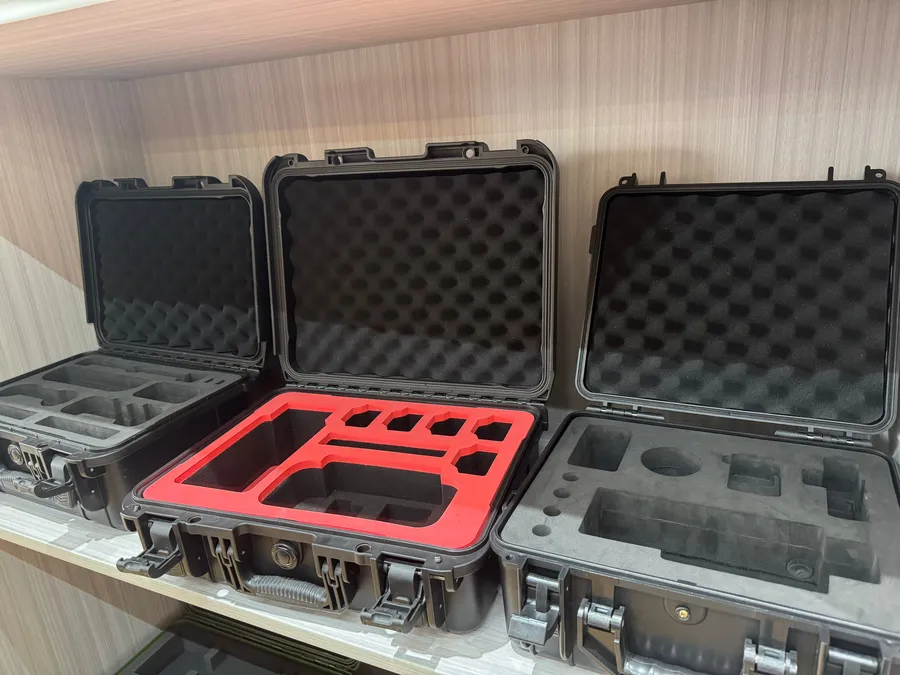
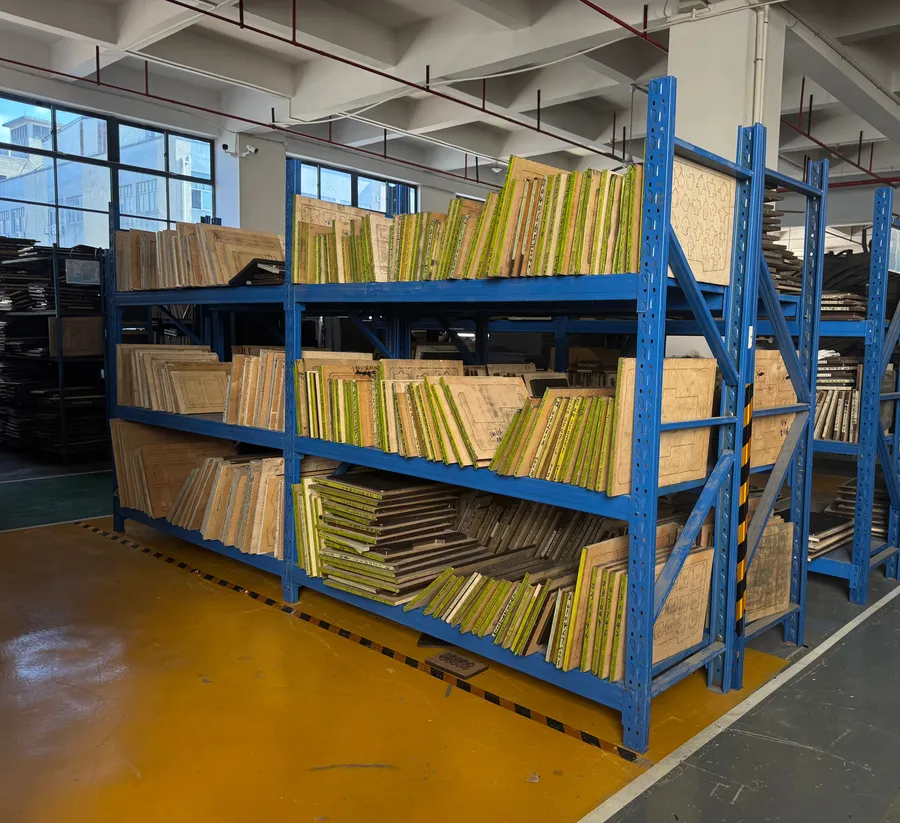
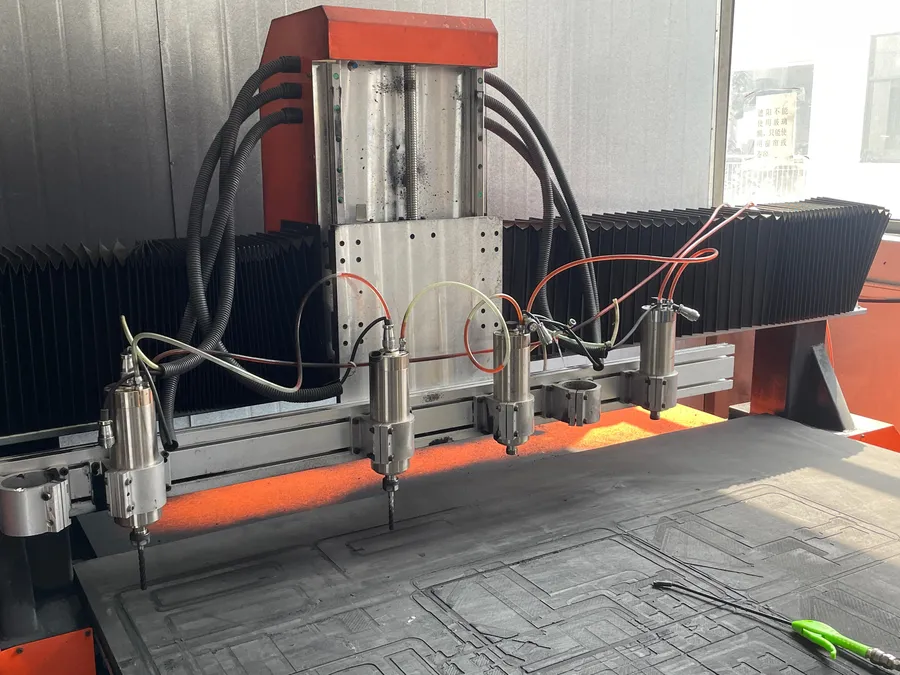
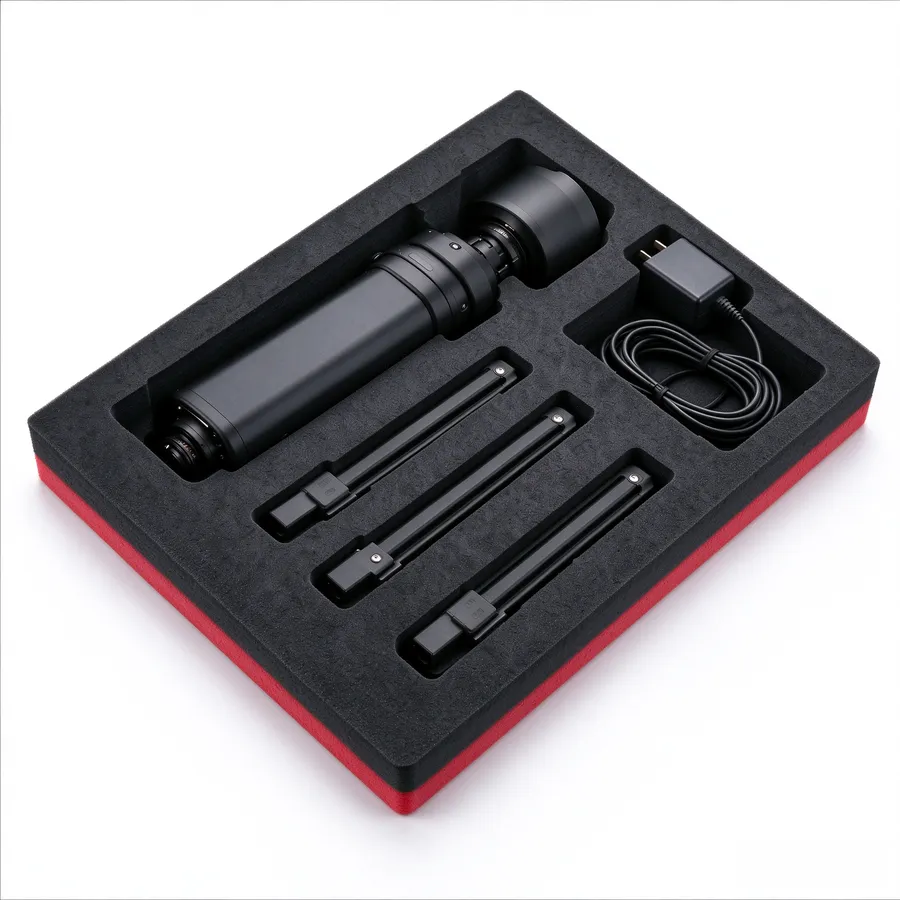
Customisation
Everything described above is configurable on a standard shell: interior layout (pick-and-pluck, die-cut or CNC-cut), foam grade and thickness, colour, logo method, latch and lock count, pressure-equalisation valve, cable ports, document holder and identification plate. A bespoke exterior geometry requires a new mould — 125 days, from 3,000 units per moulded component.
Procurement considerations
| Question | What to send us |
|---|---|
| Which shell fits? | Equipment L × W × H as packed, plus required clearance per axis |
| What does it cost? | Order quantity and estimated annual quantity — the two drive different answers |
| Is tooling needed? | Whether an existing shell clears the envelope with usable foam depth |
| Lead time? | Your required delivery date, not just the order date |
| Certification? | The exact standard your tender names — we will say whether we can test to it |
| Freight? | Destination and preferred terms; carton and pallet data supplied with the quotation |
Comparison and selection guide
The tables on this page exist because a protective case is chosen by comparing three things: the envelope, the environment and the handling chain. Where no table applies, the rule below is.
| Situation | What To Do |
|---|---|
| Airport and road transfer | Check the external dimensions against cabin and boot constraints, not just the internal volume. |
| Rough ground | Larger wheels and a wider track matter more than shell volume. |
| Stored upright | Confirm the case can stand on its base with the handle retracted in your racking. |
- Size on internal dimensions plus clearance, never on a product name.
- Choose the carrying method before the shell: it changes the series, not just the price.
- Specify the interior last, and decide up front whether the end user will reconfigure it.
Can case wheels be customised for a specific piece of equipment? relates to Logistics & Packing Guide. Related families: Rolling Cases / Equipment Transport Cases / Military Protective Cases / Custom Protective Cases. Related sectors: field and industrial equipment. Continue in the Logistics & Packing Guide cluster.
This page is written from our own production data. If your requirement differs, send the dimensions and we will tell you which of the 155 models fits, or whether a custom route is needed.