What is case load capacity and why does it matter when buying a protective case?
Case load capacity is the mass a case is expected to carry or withstand without damaging the contents or itself - and the first thing to understand is that the phrase covers three different numbers, not one. The first of them is content mass: what you put inside, including equipment, cables, batteries and the foam layout, all of which the shell then has to carry. The second is stack load: the compressive weight a case receives when other cases or goods sit on top of it in a warehouse rack, a container or a pallet column. The third is handling load: the forces put through the handle, the latches, the hinges, the feet and the wheels when a person lifts, drags or drops the unit into place. It matters when buying a protective case because these three are decided by different parts of the product - content mass by the interior and the wall section, stack load by rim and lid geometry plus stackability, handling load almost entirely by the hardware set - and a supplier who answers only one of them has not answered your question. We should be straight about our own file: the model records for all 155 listings state the stack load and load capacity fields as not measured, so this page explains what we publish, how to plan against it, and how a measured figure can be commissioned for the configuration you actually order.
Key points
- Treat case load capacity as three separate questions - content mass, stack load and handling load - because they are decided by different parts of the case.
- Our model records state stack_load_kg and load_capacity_kg as not measured for all 155 listings, so no stack figure in this page should be read as a rating.
- Geometry and mass are published per model and are what you can plan against today: external and internal dimensions, wall thickness from 2.0 mm to 6.0 mm, net weight, internal volume.
- Stackability is a published field, not a load number: 136 of 155 models are recorded stackable and the 19 wheeled transporters are recorded as not stackable.
- Handling load lands on hardware: hinge, feet and the padlockable latch are recorded as measured on all 155 models, and the latch count itself is specified per configuration.
- A shock or impact statement is a configuration option in our records, not a rating: the entry reads that the shell alone is not a shock rating and no drop height is claimed without a test.
- If a tender requires a measured figure, treat it as a separate work package: accredited testing is quoted per configuration, alongside a 45-day sample on an existing mould.
What case load capacity actually means: three numbers wearing one name
Load capacity is one of those procurement words that survives because nobody checks it. Ask three suppliers for the load capacity of a hard-shell case and you will get three different kinds of answer. The first is content mass - the kilogram of equipment, battery pack, cabling and foam the case is expected to hold, which is really a statement about your device and only indirectly about the case. The second is stack load - the compressive force arriving from above when cases stand in columns in a rack or a container, and the one that turns a harmless-looking box into a collapsed lid. The third is handling load - the peak force through the handle, latches, hinges and feet at the moment somebody lifts, swings or sets the case down, which is where hardware fails rather than the shell. All three are real, all three are asked about under the same two words, and they do not scale with each other. A case can hold 20 kg of equipment comfortably, still fail if a second full case is stood on it, and still have its handle pulled off by a 15 kg load carried by the handle alone. The practical consequence for a buyer is that a specification line reading case load capacity: 25 kg is meaningless unless the basis is stated with it.
Why it matters when buying a protective case, before you compare a single price
It matters first because the failure mode is invisible. A shell that has been over-stacked does not usually announce itself on day one; the lid rim creeps, the latch seats shift, and the seal that depends on that geometry quietly stops being the seal you specified. It matters second because load decides the mould you should be buying at all. A case that spends its life on a shelf carrying one instrument is a different product from a case that spends its life four-high in a rack, and the difference shows up in wall thickness, rib layout and whether the rim is shaped to carry weight through the corners instead of through the lid face. It matters third because load is the field that converts your storage decision into money: stack height determines how many pallet positions a shipment occupies, which determines freight cost per unit, which is usually a larger number than any weight saving on the shell. And it matters fourth because load is where the interior enters the conversation: the same shell loaded into a moulded tray with a 3 kg device near one corner behaves differently from the same shell with the same 3 kg distributed across a convoluted base foam.
What our published model records state about load, field by field
This is the honest position, taken from the same protection and hardware records that are printed on our model pages. Read the claim column as the important part. Two fields that a buyer would expect to carry a load figure are recorded as not measured on all 155 listings, and we are not going to convert a wall thickness into a stack rating to fill the gap. What is measured is the material and hardware reality the load has to travel through.
| Record Field | Published Value | Claim Status | What The Record Says |
|---|---|---|---|
| Stack load (kg) | None stated | Not measured | Recorded as not measured on all 155 model listings; no stack figure is printed on the model page. |
| Load capacity (kg) | None stated | Not measured | Recorded as not measured; we will not state a value we cannot show you a record for. |
| Pallet quantity | None stated | Not measured | Calculated from the carton footprint against your pallet size, so it is an arithmetic result you supply, not our rating. |
| Container loading | None stated | Not measured | 20GP / 40GP / 40HQ figures supplied with the quotation once the configuration is fixed. |
| Shock protection | Available | Configuration option | Requires a specified foam layout; the shell alone is not a shock rating. |
| Impact resistance | Available | Configuration option | Recorded with the model's published wall thickness, and no drop height is claimed without a test. |
| Ingress rating | None stated | Not measured | No ingress rating is stated on any listing; accredited testing is quoted per configuration. |
| Corrosion path | Stated | Measured | Thermoplastic shell, no ferrous corrosion path - relevant because rust is how steel hardware loses its load path, not how a PP shell fails. |
| Hinge and feet | Fitted | Measured | Recorded as fitted on all 155 listings; these are the parts that carry a case standing under load. |
| Latch and lock | Padlockable | Measured | The latch body accepts a standard padlock; latch count is specified per configuration, and latch count is where handling load is decided. |
| Seal type | Gasket in moulded channel | Measured (124 of 155) | A compressible gasket in a continuous moulded channel on 124 listings; the remaining 31 state no seal offer. |
| Wheels | 2 on transporters | Measured | Recorded on 19 wheeled models, and the same 19 are recorded as not stackable. |
What you can plan against today: the published geometry, mass and hardware
The absence of a stack rating does not leave a buyer with nothing, because load decisions are mostly decided by things we do publish per model. Pick any line below and read it as planning data: the internal box is what your content mass has to fit inside, the wall thickness is the section the load travels through, net weight is the tax the shell imposes on your carried total, mass per litre shows how efficiently the mould turns volume into a carrying structure, and the stackable and wheels entries show how the case is intended to be loaded in a warehouse. KX-88442 at the top of the file is a transporter: 843 x 592 x 415 mm external, 139.5 litres of internal volume, 15,320 g of published net weight, 5.0 mm wall, two wheels - and it is explicitly recorded as not stackable, which is the record telling you its load path is the ground and its frame, not a stack column. KX-6621 has the thickest published wall in the file at 6.0 mm, 48.9 litres, 6,420 g, and is recorded stackable. KX-2811 is the small thick-wall case: 5.0 mm at 890 g enclosing 4.5 litres, which is 198 g per litre - a lot of plastic per unit of space, exactly what you would want in something you intend to put under a stack.
| Model | External Mm | Internal Mm | Wall Mm | Published Net Weight | Internal Volume | Stackable Recorded | Wheels Recorded |
|---|---|---|---|---|---|---|---|
| KX-1204 | 120 x 90 x 40 | 115 x 78 x 32 | 2.6 | 100 g | 0.3 L | Yes | No |
| KX-2614 | 255 x 245 x 135 | 240 x 200 x 120 | 2.2 | 460 g | 5.8 L | Yes | No |
| KX-2811 | 280 x 225 x 111 | 253 x 180 x 98 | 5.0 | 890 g | 4.5 L | Yes | No |
| KX-4616 | 460 x 367 x 155 | 455 x 338 x 148 | 3.0 | 1,395 g | 22.8 L | Yes | No |
| KX-65522 | 545 x 440 x 215 | 507 x 385 x 190 | 5.3 | 4,860 g | 37.1 L | Yes | No |
| KX-6621 | 662 x 495 x 210 | 587 x 434 x 192 | 6.0 | 6,420 g | 48.9 L | Yes | No |
| KX-85021 | 495 x 370 x 210 | 437 x 308 x 164 | 4.5 | 4,912 g | 22.1 L | No | Yes |
| KX-88442 | 843 x 592 x 415 | 740 x 518 x 364 | 5.0 | 15,320 g | 139.5 L | No | Yes |
The three routes from a load requirement to a quotation
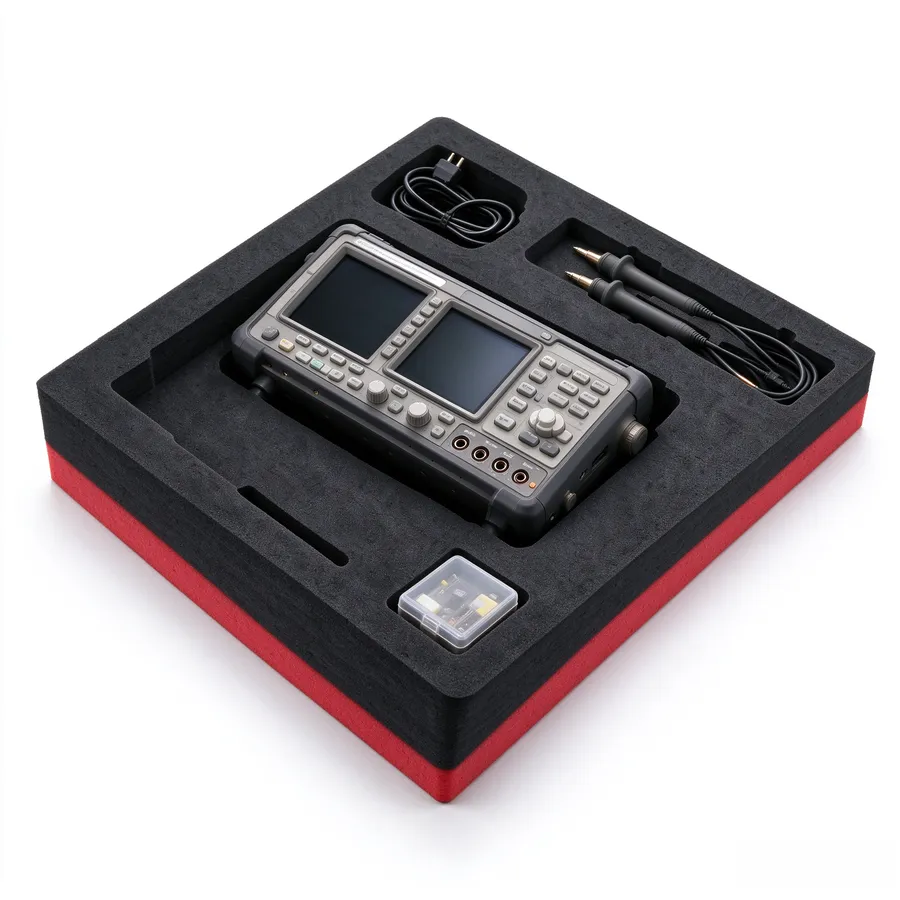
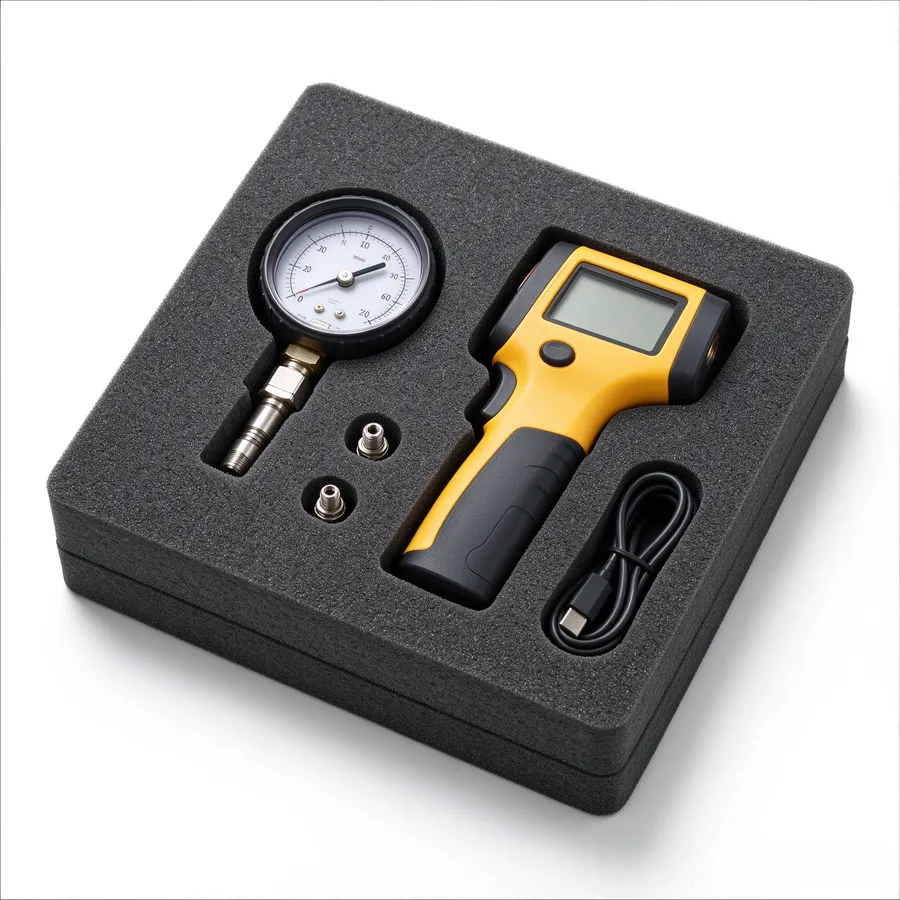
Once the basis is named, the work falls into three routes and each has a different cost and clock. Route one is selection against published geometry: we match the content mass and the equipment envelope to a model whose wall section, volume and stackability record already suit the duty. Route two is configuration on an existing mould, which is where load is genuinely engineered without tooling - the foam structure (top foam, base foam, egg-crate or convoluted, custom cut, layered) and the zones that carry the mass, the number of latches and where they sit, whether the gasket channel is fitted, whether wheels are specified, and whether the interior holds the load centrally or lets it sit on one corner. Route three is a new mould, chosen when the stack column or the payload is far enough outside what existing geometry supports; that route is quoted at 125 days with MOQ from 3,000 units per component, and it is the route where a measured figure can be built in as a deliberate scope item. Where a tender or an internal safety standard requires a documented number, the honest sequence is: fix the configuration, sample it, then commission accredited testing against that configuration as a separate work package, because a test result belongs to a specific build and not to a size class.
To make the routes concrete, the published minimum order and lead-time fields on our model records read: 1 unit for standard listings and for custom foam, 300 units for a logo, colour or OEM programme, 3,000 units per component for a custom mould, 45 days to first sample on an existing mould and 125 days for a new one. Those are the numbers we work to; a load requirement that can be met by route one or two does not need route three's money.
Stacking: the part of load capacity that is geometry, not a rating
Stackability is published as a yes or no field on every listing, and the pattern in our file is instructive. 136 of 155 models are recorded stackable. The 19 that are not are exactly the 19 models recorded with wheels - the transporter formats, from KX-85021 through the largest 843 x 592 mm bodies. That is not an accident of data entry; it is the design intent stated plainly. A body on two wheels and a telescopic handle carries its load through its frame and its feet while it stands on the floor, and its base geometry is shaped to roll rather than to accept a compressive column through the lid. Stacking it puts the weight on the wrong structure. This is what a stackable field can legitimately tell you: which structure the load is meant to enter. It is not the same thing as a stack load figure, which would tell you how many kilograms may enter it, and we do not publish that second number as measured for any model. Where a rack plan or a pallet column has to be worked out, the arithmetic is done from two published fields you already have - the carton footprint and your own pallet size - and our pallet record says exactly that: calculated from the carton footprint against your pallet size. Container counts for 20GP, 40GP and 40HQ are supplied with the quotation once the configuration is fixed, because they depend on the same two inputs. The safe buyer habit here is to treat a stack as an engineering decision about geometry you can see, not as a rating you were handed.
How to write a load requirement so a supplier has to answer it
Six lines turn case load capacity from a word into a specification, and any supplier who cannot answer them should not be quoting your tooling. One: state the basis, in one sentence - content mass, stack load, or handling load. Two: give the content mass with its distribution, not just a total, because a 12 kg body sitting off-centre in a 20-litre case is a different problem from 12 kg spread across a base foam. Three: give the stack condition: how many cases high, on what surface, for how long, and whether the stack is static in a rack or moving in a container. Four: give the handling condition: who lifts it, by which feature, how far, and whether it is ever dropped the height of a tailboard. Five: state the acceptance method - which measured field or which test basis you will accept as proof, and who pays for it, because this is where an accredited third-party work package is quoted. Six: state what happens at goods-in: which figure your team will re-weigh or re-check against the sample, so the specification survives delivery. If you send us those six lines we will answer in the same register - published data where we have it, configuration where it is a build decision, and a separate quotation wherever a number has to be measured before it can be written down.
What we do not state, and how to get a stated number
To be plain about the limits of this page: we state no stack load figure, no payload figure and no ingress rating for any of the 155 listings, because those fields are recorded as not measured in our product data and a number invented to fill a table is worse for a buyer than an empty cell. We state no comparative ranking either; nothing here is presented as the strongest case available anywhere, and no figure in this page is presented as a third-party conformity result. What we do state, per model and verifiably against the listing, is external and internal dimensions, wall thickness from 2.0 mm to 6.0 mm, shell material, net weight where published (93 of 155 models), internal volume, the stackable and wheels fields, the gasket channel, the padlockable latch, hinge and feet, and - where the listing carries packing data - carton dimensions on 64 models and pieces per carton on 58 of them, and the MOQ and lead-time ladder. For the fields that are not measured, the route is a documented one: freeze the configuration, sample it within the 45-day existing-mould route, and commission accredited third-party testing against that configuration as a separate work package priced with the order. We work wholesale and OEM on EXW or FOB from Guangdong only - no retail channel, no DDP quotation, no overseas warehouse stock - on a 30 per cent deposit with the balance cleared after inspection and before container loading, and third-party inspection plus on-site factory audit are welcome by appointment. Send the six-line requirement to Fred Zhao or the KeXin Sales Team on WhatsApp +86 135 3588 0002. KeXin New Materials (Guangdong) Co., Ltd.
Customisation
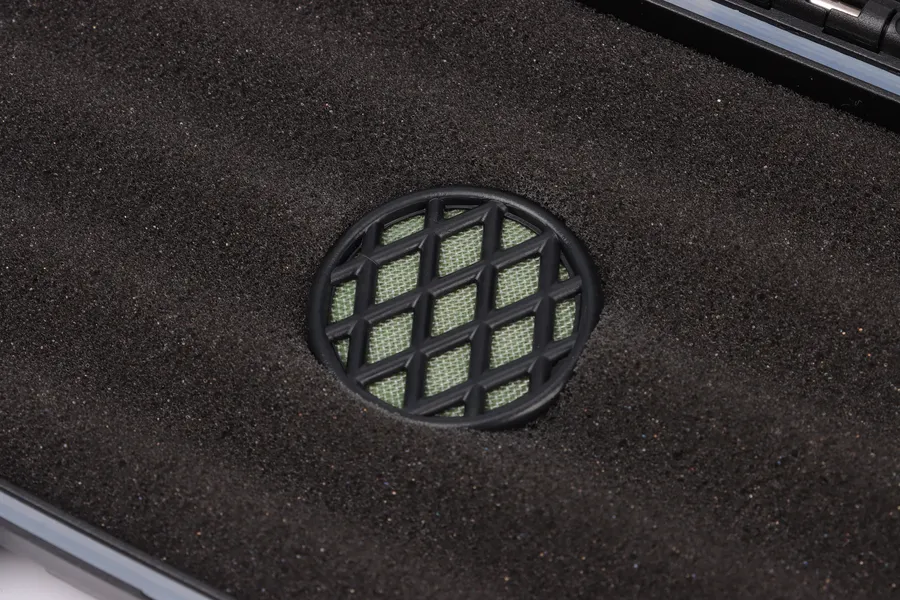
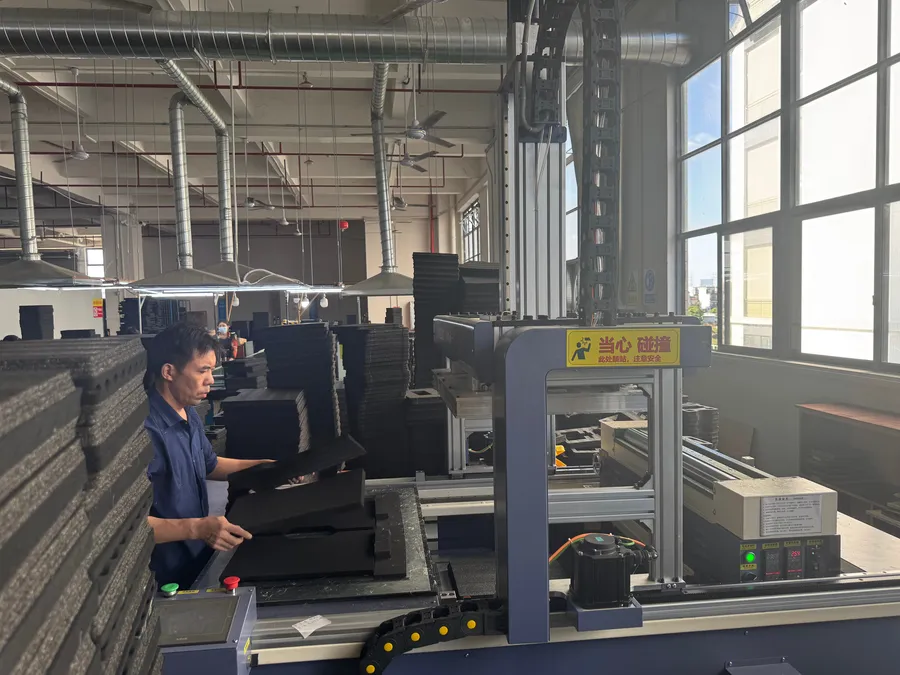
Everything described above is configurable on a standard shell: interior layout (pick-and-pluck, die-cut or CNC-cut), foam grade and thickness, colour, logo method, latch and lock count, pressure-equalisation valve, cable ports, document holder and identification plate. A bespoke exterior geometry requires a new mould — 125 days, from 3,000 units per moulded component.
Procurement considerations
| Question | What to send us |
|---|---|
| Which shell fits? | Equipment L × W × H as packed, plus required clearance per axis |
| What does it cost? | Order quantity and estimated annual quantity — the two drive different answers |
| Is tooling needed? | Whether an existing shell clears the envelope with usable foam depth |
| Lead time? | Your required delivery date, not just the order date |
| Certification? | The exact standard your tender names — we will say whether we can test to it |
| Freight? | Destination and preferred terms; carton and pallet data supplied with the quotation |
Comparison and selection guide
The tables on this page exist because a protective case is chosen by comparing three things: the envelope, the environment and the handling chain. Where no table applies, the rule below is.
| Situation | What To Do |
|---|---|
| Sea freight | Sealed configuration plus desiccant; salt spray is a handling issue, not a material issue. |
| Air freight | Mass and external dimensions drive cost more than volume. |
| Repeated movement | Replaceable latches, hinges and gaskets; keep a spares kit with the first order. |
- Size on internal dimensions plus clearance, never on a product name.
- Choose the carrying method before the shell: it changes the series, not just the price.
- Specify the interior last, and decide up front whether the end user will reconfigure it.
What is case load capacity and why does it matter when buying a protective case? relates to Logistics & Packing Guide. Related families: Equipment Transport Cases / Military Protective Cases / Custom Protective Cases / Rolling Cases / Instrument & Equipment Cases. Related sectors: field and industrial equipment. Continue in the Logistics & Packing Guide cluster.
This page is written from our own production data. If your requirement differs, send the dimensions and we will tell you which of the 155 models fits, or whether a custom route is needed.


