What is case weight and why does it matter when buying a protective case?
Case weight is one label over four different numbers: the empty shell, the shell with its interior fitted, the packed carton, and the palletised or delivered load. Only the first is what we publish. In our published model file a measured net weight is recorded on %d of %d listings, and no listing publishes a gross or shipping weight at all, so a freight figure has to be built from the published net weight plus the carton and pieces-per-carton data we quote for your order. It matters in three places: the chargeable weight your forwarder applies, whether one person can carry the loaded case, and whether the mass per litre still suits the equipment inside once you add foam.
Key points
- Agree which of the four weight figures a quotation is using before you compare two suppliers on mass.
- Our published file records a measured net weight on 93 of 155 listings; the other 62 have no record and we do not estimate one.
- No listing publishes a gross weight, so a shipping figure is built from published net weight plus the carton we quote.
- Across the published measured weights the median is 1480 g and the range runs 100 g to 15320 g, so a single adjective tells you nothing.
- Mass per litre of published internal volume is the normalisation: median 131 g per litre across the listings that carry both figures.
- Weight can be configured on an OEM programme; it cannot be adjusted on a stock shell without changing what that model publishes.
Four numbers that all get called case weight
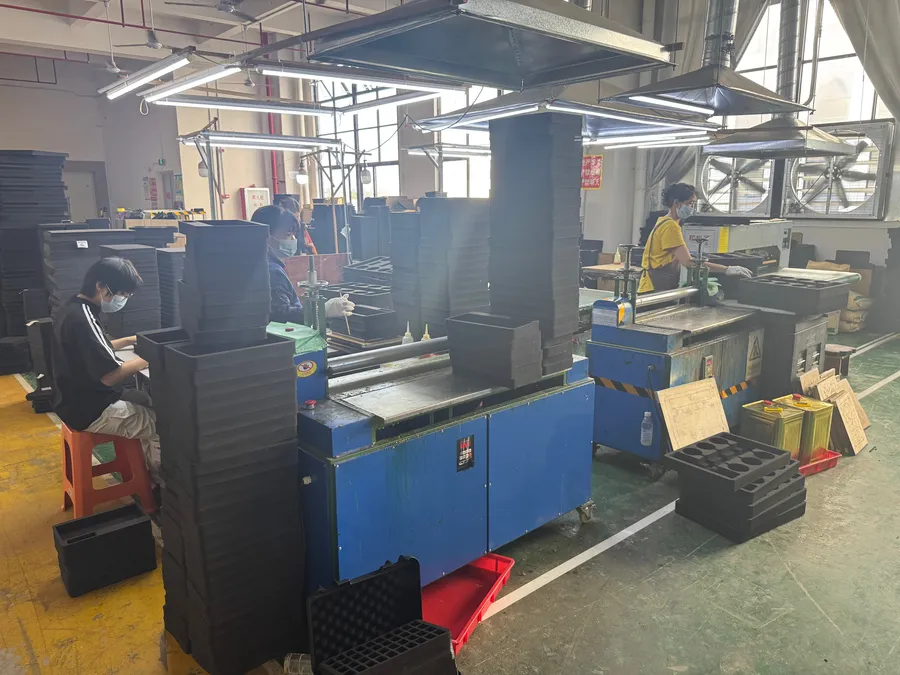
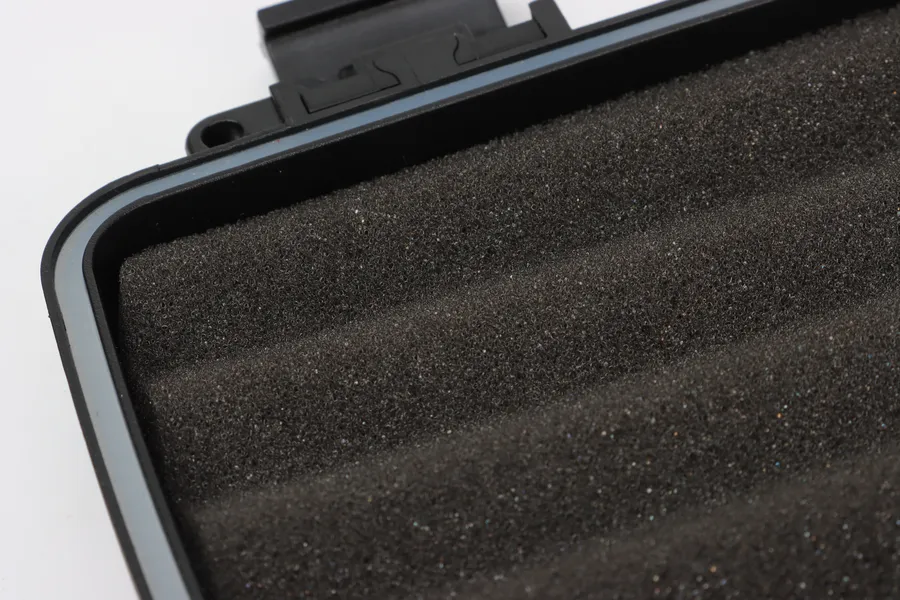
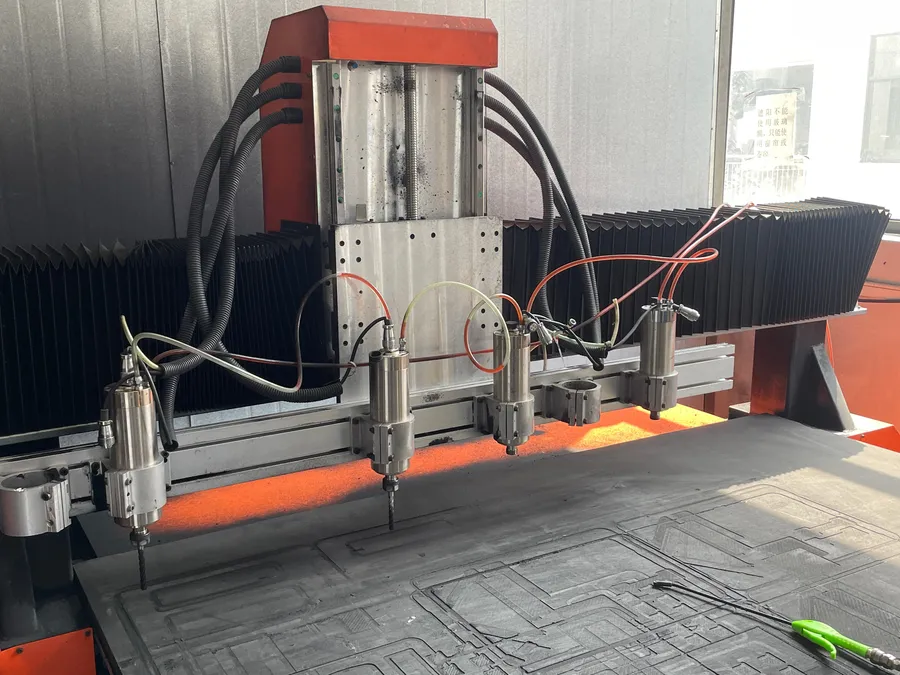
The first is the empty shell: the case as moulded and assembled, with its handle, latches and any seal, and nothing inside. That is the figure our published data records as a measured net weight, taken from our own production records. The second is the shell with its interior fitted, which is heavier by the foam you specify: a configured pick-and-pluck, die-cut or CNC-cut layout in EVA, PE or EPE can add a meaningful amount on a large cavity, and it is not included in the published net figure. The third is the packed carton, which is net weight times the published pieces per carton plus the carton itself, and the fourth is the palletised or delivered load, which depends on your deck pattern rather than on our mould.
None of these is the wrong number; they answer different questions. The published net weight tells you what the item handling your equipment actually is. The interior-fitted figure tells you what a technician lifts out of a vehicle. The carton figure is what your forwarder invoices, and because no listing in our published file carries a gross weight, that one has to be calculated for your order rather than read off a datasheet. Asking a supplier "how much does it weigh" without naming the basis is how two quotations end up comparing a shell to a shipment.
What our published weight data actually covers
Of 155 listings, a measured net weight is published on 93. The remaining 62 publish dimensions, wall and configuration data but no mass, and our published claim policy is explicit that where no record exists we state no value. Weight is the specification line we are least willing to infer: a shell's mass comes from the moulded wall section, the material grade and the hardware fitted, and none of those convert into grams by formula without a production record.
For the listings that do carry a figure, the published range is wide. The lightest measured net weight is 100 g on KX 1204, a mini utility shell whose published external size is 120 x 90 x 40 mm, and the heaviest is 15320 g on KX 8-8442, whose published external size is 843 x 592 x 415 mm. The median published net weight across the listings with a record is 1480 g, with the lower quartile at 815 g and the upper quartile at 4745 g. Any of those four statements is more useful than a category adjective such as "lightweight", which is why we do not use one on a model page.
The published range band by band
This table is the distribution of the measured net weights we publish, band by band, with a named example in each band so the numbers stay attached to a model you can open. Read it as a sizing map: if your load budget sits in the middle bands, most of the catalogue is available to you; if it sits below 815 g, the choice narrows quickly once the interior is configured.
| Published Net Weight Band | Listings In Band | Example Model | Example Measured Net Weight | Published Internal Volume |
|---|---|---|---|---|
| Under 500 g | published 15 | KX 1204 | measured 100 g | published 0.3 L |
| 500 g to 1 kg | published 17 | KX 3207 | measured 570 g | published 4.5 L |
| 1 kg to 2 kg | published 25 | KX 4010-2 | measured 1240 g | published 10.7 L |
| 2 kg to 5 kg | published 16 | KX 6-4819 | measured 2800 g | published 25.5 L |
| 5 kg to 10 kg | published 13 | KX 8-5726 | measured 5600 g | published 32.3 L |
| 10 kg and above | published 7 | KX 8-8442 | measured 15320 g | published 139.5 L |
Weight against published internal volume
Two shells with the same outside size can weigh very differently, which is why mass per litre of published internal volume is the comparison that survives a supplier change. Across the listings that publish both figures, the computed spread runs from 61 g per litre to 387 g per litre with a median of 131 g per litre: small shells sit high because the wall and hardware are a large share of a tiny cavity, while big shells fall toward the low hundreds. Every value below is a published or measured figure from our model file, and the last column is our published carton data where one exists.
| Model | Published Internal Volume (L) | Measured Net Weight | Mass Per Litre | Published Packing |
|---|---|---|---|---|
| KX 1204 (published) | published 0.3 | measured 100 g | computed 333 g per litre | no carton figure published |
| KX 2005 (published) | published 1 | measured 175 g | computed 175 g per litre | published 40 pcs per carton |
| KX 3207 (published) | published 4.5 | measured 570 g | computed 127 g per litre | published 24 pcs per carton |
| KX 4010-2 (published) | published 10.7 | measured 1240 g | computed 116 g per litre | published 10 pcs per carton |
| KX 6-4819 (published) | published 25.5 | measured 2800 g | computed 110 g per litre | no carton figure published |
| KX 8-5726 (published) | published 32.3 | measured 5600 g | computed 173 g per litre | no carton figure published |
| KX 8-8442 (published) | published 139.5 | measured 15320 g | computed 110 g per litre | no carton figure published |
Where the number changes the buying decision
Freight is the first place. A forwarder charges the greater of actual mass and volumetric weight, and volumetric weight comes from the published external dimensions of the shell or the carton, so a slightly larger footprint can cost more than a heavier case does. Because no listing publishes a gross weight, the honest input for a freight estimate is the published net weight multiplied by the published pieces per carton - a packing figure is published on 58 listings - plus the carton and your pallet, and we supply that arithmetic with the quotation.
Handling is the second. A case that a technician must lift into a rack or out of a boot is constrained by the interior-fitted mass, not by the published net figure, and that is where wheels and a telescopic pull earn their weight: wheels are published on 19 listings and a telescopic handle on 19, and the handle and wheel set adds mass to the shell while removing it from the carrying task. Stackability is the third: a published stackable flag appears on 136 listings, and stacking is a mass question as much as a geometry one, because the load path runs through the case below.
The fourth place is one buyers miss: the interior. A configured foam layout is mass you have to spend somewhere. If the load budget is fixed and the equipment is heavy, a thicker base foam and a firmer grade may push the carrying figure past what one person should lift, and the fix is the cavity or the hardware choice rather than the shell. That is a specification conversation, not a datasheet lookup.
Is a heavier case a better case?
Not automatically, and our published data is deliberately blunt about it. Wall thickness is published as a measured value on 148 listings, from 2 mm to 6 mm, and the material split across the file is published as PP on 94 listings, engineering PP on 38 and ABS on 22. Those are the variables that add grams. Whether a given shell survives a specific route, however, is a different question, and our published protection fields record shock and impact behaviour as a configured construction option dependent on the foam layout you order, with water and dust ingress recorded as no test figure for any listing.
So use mass to compare like for like, not as a proxy for protection. Two listings with the same published external footprint and a different published net weight are telling you something real about wall section and hardware; a listing that weighs more than you expected is not telling you the case survives more. Where a test figure is genuinely required by your own customer, laboratory testing on a named model and configuration can be commissioned as a separate work package, and we would rather quote that than borrow someone else's number.
When you can set the weight, and on what terms
On a stock shell, mass is published as it is: you choose the model, the interior and the hardware, and the published net figure is what arrives. On an OEM programme the mass becomes a target you can engineer toward, by moving material grade, wall section and hardware rather than by asking for a lighter shell from the same mould. Our published commercial terms for that route are a 45-day first sample on an existing mould and 125 days for a new mould at MOQ 3,000 pcs per component, with a thirty percent deposit, wholesale and OEM only on EXW or FOB terms; the mass of the approved sample is then the figure the batch repeats.
What we do not publish is just as important to the buying decision. No listing carries a gross weight, no pallet quantity is published for any listing, and container loading appears in our published data with no measured value, carrying the note that 20GP, 40GP and 40HQ figures are supplied with the quotation. Those three gaps are not an oversight: they depend on your deck pattern, your carton and your destination handling, so publishing one fixed number for them would be the least accurate thing we could do on a model page.
Purchasing notes: how to ask so the answer is usable
Send the load budget as a constraint with a basis attached: the maximum a person lifts, the maximum per carton your forwarder will accept, or a fixed mass per litre if you are normalising across suppliers. Ask for the published net weight of the named model, then ask us to add the configured interior and the packing figure as arithmetic you can check. That is a two-line enquiry we can answer from the model file, and it avoids the common failure where a quotation is compared on shell mass while the invoice is paid on carton mass.
KeXin New Materials (Guangdong) Co., Ltd. publishes its specification data per model, measured where a production record exists and left blank where it does not. We supply at wholesale and OEM level only, quoted EXW or FOB from the factory: no retail units, no DDP and no overseas warehouse stock, so the delivered-mass question always belongs to your own freight arrangement, and we will show the calculation behind it.

Customisation
Everything described above is configurable on a standard shell: interior layout (pick-and-pluck, die-cut or CNC-cut), foam grade and thickness, colour, logo method, latch and lock count, pressure-equalisation valve, cable ports, document holder and identification plate. A bespoke exterior geometry requires a new mould — 125 days, from 3,000 units per moulded component.
Procurement considerations
| Question | What to send us |
|---|---|
| Which shell fits? | Equipment L × W × H as packed, plus required clearance per axis |
| What does it cost? | Order quantity and estimated annual quantity — the two drive different answers |
| Is tooling needed? | Whether an existing shell clears the envelope with usable foam depth |
| Lead time? | Your required delivery date, not just the order date |
| Certification? | The exact standard your tender names — we will say whether we can test to it |
| Freight? | Destination and preferred terms; carton and pallet data supplied with the quotation |
Comparison and selection guide
The tables on this page exist because a protective case is chosen by comparing three things: the envelope, the environment and the handling chain. Where no table applies, the rule below is.
| Situation | What To Do |
|---|---|
| Sea freight | Sealed configuration plus desiccant; salt spray is a handling issue, not a material issue. |
| Air freight | Mass and external dimensions drive cost more than volume. |
| Repeated movement | Replaceable latches, hinges and gaskets; keep a spares kit with the first order. |
- Size on internal dimensions plus clearance, never on a product name.
- Choose the carrying method before the shell: it changes the series, not just the price.
- Specify the interior last, and decide up front whether the end user will reconfigure it.
What is case weight and why does it matter when buying a protective case? relates to Logistics & Packing Guide. Related families: Equipment Transport Cases / Instrument & Equipment Cases / Rolling Cases. Related sectors: field and industrial equipment. Continue in the Logistics & Packing Guide cluster.
This page is written from our own production data. If your requirement differs, send the dimensions and we will tell you which of the 155 models fits, or whether a custom route is needed.