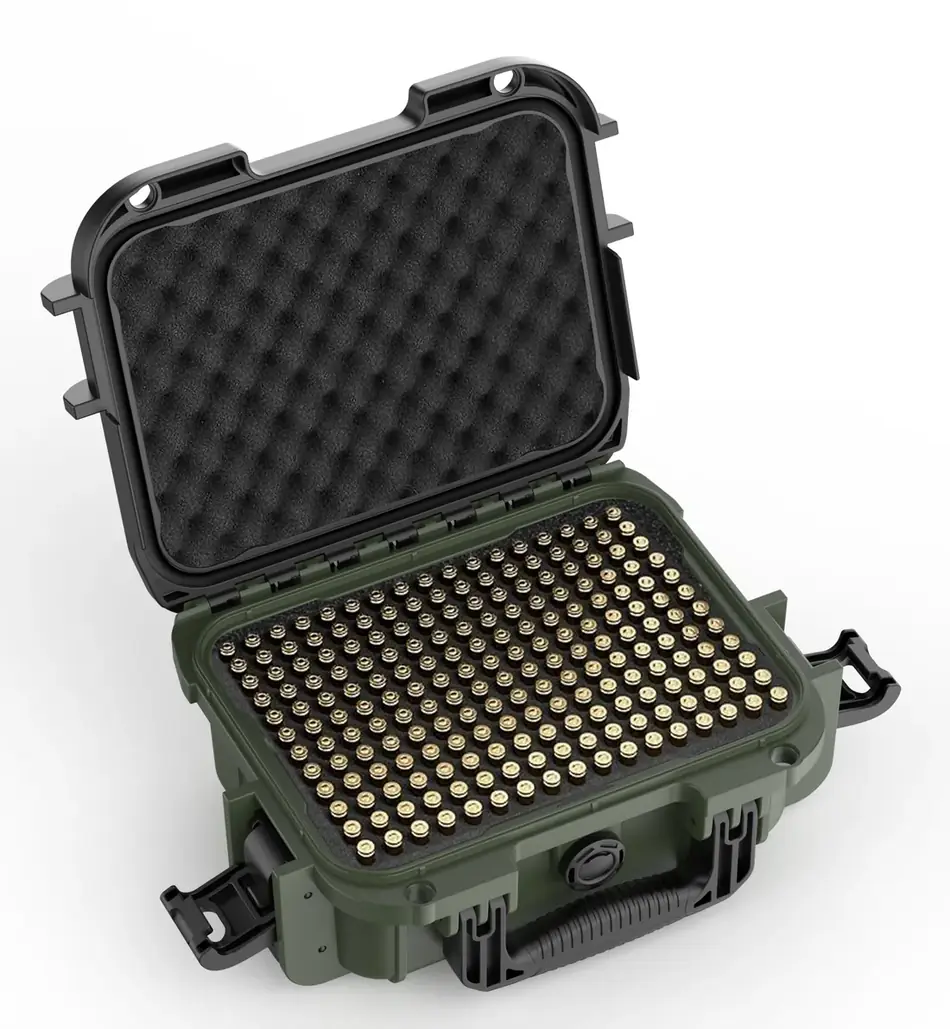
What is case locks and why does it matter when buying a protective case?
A case lock, in the way we publish it, is not a lock at all: it is a latch body shaped so that a standard padlock can pass through it and clamp the lid shut. That single capability is recorded as measured on 155 of the 155 models in our product file, with the note that the latch body accepts a standard padlock. What our file does not publish is the part buyers usually assume is there: no model states a lock type, so none of the 155 listings distinguishes a keyed cylinder, a combination dial or a hasp-only arrangement, and no listing states how many latches a shell carries, because the latch field reads count specified per configuration. This matters when buying a protective case for three concrete reasons. Whether a padlock can hold the lid shut is also what keeps a compressible gasket under load in transit, and a gasket is available on only 124 of 155 models, so on 31 shells the padlock is a security measure and nothing else. The mass of the padlock you add is not inside our published net weights, which exist on 93 of 155 listings, with gross weight on none. And the locking hardware you can actually order is bounded by tooling, not by preference: a hasp in an existing boss is a 45-day existing-mould OEM change at a MOQ of 300 pieces, while a new locking position or an integrated cylinder is a new mould at 125 days from 3,000 pieces per component.
Key points
- On our file a case lock means a padlockable latch: recorded as measured on 155 of 155 models, same note on every listing.
- No listing publishes a lock type, so do not read a padlock photo as a keyed or combination cylinder being supplied.
- Latch count is unspecified on all 155 models; put the number of latches in the order or receive whatever the run carries.
- Locking also holds the gasket compressed, and a gasket is published available on 124 of 155 models, absent on 31.
- Series 7 is the clean example: 0 of its 6 models publish a gasket, so a padlock there secures access but seals nothing.
- A padlock's own mass sits outside published weights: net weight on 93 of 155 listings, gross weight on none.
What a case lock is on our shells, and what it is not
Ask five suppliers what a case lock is and you will get five answers, because the phrase carries two different products. The first is an integral lock, a cylinder or combination unit moulded or riveted into the shell, usually with keys that belong to the case. The second is a padlockable latch, where the latch body has an aperture and the lock itself is a separate piece of hardware that the buyer already owns or buys locally. KeXin publishes the second. Across all 155 models in our file the lock field carries the same measured note: the latch body accepts a standard padlock. Nothing in the file describes a keyed cylinder, a combination dial, a TSA-style acceptance or a master-key arrangement, and we do not add one to a page because a buyer assumed it.
That distinction is decision-grade rather than pedantic, because it changes who controls access. With a padlock, the lock is yours: you choose the keying strategy, you replace it in any hardware store in the destination country, and a lost key costs a padlock rather than a shell. With an integral lock, the supplier's hardware becomes a spare-parts dependency for the life of the fleet. For wholesale and OEM buyers shipping containers of cases to distributors, the padlockable arrangement is usually the one that survives contact with a supply chain, which is why our catalogue is built that way.
The hardware fields sitting behind a locking question
Our file carries nine hardware keys per model, and only one of them is about locking. Reading them in order is the fastest way to see what you can specify from a datasheet and what has to be settled by email. The lock note is uniform, which is unusual and genuinely useful: it means a padlock decision does not vary by SKU, so a fleet mixing small 0-series shells with the largest 8-series bodies can standardise on one padlock type. The latch field is the opposite, deliberately, because latch count is a configuration choice rather than a shell property.
| Hardware Field | Published As | Coverage | Value Or Note Carried | Buyer Consequence |
|---|---|---|---|---|
| lock | Measured | 155 of 155 | Latch body accepts a standard padlock | Padlock use is standard across the range |
| latch | Manufacturer option | 0 of 155 give a number | Count specified per configuration | State the latch count you want, or inherit the running configuration |
| hinge | Measured | 155 of 155 | True | Hinged construction is standard, so lid alignment under load is a latch question |
| pressure_valve | Manufacturer option | 0 of 155 give a value | No value published | Ask for it explicitly if the case will be locked and flown or driven over altitude change |
| document_holder | Manufacturer option | 0 of 155 give a value | No value published | Relevant to custody and issue-room use, where the tag is part of the lock procedure |
| lock type, key count, aperture size | Not a field | 0 of 155 | Absent from the data structure | Any supplier quoting these is describing bought-in hardware, not the shell |
Padlockable latch against a built-in lock, compared on what we can prove
The table below compares the two locking approaches using only fields our own file carries, plus the consequences that follow from them. Where a row cannot be filled from published data, it says so rather than estimating.
| Aspect | Padlockable Latch (Our File) | Built-In Lock (Not Our Configuration) | What To Verify In Writing |
|---|---|---|---|
| What the catalogue states | Latch body accepts a standard padlock, 155 of 155 | Would need a lock type field; 0 of 155 models publish one | Which of the two is on the drawing you approve |
| Number of securing points | Not published; latch count is per configuration | Not published either way | Latch count per SKU on the purchase order line |
| Effect on the seal | Holds latches closed, so gasket compression is maintained on the 124 models that publish one | Same physical effect, but the lock becomes the wear item | Whether the shell has a gasket at all, since 31 publish none |
| Added mass | Yours, and outside published figures; net weight exists on 93 of 155 listings, gross weight on none | Integral hardware mass also unpublished | Loaded mass ceiling, not shell mass alone |
| Repair path | Replace the padlock from local stock wherever you operate | Supplier-specific spare part | Spare hardware kit per batch band you operate |
| Customisation route | Hasp in an existing boss, bolt-on kit: 45 days, MOQ 300 | New mould: 125 days, MOQ from 3,000 per component | Which route the quoted price belongs to |
Why the gasket changes the reason you lock a case
A padlock does two unrelated jobs, and buyers normally pay for one while believing they bought the other. It controls access, and it prevents the latches from being released, which on a gasketed shell is what keeps the compressible seal under load through hours of vibration on a truck. Our file publishes a gasket on 124 of 155 models, described as a compressible gasket in a continuous moulded channel and recorded as measured, with the remaining 31 listings stating that none is offered on the shell. So before you specify locking, read the sealing row, because on a shell with no gasket the padlock is purely an access control device and the interior is exposed to whatever the environment is doing.
The distribution is not random, which is the useful part. Every one of the 20 models in the 6-series publishes a gasket, 58 of 62 in the 8-series do, 18 of 19 rolling T-series shells do, and 14 of 18 in the 9-series do. At the other end, none of the 6 models in the 7-series publishes a gasket, and 11 of the 23 small 0-series shells do not, including KX-1204 at 120 by 90 by 40 mm and 100 g. If your requirement is a lockable and sealed electronics carrying case, the 7-series and part of the 0-series are the wrong shortlist no matter how good the latch is, and that is visible from published data before anyone sends a sample.
How to decide what locking you actually need
Work through three questions in this order. Is the purpose to stop casual opening, to record that a case was opened, or to keep a sealed interior sealed? For casual-opening prevention a padlock through the latch aperture on any of our 155 models is sufficient and costs you nothing on the tooling side. For tamper evidence the padlock is the wrong device and a seal label or a document holder arrangement is the right one, which is why the document holder line exists in our hardware fields even though no model publishes a value for it. For keeping a seal compressed, the locking choice is downstream of the gasket choice, so select the shell first.
Then size the shell against the loaded mass rather than the empty one, because the latch is what carries the lid against the body when a case is lifted by the handle and the contents shift. Published net weight runs from 100 g on KX-1204 to 15,320 g on KX-88442, and the load capacity field is recorded as not measured on all 155 models, so there is no published figure that says how much a latch or a padlock aperture will take. Where the shell geometry does the talking, wall thickness is available on 148 of 155 listings and is a fair proxy for how substantial the latch boss is: the rolling range runs 4.2 mm to 6.0 mm, and KX-97227 at 720 by 500 by 270 mm publishes 6.0 mm. On the small end KX-1204 publishes 2.6 mm.
Applications where the locking field decides the specification
Ammunition storage and issue rooms are the clearest case. Every model publishes the padlock note, so a padlock and hasp regime is available at every size, and the practical variables become latch count and whether the shell carries a gasket at all. KX-3207, at 315 by 260 by 70 mm and 570 g, publishes a gasket in a moulded channel and a padlockable latch, which is a different duty profile from KX-1204, a 100 g shell with no gasket offered. For long equipment, KX-814641 at 1,356 by 154 by 408 mm publishes both, and there the locking question is really about how many latches span a body long enough to flex in transit.
For electronics and instrumentation moved between sites, the lock interacts with altitude and temperature, because a locked, gasketed shell that is flown or driven over elevation change will breathe through whatever path is available, and a pressure equalising valve is a manufacturer option that no model in our file publishes a value for. That is a configuration conversation, not a catalogue line, and it belongs in the same email as the latch count. For law-enforcement custody use, the chain-of-custody question is usually answered by a tag rather than a lock, which again points at the document holder field. For field and military transport, the padlockable latch is the workhorse, with the caveat that the 19 rolling models are published as non-stackable, so palletising a locked and wheeled fleet is a different exercise from palletising 136 stackable shells.
Customising case locks on OEM terms
Custom hardware is recorded as available on all 155 listings, and the hardware material line states metal or polymer by configuration rather than fixing a grade per model. Within an existing mould we can add a padlock hasp in an existing boss, supply bolt-on hardware fitted to the inserts we already run, colour the latch bodies, and put a logo on the grip or the latch cover. Those are 45-day, MOQ-300 changes on the OEM route, with custom colour and custom logo also sitting at 300 pieces. What is not available without a tool is a change to the latch or hasp position, an integral cylinder instead of a padlock aperture, or a different aperture geometry, because those live in the mould and in the load path.
| Locking Change | Route | Moq (Pieces) | Lead Time |
|---|---|---|---|
| Padlock added through existing latch | Buyer-supplied hardware | No supplier MOQ beyond the case order | None; the aperture is already published measured on all 155 |
| Hasp in an existing moulded boss | Existing mould | 300 | 45 days to first sample |
| Latch or hardware colour, logo on latch cover | Existing mould | 300 | 45 days to first sample |
| Latch count set to your requirement | Configuration | Per order configuration | Confirmed with the sample, since the field is not published per model |
| Integral cylinder or relocated latch position | New mould | From 3,000 per component | 125 days |
Procurement notes on the lock line
Write three things into the order rather than relying on the datasheet: the latch count you expect per SKU, the padlock shackle diameter you intend to use so the aperture is confirmed against it, and whether the shell is to carry a gasket. The second of those is the one that bites. A note that the latch body accepts a standard padlock does not tell your stores team which shackle size clears the hasp when the latch is closed under lid compression, and a padlock that will not reach is discovered at a loading bay, not at a quotation. Send the padlock specification and ask for the aperture to be confirmed against it on the sample.
At receiving inspection, cycle every latch on a sample quantity from each pallet rather than from one carton, and look for mould flash at the aperture edge, since that is the artefact that stops a shackle seating. Keep a spare hardware allowance per batch band. If a locked case will be palletised with others, remember the stacking property published in the file: 136 of 136 fixed-folding models publish as stackable and none of the 19 rolling models do, and a protruding padlock on a stackable shell also changes how cases sit square. Payment is a 30 percent deposit on EXW or FOB terms, wholesale and OEM only; we do not sell retail, do not quote DDP, and hold no overseas warehouse.
What we do not publish about case locks
No listing states a lock type, a key number, a combination, an aperture dimension, a torque figure, a pick resistance or a latch cycle life, and none publishes a load capacity or a stack load, all of which are recorded as not measured across the 155 models. We do not fill those gaps with an estimate to make a quotation close. Protection data is treated the same way in the same file: waterproof, dust and temperature-range entries are recorded as not measured, so neither a padlockable latch nor a gasket description carries an implied ingress rating. Where a customer file needs a stated number, accredited third-party testing on the configuration you order can be quoted as a separate work package, and the result attaches to that configuration rather than to the catalogue.
The short answer to the question in the title is therefore narrow and checkable. Case locks means a padlockable latch, published as measured on every model we list. Why it matters is a function of three other published numbers: whether the shell carries a gasket, how many latches you ordered, and what the loaded case weighs once your device, foam, padlock and any added hardware are inside it.
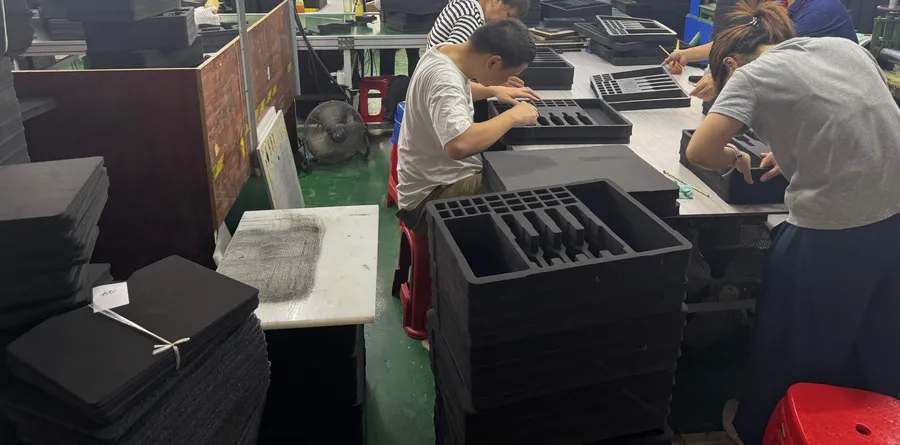
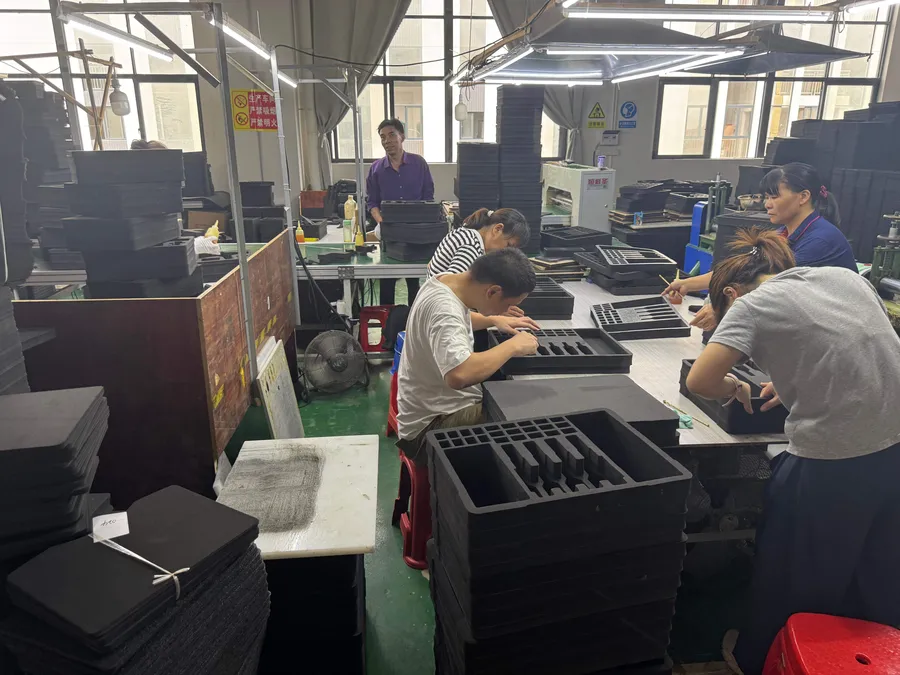
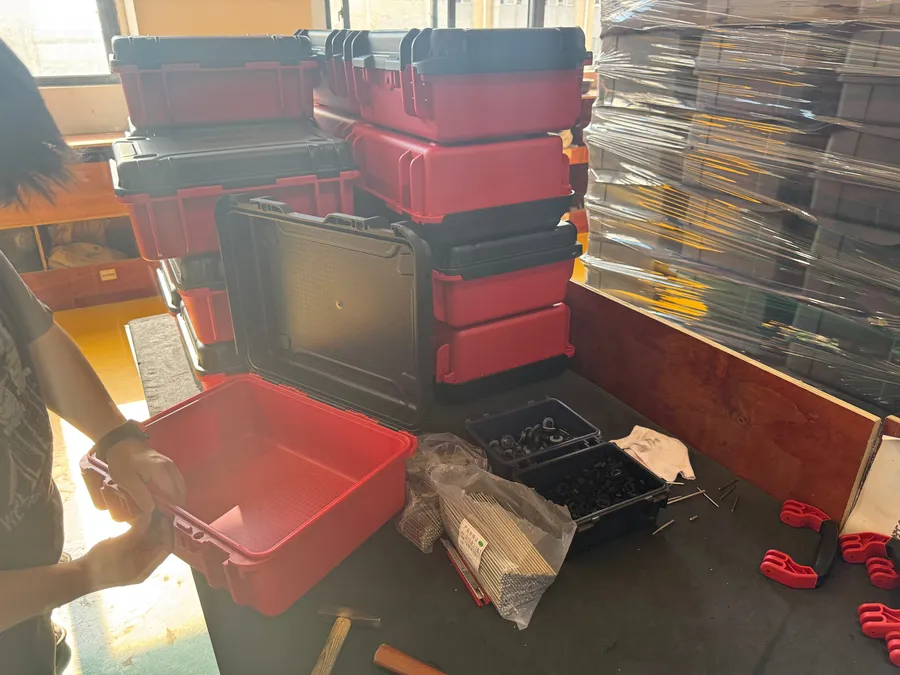
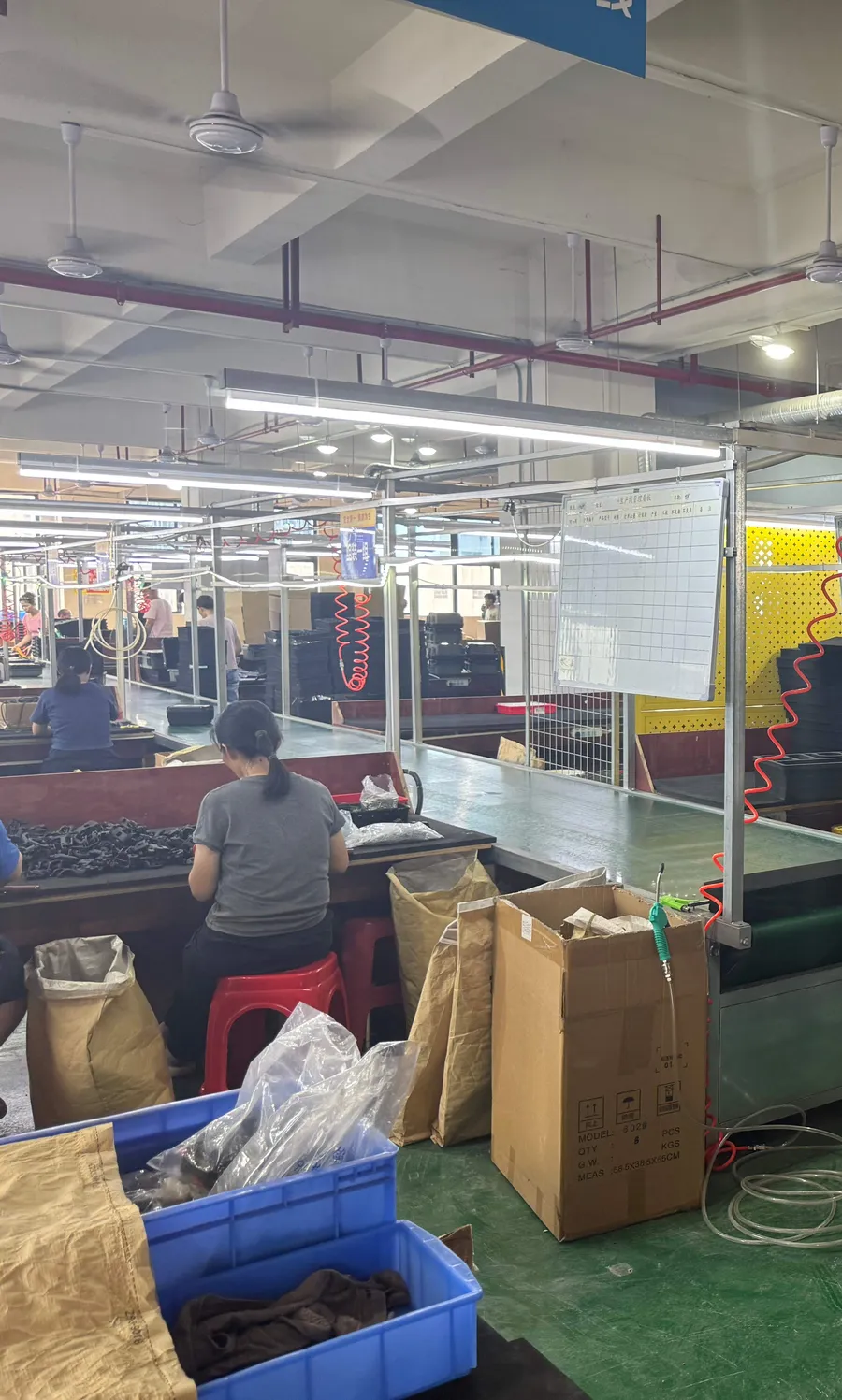
Customisation
Everything described above is configurable on a standard shell: interior layout (pick-and-pluck, die-cut or CNC-cut), foam grade and thickness, colour, logo method, latch and lock count, pressure-equalisation valve, cable ports, document holder and identification plate. A bespoke exterior geometry requires a new mould — 125 days, from 3,000 units per moulded component.
Procurement considerations
| Question | What to send us |
|---|---|
| Which shell fits? | Equipment L × W × H as packed, plus required clearance per axis |
| What does it cost? | Order quantity and estimated annual quantity — the two drive different answers |
| Is tooling needed? | Whether an existing shell clears the envelope with usable foam depth |
| Lead time? | Your required delivery date, not just the order date |
| Certification? | The exact standard your tender names — we will say whether we can test to it |
| Freight? | Destination and preferred terms; carton and pallet data supplied with the quotation |
Comparison and selection guide
The tables on this page exist because a protective case is chosen by comparing three things: the envelope, the environment and the handling chain. Where no table applies, the rule below is.
| Situation | What To Do |
|---|---|
| Fastest | Standard shell plus CNC foam — typically 45 days from approved drawing. |
| Branded | Standard shell plus custom colour and logo — MOQ applies to the resin colour. |
| Bespoke geometry | New mould — 125 days, MOQ from 3,000 units per component. |
- Size on internal dimensions plus clearance, never on a product name.
- Choose the carrying method before the shell: it changes the series, not just the price.
- Specify the interior last, and decide up front whether the end user will reconfigure it.
What is case locks and why does it matter when buying a protective case? relates to Logistics & Packing Guide. Related families: Custom Protective Cases / Military Protective Cases / Ammunition Storage & Transport Boxes / Electronics Cases / Tactical Equipment Cases / Rolling Cases / Waterproof Cases. Related sectors: field and industrial equipment. Continue in the Logistics & Packing Guide cluster.
This page is written from our own production data. If your requirement differs, send the dimensions and we will tell you which of the 155 models fits, or whether a custom route is needed.